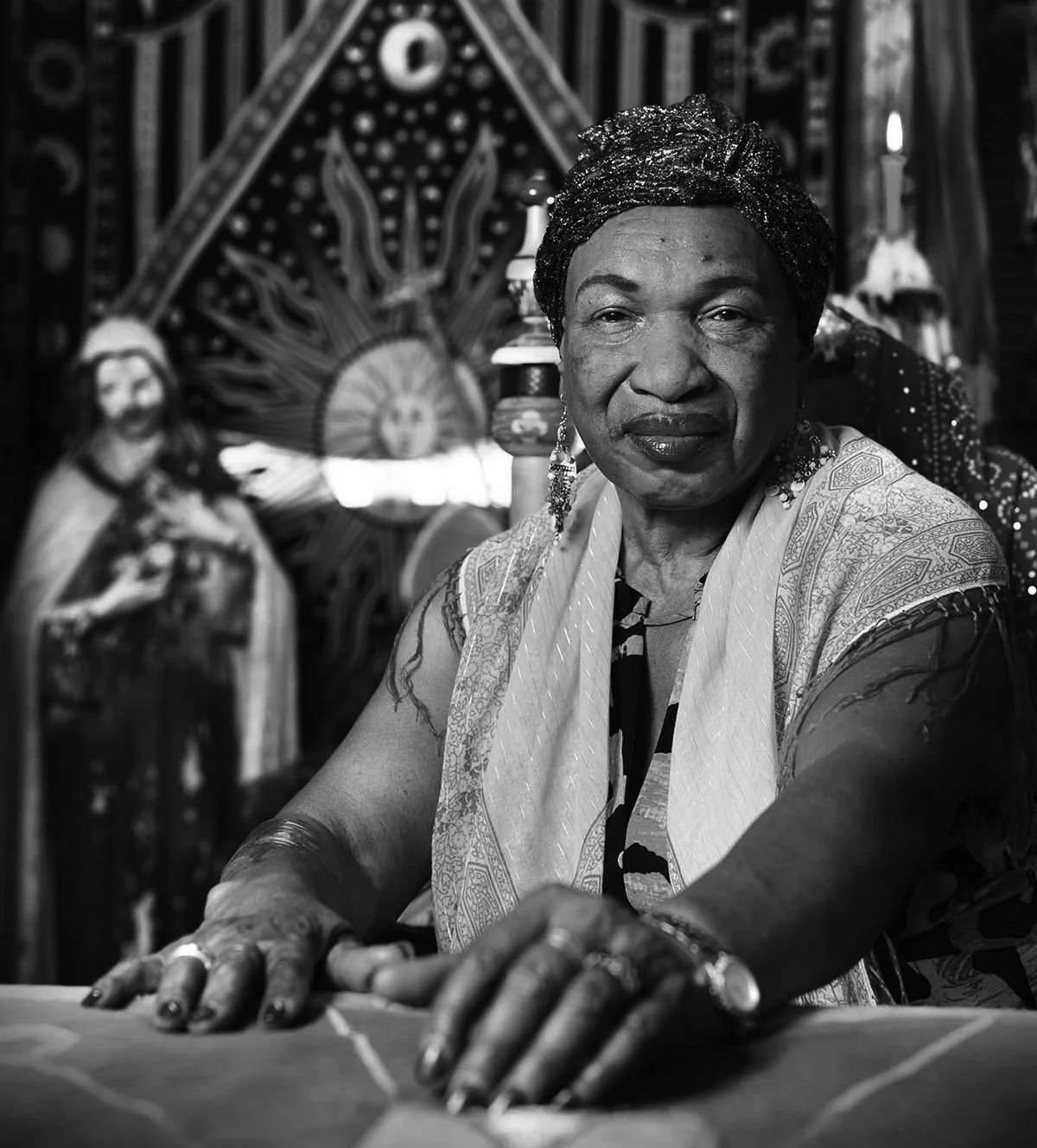
Voodoo Priestess Miriam (Miriam Chamani) passed away on August 16, 2026. Photograph by Cheryl Gerber
2026After 35 years behind the lens, photographer Cheryl Gerber reflects on the people who shaped the French Quarter and the spirits they’ve left behind.
– by Cheryl Gerber
If you choose to listen to this story, don’t miss out on the photos below! More than thirty-five years ago, I walked into A Gallery for Fine Photography on Royal Street in the French Quarter and my life changed.
At the time, I was shooting my first freelance gig for Arrive, a tourist magazine, photographing the New Orleans visitors expected to see: wrought-iron balconies, Creole cottages, courtyards, shutters and gas lamps flickering in the evening light. I loved architecture and was still learning how light moved across brick and stucco, how shadows could turn an ordinary streetlamp or balcony into something almost abstract.
I especially loved photographing St. Louis Cathedral. There was something holy about it, rising above Jackson Square, its spires cutting into the sky. I would wait for the light to strike it just right and believe, for a moment, that I had captured something sacred.
One morning in early 1990, as the midday light became too harsh for photographs, I wandered into A Gallery for Fine Photography to cool off and stood before photographs by Henri Cartier-Bresson, Ansel Adams and Margaret Bourke-White.
This column is underwritten in part by Tom and Alycia Reagan
Then I moved deeper into the gallery and found an exhibit by a photographer I had never heard of, Michael P. Smith.
His black-and-white photographs felt alive. Men danced in the streets with tambourines and drums, faces lifted, bodies caught up in the music. There were musicians, churchgoers and second liners, people I had passed on these same streets without really seeing them.
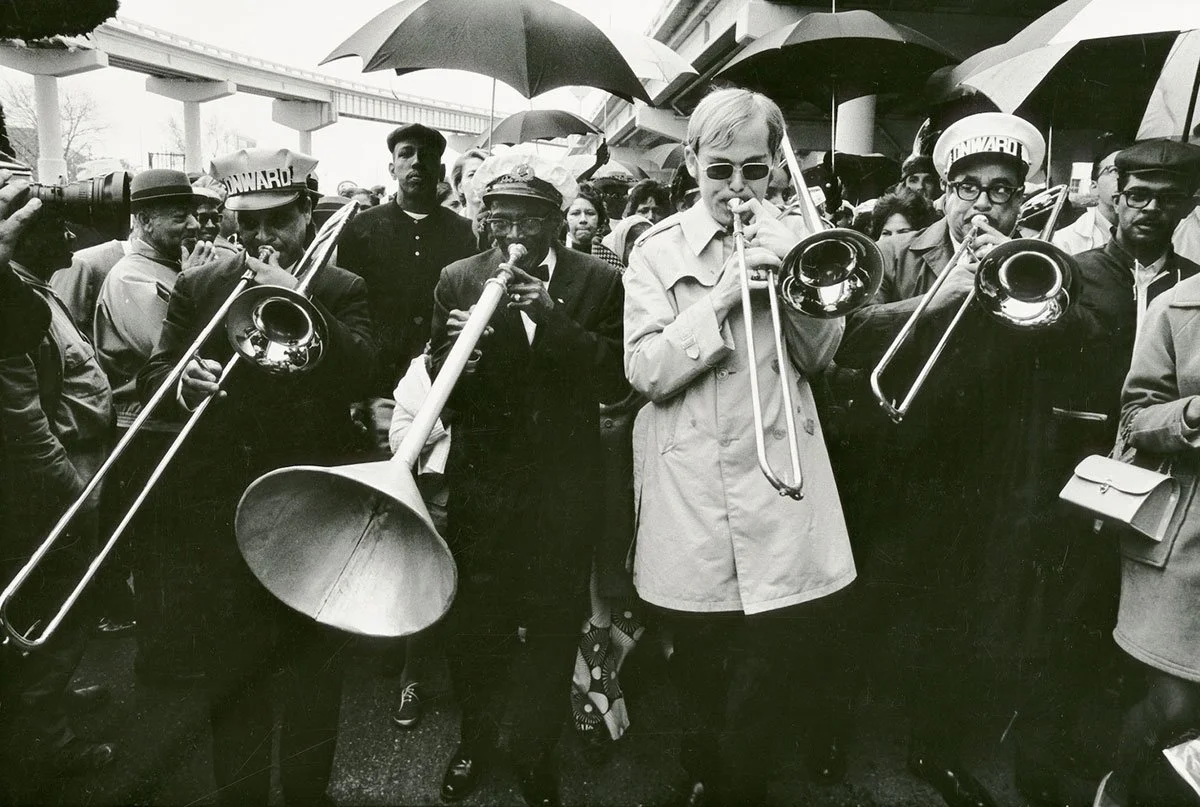
Onward Brass Band at Paul Barbarin’s funeral, 1969, by Michael P. Smith, Historic New Orleans Collection
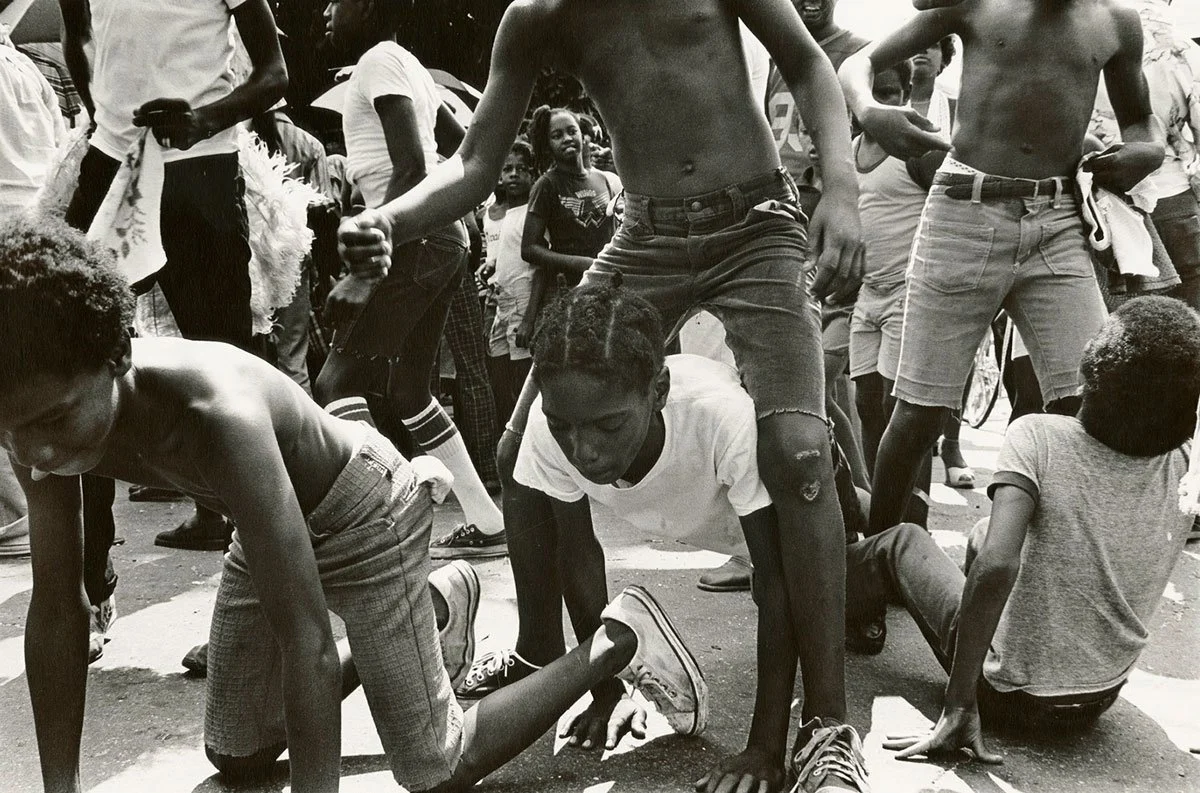
Scene Boosters Marching Club, annual parade, 1978, by Michael P. Smith, Historic New Orleans Collection
I bought Mike’s book, Spirit World. I did not fully understand the title, but I understood that his photographs revealed a city far more complicated than the one I had been photographing. Michael photographed people and culture, a New Orleans that seemed to exist beneath the architecture I had been so carefully framing.
When I walked back onto Royal Street, I saw the French Quarter with new eyes.
For the next thirty-five years, people became the story.
Some of my first subjects were the Gutter Punks I passed on my way to the Gumbo Shop, back when I was pushing thirty, still waiting tables, and afraid that becoming a career photographer might elude me. I resented them for asking for my hard-earned tips and once snapped that they weren’t contributing anything to society.
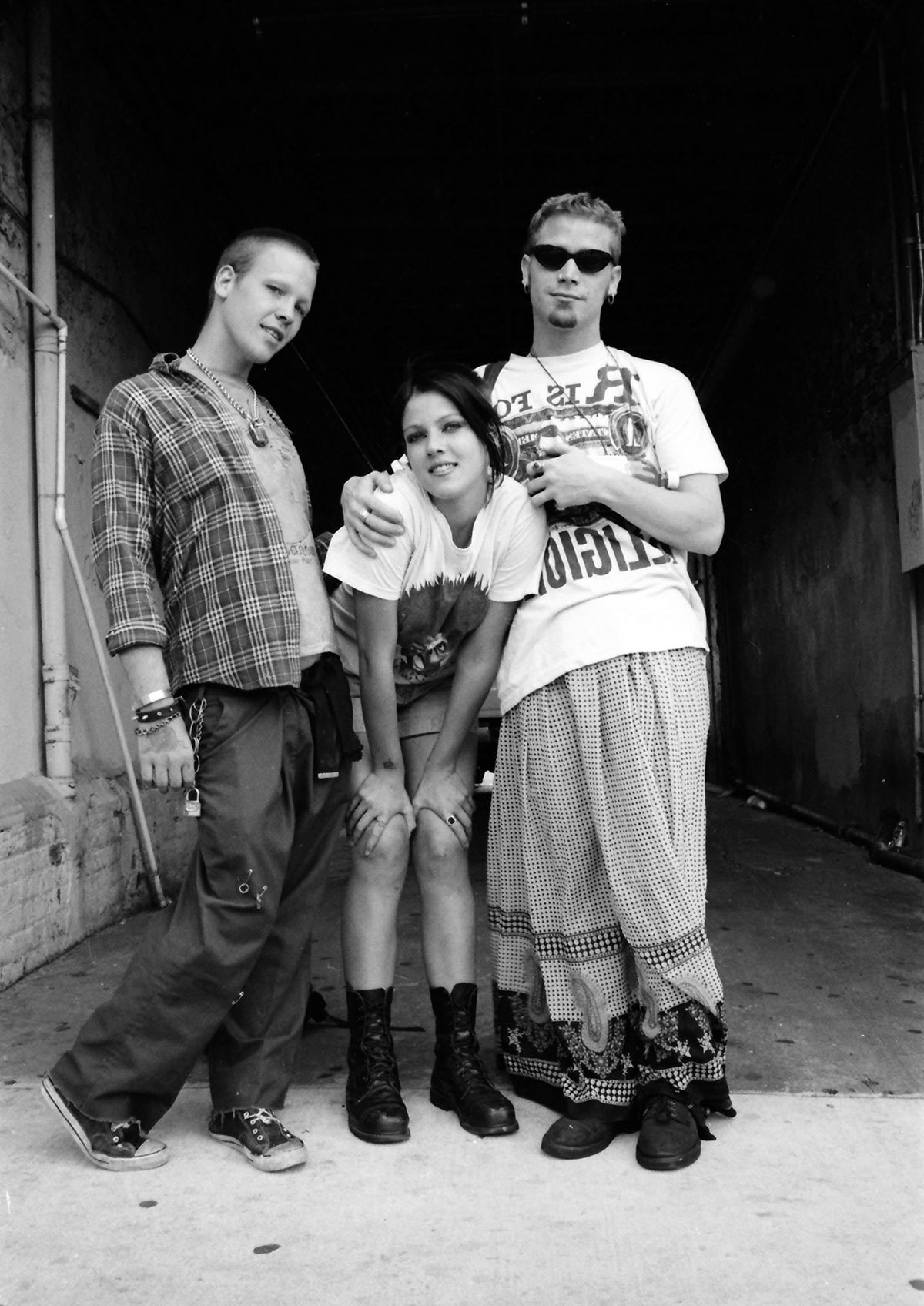
by Cheryl Gerber, 1995
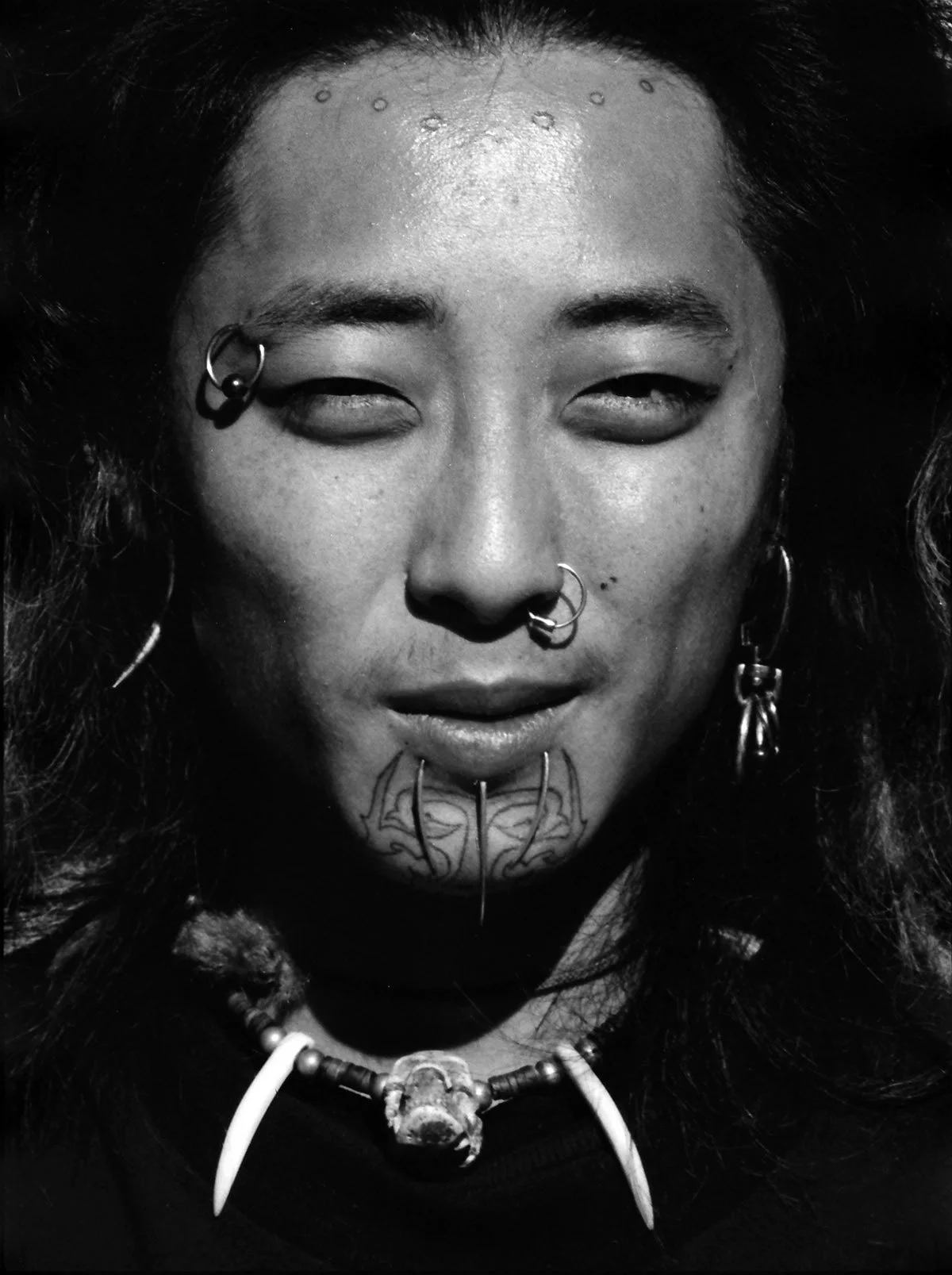
by Cheryl Gerber, 1995
I made assumptions based on how they looked until a wise friend reminded me that one of them might be a great musician or poet.
At Kaldi’s, King Richard, the homeless tarot card reader, encouraged me to look deeper.
So I did. I talked to them, photographed them and spent enough time with them to learn how little my assumptions had told me about who they were. I didn’t find the great musician or poet among them then, but some were wiser than I expected and taught me how little I knew about the lives I was judging. The piece became my first major story and cover for Gambit.
A month before my thirtieth birthday, I quit waiting tables.
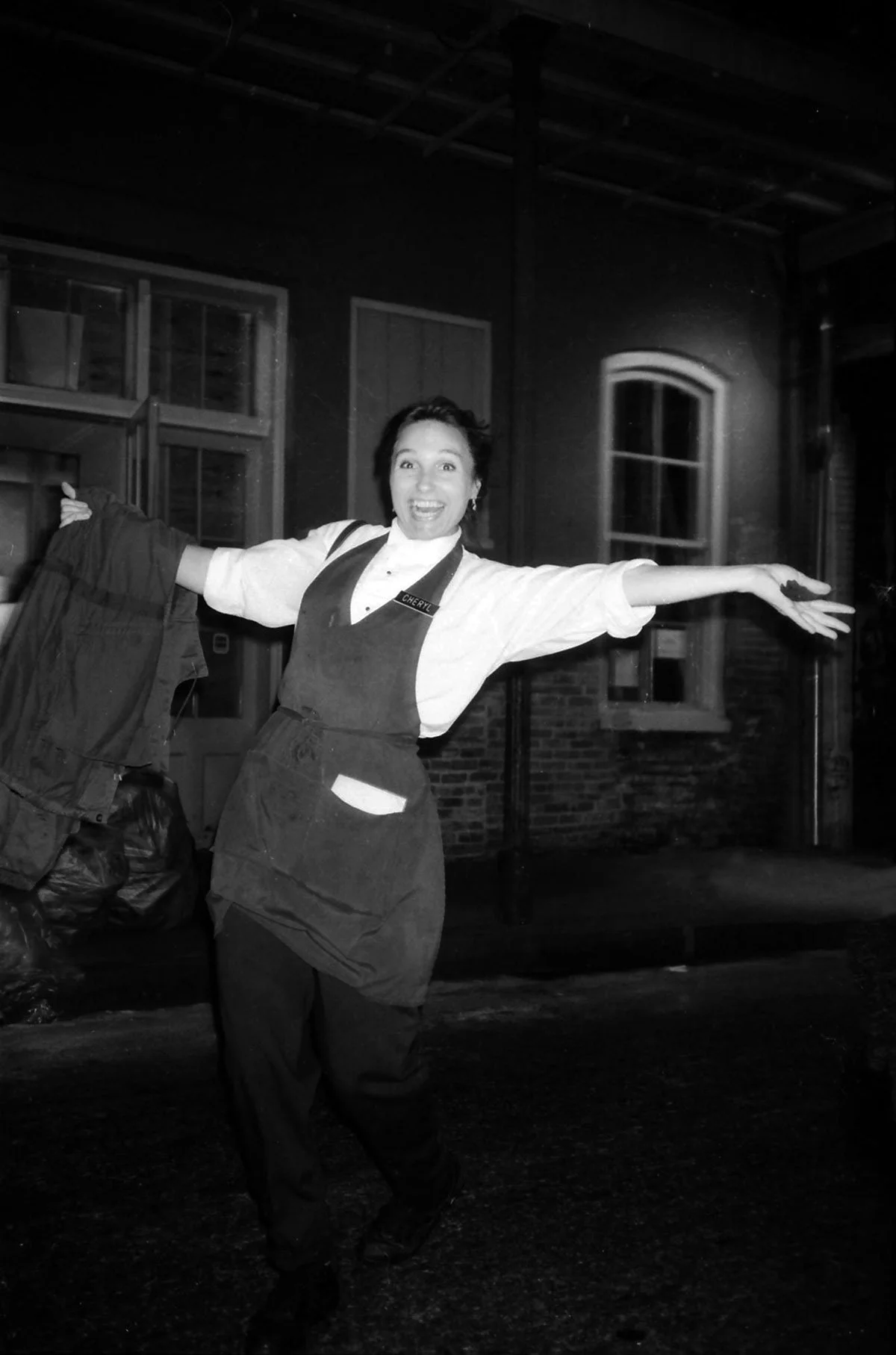
Cheryl waiting tables at the Gumbo Shop in 1994
After that, the Quarter seemed filled with people I wanted to photograph.
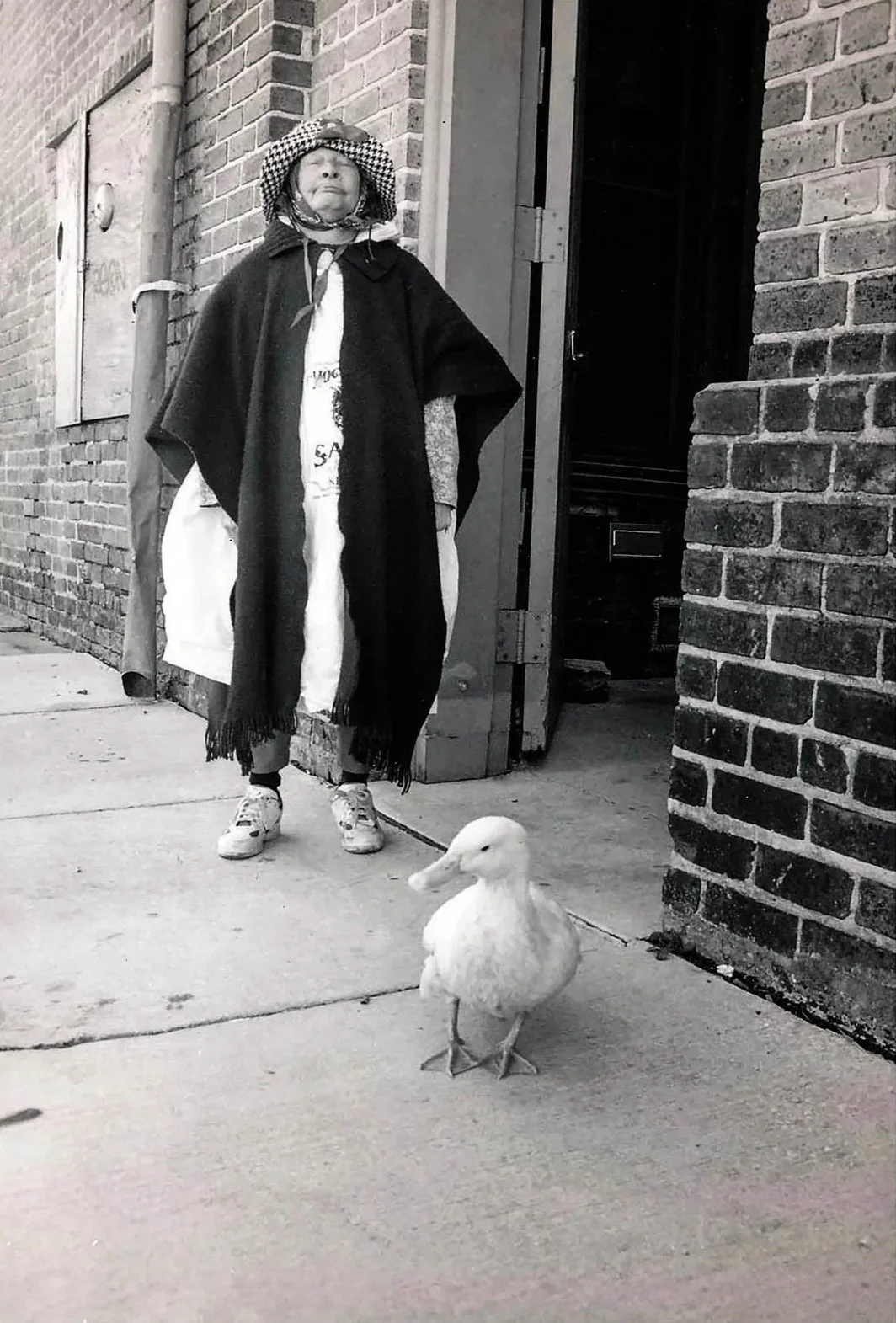
Ruthie the Duck Lady held down Decatur Street, cigarette dangling, ducks waddling dutifully behind her.
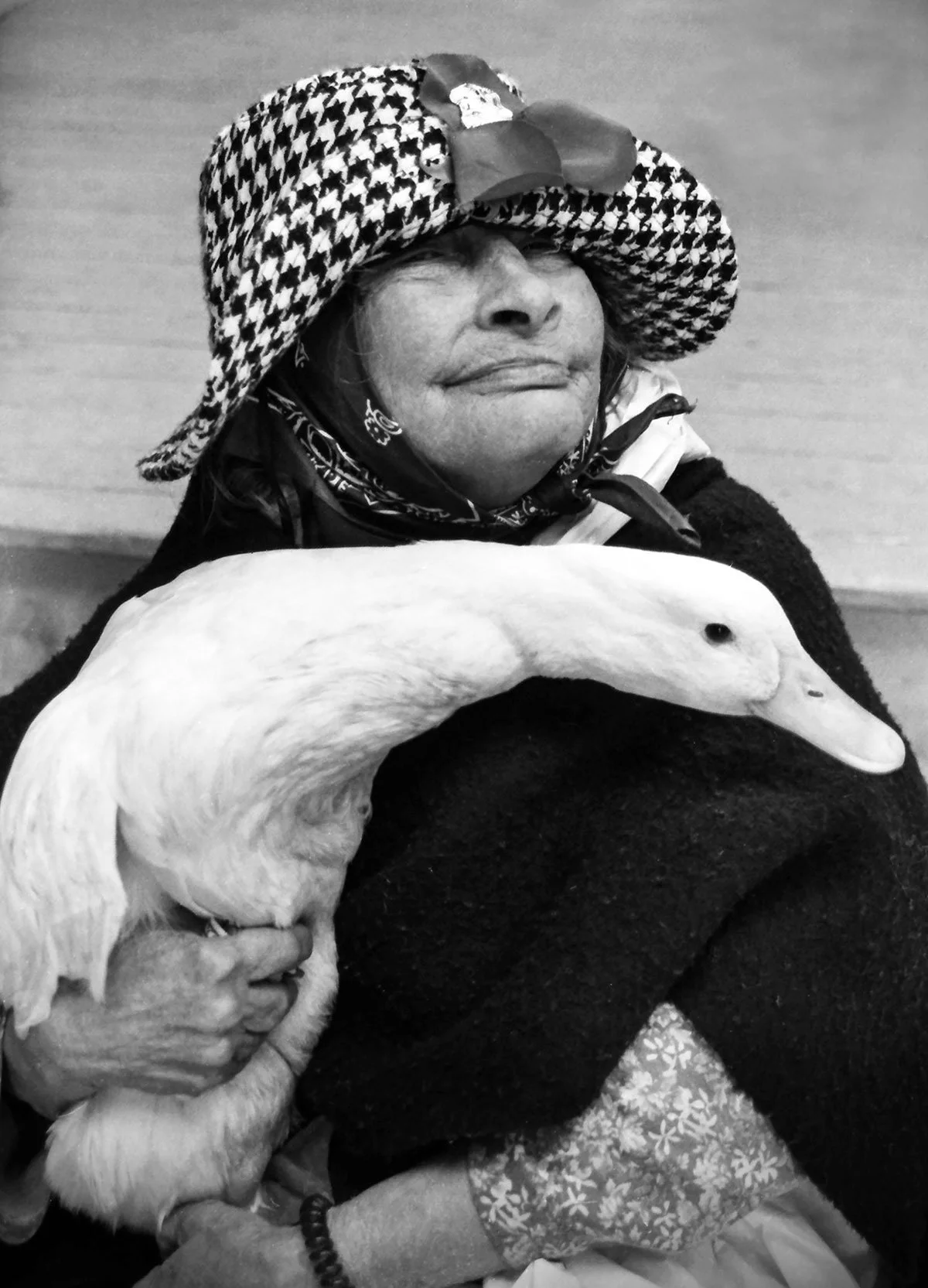
Ruthie the Duck Lady by Cheryl Gerber
There was Jimbo, the homeless man I once found lying happily in the center of Jackson Square while I was photographing a story about homeless veterans. I asked whether he had served in the military.
Yes, he told me. As a matter of fact, his father had been a famous general.
“Oh, really? Who?”
He looked over my shoulder toward the bronze figure towering above the square.
“Look,” he said. “Here he comes now.”
Andrew Jackson.
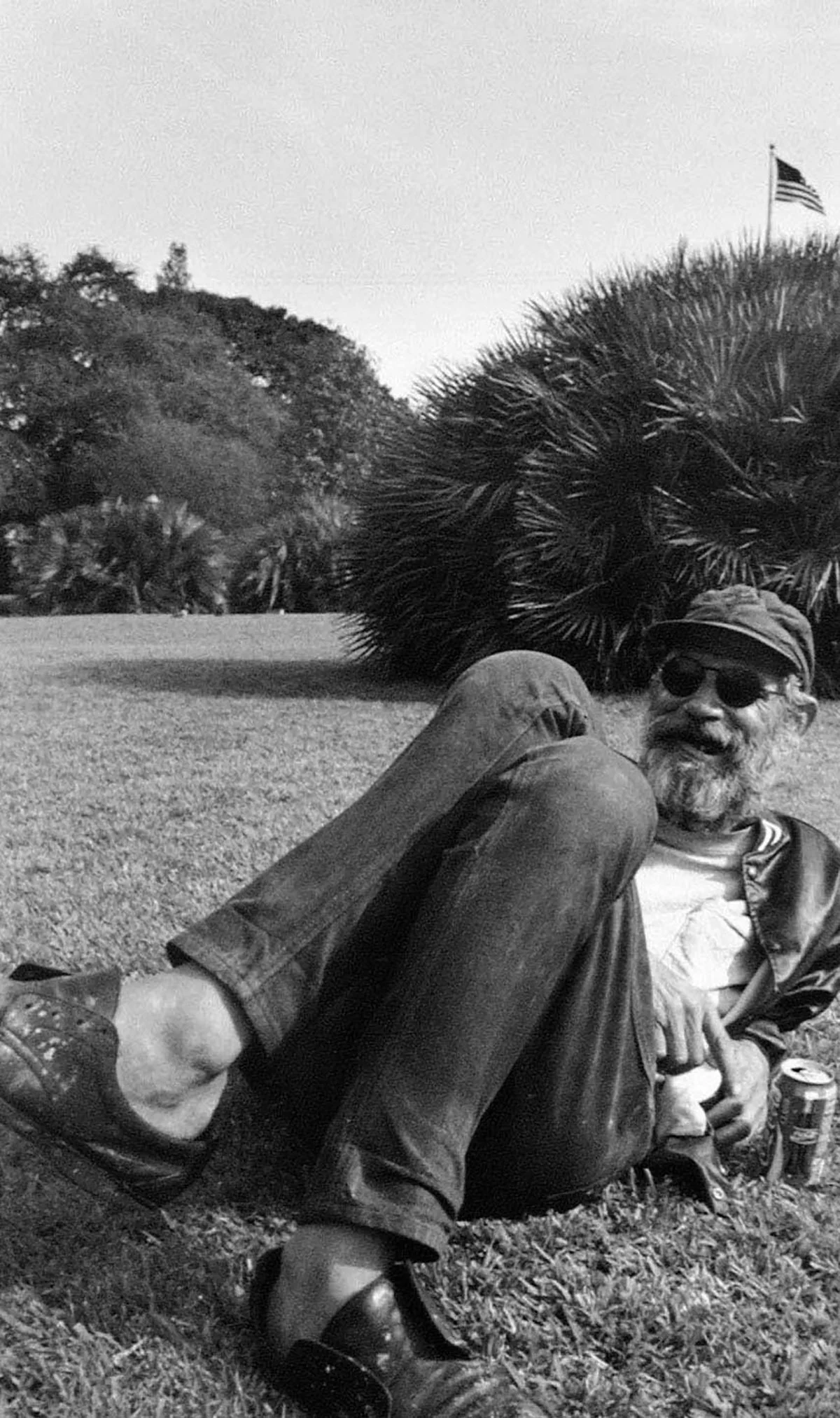
Jimbo, 1993 by Cheryl Gerber
Photographers became part of my education too. Johnny Donnels and Louis Sahuc taught me to look harder at streets I thought I already knew. George Dureau was my neighbor on Barracks Street, close enough that he became part of daily life rather than some distant, celebrated artist.
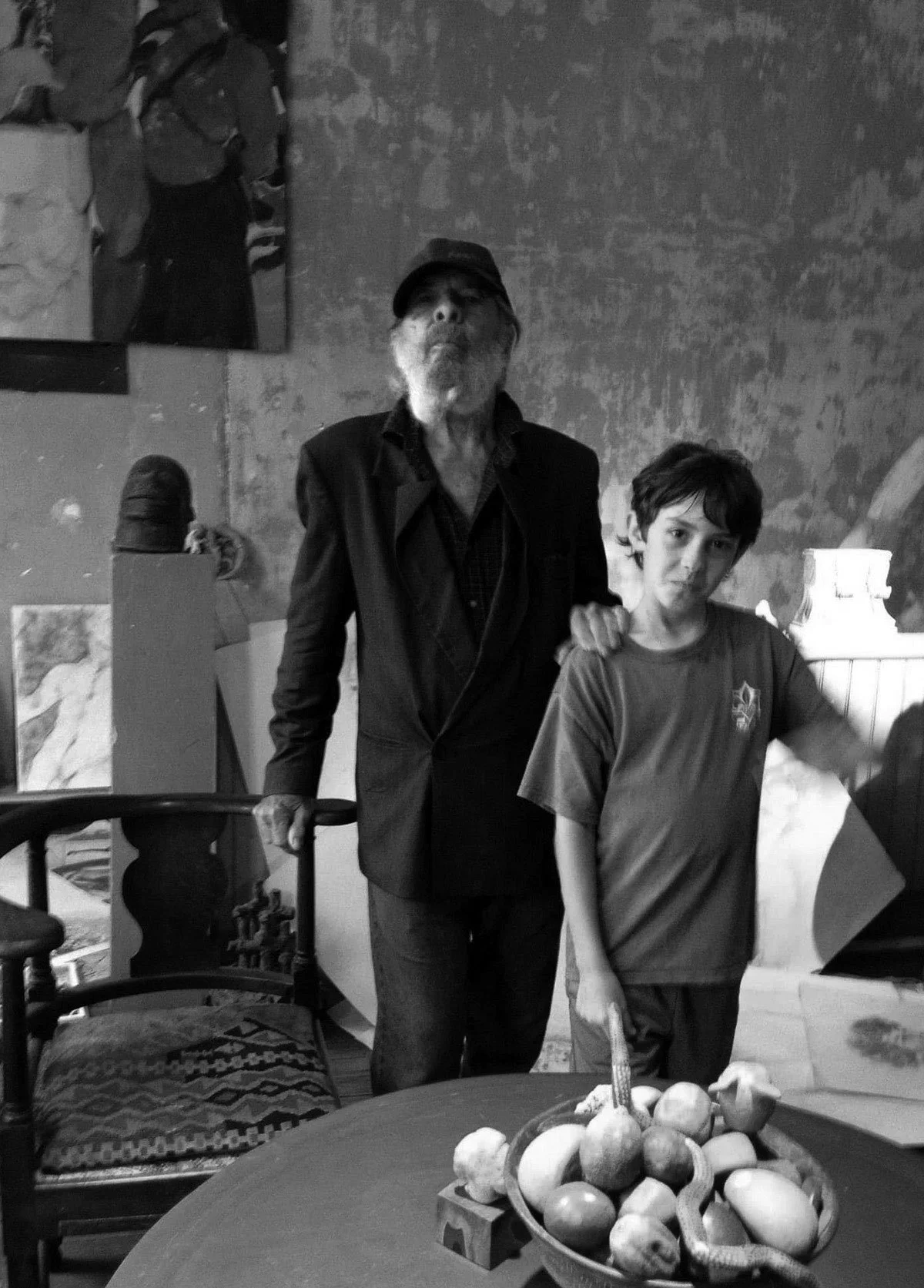
George Dureau and nephew by Cheryl Gerber
And then there was David Richmond.
I met David when I walked into K&B Camera on Dauphine Street and announced that I wanted to build a darkroom but had no idea what I needed. He stood there in vintage clothes, hat and suspenders, looking as though he had stepped out of another decade.
I took one look at him and said, “You look like someone I should know.”
I was right.
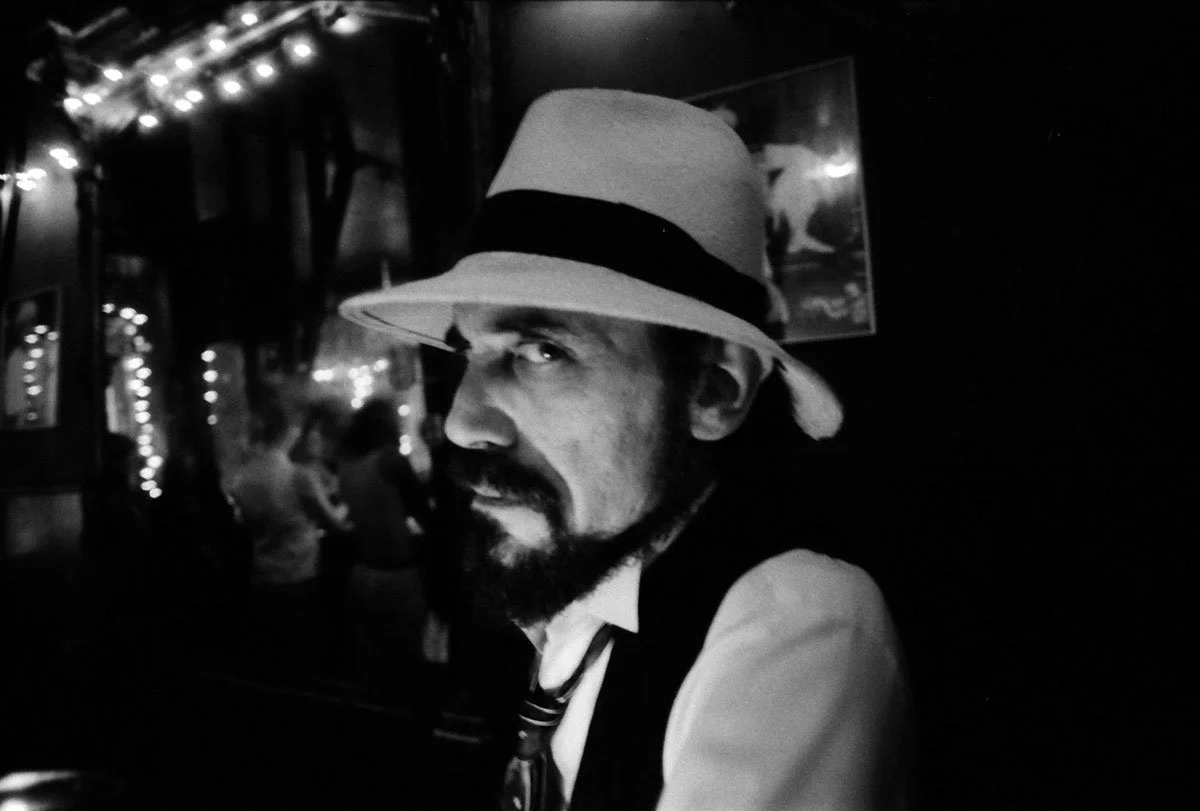
David Richmond at the Funky Butt by Cheryl Gerber
David became one of my closest friends and mentors, patiently answering questions, looking at my photographs and reminding me, when I was too hard on myself, that technical perfection was not the only thing that mattered. I can still hear him when I lamented that my photographs were only snapshots.
“Yes, but they are the best snapshots.”
David is gone now. So is K&B Camera. Today, the space houses the Museum of Death, an irony I doubt even David could have improved upon.
Inspired by these mentors, I began photographing Mardi Gras and crime scenes, second lines and funerals, weddings and hurricanes, musicians filling streets with noise and neighborhoods emptied by disaster.

Troy Andrews (Trombone Shorty), Travis Hill, Sammy Cyrus, Dwayne Williams in Jackson Square by Cheryl Gerber

John Goodman and Pete Fountain march in the Half-Fast Walking Club on Mardi Gras Day, photo by Cheryl Gerber
Somewhere along the way, death became part of the work too. By 1996, violence had become an increasingly familiar part of life in New Orleans. That year, infamous murders shook the French Quarter.
I had already photographed murder scenes around the city, but these deaths frightened me differently because they had happened inside the small geography I thought of as home – a place I had somehow imagined beyond the reach of that kind of violence.
So over the next three decades, my body of work ran the gamut between vibrance and violence, a contrast reflected in two of my books: New Orleans: Life and Death in the Big Easy, published in 2015, and The Danse Macabre: Celebration and Survival in New Orleans, (2024).
Thirty years is a long time in a human life.
In those thirty years, I watched Katrina tear through the city and the pandemic empty the French Quarter, leaving Bourbon Street silent and Jackson Square nearly deserted. Then, on New Year’s Day 2025, fourteen people were killed on Bourbon Street when a man drove a truck into a crowd celebrating the new year.
In those years, I became the photographer I once wanted so badly to be. I buried my parents, lost friends and mentors, watched children grow into adults, and kept walking many of the same streets where I once believed adulthood was only beginning.
Some of the people in those old photographs are still here. Trombone Shorty grew up before my eyes; I photographed him playing in Jackson Square when he was still a boy. Jude Acers is still doing what he was doing the first time I raised my camera, playing chess on Decatur Street all these years later.
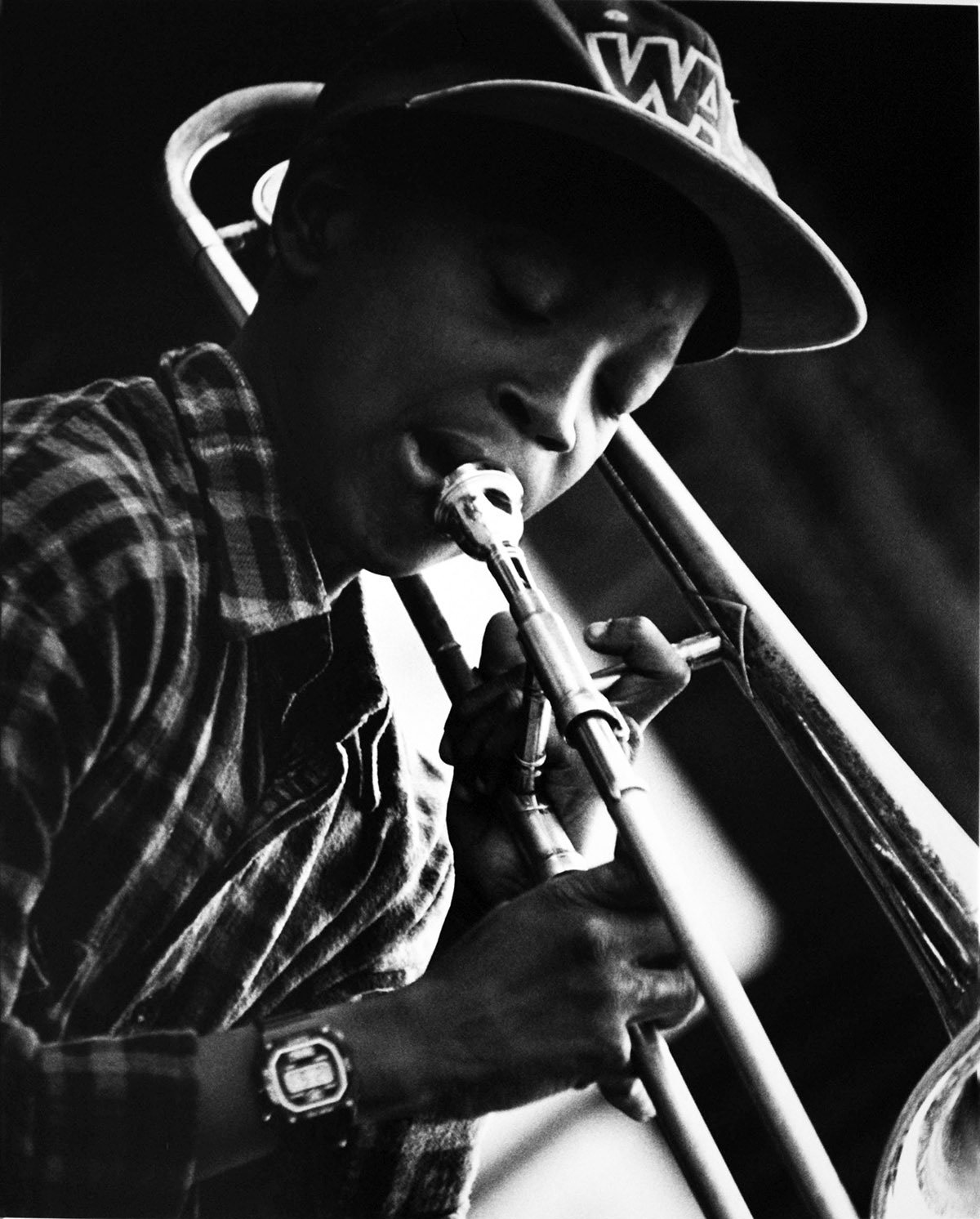
Troy Andrews, aka Trombone Shorty, 1995 by Cheryl Gerber
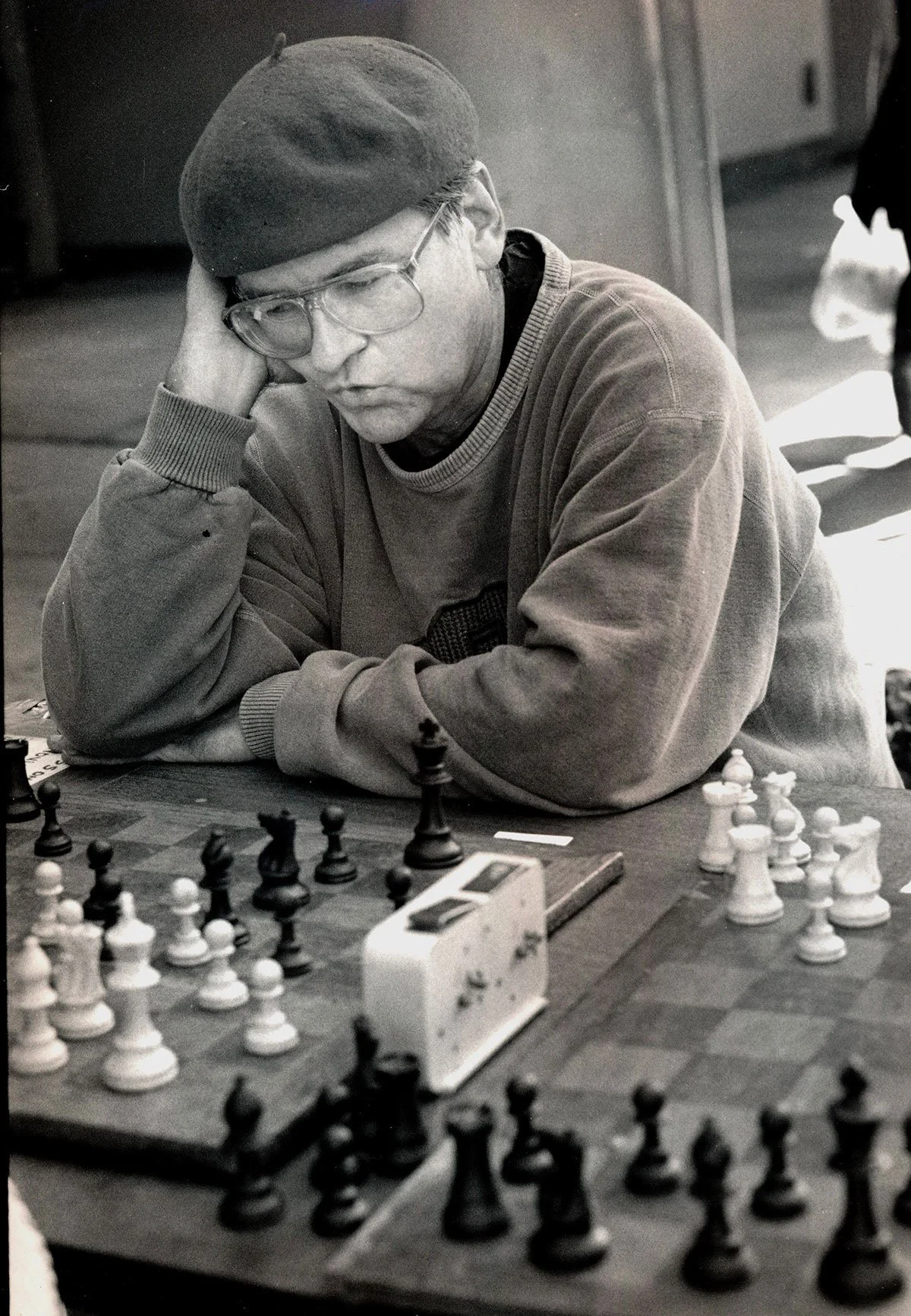
Jude Acers, 1993 by Cheryl Gerber
To the French Quarter, thirty years is almost nothing.
I have lived within two blocks of Esplanade Avenue for more than half my life, and now I cannot walk very far through the French Quarter without encountering someone who is no longer here.
This year, we have said goodbye to several more of those spirits.
One of them was an unhoused poet.
His name was Kevin.
Years after my friend told me that one of the people I was afraid to approach might turn out to be a musician or poet, I began noticing Kevin beneath the live oaks along Esplanade Avenue, alone with a yellow legal pad.
Just as I had once passed the Gutter Punks without knowing anything about them, I had passed Kevin without knowing who he was.
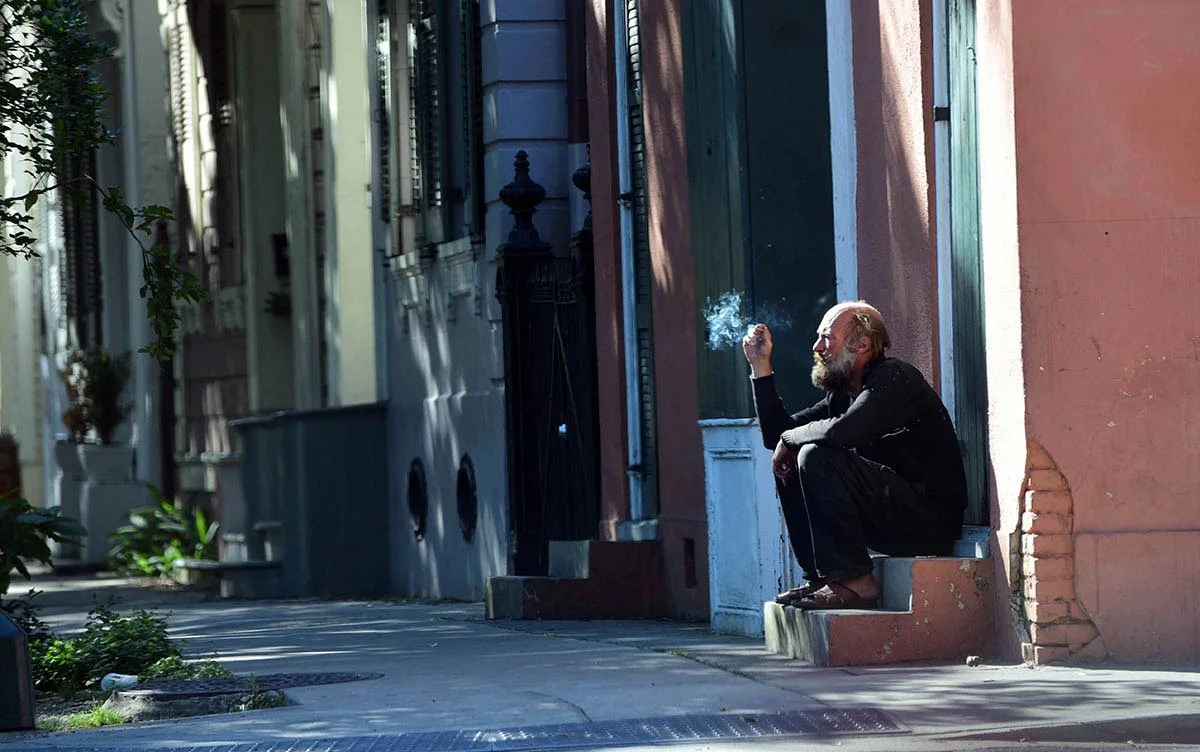
Kevin Bennett in the French Quarter, photo by Cheryl Gerber
Then one night, under a nearly full moon, I finally stopped and talked to him. I learned that he was a poet, once the poet laureate of Stanford, a man whose life had carried him a long way from where it began. Soon after, I put him in touch with friends from college, and he was housed for the last seven years of his life, three blocks from St. Louis Cathedral. Over the years, he became a friend and something of a sage.
In April, we said goodbye to Kevin with a second line from Jackson Square to the sidewalk outside his apartment, where he had so often sat in his folding chair. Neighbors said that corner is forever anointed.
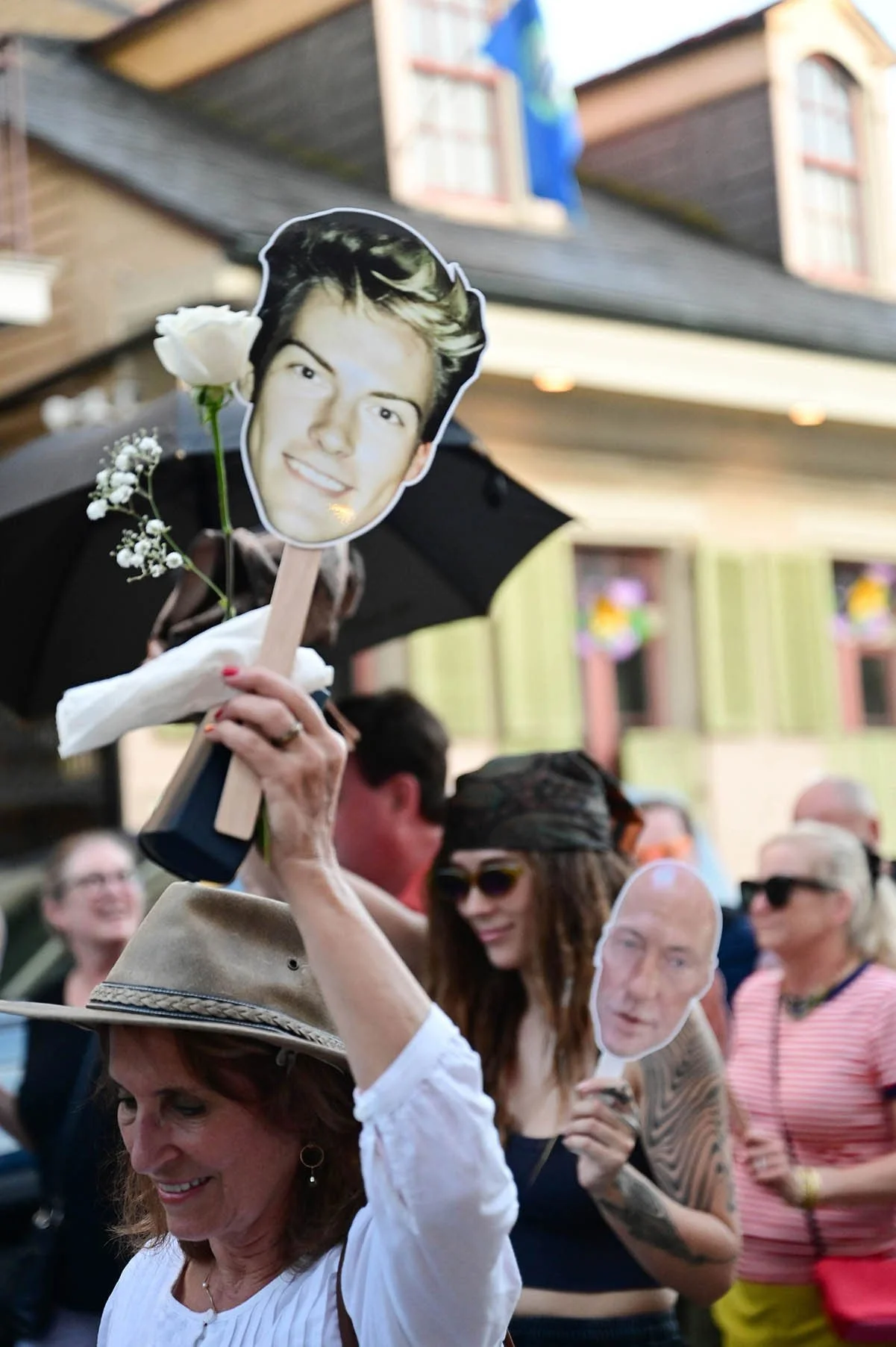
Kevin Bennett’s second line, May 2026, photo by Cheryl Gerber
This year we also lost Frank Perez, the writer and historian I had recently photographed at the rededication of the plaque memorializing the victims of the UpStairs Lounge fire. Frank spent much of his life making sure stories New Orleans had once been willing to forget were not forgotten. He left behind books, photographs and the histories he worked so hard to recover.

Frank Perez speaks to a crowd at the 2025 dedication of a new plaque memorializing the victims of the UpStairs Lounge fire. Photo by Cheryl Gerber for French Quarter Journal
And then came the death of Voodoo Priestess Miriam. Years ago, I sat on the floor of the Voodoo Spiritual Temple through one of her ceremonies that lasted nearly three hours. My butt hurt for days, but I was mesmerized. I had grown up with religion all around me, but that afternoon changed the way I understood spirituality.
But not all the people who haunt these streets are people whose voices I once knew.
Near Esplanade, a historical marker now acknowledges the slave pens that once operated in this part of the city, places where Black men, women and children were confined before being sold.
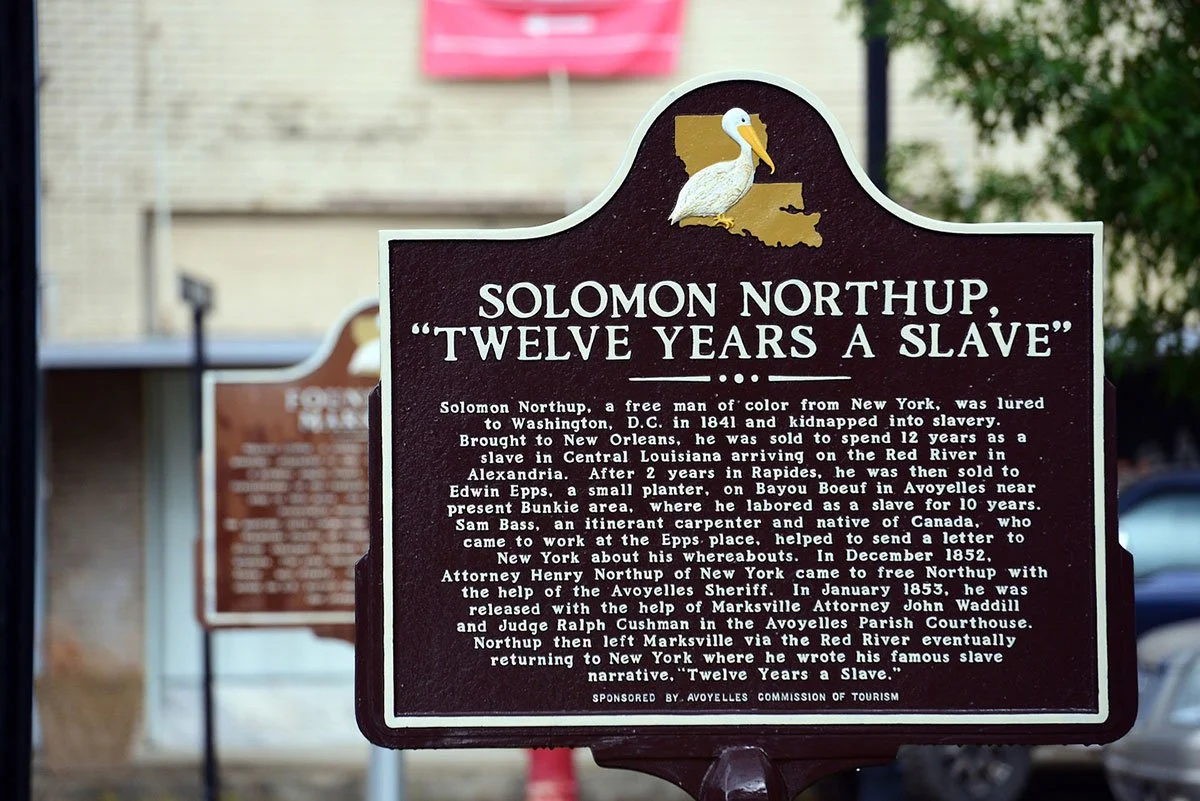
Historical markers at Chartres Street and Esplanade Avenue, photo by Cheryl Gerber
For decades, I walked that ground without knowing.
I never knew the people who were held and sold there.
But the trees did.
Once you know, you see the live oaks differently, not simply as part of the Quarter’s beauty, but as witnesses to a history I had spent years walking past.
And still, life moves beneath them.
The Quarter has made room for poets and musicians, artists and hustlers, tarot card readers, street people, oddballs and saints.
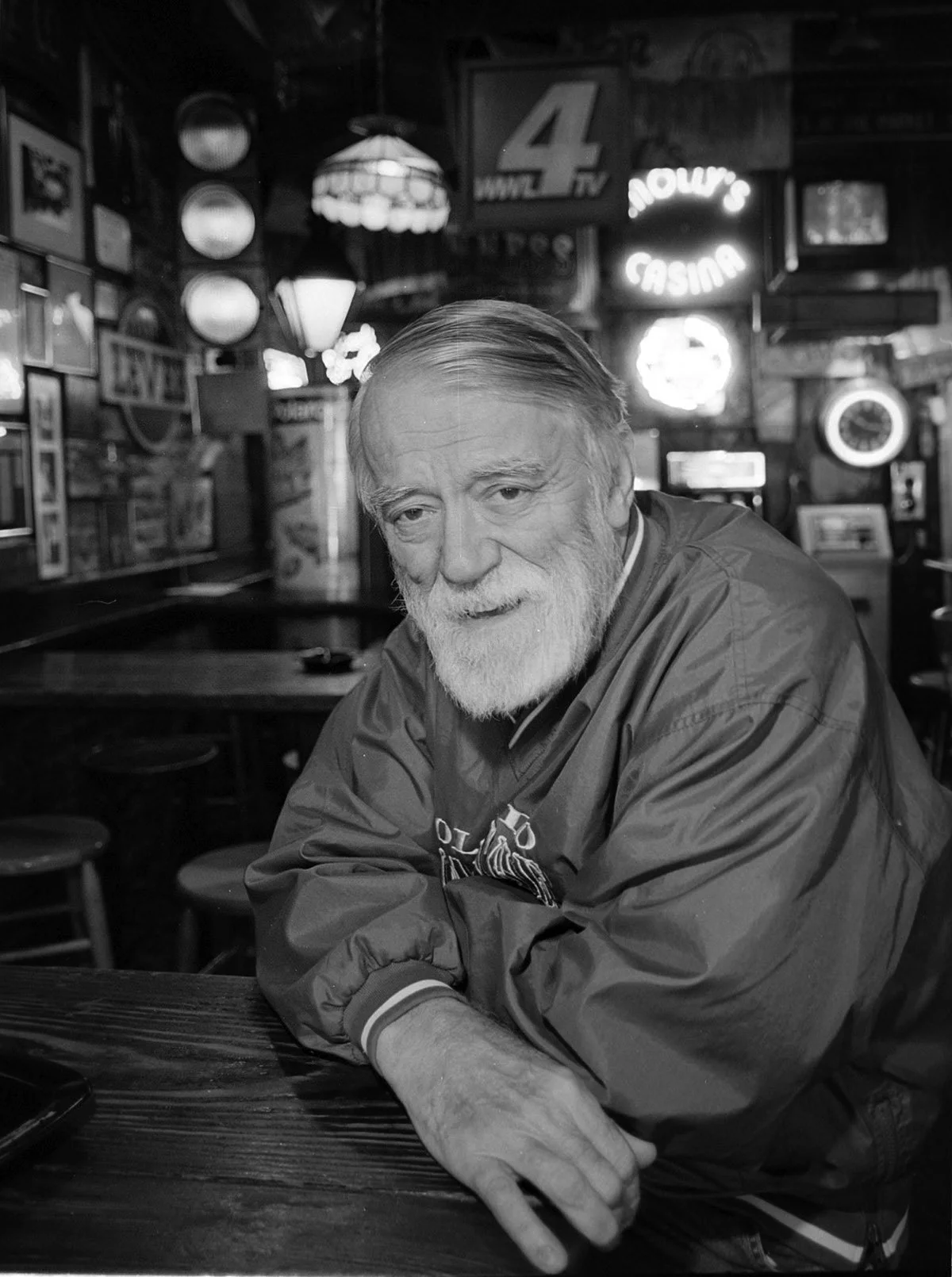
Jim Monaghan at Molly’s, photo by Ellis Anderson
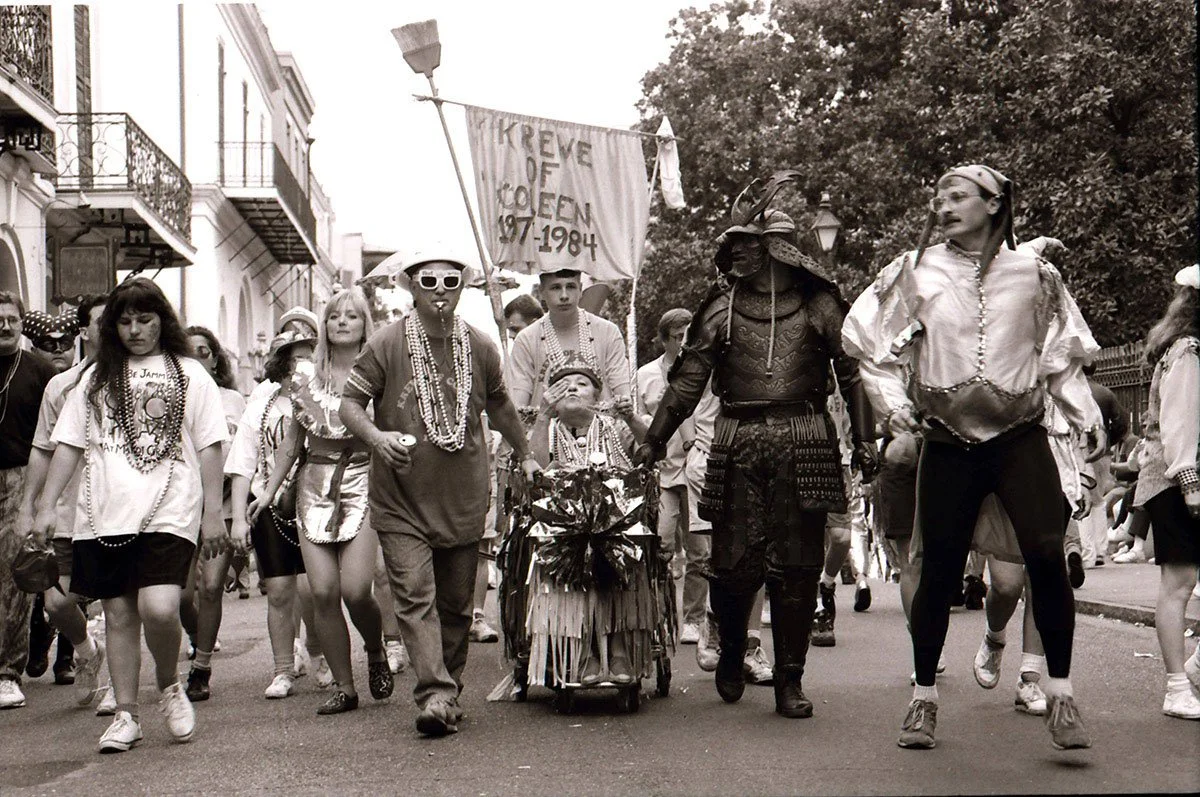
Krewe of Coleen, Mardi Gras 1992, by Cheryl Gerber
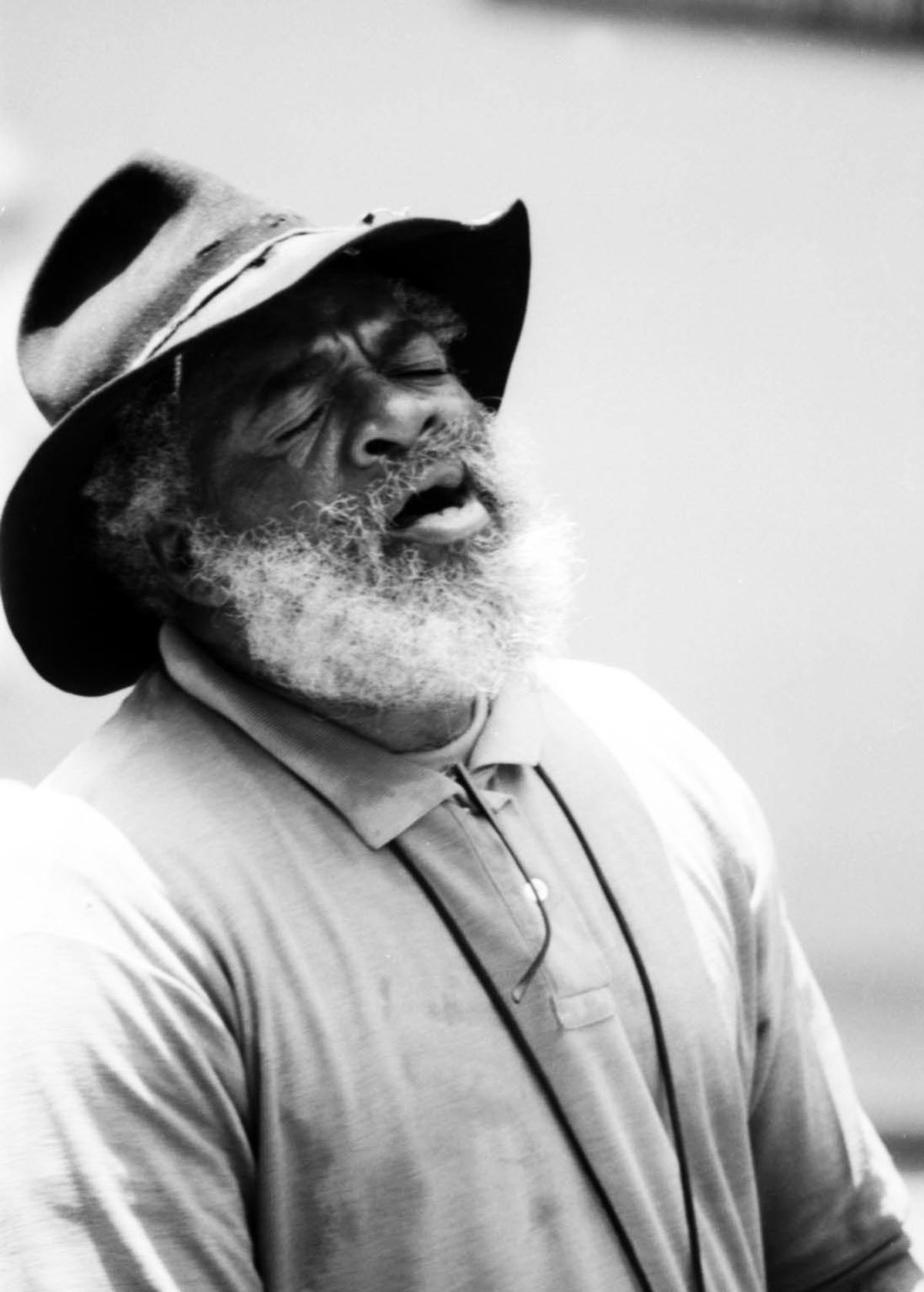
Grandpa Elliott Small, 1996, by Cheryl Gerber
For years, I wanted the French Quarter to stay exactly as I remembered it, which was another way of wanting the people I loved not to leave.
But the souls here are transient. The Vieux Carré holds steady, not because it has escaped loss, but because it has absorbed it. And after more than thirty-five years of walking these streets, so have I.
We can preserve the shutters and balconies, repair the roofs and fight to keep the old houses standing. We cannot keep the people inside them.
For years, I tried to hold on to what I could with a camera.
But photographs cannot answer back, tell another joke, invite you upstairs for a Sazerac, bum a cigarette, ask for spare change, or wave from a balcony.
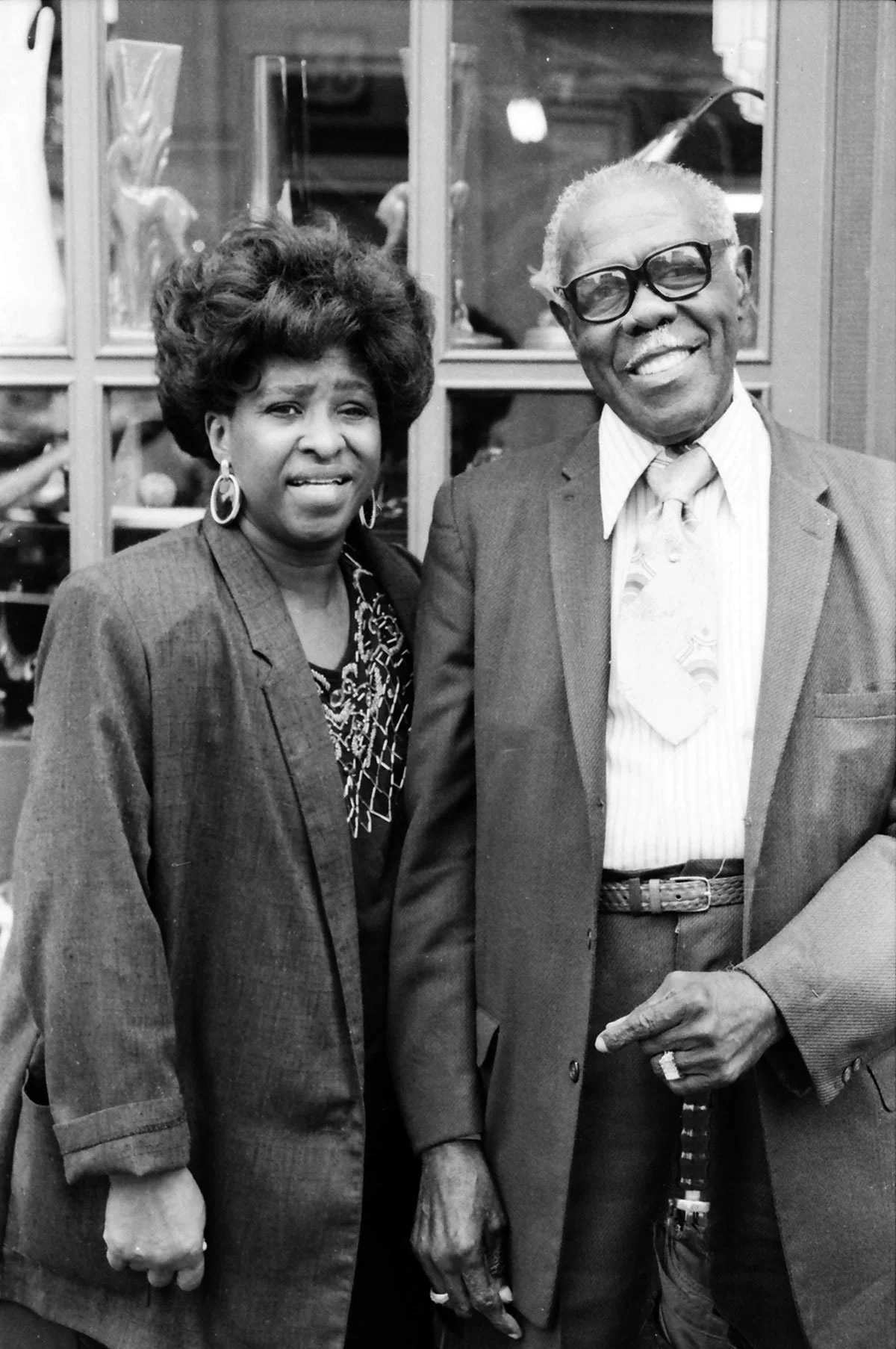
Thais Clark and Loyd Washington, 1997, by Cheryl Gerber
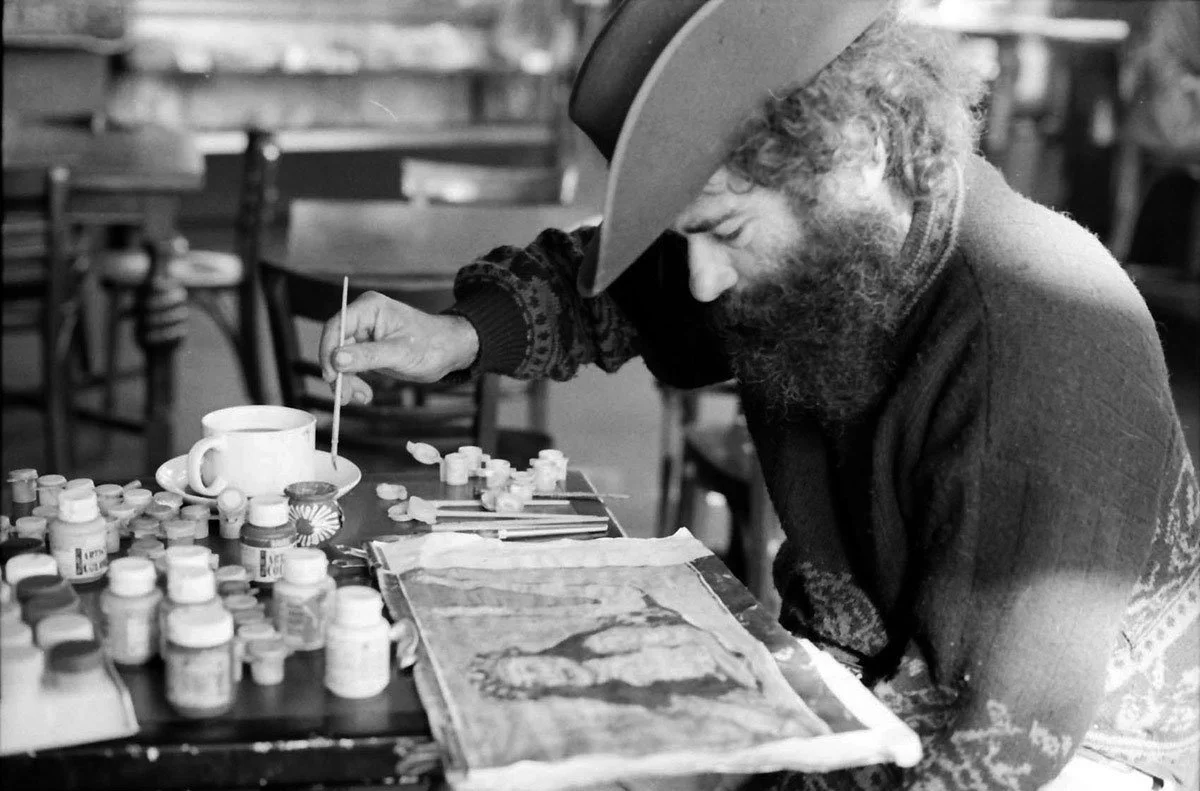
Artist painting at Kaldi’s coffeehouse on Decatur, 1993, by Cheryl Gerber
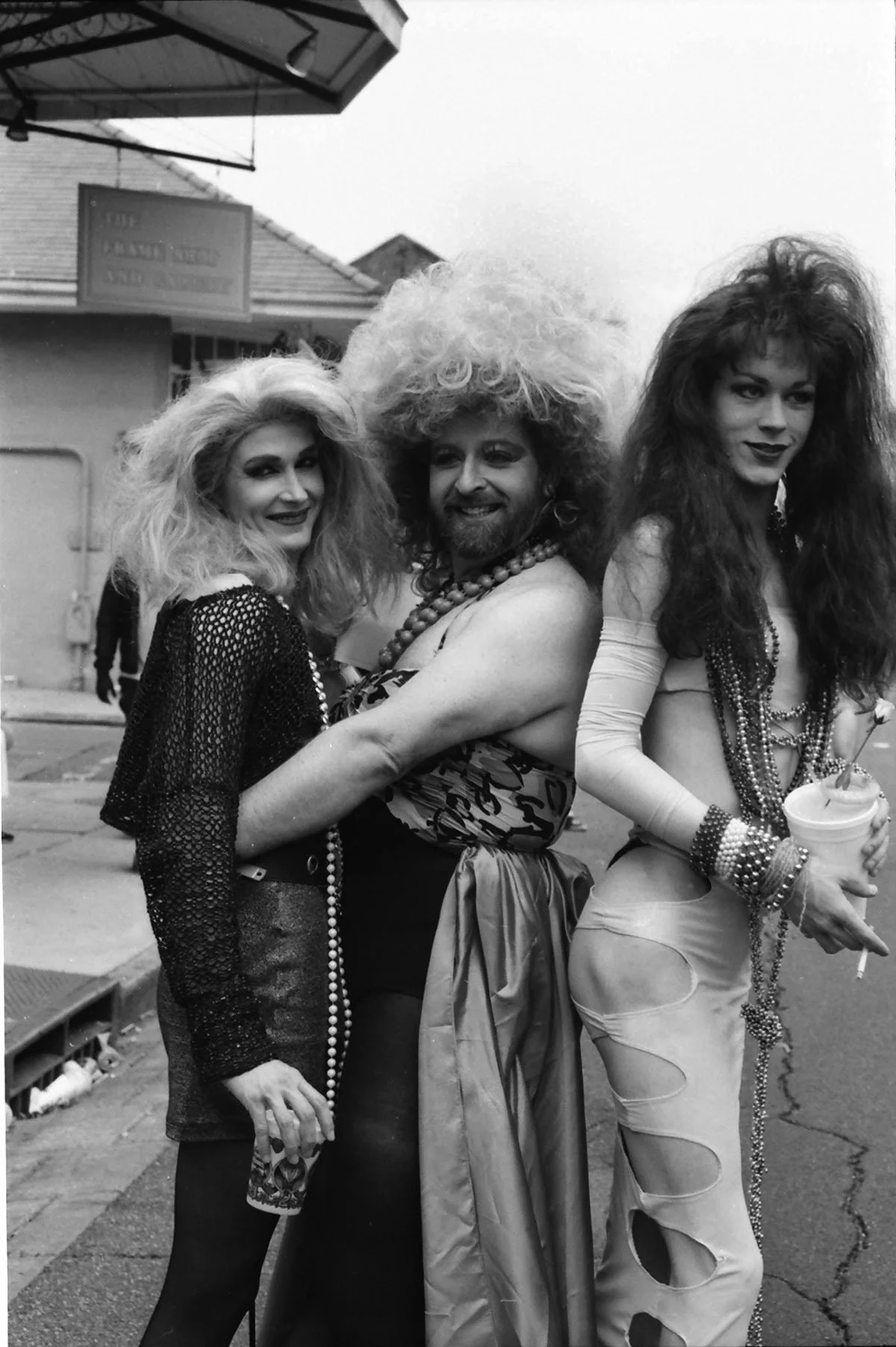
Mardi Gras 1992, by Cheryl Gerber
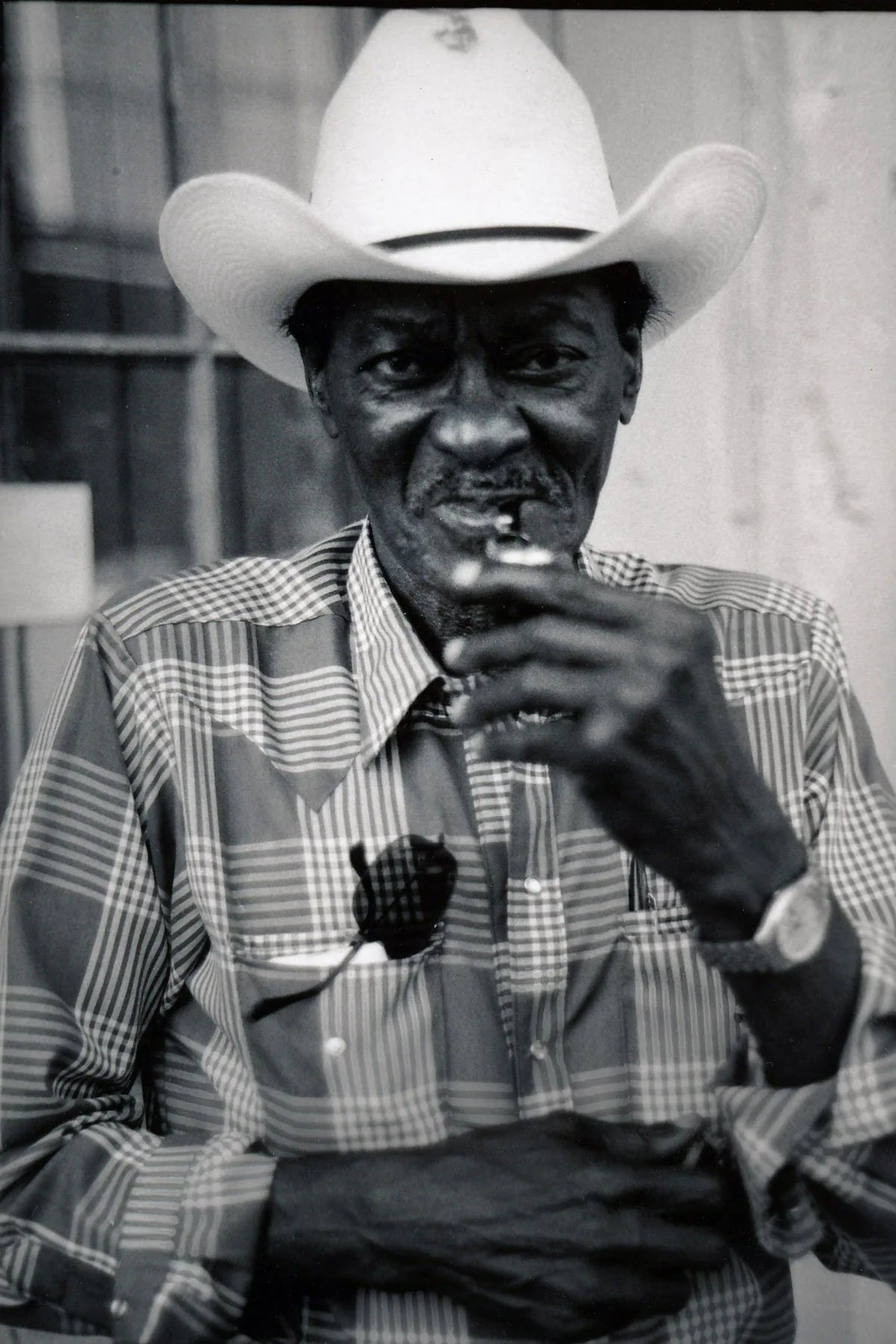
Gatemouth Brown, 1995, photo by Cheryl Gerber
I look at those old snapshots now and understand what David knew before I did. Their worth was never in their technical perfection. The moment would be gone, and I would one day be grateful to have even this much of it left.
On this All Saints Day, I find myself listening for them.
Sometimes the photographs give their voices back to me. I can still hear Ruthie bumming a cigarette “for later,” Jimbo talking to Andrew Jackson, Kevin describing the gas lamps as “lanterns of the stars,” as if the stars themselves had descended into the French Quarter to burn.
There is that old saying: If these streets could talk.
But they do.