
Big Chill in the Quarter: Remembering Poet Kevin Bennett
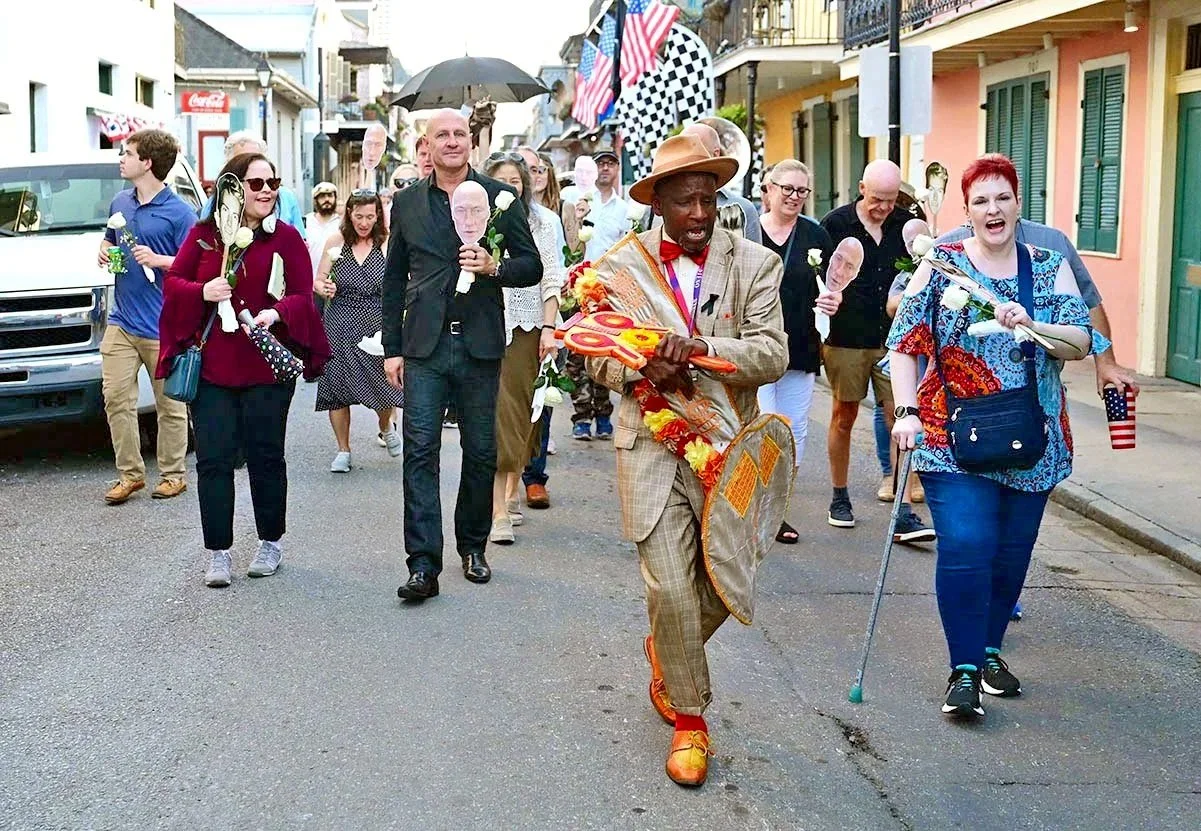
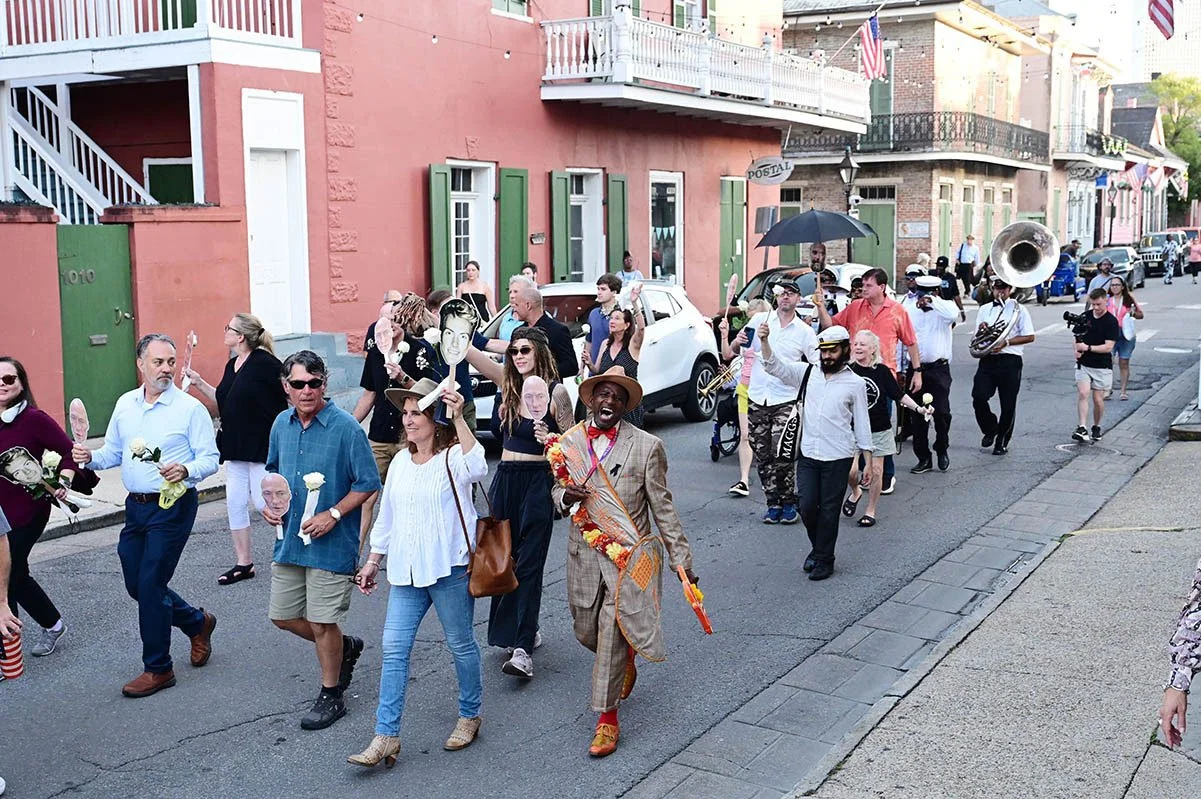
A second line honoring the late poet and French Quarter denizen Kevin Bennett
May 2026Old friends and French Quarter neighbors gathered to celebrate the Stanford-educated poet who lived an unusual life filled with words and wandering.
– by Cheryl Gerber
photographs by Cheryl Gerber and courtesy friends of Kevin Bennett
This column is underwritten in part by Luna Press
After poet Kevin Bennett died suddenly inside his French Quarter apartment last month, his people came.
A coterie of Kevin’s college friends reunited in New Orleans for what former girlfriend Pauline Steinhoffer called “The Big Chill in the Big Easy.” The reunion was shaped by grief, memory and the strange gratitude of being pulled back together by the person they had come to mourn.
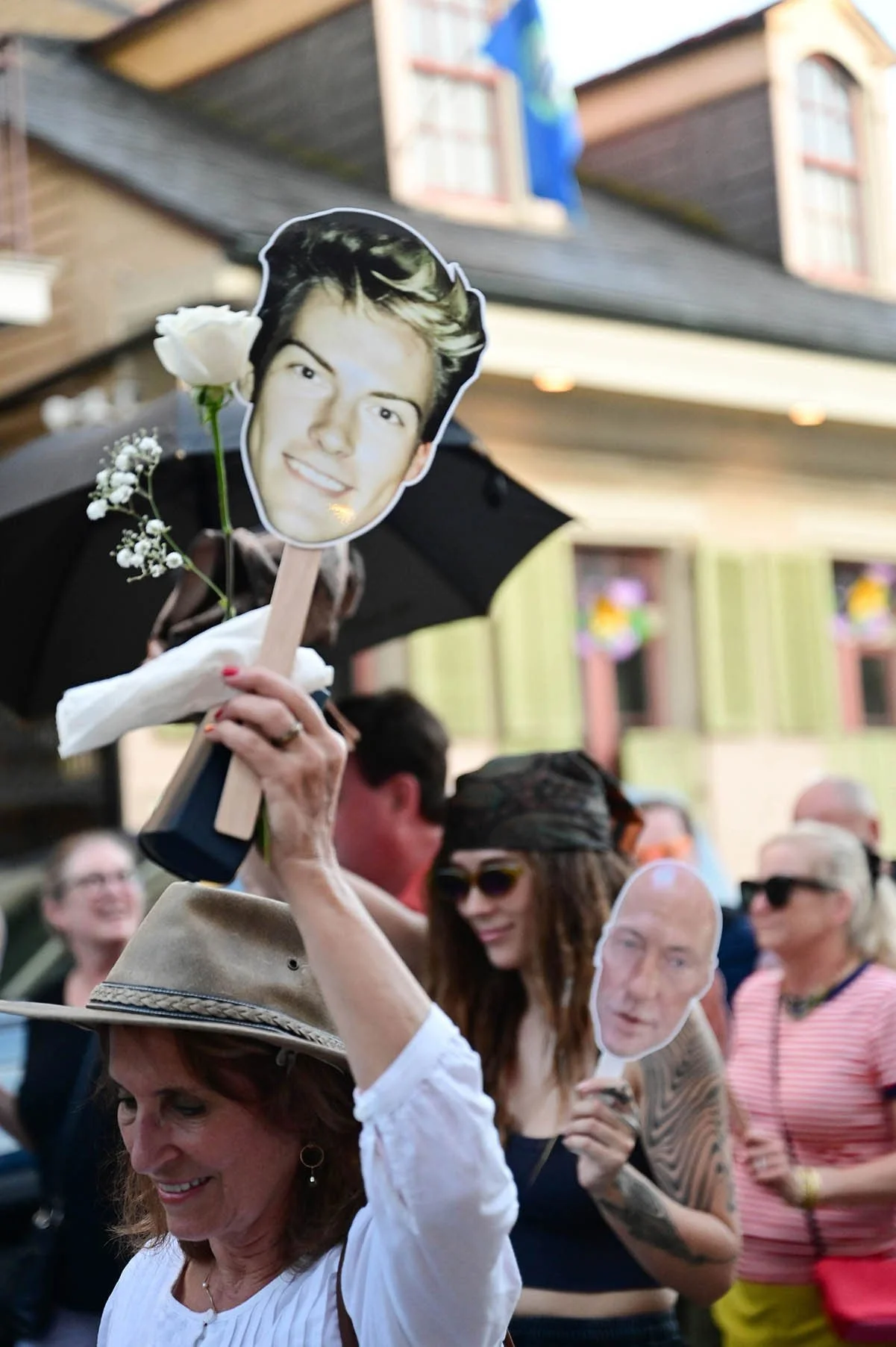
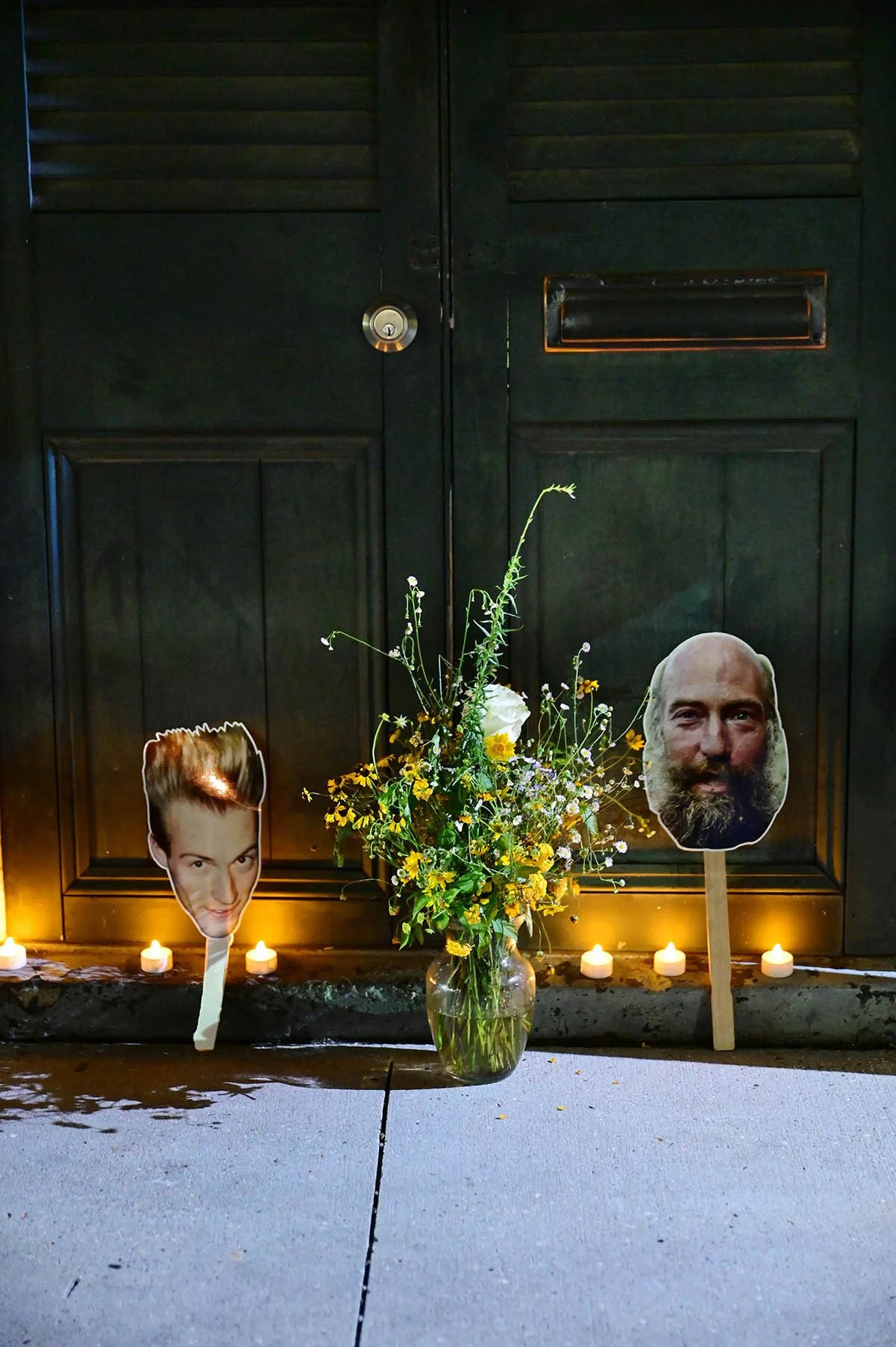
They came from California, Las Vegas, Dallas, Spain, Hawaii and from across New Orleans to send Kevin off the only way this city knows how: with a brass band and a grand marshal, dancing through the French Quarter streets. The fans they carried showed the many faces of Kevin through the years.
Friend John Coyle later called it “a peripatetic parade for the passing of the poet,” a fitting tribute to a friend who loved alliteration.
The second line ended where Kevin’s last chapter had unfolded – outside his Governor Nicholls Street apartment. Against the backdrop of that doorway, with tea lights, flowers, and a slideshow nearby, stood Kevin’s beloved folding chair, where he had sat for hours upon hours.
For the memorial, it was left there for whoever wanted to sit and share. Family, friends and neighbors spoke of Kevin’s extraordinary mind, his appetite for literature, his wild humor and his difficult brilliance.
***
For many years, Kevin was a question moving through the neighborhood — a familiar figure without a known name, a man people noticed, wondered about, and walked past. For years, I was one of them.
I first met Kevin Bennett on April 7, 2019, under the light of a nearly full moon, as he lay stretched out on his side in a sleeping bag on the Esplanade Avenue neutral ground, writing on a yellow legal pad.
By then, I had seen him for years. For more than a decade, Kevin had wandered the streets of the French Quarter and the CBD, and I had noticed him the way photographers notice certain people — from a distance, with curiosity and caution. I had photographed him occasionally and had wondered about him often. He had the air of a ruined Walt Whitman, but he was rarely approachable.
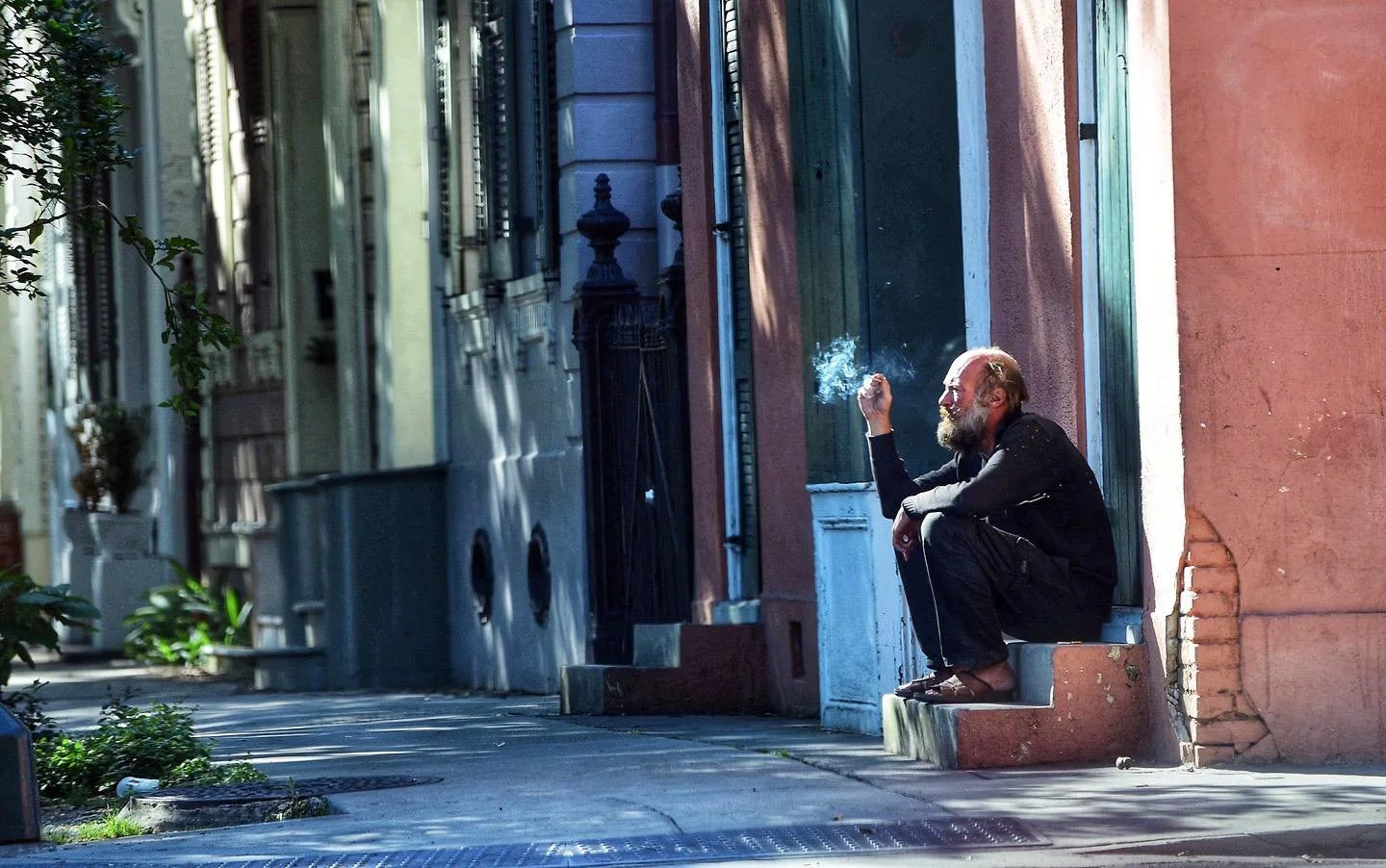
That night was different.
I was walking my black Lab well after midnight when Kevin seemed unusually lucid, so I asked him a simple question.
“Are you a writer?”
He lit up. His piercing blue eyes widened, and he told me yes, he was a poet — a Stanford University poet from the early 1990s.
I did not quite believe him at first. But after nearly an hour of conversation, as he spoke of Tolkien, Kierkegaard, C.S. Lewis and poetry with the fluency of someone who had lived inside books, I knew at least part of what he was telling me had to be true.
When I got home, I started digging. I searched online until I found a few traces of Kevin’s former life, including a man who said he was looking for his long-lost friend, “the poet laureate of Stanford.”
I sent a message before dawn.
John Coyle texted back almost immediately: “Holy shit. We’ve been looking for him for years.”
***
Kevin Bennett had been drawn to New Orleans in 2003, after he quit a high-paying job as a technical writer. He was seeking a place where his mind, his faith and his writing could belong.
He came to live inside the dream he made of the French Quarter. He came for the gas lamps, the river, the cathedral, the theater of the streets. He came for a city where beauty, decay, argument, faith and language gave him a lot to write about.
Then came Hurricane Katrina.
The storm scattered the city he had come to love and further loosened whatever fragile structure still held his life together.
After the storm, Kevin fell on hard times. His mental health deteriorated, and the brilliant Stanford poet who had once written so rapturously about the Quarter slowly became one of its wandering figures — familiar to many, known by few.
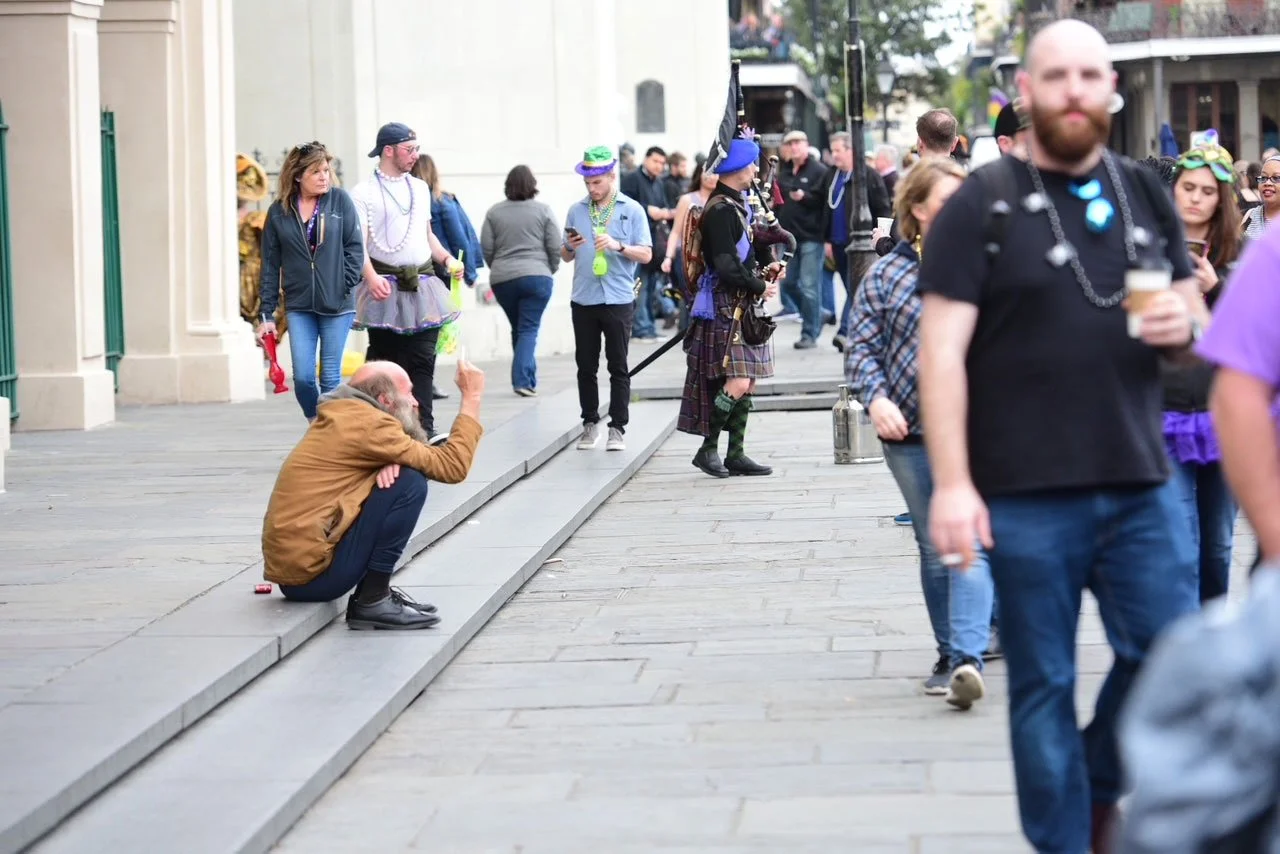
Kevin Bennett in Jackson Square, photo by Cheryl Gerber
Even then, his writing held the city in a kind of sacred light:
“The gas lamps always burn, and their light is to see the French Quarter as it truly is, with France and all. They look like the lanterns of the stars, as if the stars had descended here to burn.”
Kevin was a man of deep faith who loved the Mississippi River and St. Louis Cathedral. In another passage, he wrote:
“The hulls of the ships lift on the river, misted by the sea, and the barges go by with the smoke of stone. The cathedral rises pale and to God.”
***
At the center of Kevin’s world was John Coyle, the man who planned the May 26th second line and memorial and remained what he had been since college days at Stanford – Kevin’s best friend – to the end.
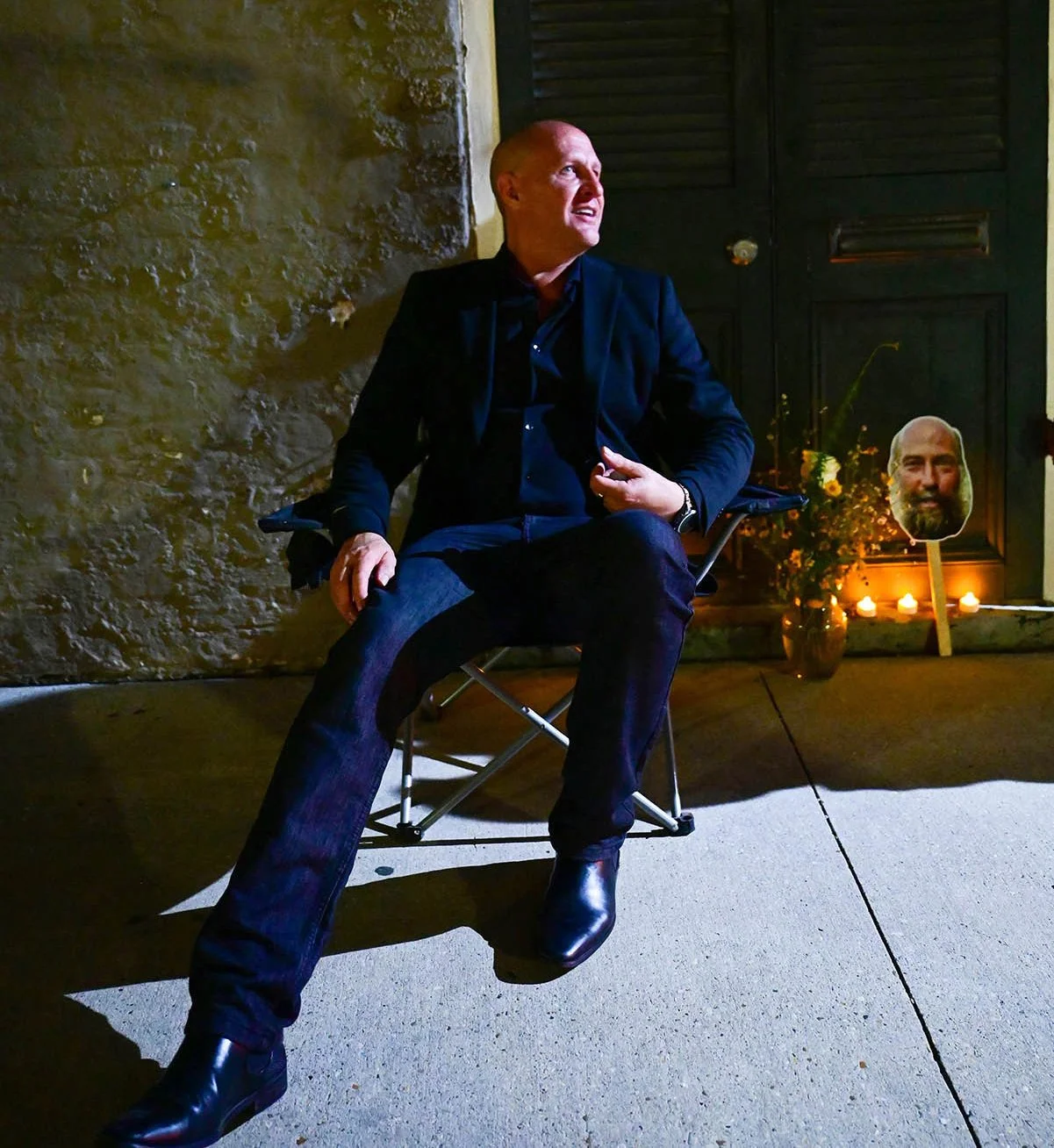
John Coyle at the memorial service for Kevin Bennett
Coyle, a silver-medal-winning Olympic speed skater from the 1994 relay team, flew to New Orleans after my 2019 message that Kevin had been found. He had known Kevin since they were boys in Michigan, where they met through speed skating.
They both went on to Stanford, where they became inseparable — roaming rooftops, outrunning campus police through cornfields, setting off explosions and coordinating fire alarms.
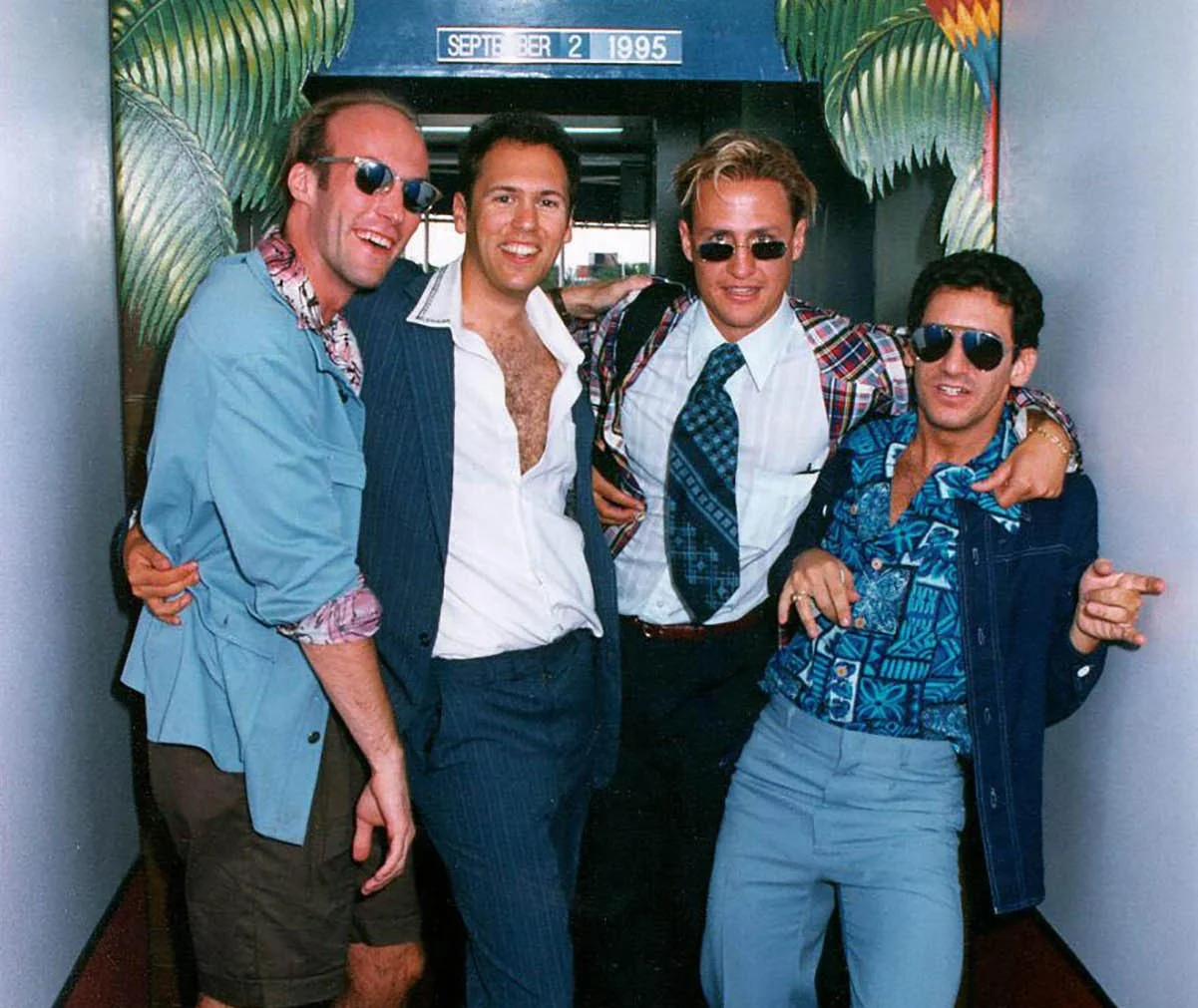
Kevin Bennett, John Wesseling, John Coyle and Perry Friedman on a 1995 reunion cruise
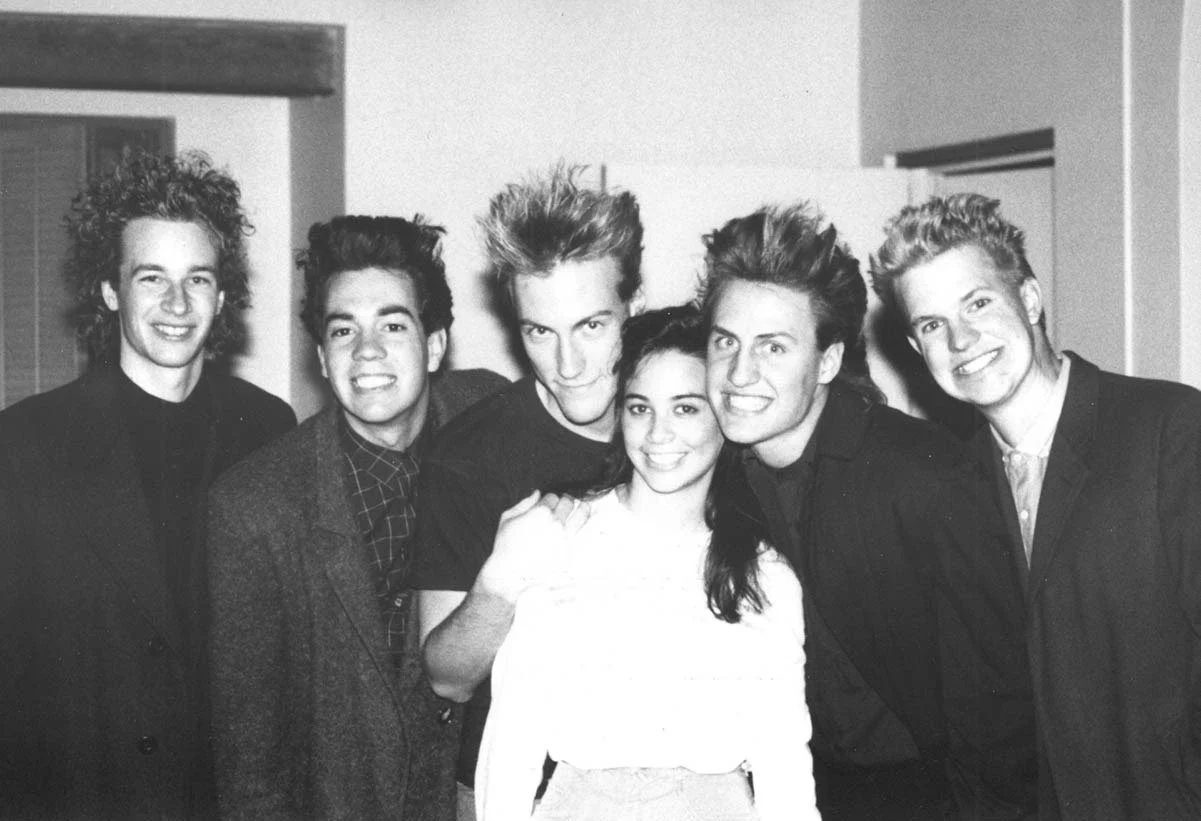
Pauline Steinhoffer with Kevin Bennett (center), John Coyle to her right.
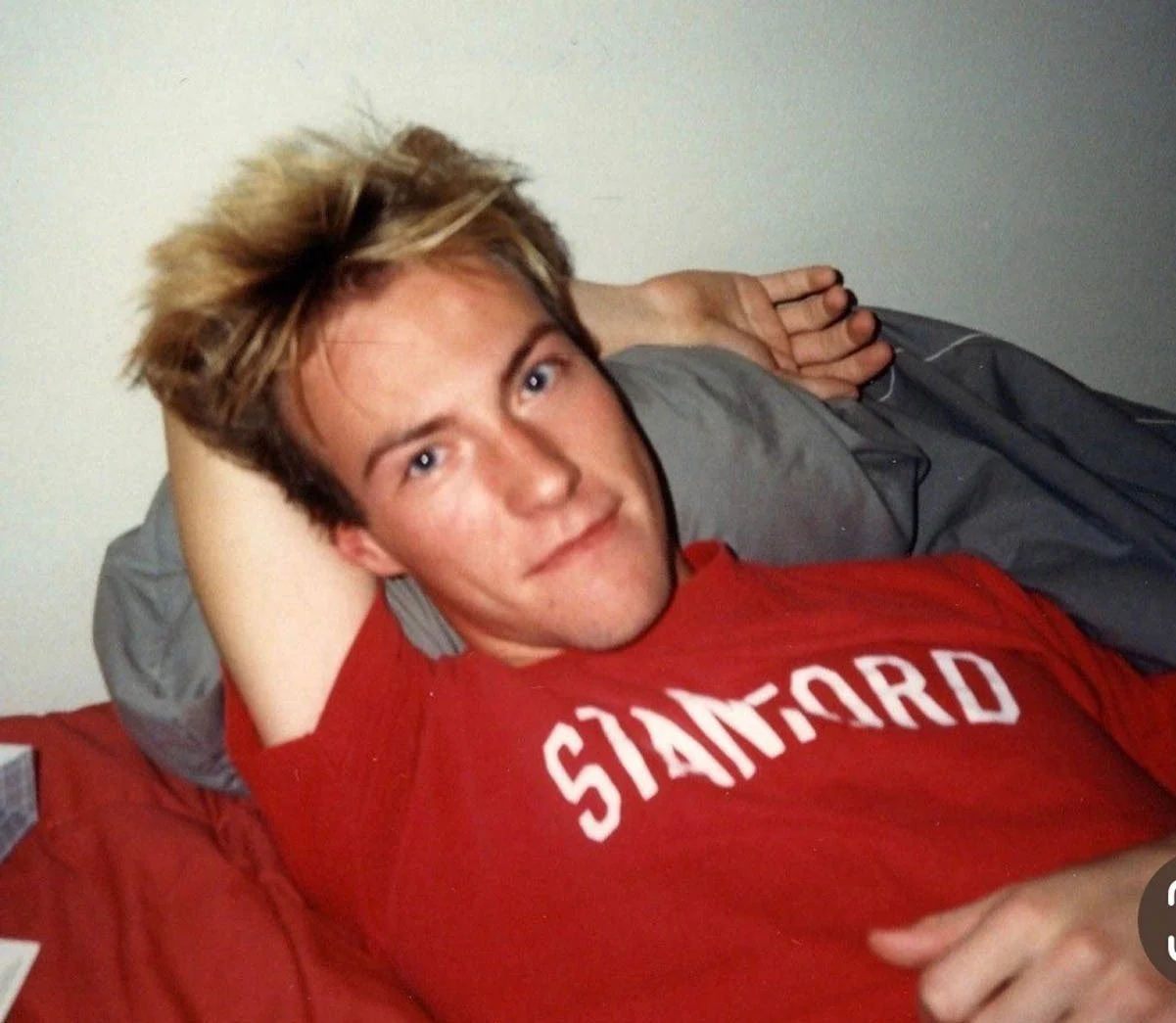
Kevin Bennett at Stanford
Coyle, now an author and keynote speaker known for his work on time, credits Kevin with helping make him a writer.
“[At Stanford] I didn’t get a good grade on my English paper, and I looked down at Kevin’s paper and he had an A++. Who gets an A++?” Coyle recalled.
When he asked Kevin how he had earned such a high mark, Kevin replied that he simply wrote the way he talked.
After my pre-dawn message in 2019, Coyle flew to New Orleans more than once before the two friends finally reunited. There had been a series of near misses and mishaps before they found each other again on the neutral ground, stopping traffic as they ran toward each other.
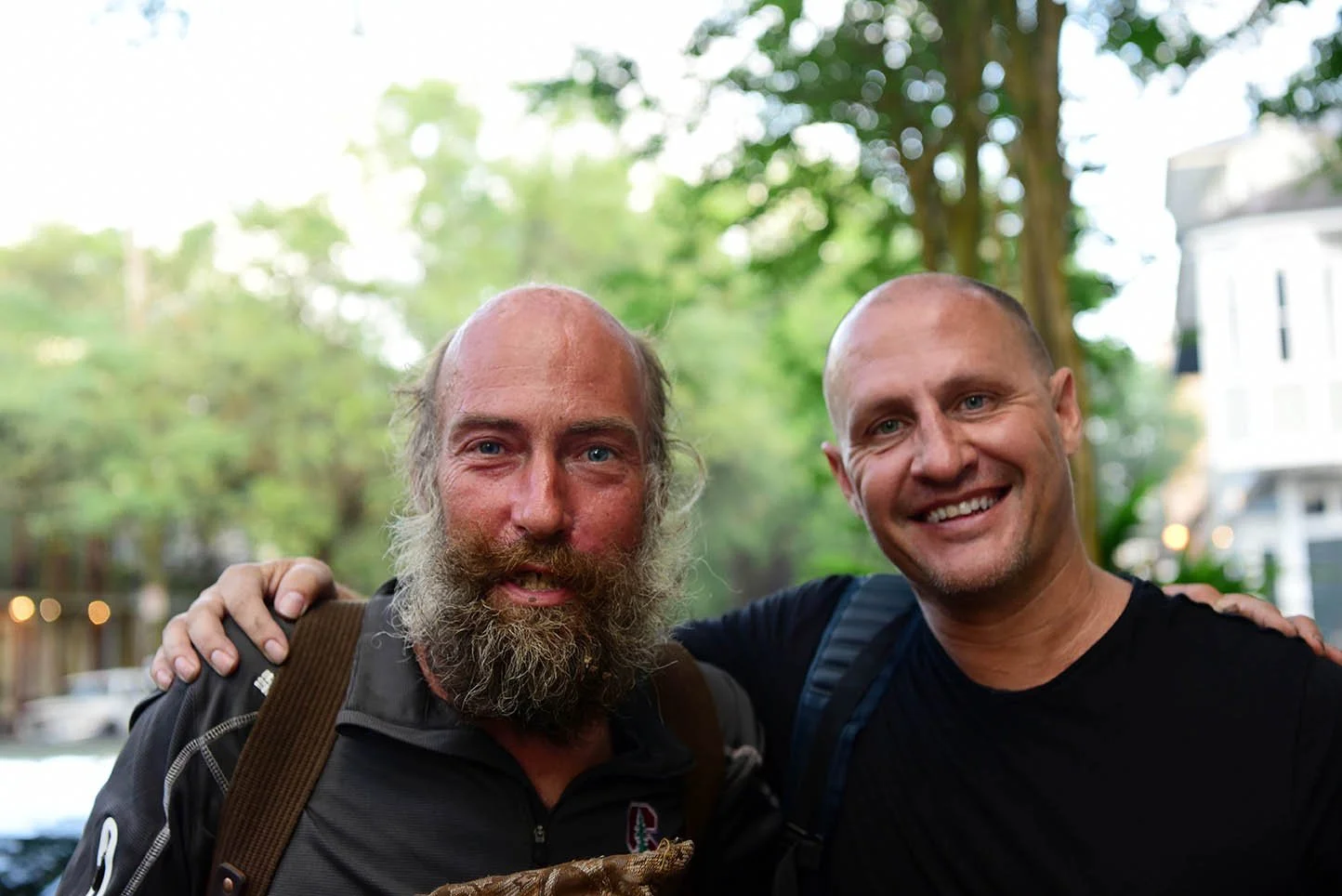
Kevin Bennett and John Coyle in the Quarter
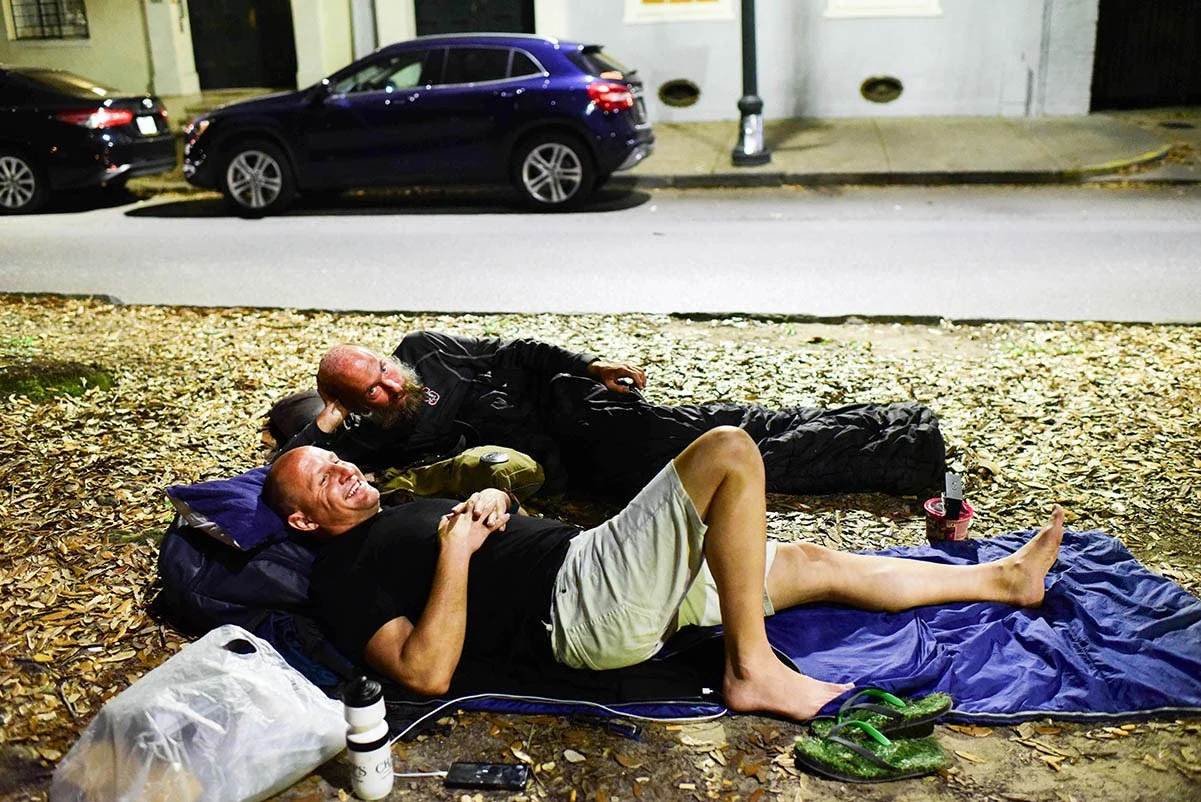
Coyle insisted on getting Kevin a hotel room that night, but Kevin refused. The weather was beautiful, he said, and he wanted to sleep outside one more night. So they did. Coyle had come prepared. I came across them spending the night under the stars in the very spot where Kevin was found, sharing cigars and listening to Def Leppard on a Bluetooth speaker.
After Kevin was settled into an apartment provided by his friends – fully furnished and stocked with a new laptop, phone and clothes, Coyle kept coming back. Over the next seven years, he returned to New Orleans again and again to take Kevin to Galatoire’s, get haircuts and shaves, drink coffee at CC’s and eat burgers at Port of Call.
Just a couple of months before Kevin’s death, the two friends sat together again in New Orleans. Kevin and I joined Coyle at the Ritz-Carlton, where he gave a keynote talk about how time is not linear — how certain moments stretch and slow, the way childhood summers seem endless in memory.
Kevin had given many people that kind of memory and time.
***
At the memorial, Pauline Steinhoffer spoke of how Kevin had connected her to nearly everyone she now holds dear, including the man she later married.
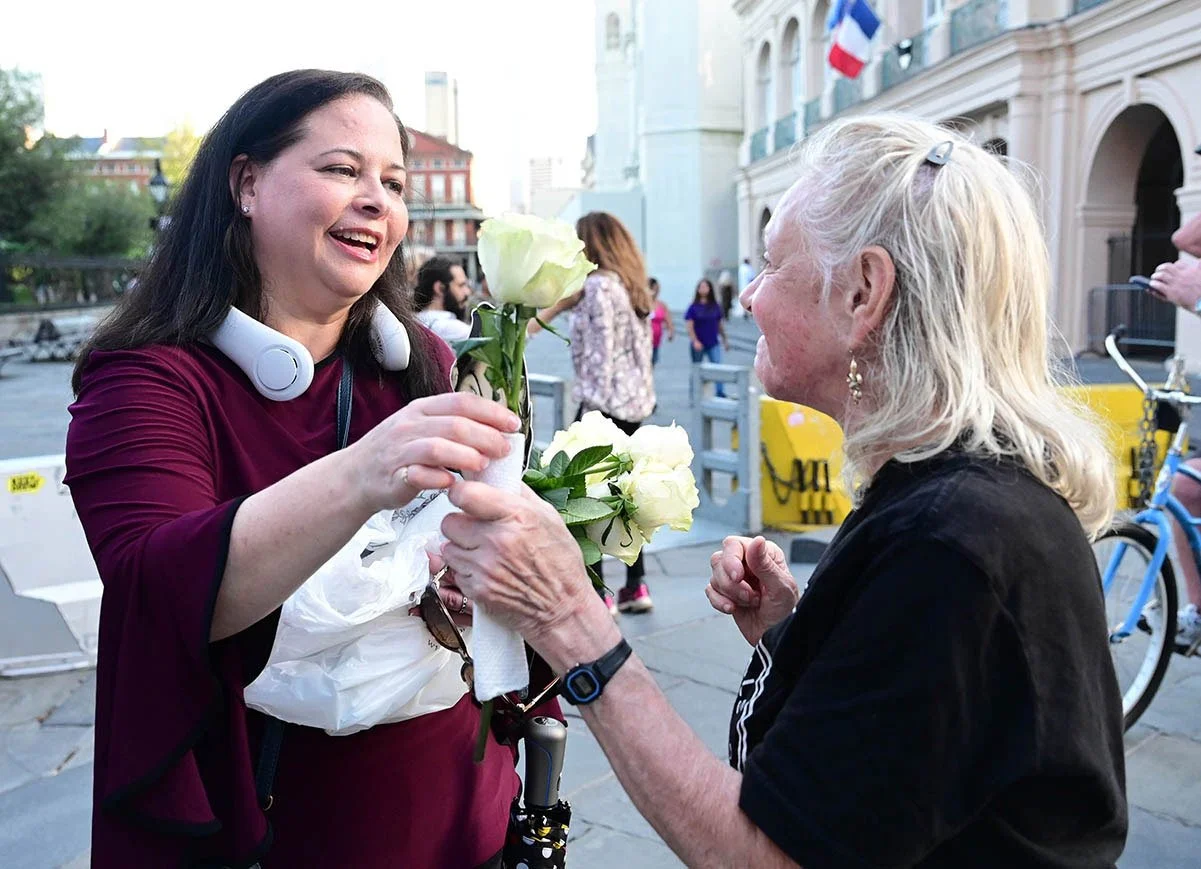
Pauline Steinhoffer at Jackson Square before the second line honoring Kevin Bennett
Shawn Blosser, who traveled from Hawaii, remembered Kevin as the kind of college friend who could turn ordinary days into stories people were still telling decades later. The lesson Kevin left him was simple: never judge a book by its cover.
John Wesseling, a neuroscientist who lives in Spain, spoke of the charge Kevin carried.
“Interacting with him, breathing the same air, was like free-flowing electricity,” Wesseling said. “In philosophy, at least, he took open-minded to a new level.”
Wesseling acknowledged that much of Kevin’s brilliance had later been obscured by mental illness beyond his control.
“But I continue to see the world through your eyes every single day,” he said. “Your spirit lives on through me. And who I am made my daughter the way she is, and it goes on like that.”
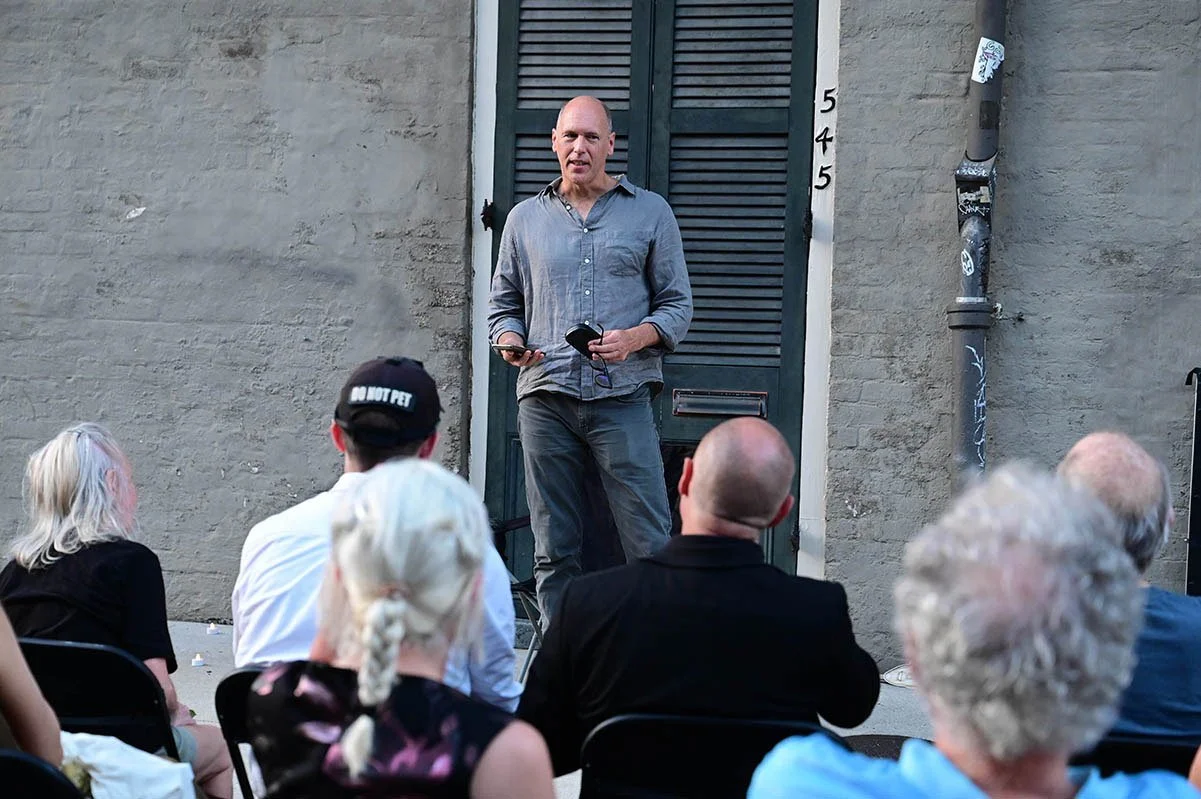
John Wesseling speaks at Kevin Bennett’s memorial service.
Kevin’s only sibling, Ruthanne, and her husband, Adam Green, drove in from Dallas, unsure what to expect — or what to wear to a second line. She shared childhood memories of growing up with a genius brother on a gorgeous lake in Michigan, where they ice-skated.
Ruthanne also remembered Kevin’s first response to her arrival: He was not pleased to have a baby sister and wanted to send her back. It was the kind of story only a sister could tell — funny, tender, and ordinary enough to bring Kevin back down to earth.
One friend, Robyn Friedman, even attended by livestream after a health emergency forced her to cancel at the last minute.
“I want the neighbors to know that he had people,” said Friedman, who had flown in from Las Vegas seven years ago to furnish Kevin Bennett’s new French Quarter apartment his friends had rented for him
Friedman was not a relative. She was the wife of Perry Friedman, one of Kevin’s closest friends from Stanford University and part of the circle that had been searching for him for 13 years.
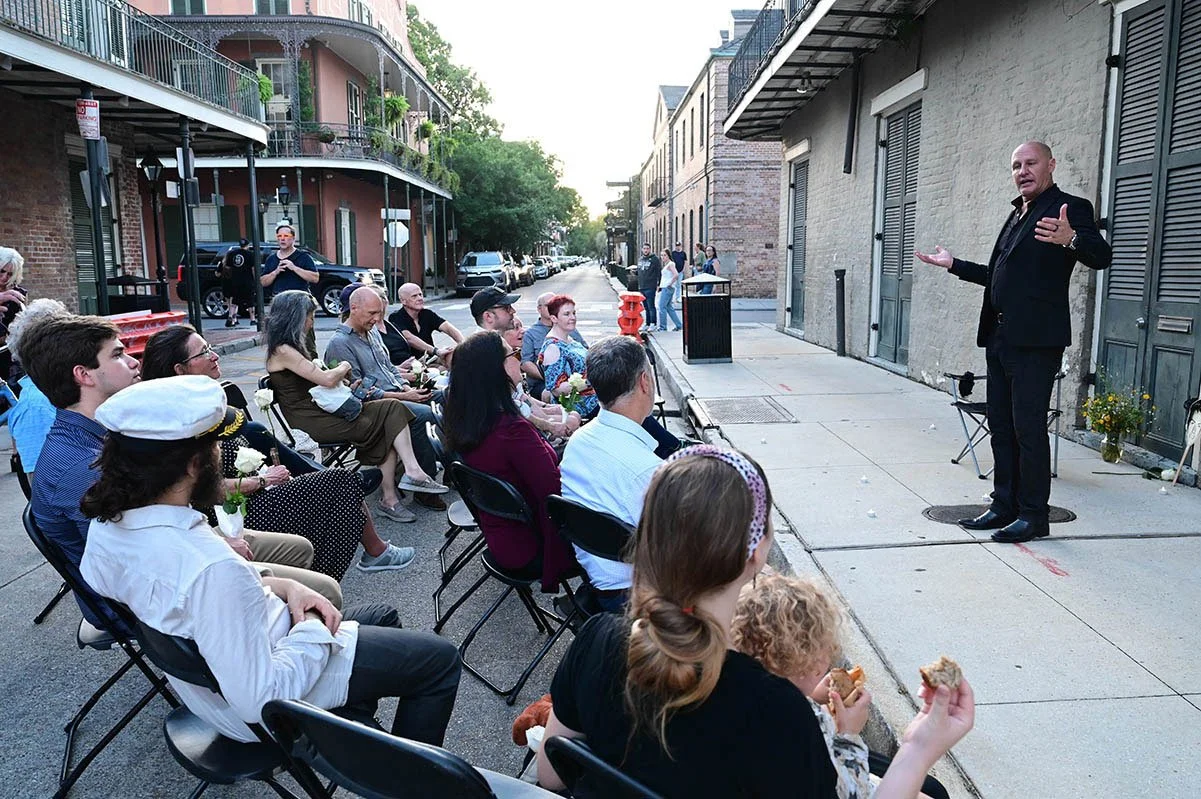
John Coyle speaks at Kevin Bennett’s memorial service
But Kevin’s effect was not limited to the friends who had known him at Stanford or in Michigan. One surprise speaker was Michael Scioli, who met Kevin in New Orleans more than a decade ago and described him as a mentor.
The two had shared long conversations about philosophy, psychology, and the life of the mind. Scioli seemed, in some ways, like a younger echo of Kevin — another searching intellect drawn into his orbit.
Like Kevin, Michael said, he was a wanderer. He credited Kevin with helping him find not only his passion for theology, but the stable life he holds dear today as a husband and father.
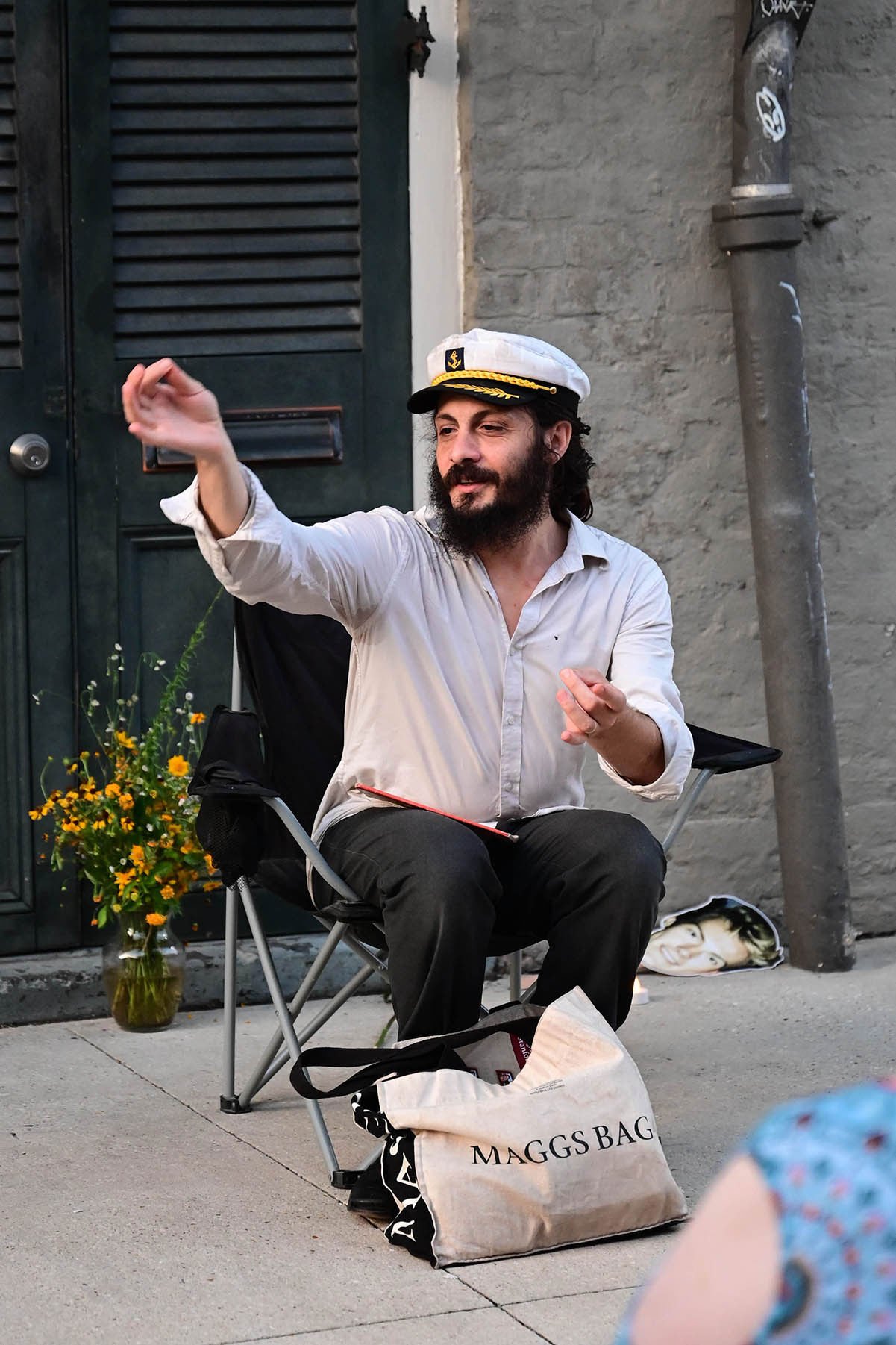
Michael Scioli speaks at Kevin Bennett’s memorial service.
Another unexpected guest, Jim Mokhiber, who teaches cultural history at UNO, came after hearing about the memorial on social media. He had known Kevin in their Stanford dorm days and wanted to honor him.
Neighbors spoke of daily exchanges with Kevin over cigarettes and passing weather. And as the memorial moved into the night, my husband, Mark McGrain, lifted his trombone and played a moving rendition of his composition “The Mist” toward another bright moon.
By the end, we all seemed to understand that each of us had known a different version of the same man: Kevin the poet. Kevin the philosopher. Kevin, the friend and prankster.
Kevin, the student whose Stanford admissions essay, submitted two weeks late, was later read to freshmen as a lesson in writing. Kevin, the man who loved Taco Tuesday, vampires and dragons, cigarettes and argument, beauty and God, the flickering gas lamps and street theater of the French Quarter.
Kevin, the man who could be impossible to reach and impossible to forget.
***
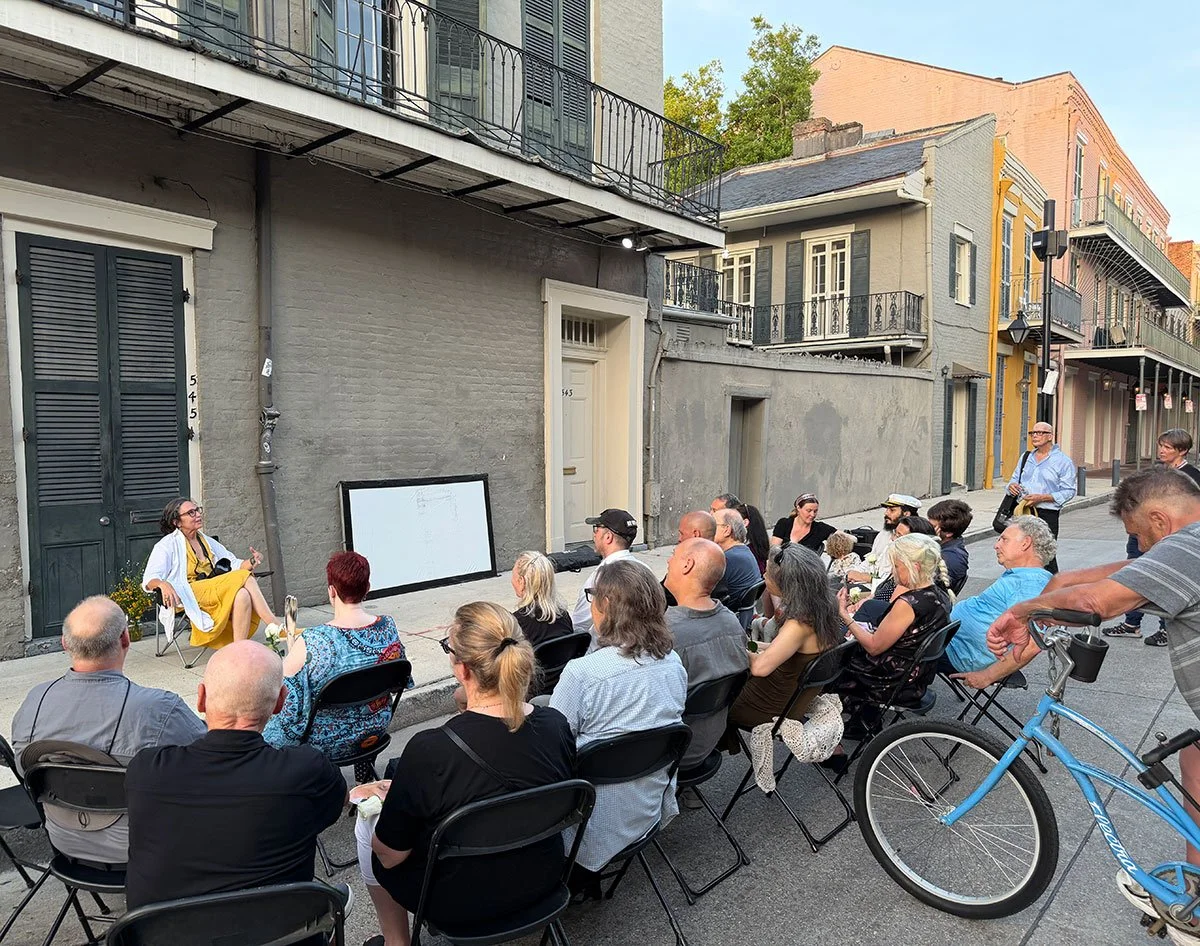
Cheryl Gerber at Kevin Bennett’s memorial service on Governor Nicholls Street, photo by Ellis Anderson
At the memorial, I was introduced as the person who found him. That is how people often tell it, and I understand why. But the truth has always felt more complicated.
Kevin was in my path that night. But I was in his, too.
As a photographer, I have spent my life learning how to see people — not just as subjects, but as lives unfolding inside a frame. It was Kevin, the poet, who reminded me what it means to truly look. With just a few words, he helped me cut through my own grief over my mother, who had been a poet too, though one the world never came to know.
That was one of Kevin’s gifts: He changed the way people saw, even when his own life resisted being clearly seen.

My dear friend Darlene Wolnik, a longtime Quarterite, captured the gathering outside Kevin’s apartment.
“His people got up to tell their own Kevin stories, all the while competing with ghost tour guides who shouted their pay-for-play scriptures a few feet from this quiet gathering,’’ she posted. “Tears, laughter, affirmations, and memory were spilled here tonight, anointing another space in our old, magical city.
“I’ll never pass that corner without seeing that hunched-over, chain-smoking wraith waiting for whatever the world would bring him, pleased to see that he was being tended to by a whole community honored to offer comfort to a poet.”
His old friends had wanted the neighbors to know Kevin had people.
By the end of the night, no one walking past that corner of the Quarter could have doubted it.
A More Humble Mythology
Say the soul is just a small straying wind,
Dreamless and without pity,
Before the body catches it
With the blue net of nerves
And teaches it to love this slow
And always unfaithful flesh.
Read more of Kevin Bennett’s poetry in the Stanford publication Mantis.