Frank Perez: Part of the Quarter’s Continuum
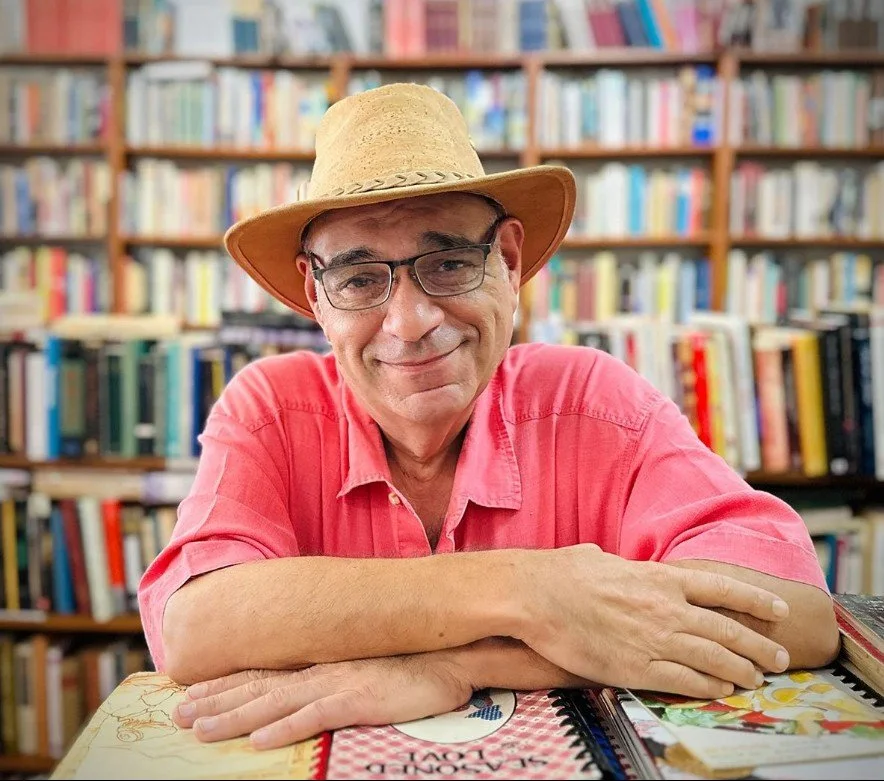
Frank Perez in the Dauphine Street Bookstore, June 2025, photo by Ellis Anderson
August 2026Frank Perez: 1968 - 2026
Frank’s stories were always a heavy pour – his writing could quickly intoxicate listeners and readers, bringing on a kind of double vision where suddenly, the past existed alongside the present.
– by Ellis Anderson
Frank Perez told me he hated having his photo taken because he didn't feel individually important. He did understand that he was part of a long continuum of people who passionately loved the French Quarter and his LGBTQ community and fought for them, but group photos were more his style. He wasn't a stand-alone player.
I twisted his arm last year because he had a new book coming out and needed some PR shots. So he grudgingly allowed me to find the right light and surroundings that reflected his personality and tell him where to stand and try to not roll his eyes when I was shooting.
We talked a lot that afternoon, and somehow drifted into a conversation about the possibility of an afterlife (having no idea he was in the last year of his own). Frank had once been a minister, but he eschewed the idea of heaven and hell.

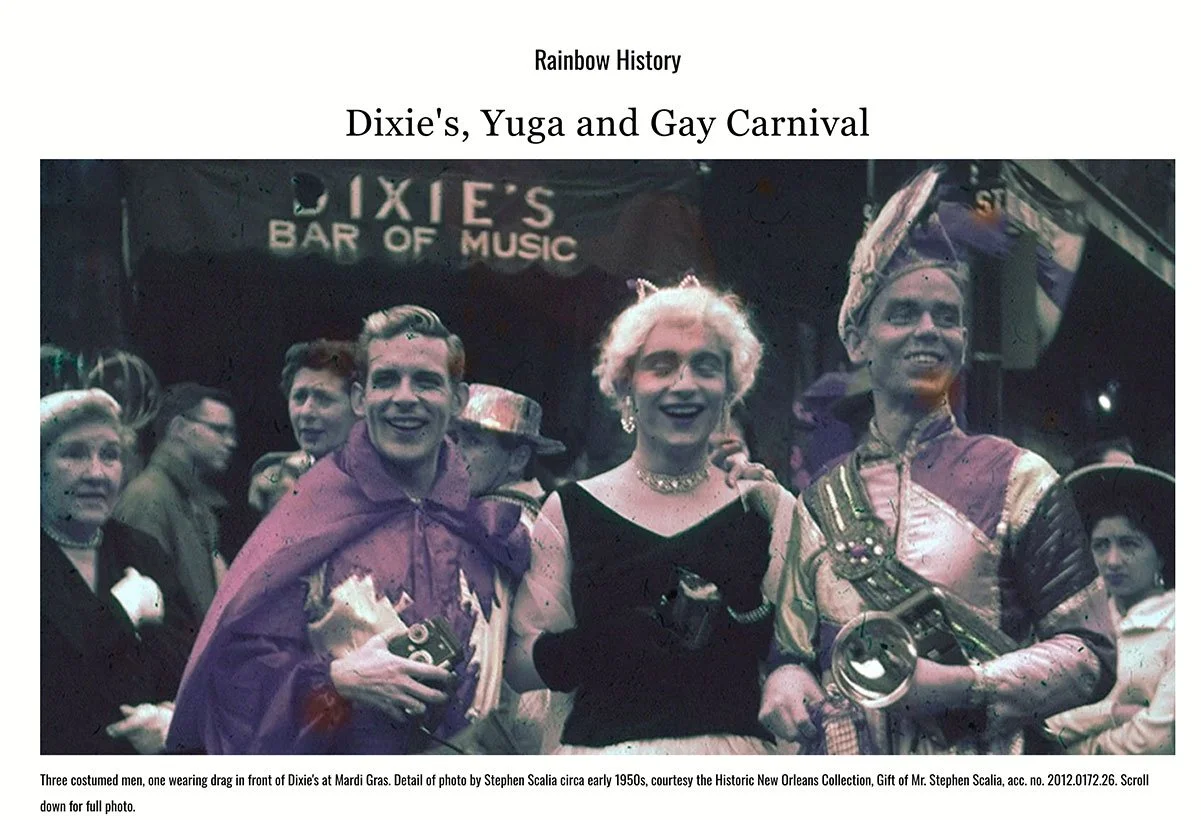
He joked (or did he?) that the Quarter has different dimensions and for those who loved it, they just slipped from one to another at death. He reckoned he'd join the spirits of Pops Whitesell and Frances Benjamin Johnson and William Irby and Tennessee Williams and Clay Shaw at Dixie's every evening, knocking back proper stiff drinks instead of fluffy cocktails. Together, they'd debate, laugh, argue and quote classic literature until Miss Dixie forced them out the door to toddle home.
***
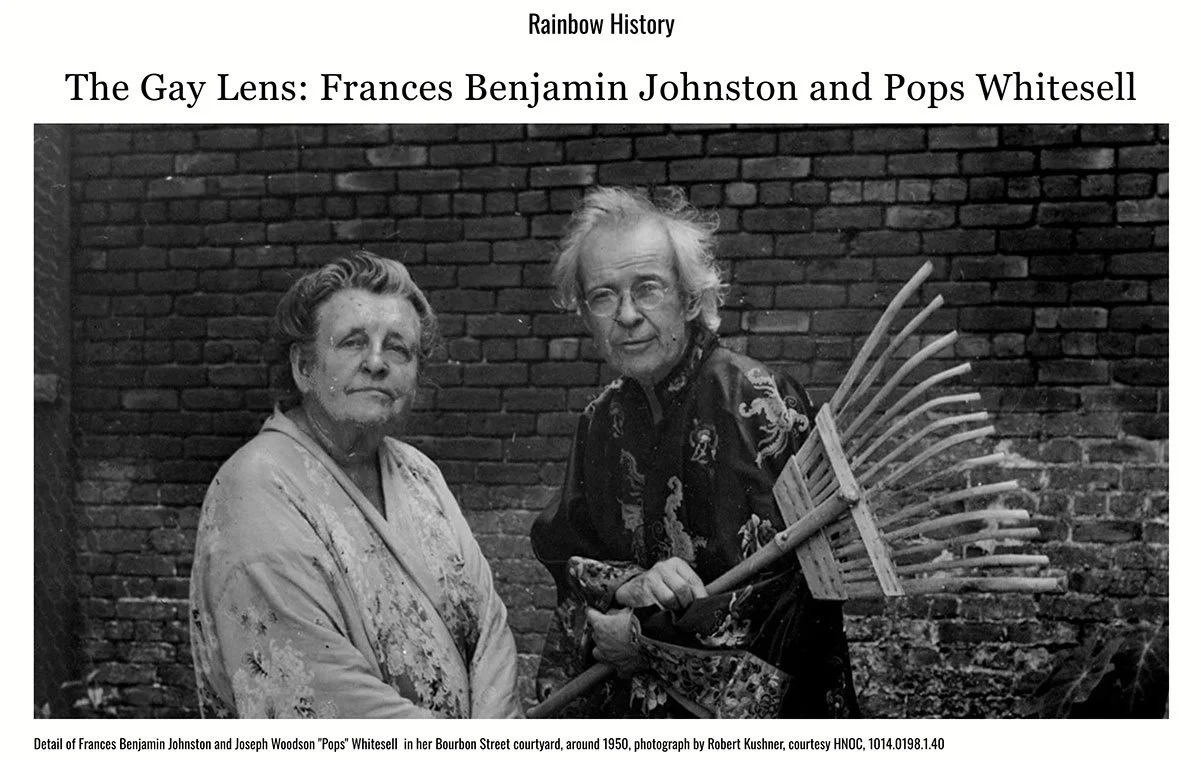
Read this story by Frank Perez here.
Frank’s leadership and activism are woven tightly into the fabric of several New Orleans organizations. He wrote six books, including one of his last, Rainbow Fleur de Lis. It’s a collection of New Orleans queer history essays – five of which were first published in French Quarter Journal. And for nearly two decades, he wrote queer history columns for Ambush Magazine.
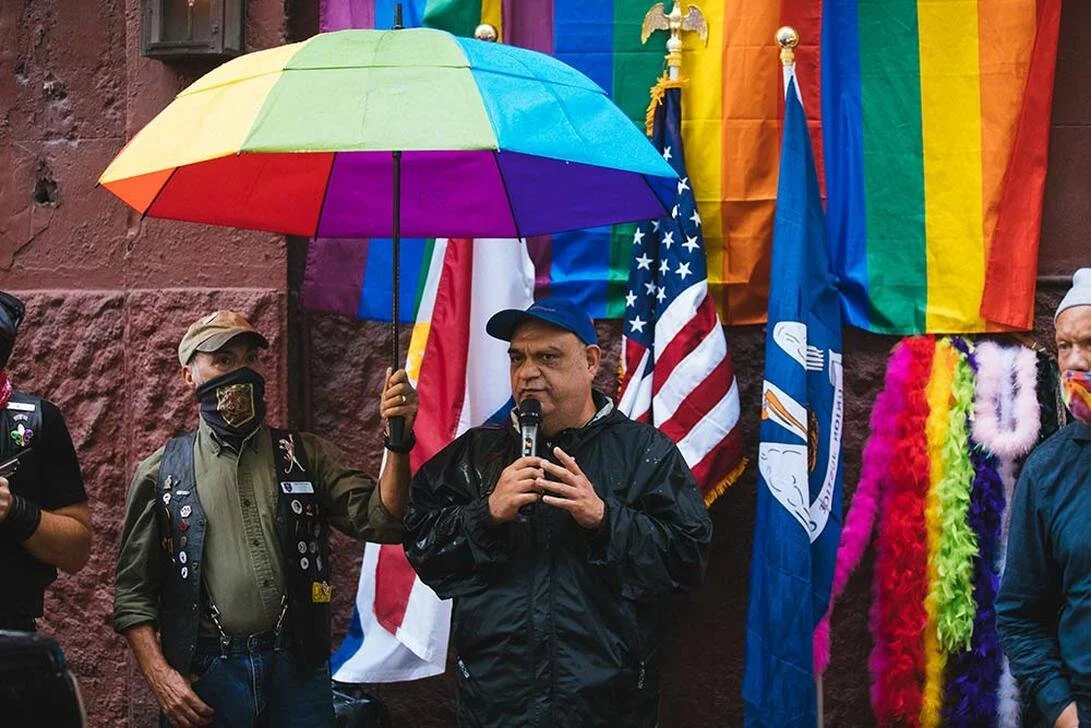
At the 2020 UpStairs Lounge Fire memorial service, photo by Andrew Simoneaux for FQJ. Click to see the album.

2024: LGBT+ Archives of Louisiana executive director Frank Perez, Stonewall National Museum, Archives and Library executive director Robert Kesten and Guy LaMothe, LGBT+ Archives of Louisiana board president, photo by Ellis Anderson. Click to see the story.
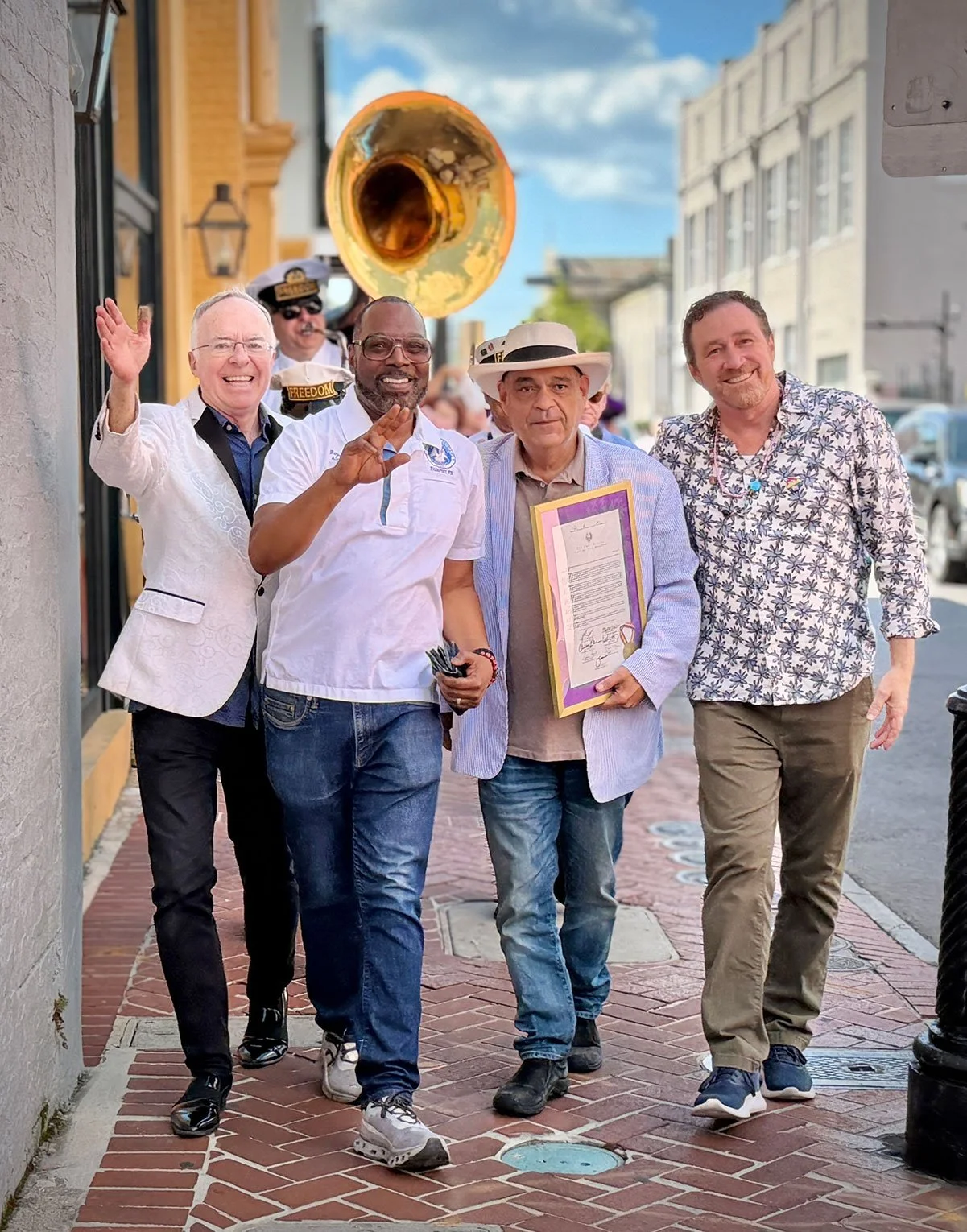
So when I first conceived of French Quarter Journal back in 2018 and began to assemble a team of writers and photographers, a friend referred me to Frank. We met and talked about the project. He was enthusiastic and agreed to write a regular LGBTQ column for it. He decided on the name, Rainbow History.
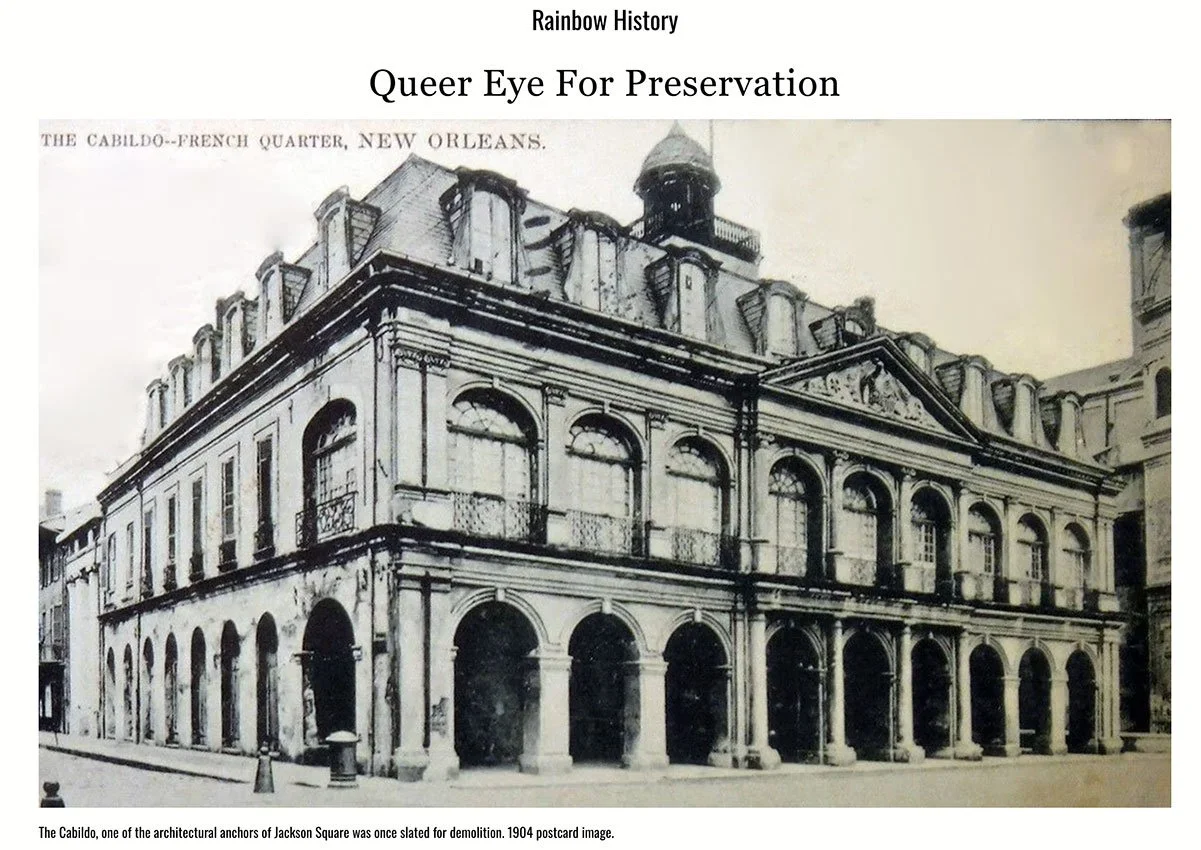
The very first article he wrote for French Quarter Journal taught me so much. I felt I had a good handle on French Quarter history, but I discovered several things in this story: In the early 1900s, there was actually a movement to demolish the entire Quarter – including key historic buildings like the Cabildo. Whole blocks had been razed.
I also learned that several gay men, like Allison Own and William Irby, were pivotal in turning back the tide of destruction.
Frank titled the article “Queer Eye for Preservation.”
Read this story by Frank Perez here.
Unfortunately, French Quarter Journal launched just a few months before the pandemic. The few sponsors we had recruited up to that point dropped off, leaving us without the resources to continue.
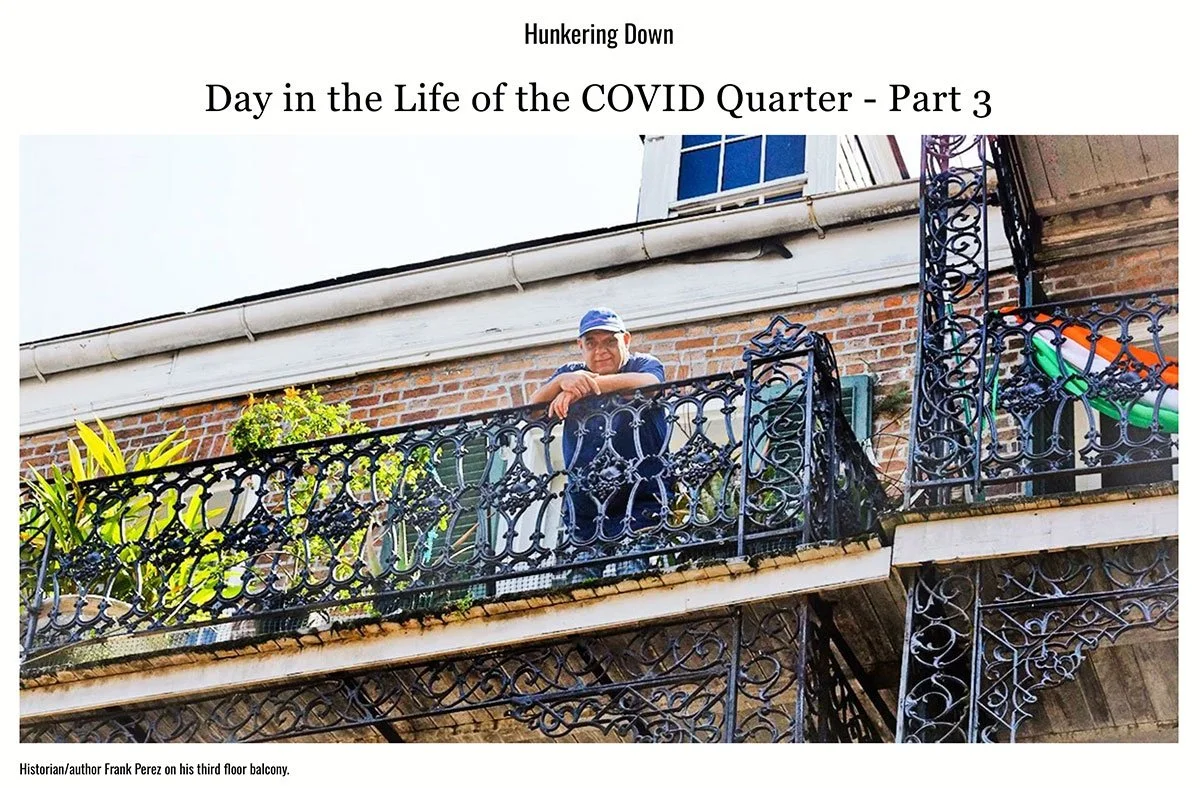
But Frank suggested a pivot: to write a personal diary of what life was like in the Quarter during the shutdown. We scraped together enough to offer him a small honorarium, but he certainly wasn’t doing it for that pittance. He wrote because he knew it would be important in the future, and he wanted to help save FQJ.
Largely because of Frank’s support, we were able to hang on through the shutdowns and do some important documentation in a special section called Hunkering Down. It included nine diary entries by Frank. These are especially precious because, while he wrote thousands of pages about New Orleans and LGBTQ+ history, these columns were personal, recounting everyday events and insightful ruminations.
Find Frank’s COVID Quarter diary entries here.
As things slowly returned to normal, we retooled the FQJ website and relaunched in May 2023, happily featuring regular installments of Rainbow History.
During the darkest times, I would sometimes get tired and discouraged and talk to Frank, wondering if French Quarter Journal should continue to struggle for survival. After all, it had just started, and few would notice if it vanished.
He would tell me to toughen up and that FQJ was needed — that the last Quarter-centric community publication, the Vieux Carre Courier, had folded for lack of funding in 1978.
Then he would end with these words that always steamrolled my doubts:
“If I was researching the Quarter 100 years from now, French Quarter Journal would be my favorite resource.”
I took his advice and stopped doubting. Documenting this extraordinary community for the Franks of the future became FQJ’s unspoken mantra.
But one of the most important concepts Frank helped me truly grasp was that our lives are part of a grand continuum – that we’re all threads in an unfathomable design.
It’s especially easy to sense that in New Orleans and the French Quarter, where the past is inextricably woven through our daily lives. Frank recognized that mysterious energy and talked about it on occasion. He also wrote about it in his COVID diary series:
To be in the French Quarter is to step outside of time and enter a world of dreams and letters, a world perfumed by jasmine and oleander – with the faintest hint of mud wafting in from the Mississippi – a world where people move slowly, with catlike grace and elegance.
Here, myth and reality meld to form a dreamy realm where imagination reigns supreme and care is wholly abandoned.
The Quarter itself is a poem. The souls are old here and each has a story to sigh into any willing ear.
Sitting on the balcony with Rupee on my lap, I watch the sun slowly sink beneath the rooftops of Armstrong Park. So many rooftops. I imagine the multitudes of lives lived under those rooftops through the centuries. To be just one of those lives, to be just one flash of color in the kaleidoscope that is the Quarter lends perspective, which in turn yields gratitude.
For that is what we are – footnotes in the tout ensemble.
***
It was a scorcher that June day when Frank and I were trudging around the Quarter for his photo shoot. He was bored and a little annoyed and the drink in his go-cup had run dry when we popped into Dauphine Street Books (which is, in typical French Quarter fashion, located on Chartres Street).
I’ve tried to remember how I teased him, what I said to make his incandescent warmth surface for the best photo of the day. I probably joked about getting another drink or five. Maybe I promised Frank we could head over to Dixie’s as soon as he stopped scowling.
Of course, Dixie’s was long gone and the only reason I even knew about it was because Frank documented it so faithfully. His histories were no teetotalling strings of facts strung together – they were always a heavy pour. His writing could quickly intoxicate a reader, bringing on a kind of double vision where suddenly, the past existed alongside the present.
Read this story by Frank Perez here.
Since that afternoon, I have come to believe that Frank’s version of the French Quarter continuum is true. And that on some dimension, Dixie’s still exists. I imagine, on the day of his passing last week, the regulars all stood and applauded his arrival.
Hey, Frank! It's about time! Whatcha having tonight? On the house!
Back here in this dimension of the Quarter, Frank has left a lot of people shedding tears and enormous shoes to be filled. Thankfully, he also left behind an enormous body of written work to inspire us all and fuel the fire in emerging activists and advocates.
So keep listening for Frank. Read his work to educate yourself. Find meaningful work. Join an organization. Donate to causes like his beloved LGBT+ Archives Project of Louisiana.
And when you're strolling through the Quarter one quiet night, stop a bit and try to connect with that other dimension Frank talked about. If you listen very carefully, you might just hear the uproarious laughter from Dixie's.
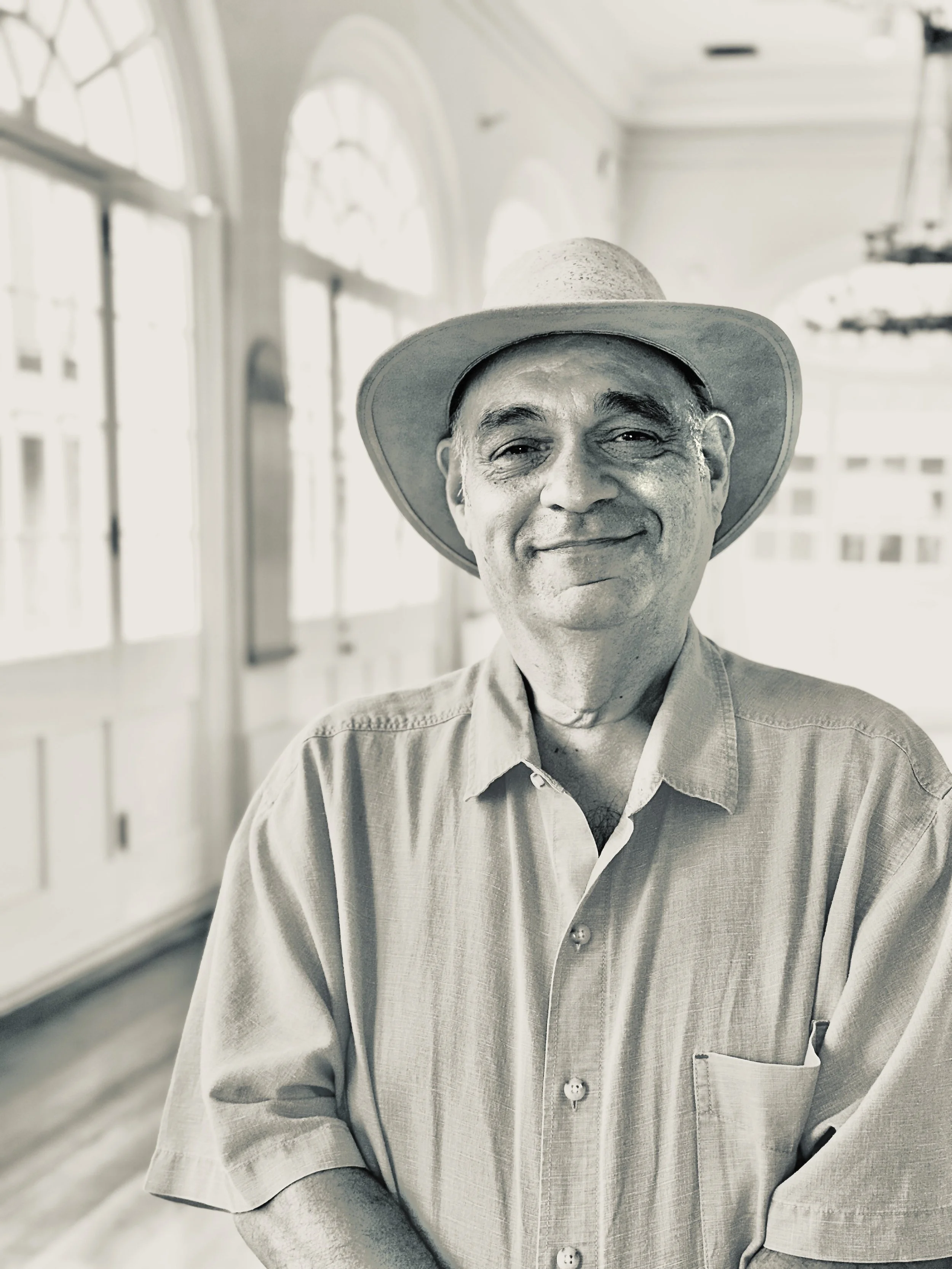
Another photo of Frank taken that afternoon in June 2025, in the Cabildo, by Ellis Anderson
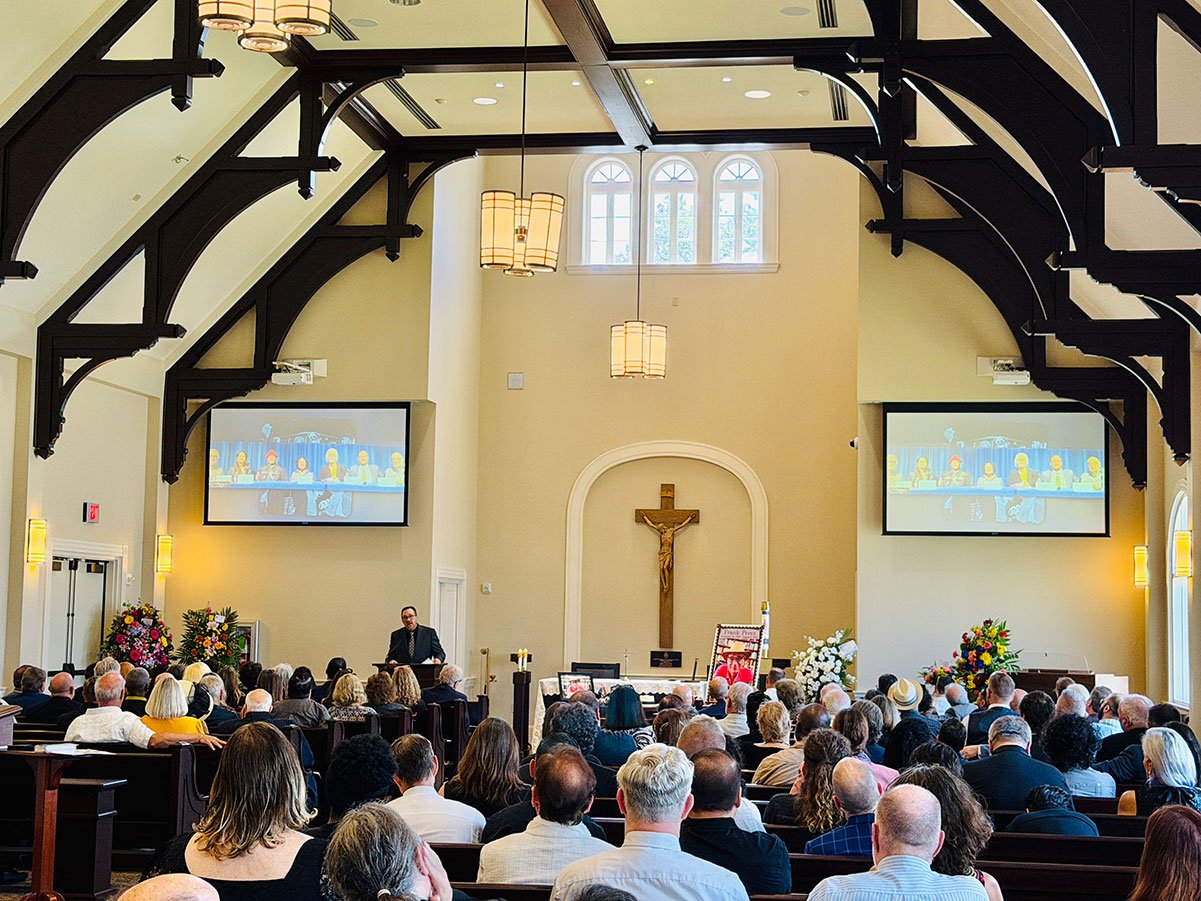
Guy LaMothe, LGBT+ Archives Project of Louisiana board president and Frank’s friend speaking at his service, August 15, 2026. The chapel has a capacity of 350. There was standing room only.
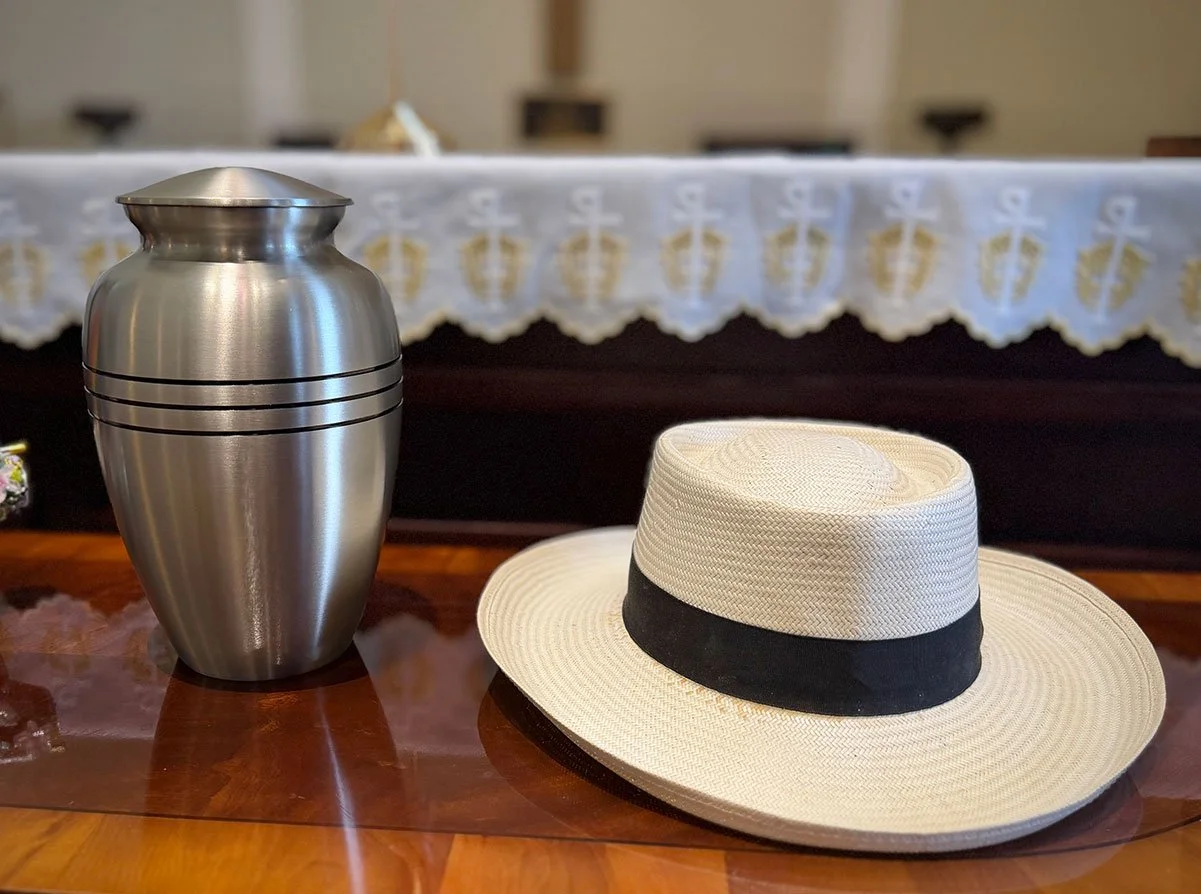
Frank’s urn and his beloved hat
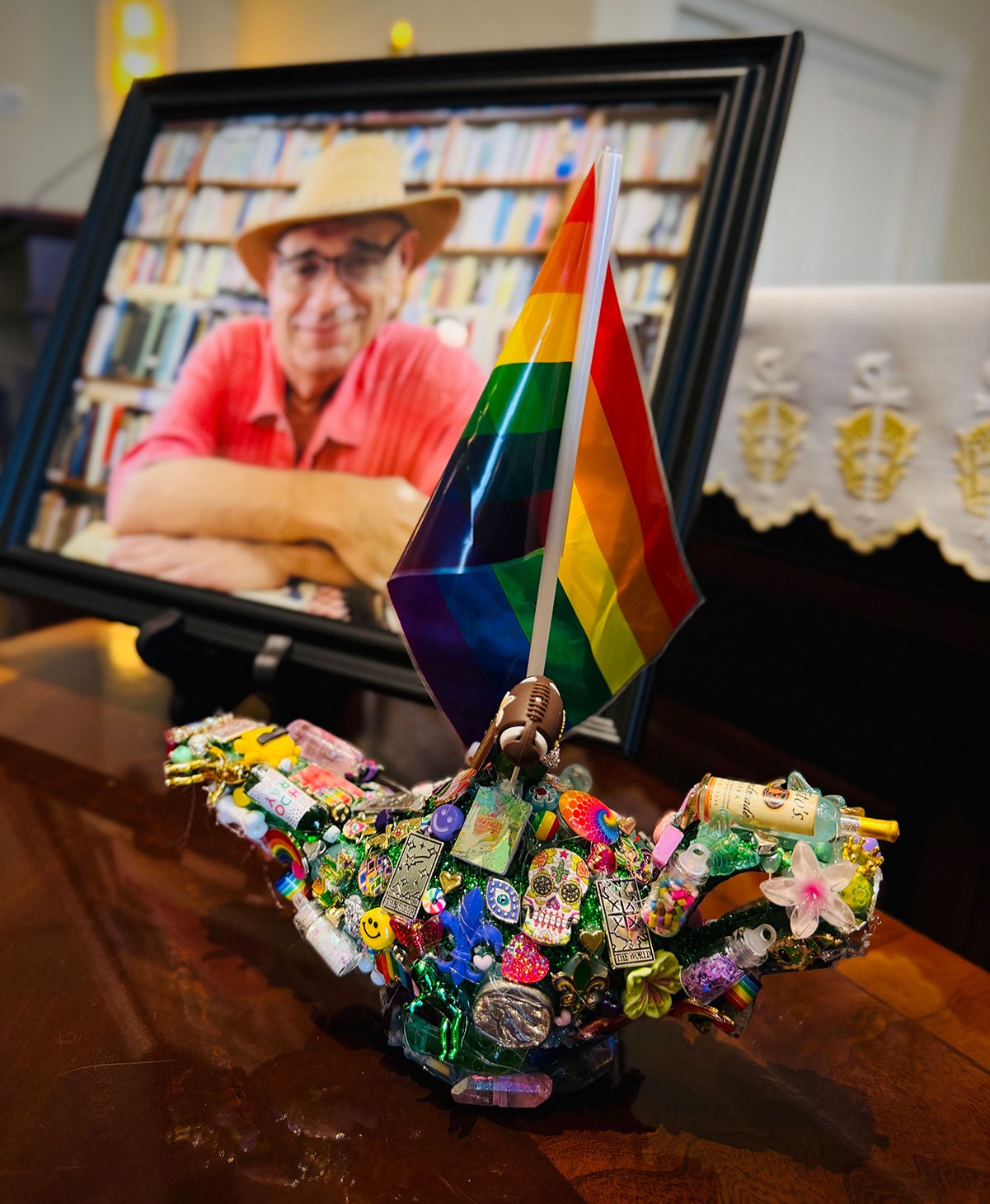
A miniature float commemorating Frank’s life