
Barbara Yochum: As Long As I Can Do It
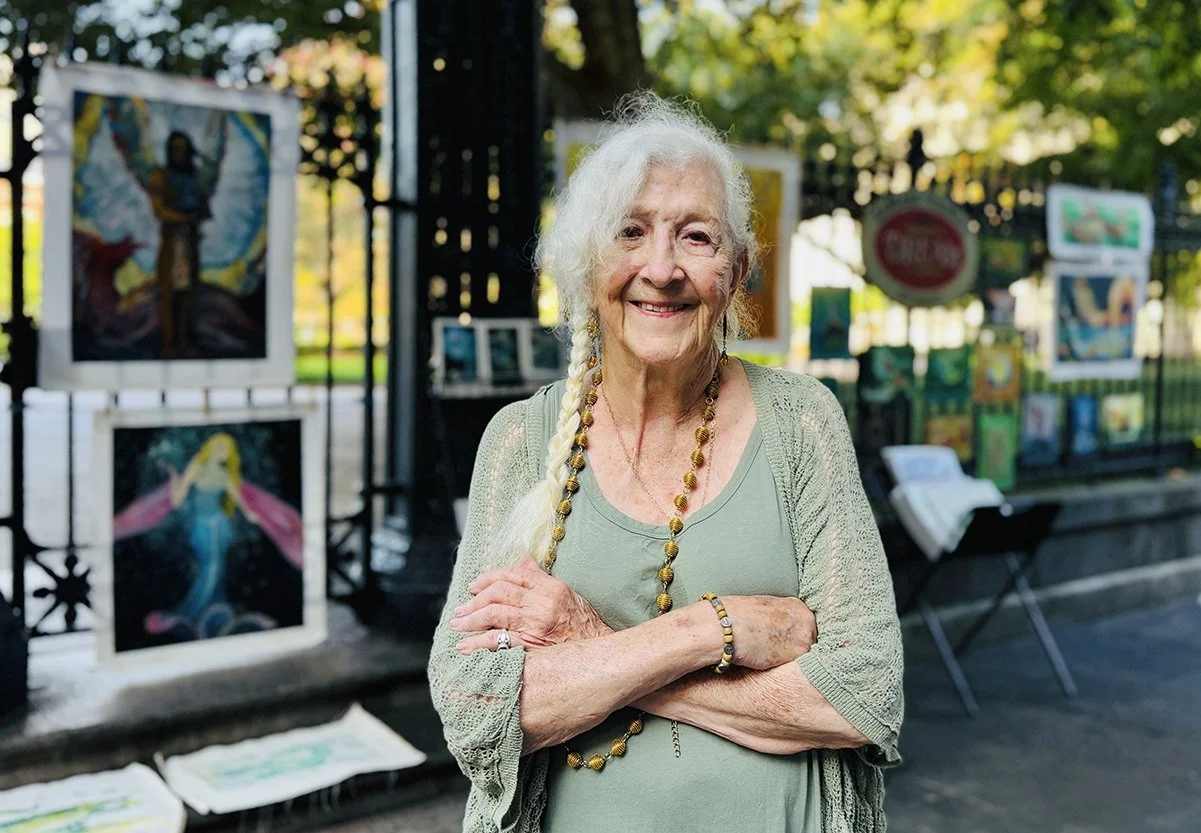
October 2026As a child, she dreamed of being an artist; now, after six decades as a Jackson Square fixture, she’s still finding time to dream.
– by Michael J. Warner
At age 87, Barbara Yochum is perhaps the longest-showing artist on Jackson Square. She’s been “on the fence” for nearly six decades and is a beloved French Quarter fixture.
Yochum’s path to an artist’s life began early: As a high schooler in Philadelphia, Yochum planned to attend the Museum School of Art and even snagged a Ford Foundation grant. But her father wanted her to promise that if she went to the school, she wouldn’t get married before she was 21. “And I said, ‘Daddy, I can’t promise you that.’ Everybody got married back then.”
She walked away from the grant. “My art mentor never spoke to me again.”
So Yochum took a job as a receptionist at Pinkerton’s Detective Agency. Looking out of the 18th-floor office window one day, she saw students carrying huge portfolios to classes at the Pennsylvania Academy of Fine Arts. Still drawn to the idea of studying art, she spent that summer with a sketch pad and pencil in hand, producing drawing after drawing. Soon she had her own portfolio for submission to the academy. And she got in.

This column is underwritten in part by Logo and name of column sponsor
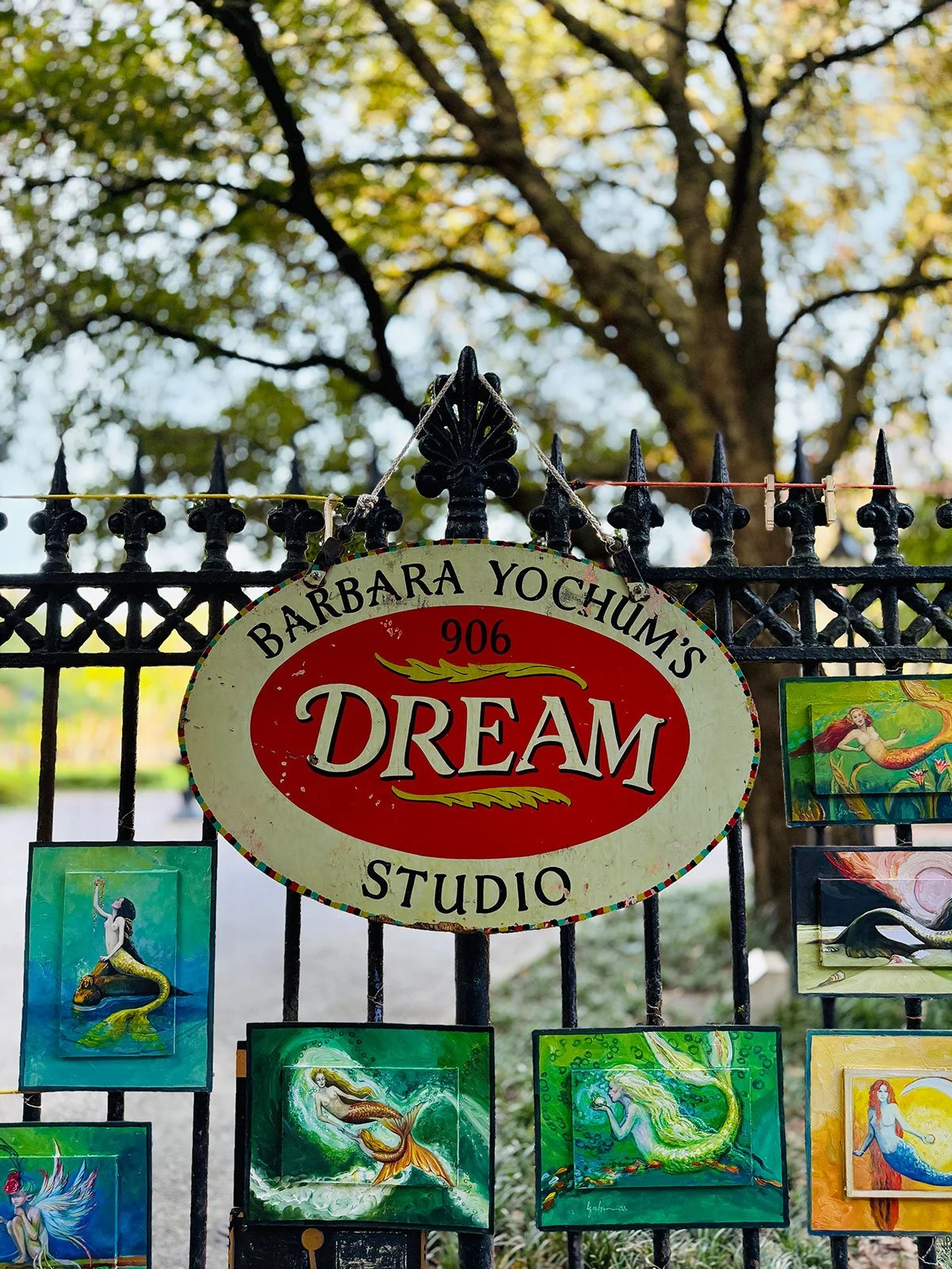
Photo by Ellis Anderson
At $400 per term, tuition was steep, and Pinkerton paid only $42 per week. Her parents helped with rent and supplies.
“I was supposed to go to New York and get famous,” she said. Instead, she annoyed her instructors by moving to New Orleans.
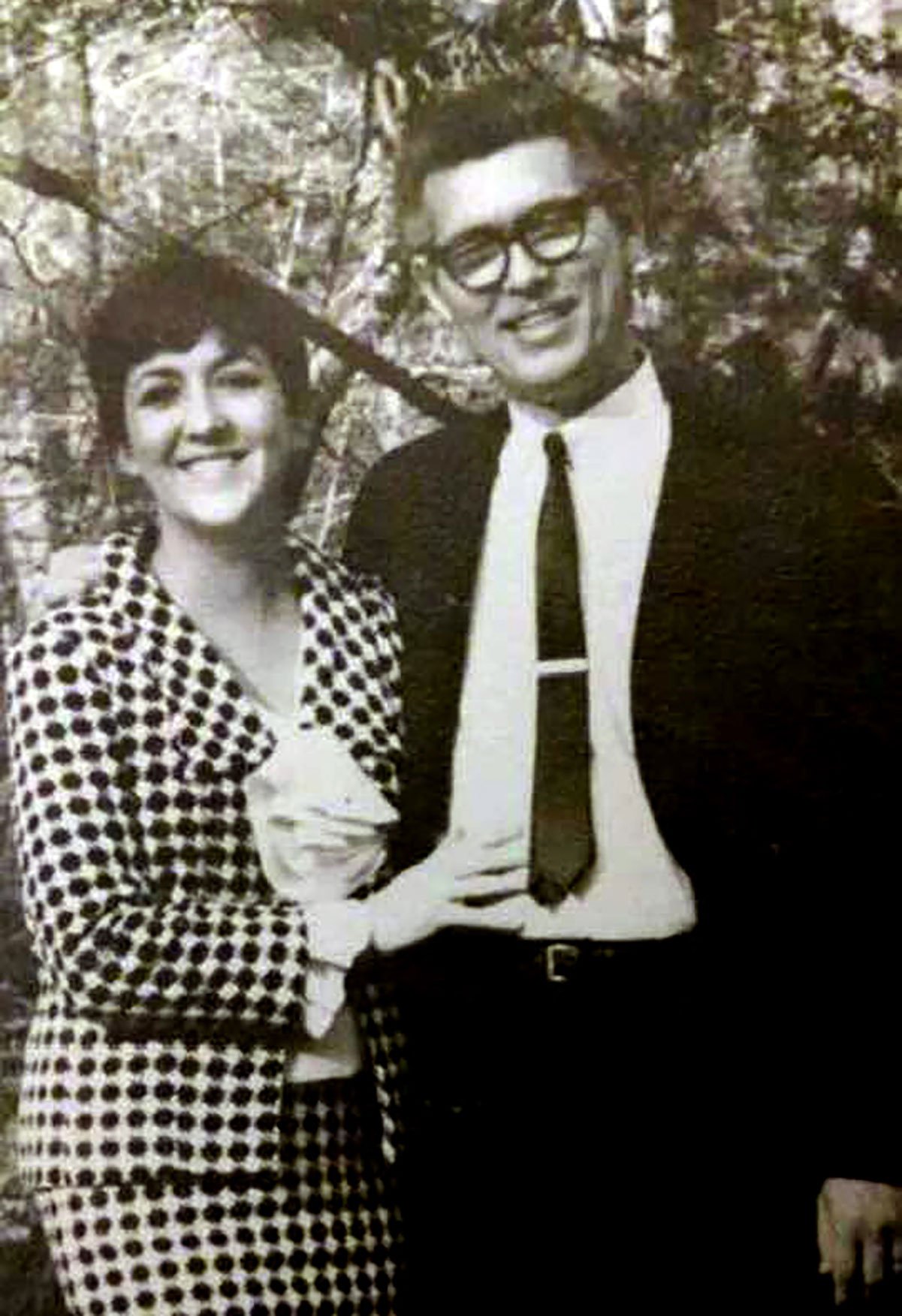
Barbara met her husband Bert when both were art students at the Pennsylvania Academy of Fine Arts. The couple moved to New Orleans in 1966. Photo courtesy Barbara Yochum
But she had a reason for the move. “I fell in love with one of my fellow students and he was from New Orleans.” In 1966, they moved to the Crescent City and soon married.
Because of her prestigious training, Yochum found a job teaching art at LSUNO. But the pay was meager, and it was hard to make ends meet. At the time, the university had no summer program, no work for teachers. She cast about for additional income.
Artists had been hanging their work on the fence around Jackson Square since the early 1930s, when a group of uptown socialites organized exhibitions to help artists during the Great Depression. By the 1960s, Chartres Street at the Square had attracted dozens of sidewalk portraitists. So Yochum gave it a try.
After her first weekend on the Square, Yochum found she had pulled in $500. “I was like, ‘I’m through teaching!’ ”
By the end of summer, she bought a new Chevy van right off the lot.
A committee of artists tried to organize and manage the artists around the Square. Each artist had a spot on the fence, chosen by pulling locations from a hat. “It wasn’t handled well,” said Yochum, laughing.
The rules required her to work at least 16 days a month to keep her spot, though she could take a 6-week vacation every year. She had to send a letter to the committee to claim her vacation time. But it was poorly enforced, for when Yochum came back from vacation, she would sometimes find someone else in her spot.
Another young Jackson Square portraitist whom Yochum befriended was Nancy Davis. She described Davis as “drop-dead beautiful.”
“We’d go to a bar, sit at a table and suddenly the whole table would be covered with drinks that people sent us. And I knew they weren’t for me.”
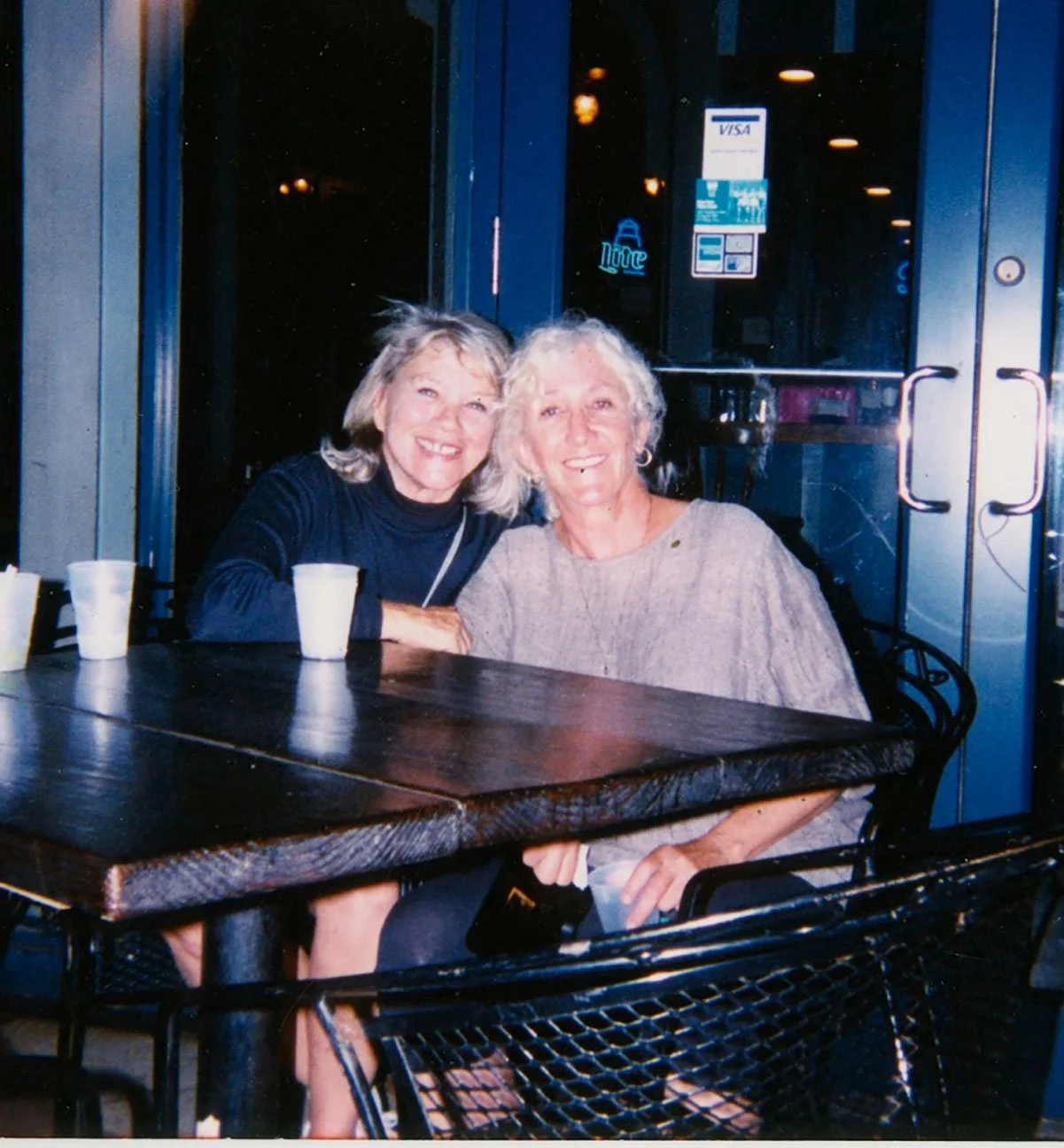
Fellow artist Nancy Davis and Barbar Yochum in 1995, photo by Marilyn Milam, The Historic New Orleans Collection, gift of Marilyn Milarm
In the early 1970s, artists worked only the Chartres and St. Ann sides of the Square. Choice spots along on these streets were allocated by drawing names from a hat.
But she and Davis were among the first artists to move around the corner to do portraits along St. Peter Street. “Everybody said we can’t make money on St. Peter Street,” said Yochum. “But we made plenty of money.”
At one point, Yochum had counted 62 portrait artists on the Square, among whom she and Davis were two of the busiest. She produced pastel works, which she would put under glass and cardboard for $10 extra.
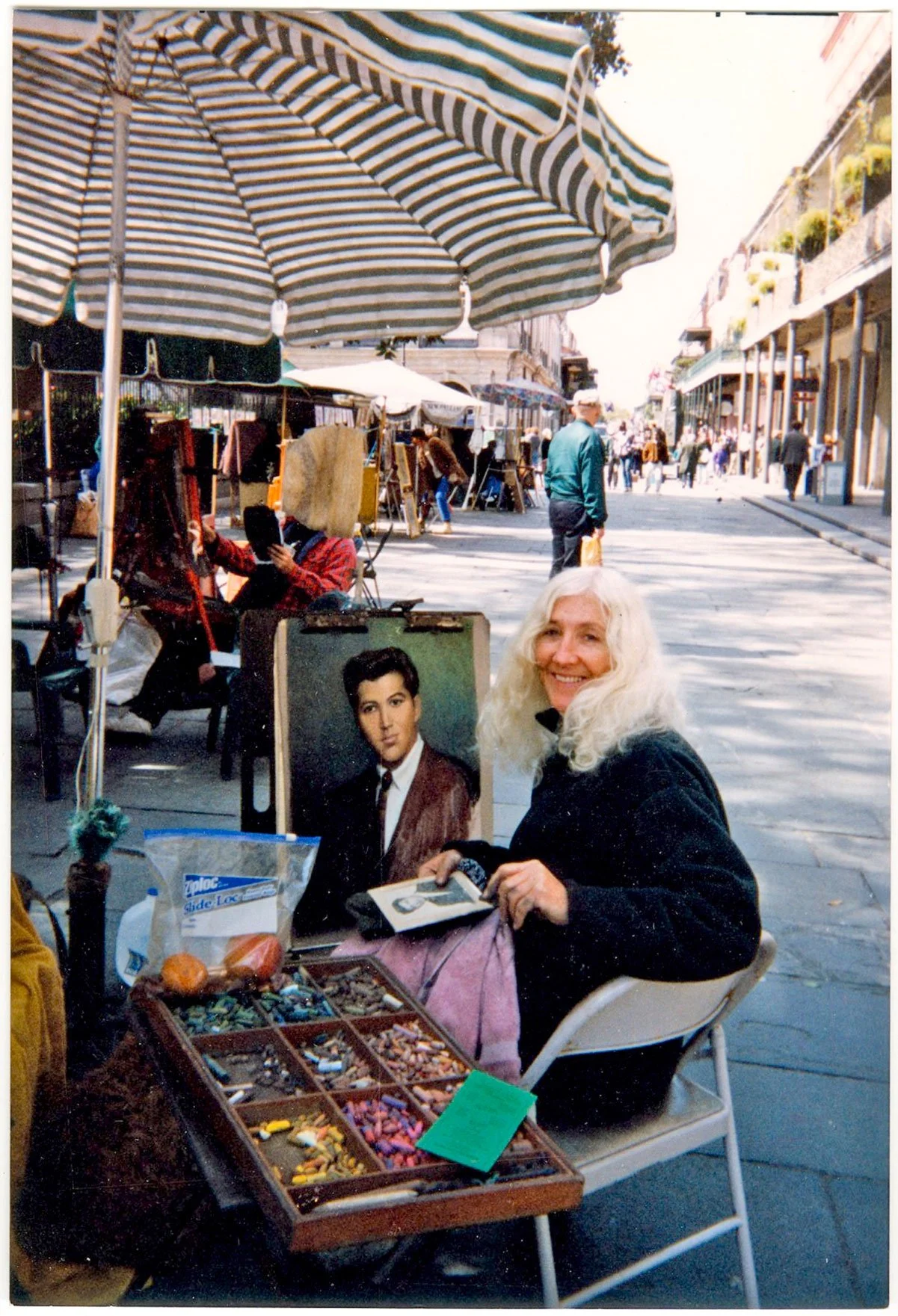
Barbara Yochum at work on a portrait in 1995, photo by Marilyn Milam, The Historic New Orleans Collection, gift of Marilyn Milarm
In the 1960s and 70s Yochum kept her nose to the grindstone and didn’t socialize much while working. “I didn’t wander around the Square much and chitchat. For that, we had the Alpine.”
The Alpine Restaurant opened in 1964 at 620 Chartres Street, just a block up from Jackson Square. Today it’s the location of Doris Metropolitan Steakhouse. After a hot day in the sun, many artists ended up there for a beer and a burger, and it became one of those unique social hubs of the French Quarter. It bound people together as a cohesive group, even those who, just minutes earlier, had been fiercely competing for a tourist customer.
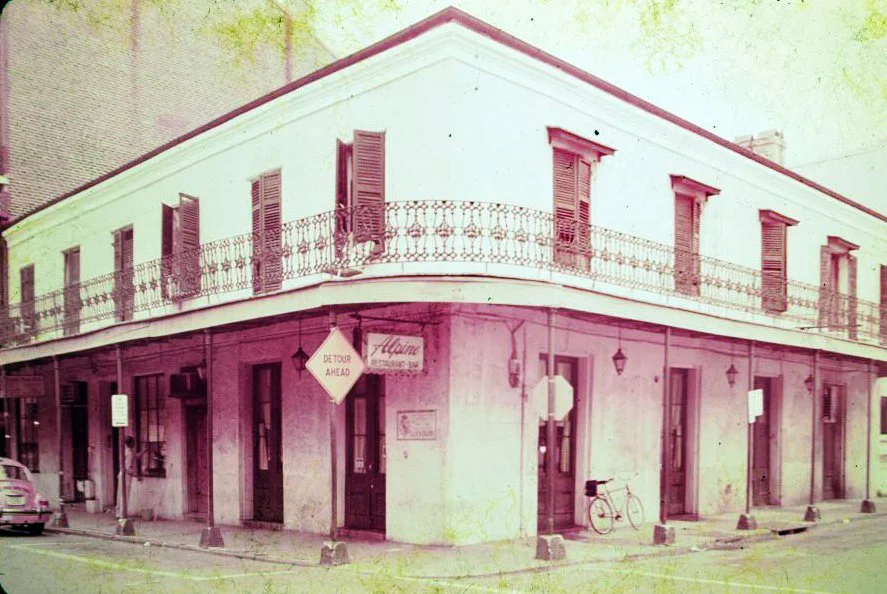
The Alpine, at the corner of Chartres and Wilkinson Row, 1975, courtesy Vieux Carre Commission Virtual Library
“If the kids got sick at school, McDonogh 15 called the Alpine and they would tell you that your tot was sick and would you come out and pick them up?” recalled Yochum. After school, the artists’ children often came to the Alpine to do their homework and eat while their parents imbibed.
The Alpine was operated by Konrad Klein, an Austrian by birth, though he had become a naturalized US citizen in 1952. He had been a tenor in various German opera companies, performing lead roles in such works as The Magic Flute and La Bohème. He arrived in the French Quarter after World War II, and performed on stage with Al Hirt and Shecky Green, among others.
There was a long copper bar in the Alpine and a spacious dining room, where Klein hosted Mardi Gras and Halloween parties. In the back was a big patio where some of the artists would drink and smoke pot.
This bistro “was our place,” said Yochum. “We would open the refrigerator and take stuff out, until Konrad saw that it was gone. It was dirty. Full of cockroaches and stuff. But we still ate hamburgers there.”
After Yochum turned 40, somebody posted a sign above the bar that said, “Barbara Yochum is over the hill!” Beneath that were notes from people who denied her over-the-hill status and said it ain’t so. “You could see who liked me and who didn’t.”
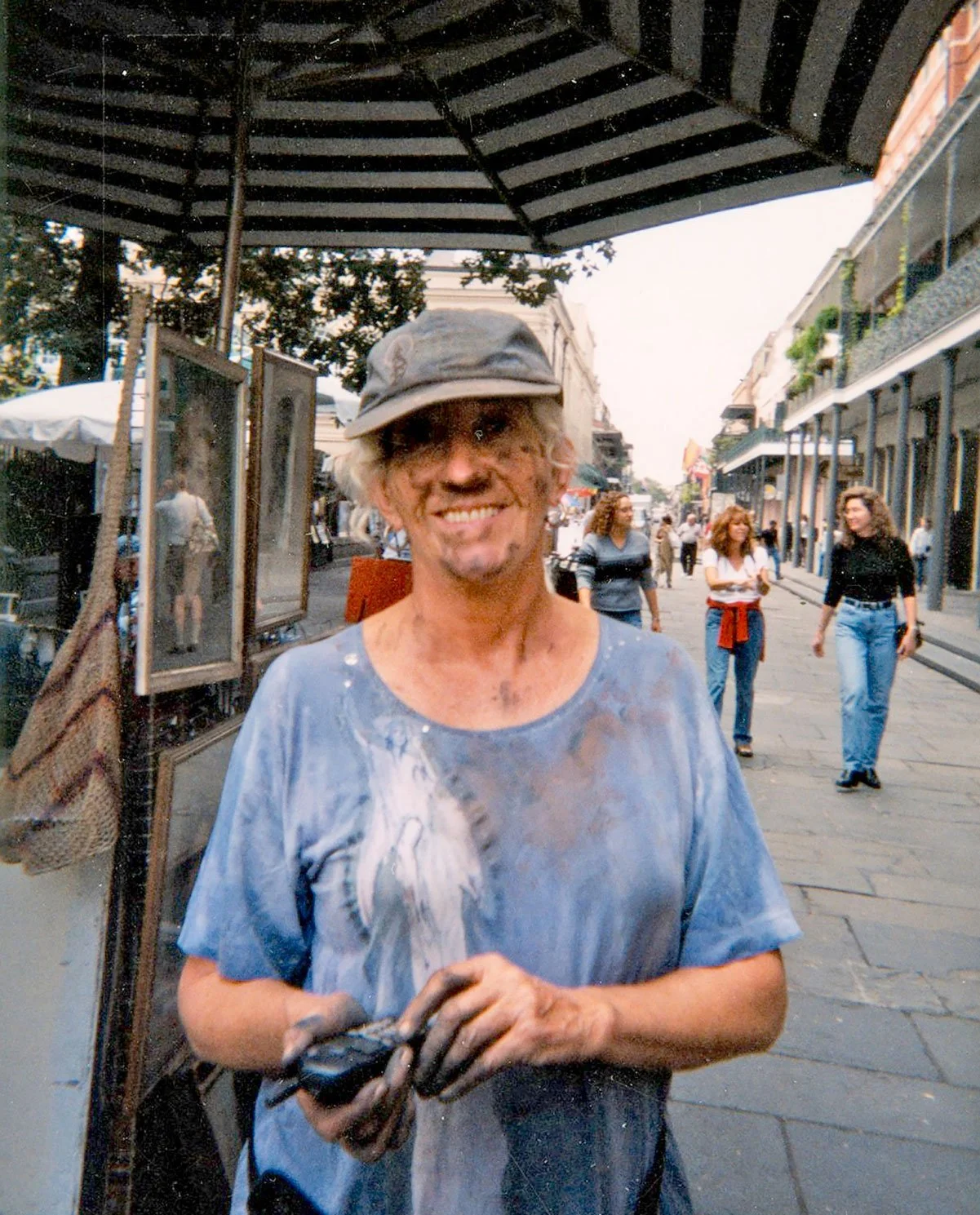
Barbara Yochum at work, 1995, photo by Marilyn Milam, The Historic New Orleans Collection, gift of Marilyn Milarm
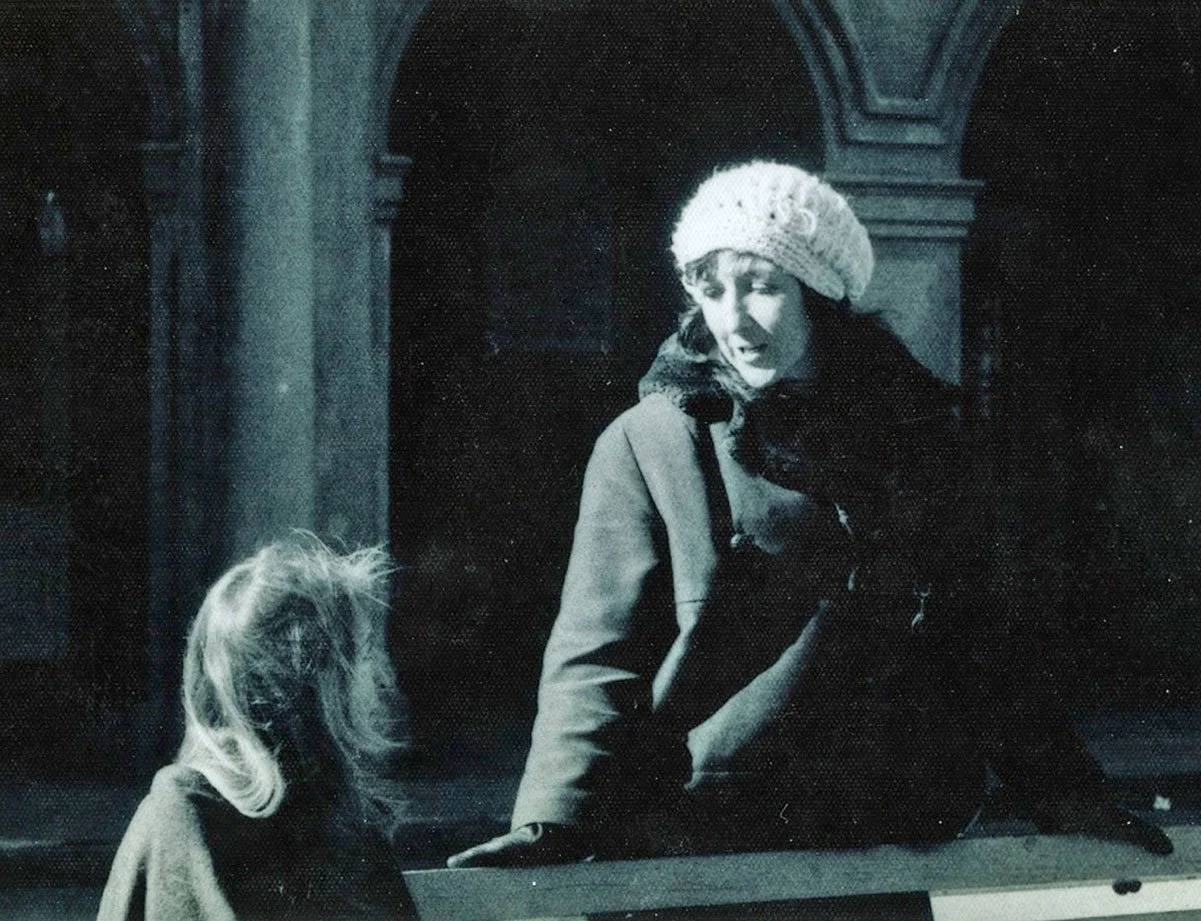
Barbara Yochum and her daughter Mia on Jackson Square, 1973, photo by Marilyn Milam, The Historic New Orleans Collection, gift of Marilyn Milam
But Yochum has seen some difficulties as well. In 1978, she was mugged and severely beaten while walking home from a get-together with a girlfriend. “I had amnesia for 21 days and I couldn’t take care of my kids. I asked my ex-husband to take them for a while.” It took her five years to recover.
Another time, someone stole her van, along with all her work and equipment.
And in 2003, she quit portraiture.
Many New Orleans residents used to bring their kids to the Square to have their portraits made. A man from uptown had brought his daughter to Yochum for a portrait—a Christmas gift for the girl’s grandparents. Yochum dutifully sketched the young woman, and then it was the man’s turn.
But “the man told me what he wanted to do to me in his hot tub during this whole portrait.” She endured the man’s abuse because she had already done the girl’s portrait and wanted to get paid. That was the year she had been diagnosed with breast cancer. “I had just finished chemo and I looked terrible. I had no hair, I was wearing a turban. And I stood up and said I can’t do this anymore.”
The predominant type of work sold on the Square changed with the seasons. Winter offered a better opportunity for genre paintings of jazz musicians blowing a trumpet, bayou landscapes, or courtyards. Yochum says a handful of people did fine French Quarter scenes. But portraits only sold better during the summer tourist season.
Putting portraiture behind her, Yochum brought out her fantasy paintings of mermaids and fairies and strange little creatures. Anything magical. And she found she had better sales than when she was doing portraits.
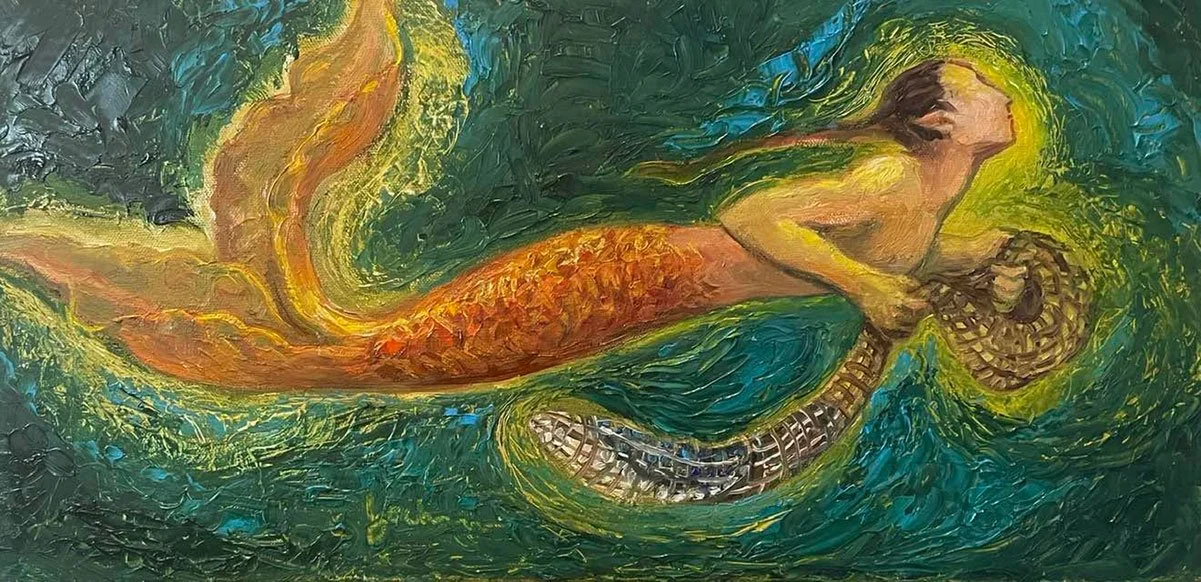
Courtesy Barbara Yochum
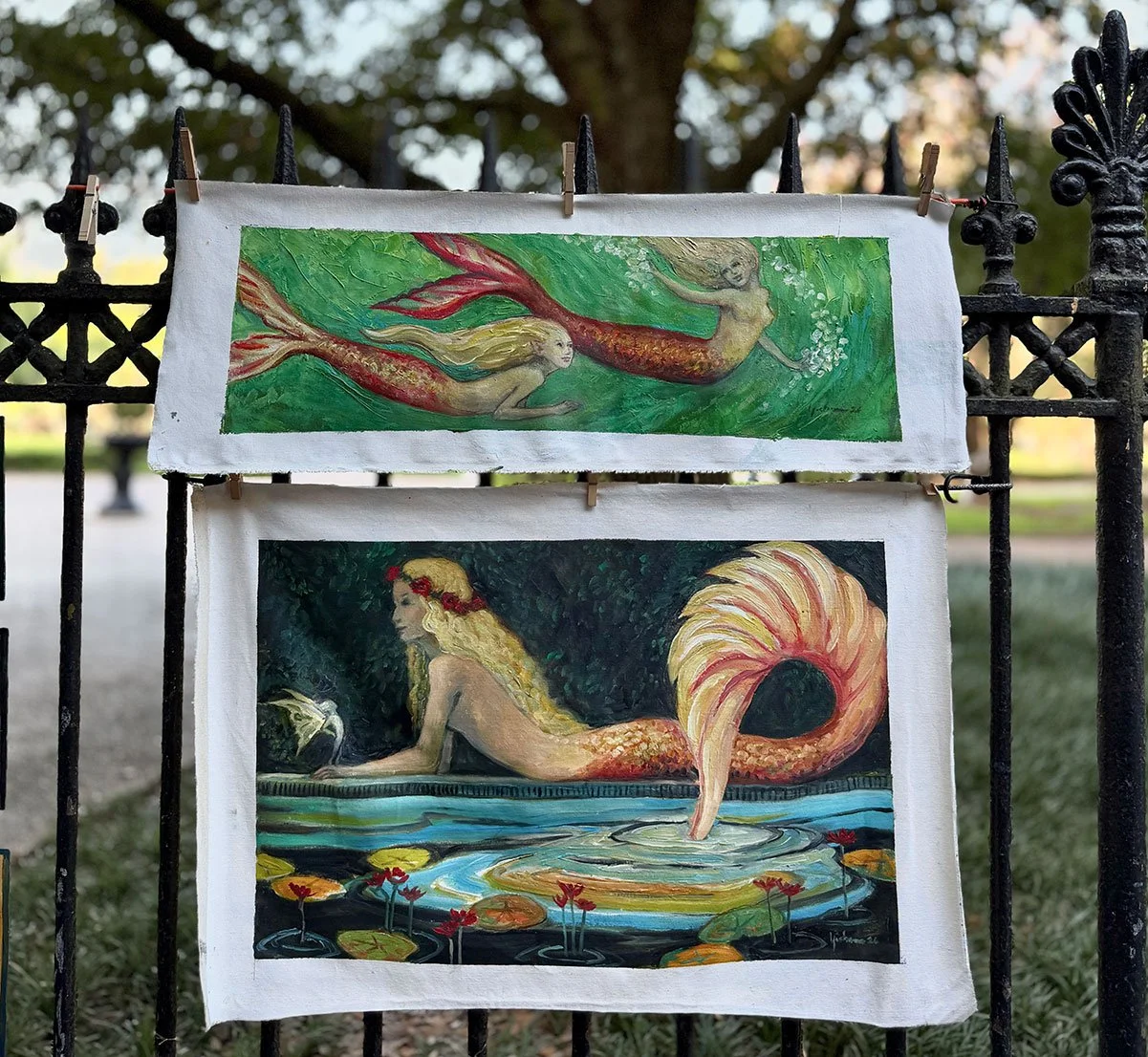
Photo by Ellis Anderson
She also paints Storyville prostitutes. “I realized there was a market I was missing. So I said, I’ll do Storyville prostitutes. I do. They’re fun to paint.”
And she sells prints. In 2011, Yochum was the key figure in a drawn-out legal battle over a city ordinance that required artists on Jackson Square to sell only one-off original works. Prints were forbidden.
But Yochum says she saw an economic trend. “I knew the economy was changing and that the artists were gonna need to sell prints of their own work.” After repeated trials and appeals, Yochum won the right to sell prints on the Square. Though controversial at the time, many other artists sell prints now too.
Yochum still regularly works from her spot on Jackson Square and she has many admirers. Customers from 20 or 30 years ago come back to see her.
“I never thought about my age until the last year or so when people started making comments about how old I was to be still working. I had never even thought about it. It doesn’t matter to me. As long as I can do it, I’m going to do it.”
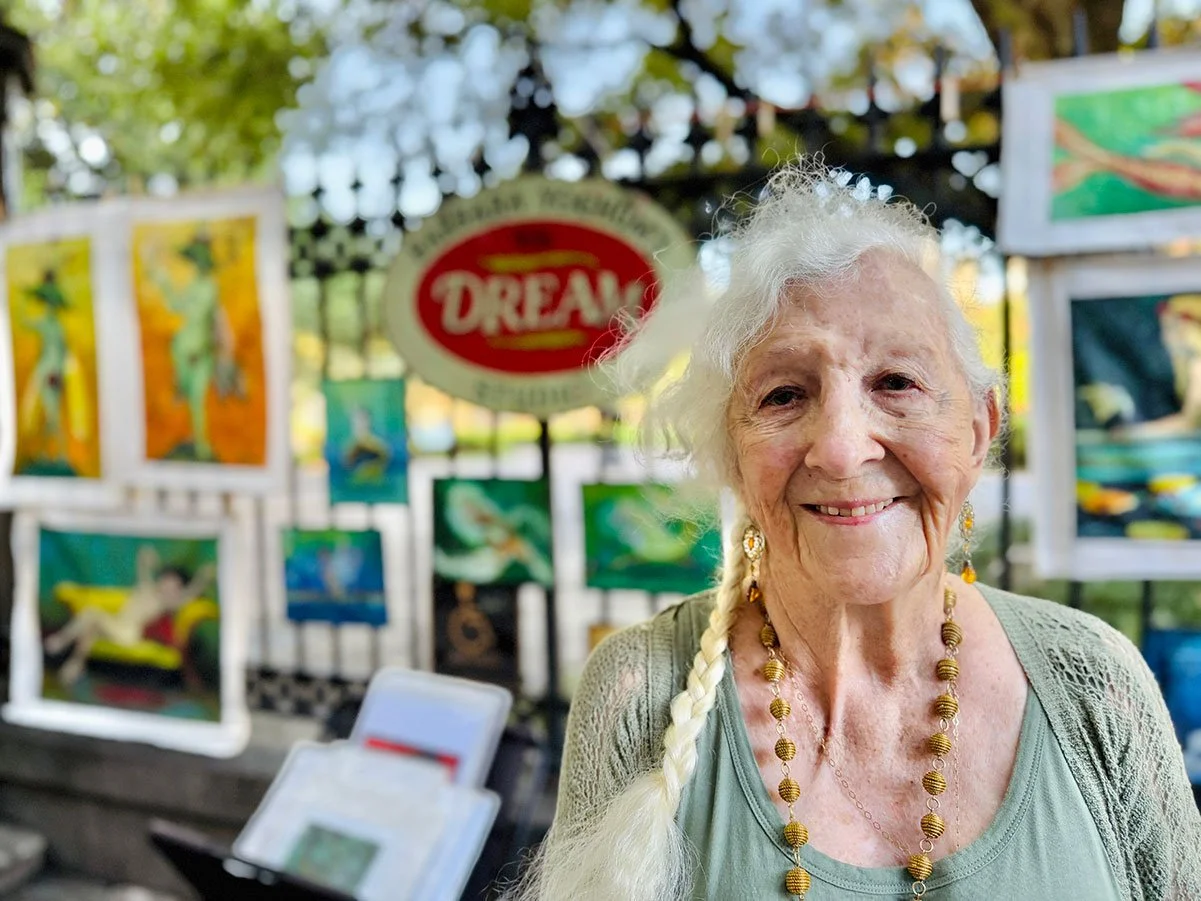
Photo by Ellis Anderson