
A Tree Grows on Bourbon Street
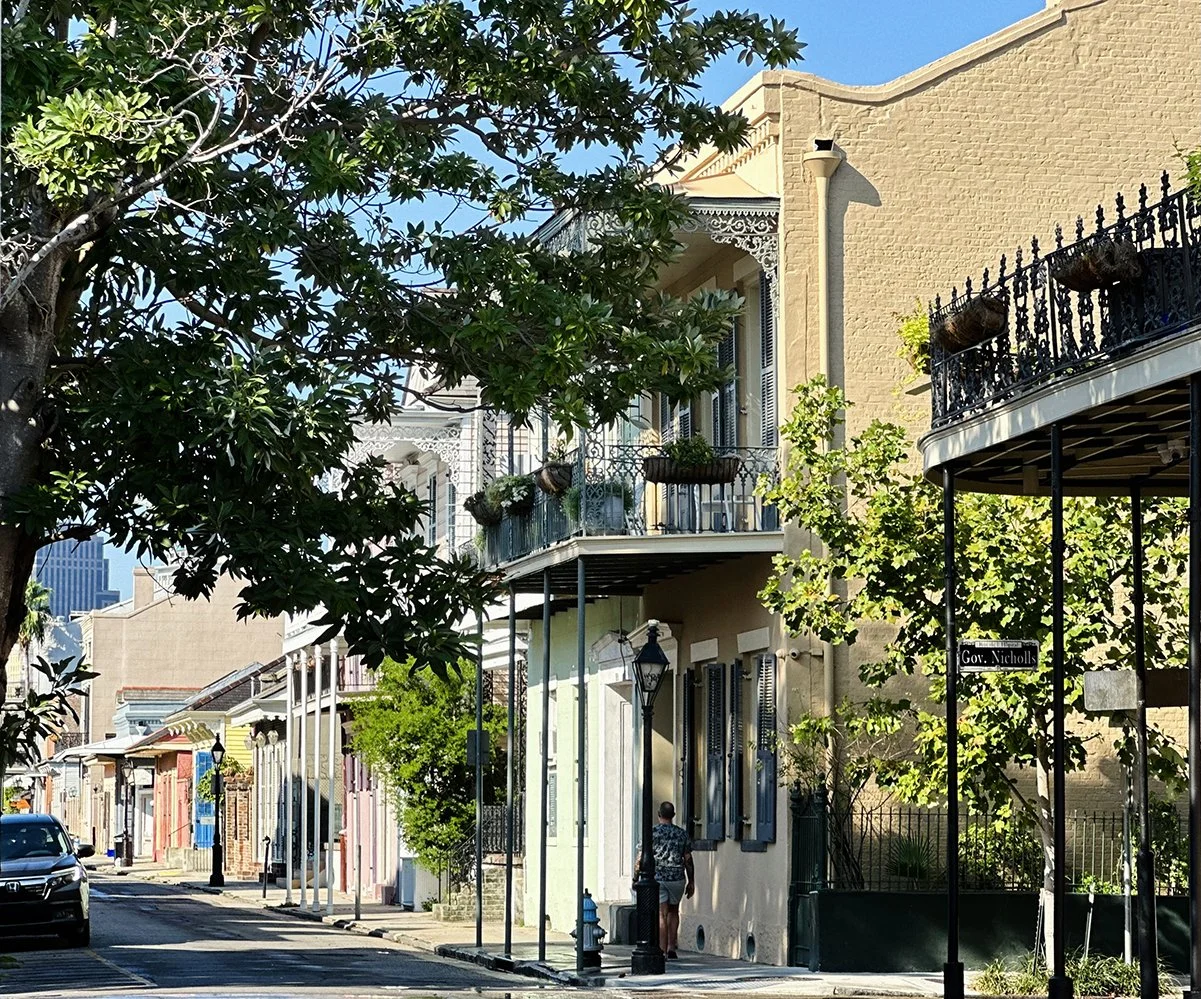
The intersection of Bourbon and Gov. Nicholls Street. The “Pole Dancer” Sweetbay Magnolia tree is on the left. photo by Ellis Anderson
October 2026Street trees in the Vieux Carré: Meet a few of our hardy neighbors that survive – and even thrive – in the dense urban fabric of the French Quarter.
– by Helen Sierminski
Bourbon Street, a 13-block road in the French Quarter known for its raucous nightlife and endless to-go cups, is unlikely to bring to mind trees or anything related to nature. But go to the intersection of Bourbon and Governor Nicholls Street and there you will find a formidably gnarled Sweetbay Magnolia tree, growing around two obsolete metal poles.
Lovingly nicknamed the “Pole Dancing Tree,” this woody beauty has stood here since at least 1988, weathering countless storms and hurricanes and witnessing all manner of human excellence and depravity. This tree’s longevity is a testament to nature's resilience, even in the most extreme urban settings.
Sweetbay Magnolia (Magnolia virginiana) trees are native to the Southeast coastal region of the United States, naturally found in low, wet woodlands, river floodplains and shrub swamps. They have become a favorite species for sidewalk plantings in New Orleans, as they are less formidable than their famous cousins, the Southern Magnolia. Since both types of magnolias evolved before bees, they’re pollinated by beetles that are attracted to their white flowers loaded with nectar and pollen.

This column is underwritten in part by Logo and name of column sponsor
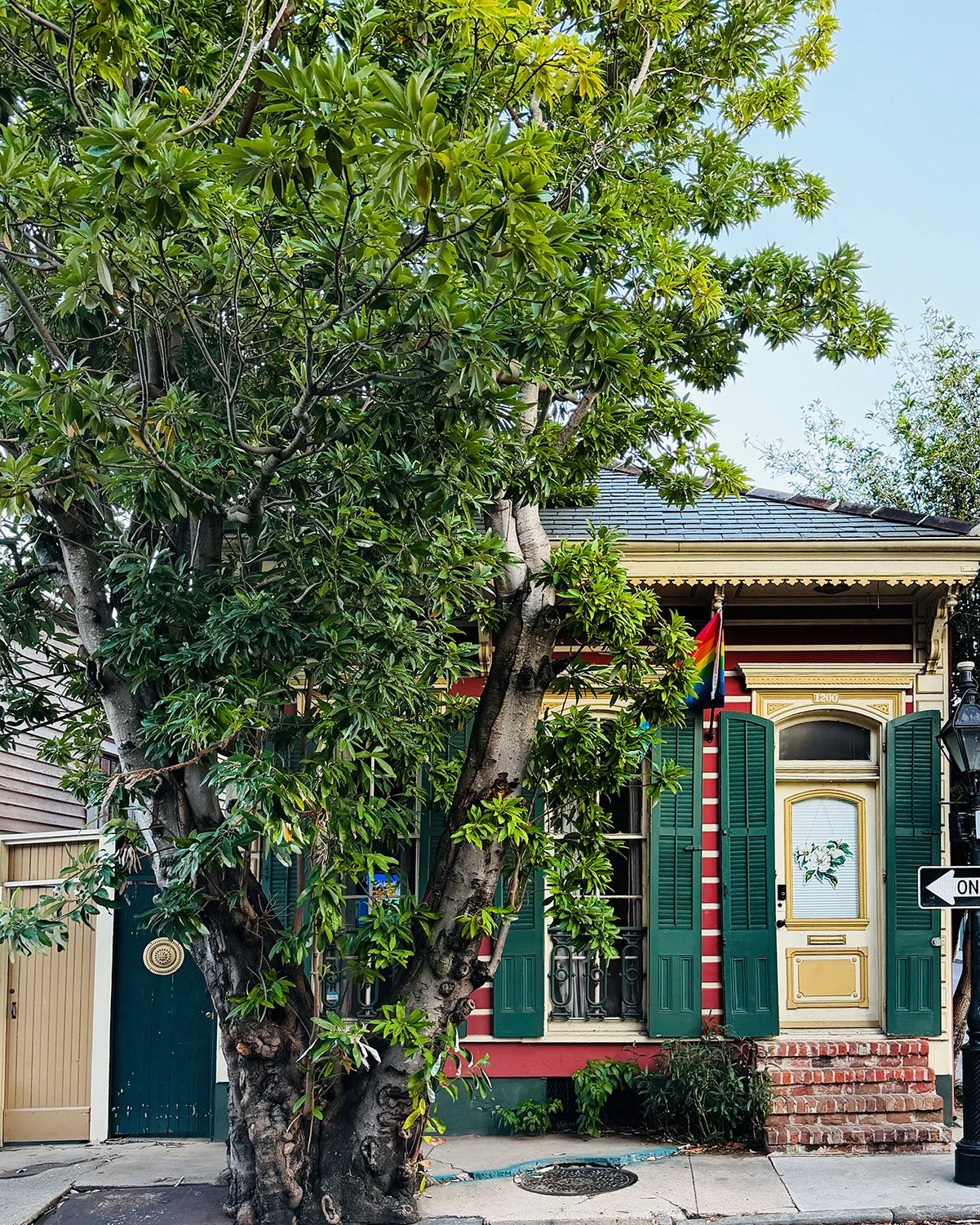
The Sweetbay Magnolia on Bourbon Street, photo by Ellis Anderson
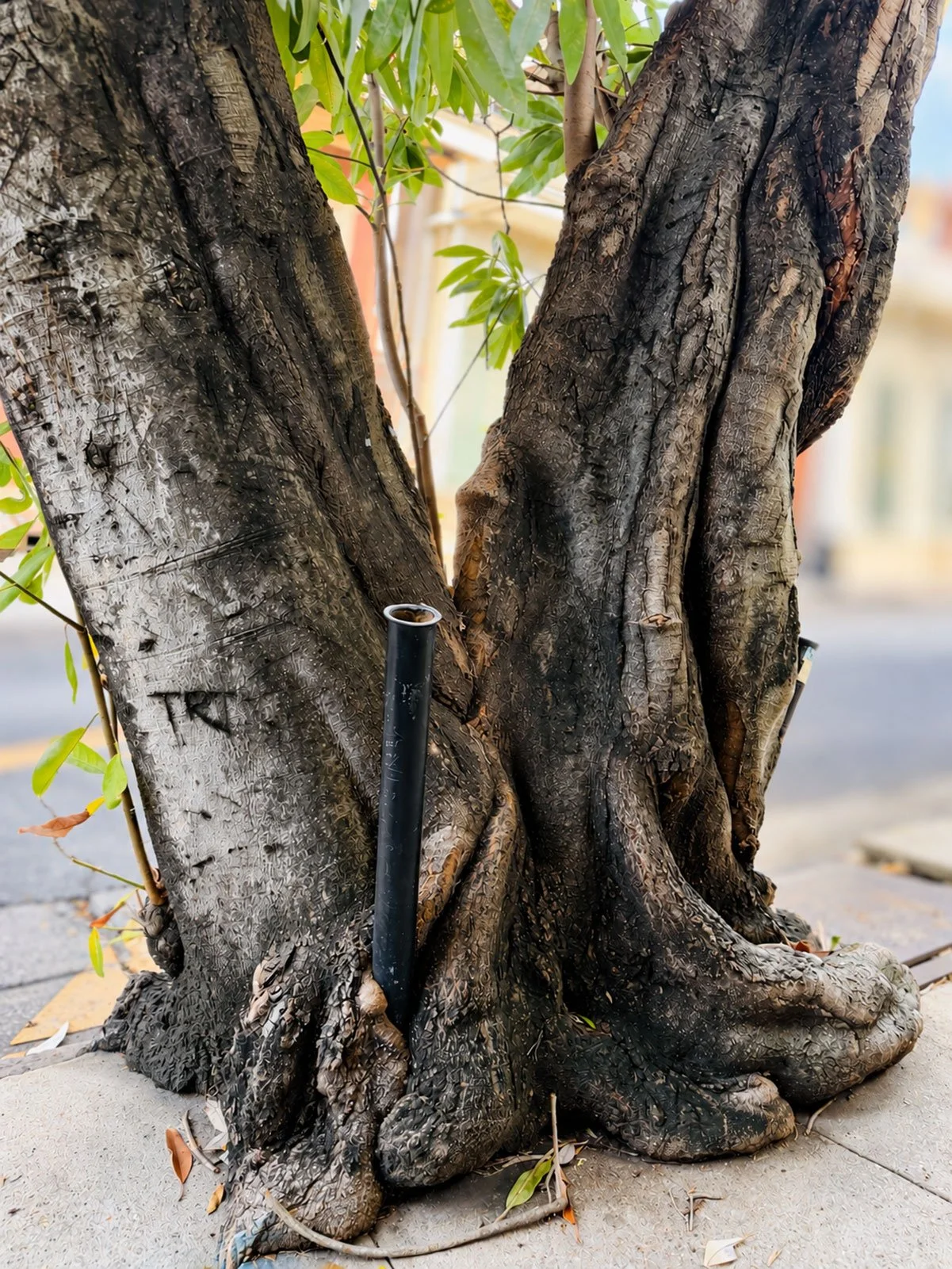
The Pole Dancing Tree, photo by Ellis Anderson
One block over on Royal Street, across from the popular deli and corner store Verti Mart, is a sadder scene. A stump is all that remains of an elm that once shaded an otherwise treeless sidewalk. One morning, the tree was gone, with only a stump remaining to remind us of her presence. Neighbors and frequent French Quarter visitors were left without an opportunity to say goodbye to the graceful Royal Street fixture – and to draw their own conclusions about what had sealed her fate.
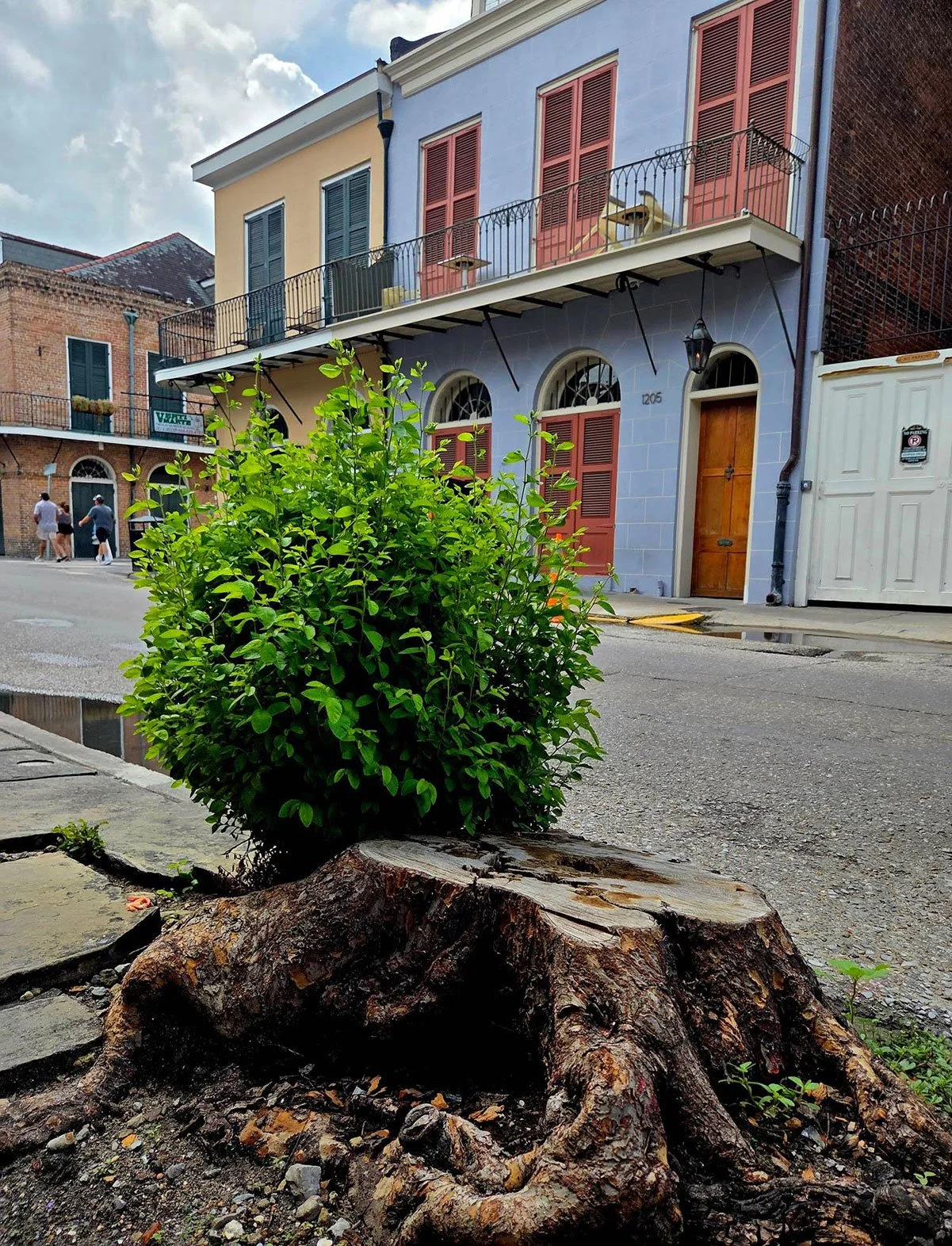
Photo by Helen Sierminski
I obtained a copy of the city’s arborist report about this particular tree. It revealed that two major cavities had been discovered during his inspection. The report continued that it was “not possible for this tree to heal these major wounds, or for the increased failure risk to be mitigated by pruning.” One cavity was at the base and another was about 10 feet up, which greatly reduced the strength of the trunk.
Despite the inevitability of her demise, the elm’s removal left many saddened and confused. Several neighbors echoed the same sentiment: You just don’t cut a tree down in the French Quarter. There are not enough as it is.
Judith Navoy, a Marigny resident who works in the French Quarter, said, “I used to pass that tree on my way to and from work. I immediately knew something was different when I was walking home but it took me a second to realize the tree was gone.
“It always breaks my heart when someone cuts down a street tree because it’s unlikely they’ll replace it, since it involves dealing with the stump. It was especially sad to lose that tree since it’s the only one for many blocks.”
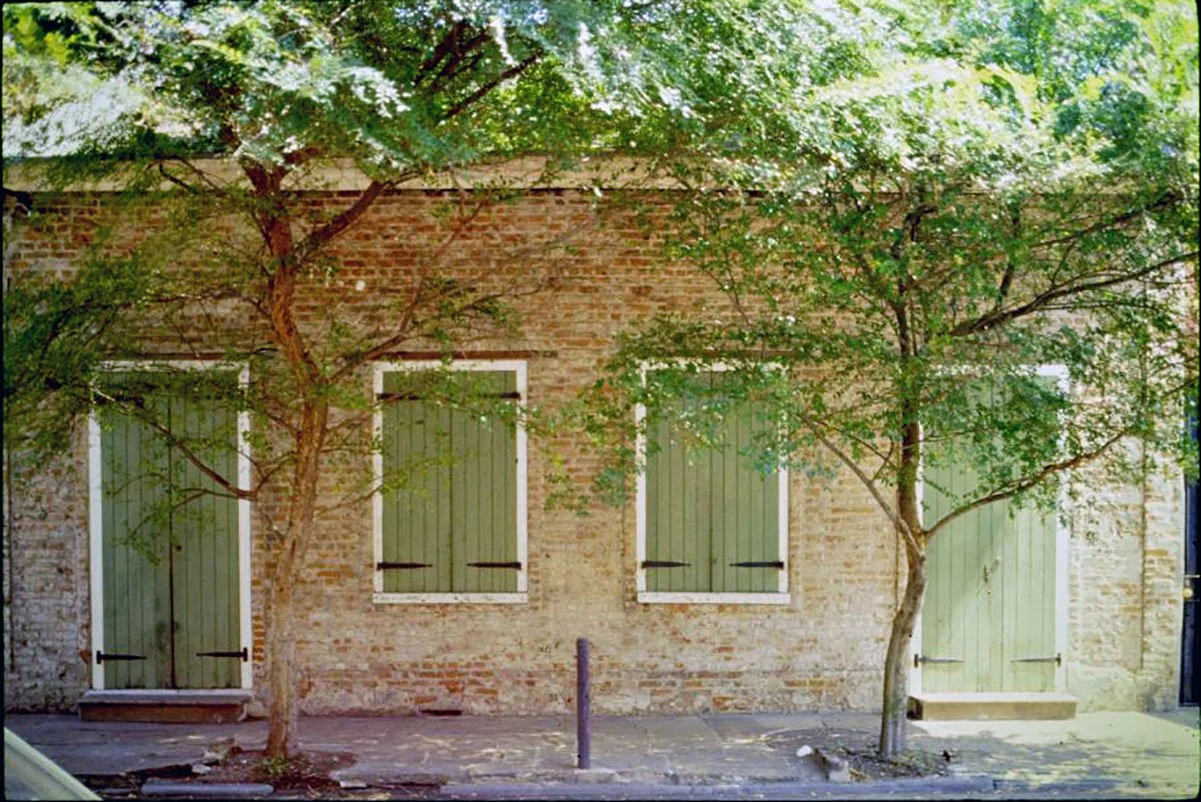
Apparently twin elms were originally planted, as shown in the 1980 photograph from the Vieux Carré Commission archives. The other apparently died or was removed some years ago.
It takes years to grow a tree to maturity; it takes minutes to cut one down. In our modern society, the decision to remove a tree has often been cavalier. Yet, the narrative around trees is shifting, with a growing number of citizens and organizations championing them and fighting for their protection.
For instance, the Global Alliance for the Rights of Nature recognizes ecosystems and natural entities as rights-bearing subjects rather than rightless property. Several countries - including New Zealand, Brazil, Spain, and India – have passed rights of nature laws, granting personhood or rights to rivers, national parks and the Amazon rainforest.
And recently, a small Canadian town outside of Montreal, Terrasse-Vaudreuil, signed on to the Universal Declaration of Tree Rights, which “emphasizes the ecological importance of trees as living beings upon which our planet depends.”
One only needs to spend time with the trees, observing all the life forms that call them home, to understand why our appreciation of trees is growing.
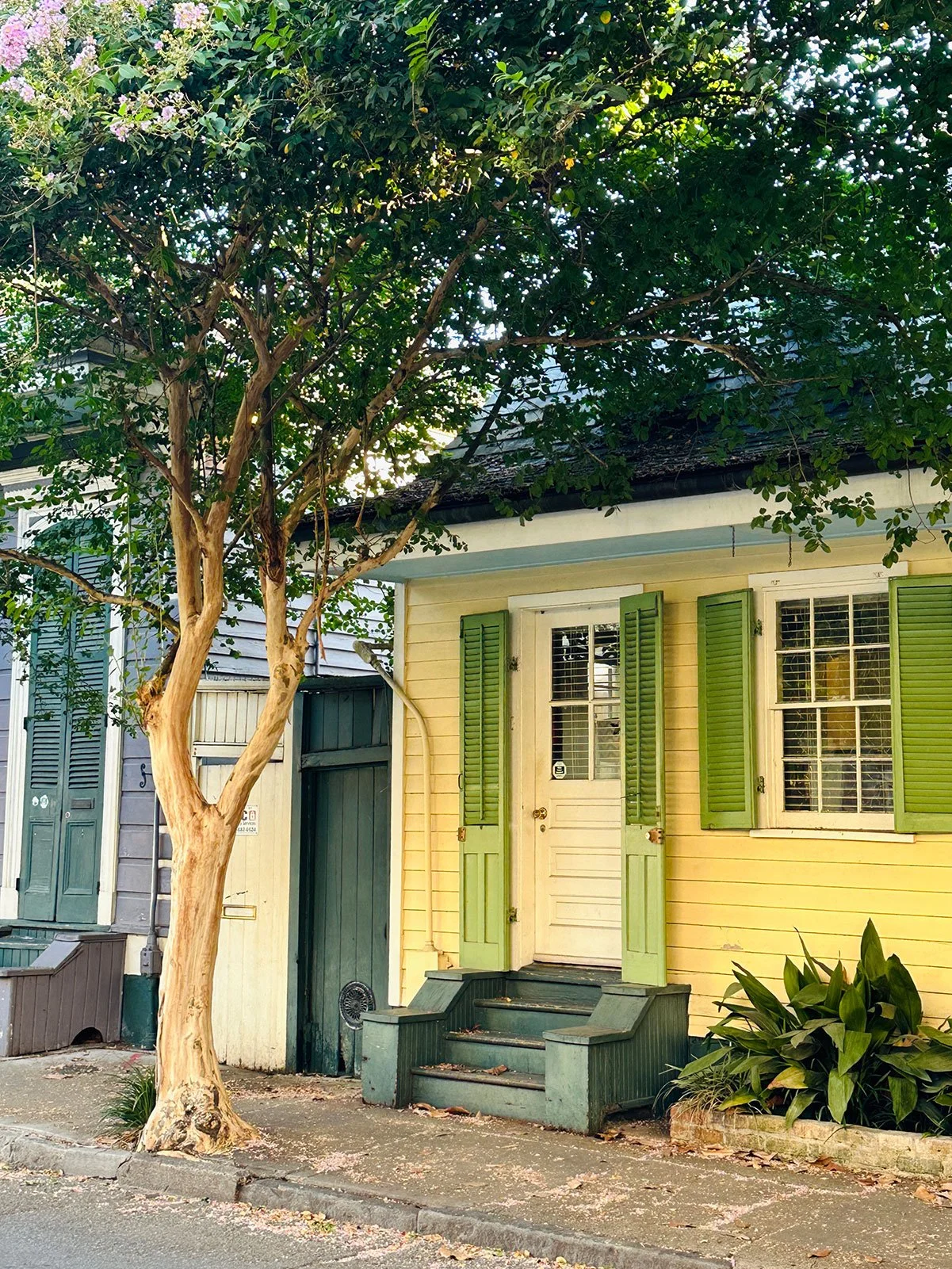
A crepe myrtle in front of a Gov. Nicholls Street home, photo by Ellis Anderson
Trees provide us with oxygen, purify our air, provide stormwater mitigation, cool our surfaces and promote overall physical and mental health by lowering our blood pressure and heart rates – as well as our stress levels. Cooling bills are lowered and flooding is reduced with active, substantial tree canopies.
Trees also act as homes and resources for countless plant and animal species. Louisiana hosts a large number of migratory birds that pass between the northern United States and Central and South America. Trees in extreme urban spaces act like migratory-bird oases.
While there may not be a tree canopy in the French Quarter - other than Esplanade Avenue – the neighborhood is host to a variety of tree species, both native and non-native to Louisiana.
At the same intersection where the Sweetbay Magnolia lives, our official state tree, the Bald Cypress (Taxidium distichum) towers and an American Tulip tree (Liriodendron tulipifera) flourishes.
Native Southern Magnolias (Magnolia grandiflora) inhabit the property of the US Appeals Court on Royal St and Jackson Square – as well as many other spaces in the Quarter. Non-native crepe myrtles, a favorite for planting in urban spaces in the south, line the sidewalks and courtyards in the Quarter, standing strong and proud in the face of storms and revelry.
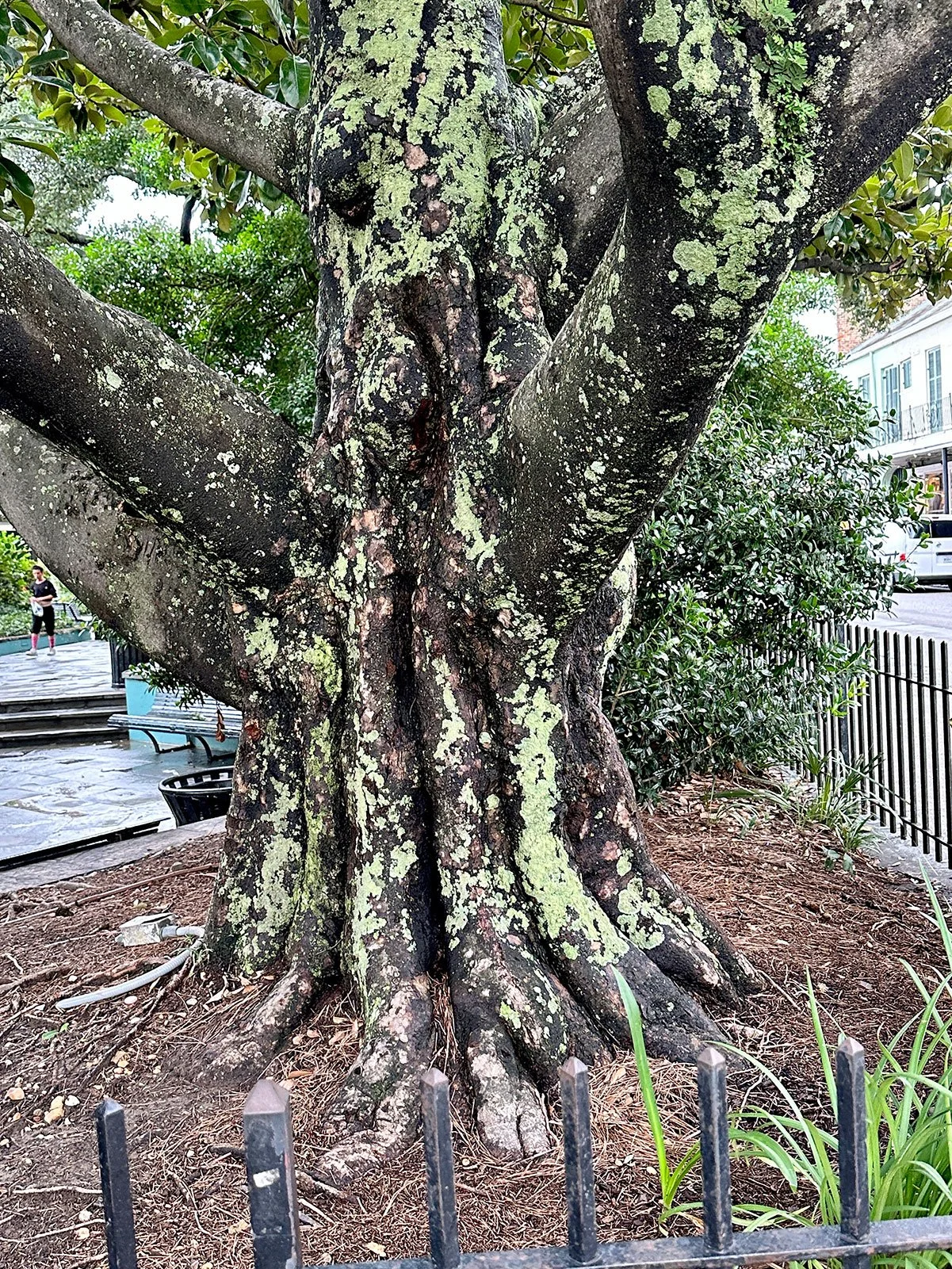
The magnolia at the Joan of Arc island on Decatur Street, photo by Ellis Anderson
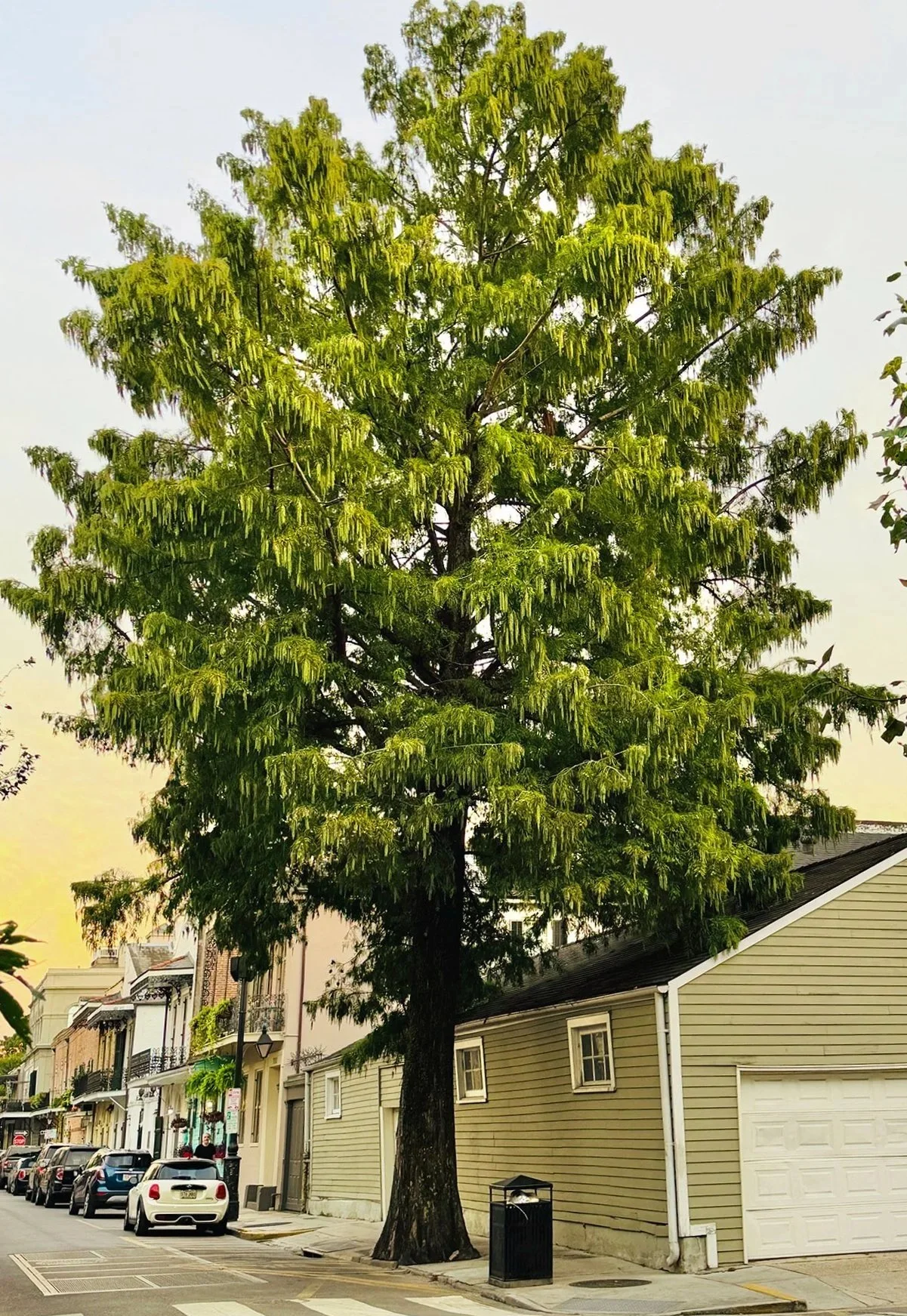
This cypress, also at the corner of Bourbon and Governor Nicholls Street was also planted by Christopher Frederichs, according to neighbor Betsy Fabry, photo by Ellis Anderson
While Quarterites hold varying opinions as to street trees, veteran residents are well aware of who has planted the trees and who has damaged or cut down the trees.
Based on discussions with several long time residents, it is likely that the late Bourbon Street resident Christopher Frederichs had a hand in planting the Sweetbay Magnolia tree, as well as several other trees in the area. He was the first landscape architect for the Department of Parks and Parkways and was much sought after in his private practice. He was noted for having a particular interest in native trees.
While this tree looks incredibly storied, she was planted not long before 1988. A search on the Vieux Carre Commission website shows a picture of the house from that year with a very small tree planted in the front.
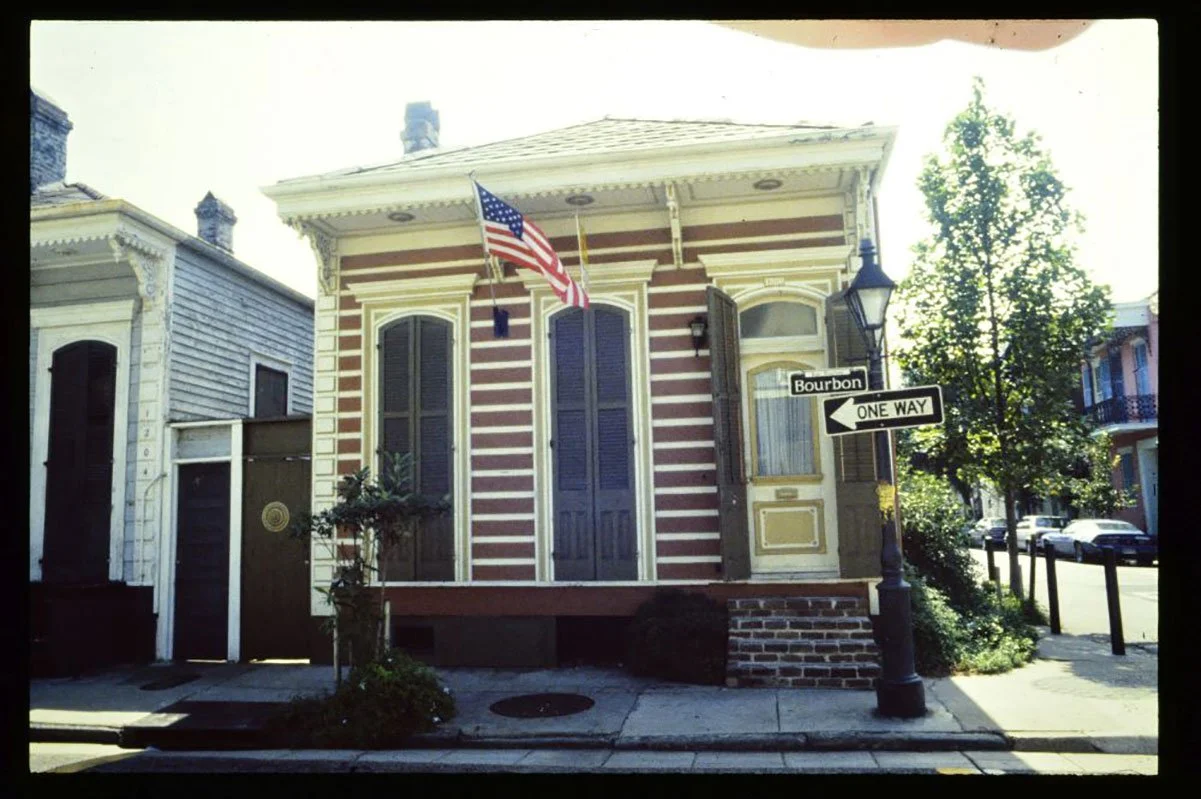
The Sweetbay Magnolia as a youngster in 1988, photo from the Vieux Carre Commission archives
The average lifespan of a Sweetbay Magnolia tree under optimal conditions is between 50 and 130 years. However, this number drops considerably for trees planted in sidewalk cutouts, averaging closer to 10 to 25 years. The root space is limited, soil conditions are not ideal and heat dehydrates the root zone faster than normal. That said, it is a true marvel to see this tree persisting despite these circumstances.
Due to the precarious nature of the French Quarter, trees along the sidewalks are subjected to especially unfavorable conditions. Cars crash into trees, their limbs get knocked by tall trucks and their roots get run over by vehicles parking on the sidewalk. To exist and persist as a resident of the French Quarter, whether human or another life form, is not for the faint of heart. This persistence deserves our respect.
Despite the ecological and health benefits of trees, there are opposing viewpoints about planting trees on the sidewalks of the French Quarter. Beyond concerns about infrastructure, some preservationists oppose sidewalk trees because they didn’t exist in the neighborhood’s early days and are therefore historically inaccurate. They argue that to maintain the neighborhood’s historic integrity, tree plantings should be relegated to courtyards and parks.
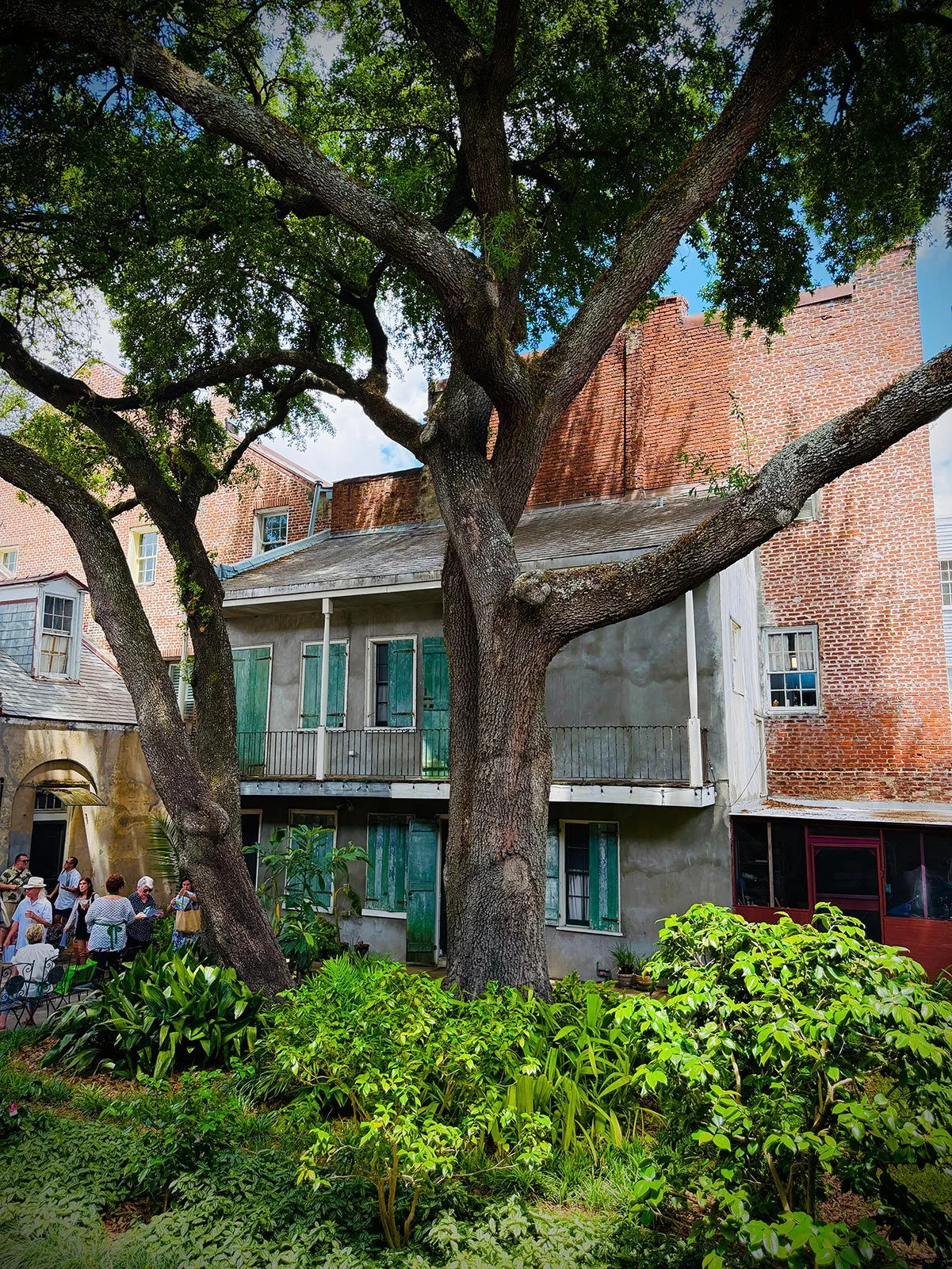
A live oak in the courtyard of a Rampart Street house, photo by Ellis Anderson
However, many residents and visitors disagree, noting that corralling trees to private spaces or the few parks that exist in the Quarter keeps everyone from enjoying their benefits. It also diminishes the benefits that these trees provide to our fragile ecosystem.
Picking the appropriate tree to plant along the sidewalk can make a big difference to the tree’s longevity and its overall environmental benefits.
Local arborist Jonathan Patrick (ISA and LDAF Certified), says that balance is the key to selecting the right tree for streetside plantings.
He advises that one select a tree “that can cast enough shade and give enough wildlife canopy to be effective, while avoiding trees that want to grow too big for their britches – which again, the city has guidelines for this.
“The Sweetbay Magnolia on Bourbon is an excellent example of a mature tree that, while robust, has set in without any significant damage to nearby infrastructure while maintaining a beautiful canopy, providing much-needed shade in the summer months and food and canopy for local wildlife.”
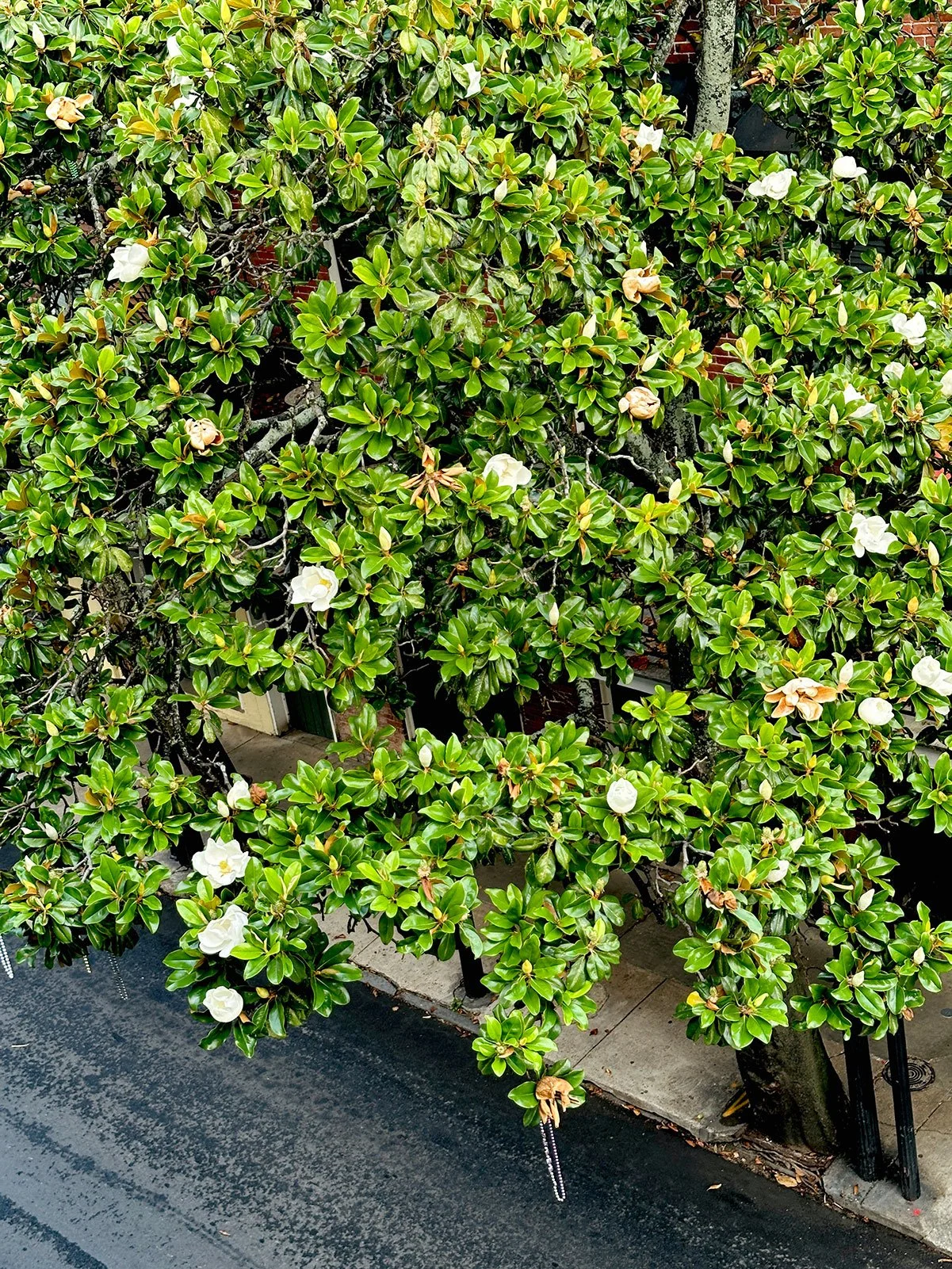
The beloved magnolia trees on the 800 block of Chartres Street - looking down from the balcony of French Quarter Journal’s office, photo by Ellis Anderson
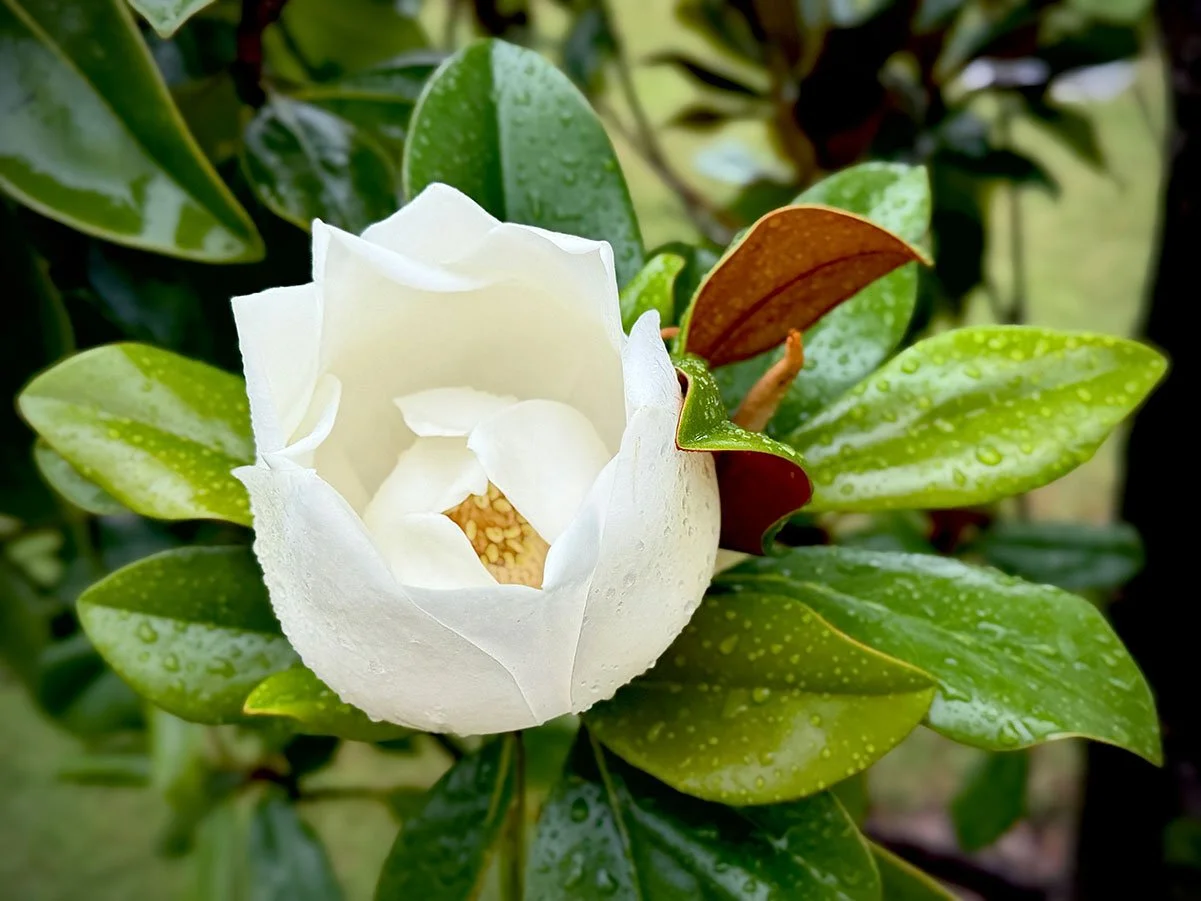
A magnolia blossom in a tree at the new Riverfront Park. Magnolia trees evolved before bees, so their blooms are pollinated by beetles. Photo by Ellis Anderson
Whether the advantages of planting trees along city sidewalks outweigh the disadvantages is an incredibly nuanced discussion that may never fully be concluded. However, a large body of scientific research and anecdotal evidence suggests that trees are crucial for healthy ecosystems and for our holistic health as humans.
Learning to live with the trees that would naturally inhabit the spaces now taken up by urban sprawl benefits our well-being – and the well-being of our environment as a whole.
Besides, how cool is it to see a large tree growing on Bourbon Street?
Read our story about Helen Sierminski and her urban nature tours here! You can also find at Nola Sidewalk Gardens and Forests on Instagram.
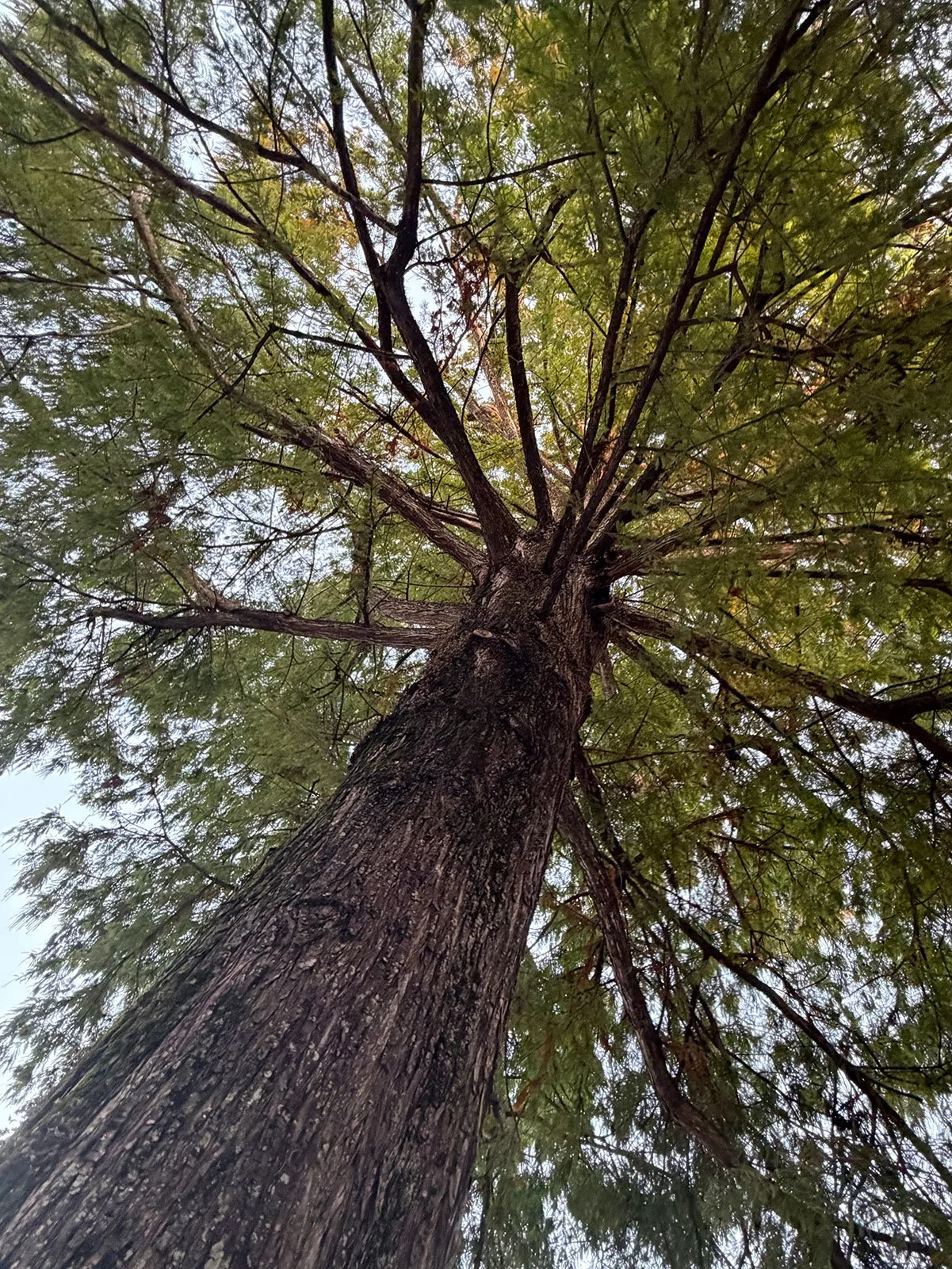
Looking up into the cypress at Governor Nicholls and Bourbon Street, photo by Ellis Anderson
*Special thanks to Jonathan Patrick, ISA and LDAF Certified Arborist, John Benton, Arborist for their assistance with knowledge of urban trees.
And special thanks to long-time French Quarter Residents Kim Rosenberg, Leo Watermeier, Gary Williams and Jon Kemp for providing context and details regarding the trees of the French Quarter. Without them, this article would not have been possible.