
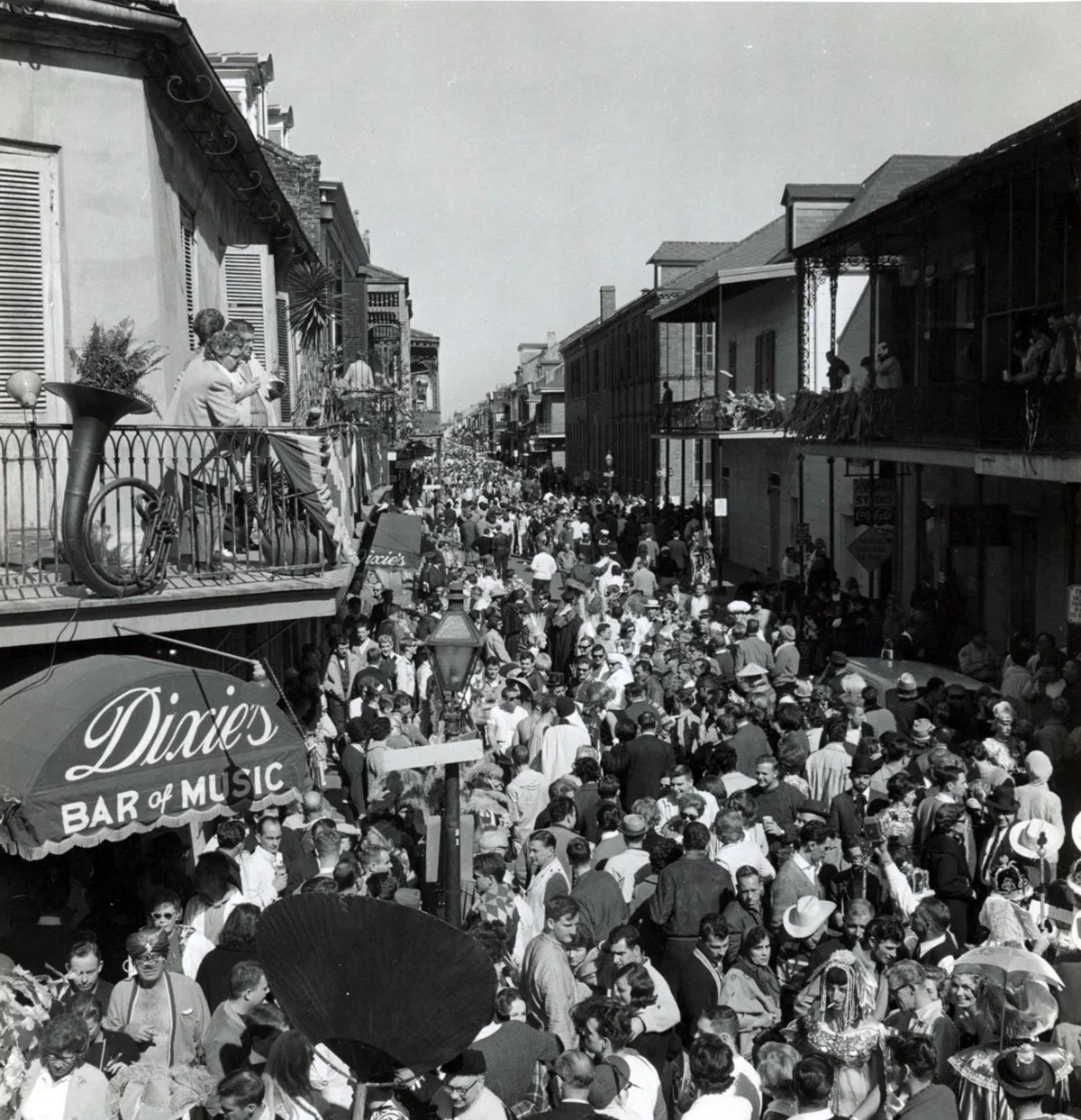
Dixie’s at Mardi Gras, between 1959 and 1964, by photographer Arthur W. Tong. Historic New Orleans Collection, the Richard R. Dixon/Cole Coleman Collection, gift of Mr. & Mrs. Richard R. Dixon, 1980.257.69
November 2026A fascinating new documentary takes a deep dive into the mostly forgotten 1955 Mardi Gras battle between police and gay patrons of Dixie’s bar, one that may have been more important than realized.
– by Claude Summers
On Mardi Gras weekend, February 20-21, 1955, several thousand revelers rioted in the French Quarter. The disturbances generated national headlines and resulted in dozens of arrests, injuries to police officers, and widespread disorder. Yet despite the attention they received at the time, the events have largely disappeared from the city's historical memory.
A new documentary, Bachelors Only, which premiered at the New Orleans Film Festival on October 24, revisits those events and offers a provocative interpretation. Filmmakers Lasse Lau and Flo Maak suggest that at least part of the unrest was rooted in resistance to police harassment of New Orleans' LGBT community.

This column is underwritten in part by the LGBT+ Archives Project of Louisiana
While the disorder that began near Pat O'Brien's appears to have stemmed from a drunken altercation, the confrontation that later erupted at Dixie's Bar of Music may have been more significant. The events at Dixie's may accord New Orleans an important place in the history of the struggle for equal rights in the United States.
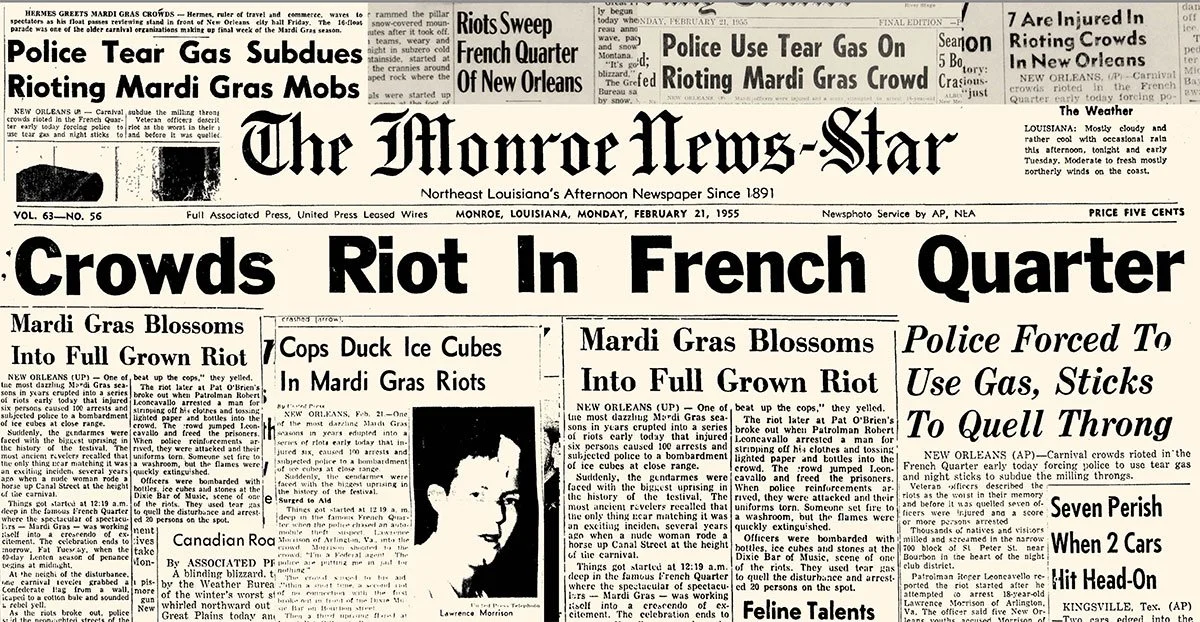
From the promotional materials of the Bachelors Only documentary
A Climate of Hostility
As Frank Perez documents in Rainbow Fleur De Lis: Essays on Queer New Orleans History, the 1950s were a difficult period for LGBT people in the Crescent City. In 1955, Police Superintendent Dayries publicly declared that homosexuals constituted the city's "Number One vice problem," adding, "They are the ones we want to get rid of most."
Despite New Orleans' contemporary reputation for tolerance and permissiveness, LGBT residents during the 1950s faced pervasive discrimination and official hostility. Police routinely raided gay bars, harassed patrons, and used entrapment tactics against gay men. Arrests on “morality charges” often had disastrous consequences because local newspapers published the names of those arrested.
Lesbians were not exempt from the harassment. In a 1953 raid of the Goldenrod Inn on Frenchman Street, forty-three lesbians were booked for disturbing the peace and being “loud and boisterous.”
The Starlet Lounge, on Chartres Street, which featured cross-dressing bartenders, lost its liquor license and was permanently closed as a “public nuisance” in 1954. The employees of Tony Bacino’s on Toulouse Street were repeatedly arrested in a multi-year campaign of harassment that began in 1958.
Many bar owners paid protection money or relied on informal arrangements to receive advance warning of periodic "clean-up" campaigns.
Such conditions inevitably bred resentment toward law enforcement. That resentment may have been especially acute during Mardi Gras, a season associated with freedom, masquerade, and the temporary suspension of social conventions. It was also one of the few times when cross-dressing in public was legal.
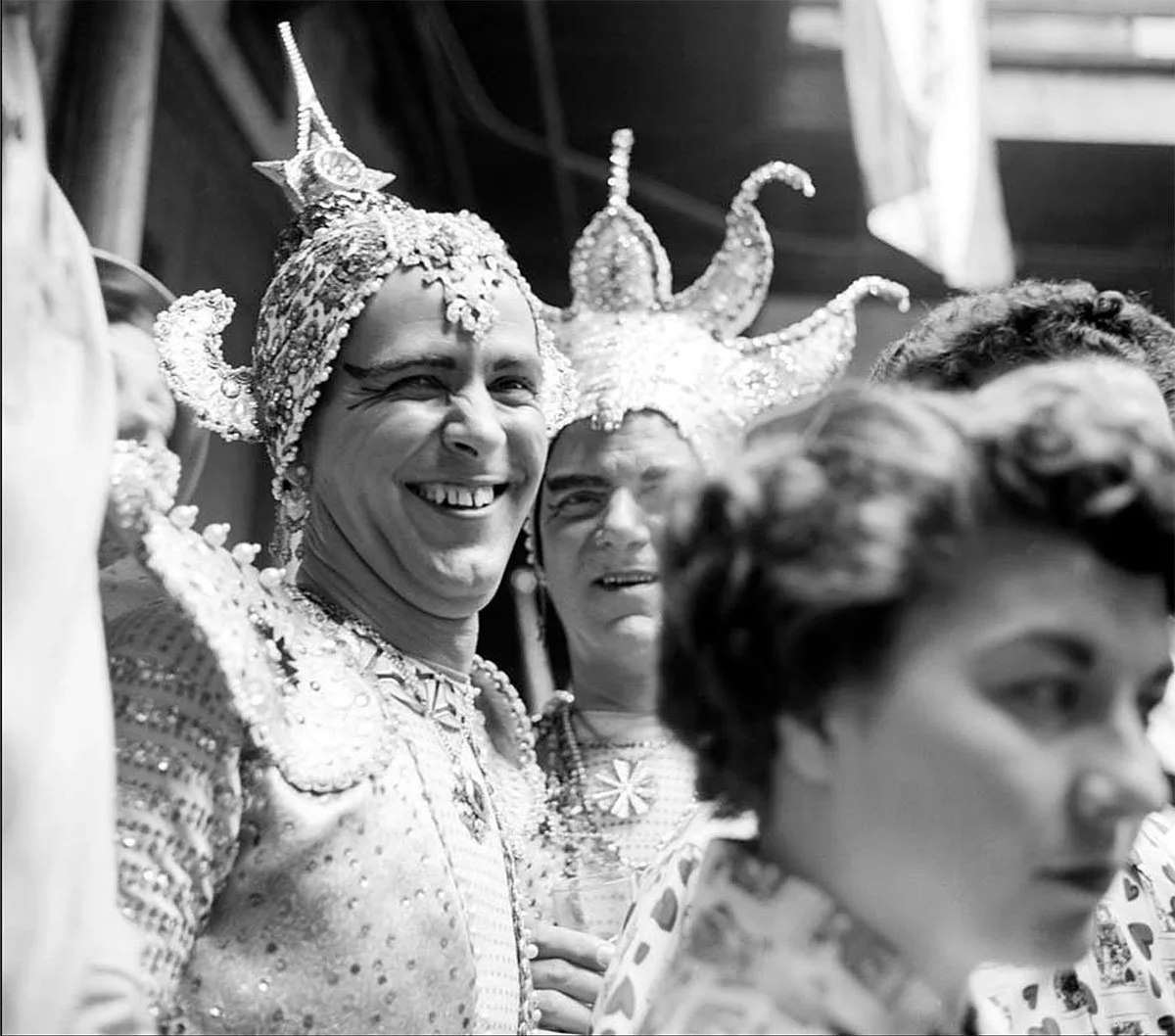
Mardi Gras in the early 1950s, photograph by Jack Robinson, the Jack Robinson Archive, LLC; www.robinsonarchive.com
For many LGBT New Orleanians, Mardi Gras offered a rare opportunity to express identities that otherwise had to remain hidden. Against that backdrop, police incursions into gay gathering places would have been seen not merely as law enforcement actions but as direct attacks on one of the community's few spaces of freedom and celebration.
Dixie's Bar of Music
The disturbances of Mardi Gras weekend in 1955 began in the 700 block of St. Peter Street outside Pat O'Brien's, where late on Sunday night a patrolman attempted to arrest an intoxicated young man who had tried to break into a car he mistakenly believed was his own.
Arrest records identify the man as Lawrence Morrison. During the struggle, an impaired Morrison kicked the officer in the groin. Bystanders joined the confrontation, and a large-scale riot quickly developed. In this sense, the initial outbreak of violence may fairly be described as a drunken brawl.
The second disturbance unfolded differently.
In the early hours of Monday, police–unprovoked–attempted to enter Dixie's Bar of Music at the corner of St. Peter and Bourbon Streets. The response from patrons transformed the encounter into something more than a continuation of the earlier street fighting.
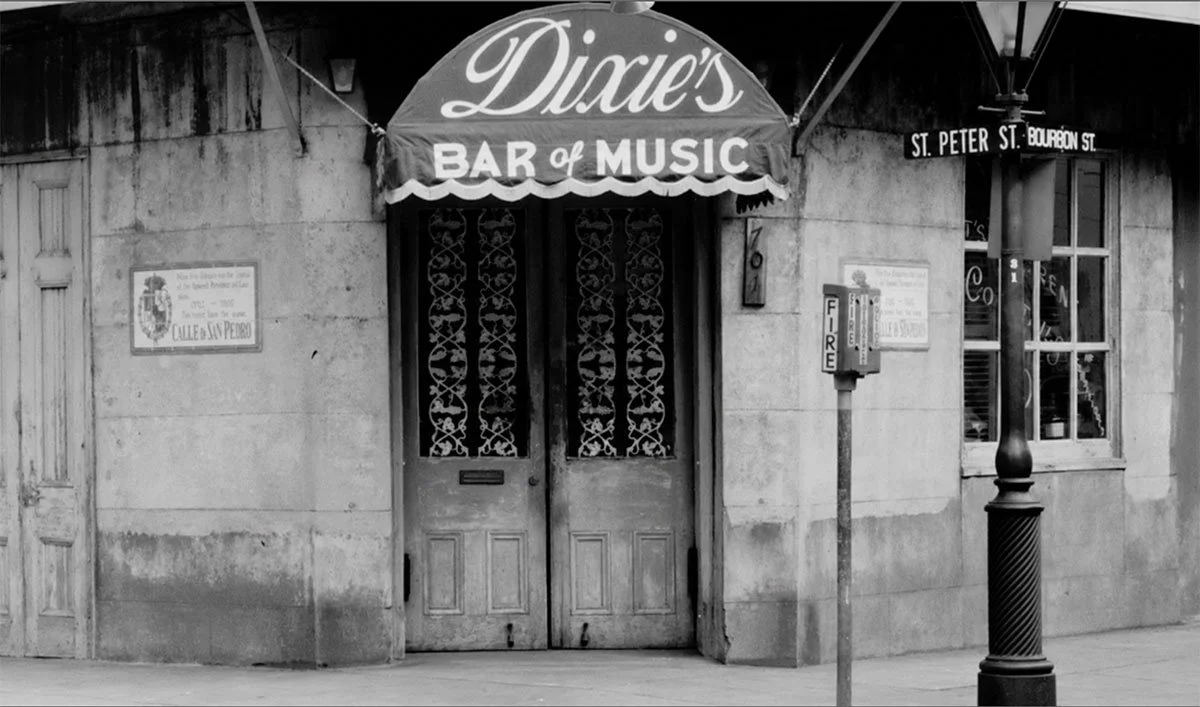
A screenshot from the Bachelors Only documentary, with permission
Dixie's occupied a unique place in New Orleans nightlife. Operated by sisters Irma and Yvonne Fasnacht, known respectively as Miss Irma and Miss Dixie, it was the beating heart of nightlife for gay men during the 1950s and early 1960s.
Originally established on the 200 block of St. Charles Avenue in 1939, the bar relocated to 701 Bourbon Street in 1949 where it remained until 1964. There it developed a reputation not only for music and entertainment but also for providing a welcoming and relatively safe environment for LGBT patrons.
Miss Dixie herself was a legendary figure. A clarinetist and vocalist who had performed in an all-women's swing band during the 1920s and ‘30s, she was fiercely loyal to her clientele.
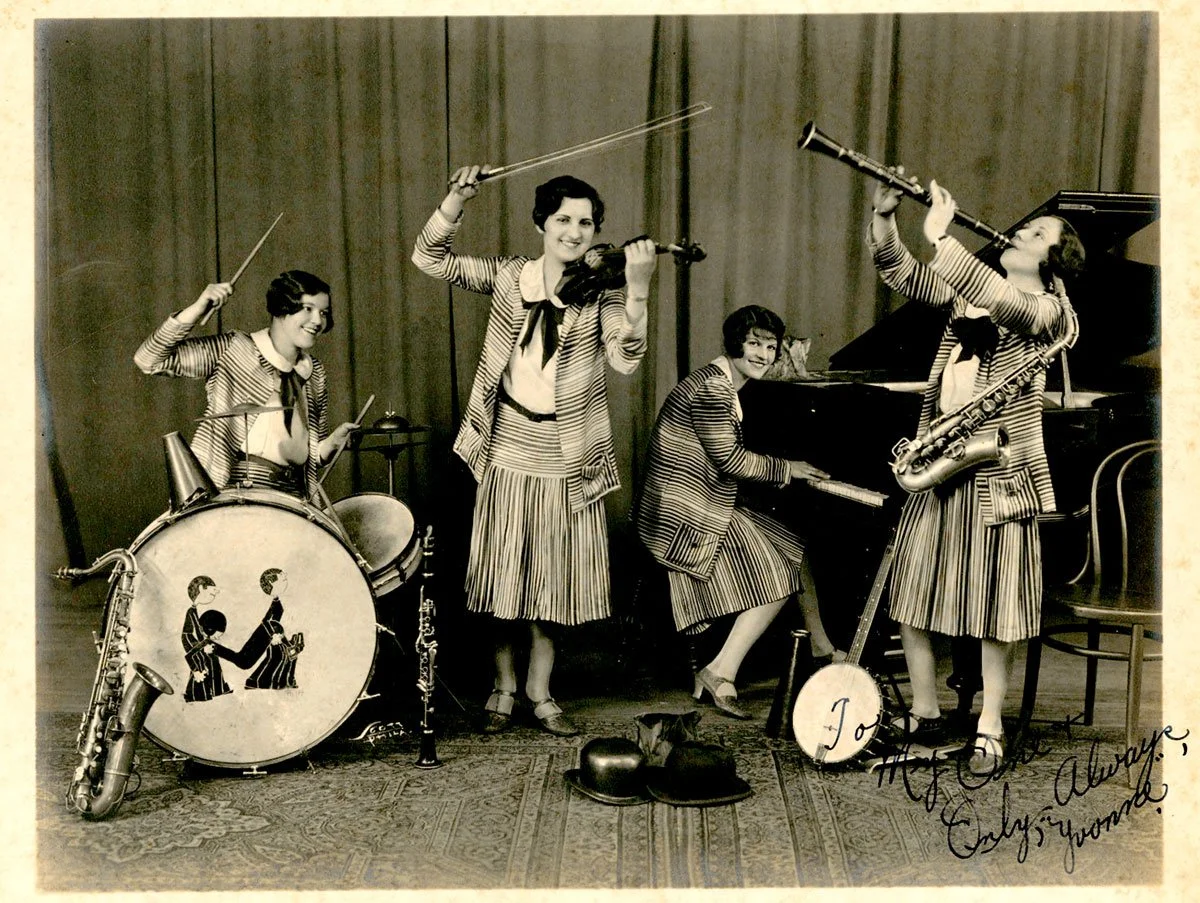
Miss Dixie, Yvonne Fasnacht, and her all-girl band in this 1929 photograph by “Scott.” Historic New Orleans Collection, 2010.0198.3
Her dedication became especially apparent in 1962 when Jefferson Parish authorities raided the Krewe of Yuga ball in Metairie and arrested nearly one hundred men. Miss Dixie quickly opened her safe, removed bail money, and sent her attorney to secure their release.
Although Dixie's attracted prominent writers, artists, visiting celebrities, and members of the city's social elite, including Tennessee Williams and Clay Shaw, on weekends and holidays the bar was filled to the rafters.
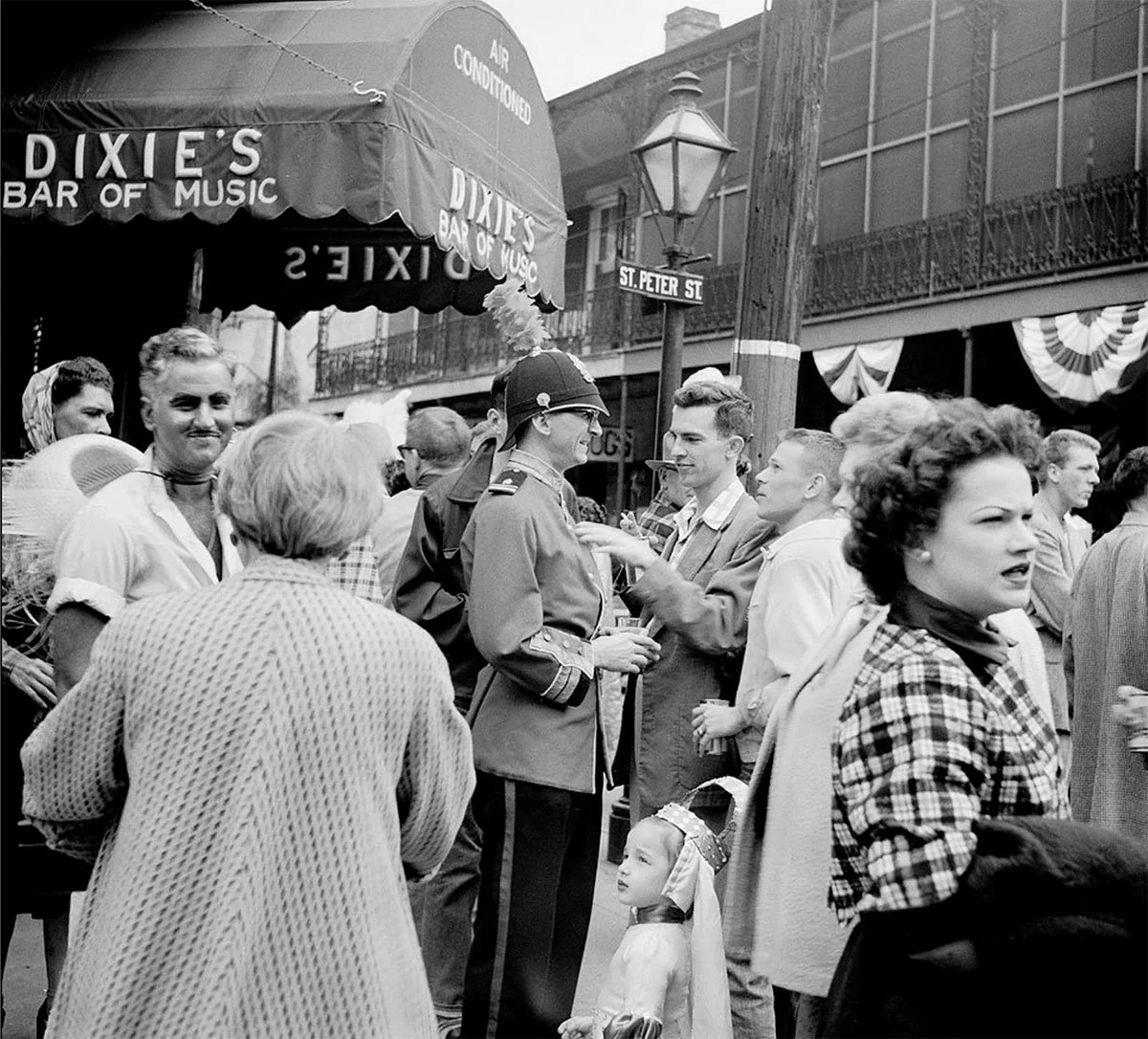
Mardi Gras in the early 1950s, photograph by Jack Robinson, the Jack Robinson Archive, LLC; www.robinsonarchive.com
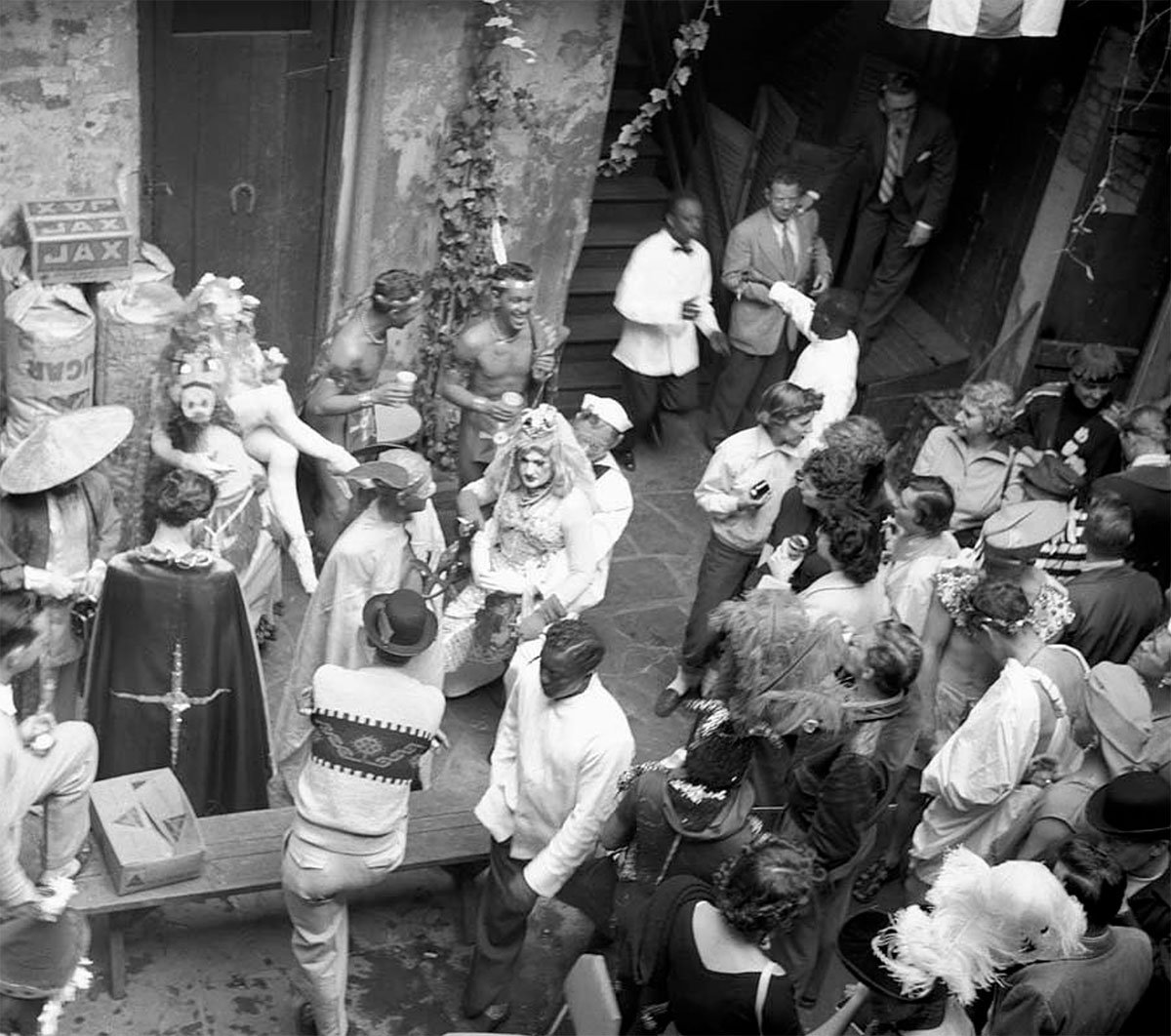
Mardi Gras in the early 1950s, Dixie’s courtyard, photograph by Jack Robinson, the Jack Robinson Archive, LLC; www.robinsonarchive.com
Given its importance within the community, it is easy to understand the outrage patrons may have felt when police attempted to enter the bar during the early hours of February 21, 1955.
When officers found their access blocked, they tossed tear gas into the crowded establishment. Patrons responded by throwing the canisters back and pelting police with ice cubes and beer bottles.
Police eventually quelled the crowd using nightsticks and arrested twenty people at the scene. But the confrontation did not end there. Patrons poured onto Bourbon Street, where they mingled with participants from the earlier disturbance near Pat O'Brien's.
By the time order was restored, more than 100 people had been detained by the police (at least 26 of whom were formally charged), many had suffered injuries, and seven police officers had been hurt. But the significance of the confrontation at Dixie's lies not in the scale of the violence, but in the fact that, instead of meekly submitting to another police intrusion, members of the LGBT community fought back.
Bachelors Only
Filmmaker Lasse Lau first became interested in the Mardi Gras riots while conducting research at the GLBT Historical Society Archives in San Francisco. There he encountered an oral-history recording that would become central to the documentary's narrative.
The recording was made in 1999 by the late Paul Coates, a U.S. Navy veteran, ballet dancer, and founder of the Ballet Academy and Theatre in Shreveport. In his oral history, he reminisces about his frequent visits to New Orleans during the 1950s and describes his participation in the confrontation at Dixie's during Mardi Gras weekend in 1955.
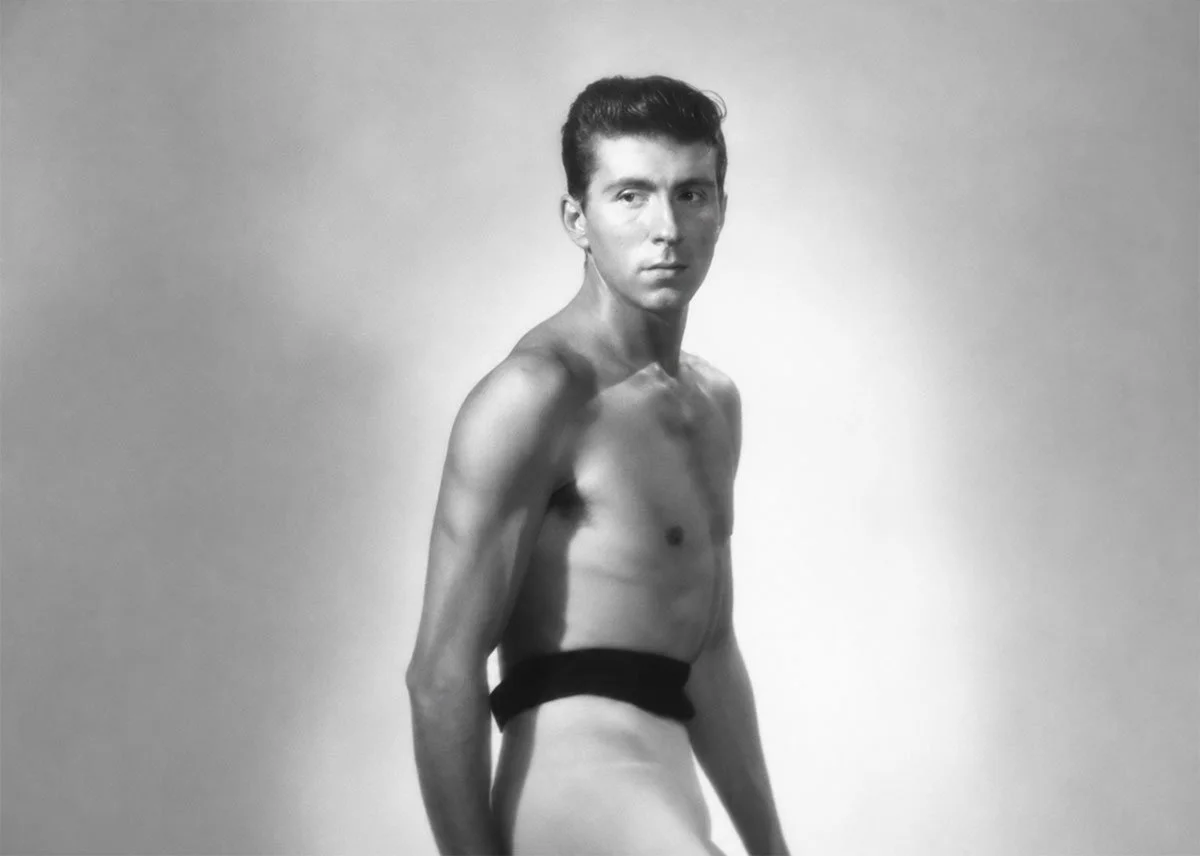
Paul Coates portrait from promotional materials for Bachelors Only.
As transcribed by Frank Perez in an article for Ambush, Coates colorfully recalled the scene:
Someone shouted out, "The police is trying to get in here," so we said, "Well fuck them!" And so we got the bar stools and just piled them up against the door and we barricaded, we locked the door first . . . So the police were trying to break down the door . . . they threw in tear gas . . . we all got our handkerchiefs and covered our faces and we found the goddamn tear gas and threw it right back out the window at them.
Coates' recollections form the emotional center of Bachelors Only. His account reveals an event that differs markedly from the street fighting outside Pat O'Brien's. What occurred at Dixie's was not simply a drunken brawl. It was also an act of organized resistance to police aggression.
The film's title comes from a euphemistic description of Dixie's in a tourist guidebook. Someone amused by the coded reference carved "Bachelors Only" on one of the bar’s side entrances.
Through archival materials, atmospheric imagery, and commentary from local historians Roberts Batson, Howard P. Smith, Alecia Long, and Frank Perez, as well as from regular patrons of Dixie’s such as CJ Blanda and Ray Durand, Lau and Maak vividly recreate both the era and the circumstances surrounding the riots. Heather Harlee Zimmer, whose aunt was Miss Dixie's life partner, contributes valuable personal insight into the character of one of the most colorful figures in New Orleans' queer history.
Pre-Stonewall Rebellions
Contemporaneous news coverage of the Mardi Gras riots failed to distinguish between the disturbances that began outside Pat O'Brien's and the confrontation that unfolded at Dixie's. Newspapers portrayed the entire episode as a single drunken riot and none mentioned that Dixie’s was a gay bar.
Viewed from a broader historical perspective, however, the events at Dixie's appear fundamentally different.
The patrons who resisted police efforts to invade Dixie’s were responding not merely to a single encounter but to years of harassment, intimidation, and discrimination. Their actions deserve consideration as one of the earliest documented examples of organized resistance to anti-gay policing in the United States.
The Stonewall riots in New York City's Greenwich Village during June 1969 have rightly come to symbolize a transformative moment in LGBT history. Yet Stonewall was not the first instance in which members of the queer community fought back against police oppression.
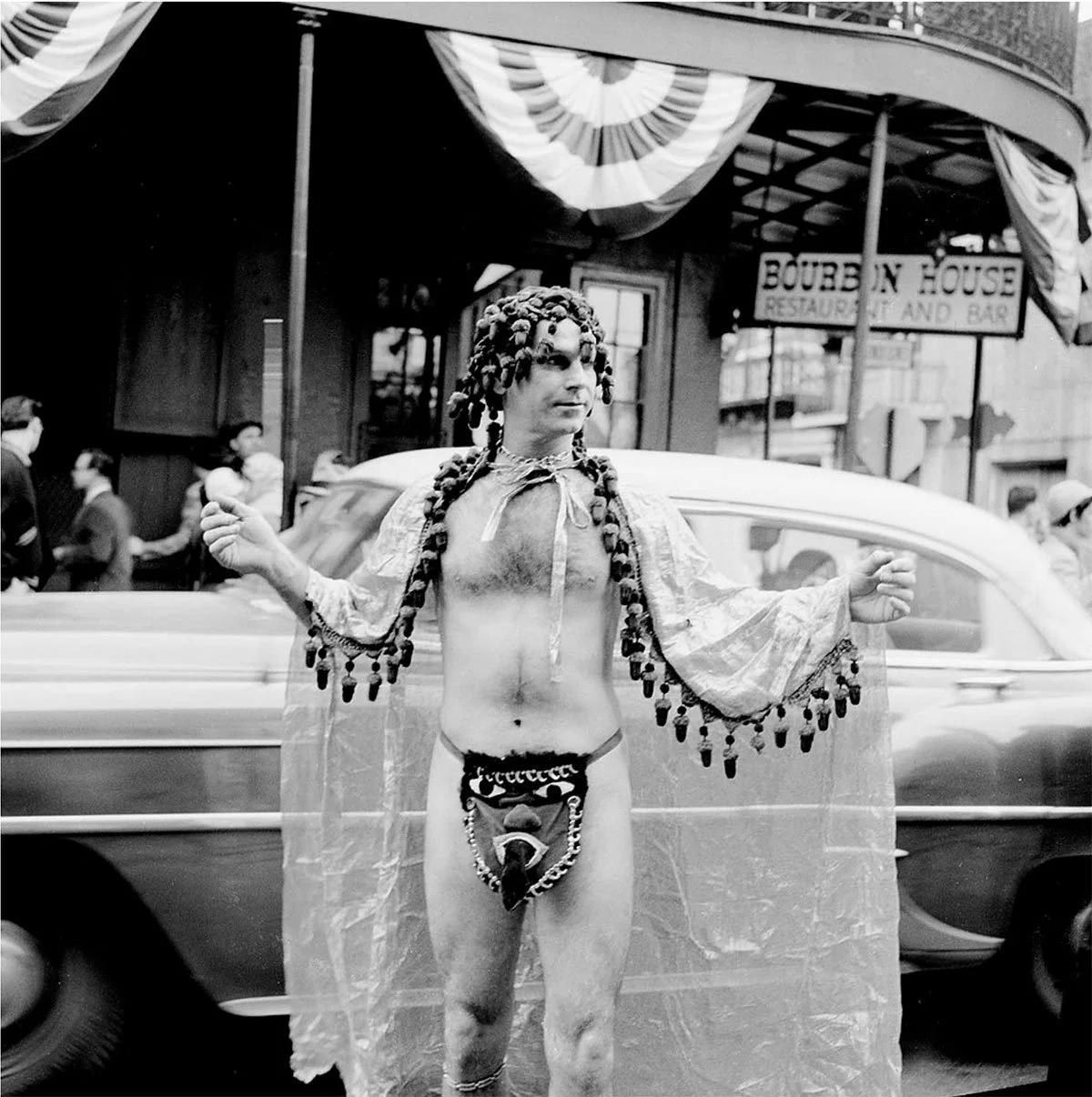
Mardi Gras in New Orleans, early 1950s. Photograph by Jack Robinson, the Jack Robinson Archive, LLC; www.robinsonarchive.com
In 1959, customers of Cooper’s Do-nuts, a 24-hour cafe in Los Angeles, are said to have resisted police harassment when LAPD officers attempted to arrest sex workers.
Better documented are incidents from the 1960s. In 1966, transgender patrons of Compton's Cafeteria in San Francisco's Tenderloin district rioted in protest against police abuse. On New Year's Day 1967, patrons of the Black Cat Tavern in the Silver Lake neighborhood of Los Angeles responded angrily after police raided the establishment and beat and arrested customers, triggering weeks of protests.
None of these acts of resistance predate the events that occurred at Dixie's during Mardi Gras weekend in 1955.
Unlike Stonewall, these earlier confrontations did not capture the national imagination. At the time, there existed no extensive network of LGBT newspapers and organizations capable of transforming local incidents into rallying points for a nationwide movement.
Nevertheless, they mattered.
Each represented a moment in which LGBT people refused to accept mistreatment in silence. Each contributed to the gradual emergence of a political consciousness that would eventually fuel the modern gay-rights movement.

The 1977 Anita Bryant protest, photo © Owen Murphy. Read more about the protest and see more of Murphy’s images in this piece about LGBTQ activist Bill Rushton by the late Frank Perez.
*Bachelors Only. Presented by Not Straight LLC and Bow & Arrow Entertainment and executive producer Kevin Jennings. A film by Lasse Lau & Flo Maak with support from the LGBT+ Archives Project of Louisiana and Others.