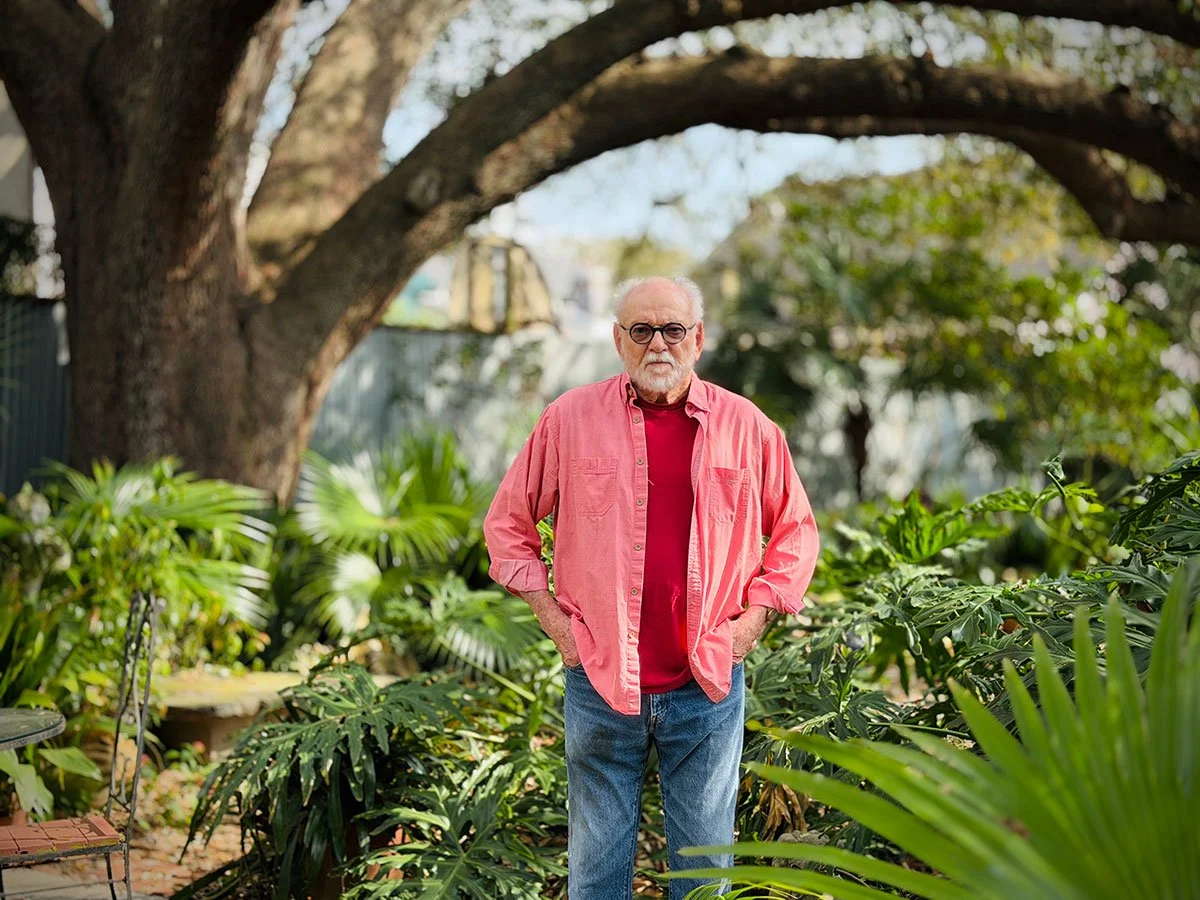
Gene Cizek in the back of his home Sun Oak, with the tree that once seemed condemned to make room for a pool. Photo by Ellis Anderson
March 2026The man who helped put the historic Faubourg Marigny neighborhood on the map – and still works to keep it there.
– by Doug Brantley
photos by Ellis Anderson and courtesy Gene Cizek, also Library of Congress
This column is underwritten in part by Cool Murphy Real Estate
Gene Cizek points to the dining room as he guides me through his famed circa-1807 Faubourg Marigny property.
“Christ on the cross!” I blurt out.
I am not swearing. A massive crucifix presides over the supper table. But Cizek has a long and illustrious history of rescuing and preserving pieces of New Orleans’ past.
“It’s from the first St. Louis Cathedral,” he notes. “After they put a fancier one in there, this one was the feature of the first African American church built specifically for Black people by the archdiocese. It sat there until the church was torn down to build Tulane hospital.
“I had it blessed, so the older ladies in the neighborhood could come over and do their prayers, without having to walk down to the cathedral.”
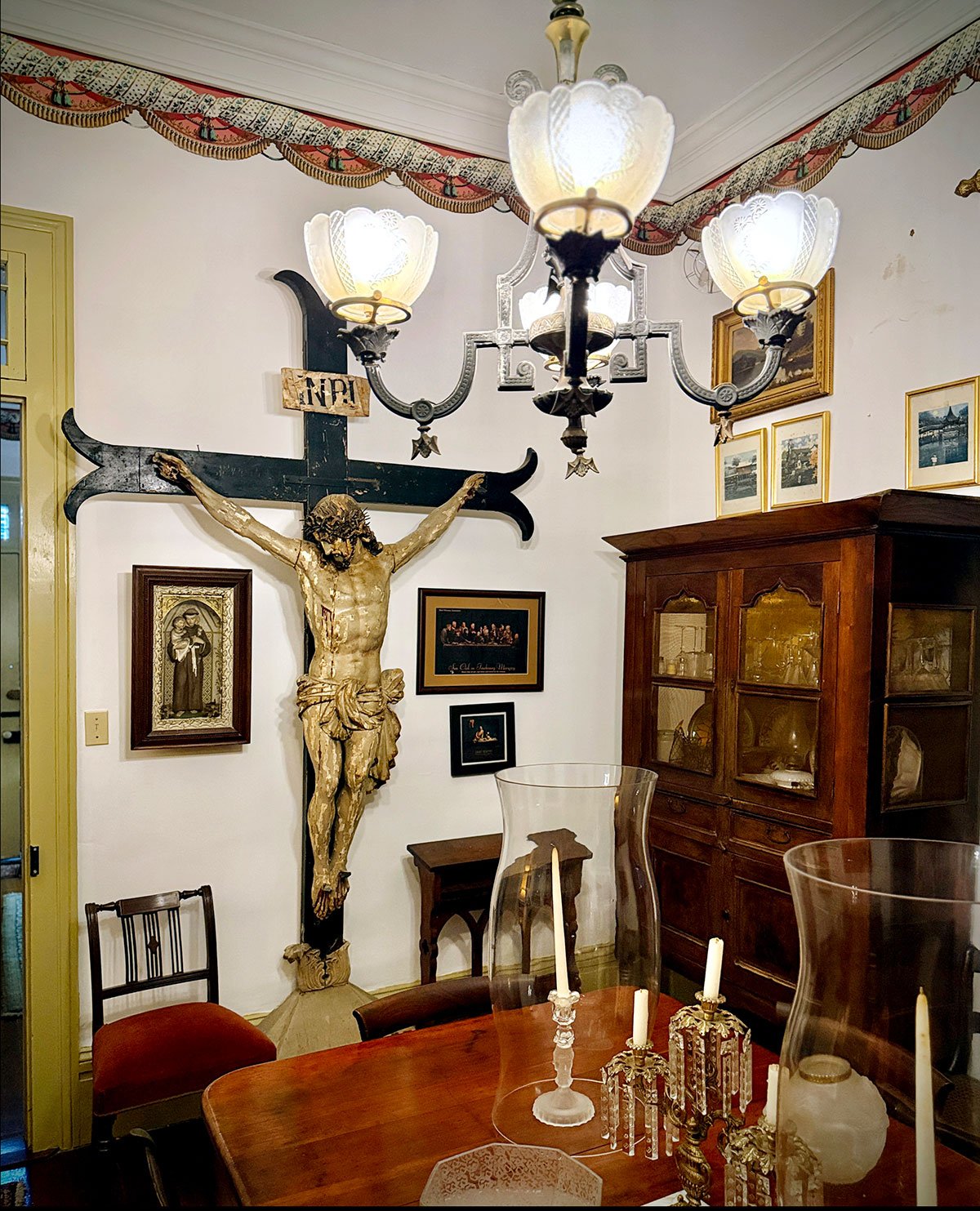
The dining room at Sun Oak, photo by Ellis Anderson
Cizek’s home, named Sun Oak, was designed as if three Creole cottages had been combined into one house. It was originally built by Constance Rixner Bouligny, a free woman of color. The lot was one of the first properties sold after plantation owner Bernard de Marigny subdivided his vast estate in 1806.
In 1836, the house was renovated in the Greek revival style. With a distinct gallery and rusticated façade, the home is renowned for its signature Caribbean coloring of French red, Egyptian blue, indigo and putty, which preservationist/architect/educator Cizek returned it to after purchasing the complex in 1976…for a mere $40,000 ($228k in today’s dollars).
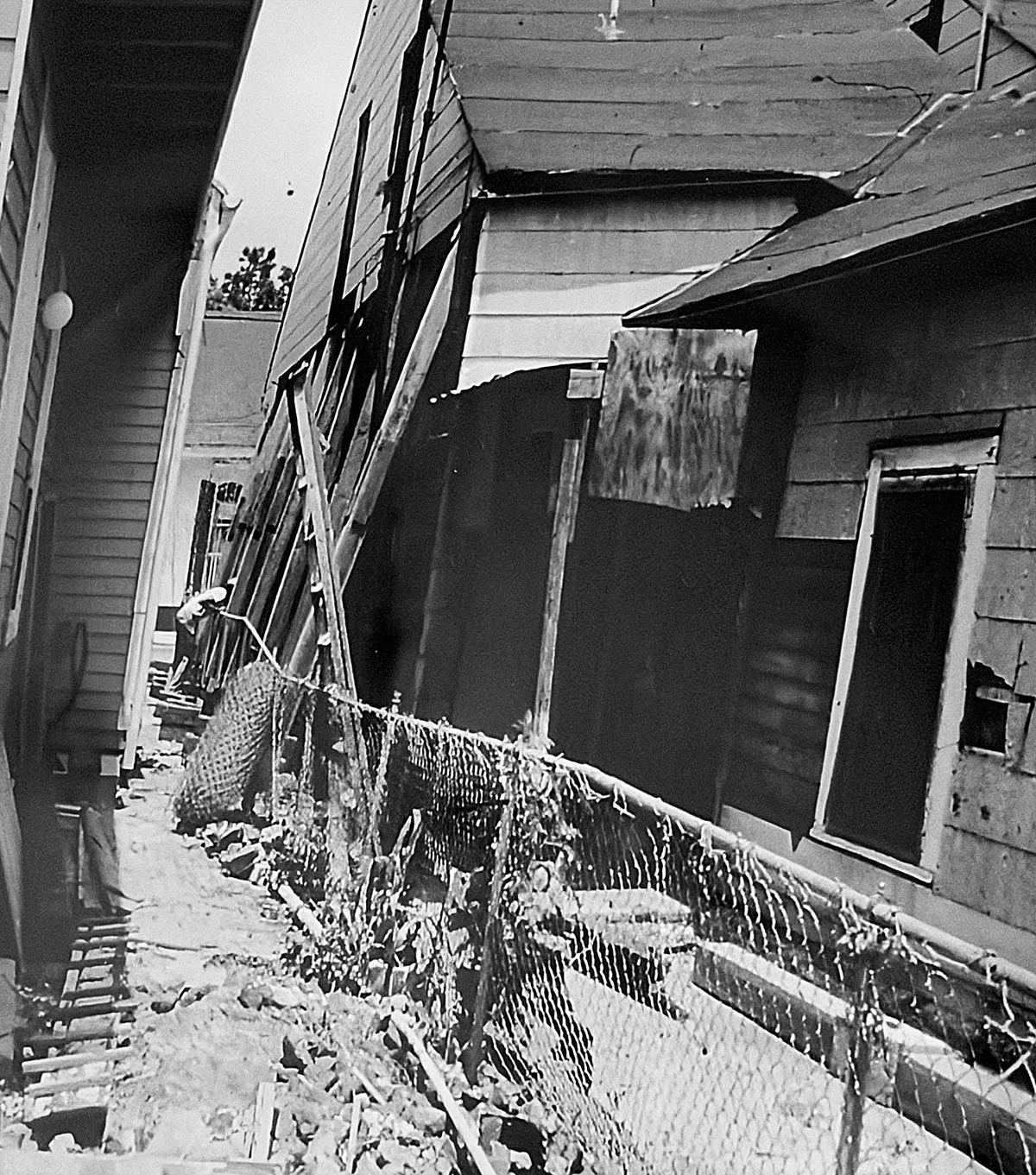
This photo hangs in Sun Oak today, reminding viewers of the way the house looked when Cizek first purchased it in 1976. Photo courtesy Gene Cizek
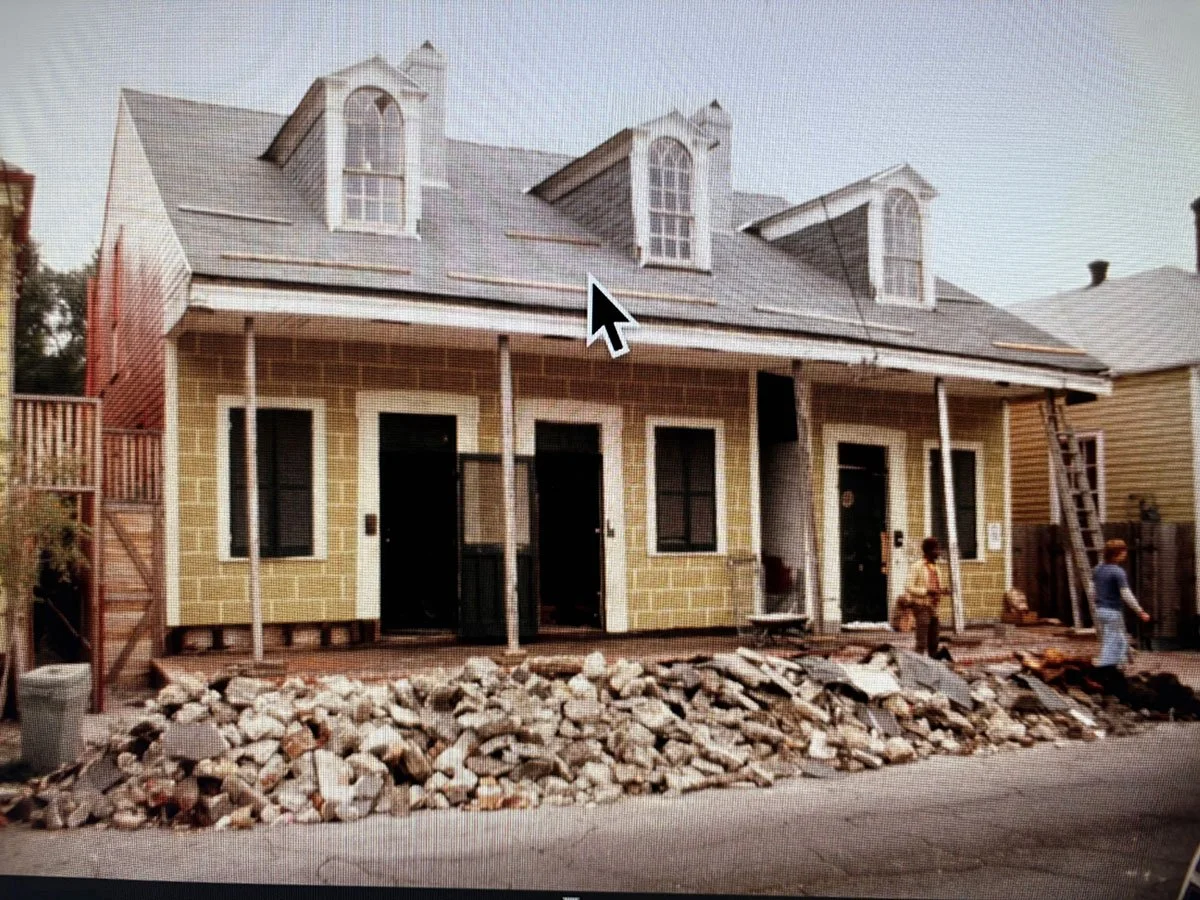
Sun Oak undergoing restoration in 1978, photo courtesy Gene Cizek
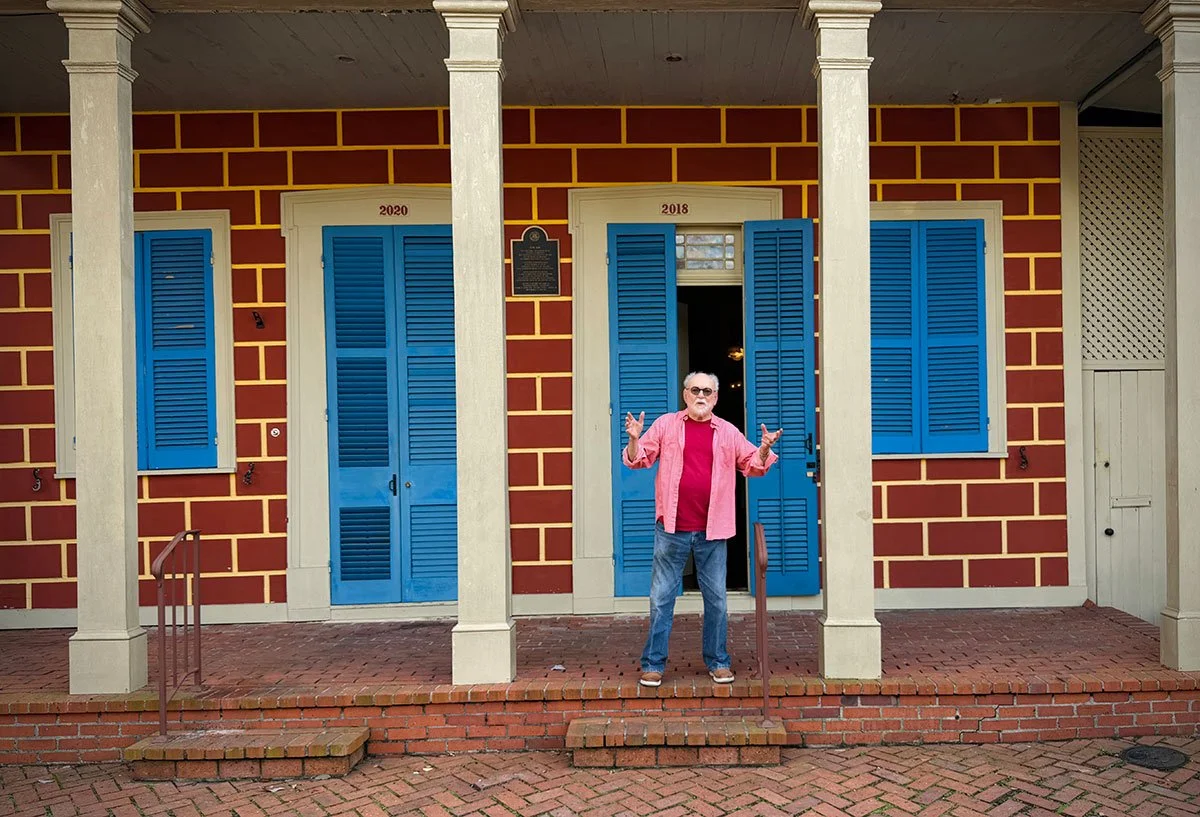
Gene Cizek on the front porch of Sun Oak, remembering the enormous scope of its restoration. The Marigny home is a show-stopper with its signature Caribbean coloring of French red, Egyptian blue, indigo and putty. Photo by Ellis Anderson
“At the time, I had five properties,” he recalls. “This was the most expensive, but it was also the largest. The first was on Kerlerec Street and also built by a free woman of color, who was related to Étienne de Boré, the sugar guy.
“I paid $20,000 [for Kelerac] and the owner financed it.”
In those days, banks would not loan to investors in areas east of Esplanade, and insurance companies redlined the districts. So, Cizek set out to change that—and did he ever.
***
Born in 1940 to Bohemian parents—not the French Quarter variety (though they did keep an apartment in the Vieux Carré during the 1920s and ’30s), but real-deal Bohemians (as in the Czech Republic)—Cizek hales from a long line of movers and shakers, thinkers and doers.
His grandfathers, Martin Cizek and John Fabianek, each founded small, central Louisiana communities of Bohemian immigrants during the early 1900s: Kolin, which catered to farmers, and nearby Libuse. Born out of the Freethinkers Society, Libuse was home to a number of buildings designed by grandfather Cizek, an architect.
“My grandfather came from a very intellectual family,” Cizek says. “His cousin, Franz Cizek, is the founder of modern art education, and traveled the world showing the work of his students. In the 1920s, he was even here in New Orleans, with a huge exhibition at the New Orleans Museum of Art.
“Franz studied in Vienna and later founded the School of Art there.” Several famous Bauhaus movement architects like Walter Gropius and Mies van der Rohe studied under Franz.
Cizek’s parents, Darwin (who himself traversed the globe as a Merchant Marine) and Matilda, operated lucrative mercantile stores in the Alexandria area. Both died when their son was just 15, but not before imparting a passion for architectural preservation.
“When I was a wee child, my mom and dad started taking me ‘to tell the buildings goodbye,’” he recalls, “because they would be torn down. Alexandria went through some terrible teardowns. Bolton Avenue, where the rich people lived—gone.”
“My dad used to say, ‘There’s no such thing as a bad building. It might be ugly, but if it has good bones, you can remodel it.’”
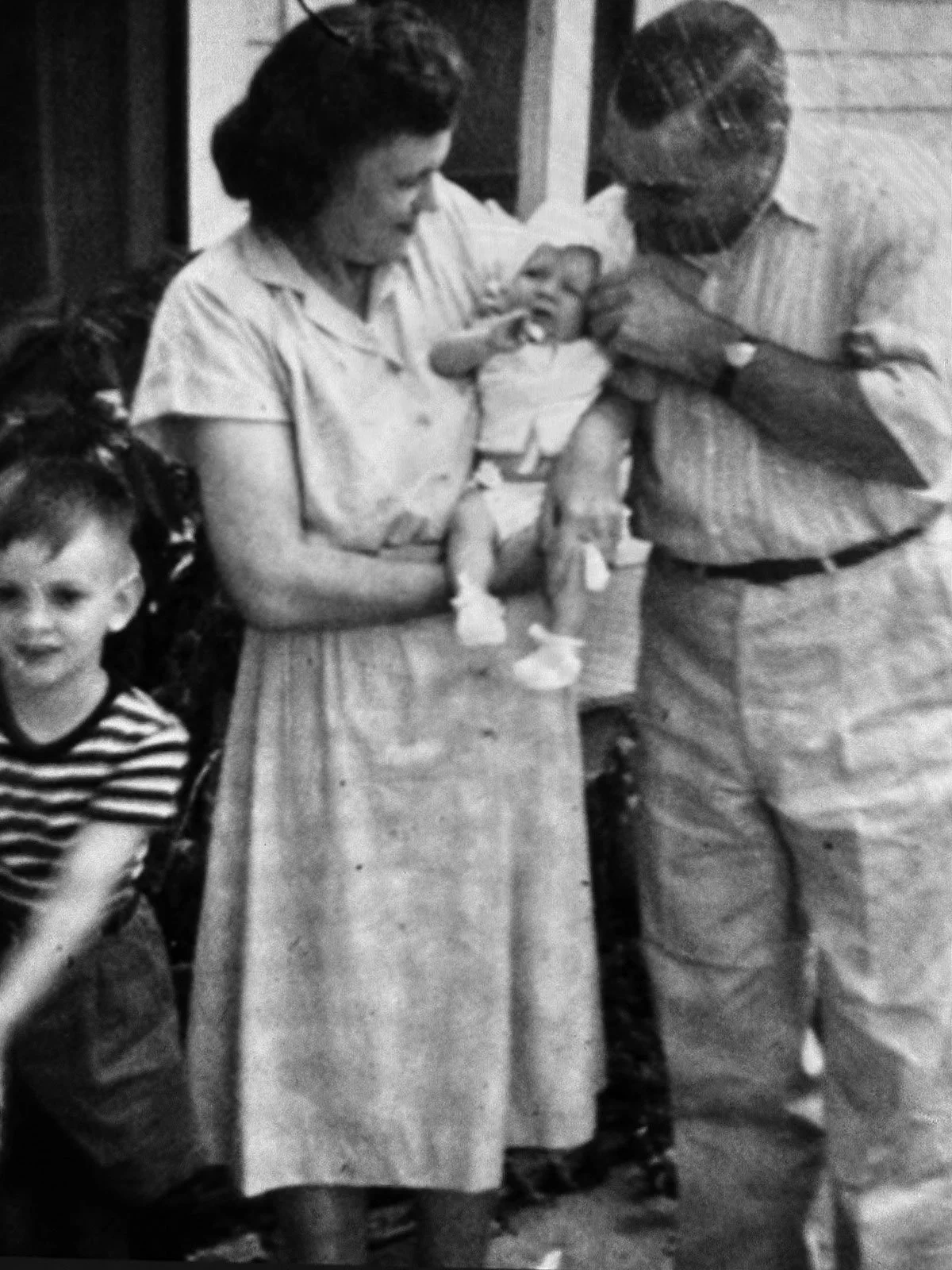
Gene Cizek (left) age 6 years old with his mother, Matilda ,and father, Darwin, holding their first grandson Jim. The photo was taken at the family home on the Holloway Prairie Road in Libuse, La. founded by Cizek’s grandparents in 1906.
Cizek honed his own architectural and artistic talents at an early age, roaming rural woods where he used his imagination and bits of this and that to create "little communities out in the country.” In the sixth grade, he began teaching art to second graders and continued throughout his high school years.
By age 12, he was drawing for “Katy Keene” comics, part of the “Archie” series, which encouraged readers to submit costume sketches for the character, as well as home and interior designs.
“My parents loved comics,” Cizek says, “and thought they were the best way to teach a kid to read.
“One day, my mom said, ‘Look, Gene. There’s this nice little boy, Lloyd Sensat, in Crowley, Louisiana, who’s drawing for “Katy Keene.” You should write to him!’
So, he did, and 8-year-old Lloyd wrote back.
Little did either realize that the newfound pen pals would become soulmates some 20 years later.
***
After his parents’ passing, Cizek managed the family store until he graduated (“I made more money—not adjusted income—but more money, period, than I’ve ever made since”), before his two older sisters sold the business.
Though his parents had set aside college funds, Cizek received a scholarship to LSU, where he majored in architecture and minored in landscape architecture. He graduated in 1964.
With the encouragement of several LSU professors who felt Cizek needed more of a challenge, he applied for advanced degree programs at MIT. He was accepted and awarded scholarships, going on to earn two master’s degrees there: one in city and regional planning, the other in urban design. He would continue his studies, garnering a Fulbright Scholarship to the Delft University of Technology in the Netherlands, where he received a Doctor of Science degree in planning.
He followed with another PhD in environmental social psychology from Tulane University, where his dissertation, titled “Faubourg Marigny: A Proposal for Environmental Conservation,” set the course for his career. Working all the while, he took eight years to complete it.
Teaching landscape design at LSU during the late 1960s, Cizek rented a weekend getaway pad at Dauphine and Pauger streets, in what was then referred to as “the neighborhood below the Quarter.” It was $54 a month – utilities included.
He also lived in the French Quarter for a stint, moving to Dumaine, between Decatur and Chartres, in the summer of 1970, just as he was beginning his tenure at Tulane, where he would establish the university’s Master of Preservation Studies.
“My god, the Quarter was wild then!” Cizek says. “We were all living, living, living!”
And what a life.
“When I first got here, I didn’t want to get involved in gay life at all,” he insists.
But within days of moving in at Dumaine, he had landed an invite to Tennessee Williams’ Fourth of July party, through one of his LSU students who was intimate with the playwright.
“It was just unbelievable. There were cops there, firemen, politicians.”
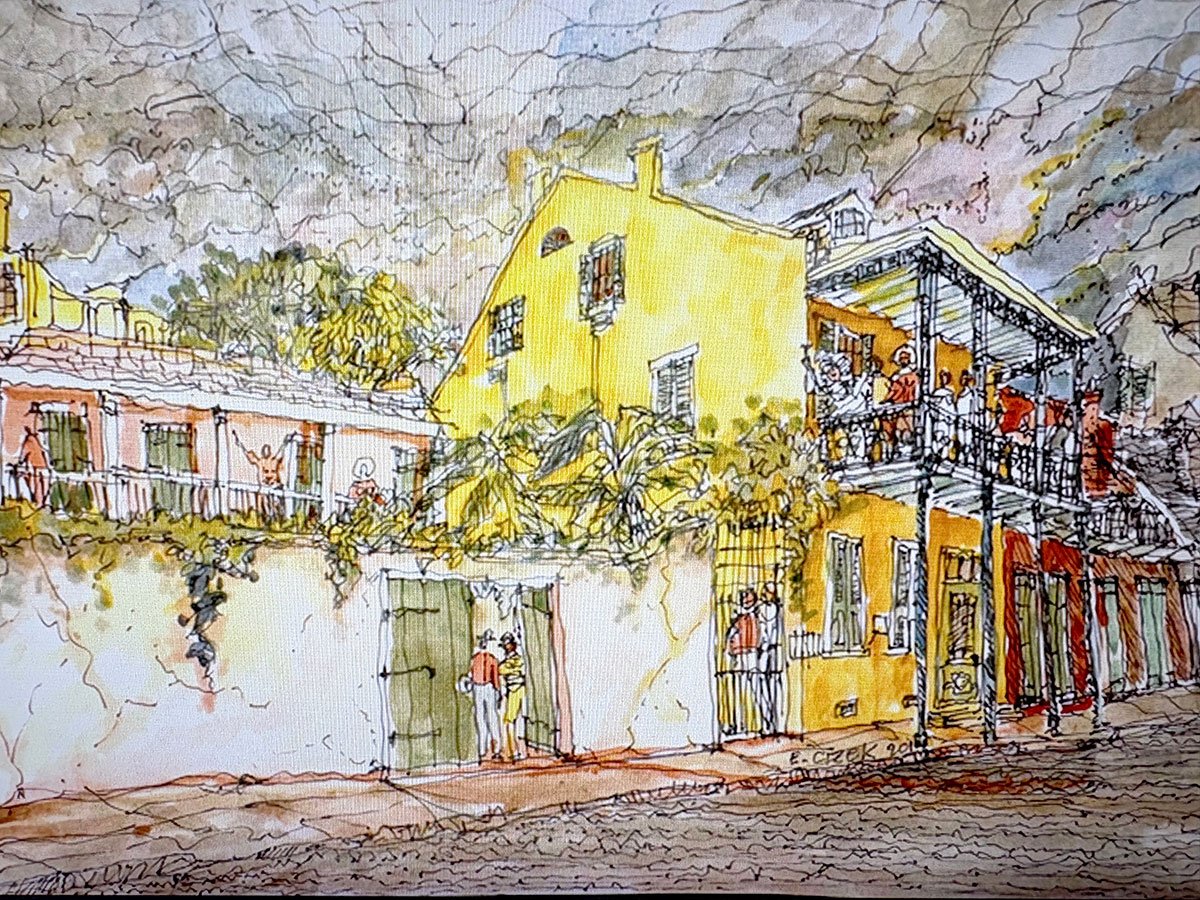
Tennessee William”s House in the French Quarter, where Cizek once attended a Fourth of July party. Cizek later painted this watercolor which as the cover sheet for the book ”Where Writers Wrote.”
But as hard as he was living, Cizek was even harder at work protecting the then-endangered Marigny neighborhood, where he purchased that first home on Kerlerec Street (which served as the focus of his PhD) in 1971.
While simultaneously teaching at Tulane (where he would continue until 2015) and slugging away at his doctorate, Cizek – who was also serving as director of architecture and planning for the New Orleans Urban Renewal Authority – got tapped by city planning commissioner Harold Katner to conduct a study of the Marigny.
The year prior, the Archdiocese of New Orleans had demolished the Henry Howard-designed Holy Redeemer Catholic Church on Washington Square, along with its neighboring Carnegie Library, both of which had been damaged during Hurricane Betsy.
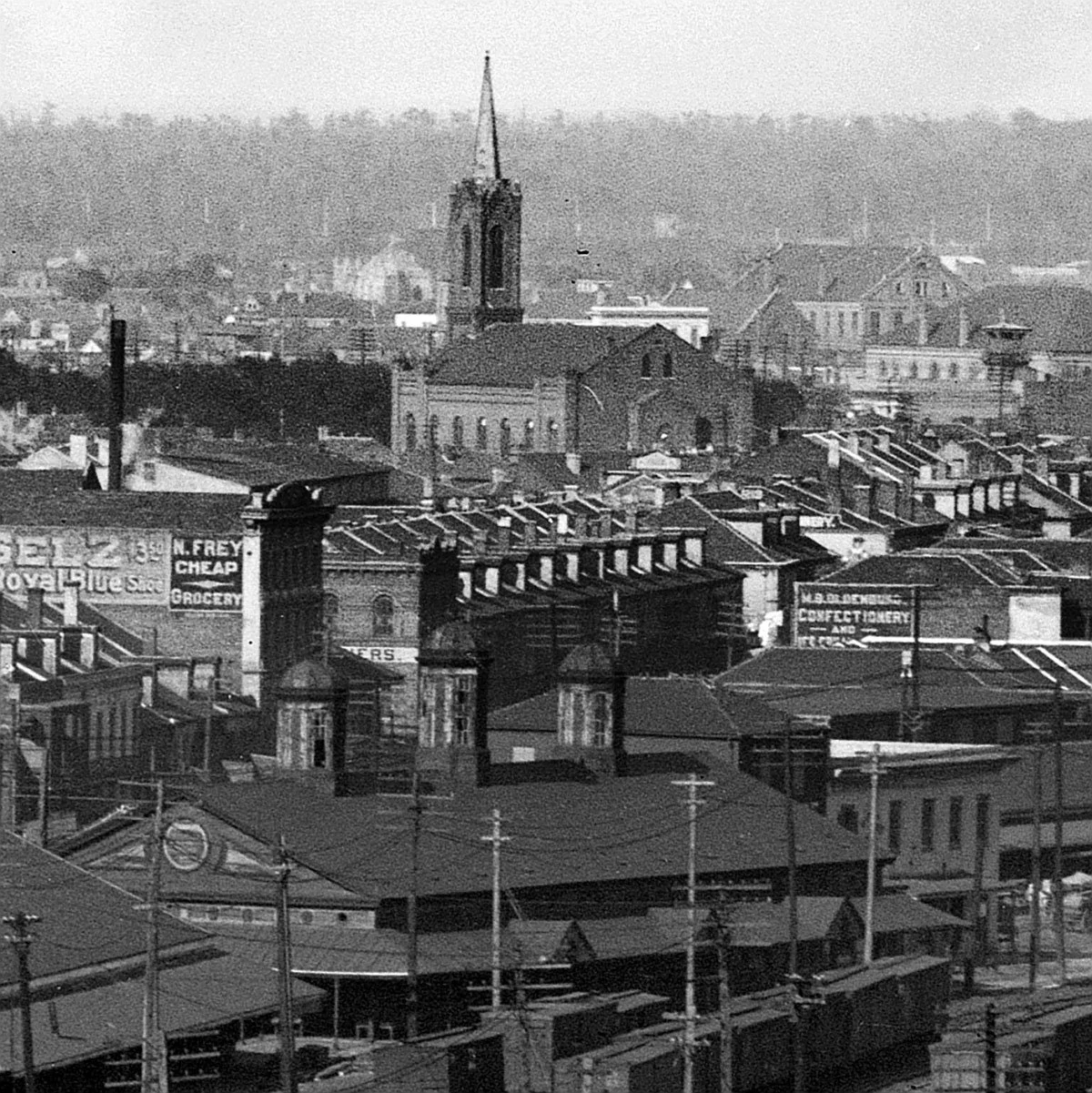
View of the Third Presbyterian church that was torn down. The treed area it’s facing is Washington Square. The Carnegie Royal Branch library (below) is adjacent. Photo Library of Congress
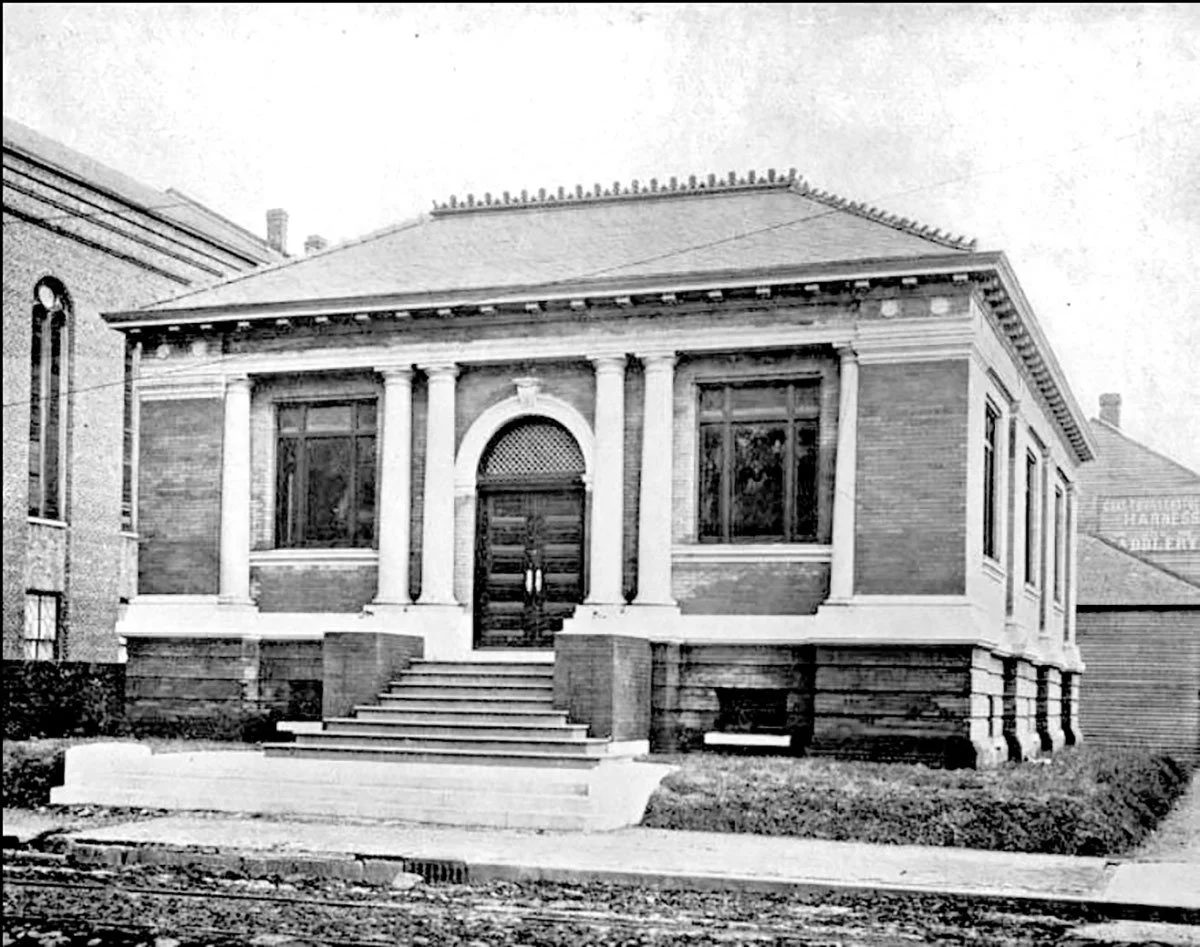
The Carnegie Royal Branch Library in 1907, shortly after it was built. Visible is a piece of the Third Presbyterian Church to the left. Both buildings faced Washington Square Park and were demolished to make way for the behemoth Christopher Inn. Creative Commons Wiki image
In their place was erected the nine-story, behemoth Christopher Inn senior-housing complex, which dwarfed the square and its surrounding properties. Architecture advocates, Cizek included, were outraged, fearing the rest of the neighborhood could well suffer the same fate.
At the time, the only section of the city protected by historic-district zoning was the French Quarter. Katner charged Cizek, who enlisted a battalion of his former LSU students and current Tulane students (“I called them my army”), with canvassing the neighborhood to explore the idea of implementing similar zoning to aid in its preservation and renewal.
“We did the study in the spring of 1971,” Cizek says, “and that summer, Historic Marigny Zoning was born. First in the Triangle, then in the Rectangle. Then it was going everywhere. It became the zoning for old neighborhoods.”
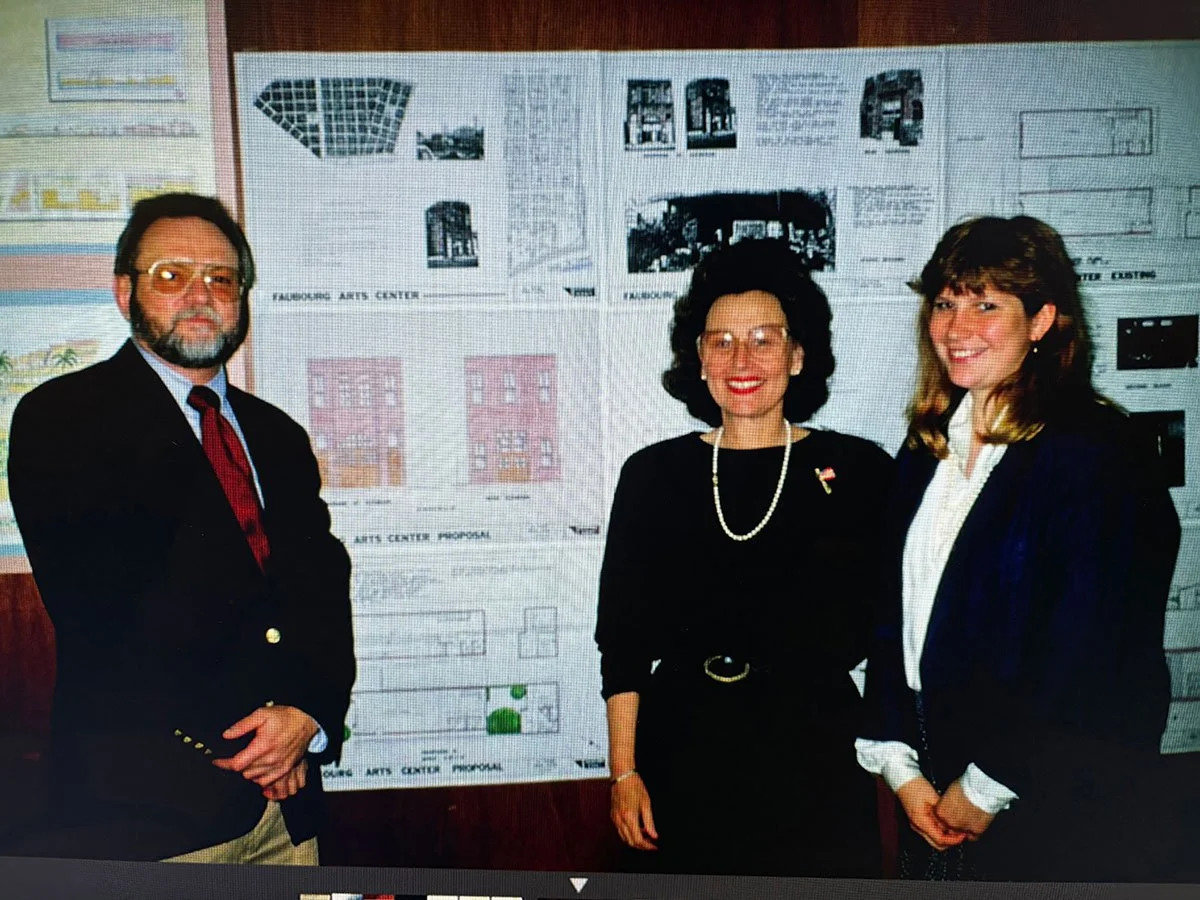
Cizek and Counciilwoman Jackie Clarkson with a Tulane student at a presentation of The Proposed Master Plan for Faubourg Marigny, photo courtesy Gene Cizek
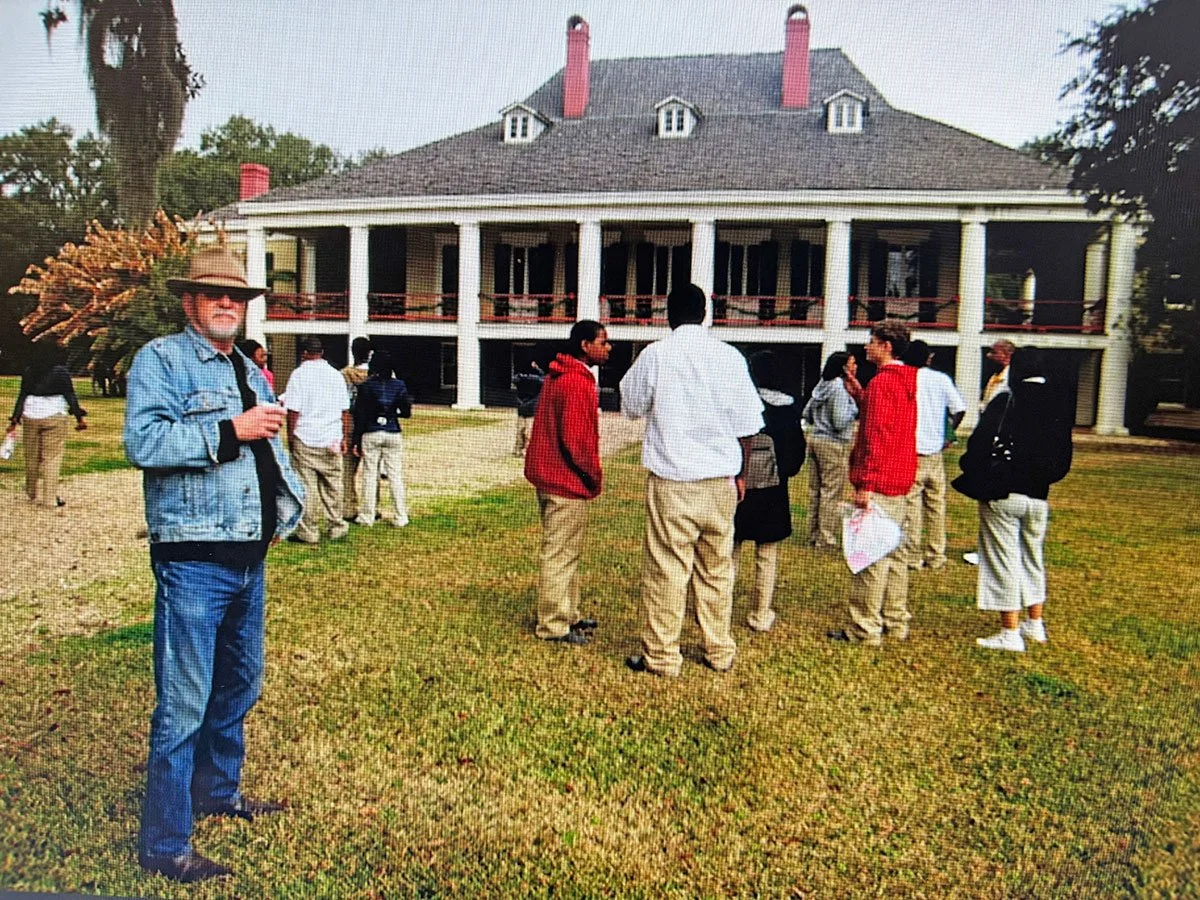
Cizek on a field trip with his Tulane students at Destrehan Plantation, which was restored by Cizek. Photo courtesy Gene Cizek
And so, it began.
The following year, Cizek would take the lead in founding the Faubourg Marigny Improvement Association and serve as the organization’s first president. He remains an active member today.
In 1974, the city designated the Marigny the first historic neighborhood outside of the French Quarter.
That same year, Cizek helped establish the Preservation Resource Center, broadening his vision for and influence on the city.
While at MIT, the preservationist had worked on a New York project called “Back to the City,” focusing on the reuse of existing buildings. The project became the impetus for The Historic Tax Act (part of the federal Tax Reform Act of 1976), which accelerated depreciation for the rehabilitation of historic structures nationwide.
Following its passage by the U.S. Congress, Cizek sold his Kerlerec Street property and purchased Sun Oak – now financed through American Savings and Loan – and became the first homeowner in the state to utilize the tax-incentive program.
***
Back in 1971, not long after he bought the Kerlerec cottage, Cizek attended a niece’s wedding in Lafayette. Afterward, he visited a local bar, where one of his students was playing in a band. He struck up a conversation with the bartender.
“I told him I had just bought a Creole cottage in New Orleans,” he says. “And this really cute guy with a burr haircut came running over and said, ‘I just love Creole cottages!’
“It was Lloyd.”
Call it kismet. “My life has been full of these crazy, crazy happenstances.”
But their reconnection was short-lived; Sensat was leaving the next day to join the Air Force, hence the burr cut. They would not cross paths again until 1977, shortly after Cizek acquired Sun Oak.
“It was Easter, and I’m walking down Royal Street past the Golden Lantern bar,” he reminisces. “And Lloyd is there, and he’s drunk. I dragged him home with me, and we were together for 37 years.”
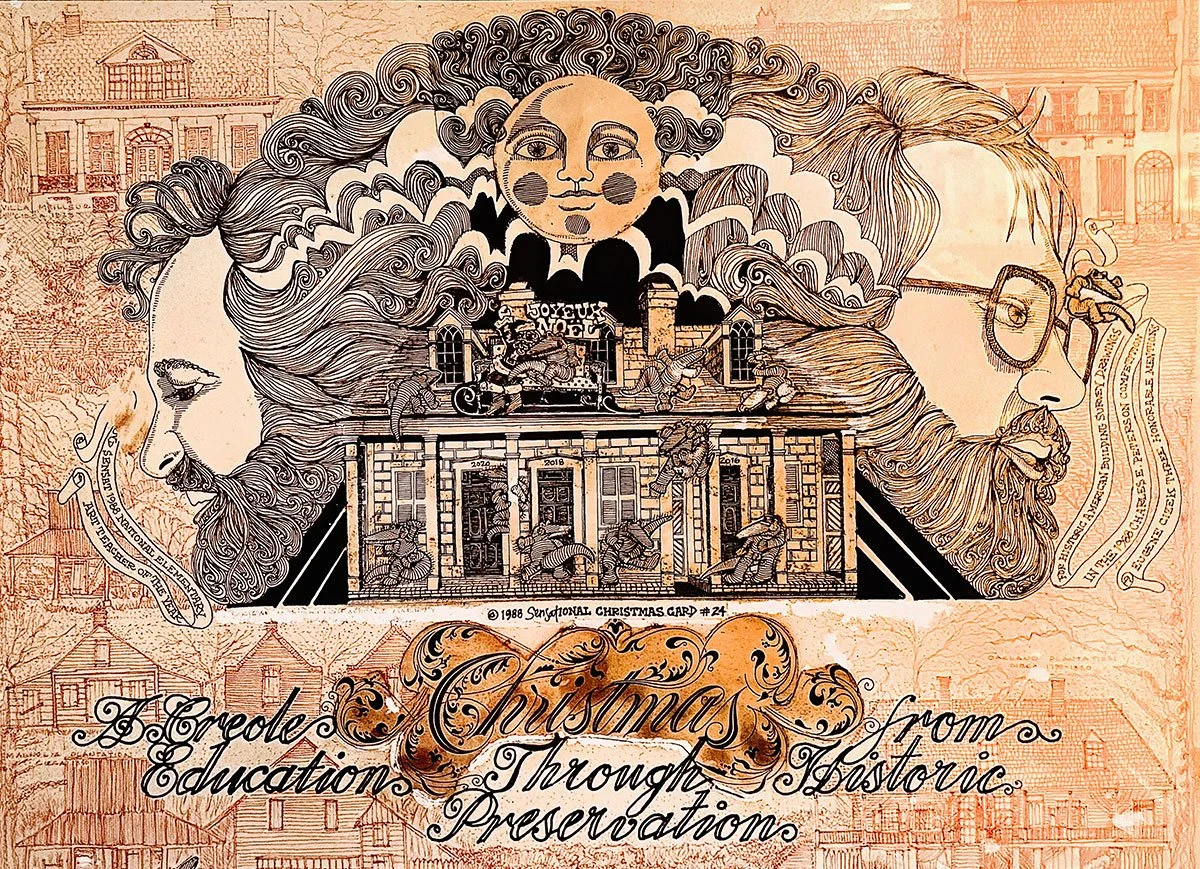
A 1988 Christmas card drawn by Lloyd Sensat, the year he was named National Elementary Art Teacher of the Year and Cizek took three honorable mentions for drawings he entered in the Charles E. Peterson Competition of the Historic American Building Survey. Image courtesy Gene Cizek
It’s impossible to calculate the impact Cizek and Sensat’s coupling had not just on the Marigny, but the city and Louisiana at large.
With their shared artistic bents, they transformed Sun Oak—named for their love of sun imagery and the ancient oak in the adjacent lot they purchased (to save it from becoming a swimming pool)—into a must-see, featured in numerous publications, from “New Orleans Architecture: The Creole Faubourgs” to “Better Homes & Gardens.”
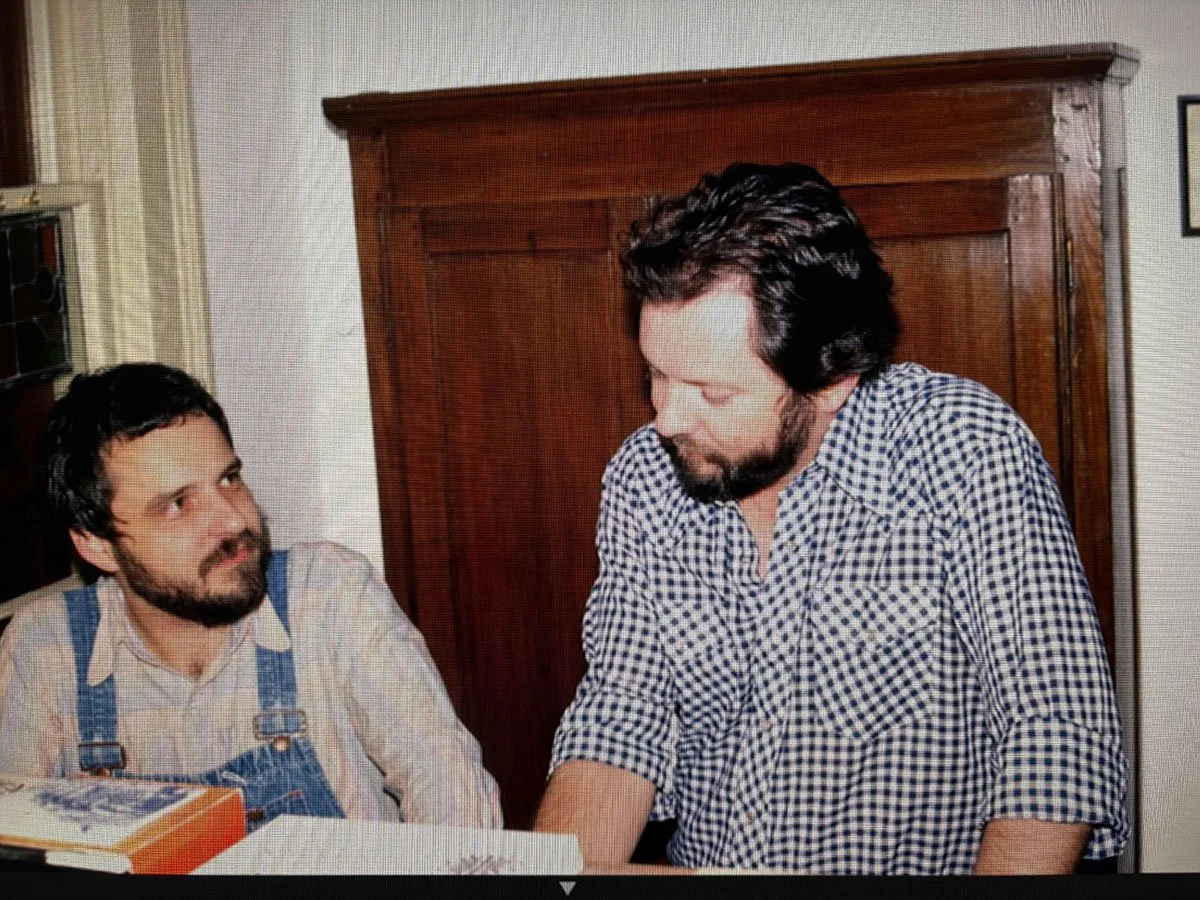
Cizek and Sensat working on plans for the restoration of Sun Oak., photo courtesy Gene Cizek
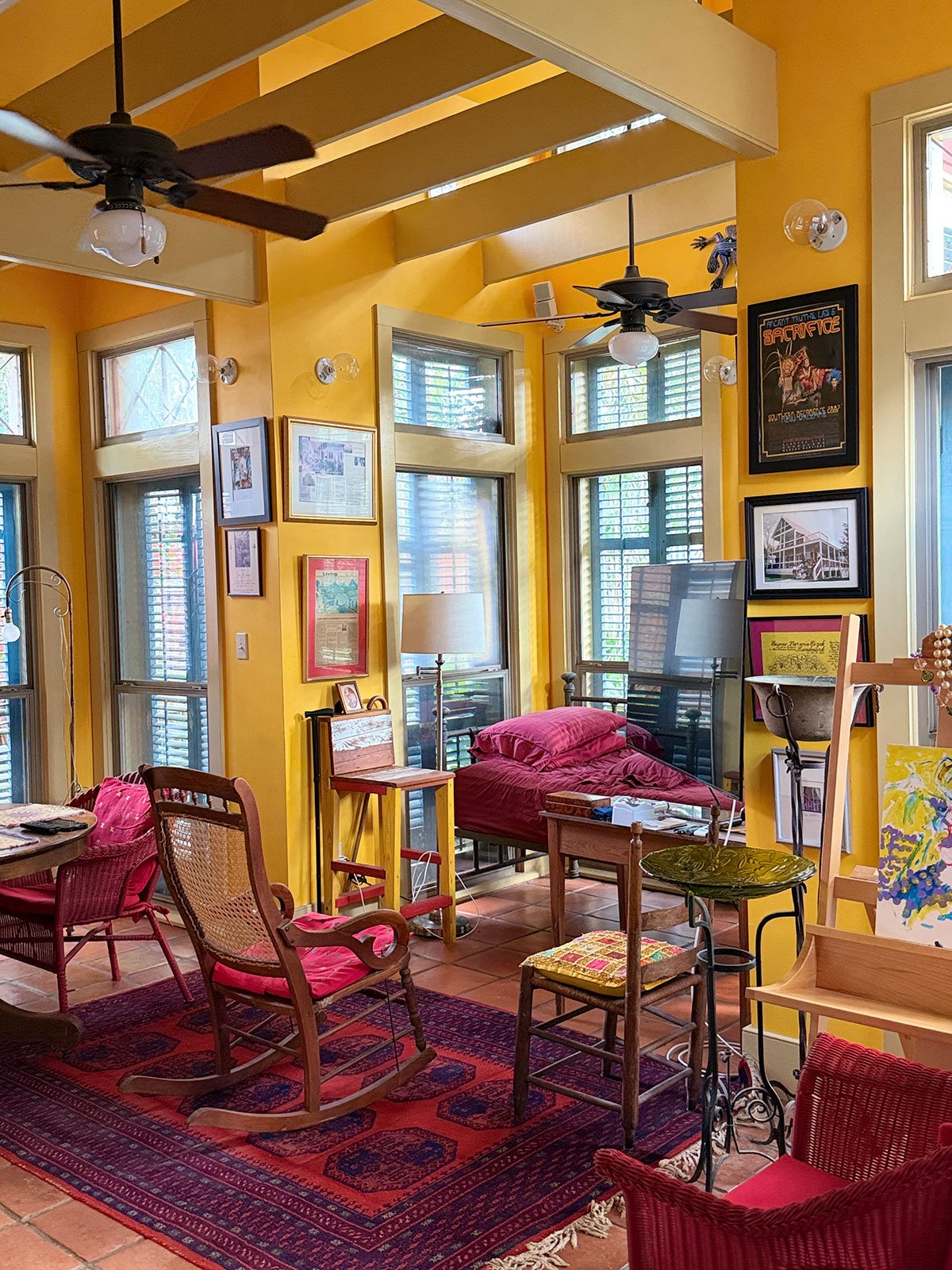
The 2004 Sun Room Addition to Sun Oak House designed by Cizek and built by his Masters in Presentation Studies students who were employed by Cizek to build it. Photo by Ellis Anderson
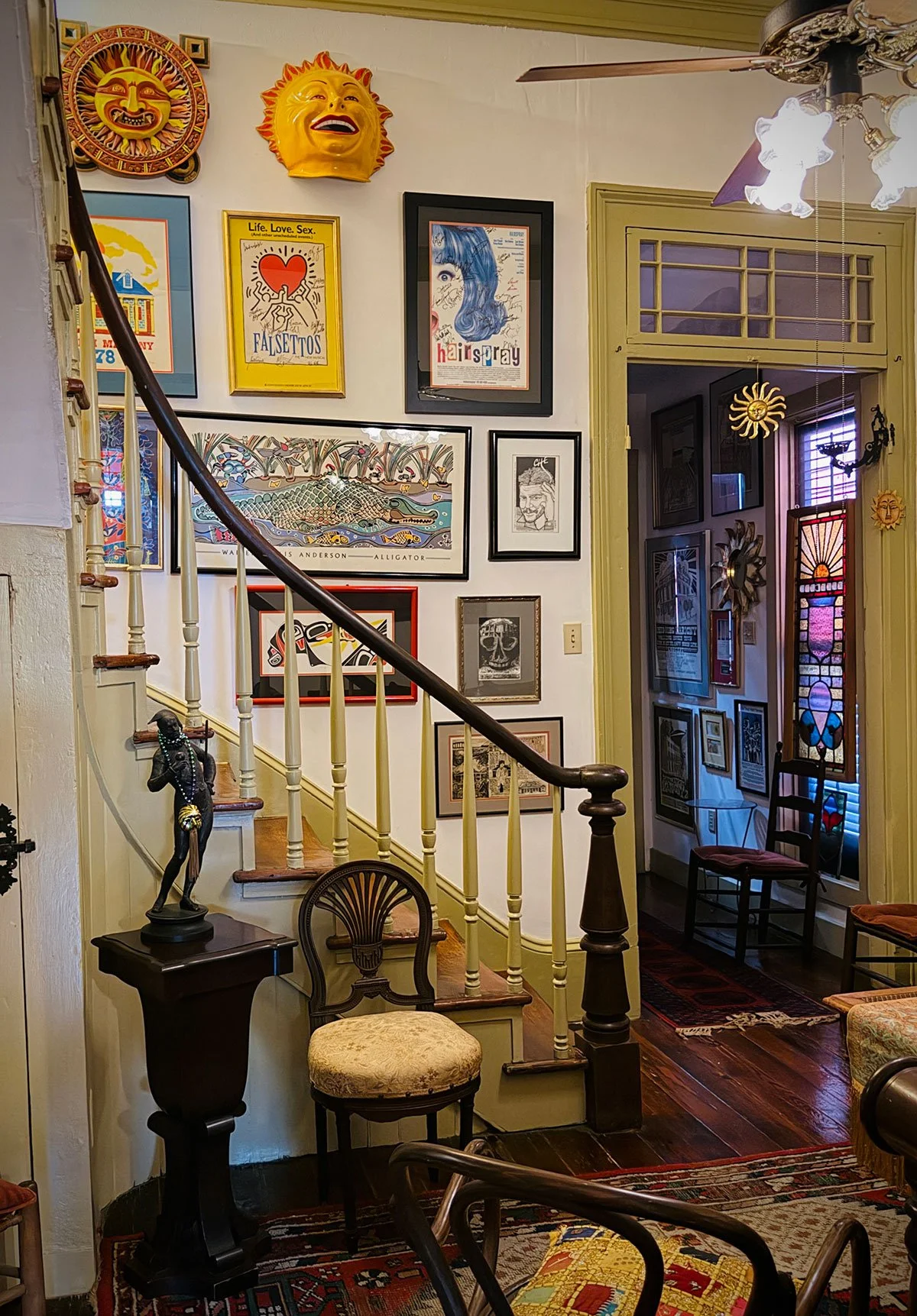
A parlor in Sun Oak, photo by Ellis Anderson
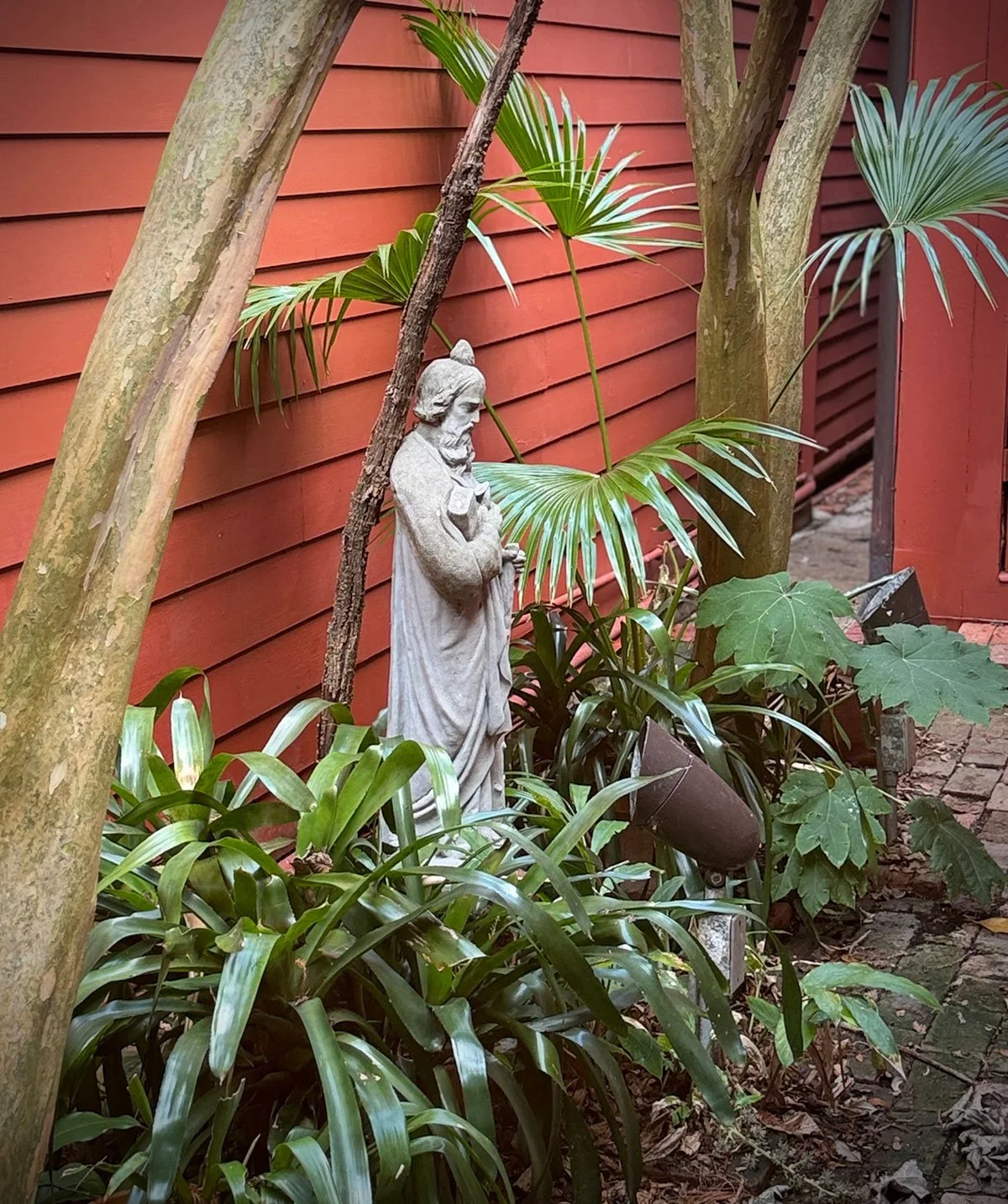
An interior courtyard in Sun Oak, photo by Ellis Anderson
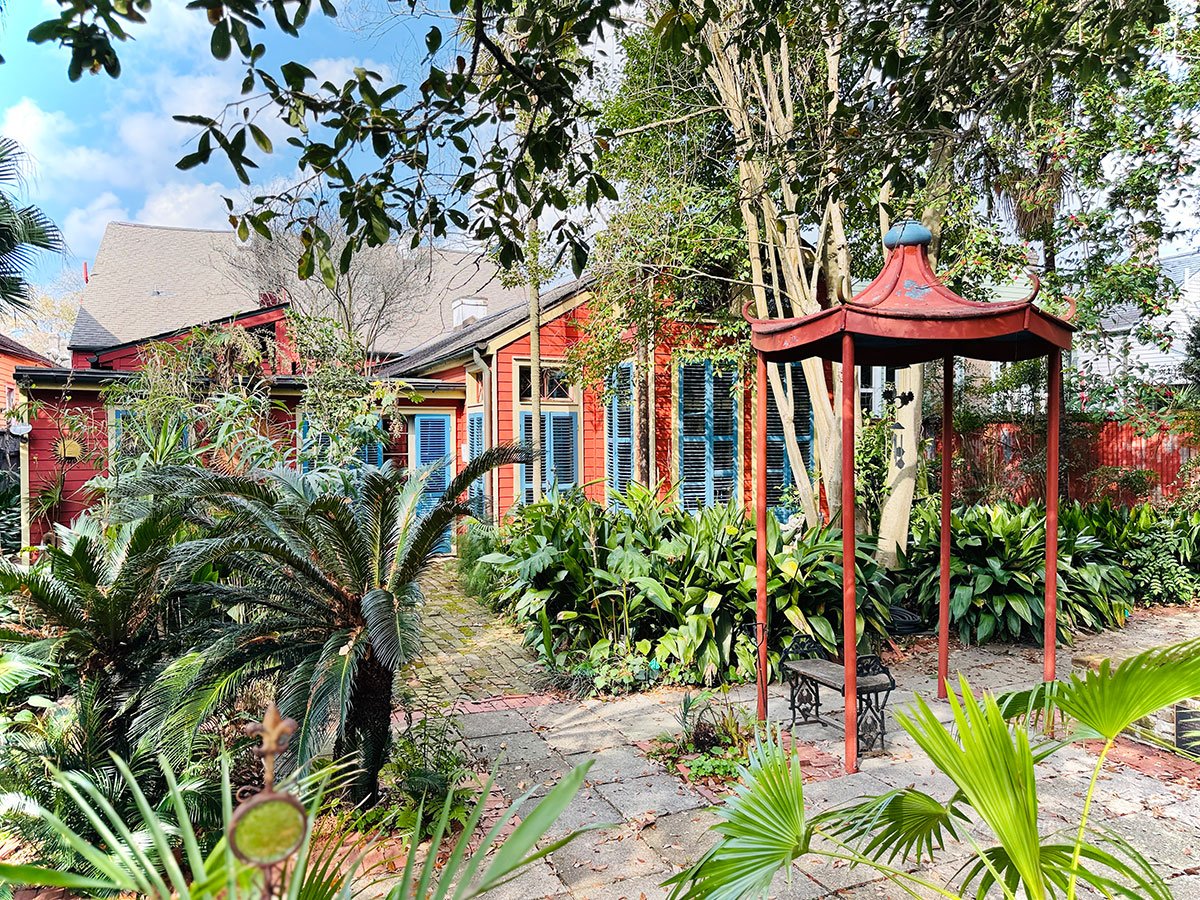
Looking toward the back of Sun Oak, photo by Ellis Anderson
Sensat likewise shared Cizek’s talent for teaching, working in the St Charles Parish public school system for more than 25 years, leading its Talented Arts studies. Together, the couple established the Sun Oak Foundation for Education Through Historic Preservation program, with the goal of cultivating a new generation of preservationists.
“It is a good basis for education in general,” Cizek says of the youth-focused program, which incorporates drawing, storytelling and acting into its syllabus – and would help earn Sensat a Walt Disney Art Educator award.
“The program was very appealing for teachers. Go to St. Charles Parish, and you can find a lot of those students who have incorporated what they learned, and how they learned it, into their own work as educators.”
After his retirement, Sensat continued to promote Marigny and city history through his popular walking tours, which often began at Sun Oak with him dressed to depict the neighborhood’s namesake.
During a Garden District tour in 2011, he suddenly fell ill and fainted. Within hours he was dead.
Sensat’s service at Our Lady of Guadalupe Church drew more than 1,000 attendees. His ashes, placed in a wooden box covered with sun symbols, were interred in St. Louis Cemetery No. 1—sharing the same tomb as Bernard de Marigny.
A plaque attached to its side includes a space for Cizek, when the time comes. Its epithet, written by longtime friend and associate William de Marigny Hyland (a descendant), reads in part:
Defenders of the distinct historic and cultural legacies of Louisiana
Tireless advocates for the restoration and appropriate development of Faubourg Marigny
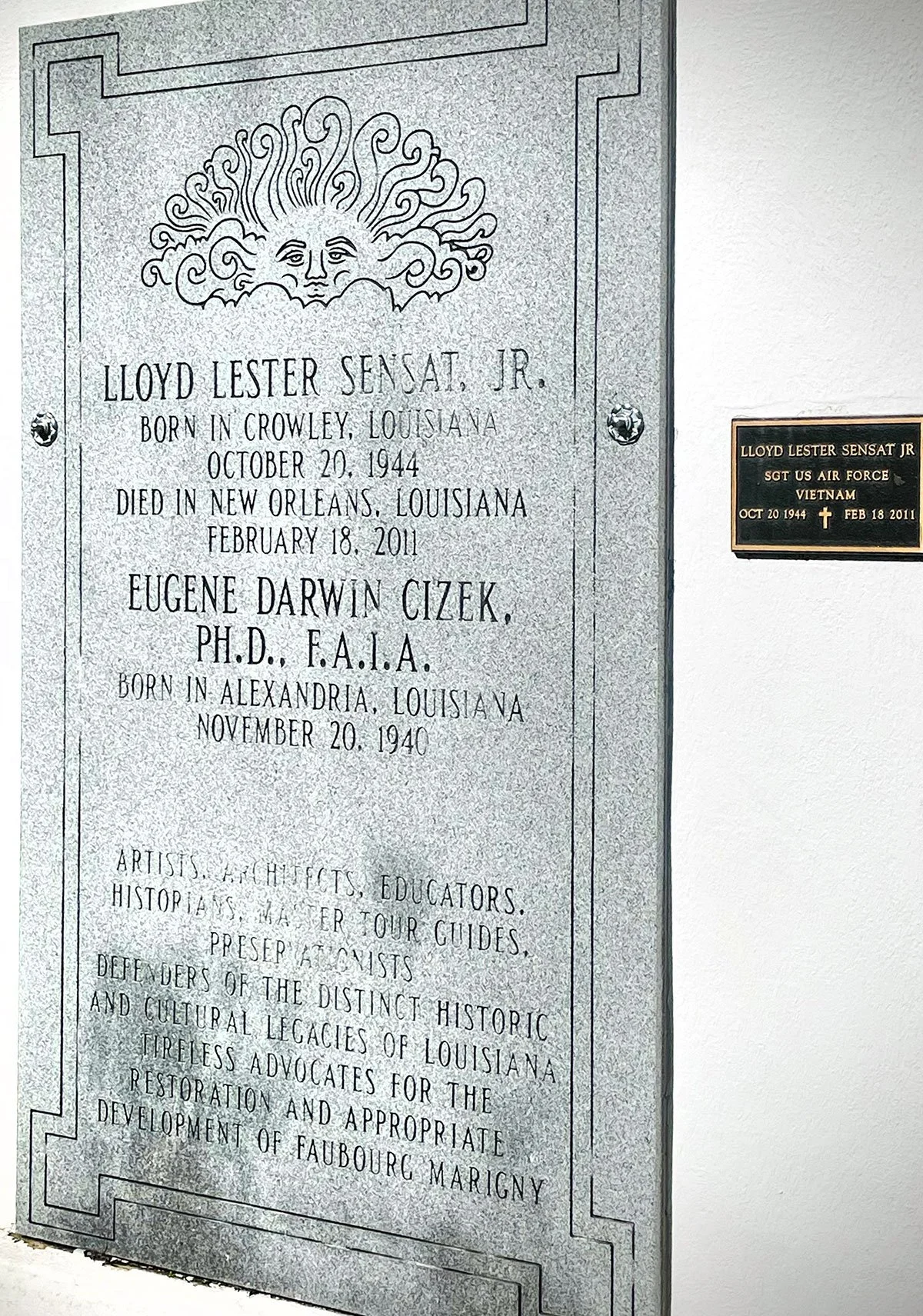
The tomb of Bernard de Marigny in St. Louis Cemetery #1. A plaque attached to its side includes a space for Cizek, when the time comes. Its epithet, written by longtime friend and associate William de Marigny Hyland (a descendant), reads in part: Defenders of the distinct historic and cultural legacies of Louisiana/Tireless advocates for the restoration and appropriate development of Faubourg Marigny. Photo by Doug Brantley
But Cizek isn’t ready to rejoin his beloved pen pal just yet.
There are two books he wants to write (one on the Marigny, naturally, as well as a memoir), adding to several other titles he’s published and co-authored over the years. And there are his archives to tend to.
“I have over 100,000 slides, all organized, but they need to be digitized. Tulane has me doing a Cizek Collection of Lectures. My library is going to the Historic Natchez Foundation.”
And there are still preservation wars to be fought—and won. Most pressing currently, the proposed Elysian hotel (“this thing,” as he refers to it), slated for the site of the former American Aquatic Gardens (which Cizek designed). The Faubourg Marigny Improvement Association (FMIA) has filed suit over the project.
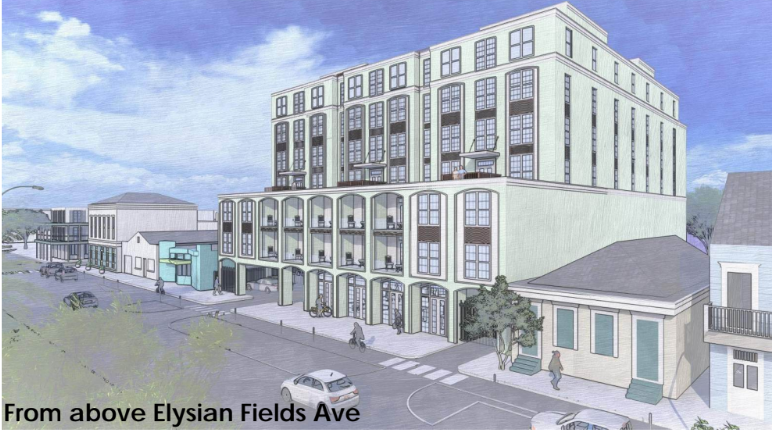
The hotel that is currently slated for the site of the former American Aquatic Gardens on Elysian Fields. According to the FMIA website, the city council voted against the advice of the Architectural Review Committee to allow the oversized structure, “granting a variance by way of an ordinance.” FMIA has filed suit. Read more about the project, sign the FMIA petition and donate to their legal fund here.
“It’s a constant battle to get the tourism industry under control,” he says. “They think people who come here need all these hotels. They do not. The hotels should be where they are now, in the Central Business District.
“But I’ve let some of my political clout fade away. I was really trying to get out of that, and to let other people step up. Because I know I’m not going to be around that much longer. I mean, I don’t know…but I am 85.”
He toys with the idea of selling Sun Oak and decamping to Natchez, where he owns a smaller, more modern home from 1902.
“A baby!” he chuckles. “But the people of my neighborhood tell me they would be most upset if I were to leave.”
No doubt. In fact, it’s hard to imagine the Marigny without the man who spent the majority of his life striving to protect and better it.
“We redid Washington Square, that was one of my projects,” he says, looking back and ticking off a few of the neighborhood’s many hard-won accomplishments. “And we got the [Rampart] streetcar back – not as far as we’d like, but we got it. And the Historic Marigny Zoning.”
Reaching further back to his days serving in city government, he’s reminded of the Birthday Club, a not-so-secret group of pioneering preservationists working to save the home of jazz great Jelly Roll Morton, among other initiatives.
“Jack Stewart, Howard Schmalz, Lou Costa and other great people,” Cizek recalls. “We realized there were so many who were second-in-command of a city office, that we could get together and try to focus the city on where we wanted to see it focus.
“There are two or three of those people who are still here. Every time we see each other, we get this big smile on our faces and go, ‘Well, we did some good stuff!’”
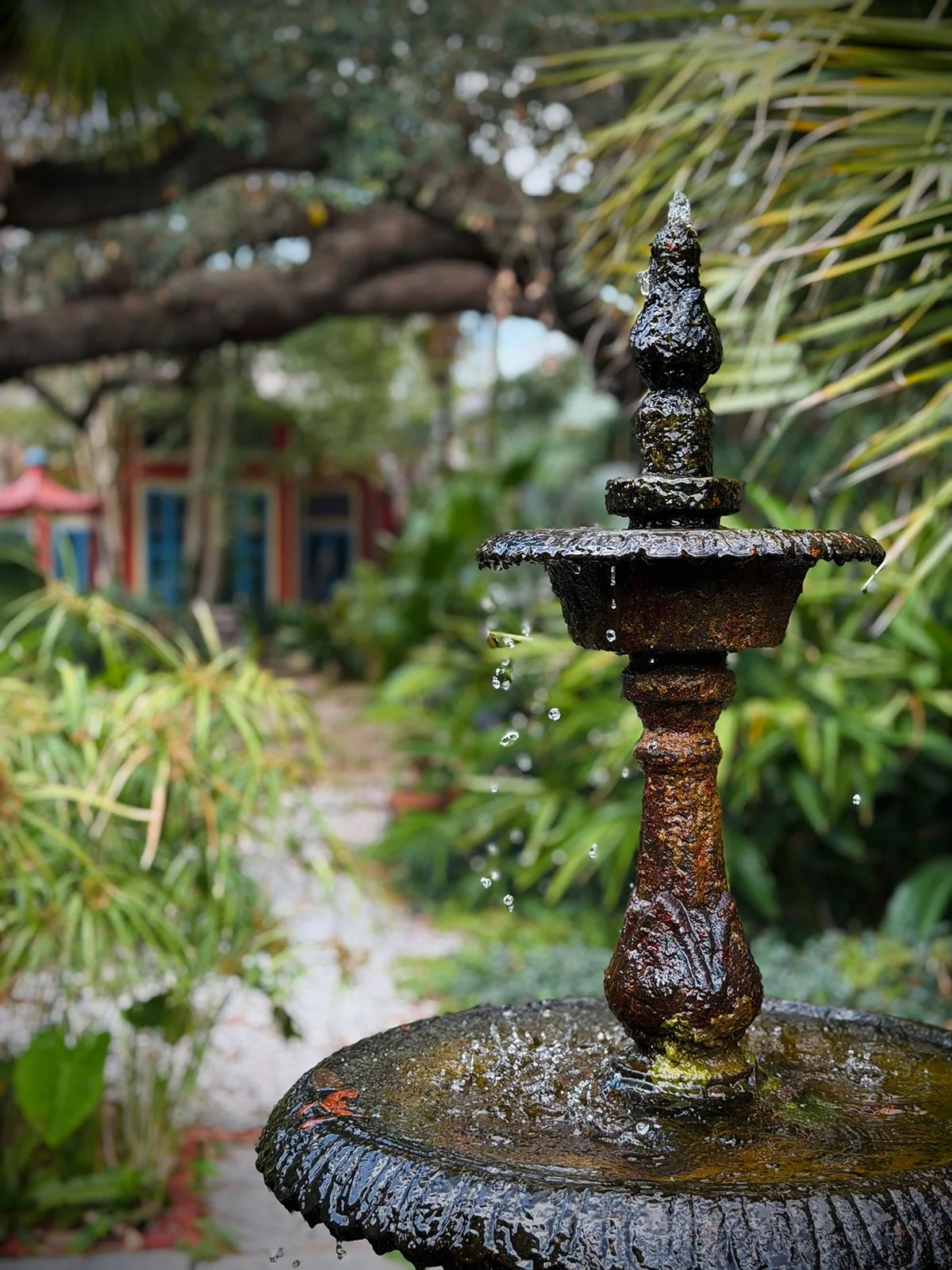
A historic fountain enlivens the back of Sun Oak’s large garden, photo by Ellis Anderson