
The Mysterious French Quarter Elves and Their Bienville Street Home
December 2025A former owner of the unique French Quarter building at 536 Bienville Street takes a look back at its history and 1990s renovation.
– by Thomas Uskali
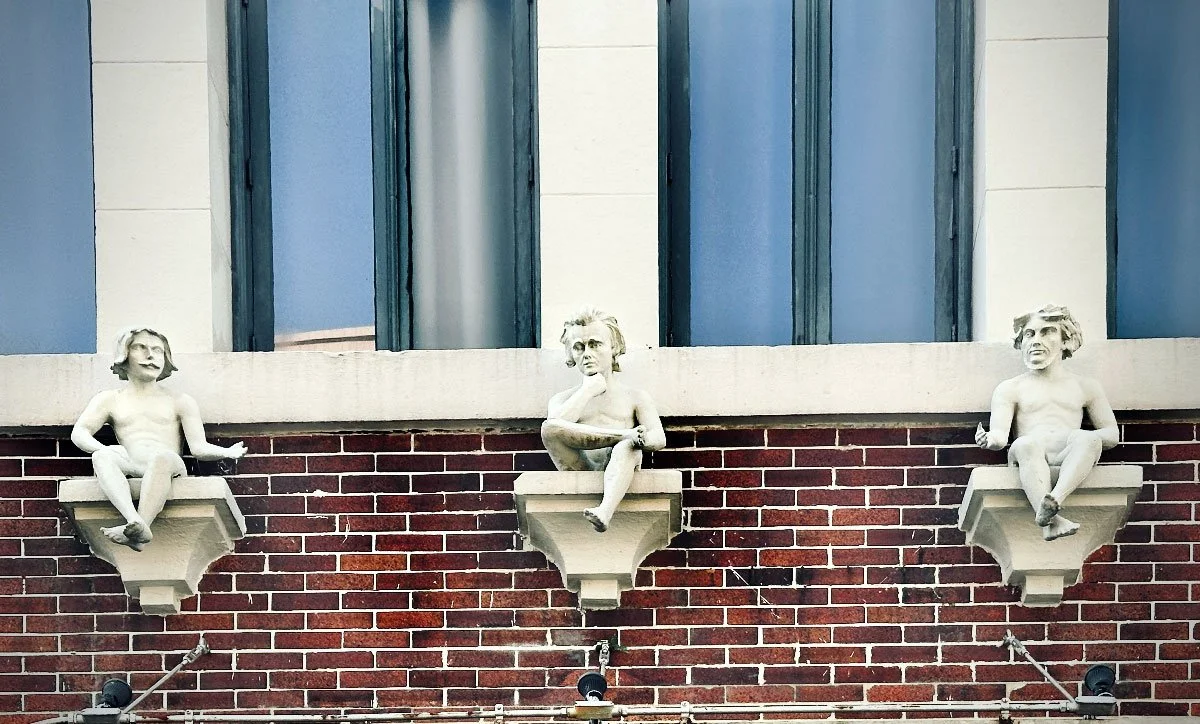
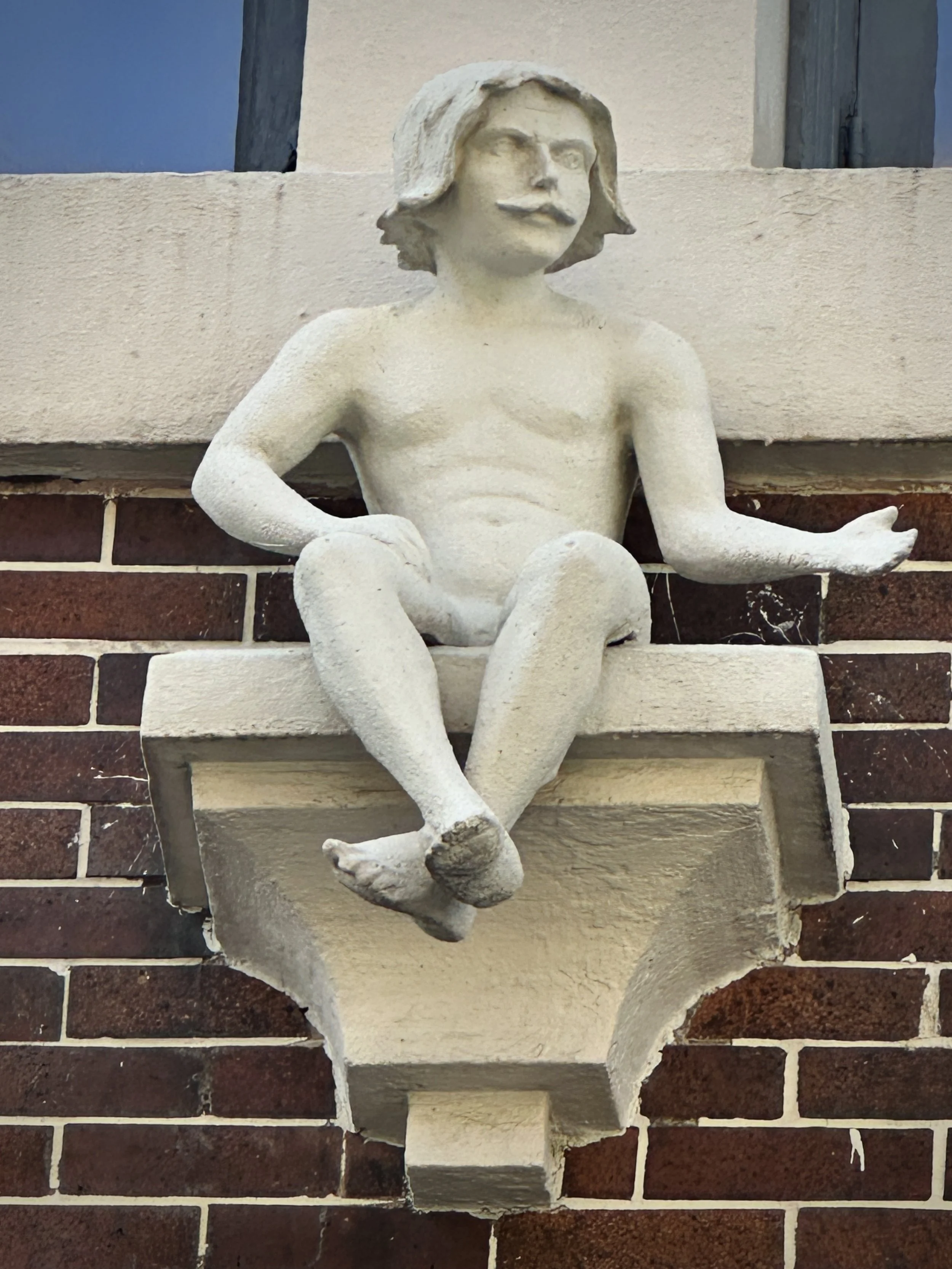
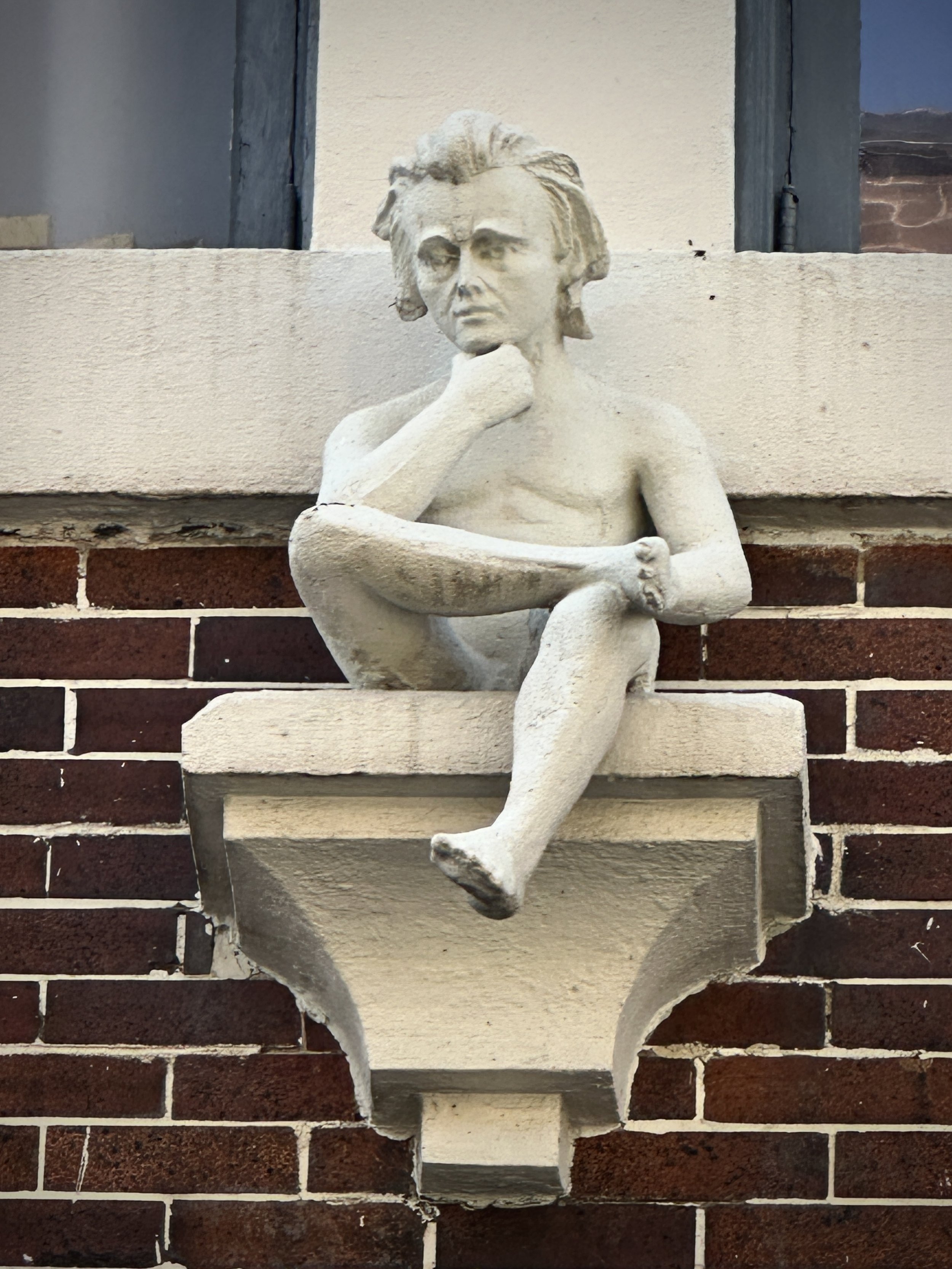
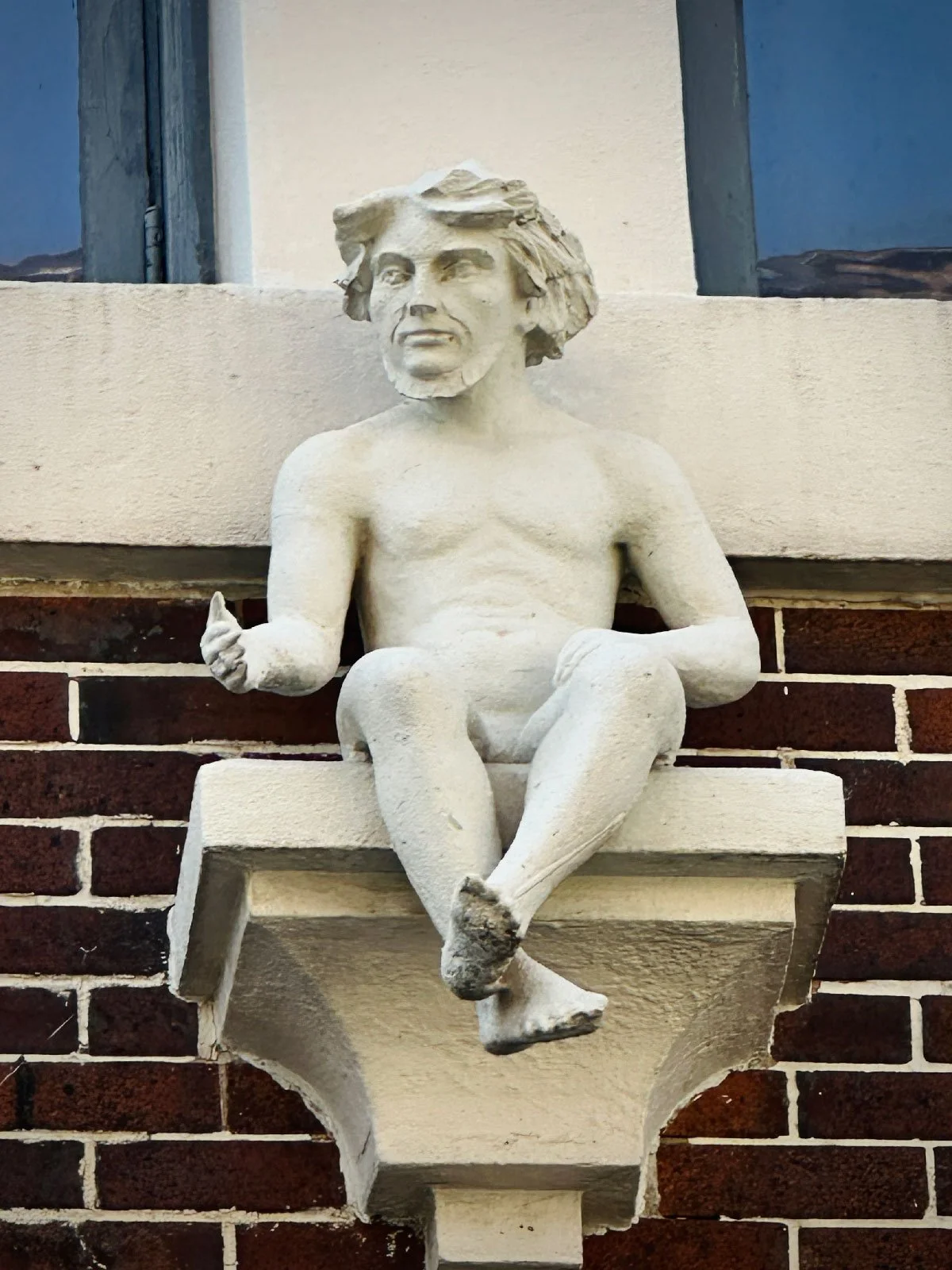
"Do they wear fig leaves? Only the pigeons know! But, these three nude figures add an intriguing medieval note to the façade of a 20th Century building located in the 500 block of Bienville." Times-Picayune, 1975

This column is underwritten in part by Karen Hinton & Howard Glaser
534-536 Bienville
536 Bienville’s terracotta facade arches over neighboring buildings, while three gnomish figures perch below its 2nd floor windows. Designed by Jordan McKenzie and built around 1910, it is a rare example of Austrian Secessionist architecture in the city, precursor to the Art Deco style.
But what most folks notice are those impish concrete guys across the street from the Chart Room bar.
In the late 1980s my spouse Charles and I lived in the 900 block of Bienville Street and regularly biked to the Hilton gym. We’d spotted the beautiful, somewhat-neglected building on what was then an eerily quiet block, and we joked that if it ever came on the market, we’d at least take a look.
And in 1994, while living in Fort Lauderdale and up for a visit, I saw a handwritten “For Sale” sign posted on its garage door. After finally getting a look inside and trying to contain our excitement, Charles began negotiations with the owner, Lester Alexander.
Lester’s father was among 16 guests at the 1950 Mardi Gras dinner for the Duke and Duchess of Windsor held at Antoine’s. Lester was a neighborhood habitué who used the open garage door of 536 Bienville as his front stoop. He was pals with antiques dealer Henry Granet who owned the warehouses next door and seemed to know every local who passed by.
Polite but wary, we might never have owned the building if not for Charles’ ability to gently charm him. A collector at heart, Lester’s treasures covered thousands of square feet: giant commercial exterior lighting fixtures, motley furniture, two gas-powered refrigerators, dusty relics, all a glimpse into decades of “finds.”
By day of closing, the building was nearly empty. A ‘52 Ford convertible was out of the ground floor, a few lighting fixtures (with sales tags) remained, and several hundred sheets of drywall lay on the unfinished 4th floor alongside wood framing completed in the 1960s.
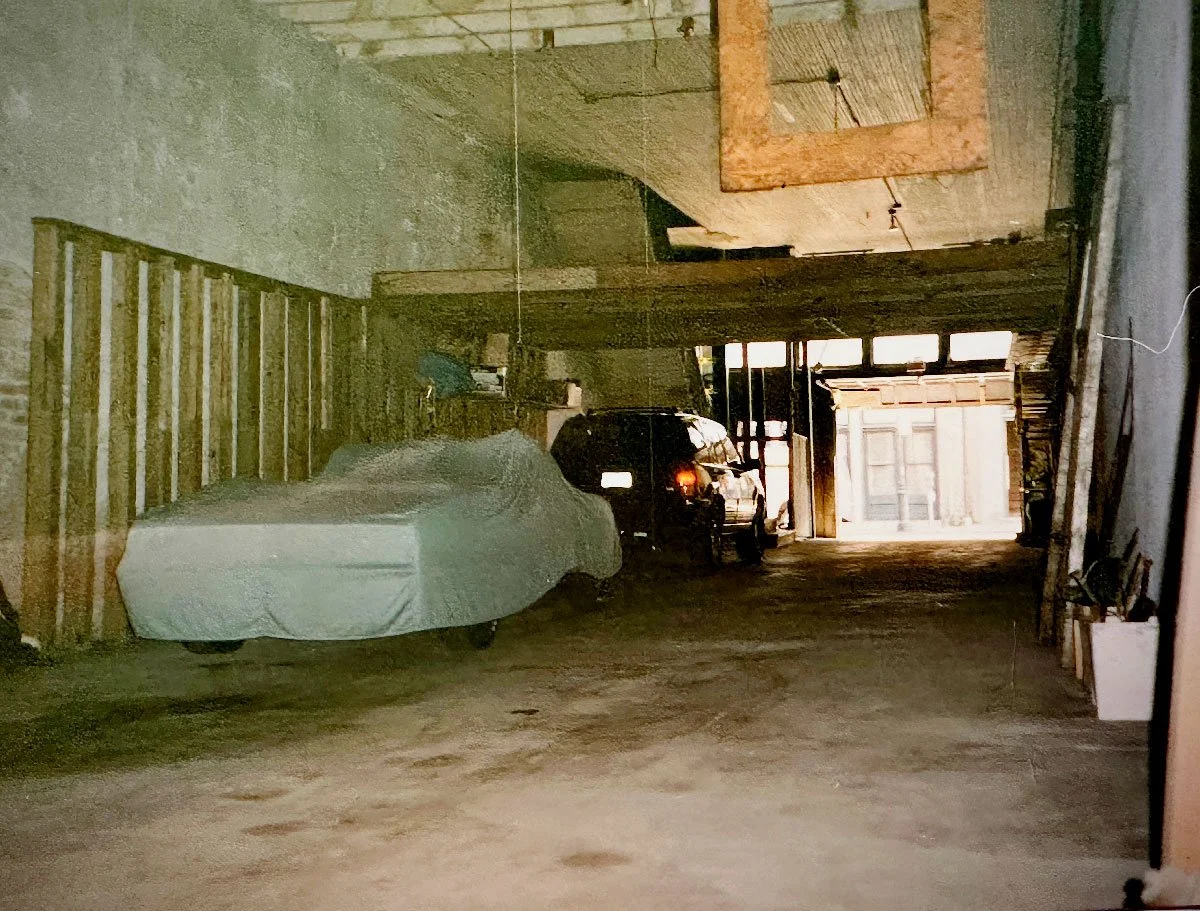
The ground floor of the building in the 1990s, photo courtesy Thomas Uskali
Lester also introduced us to Al Haywood, his “man of all work.” Everyone in the Upper Quarter knew Al. He lived in a house that’s now on the Lafitte Greenway and drove down nearly every morning to sweep the sidewalk and check on our building and those of neighbors who trusted him to look after their properties. Al became indispensable to us, and he worked with us for many years.
When we took finally possession, weathered garage and pedestrian doors offered little indication of what lay inside. The space was vast, 21 feet wide by 120 feet long, with no supporting columns. Built as a coffee and cotton warehouse, each of the upper floors was designed for strength and access to an open-car freight elevator.
That lift was straight out of a film noir. It required a deft hand to arrive precisely at each floor level and was powered by a dedicated DC (direct current) electrical line that Entergy maintained for warehouses along Iberville and Bienville Streets. This power line was an artifact of the original New Orleans Public Service Company (NOPSI) streetcar infrastructure. We think the line still operates!
Today, a small commercial elevator takes up about a quarter of what “old sparky” did. In 1996, Charles’ sister managed to fritz out the original elevator motor when attempting to make a pinpoint landing on her guest floor during a visit. We could hear the giant DC motor sputtering and thudding in loud protest while she pulled and pushed at the rope that fateful day. Later that year, its absence meant an extra-large fee and gratuity for Fireball Movers.
A massive fire in 1908 brought down huge stretches of the neighborhood, which was mostly wooden warehouses full of cotton and dry goods. This gave owners a clean slate for large-scale redevelopment. Upriver Bienville was reworked to maximize warehouse space, with shared double-thickness masonry walls along that stretch. The architects coordinated their efforts; one can follow subtle cues in horizontal bands of brick from Chartres to Decatur from one building to the next.
536 is comparatively delicate next to its bulky neighbors, and more than a little show-offy. New Orleans architect Jordan McKenzie was chosen for the project. He was known for the unusual, and he delivered. McKenzie’s models for the building were Joseph Maria Olbrich’s monumental Wedding Tower in Darmstadt, Germany (circa 1908) and his Secessionist Building in Vienna, Austria (1898). Not what one was accustomed to seeing in the French Quarter, but an exuberant expression of a particular vision.
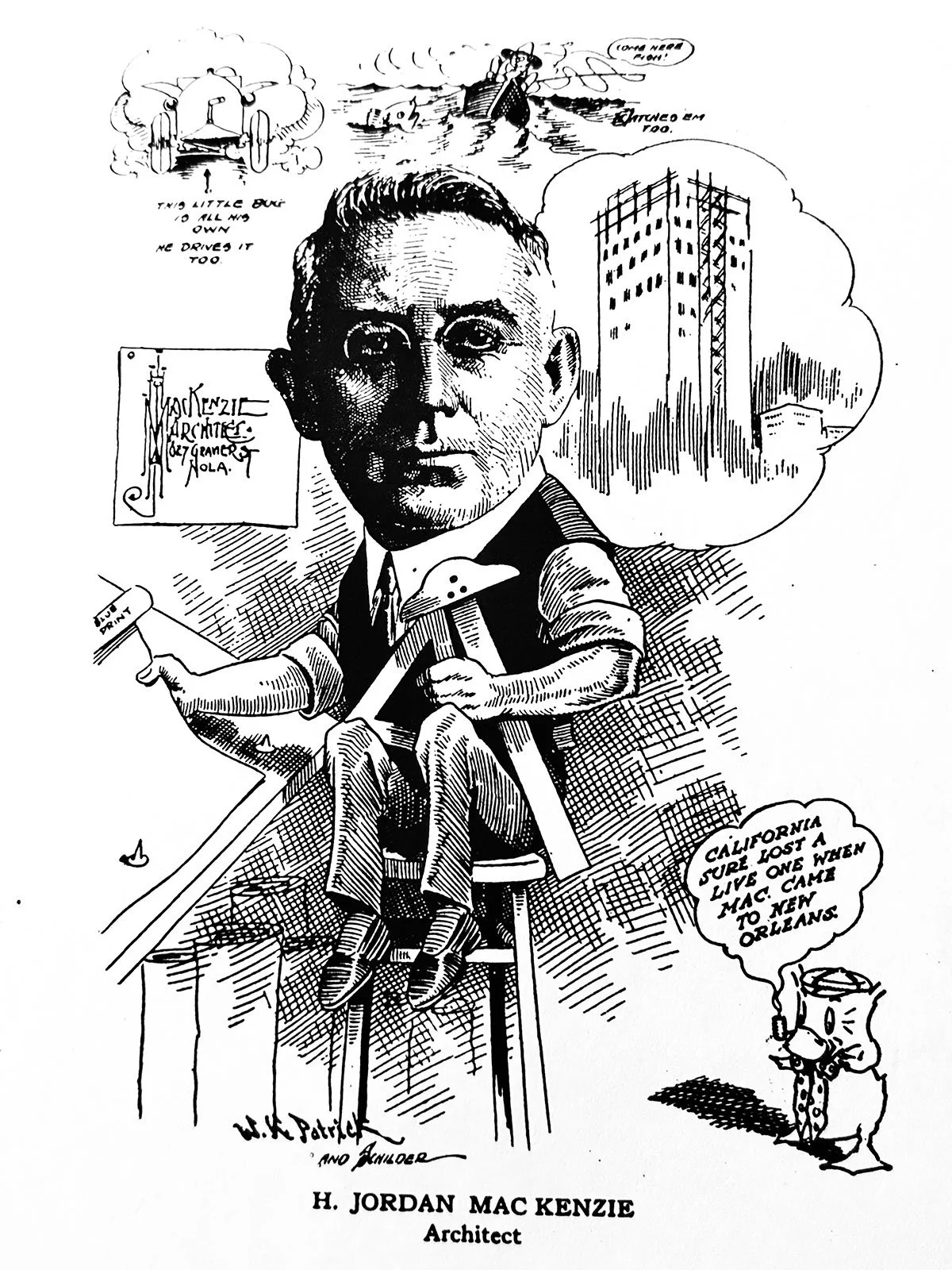
Drawing of Jordan MacKenzie, courtesy Thomas Uskali
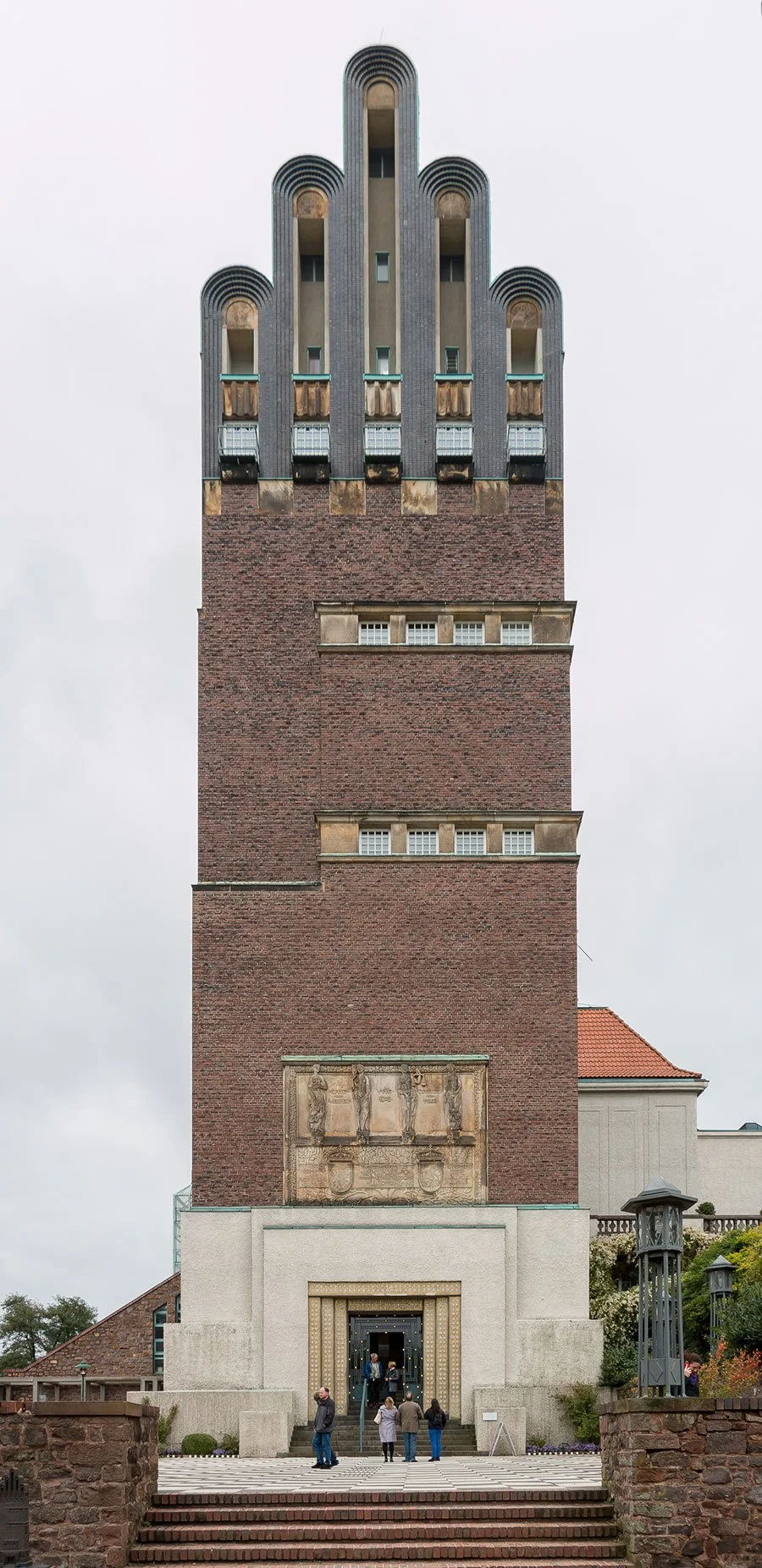
The Wedding Tower in Darmstadt, Germany, Martin Kraft, Hochzeitsturm frontal, CC BY-SA 3.0
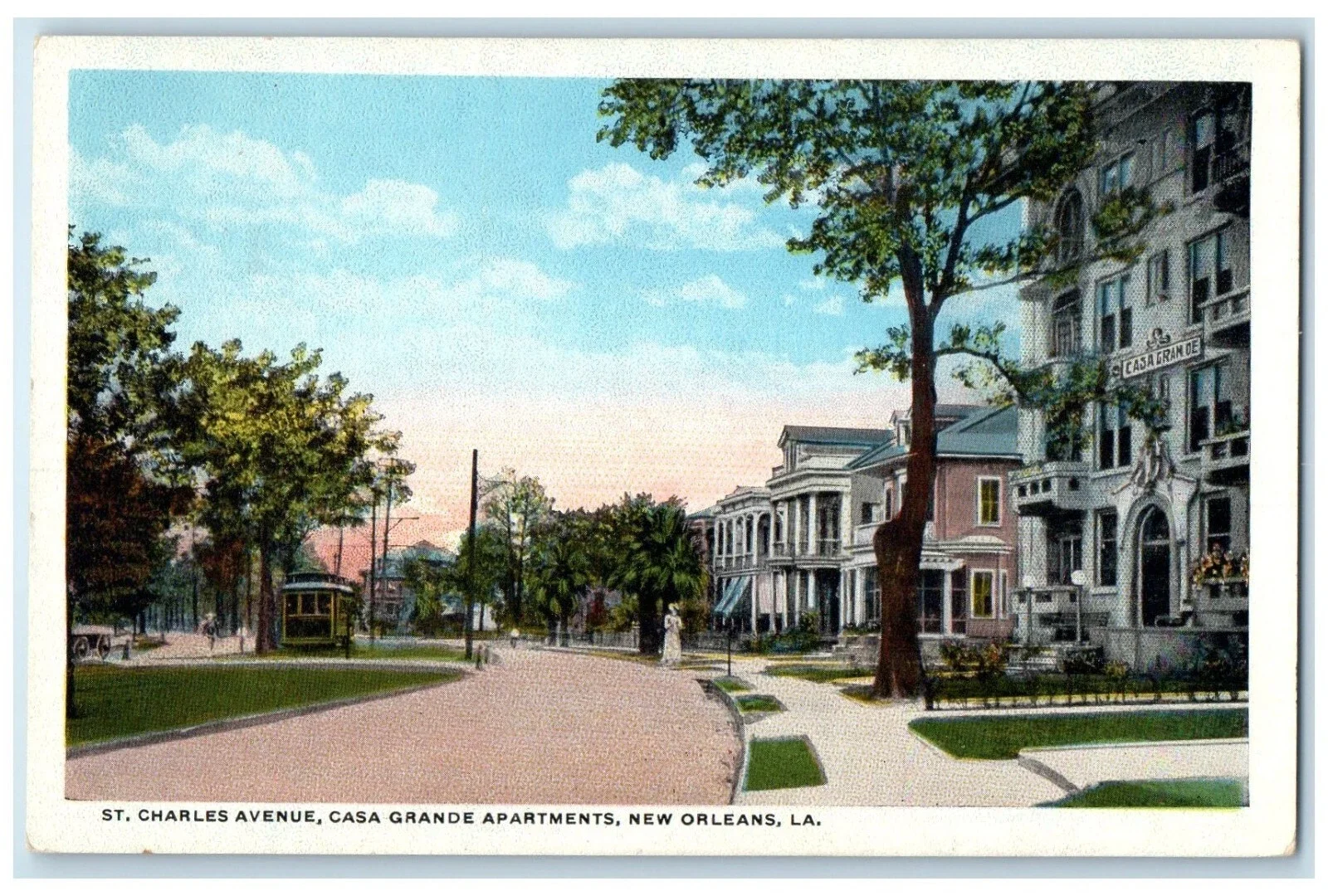
Working from the offices of Thomas Sully, McKenzie’s creations were distinctive; homes he designed on Garfield and Exposition remain mostly as they were built. His own house on West End Boulevard with a high-pitched bright blue barrel tile roof, and the Casa Grande Apartments, the first reinforced concrete residential building in New Orleans still stand out in their respective blocks.
In testament to the building’s strength, 536 had made it through 80 years of near-neglect. We put on a new roof, had the entire building re-tuckpointed, sealed the brick with a high-tech coating, and refurbished the windows. Plus, those gnomes had been through some rough times. Our contractor found a mason whose artistry restored their damaged feet and hands. Charles logged hours of conversations with the Vieux Carré Commission about “period appropriate” paint colors and what would be allowed for the doors, and we remain grateful for the expertise of Bell Roofing and Southern Coatings, who added decades to the building’s lifespan.
In retrospect, we probably could’ve lived in the wide-open spaces of the 4th floor, but we were younger and more conventional than we’d care to admit. The 3rd floor had been converted in the 1960s as a “bachelor pad” which also would’ve been swell if we hadn’t been so keen to move forward with a grand plan.
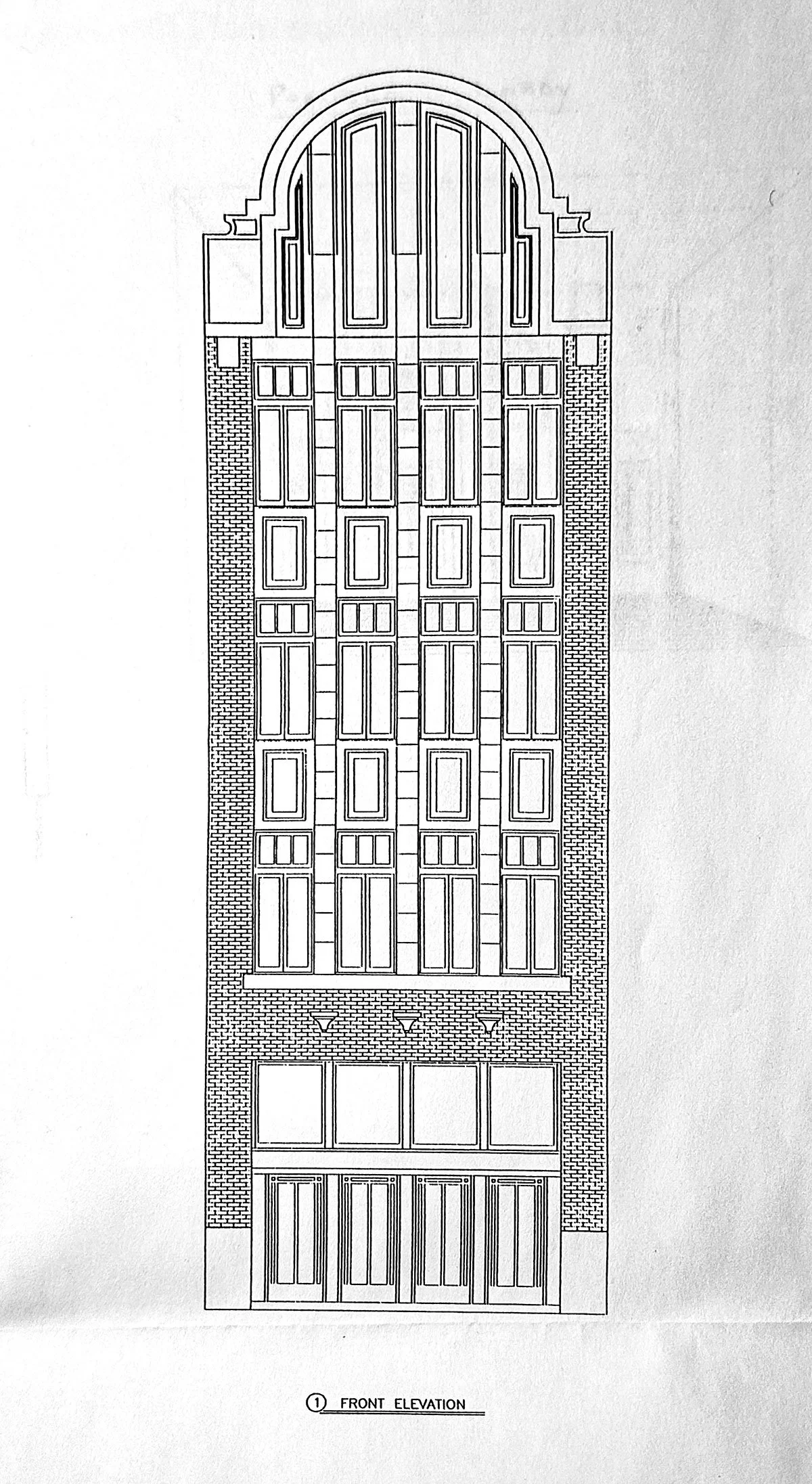
Rendering from architectural plans for the 1990s renovation, courtesy Thomas Uskali
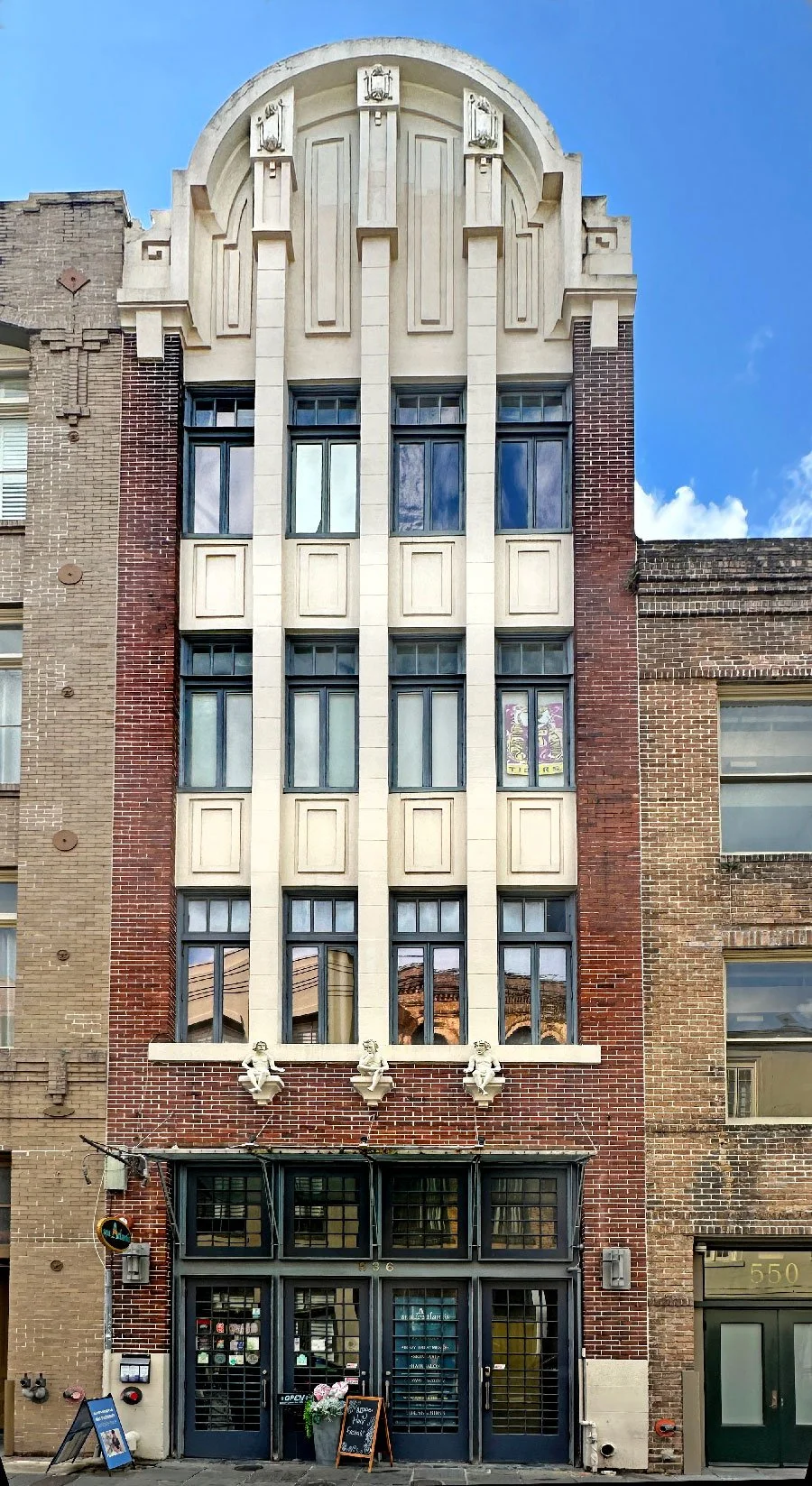
536 Bienville 2025 by Ellis Anderson
Architect T.L. Ritchie drew up an elegant interior design, with an apartment on each of the 3 upper floors. She maximized limited natural light, navigated a tricky fire escape plan with the fire marshal, maintained a warehouse feel, and made it even more chic than we’d hoped. We rented a courtyard apartment around the corner on Chartres; the building was a grand storage unit where we also kept our offices and vehicles.
We even held a “building blessing” led be my godfather, a retired Episcopal priest, and basked for a time in being French Quarter property owners.
But (and you knew there’d be a “but”) when we applied to the Vieux Carré Commission for a small roof deck, the idea was immediately rejected. Our neighbors around the block, The House of Blues, had asked for a “modest build out” a year or so before and added a massive penthouse on their roof. Alas.
Saddled with the expense of adding interior sprinklers for the entire building, and with a pricey new elevator in the offing (thanks again, Charles’ sister) we took a pause. For those who wonder why so many buildings in the French Quarter are occupied on the ground floor (usually by a shop or restaurant) with apparently vacant floors above, interior sprinklers are often why.
Visiting the building in its finished state a few years ago, it was gratifying to see our architect’s plan executed almost exactly as we’d approved it. She’d seen what the building needed, and the new owners agreed. Handsome commercial-grade doors now grace the sidewalk, and a swank glass and steel awning floats just below the little gnomes’ feet.
Life moved on quickly after we sold the building, but we often reminisce and wonder about the “what ifs.” The Upper Quarter is now a livelier and louder place than back then; neighboring warehouses are now condominiums. The old WNOE radio station is now the home of Irene’s Cuisine, and the commercial laundry is a foot massage parlor.
We loved our years of ownership, which we dubbed “stewardship.” We shared our enviable parking with friends, rented out a spot or two, and settled into working from our 3rd floor offices. The roof offered beautiful vistas, and as this was the heyday of Anne Rice’s vampires, we could imagine them leaping from one parapet to the next.
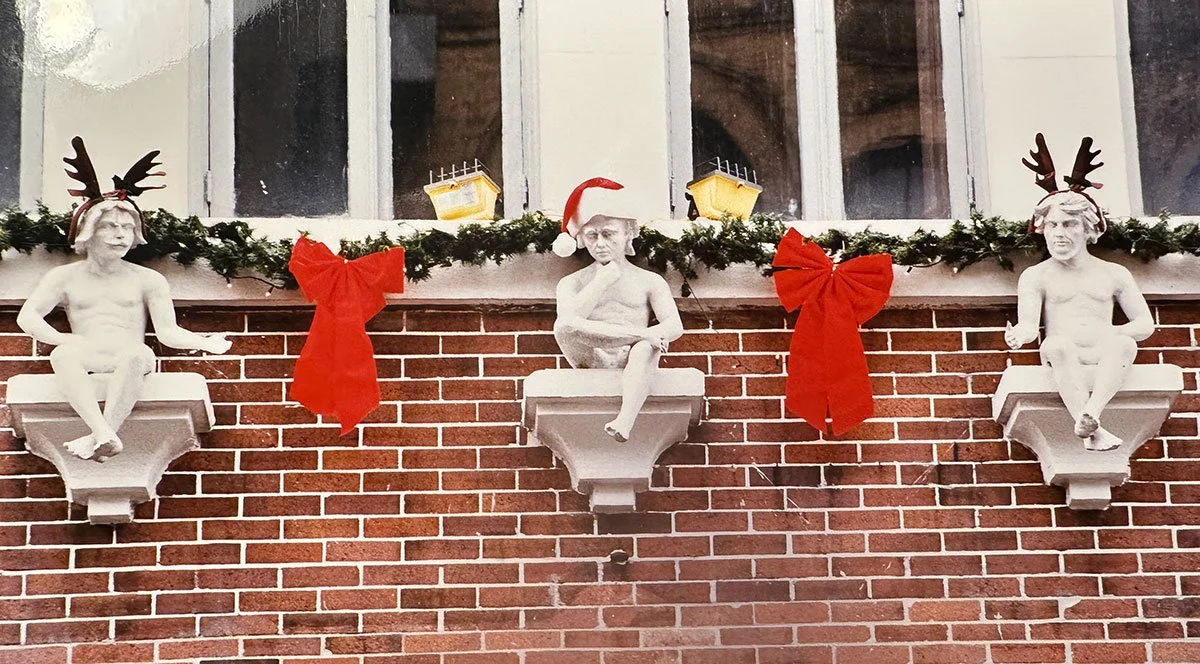
The elves dressed in holiday attire, photo courtesy Thomas Uskali