Historic Houses: Built to Flex
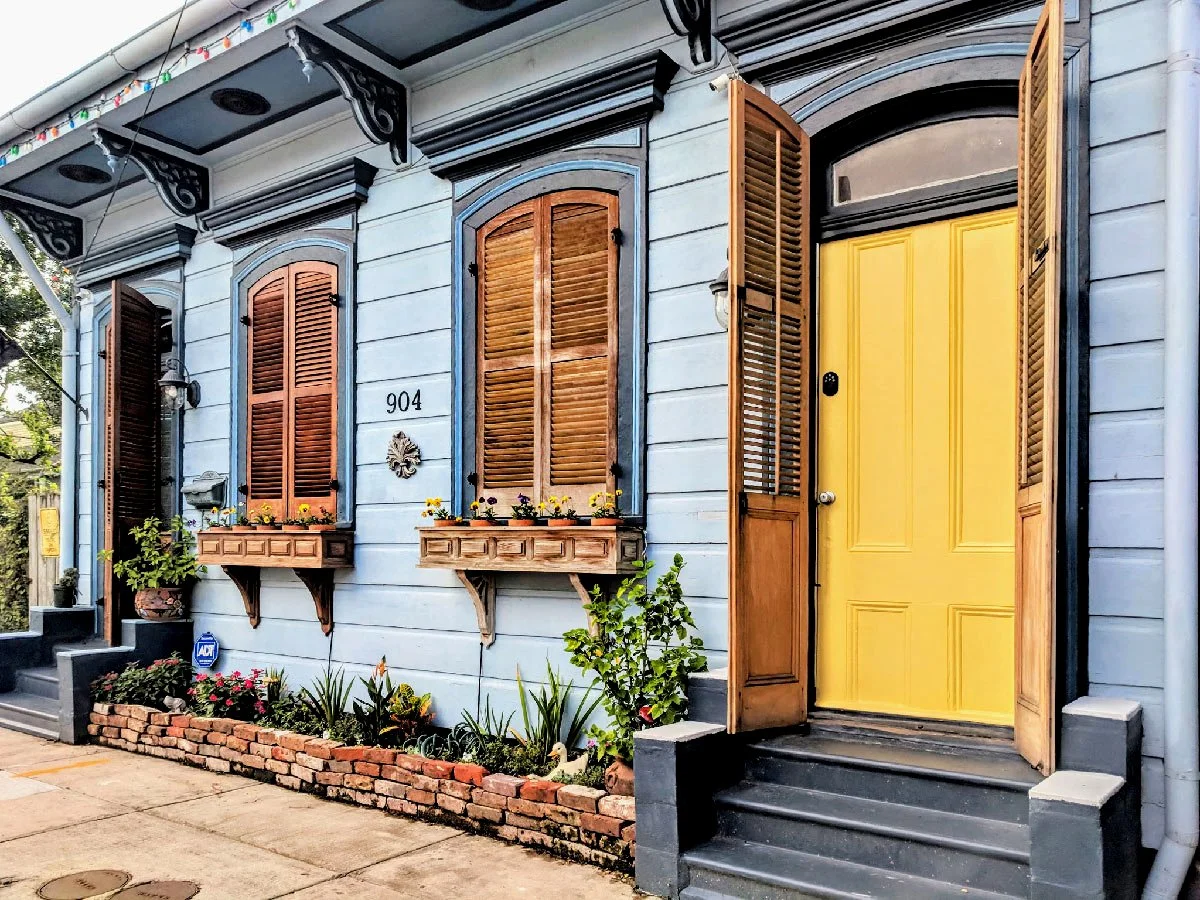
Elisa Cool Murphy’s Marigny home, built as a classic double shotgun.
January 2026Toss conformity out the window: historic homes lend themselves to creative uses, transforming to meet a family’s changing needs.
– by Elisa Cool Murphy
photos by Elisa Cool Murphy
This column is underwritten in part by Michelle Broom
The Icetray I Call Home
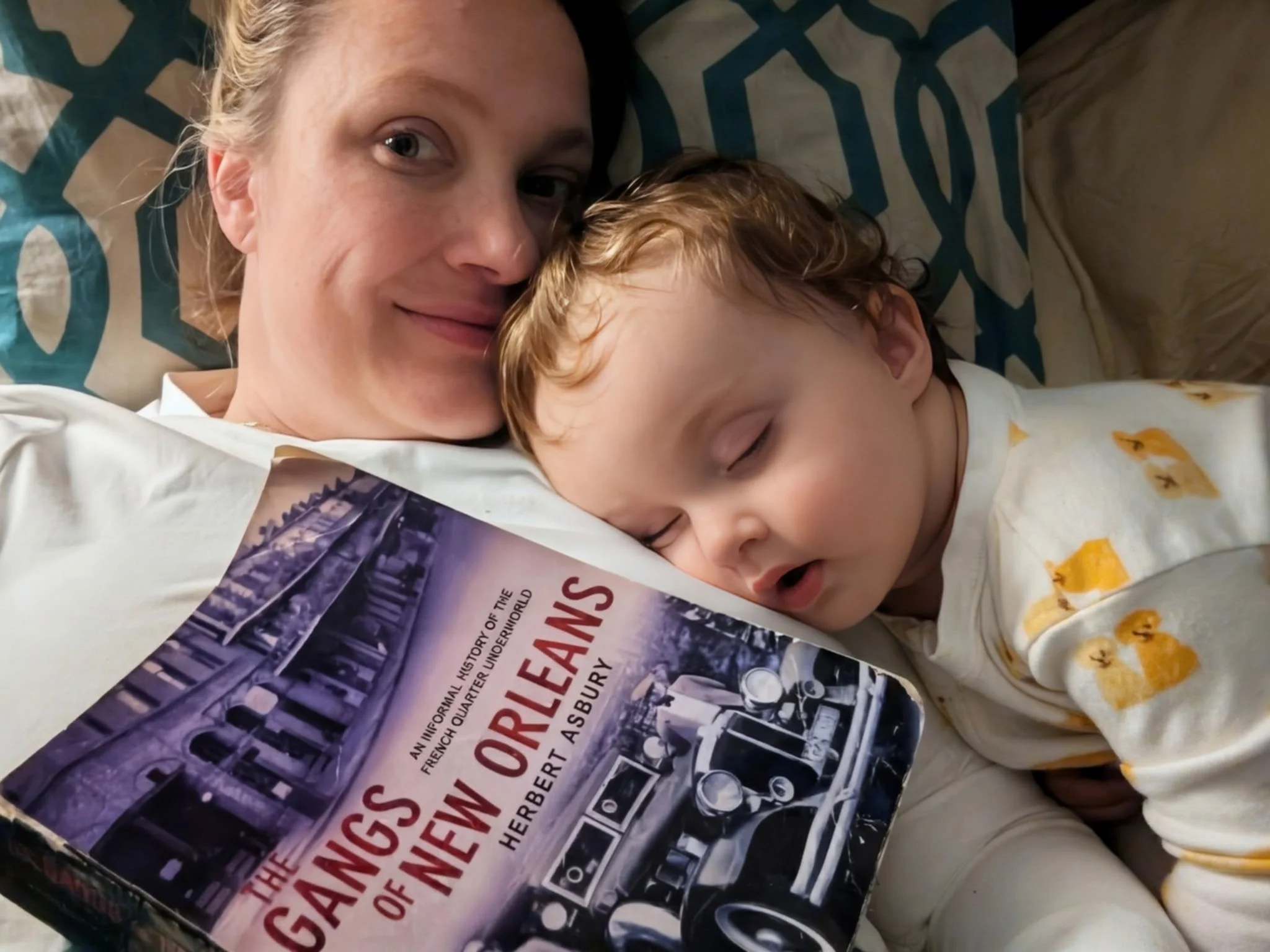
I’m dictating this essay with Cooper, my one-year-old son, asleep in my left arm. I can feel the warmth where he’s tucked into the crook of my elbow. My phone battery is flashing low. My coffee is somewhere nearby, already cold.
This is how I write most things these days.
People ask me how I manage to get anything done. The answer is: like this. One arm for the baby. One arm for the work. And a house that makes room for all of it.
When I bought this double shotgun-turned-single-family home in 2016, I thought of the rooms the way most people think of shotguns for the first time: like an ice tray. Little compartments, fixed in place, rigid in shape. No hallway. No buffer. Just room-room-room-room until you hit the backyard.
What I didn’t understand then, and what these past ten years have taught me, is that the ice tray isn’t rigid at all. It melts. It refills. It reforms. Not by calendar seasons or weather, but by life. By who you are. By who shows up. By what’s needed next.
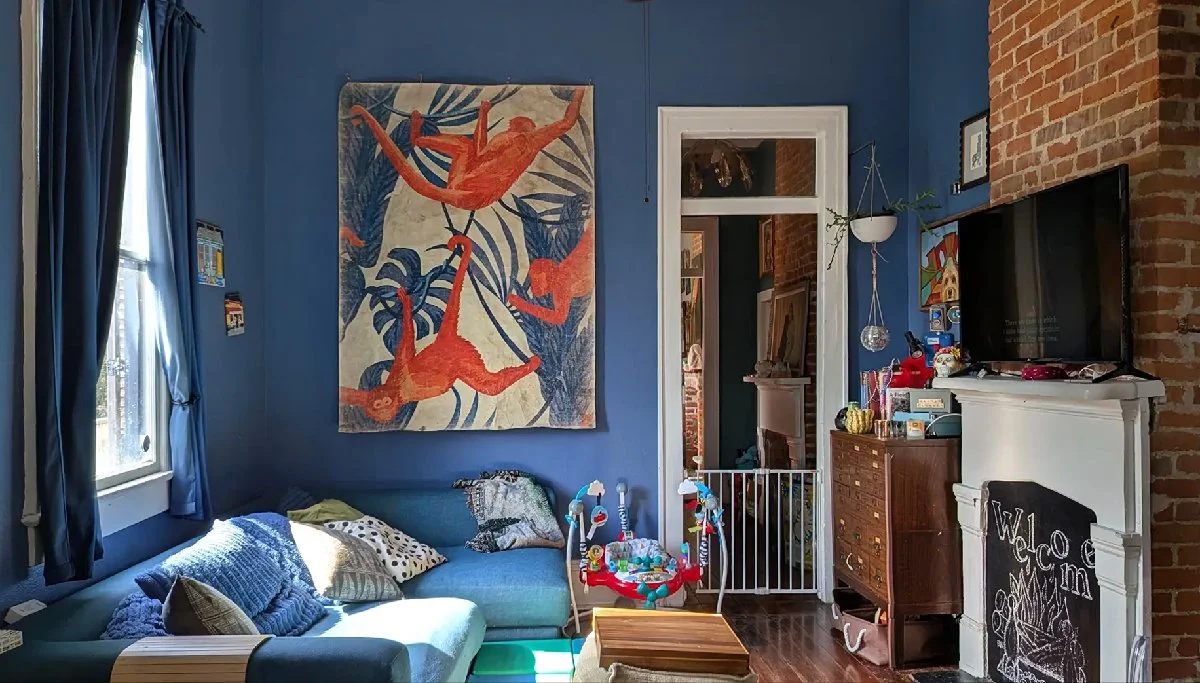
My front parlor, once a music/dining room, became a den during COVID, then a playroom when Cooper arrived, and sometimes back to a semi-dining room if twelve people get snowed into New Orleans for a week and we’re feeding everyone off folding tables.
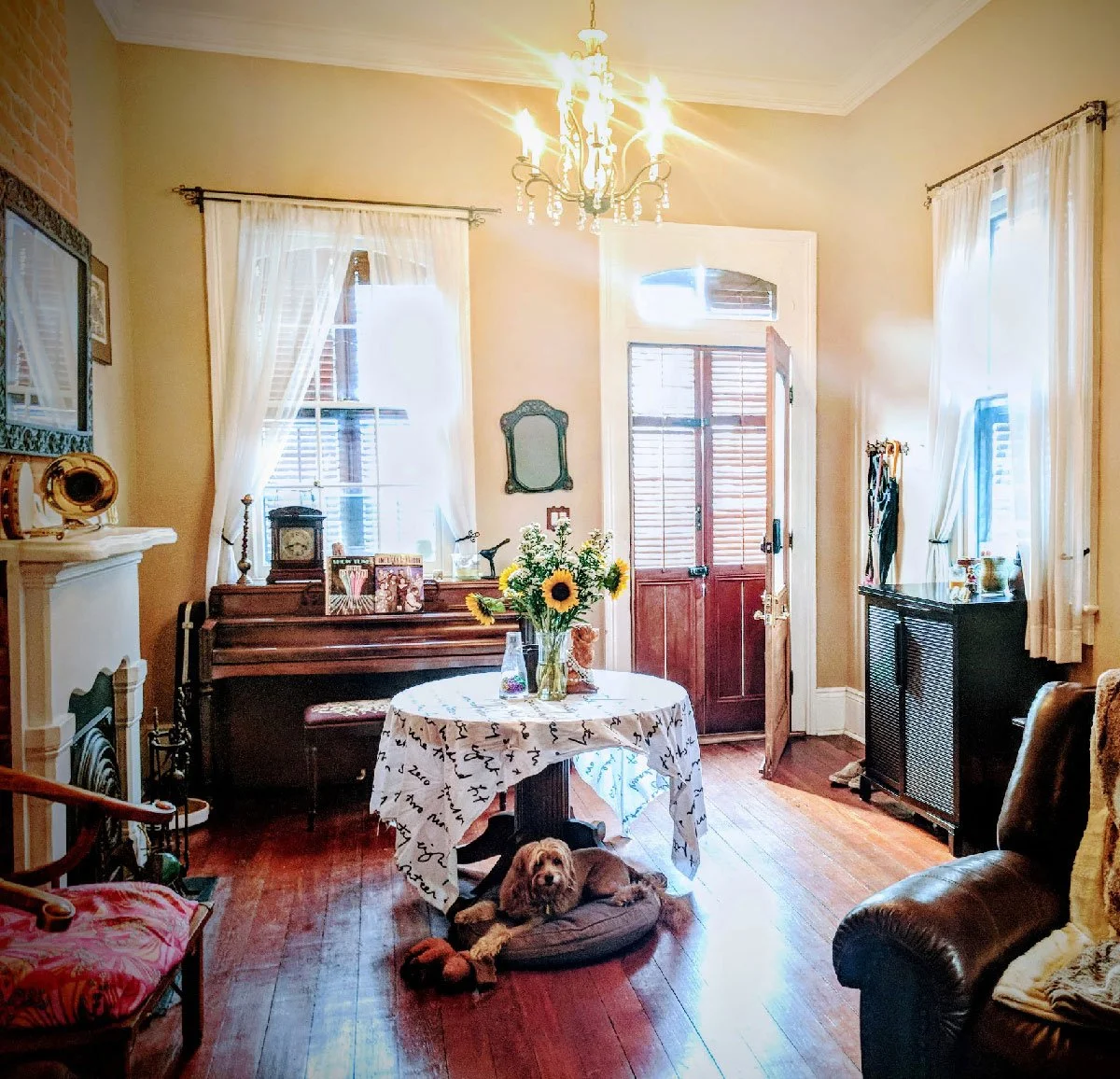
This is the front parlor of a single mid-30s first-time New Orleans home owner trying to emulate what she thinks a new Orleans front parlor should be.
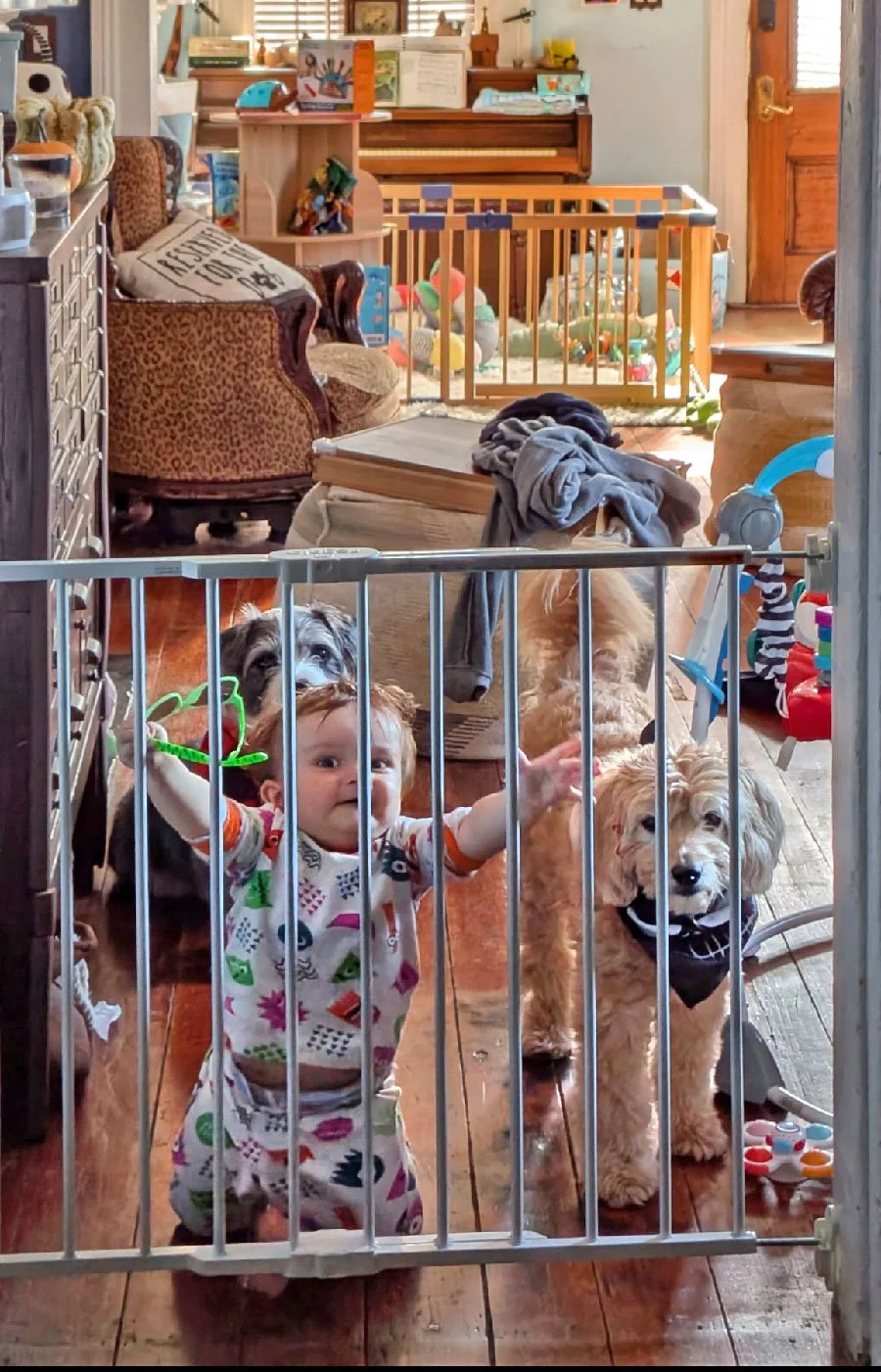
Fast forward to real life.
My costume room became an office, then an office/guest room, and now it’s Cooper’s room. We yank him out when family visits so it can become a guest room again. Nothing about this house holds still.
And then there’s the screened-in porch. I once took Zoom calls out there in a sundress while my colleagues shivered up north. Now it’s my husband’s sanctuary. You’ll find all six foot three of him cocooned in a hanging porch swing, macramé swaying gently, surrounded by plants in every stage of life. The swing was a wedding gift from a trip to Key West. The plants are his true hobby.
I bought my home as a single woman in my thirties, certain only that I wanted a house with space for my mini goldendoodle, Maddie, and a costume room. Three months later, I met Matt via Tinder at Barrel Proof.
A year after that, he was basically living here, and then actually living here, and then the house stretched again when we got married, when we brought home our rescue dog, Wren, and again when we brought home our baby. Every room has shifted with our lives, and every shift has made the floor plan make more sense, not less.
And that’s the point: these houses were built to flex. They already knew how we’d live inside them. I just had to catch up.
***
There’s No Right Way to Live in New Orleans
People assume there’s a correct way to convert a double shotgun or a Creole cottage into a single-family home, but there isn’t. Nobody ever sat down and agreed on one formula. And even if they had, it wouldn’t have mattered. These houses refuse to be fixed. They live and move with you, creating a quietly understood system of mutual survival.
No two conversions look the same. I’ve never walked into one that matched another. As the creator and owner of a real estate brokerage, saying I’ve seen a few homes is like saying the city has a few characters.
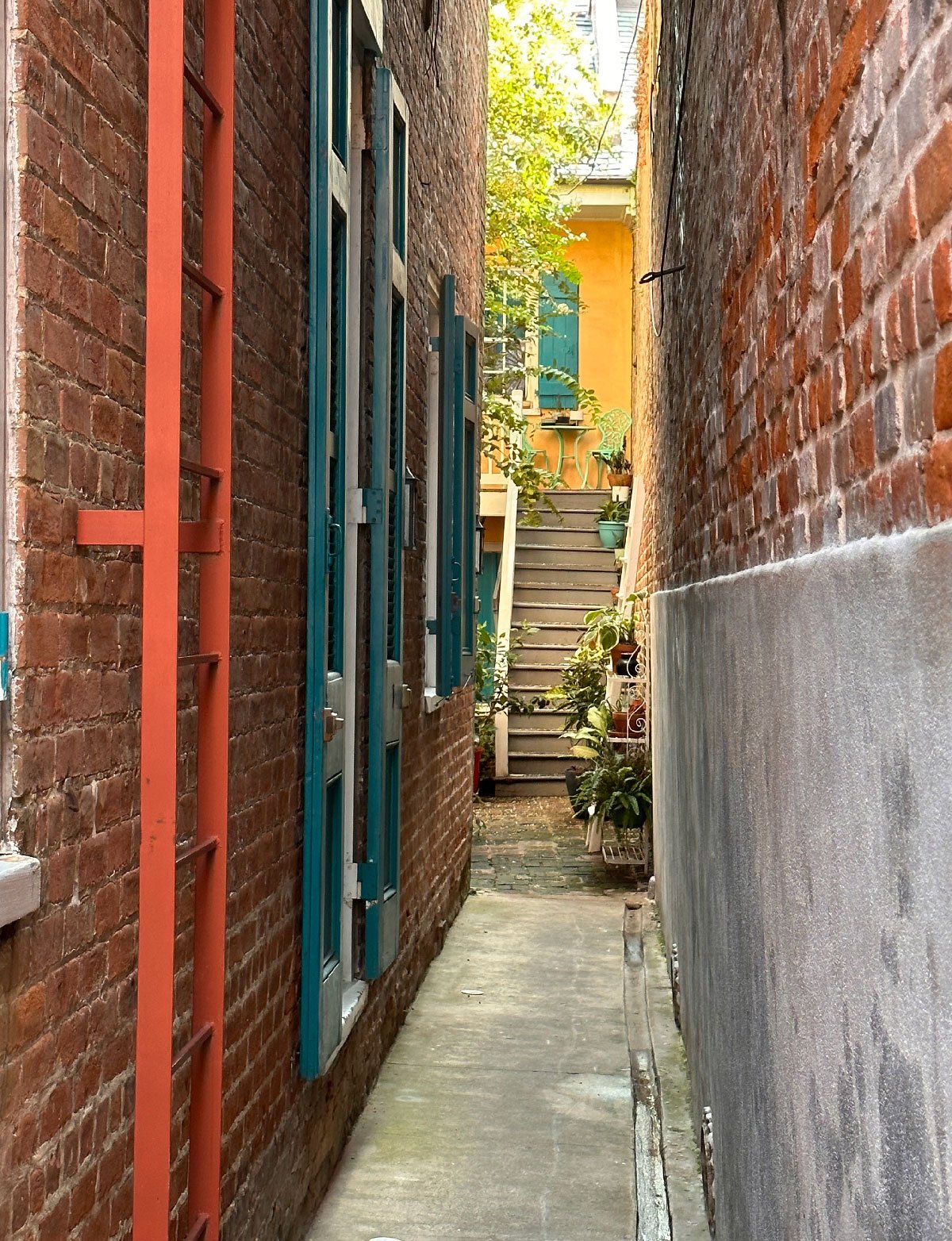
French Quarter alleyway by Ellis Anderson
Some bedrooms are in the front. Some are dead center. Some are in the back. Sometimes the kitchen is where you expect it to be. Sometimes it’s nowhere that makes one damn bit of sense. That's not a flaw, it's the point. There’s no single correct way for the homes to flow because there's no single correct way to live life inside of them.
That’s the magic: the rooms shift as you do.
For example: Alleyways here weren’t accidents; they were created with intent. They once made it possible for someone to come and go without disturbing the main rooms – and they still do. When Cooper is asleep in the front of the home, down the alleyway I go to prevent the dogs from waking him.
That same path has been used for generations—for privacy, for proximity, for coexistence.
I can’t tell you how many times someone walks an alley and says, without thinking, “My mom could use this,” or “My grown kids would love this,” or “This is how my roommate stops driving me crazy.” They usually surprise themselves. But they’re right. These houses were built to hold evolving layers of people.
And they remember. These houses don’t erase what came before. They carry it with them.
There’s a spot on my floor in the rear parlor where coals once rolled out of the fireplace and burned the hardwood. It’s been refinished and shellacked, but the burn is still there. When Cooper crawls across it, I think he’s not the first baby to do that. He won’t be the last.
***
How We Are Called
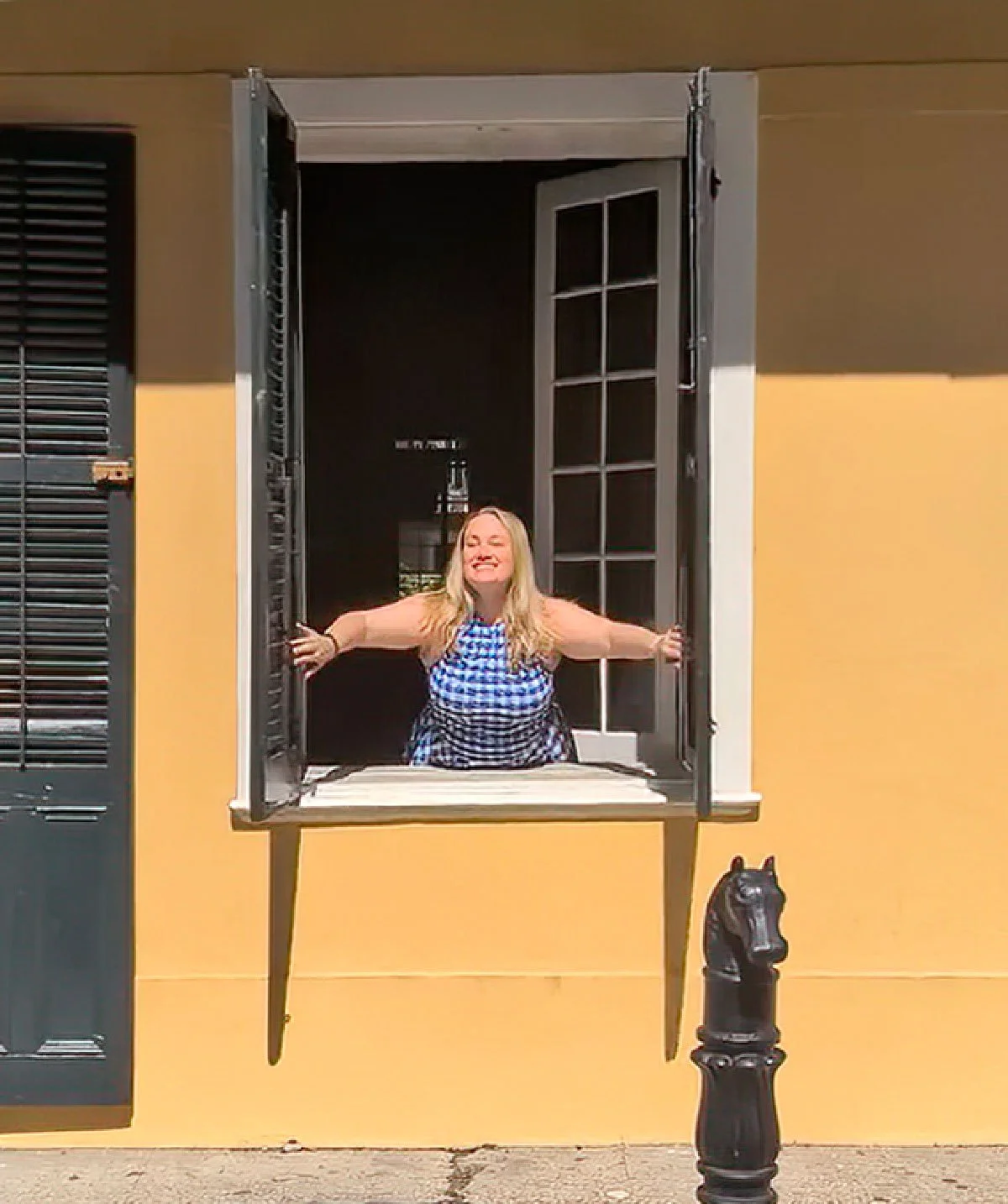
There’s an unnamed feeling that comes from experiencing life in a historic home and in neighborhoods like the Quarter or the Bywater. We each discover these perennial organisms in our own way. We tend them for a time, and pass them on to others. The blooms create a magnet stronger than jasmine, akin to a betrothal.
How it lands with you is beyond you. It’s instinctive.
I tend to describe it as a tractor beam: when your beacon lights up, it’s not subtle. You feel chosen. You feel summoned in a way you can’t fully explain to anyone who hasn’t experienced it. And, suddenly, every idea held about how a person “should” live – and how a historic house interior should conform – begins to unspool. Slowly at first, then all at once.
The influence of tract homes, two- and three-car garages, mini-mansions, and open floor plans unpeel. You become someone who wants more life in your life. And when that concept becomes your church, you want the people you love to worship it with you.
And what you’ll find, as I and so many others have found before me, is a place that lives. A place that melts. Communities that refill and reform through lived seasons, making room for each new inhabitant to discover belonging in its truest form. Affording room for each story that reveals itself, in each home, at its own pace. Sometimes messy. Never wrong.
It's as if the houses already knew how we’d live inside them. Loving on one another until our time is up, and the places we belong to reshape themselves for those who follow.