The Party Begins at Midnight: 1920s Bohemian Balls
An invitation to the 1929 Arts and Crafts Ball
July 2026These risqué French Quarter balls attracted high-society flappers, reveling artists and writers, and even New Orleans blue bloods – all ignoring Prohibition and dancing until “Dawn streaked the dove-colored sky with lipstick-reddened finger.”
– by John Shelton Reed
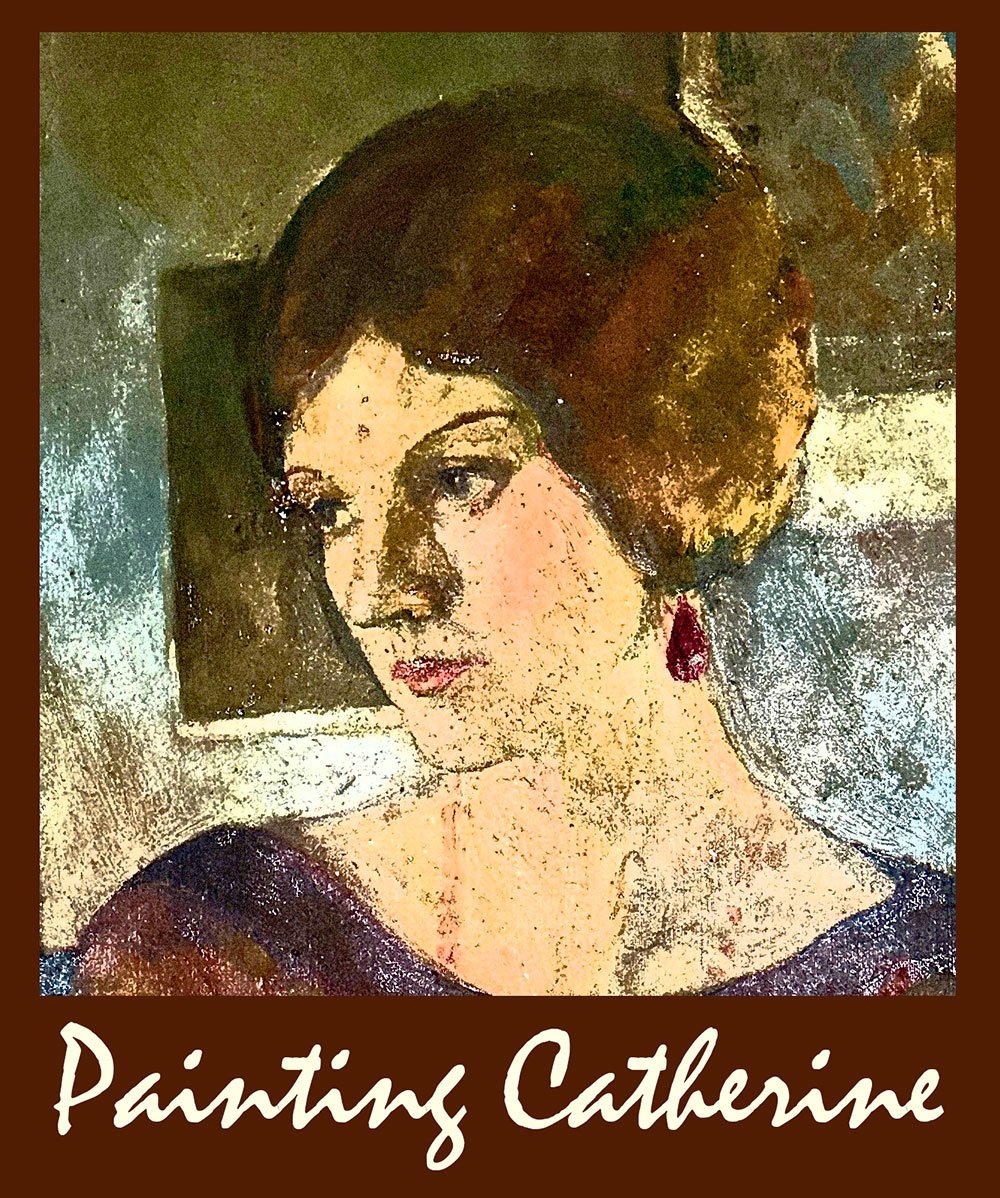
This column is underwritten in part by the book “Painting Catherine,” a novel about the French Quarter in the 1920s.
The high point of the French Quarter’s social calendar in the 1920s was a more-or-less annual “Bohemian” costume ball, modeled on the Bal des Quat’z Arts held in Montmartre each spring by students of the École Nationale des Beaux-Arts.
“The first time an imitation of this ball had been conceived of in New Orleans,” according to the States newspaper, was as a fund-raiser for the Double Dealer magazine on the night before New Year’s Eve 1922.
The party began at midnight, when a costumed crowd including a man in a bear suit, another in a police uniform that almost got him in trouble, and many others in what the newspaper described as “futuristic and original” garb arrived at the Quartier Club in the lower Pontalba building They were greeted by “raucous ribald ragtime, jangling jazz, the moaning of saxophones, the blare of cornets, and the high, shrill notes of the clarinet.”
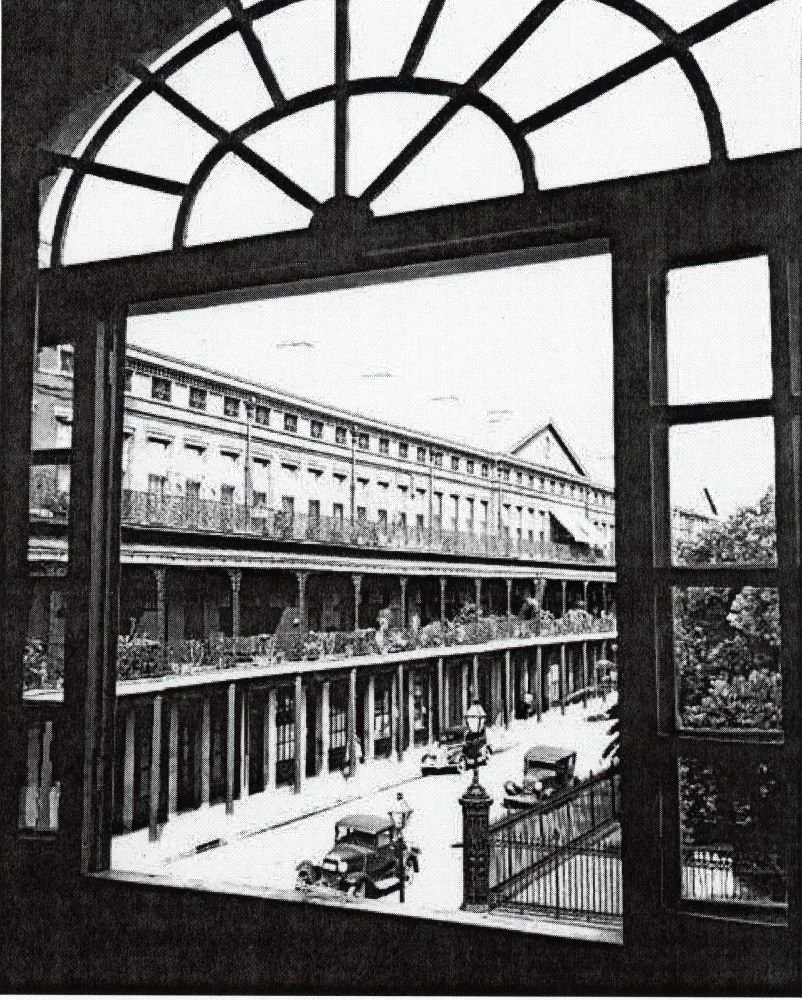
1937 view of the Pontalba location that was home to the Quartier Club in 1922, where the first ball was held. This view from the Presbytere from the Vieux Carré Commission’s Virtual Library
The evening’s entertainment began with an Arabian Nights-themed torchlight procession with a bride carried in a shoulder-borne palanquin across Jackson Square to the club. The nuptials that followed were the first of “several skits and stunts that added life and interest to the party”; others included “an up-to-date jazz dance by Miss Kingsley Black” and a “doll-dance” by a couple in costume.
Lyle Saxon’s Times-Picayune account of the evening led with subheads including “Dowagers Dance Till 5 a.m.,” “Riot of Color and Gaiety as Society Touches Fingers With Art,” and “Old-Fashioned Girl in Low-Neck Nightie.”
A monumental figure of the “Great God Silenus” near the entrance “watched the whole rout with its pagan smile,” as “bare-legged girls [in] fur-trimmed costumes of white . . . shrieked with delight” and “Turkish ladies reclined languidly on cushions upon the floor, smoke rising in long spirals from their cigarettes.”
“Pretty little talcum-powdered debutantes of this year’s crop [were] ‘tasting life’ with a vengeance, deliberately devilish,” and “more sophisticated girls of last year’s vintage [wore] daring costumes of brilliant reds and greens.” Saxon himself was probably at least as interested in some dashing French naval officers from the ship Jeanne d’Arc, in their gold-braided uniforms.
The highlight of the evening was “the dance of Salome,” which pianist Genevieve Pitot performed in attire “that made the seven veils look like an arctic explorer’s costume.” The States reporter found “words . . . entirely inadequate to describe this dance and costume”—but tried anyway: “unique, bizarre, queer, original and startling.”
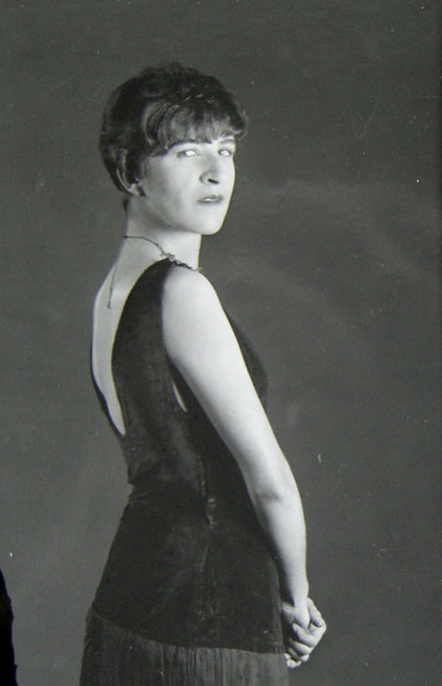
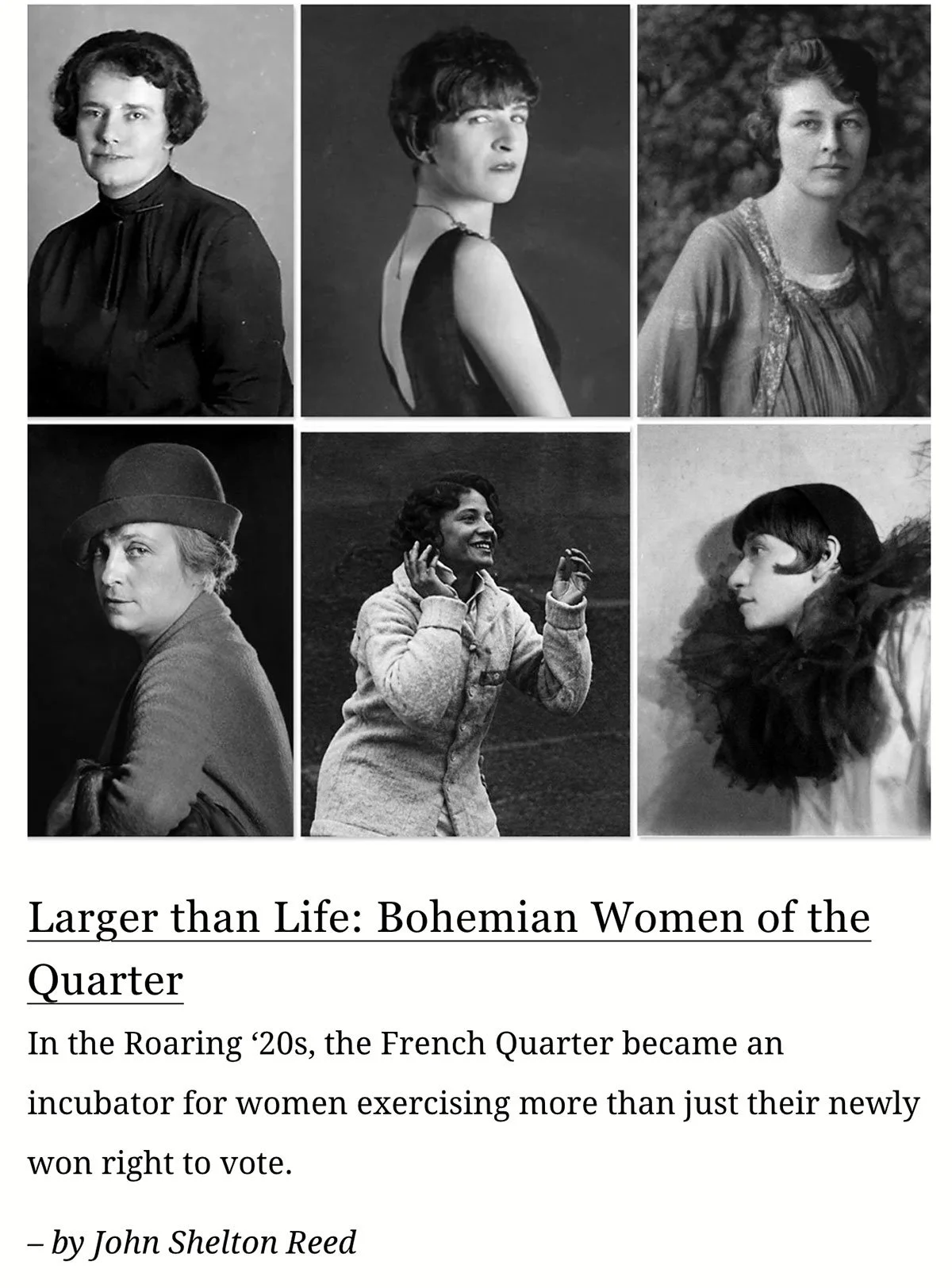
Genevive Pitot, who performed the dance of Salome at the first Arts Ball in 1922. Click to read the first in this series by John Shelton Reed celebrating 100 years of Bohemia in New Orleans “ Larger than Life: Bohemian Women of the Quarter.” photograph by “Pops” Whitesell, Louisiana Collection, Tulane University.
The dance, “greeted with much enthusiasm,” was “one of the most Bohemian features of the evening’s entertainment.” Pitot danced barefoot all evening and couldn’t wear her shoes the next day.
Ticket prices were steep—$10 for a single, $15 for a couple—but tickets did entitle their holders to unlimited drink. The alcohol was illegal under Prohibition, of course, but the two hired policemen guarding the proceeds looked the other way, and more liquor had to be procured midway through the evening.
There was also a band to pay, and the organizers rented a parrot “which sort of lent color to the proceedings,” so in the end the fund-raiser netted only about $200. But the States called the party “one of the most sensational and interesting that has ever taken place in the social history of New Orleans”—which is saying something.
A couple of years later, students at the Arts and Crafts Club held their own costumed fundraiser with the first of what became a series of Bals des Artistes. The announcement stated that the event would be “a costume and mask affair and even those coming in evening clothes will be refused admission” and promised that “stunts” at the ball would include many “features which are unmentionable—remember, it is the Bal des Artistes.”
Among the partygoers was the artist William Spratling, who came as “a dashing Arab, bearded and turbaned and short-coated,” and “won much applause.” His date Esther DuPuy was one of the featured dancers; another hoofer had “studied under the personal direction of Ned Weyburn of the Ziegfeld Follies.”
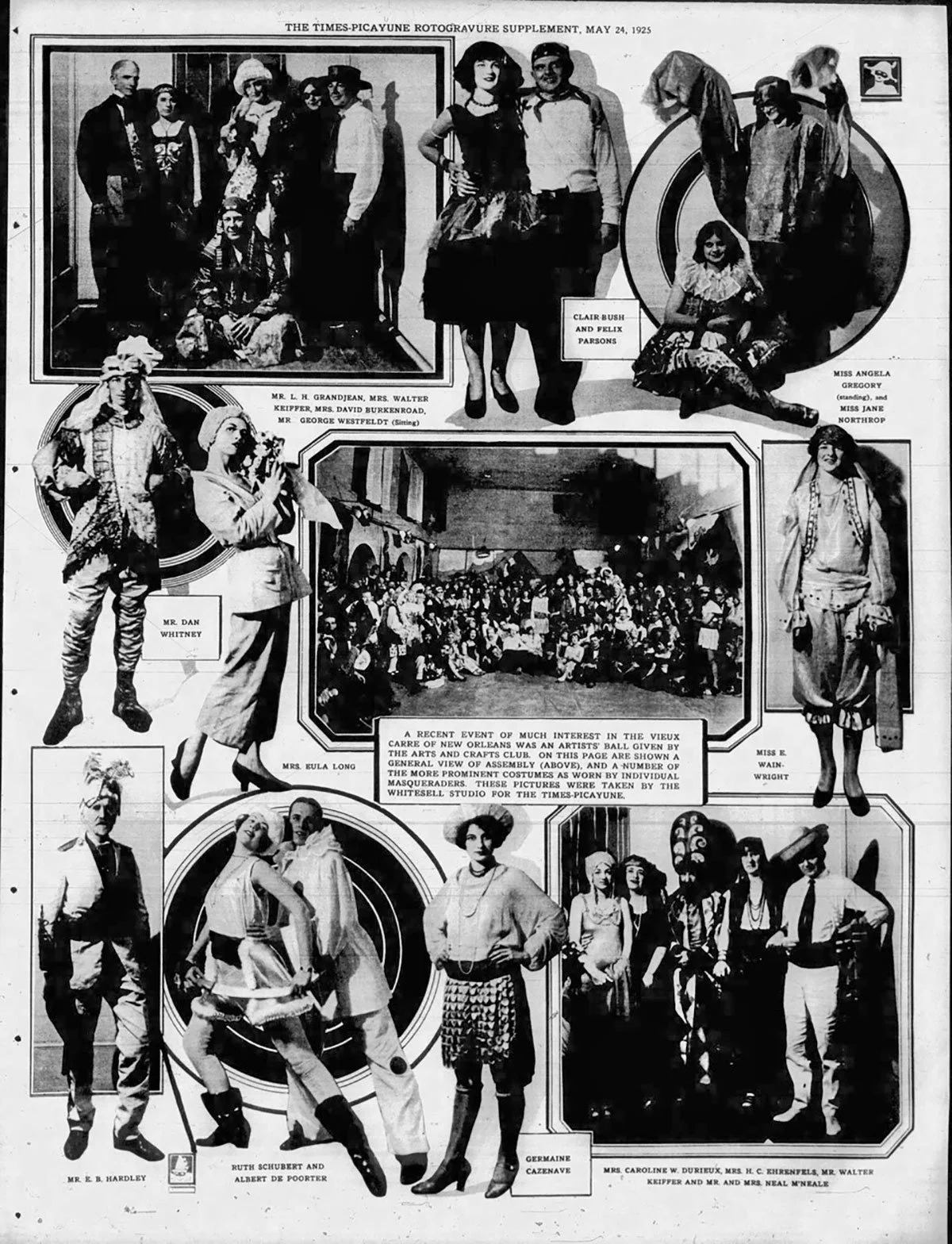
A montage of images from the 1925 ball taken by “Pops” Whitesell and published in the Times-Picayune.
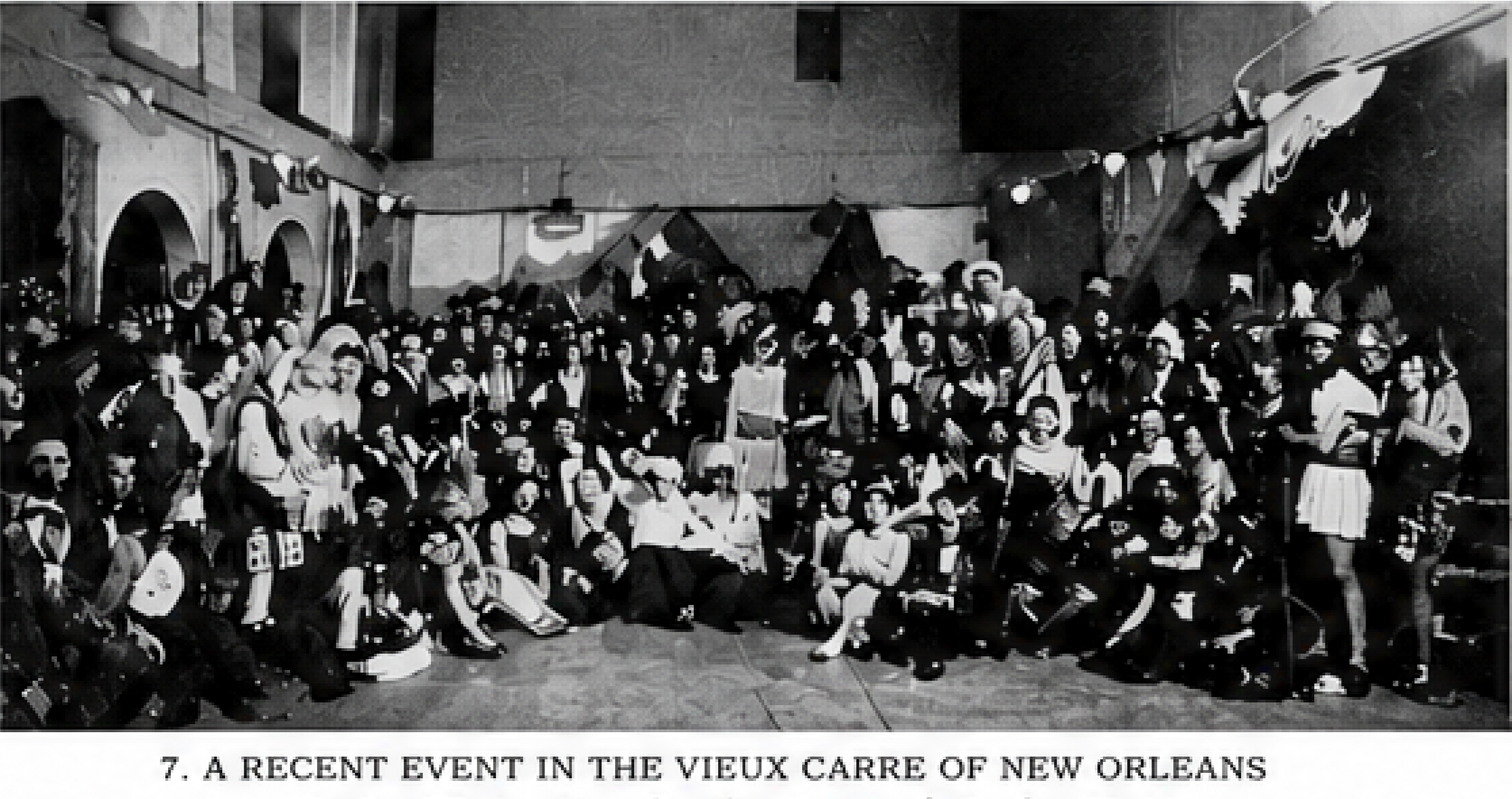
Although the resolution on this group photo shot by “Pops” Whitesell on the night of the 1925 party is poor even after careful editing, it gives an idea of the number of party-goers.
It’s not clear which features were unmentionable—surely not the Russian puppet show. Nevertheless, the Times-Picayune announced triumphantly afterward: “The Paris of America has its Montmartre.”
The announcement had said that the ball was to be, “my dear, just another night of fun and frolic for members of the club,” open to students and their guests at a dollar a head (a bit more for Club members and their guests), but it also attracted a sizable contingent of slumming debutantes and their beaus, and even some older Uptowners. By 1927, newspaper society pages were listing the names of socially prominent partygoers, who by then outnumbered the more bohemian element.
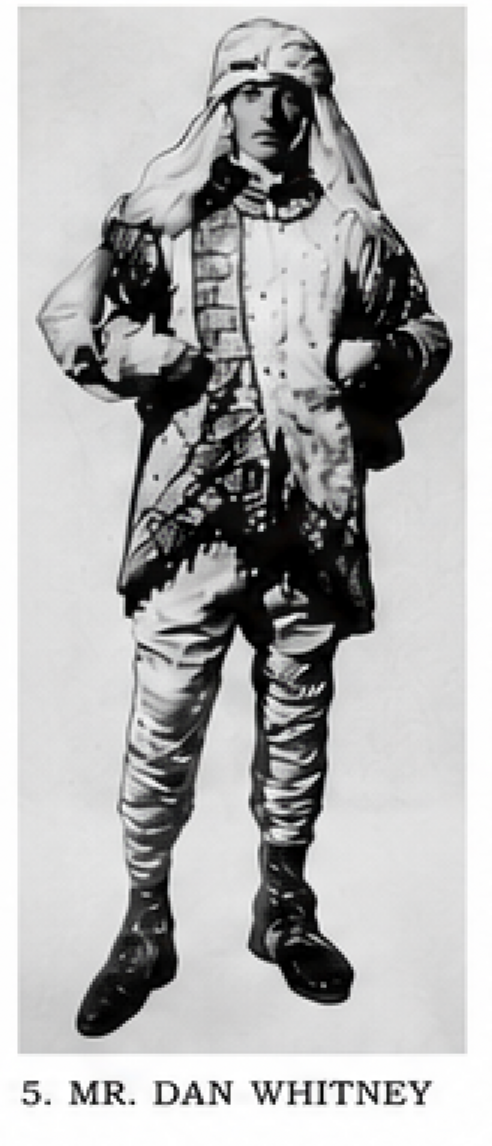
Artist and art teacher Dan Whitney, a dashing WWI veteran, attended the 1925 ball. Catherine Wainwright, a debutante who also attended later became one of his students. Whitney entered a portrait of her in a February 1926 art exhibition. A few days later, the front page of the Times-Picayune announced their elopement.
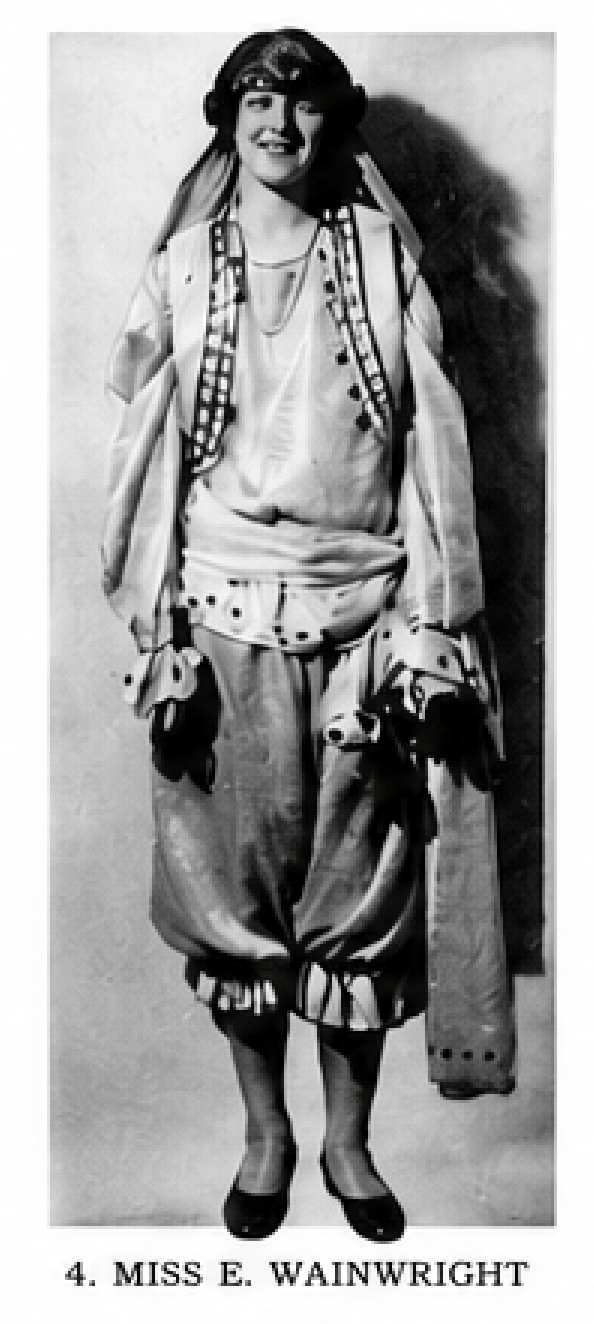
Catherine Wainwright at the ball. Read more about this romance in a FQJ piece by their granddaughter, a French Quarter resident also named Catherine Whitney.
Admission charges crept up, couples became the basic unit, and there were no longer cheap tickets for students. The ball was moved to a larger hall and explicitly opened to the public. What had formerly been “a gorgeous hidden panorama for the artists themselves, a brilliant revel that most persons could only hope to read about in gay but ambiguous descriptions in the morning papers” (the Times-Picayune‘s words) could now be enjoyed by anyone with the price of a ticket.
The Club’s friends at the newspapers could always be counted on for a steady flow of publicity. Typical headlines teased that “Secrecy Shrouds Preparations for Arts, Crafts Ball,” or promised a “Gay Soiree,” a ball to “Rival Any This Side of Paris.”
Reporters told readers to expect “lavish and daring schemes of color” and “weirdly costumed revelers,” as well as “models and others” performing “spicy sketches, tableaux and other events.” One writer boasted that an upcoming ball would be “a spectacle that no other city in America can offer,” and promised that it would “make ordinary folk drop their jaws.”
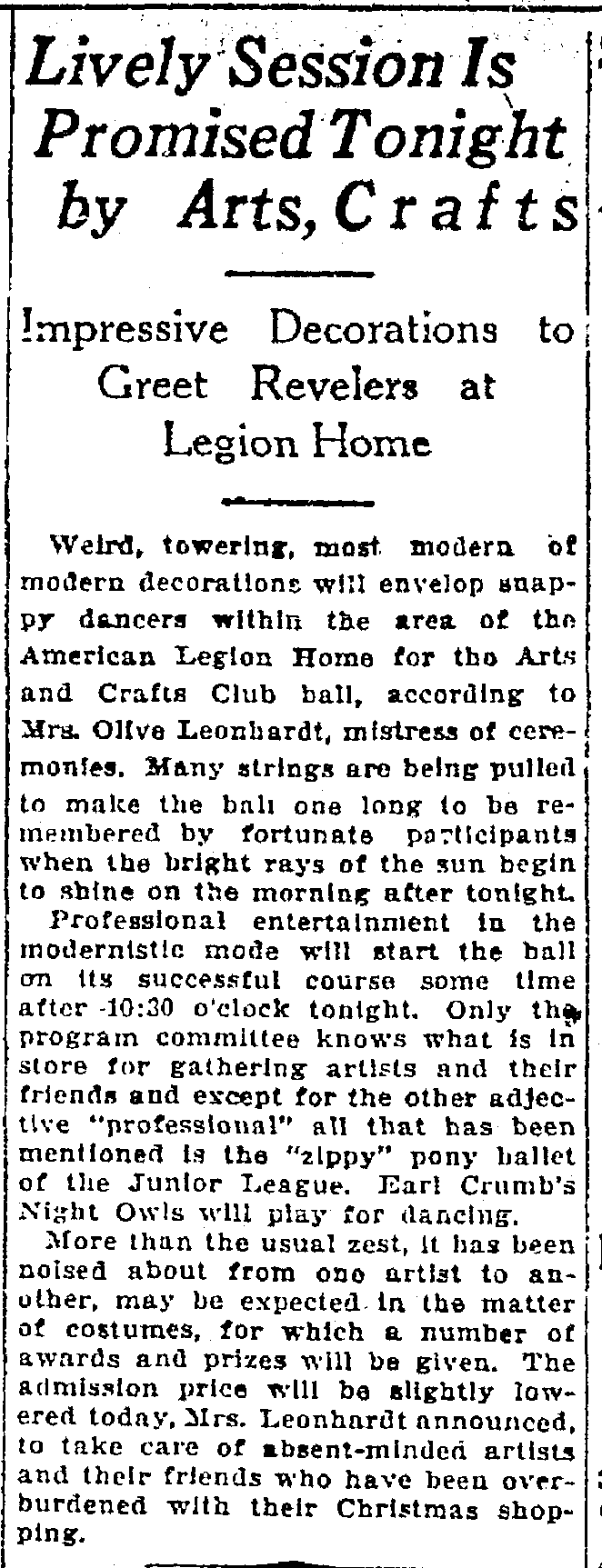
The announcement for the party in the December 10, 1927 Times Picayune, promising the Junior League dancers and Earl Crumb’s Night Owls.
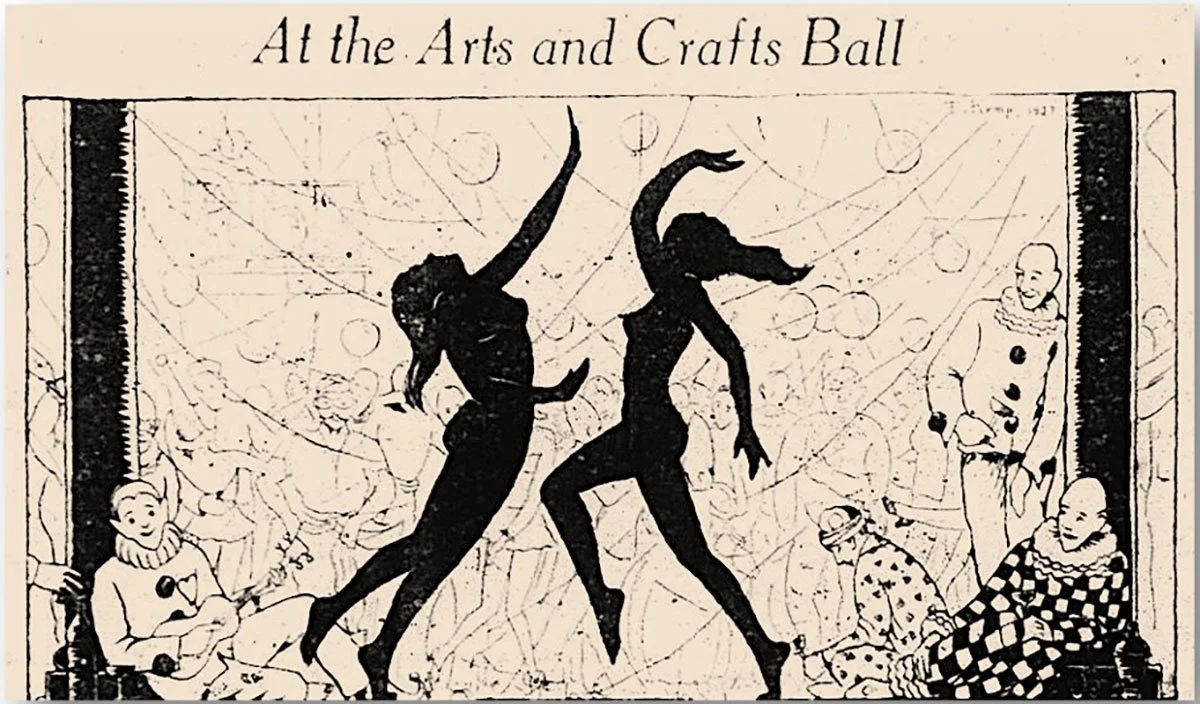
In 1927, all four daily papers promised “professional entertainment in the modernistic mode,” “a spirit of mysticism and beauty,” the presence of many an “out-of-town celebrity,” and the return of a “zippy” Junior League chorus line that had enlivened an earlier ball. Some stories were accompanied by mildly suggestive drawings by members of the Club. Even the New York Times took notice of these “pseudo Bachannalian [sic] revels.”
Costumes were varied, and often imaginative. At one ball, a crew of pirates “whooped it up with damsels representing every country, including Iceland and the West Indies,” while a host of devils, and a “horde of Russian gentlemen,” bearded and booted, cavorted with ballerinas, scrubwomen, fortune tellers, “demure young things, vampires, snake charmers, Egyptian dancing girls, hula dancers, queens and celery stalks.”
Newspaper accounts of another ball mentioned Peter Pan, Pierrot and Pierrette, a chef, several peasants, Trappist monks, a chimneysweep, a Mayan prince, a Fascist blackshirt, a pirate, ballet dancers, clowns, toreadors, policemen, sailors, and doctors.
Decorations tended toward excess. Murals for the first ball included one of Father Time “reclining on a cross-word puzzly crazy-quilt flung over the clouds, . . . flanked by a spectacled female artist seated on a garbage can and doing a landscape,” and another of “charming little cherubs in quaint postures.”
A later ball offered murals of a large and colorful octopus with “a comely maid and handsome youth” in its tentacles, “something or someone who might have been Bacchus,” and “a pale, long, aesthetic man” surrounded by “mischievous little red devils.”
For another, the Times-Picayune reported, two clubrooms were transformed into “a haven of angels and devils” and “a dream room of romance” with “statuary, fiery red paintings, and ornamental draperies.” (A philistine from the States wrote that the place was “profusely decorated with splashes of color meant to represent futuristic painting.”)
Entertainment ran to skits and dances. The 1927 ball included a parody of Flo Field’s play A La Creole, staged just the month before at Le Petit Theatre, as well as the popular Junior League chorus line in “black costumes with full tarlatan skirts and big ruffs around the neck.”
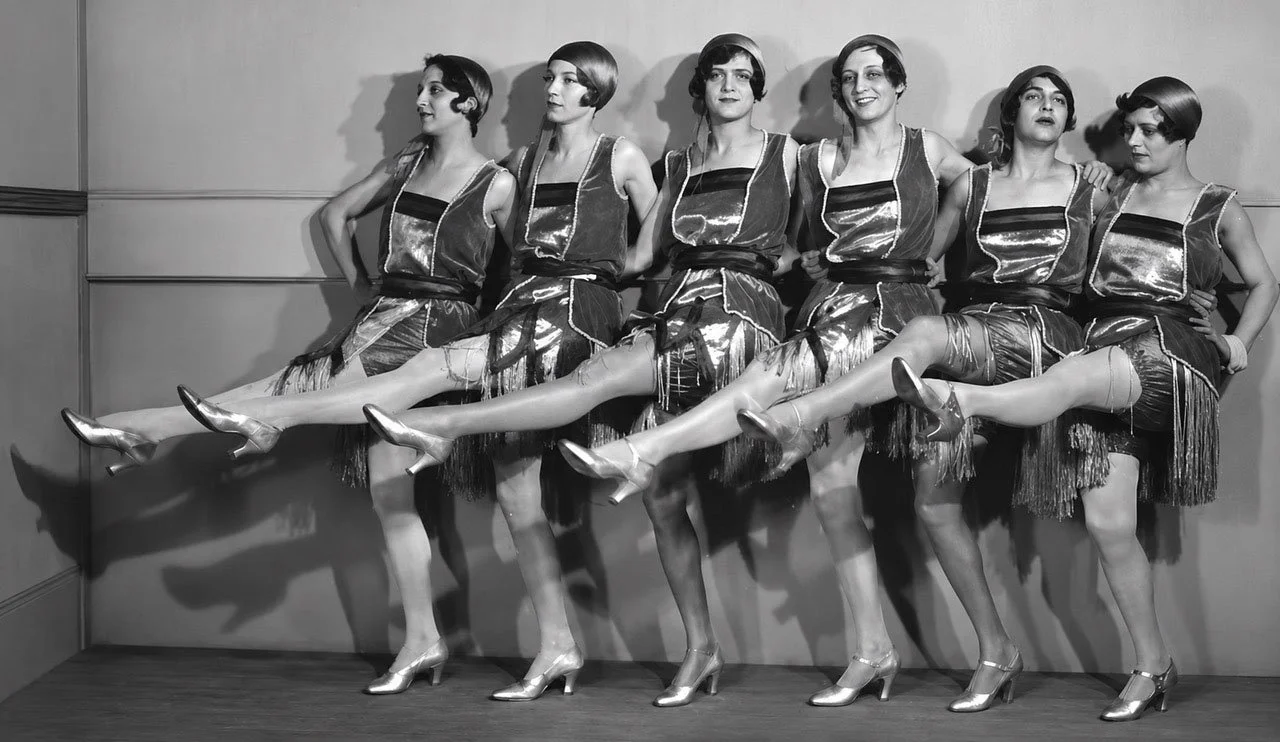
The Junior League Chorus danced at the 1927 ball in different costumes, “with full tarlatan skirts and big ruffs “ Photo restored with AI
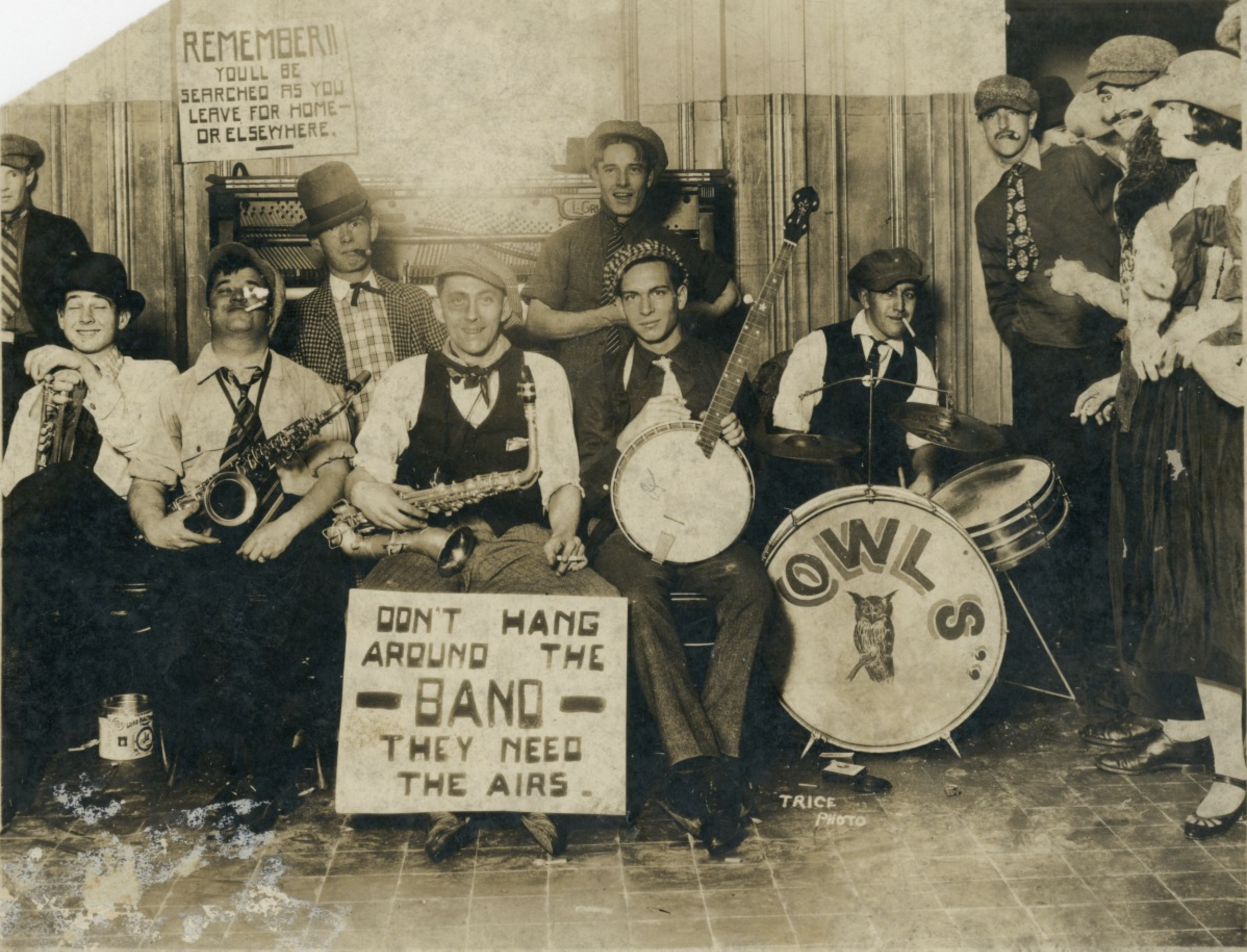
Photograph of Earl Crumb’s Night Owls, New Orleans Jazz Museum. Click on the image to read more about them in the “Sycopated Times”
All in all, said one observer, evidently carried away, the ball “surpassed any other ever given in cleverness and gaiety.” When it “rose to a fever pitch about 3 o’clock,” according to one account, “a stranger dropping in might have thought himself in the Latin Quarter of Paris, so alike was the scene.”
In short, every attempt was made to portray the balls as “like the Beaux Arts ball of the Parisian artists’ quarter”; the Times-Picayune said that they were spectacles “rivaled by nothing but the Montmartre balls themselves.”
Some New Orleanians who had been to Paris would have known about the French original by hearsay or might even have experienced firsthand the public nudity and debauchery for which it was famous (Sherwood Anderson hinted at its nature in his novel Dark Laughter). By those standards—or even by the standards of 1920s London, where Evelyn Waugh was writing of “almost naked parties in St John’s Wood”—the New Orleans balls were rather tame.
Still, some of the entertainment was a little racy, and Elise Friend recalled that many costumes were “very scanty.” At one ball, the States reported that there were enough “abbreviated costumes” to “strain the optics,” adding that many partygoers “seemed to find interest in less congested localities [and] wandered off to commune with the wonders, consisting of various types of Nature,” and that the party was still “going strong as Dawn streaked the dove-colored sky with a lipstick-reddened finger.”

A newspaper illustration signed Leonhardt, most certainly Olive Ellzey Leonhart (1895 - 1963), a prominent artist in the French Quarter Arts and Crafts Club in the 1920s.
Although Arts and Crafts Club balls were still being held in 1930 and 1931, they seem to have run out of steam by then. The Quarter’s bohemian moment was passing and the Depression had put a damper on all sorts of frivolity. By the mid-1930s, what James Feibleman later recalled as “imitation Greenwich Village parties” had had their day.
Read Part One in this special series by John Shelton Reed, author of Dixie Bohemia, celebrating the 100th anniversary of the book “Sherwood Anderson and Other Famous Creoles.”