A New Voice and Vision at the Marigny Opera House
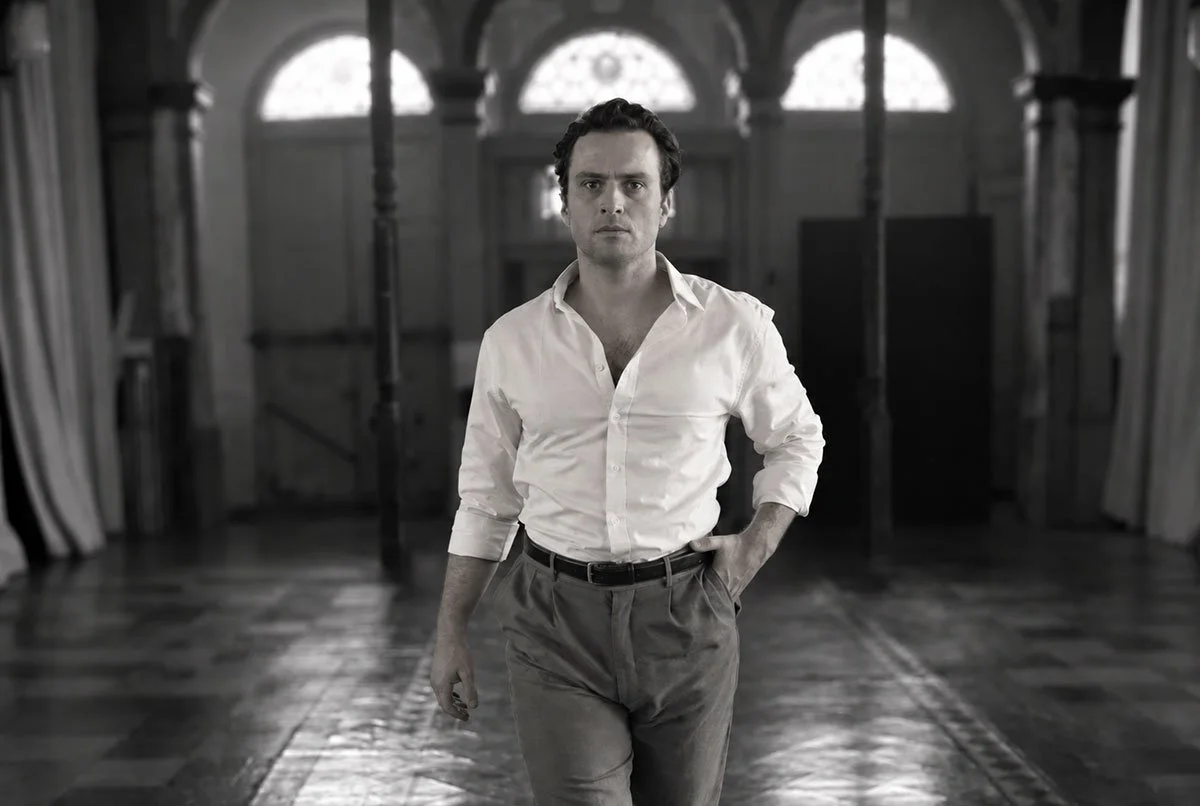
Bogdan Mynka at the Marigny Opera House, photo by Alex André
September 2026Bogdan Mynka’s meteoric rise from guest residency to artistic and executive director at the Marigny Opera House has reinforced his commitment to serve the city that’s embraced him.
– by Kim Ranjbar
“I jokingly said to myself when I moved to New Orleans: If there’s not much going on, I’ll start something myself. I didn’t realize how serious that was.”
“But that is exactly what happened.”
On August 1, Bogdan Mynka stepped into his new role as executive artistic director at the Marigny Opera House, a melding of the organization’s two most critical jobs. And like a good opera, his story is one of talent, drive and discipline being recognized and rising rapidly.
The recent transplant made his way to New Orleans along a circuitous but hauntingly familiar route. Emigrating from Kharkiv, Ukraine, in 2013, the vivacious young artist earned an undergraduate degree in music and vocal performance from Washington State University.
But it wasn’t until later, while pursuing a Master’s degree from the University of Illinois Urbana-Champaign, that Mynka took a journey down south. Encouraged by a mentor to expand his possibilities, Mynka branched out and began studying playwriting, acting, and directing.

This column is underwritten in part by Lucy Burnett
“I met two playwrights who were gung-ho about Tennessee Williams and they said ‘Bogdan, you have to come to New Orleans!’ I said sure, eventually, but they said no . . . tomorrow!’”
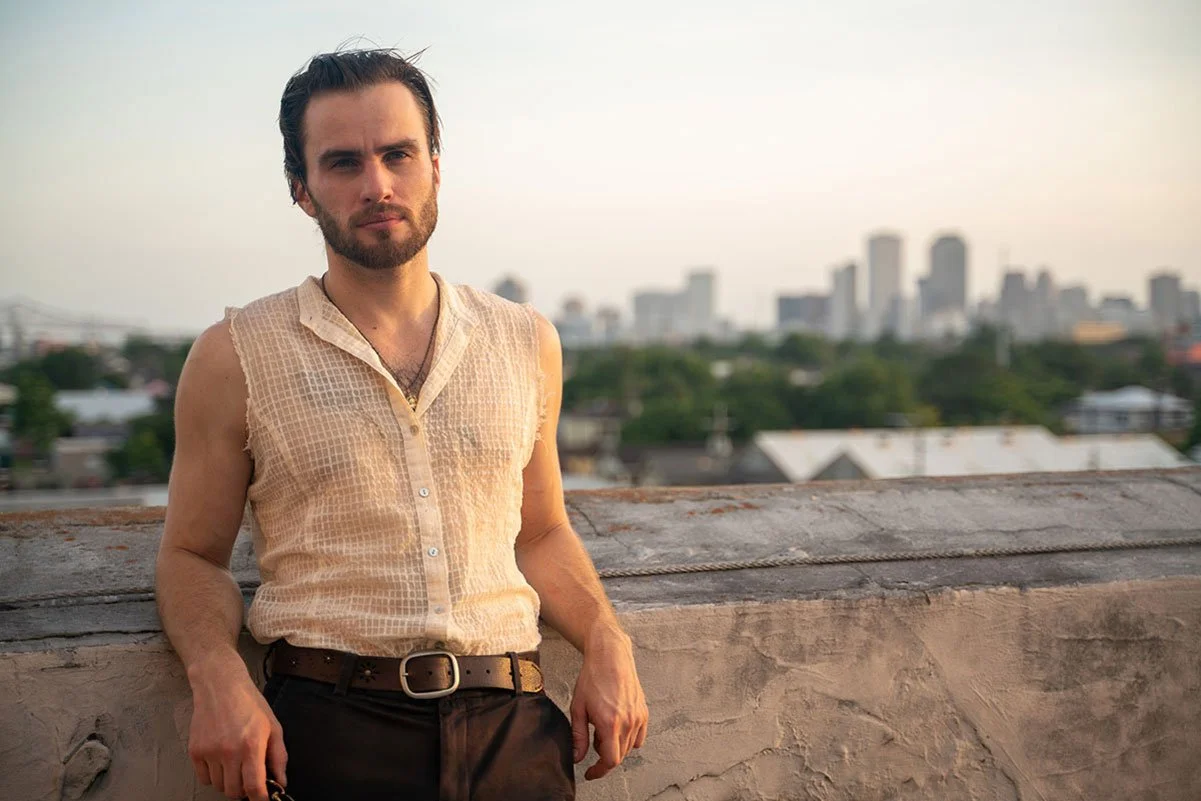
Bogdan Mynka by Alex André
In the space of three days, walking around the French Quarter and Marigny, talking with street performers and artists, Mynka was smitten.
“There’s a creative energy here that’s undeniable; it’s unlike anything I’ve ever seen,” explained Mynka. “It was [during] COVID, and everywhere else was locked down, but the city still found a way to keep the charm alive. It really warmed my heart.”
Much to the chagrin of his professors and peers, Mynka skipped over their suggestions to audition at The Lyric Theater in New York or The Santa Fe Opera in New Mexico and moved to New Orleans.
Though he started out waiting tables and doing small parts with the New Orleans Opera, Mynka finally got his big break in community theater, performing the lead roles in Jesus Christ Superstar on a local tour with the Jefferson Performing Arts Society and Company at Tulane University’s Summer Lyric Theater.
Then one day, serendipity played its hand.
“When I first moved here, people would find out I’m an opera singer and they’d say ‘Let me hear you sing,’” explained Mynka. “Nowhere else have I had people ask that of me. At first it seemed the most awkward thing, singing outside of bars or restaurants.”
During an impromptu aria in front of the Golden Lantern, Mynka was approached by French Quarter resident Catherine Whitney, who happened to be walking by. Impressed, she made his acquaintance, then introduced him to Tatianna Macchione, director of the Michalopoulos Gallery and Foundation. Macchione began hiring the singer for solo gigs at the gallery – but the opportunity quickly developed into a career for him as a gallerist.
“Tatiana has been the most important force in my life since moving to New Orleans,” says Mynka. “She taught me about the production side of things: hiring, building a team, seeing things through.”

Bogdan Mynka and Tatianna Macchione at Michalopoulos Gallery, Dirty Linen Night 2025, photo by Ellis Anderson
By squirreling away his paychecks from his job at Michalopoulos Gallery, Mynka eventually saved enough to put what he’d learned into practice, launching his own opera company, Verisimo in 2025. The name is a nod to the verismo movement, a style of realism and naturalism that emerged in both literature and opera in the late 19th century.

Dave Hurlbert at the Marigny Opera House. Click here to read FQJ’s story about MOH’s origin. Photo by Ellis Anderson
Verisimo put on its first production, a one-act opera tableau, at the Marigny Opera House last year in May. The historic 1850s church-turned-cultural venue opened by Dave Hurlbert and Scott King in 2011 was the ideal backdrop for Mynka’s vision – to bring opera back into the mainstream – and it was a talk-of-the-town sort of success.
“We had big projections, two dancers, two singers, and a pianist. We had standing room only!”
Excited by the production’s reception, Hurlbert offered Mynka a month-long residency that August and he took up the challenge.
“He [Hurlbert], hand on my shoulder, looked me in the eye and he just kind of echoed what the entire city was saying, which was, Do what you want to do. Don’t worry about what the audience might like or what’s appropriate. Do what your heart tells you.
Inspired, Bogdan’s next production combined theater, opera and dance in a presentation of Macbeth. The amalgam incorporated Shakespeare’s dialogue, music from Giuseppe Verdi’s opera and lyrics from Henry Pucell’s Fairy Queen, an adaptation of A Midsummer Night's Dream.
“People said don’t do it at the end of August, it’s hurricane season, but I took a leap of faith and it sold out.”
Keeping the ball rolling, Mynka was invited to put on another performance early this year, and he wooed the city with his interpretation of Tchaikovsky’s The Maid of Orleans. “Nobody loves Joan of Arc the way New Orleans loves Joan of Arc.”
Implementing what he now calls the “Verisimo treatment,” Bogdan condensed what would normally be a three-and-a-half-hour production into what movie fans dub a tight 90.
“A lot of these three- or four-hour operas were originally about how long, how grand, how much money they could spend – but was it really to connect with the audience?” explains Mynka.
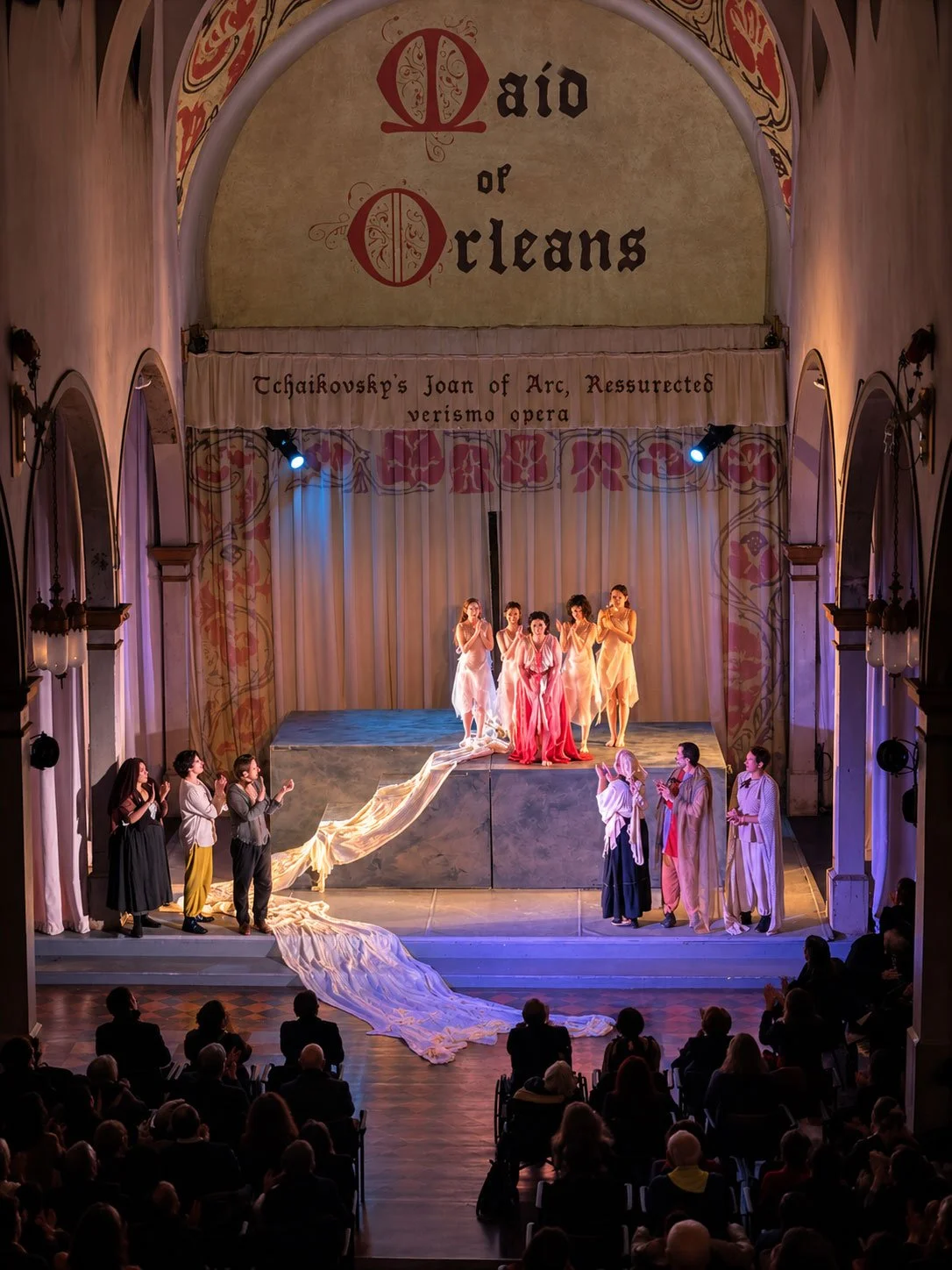
The cast takes a bow before a cheering audience at end of Maid of Orleans, performed at the Marigny Opera House in January 2026. Photo by Ellis Anderson
“If it's not driving the plot forward, I take it out. If you’re in a theater for more than two hours, you really stop being present and then what’s the point?”
For example, just trimming the excessive God-save-the-king chorales cut a solid half-hour from The Maid of Orleans. He also took umbrage at Tchaikovsky’s inclusion of a romantic scene between Joan of Arc and a Burgundian knight.
“It kind of pissed me off. The story of Joan is so inspiring … and then some Burgundian knight comes and saves the day? I wrote that out and we made a really beautiful transition, a duet where she sings ‘If only you knew how much I loved you,’ and really who she’s singing to is God. It was her relationship with the divine that drove her.”
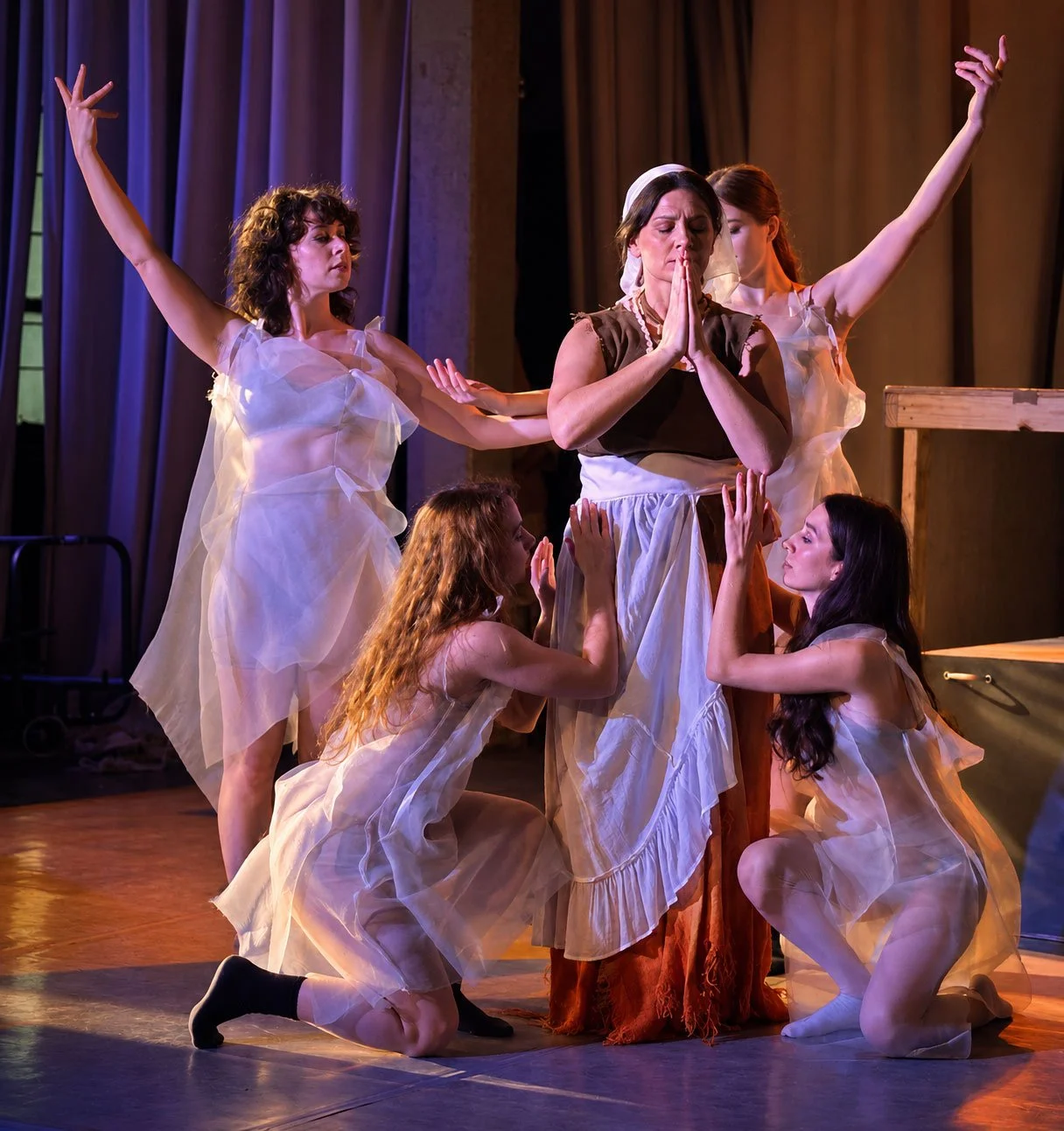
Scene from dress rehearsal of The Maid of Orleans, January 2026, photo by Ellis Anderson
For the season 2026/2027, the Marigny Opera Ballet is partnering with Verismo Opera to present a full season of four opera ballet productions. Following CAIN, Season passes will transport fans with Verisimo’s interpretation of Die Sieben Todsünden – or The Seven Deadly Sins – a ballet-chanté by German composer Kurt Weill.
La Damnation De Faust, an 1859 opera by Hector Berlioz and based on a play by Goethe, will run in Winter 2027. In late spring, expect Dido and Aenas, a Baroque tragedy by Henry Purcell.
But CAIN, a reimagined ballet-opera based on Alessandro Scarlatti's 1707 oratorio "Caino, overo il primo omicidio,” has its first performance this Friday, September 11. For those unfamiliar with opera, oratorios are typically presented in churches in a concert-style format.
“We have taken out the singing roles of Cain and Abel, but the language of their conflict and their relationships - with each other, with their parents [Adam and Eve], with God and Lucifer – are completely interpreted through dance,” says Mynka excitedly.
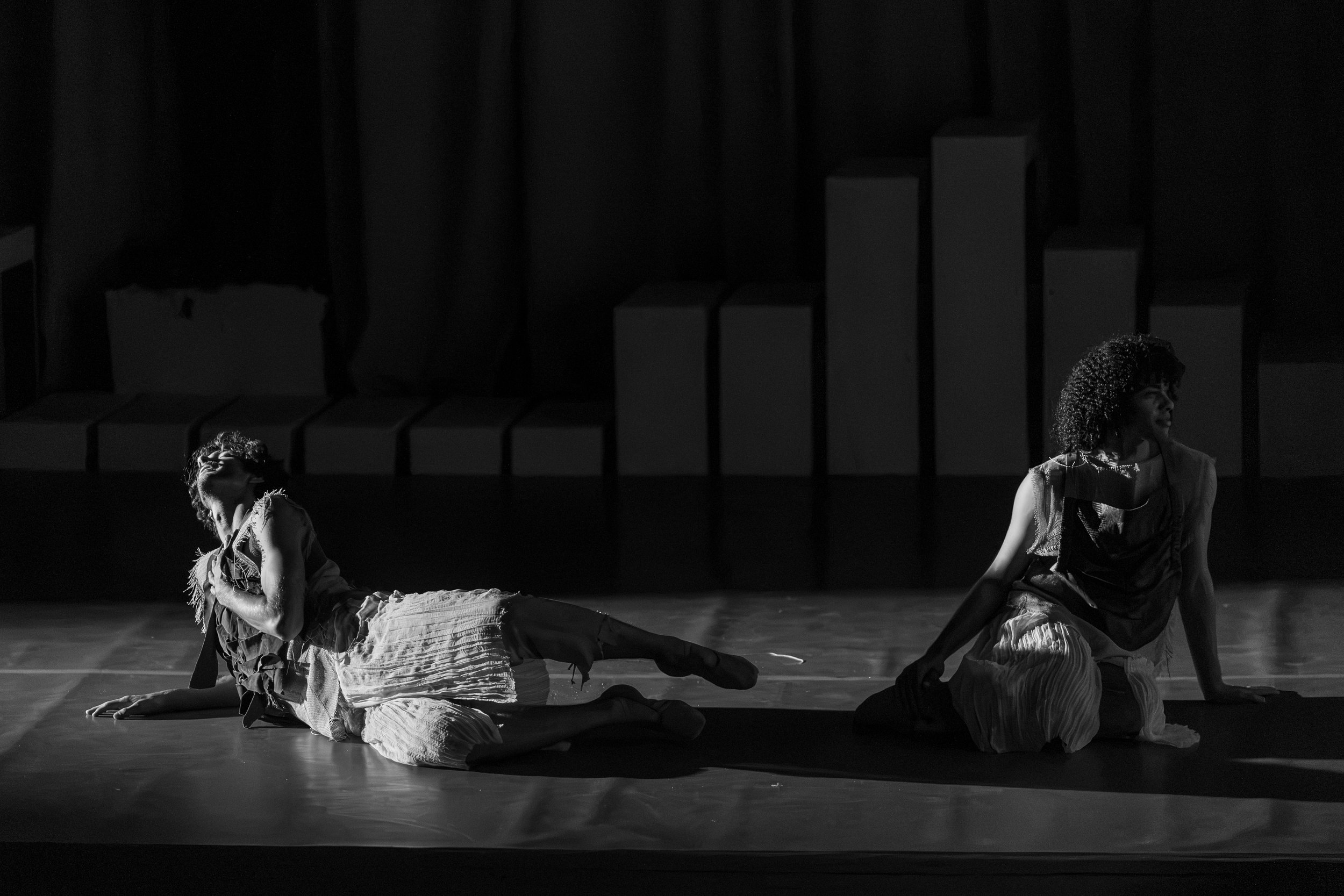
Rehearsal of CAIN at the Marigny Opera House with Claudio Caverni (L) and Caleb Chesson. Photo by Dmitriy Pritykin
“Often when we see opera ballets on the world stage, dance is presented as an accompaniment. To me, it should be a seamless marriage of the two art forms, where both are driving the story.”
Leaning into the Baroque particularities of Scarlatti’s opera, MOH’s music director Paul Weber, an early music specialist and music director at Trinity Episcopal Church, will be playing the harpsichord - at times improvised new musical scenes to accompany the dances. Members of the string orchestra will use Baroque bows, which produce a more delicate, uneven sound than their modern counterparts.
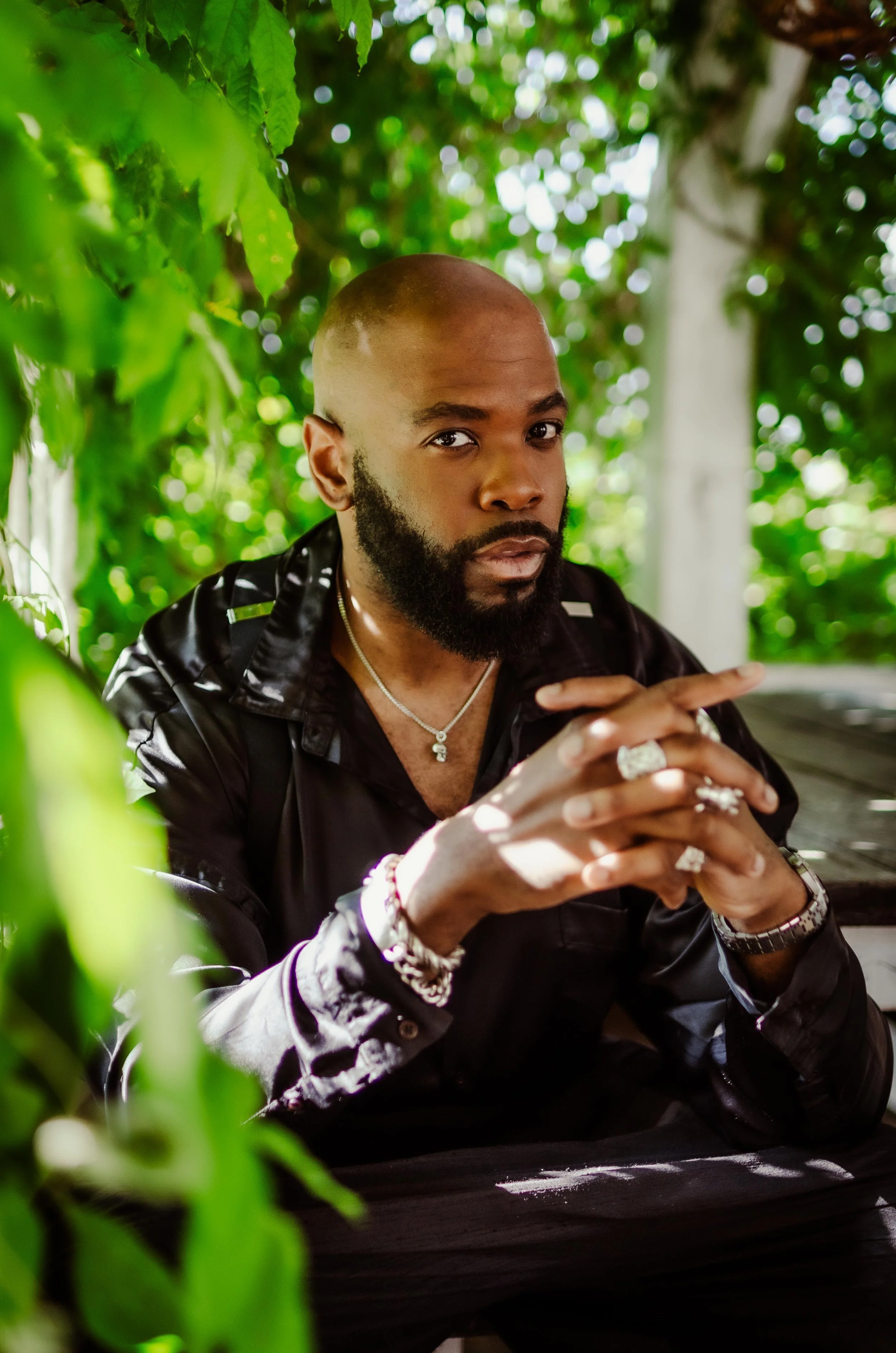
Joshua Stewart, photo by Maaya Danilo Kusmin
But Mynka’s vision ranges far beyond the details for this performance. Working closely with MOH’s new general manager, Joshua Stewart, the organization is expanding its mission to better support the city’s culture bearers.
Mynka says Stewart’s talent and experience as a noted international opera performer are invaluable, and the fact that he’s a local who went to the New Orleans Center for the Creative Arts (NOCA) fits perfectly with the new goals.
“As a boy, the bus stopped at the corner of the Marigny Opera house on his way to NOCCA!” says Mynka, talking of the kismet. “So I’m very excited to work with this key person who cares so deeply about his community.”
Stewart’s job makes him responsible for the ballet and opera productions and all other bookings at MOH. One of his goals is to develop the space to be an educational neutral ground, with access to all that want to learn more about their craft. In addition, he’s seeking sponsors, building community partnerships, and leading educational and community initiatives to grow MOH's creative hub.
For instance, performers and production professionals working with MOH this season have all agreed to teach master classes for the community to pass on their knowledge.
And this season, MOH is focusing on “bringing opera singers home.”
Mynka points out that opera performers who live in New Orleans rarely get to perform their craft in their hometown. Now, several have been invited into the MOH company for the season, allowing them to share their talents and their knowledge locally
“We’re trying to create consistency for the artists – the musicians, the singers, the dancers and key production team members – like Amalia Najera, who just graduated from Tulane and will be working as the Marigny Opera Ballet’s resident choreographer throughout this season.”
Another of Mynka’s goals is to keep ticket prices as low as possible and create opera “for the people.” Currently, GA season passes range from a very reasonable $140 - $160 for all four shows.
Mynka, noting that New Orleanians love posters, has introduced incentives for CAIN VIP ticket holders, including a limited edition, hand-pulled 24×18″ silkscreen by Gabriel Flores, printed on archival French paper.
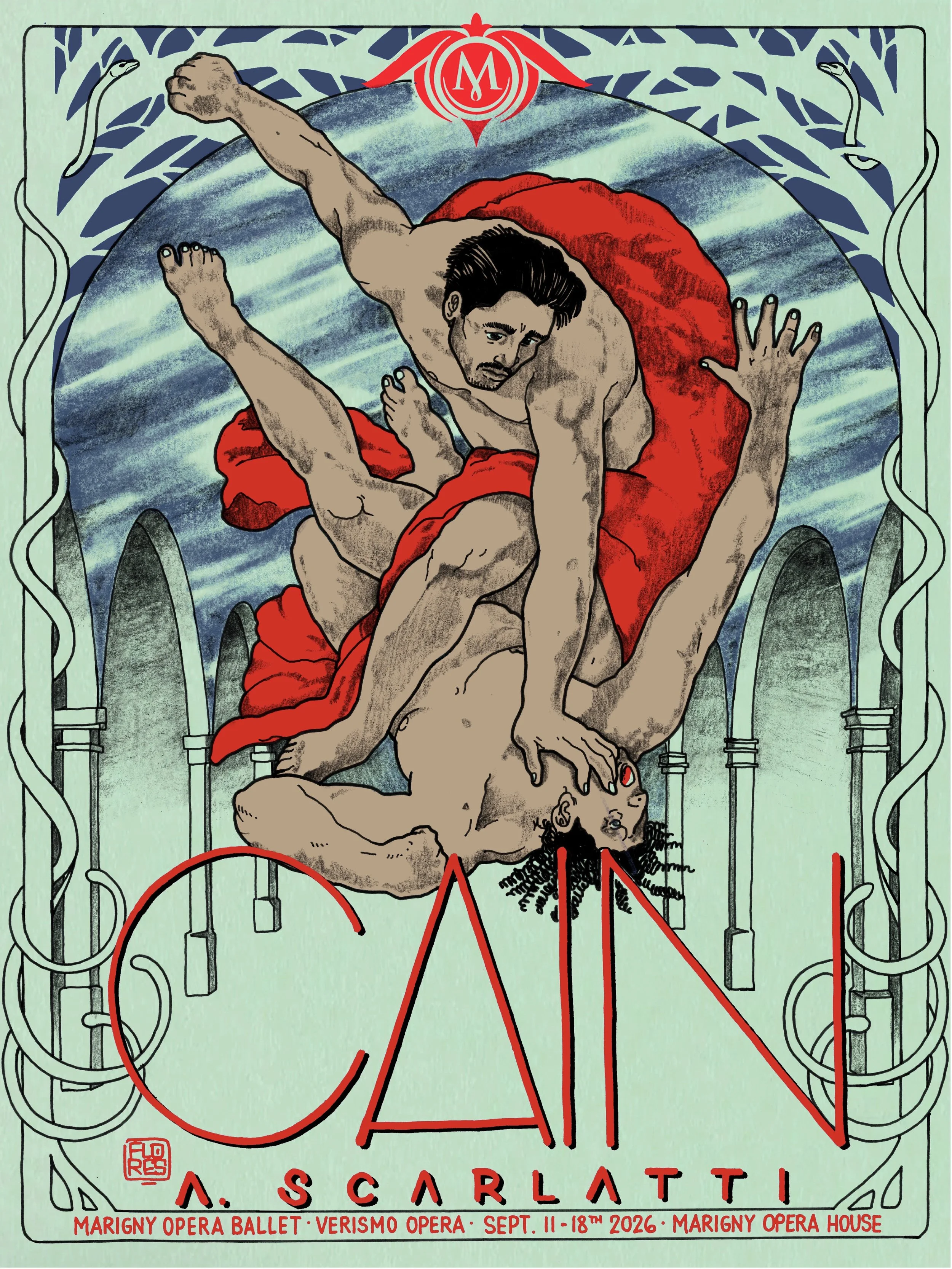
CAIN poster by Gabriel Flores
“There just has to be a better way to include the community and make our performances accessible to everybody,” says Mynka.
His own meteoric rise from guest residency to artistic and executive director has reinforced his commitment to serve the city that has embraced him. He sees a “certain synchronicity or synergy when you’re doing the right thing with the right people.”
“In New Orleans,” Mynka says, “when you find your path and you’re really committed to putting in the work, doors just start opening.”
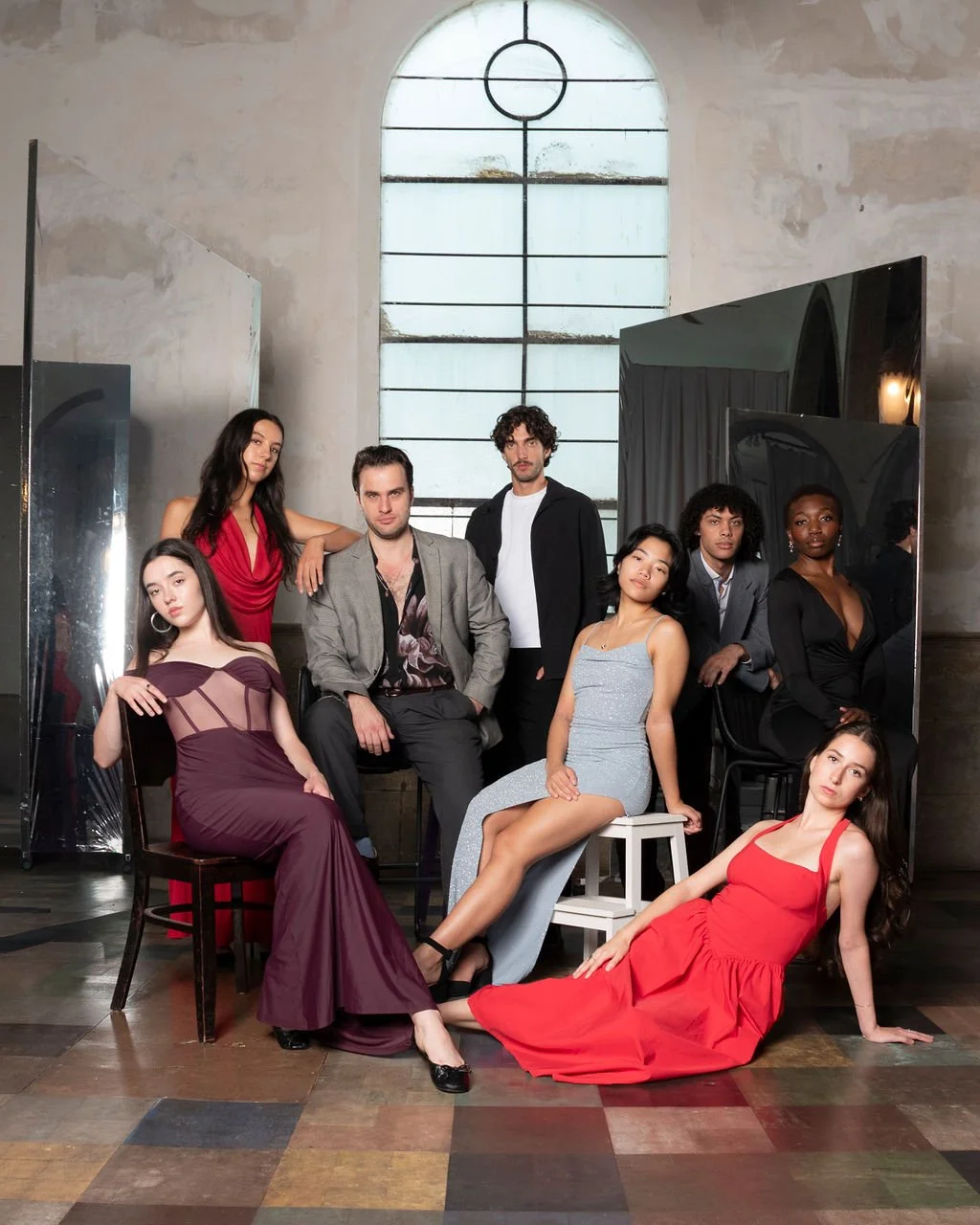
Marigny Opera Ballet company 2026 with Bogdan Mynka (second from left). L-R Emma Courish, Talia Sigismondi, Claudio Caverni, Kayla Estipular, Caleb Chesson, Amalia Najera, Nyna Moore. Photo by Still Movements Photography