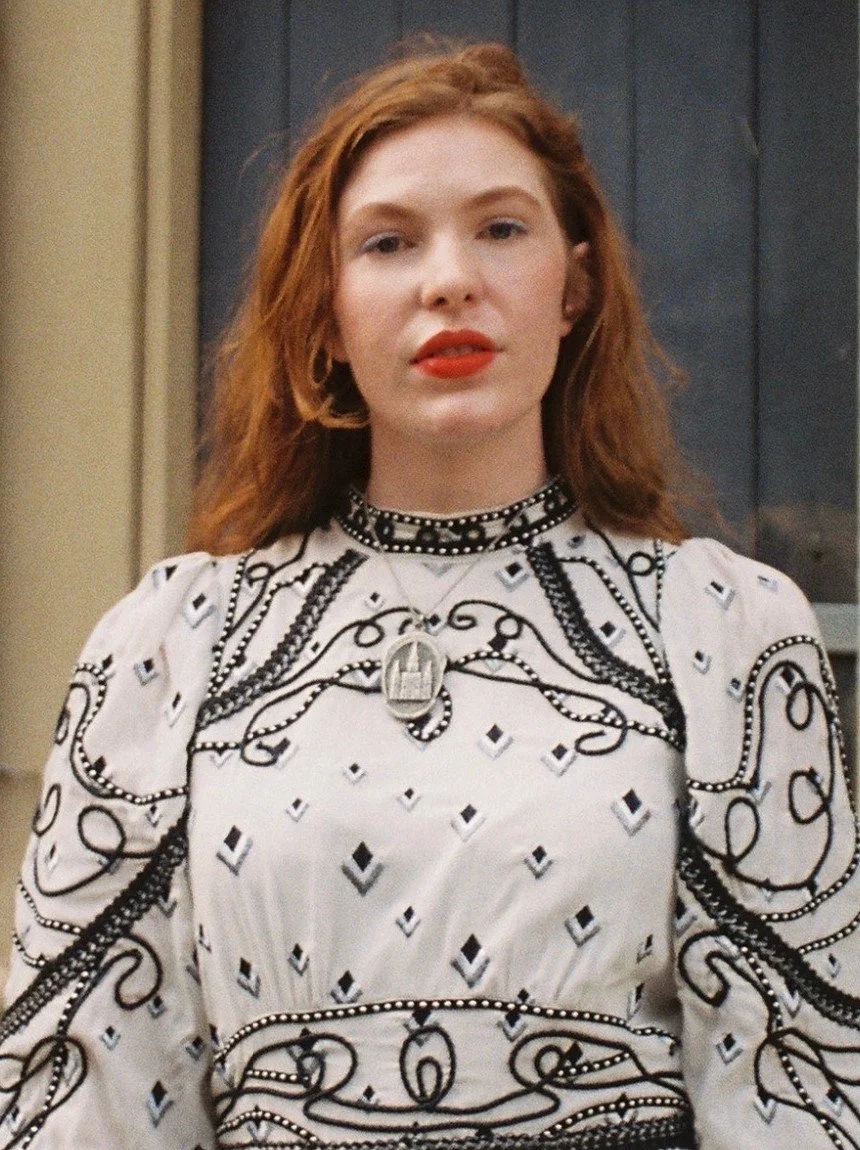
Joan of Arc Lives: A New Production of an Opera Classic
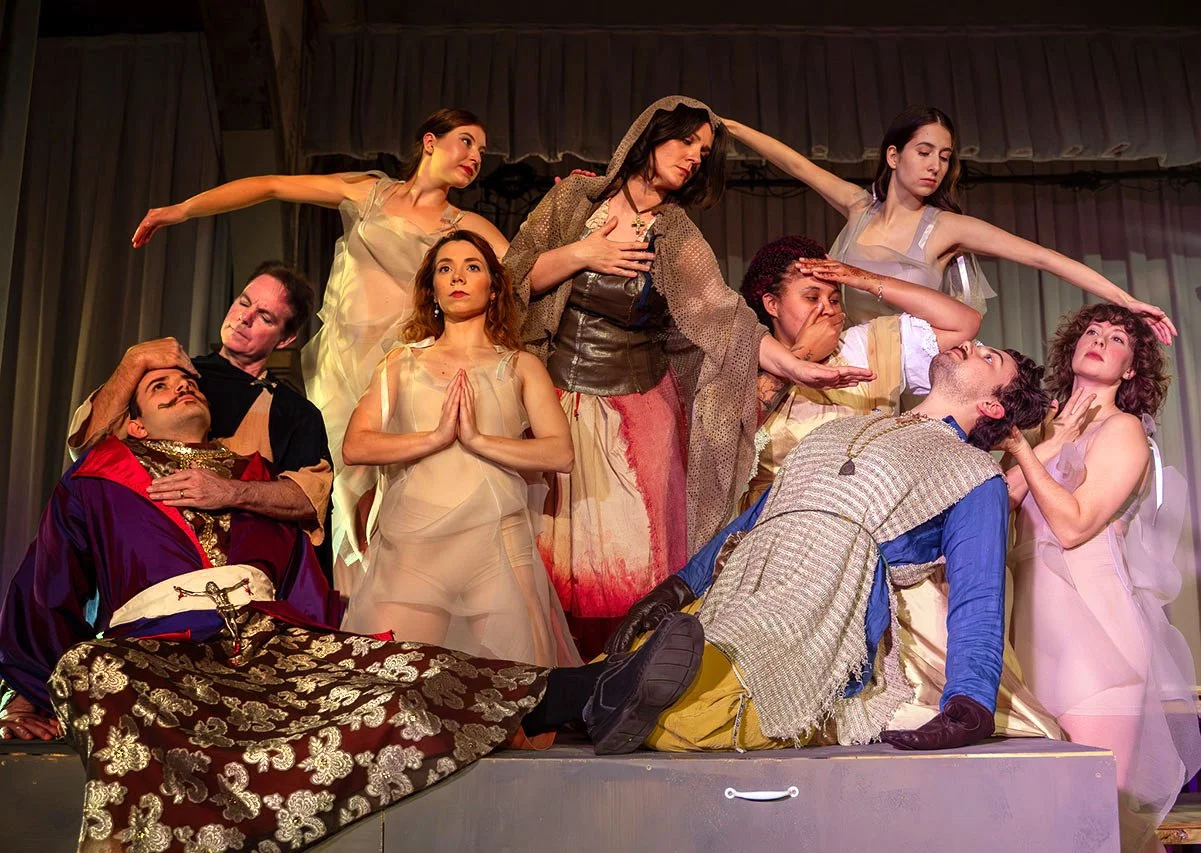
The cast in rehearsal, photograph by Alex André
January 2026Bogdan Mynka, founder of the Verismo Opera company, serves as producer and artistic director to a boldly conceived version of Tchaikovsky’s Maid of Orleans, premiering at the Marigny Opera House in January.
– by Caroline Rowe
photos by Alex AndréPerformances January 16, 17 and 18, 2026. Details and tickets here. 
This column is underwritten by Lucy Burnett
“The story of Joan of Arc is the most remarkable one in history,” begins Bogdan Mynka, founder of innovative opera company, Verismo Opera. In New Orleans, the Ukrainian-born tenor and director/producer would not have to explain further the power embedded in the story of the famed Maid of Orleans, but he continues with reverence:
“A teenage girl with no education, no inheritance, no nobility, no support, followed divine instruction and had such profound faith and courage in her destiny that she was able to lift the siege of Orleans.”
Tchaikovsky’s later work for the St. Petersburg opera, Maid of Orleans, based on Schiller’s libretto, tells a romanticized version of the life and death of Joan of Arc, whose story has acquired incalculable significance in the cultural imagination.
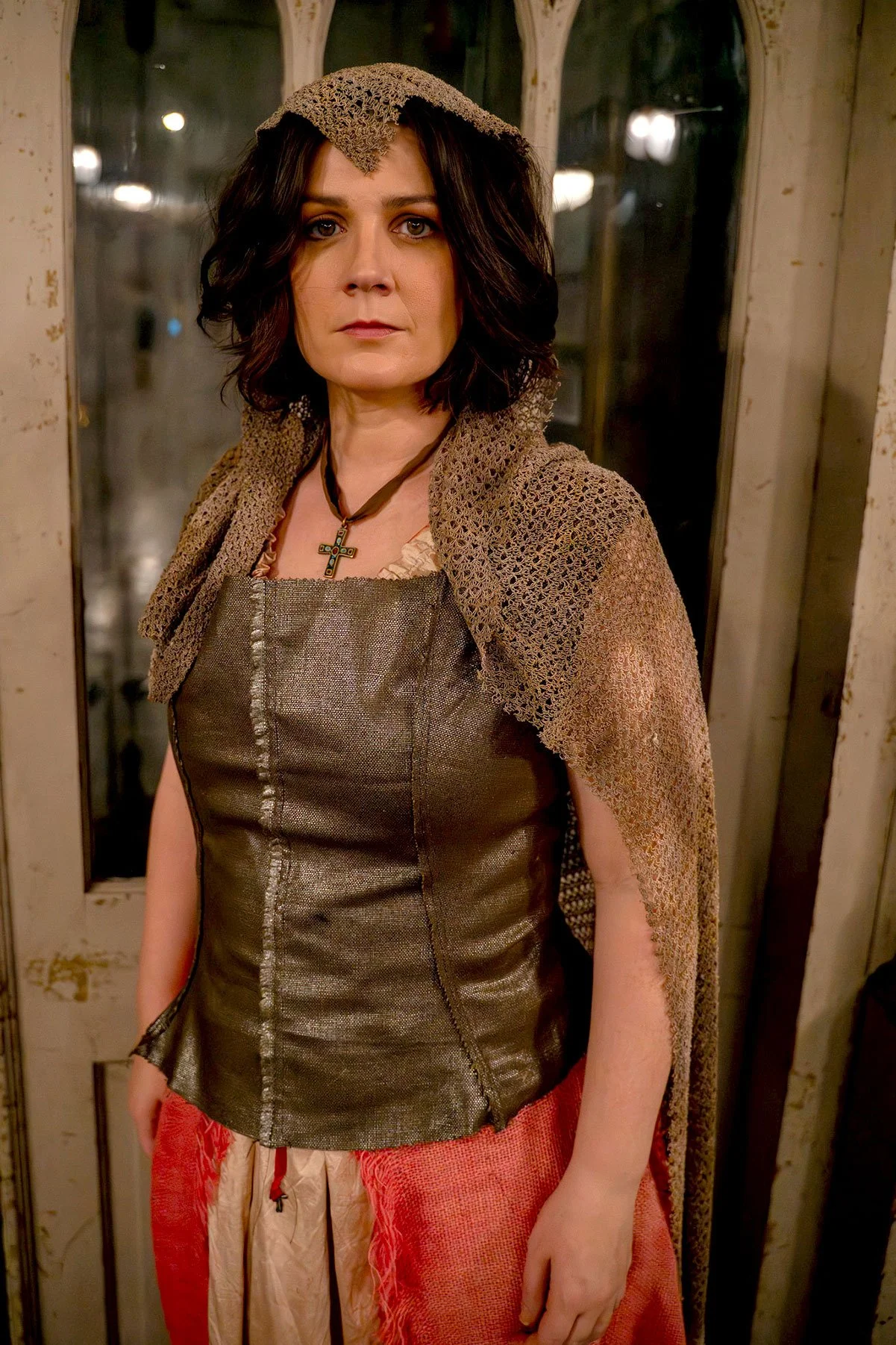
Claire Shackleton as Joan of Arc, photo by Alex André
At once a Catholic saint, an early feminist, a gender-bending figure of political liberation, a patron of France and victims of sexual violence, her story is a lightning rod for a wide array of relevant cultural and political issues.
In fact, there is no way to tell the story of St. Joan that is not political. That Joan’s subversion of traditional social norms was politically coopted to discourage similar acts of rebellion is fundamental to her story and led directly to her tragic end.
Mynka says, “A young woman, who brought the king to the throne, by that same authority, was betrayed to the English and burned at the stake. That’s the message we send to young women. This is what we do to girls who don’t listen.”
She was executed for heresy, and like the crucifixion, her execution was a slow, public act of humiliation. It was a demonstration that the empire, as well as the Church, could not countenance agitation – especially by a young girl claiming to follow direct instruction from God, who shamelessly appropriated the mantle of masculinity in her mission. Even worse, she was successful.
“Do I think it was a deliberate gender statement?” says Mynka. “No, I think it was simplicity. ‘I have a vision to lead the army and it is more effective to do that in pants. People listen to me more and I can get on a horse. I’m going to cut my hair so I can wear a helmet.’ It was so utilitarian, so functional, and that is revolution, that’s radical.
The jury cited Joan’s wearing pants in court as evidence of her unrepentantly heretical ways. In reality, it was to limit accessibility to her body after being repeatedly assaulted while imprisoned. Those attacks gave rise to her patronage for victims of sexual violence.
Given that more than one in five women are victims of sexual violence, it is surprising that this aspect of her legacy is not more well-known. However, this aspect of her story is one the Church grapples with. She was canonized as a virgin, but her purity and sexuality have been the subject of frequent debate. In truth, Joan of Arc’s sexuality or virginity could not be less important to her profound accomplishment and subsequent betrayal.
Despite this, Schiller’s libretto for Tchaikovsky’s opera adds an apocryphal romance between Joan and a Burgundian knight to the narrative. This plotline has been omitted from the Verismo Opera production, which cuts the four-act original to 90 minutes.
In this decision, Mynka asked himself, “Who did Joan love? Jesus. The last words she says are, ‘Hold the cross high so I may see it through the flames.’”
One love song between Joan and the knight is reimagined as a duet with the orchestra, during a scene of violence and violation.
“She is being beaten and violated and she has this moment of being so present with the divine. She knows it’s going to be alright.” He recites the reinterpreted lyrics, “You’re with me, my angel, if you only knew how long I’ve suffered. And how long I’ve waited for you.”
These kinds of changes to the original are exactly the kind of innovations for which Verismo Opera intends to be known. Just as the governing socio-political structures of Joan’s time allowed little deviation from societal norms, Verismo’s interpretation of Maid of Orleans subverts the staunch traditionalism that regulates contemporary opera. Mynka notes that cuts to classic librettos are “just something you are not supposed to do.”
“But Tchaikovsky’s dead!” Mynka says, “I am honoring him by bringing him younger followers. I’m certainly breaking the rules, and we’re going to get a lot of flak. I’m ok with that.”
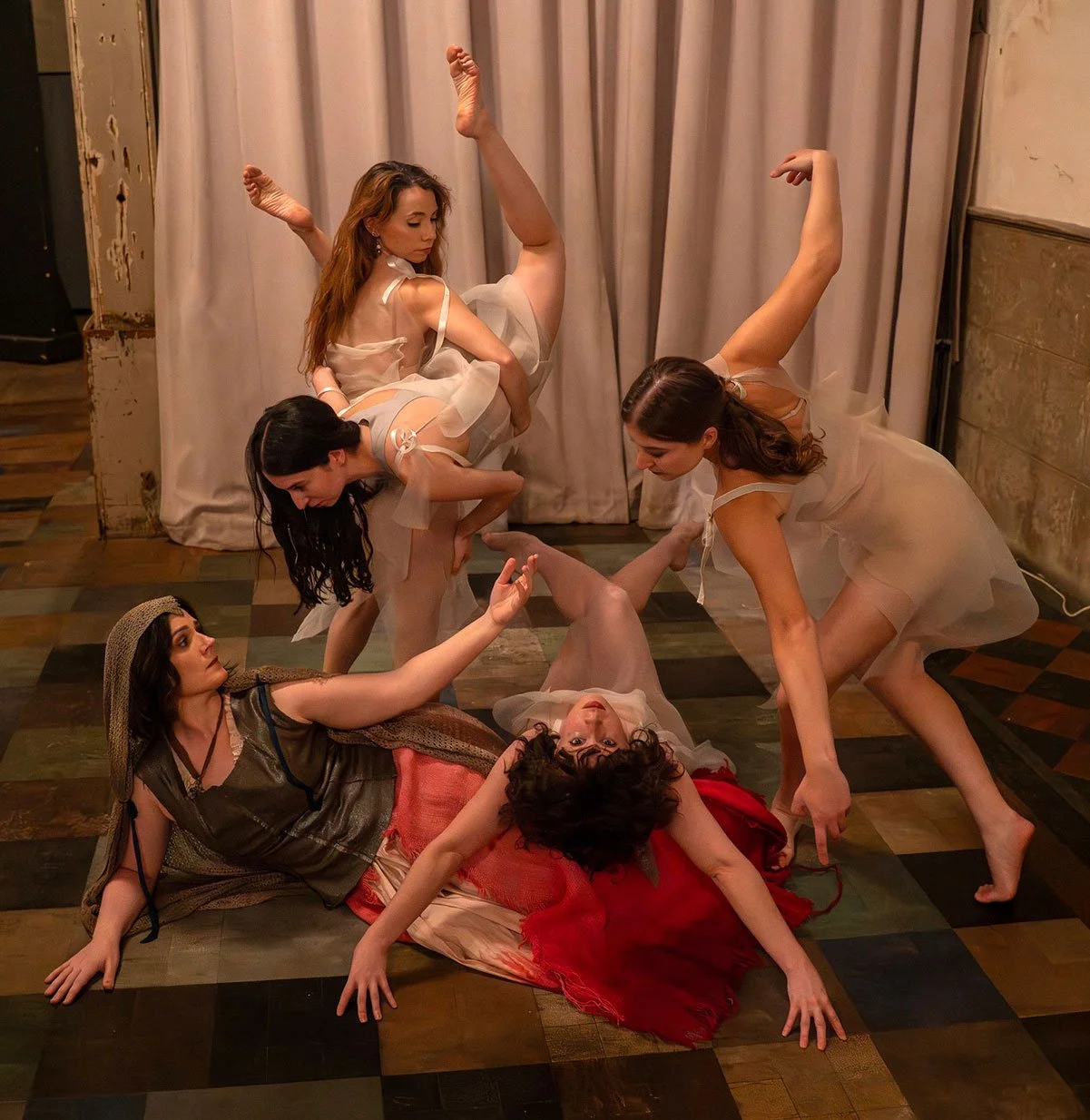
The cast in rehearsal, photograph by Alex André
Mynka clarifies that these transgressions are coming out of cultural necessity, not frivolous insurrection of the status quo. As times change, opera must change with them to retain relevance. He explains that historically, operas were commissioned by the wealthy.
The performances ran between four and six hours, which allowed the men to leave, have illicit liaisons, and return to their wives by the fourth act. But primarily, operas were a social function for the aristocracy to see and be seen.
This connection to the aristocracy bleeds into modern-day perceptions of opera, which people in this country have wrongly come to equate with classical singing—
"People hear the big vibrato, Pavarotti. But if someone were to start singing a classical piece of music with this ridiculous technique, that’s not opera, that’s a singer singing from an opera… Opera, in Italian, just means ‘the work,’ a bringing together of the art forms of scenic design, costume design, music, acting, singing… my job is to remind people how transportive and powerful that can be.”
He adds, “It doesn’t have to be three hours long. Most people have jobs. The people that I’m appealing to really don’t have the luxury to take three or four hours of their evening.”
Mynka wants the source material to be accessible to a wider, more diverse audience, and a shorter runtime is one means to this end. He adds that the show’s subversion of tradition makes it ideally geared to a New Orleans audience, provided that the performers and collaborating artists are talented.
“I don’t think this would be possible in any other city, but people here know what’s good, the audience here can recognize talent.”
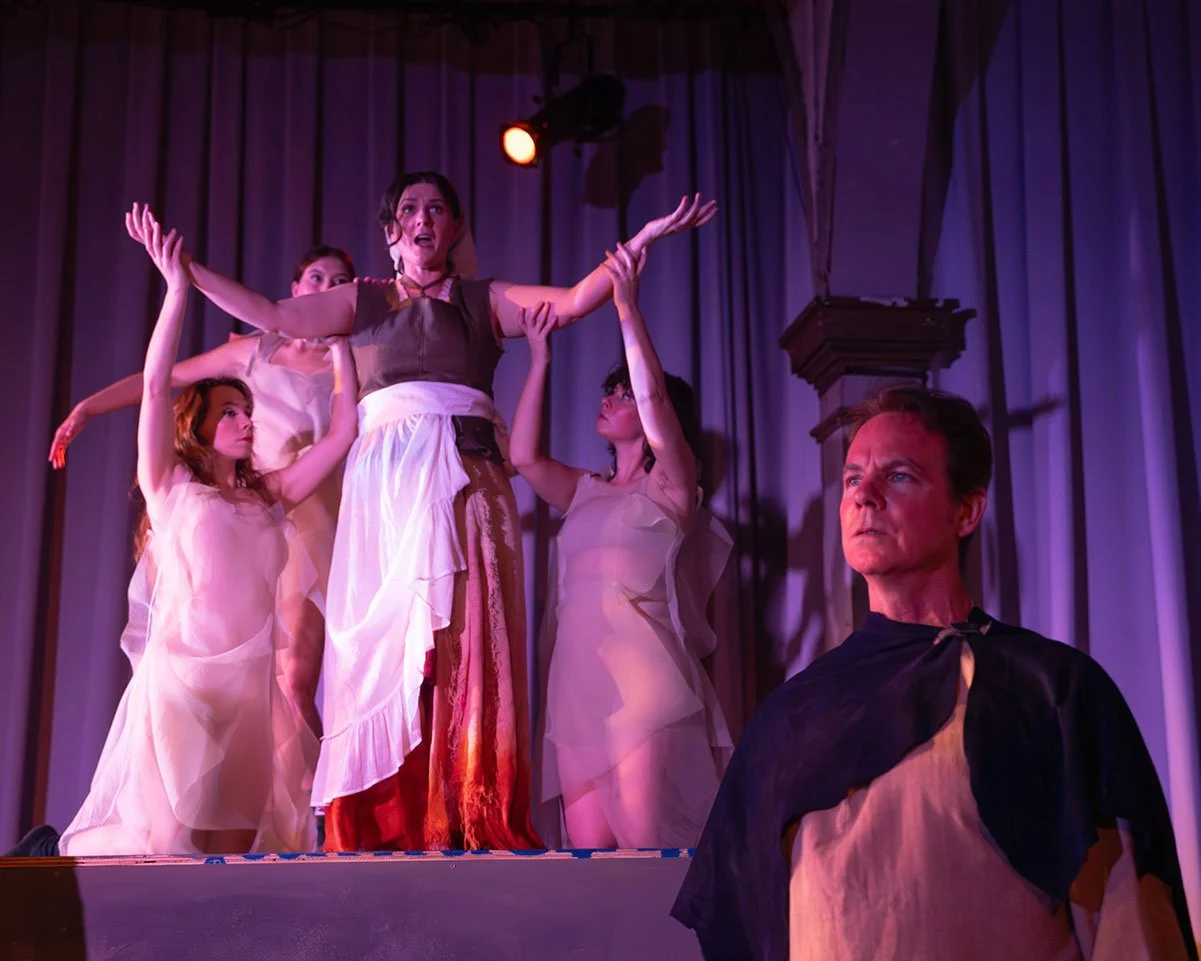
The cast in rehearsal, photograph by Alex André
As for musical innovation, New Orleans has the most fertile ground to break. Of the city’s monumental musical legacy, Mynka remarks, “All of American music, you can trace to Congo Square. It all happened here… and it's in peoples’ bones, you can never take it out.”
The legacy of New Orleans opera is also a significant well from which to draw. New Orleans was the capital of American opera, Mynka explains, after the city gained an audience of wealthy Creoles of color with high taste following the Haitian revolution.
“What we’re doing is reminding people that opera is for the people and about the people… We’re developing New Orleans to be the capital of innovative opera.”
Born in Ukraine, Mynka spent his childhood travelling around Eastern Europe with his mother, who was a missionary. He immigrated to Spokane, Washington with his father at the age of 16 and during this period, began to win singing and choral competitions.
This eventually led him to pursue a degree in music from Washington State, before moving on to graduate school at the University of Illinois Urbana-Champaign. It was on an impromptu trip with some of his classmates that Mynka found himself in New Orleans, where, like many artists before him, he decided that New Orleans was the place he wanted to live and create.
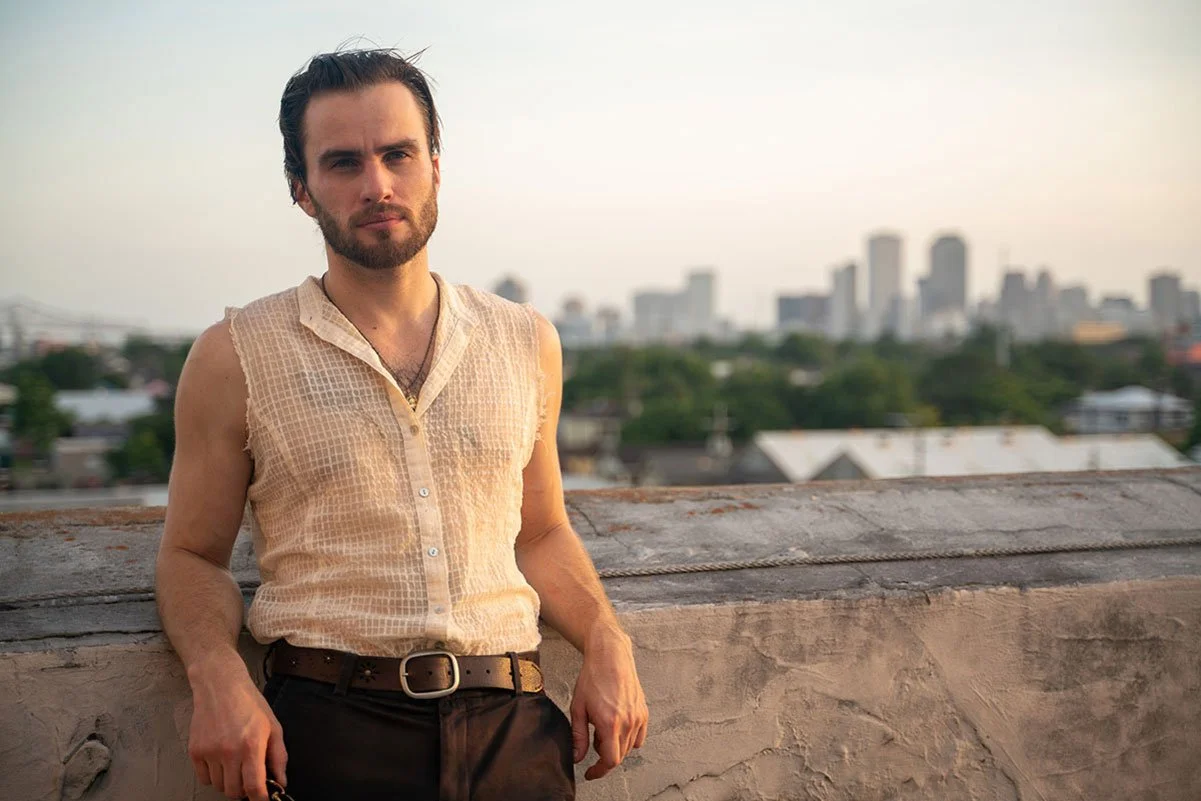
Bogdan Mynka, photo by Alex André
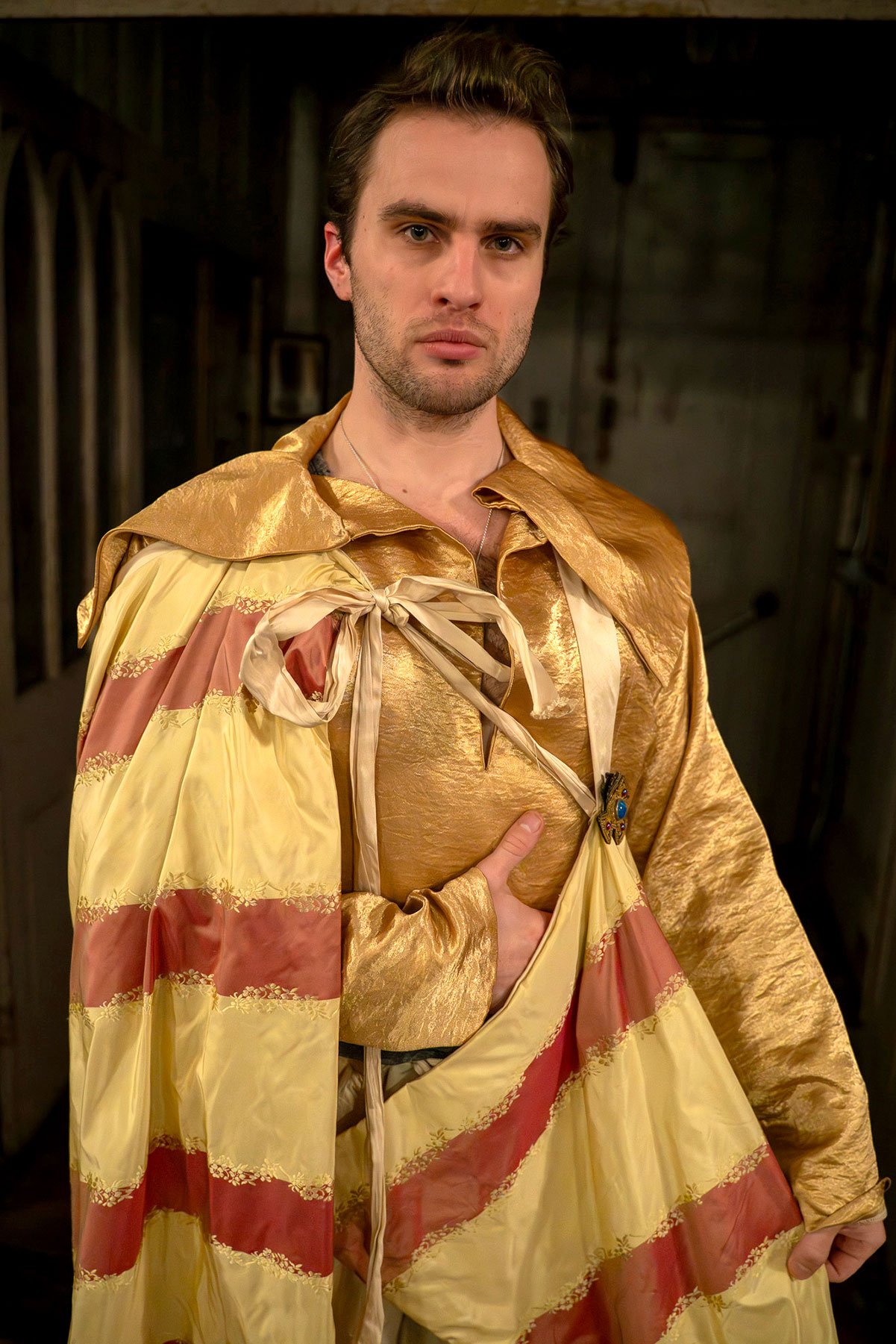
Bogdan Mynka as King Charles VII, photo by Alex André
In addition to Mynka himself, the show stars local talent, another draw for New Orleans audiences. Music director Calloway Cieslak directs a 12-piece orchestra. Mezzo-soprano Claire Shakleton stars as Joan of Arc, alongside Nathanial Richard, Jake Jenkins, and Jeffery Newell.
The show will also feature original costumes by Magdalene Paris with projections and live light painting by artist Monica Kelly. Amalia Najera choreographs dancers Lauren Guynes, Elyssa Fonicello, Sarah Radka, and Carina Kroff, some of whom have danced with the Marigny Opera Ballet extensively.
According to Mynka, this group of collaborators brims with talent and a willingness to experiment and respond authentically to the material – a unique phenomenon in contemporary opera. Of his cast, he says, “I am very lucky that they are all geniuses.”
Mynka predicts that audiences who are new to opera will undoubtedly connect to Joan’s story for a multitude of reasons, one of which is its theme of consuming spirituality, which comes across so readily in music of all kinds.
He states, “Music is very much like prayer, and to be in a room full of people making beautiful music, it’s magical. Somebody told me music is the language of angels. And I agree.”
Developing a spiritual connection to Joan’s spirit has been integral to Mynka’s handling of her story. In his home, he has erected an altar to St. Joan of Arc, where he begins each morning talking to her about how best to convey the truth of her experience. Casting the four ballet dancers as Joan’s guardian angels was central to Mynka’s vision of the audience’s experience of spiritual communion.
“What I would really love the audience to leave with is a reminder that you have your angels around you, they feel with you and hope for you, and when you’re sad, they’re sad. There is a spiritual world of beings and ancestors and saints that are with you, and all you’ve got to do is talk to them.”
New Orleans audiences are primed to be especially receptive to this idea as well, the veneration of saints, as well as ancestors, being a common and democratized spiritual practice in the city. The New Orleans cult of St. Joan of Arc is especially visible.
The gilded Decatur Street statue “Joanie on the Pony,” (cast by Emmanuel Frémiet in the 1800s) came through several location battles in New Orleans before emerging on her permanent perch near the French Market in 1999. Her symbolism of the city’s French heritage is always germane, but it is her symbolism of New Orleans’ indomitable spirit that most resonates with residents of “the unfathomable city.”
On her feast day, May 30th, you can find flowers and other offerings at the statue’s base. The beloved Joan of Arc parade kicks off the start of Carnival season on her birthday each year on January 6th - coinciding with Twelfth Night, the official beginning of the Carnival season.
Mynka sees profound parallels between Joan’s story of overcoming adversity in pursuit of a divine calling and the culture of New Orleans artists, who also prevail in their endeavors, “despite what society says you have to have.” He names some of the barriers artists face in New Orleans: poverty, increasingly limited availability of grants and skewed conceptions of what is deemed serious or valuable.
But like Joan, the artist must take on the establishment – however it manifests – including from within their chosen art form, whether that is the opera world’s conservatism, or the musical conventions challenged by the earliest jazz musicians. All these forces must be overcome to create something new and beautiful – if you are willing to fight for it.
“Joan’s resilience really applies to that understanding of your divine purpose. I don’t care how bad the siege, how deep the mire, how strong their forces, this is my calling.”
Or, in Joan’s own words, “I am not afraid, I was born to do this.”
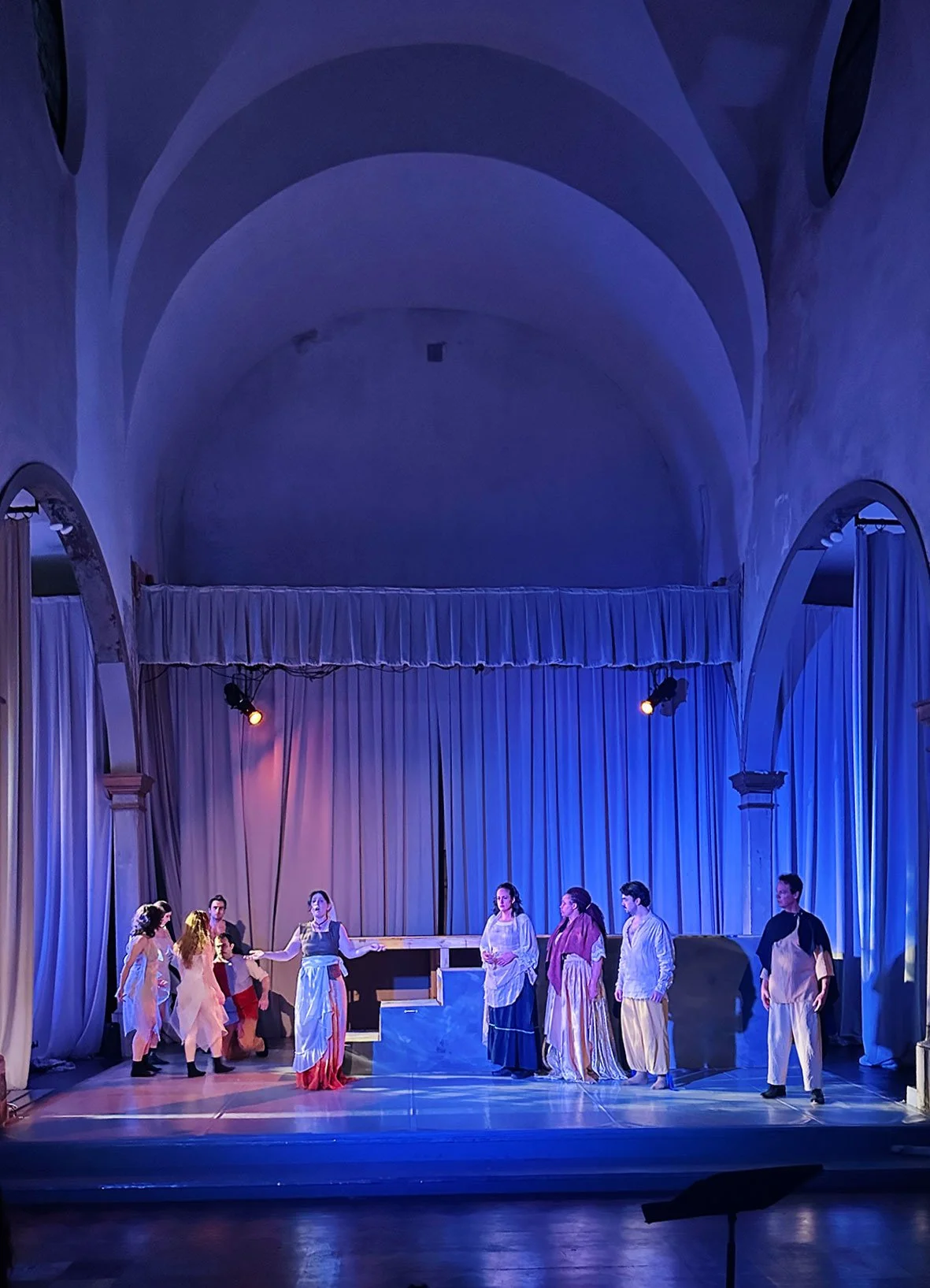
The cast in rehearsal, by Ellis Anderson
THE CAST
Joan of Arc - Claire Shackleton
King Charles VII - Bogdan Mynka
Dunois - Nathaniel Richard
Archbishop - Jake Jenkins
Agnès Sorel - Taylor Witherspoon (Jan. 16, 17)
Thibaut - Jeffrey Newell
Agnès Sorel - Maria Thomas (Jan. 18)
THE ANGELS
Lauren Guynes
Elyssa Fonicello
Sara Radka
Carina Kroff
THE CREATIVE TEAM
Artistic Director/Producer: Bogdan Mynka
Music Director/Conductor: Calloway Cieslak
Choreographer: Amalia Najera
Costume Design: Magdalene Paris
Set Design: Katalea Ford
Projections and Live Light Painting: Monica Rose Kelly
Lighting Design: Tammy Srinivas
Subtitles and Lighting Operator: Gabriela Valentino