Helen Sierminski: Natural(ist) Woman
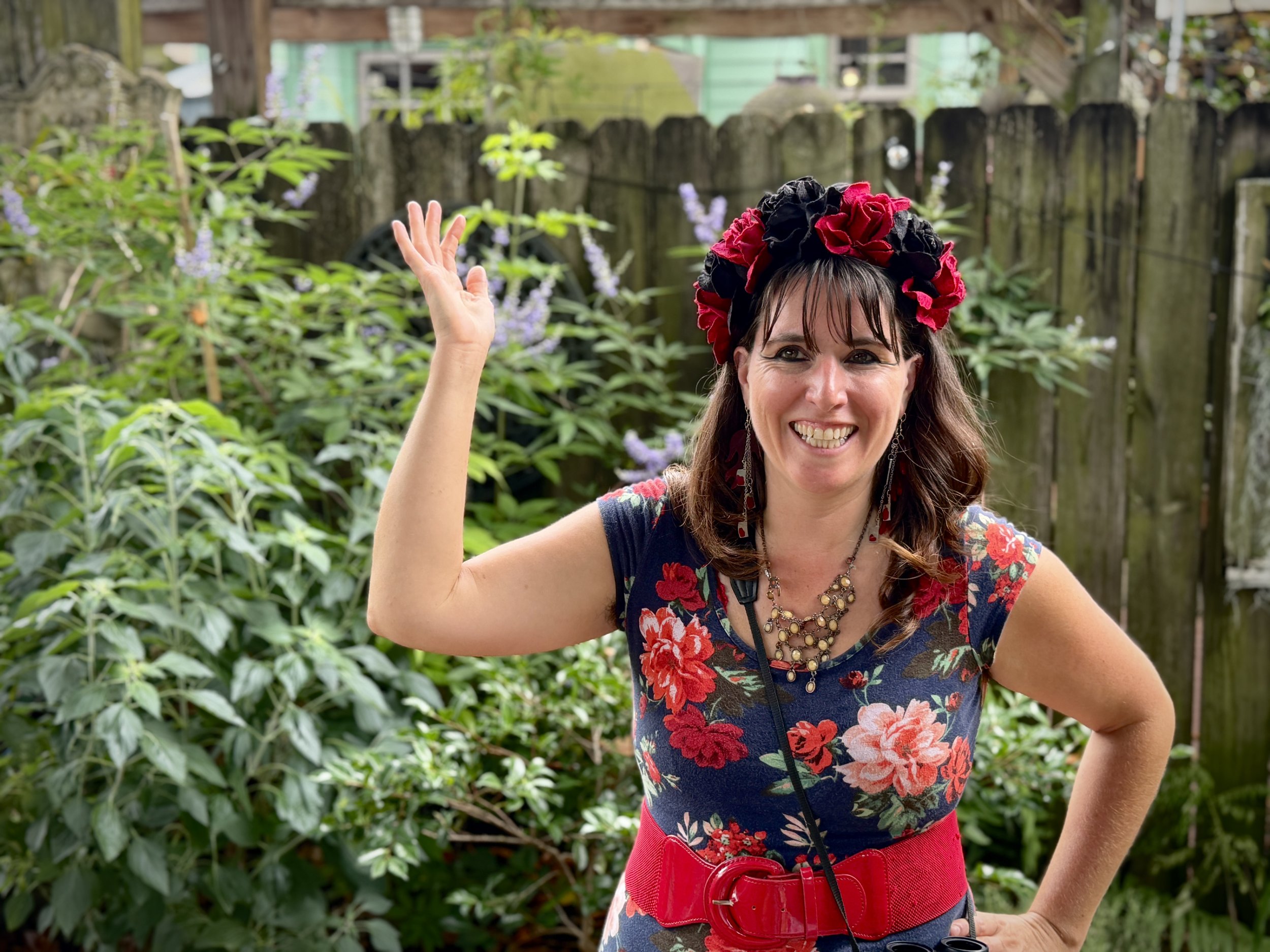
Helen Sierminski, who is helping a neighbor introduce more native plants into her garden, showcases some of the plants during the 50th annual FMIA Home Tour in May 2026
July 2026Urban nature tours given by this Marigny naturalist celebrate the native plants, trees and wildlife living among us – inspiring some of her neighbors to make room for more.
– by Doug Brantley
photos by Ellis Anderson
This column is underwritten in part by Michelle Broom
Perched along the rainy Mississippi riverfront, Helen Sierminski, outfitted in her signature crimson (“Red is the only color I truly understand”) and eyeliner that pays homage to cats, stands out like a cardinal against an otherwise bleak backdrop.
A small band of umbrella-armed locals and visitors has gathered at the end of Elysian Fields to join her for a more-than-misty morning outing along the French Quarter’s new Goldring Woldenberg Park.
“Like I tell people on my tours when they complain about the heat,” Sierminski says, as the rain picks up and pelts our group, “this is an urban nature walk, not an urban comfort walk.
“If we don’t get the rain,” she adds, nodding to a cluster of black-eyed Susans, “we don’t get the flowers.”
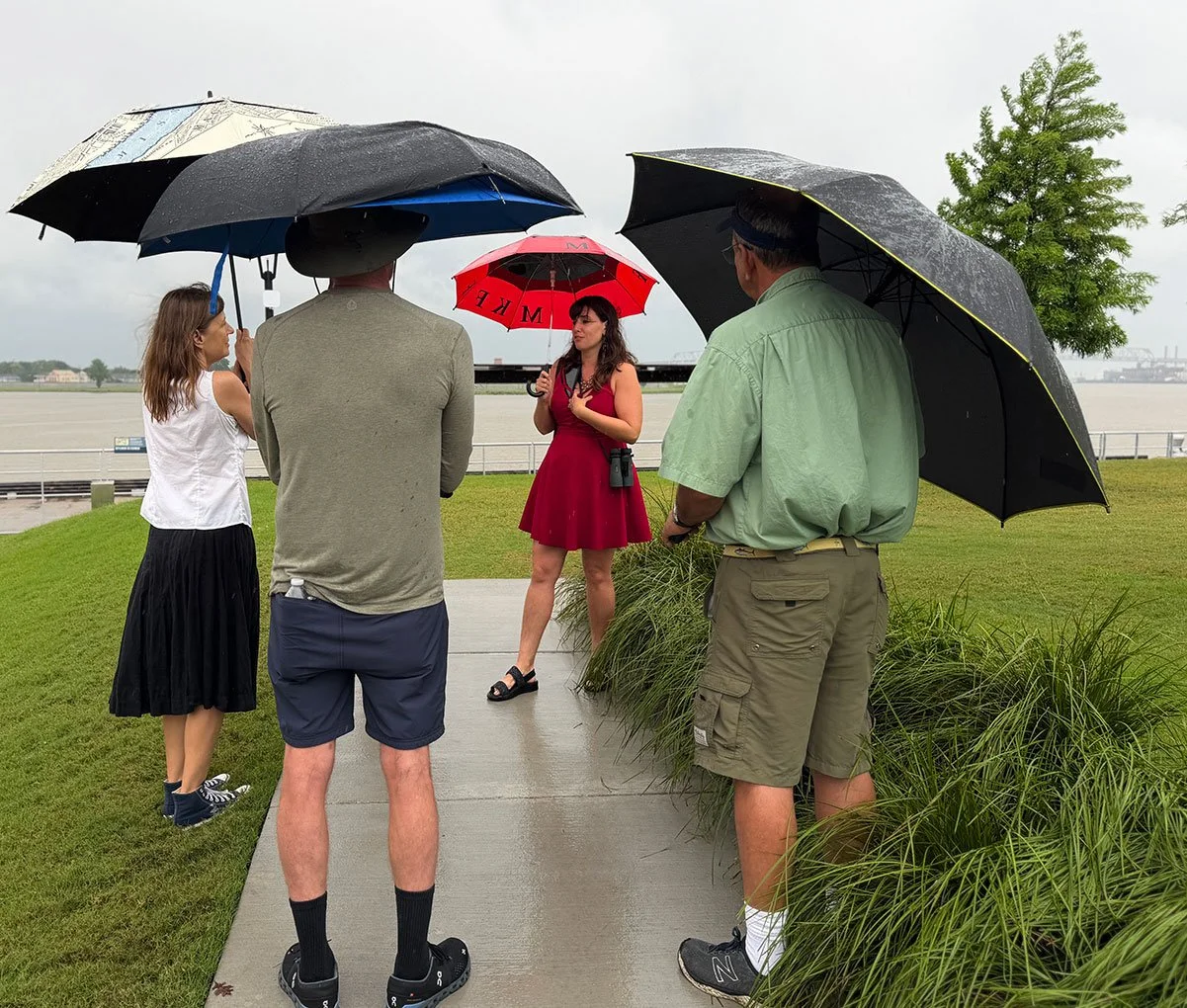
Helen leading a group through the new riverfront park one Saturday in May.
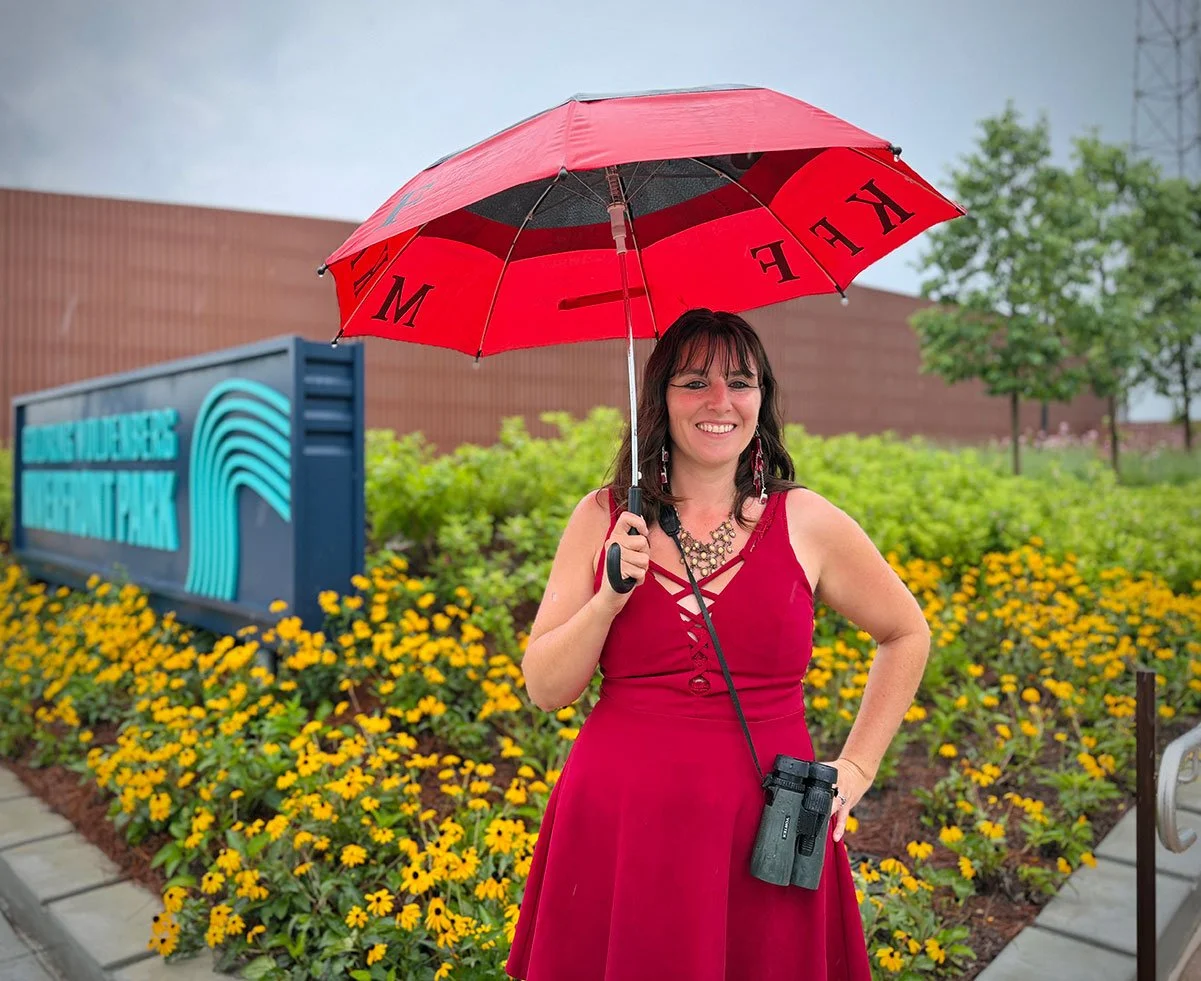
A little rain doesn’t deter Helen from leading tours - bring an umbrella!
Sierminski’s guided strolls are a natural outgrowth of her popular NOLA Sidewalk Gardens and Forests Instagram account, which she started during 2023’s record-breaking summer heat wave that kept locals isolated indoors for weeks on end.
Filming and posting her daily outdoor exploits before the sun would get too hot—spotlighting native plants, trees and homegrown greenspaces—Sierminski provided a breath of fresh air for those sequestered in the air-conditioned confines of home.
Soon, her virtual excursions went viral.
“The page started to organically turn into a way-bigger thing,” she recalls. “After about a year, I was like, ‘Why don’t I take people with me on my walks?’“
So, she did, kicking off her Urban Nature Walks in May 2024. The free explorations (tips welcomed!) mainly focus on the Marigny neighborhood she calls home. But Sierminski also leads occasional forays into other areas of the city, as well as conducts private, curated tours.
“People with friends in town who want to do something different, I get that all the time,” she says. “Some really want to see birds; some want to focus on natives or a specific neighborhood.”
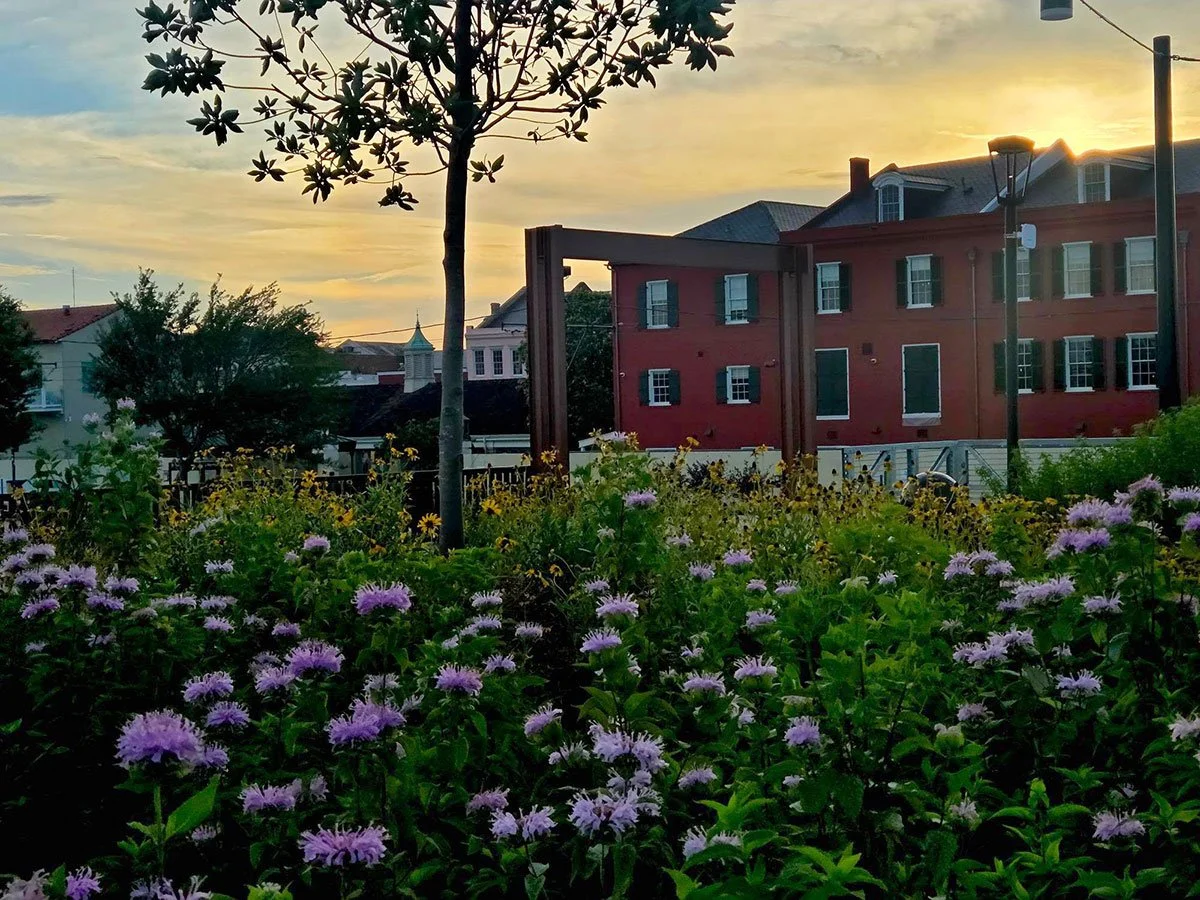
Native pollinator plants at the new Riverfront Park at sunset, photo by Helen Sierminski
The certified Louisiana Native Plant Professional, Master Naturalist and Native Plant Initiative of Greater New Orleans board member is also frequently sought out for native plant consultation services and her expertise in healthy eco-cultivation.
An avid birder, Sierminski likewise leads Urban Bird Watching walks the third Saturday of each month. Birding, too, comes naturally to the naturalist.
“When I traced my lineage, I found that my family is Etruscan, which practices augury,” notes Sierminski, “bird divination.”
“We go out in the beginning of the day and observe birds—their flight patterns, what they’re eating—and the rest of nature, and divine things from that.
“I didn’t know anything about augury, but realized it was something I was doing.”
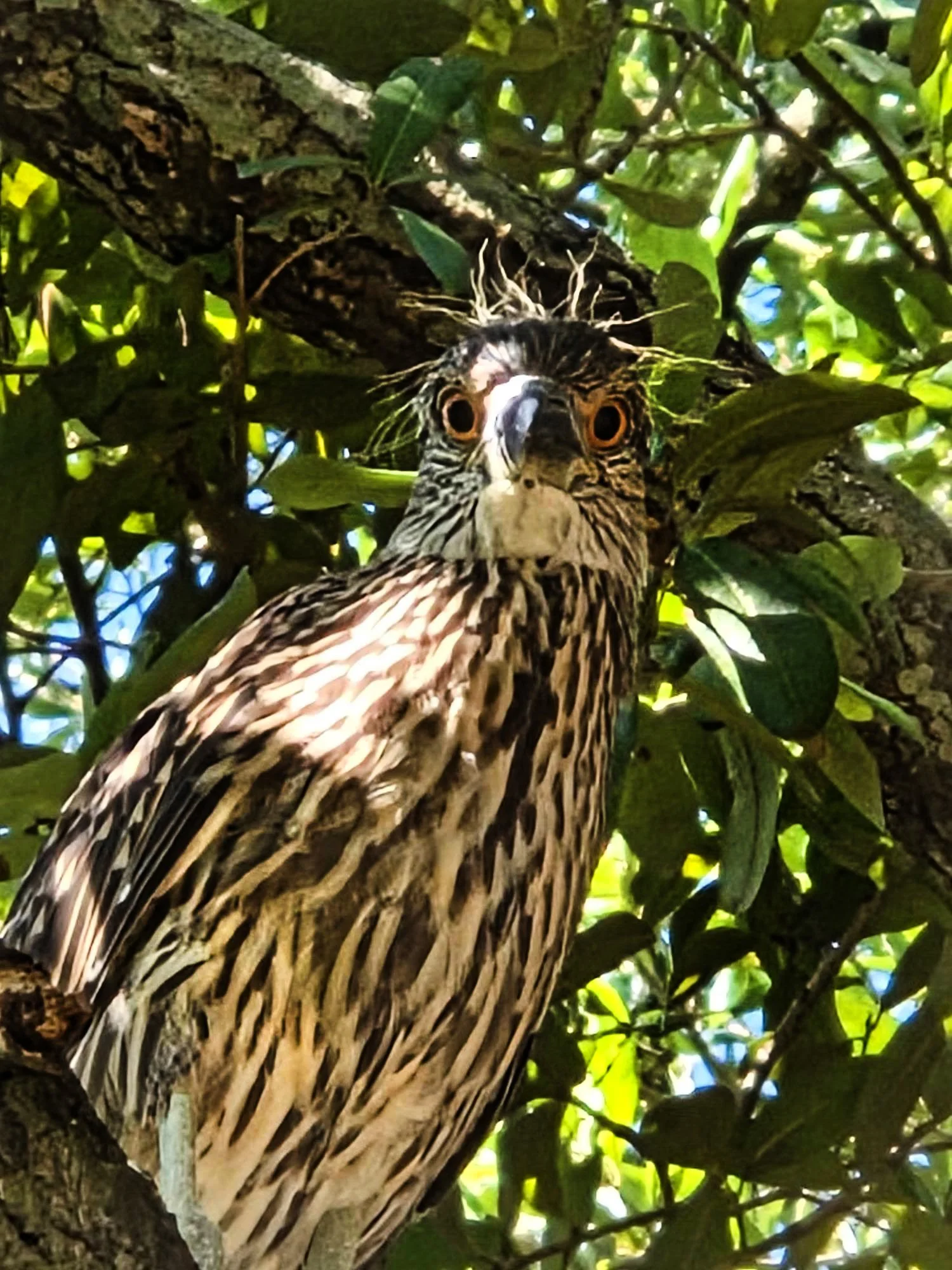
Juvenile Yellow Crowned Night Heron. Nests can be found throughout the Marigny during the spring/early summer season. Photo by Helen Sierminski
***
Augury may be an inherent trait, but Sierminski wouldn’t have guessed it growing up in Aurora, Colorado, despite spending her formative years in the shadow of the Rockies.
“My family is very much against being outside,” she says. “There was this narrative of ‘Things will sting you! Things will jump on you! Everything’s scary, scary, scary!’ So, I was heavily encouraged not to partake in nature.”
Instead, she majored in sociology, which led to nursing homes and healthcare-related jobs, then morphed into restaurant management and corporate training.
It was the opening of a Texas Roadhouse that initially brought her to New Orleans in 2002.
“It was the last week of July, the first week of August,” she says, “about as summer as you can get. I didn’t think I could survive it.”
But she did and would return to the city for good in 2017, following a self-searching road trip that eventually landed Sierminski in the Virgin Islands, where her love of nature first blossomed.
It was there she “got the call.”
“Suddenly, all of this messaging came through about New Orleans,” she says. “I would be watching a TV show, and the characters would take a trip to New Orleans. Or I’d turn on the radio, and it would be a New Orleans artist.
“After a couple of weeks, I was like, ‘OK, maybe I should think about New Orleans.’”
Initially working in the hospitality industry, it was a visit to the Couturie Forest, a 60-acre wilderness escape tucked within New Orleans City Park, that would change the trajectory of both her career and life.
“That really solidified it,” she says in retrospect. “It’s such a magical place, and a wonderful way of cultivating a love for nature within the urban environment.”
***
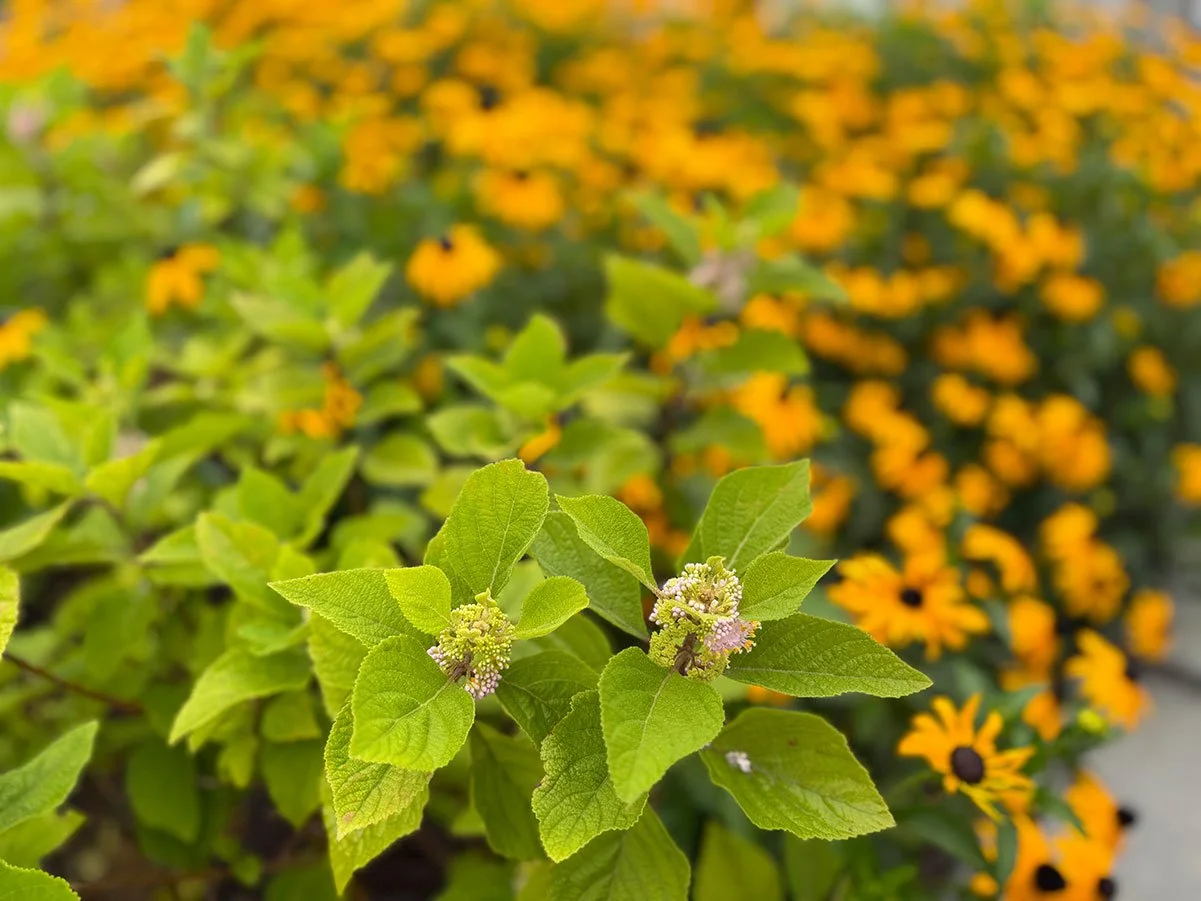
Banks of native pollinator plants at the new Goldring park on the river
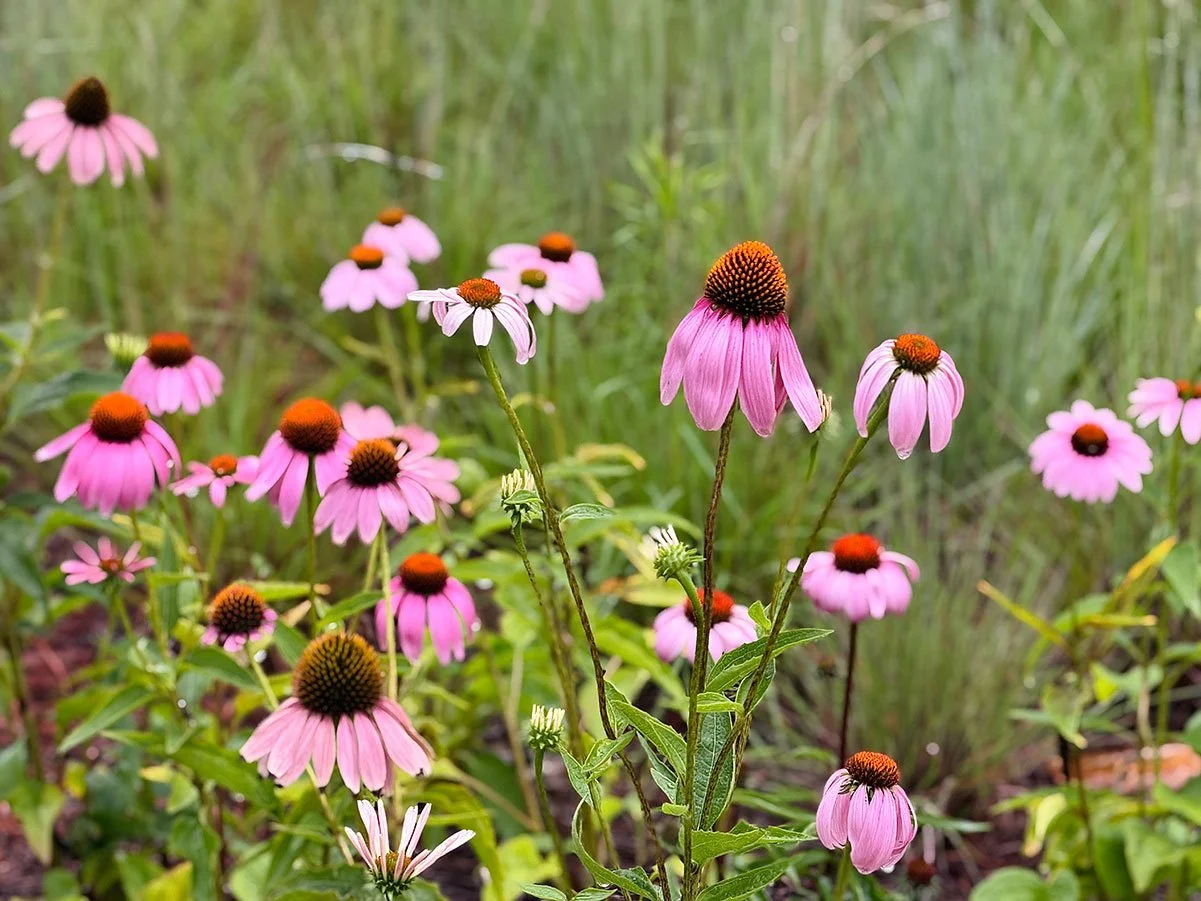
Native pollinators, echinachia at the new riverfront park, soaking up the rain.
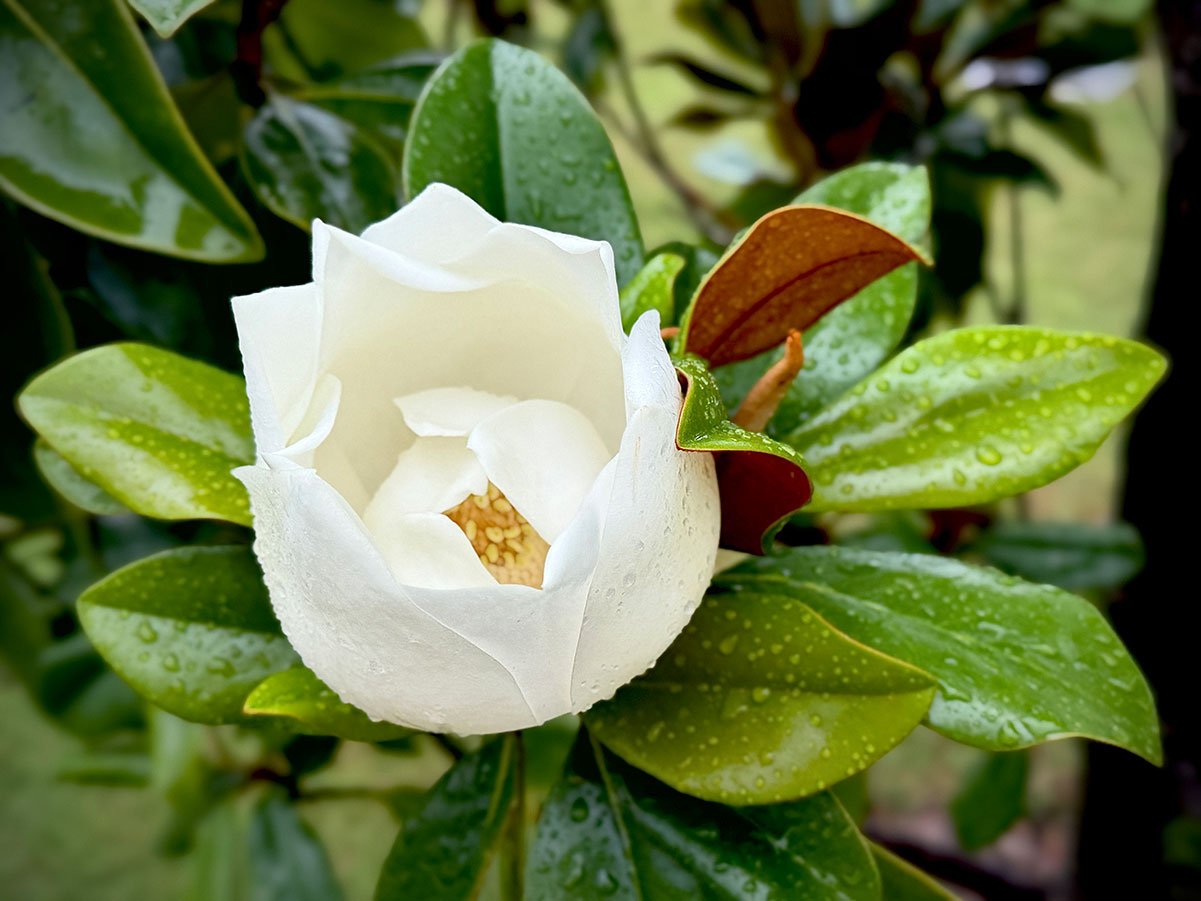
A rain-drenched blossom on one of the new magnolia trees planted in the park. More than 120 trees were planted on the six-acre park built atop the old Governor Nicholls Street Wharf. Helen amazed people in our group when she explained that magnolias are living fossils that are pollinated by beetles because the species evolved eons before bees.
Back along the rainy riverfront, Sierminski is quick to identify the swooping gulls, starlings and chimney swifts (“I call them cigars with wings”) our soggy-shoed group encounters.
In between bird sightings, she points out the Shumard oaks, Southern magnolias and bald cypress trees that populate the thoughtfully planted park.
“The bald cypress is considered a keystone species,” she notes of her favorite native. “That means it’s so important to so much wildlife—birds, insects, microbes—that, if it went away, these other species would not survive.“And bald cypress roots prevent soil erosion by holding dirt together and slowing down water.”
Sierminski’s passion for the bald cypress runs so deep, neighbors have grown accustomed to seeing the unabashed nature lover pause during her morning jaunts to plant kisses on the trees’ trunks.
“It’s a testament to how accepting the Marigny is,” she says with a laugh. “Pretty much anywhere else, people would be like, ‘Ohh…we gotta call somebody about this crazy chick.’”
But Sierminski is more than just a colorful neighborhood fixture; she also acts as a native plant facilitator, encouraging residents to incorporate and prioritize natives in their landscapes.
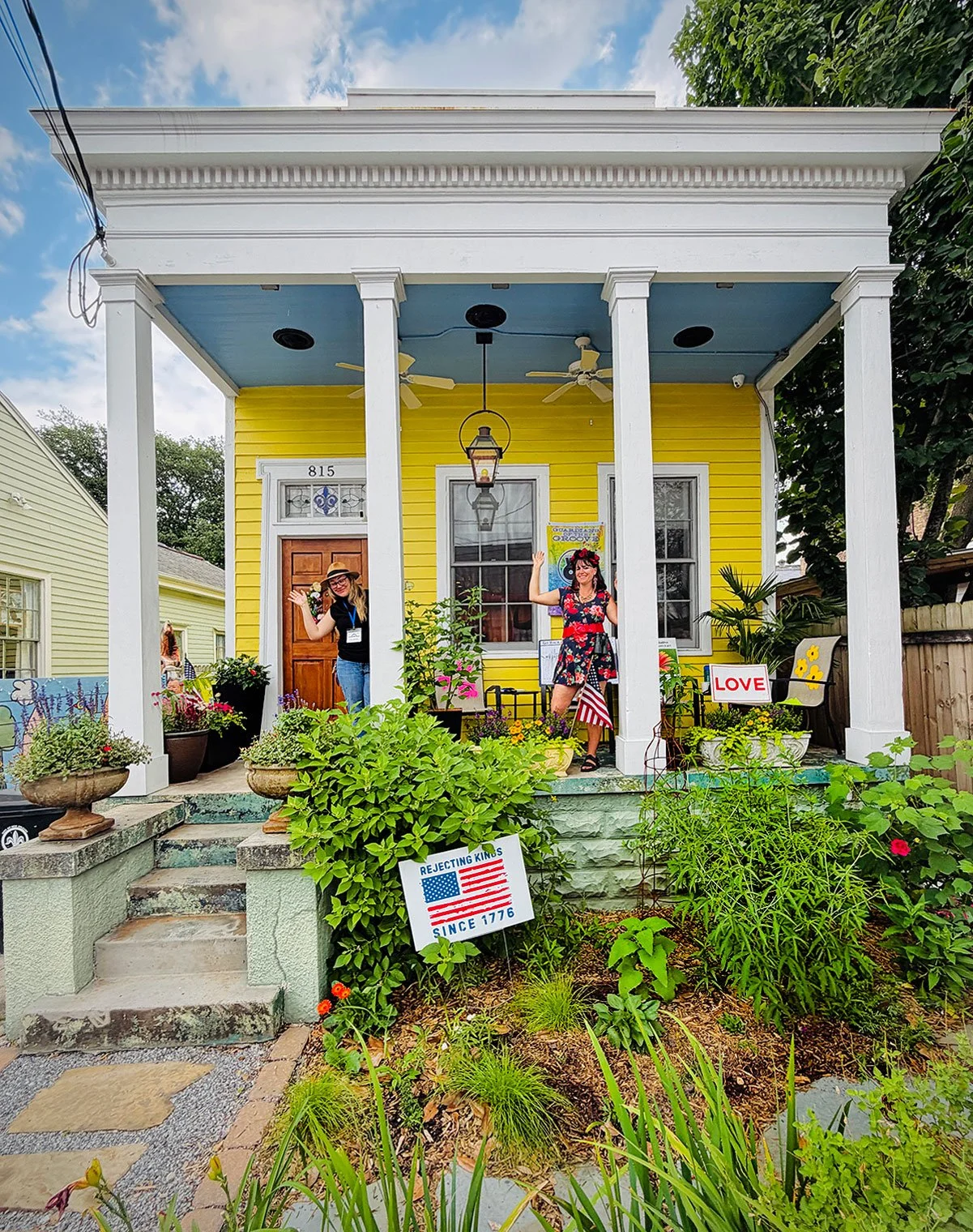
Helen and FMIA Meet the Neighbors chair Mallory Moebius docent a home with native plants on the 50th annual FMIA Home Tour in May.
During last April’s annual Earth Day, she literally took her campaign to the streets, handing out native seeds to everyone she passed. (“Probably one of the greatest things I’ve ever done.”)
Her efforts are taking root. An increasing number of area homeowners are forgoing what Sierminski calls “gas station plants”—big-box standards that, while perhaps pretty in the moment, add little lasting ecological value to gardens—in favor of pollinator-friendly natives.
Take Thom, an architect whose N. Rampart property, a regular stop on Sierminski’s Marigny tours, was completely covered in concrete just three years ago.
“It was like living on parking lot,” he recalls. “I really didn’t like being outside. It just felt dead.”
Today, his transformed backyard and street-front beds are very much alive and thriving with more than 80 native plantings, earning the novice gardener a Louisiana Native Plant Society gold-level certification marker he proudly displays.
“I never thought I would see butterflies and bees in front of my house,” Thom says, greeting passersby from his stoop. “I know it sounds cheesy, but it completely changed my life.”
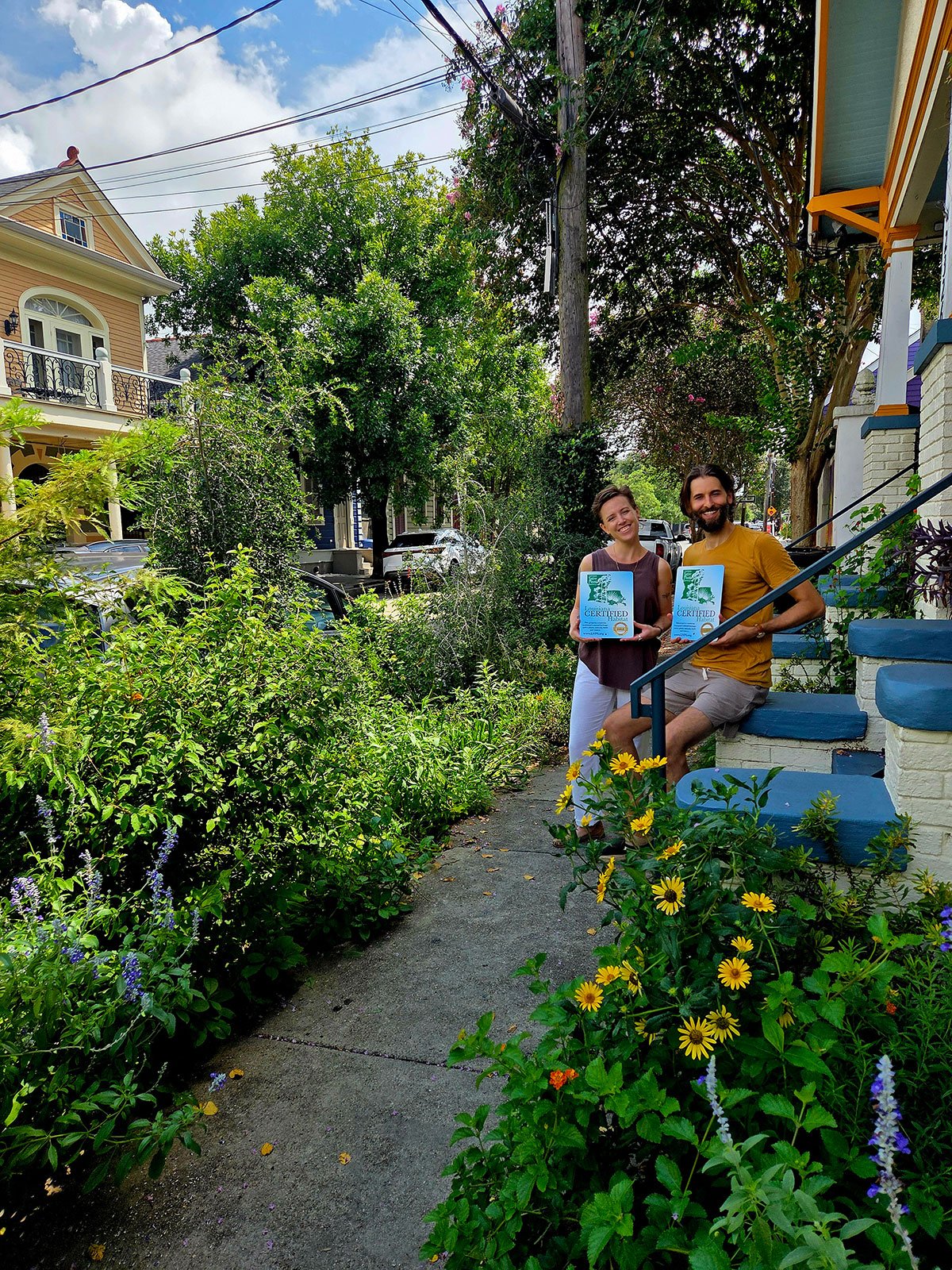
Thom and his partner Claire in the gardens filled with native plants that offer pollinators a feast. Helen certified the garden for Louisiana Native Plant Society. Photo courtesy Helen Sierminski
It’s all part of Sierminski’s bigger-picture outlook.
“The beautiful thing about this park,” she says, as the rain slackens over the Mississippi and gray skies give way to blue, “is that it connects two other parks.”
Opened in early April, Goldring links the already established Crescent Park (which travels through the Marginy and Bywater neighborhoods) and Woldenberg Park (which continues through the Quarter to the Audubon Aquarium), forming an uninterrupted, 2.25-mile riverfront promenade.
“Why would I mention that on a nature tour?” she asks. “Because we are nature, too. And in nature, everything is connected.”
She points back to her morning meanderings through the Marigny, which started her whole nature walk venture.
In addition to bird watching and plant scoping, Sierminski notes, she’s interacting with her neighbors, befriending their cats and connecting with the community at large.
“It’s the most important part of my day,” she says. “What I’m doing is helping people to actively notice things in a way that, in modern society, we’ve been trained not to. It’s an act of resistance.
“I like to imagine myself as a revolutionary. Not throwing Molotov cocktails, but getting people to look at birds and plants, to slow down, tap into their senses and appreciate life.”
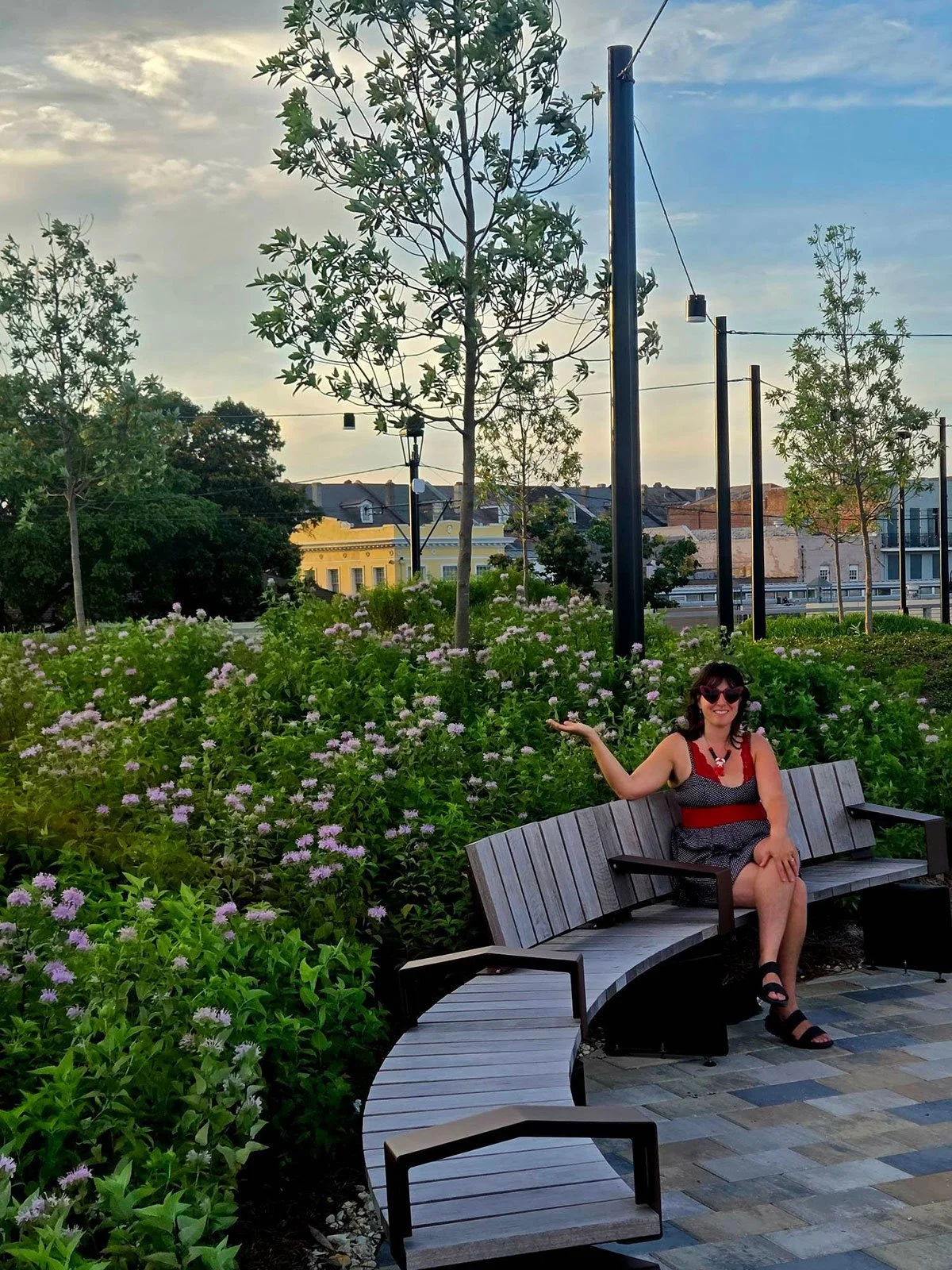
Photo courtesy Helen Sierminski