
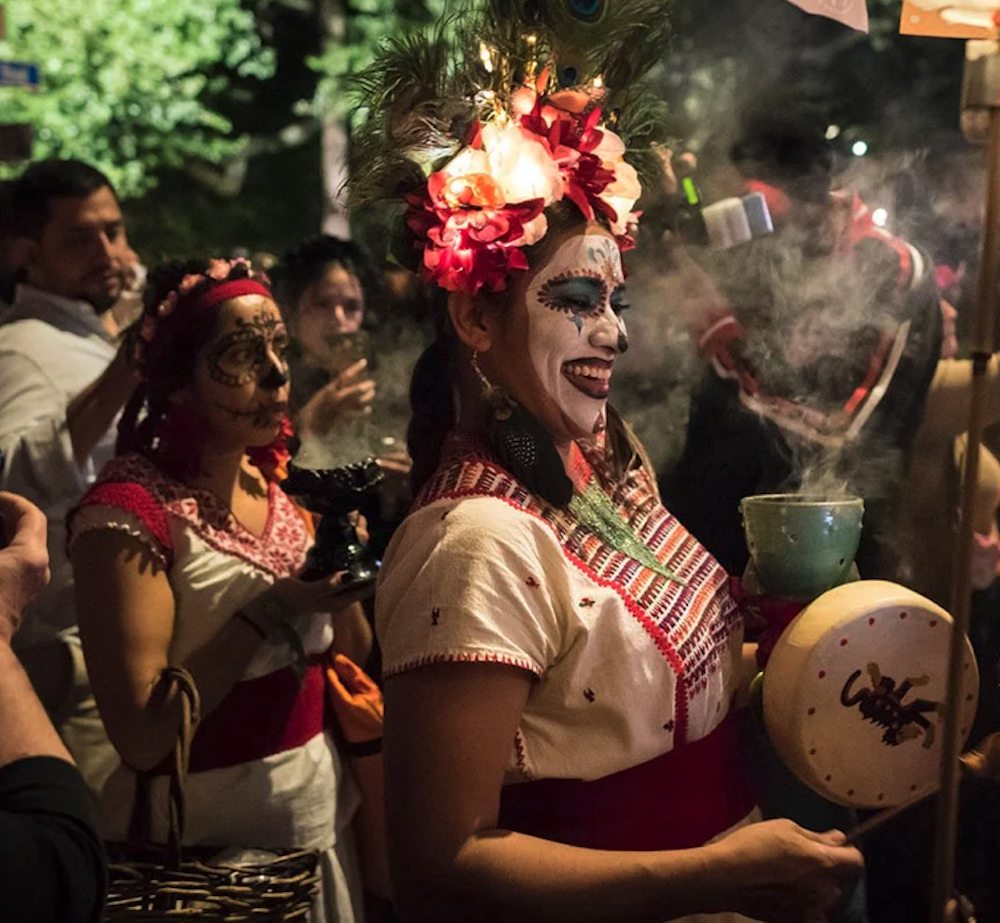
Krewe du Mayahuel in the 2025 Dia de los Muertos procession, photo by Shawn Fink for French Quarter Journal
October 2026In New Orleans, the celebration of Dia de los Muertos has found a home - in a city that already knew how to dance with its dead.
– by Karla Marie “Karlita” Cochran
Depending on where you stand in Latin America, Día de los Muertos is not one holiday but many. Some countries honor the dead on November 1, some on November 2, some on both, and some do not celebrate it at all.
I grew up between Honduras and Guatemala, and it was in Guatemala, as a girl, that I first saw the celebration up close and fell in love with it.
I fell in love with it because my father, Jimmy San Martín, made sure I would. He had worked in Guatemala with the US embassy, and loved the country like it was his own. When Día de los Muertos came around, he did not leave us on the sidelines to watch. He walked us straight into the experience.
Antigua. Quetzaltenango. Huehuetenango. The little villages out past the edges of the map... and this is the thing I learned early, the thing I have never forgotten: the smaller the place, the bigger the celebration.

This column is underwritten in part by Lucy Burnett

Krewe du Mayahuel in the 2025 Dia de los Muertos procession, photo by Shawn Fink for French Quarter Journal
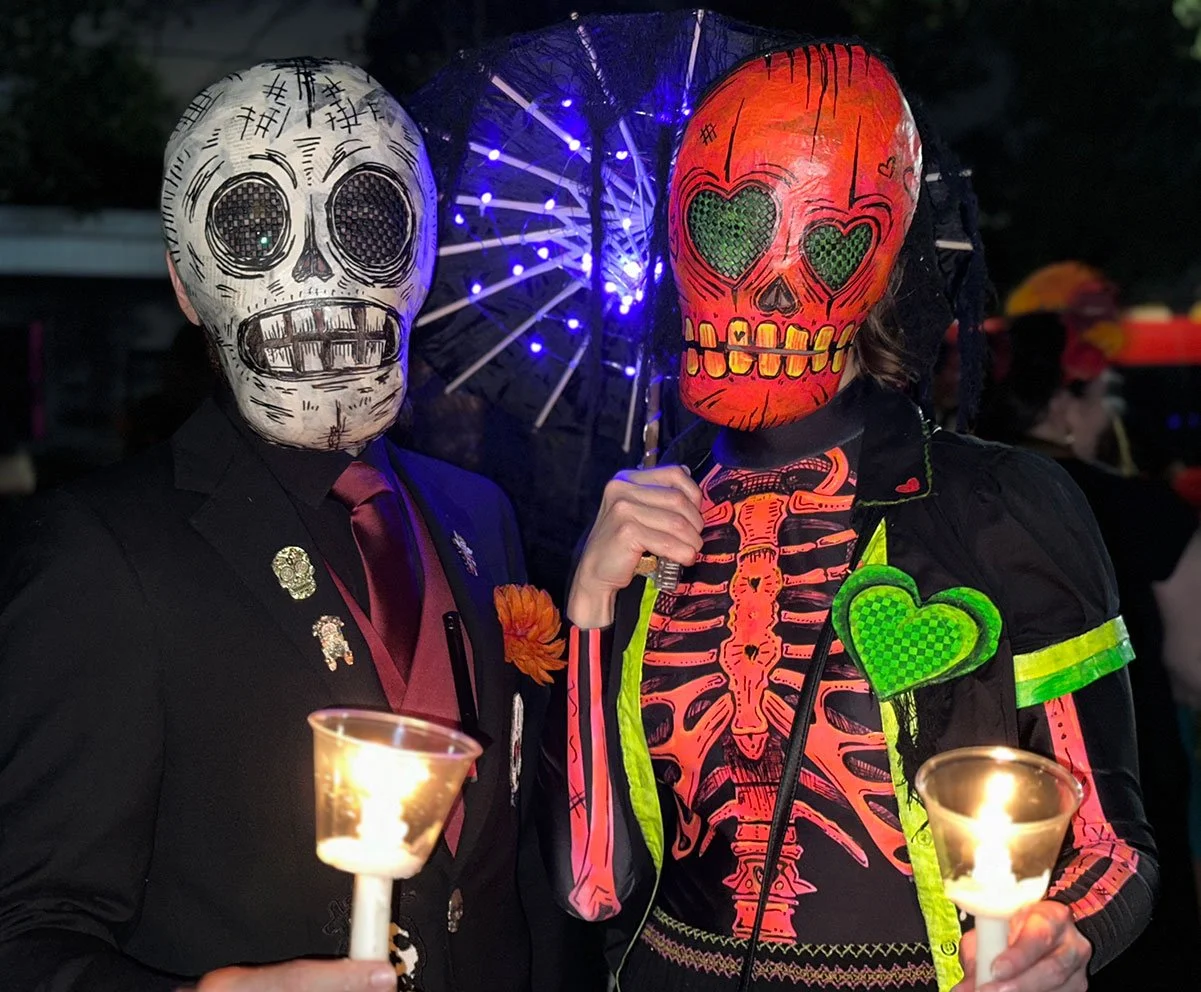
Krewe du Mayahuel in the 2024 Dia de los Muertos procession, photo by Ellis Anderson for French Quarter Journal
Picture it.
You walk through a cemetery gate, colonial wrought iron and architecture opening to welcome you to the festivities. You must look down at every step you take, as there are whole families in their brightest clothes sitting among the graves, sharing a meal with the dead, building their ofrendas and altars, or lighting candles and raising their glasses while they sing.
It is not quiet, and it is not gray. It is loud with color. A seat at the table for someone who is gone. Live music, instruments, color, life. Not a place of grief. A place of company.

The altar outside St. Roch cemetery in the 2024, photo by Ellis Anderson for French Quarter Journal
In school we made kites. Huge, colorful ones, because part of the celebration is to fly them, to send them up over the graves where the wind can carry what the living cannot. You could see the sky light up in colors like a living mosaic, and hear the children cheering and the tissue paper shaking in the wind. To a little artist's heart, it was a dream.
And there was fiambre... a cold cut salad piled with every kind of meat, cheese, and pickled vegetable you can imagine, the traditional dish of the day. My kids call it by a name of their own invention, and that is how a tradition actually survives: quietly, at a family table – sometimes under a new name.
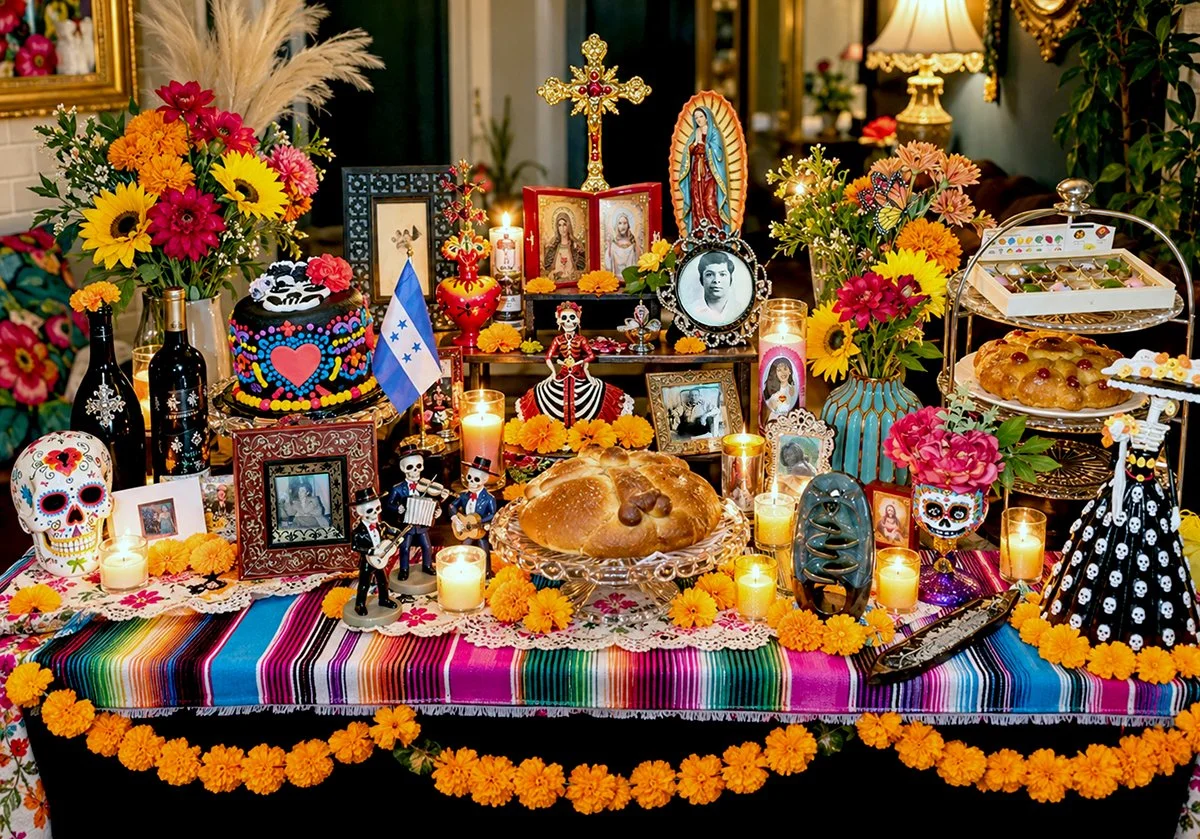
The altar at the Cochran household, photo courtesy Karla Marie “Karlita” Cochran
I write this as we celebrate Hispanic Heritage Month here in the US. The calendar gives us a month, mid-September into October, but heritage does not keep to a calendar. It travels with us. And celebrating Día de los Muertos come November is one of the truest ways we continue to celebrate Latin American roots and keep the heritage alive.
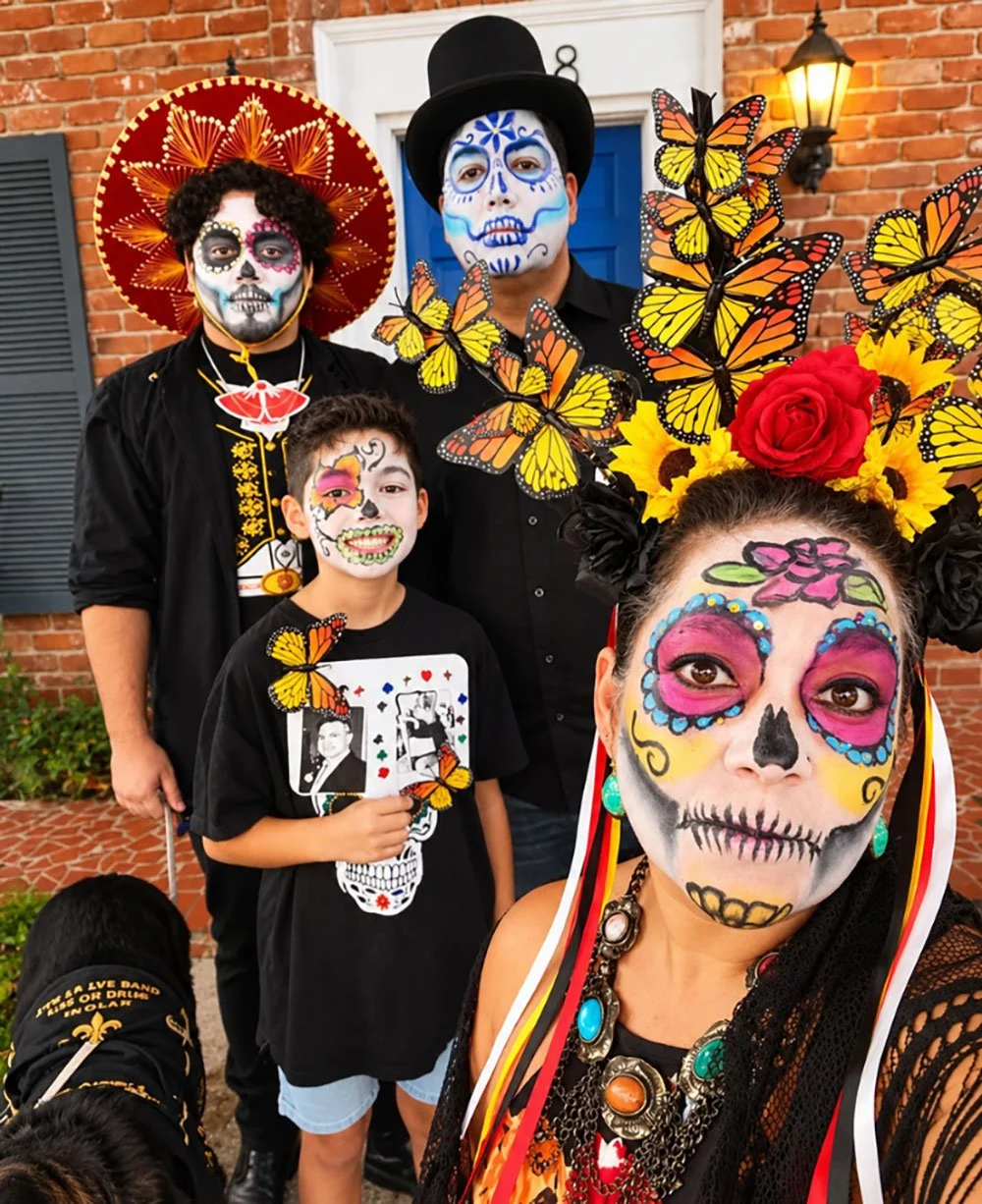
Writer Karla Marie “Karlita” Cochran and her family, photo courtesy Karla Marie “Karlita” Cochran
It makes sense that this tradition has made its home in New Orleans.
This is a city that dances at its funerals. A city that answers death with a brass band and a second line, that refuses to let grief have the last word. A city that is charged with spirituality and joins the conversation. New Orleans understood Día de los Muertos long before Día de los Muertos ever arrived.
And now it has arrived, beautifully. Each fall the Hispanic Chamber of Commerce of Louisiana fills Lafayette Square with a free festival for the whole city... a community altar, mariachi and folklórico on the stage, food from a dozen local Hispanic kitchens, and children in the painted Catrina and Catrín faces they will remember for the rest of their lives.
And over in the Bywater, the Krewe de Mayahuel gathers at Mickey Markey Park and processes through the streets to the gates of St. Roch Cemetery – drums, candles, puppets, marigolds, a whole neighborhood walking its beloved dead home.

Krewe du Mayahuel in the 2025 Dia de los Muertos procession, photo by Shawn Fink for French Quarter Journal
Stand on the route and watch it pass, and you will not know whether you are at a funeral or a party, because you are at both.
A procession to a cemetery. If that is not the most New Orleans sentence I know, I don't know what is.
My father is gone now. But every year, this season sets a plate for him, whether I am kneeling at his grave or walking a New Orleans street behind the drums. That is the gift Día de los Muertos gives, in Guatemala and here both.
It does not ask you to stop missing the people you have lost. It asks you to feed them, to play their music, to say their names out loud and let the names get loud. Build the altar. Set the plate. Pour the drink.
The dead are not gone. They are simply waiting for us to set them a place.
Editor’s note: Our Special Events page has complete details of the 2026 Día de los Muertos Festival and the Krewe de Mayahuel Día de los Muertos Procession and Fiesta! See more images from the 2025 procession here.
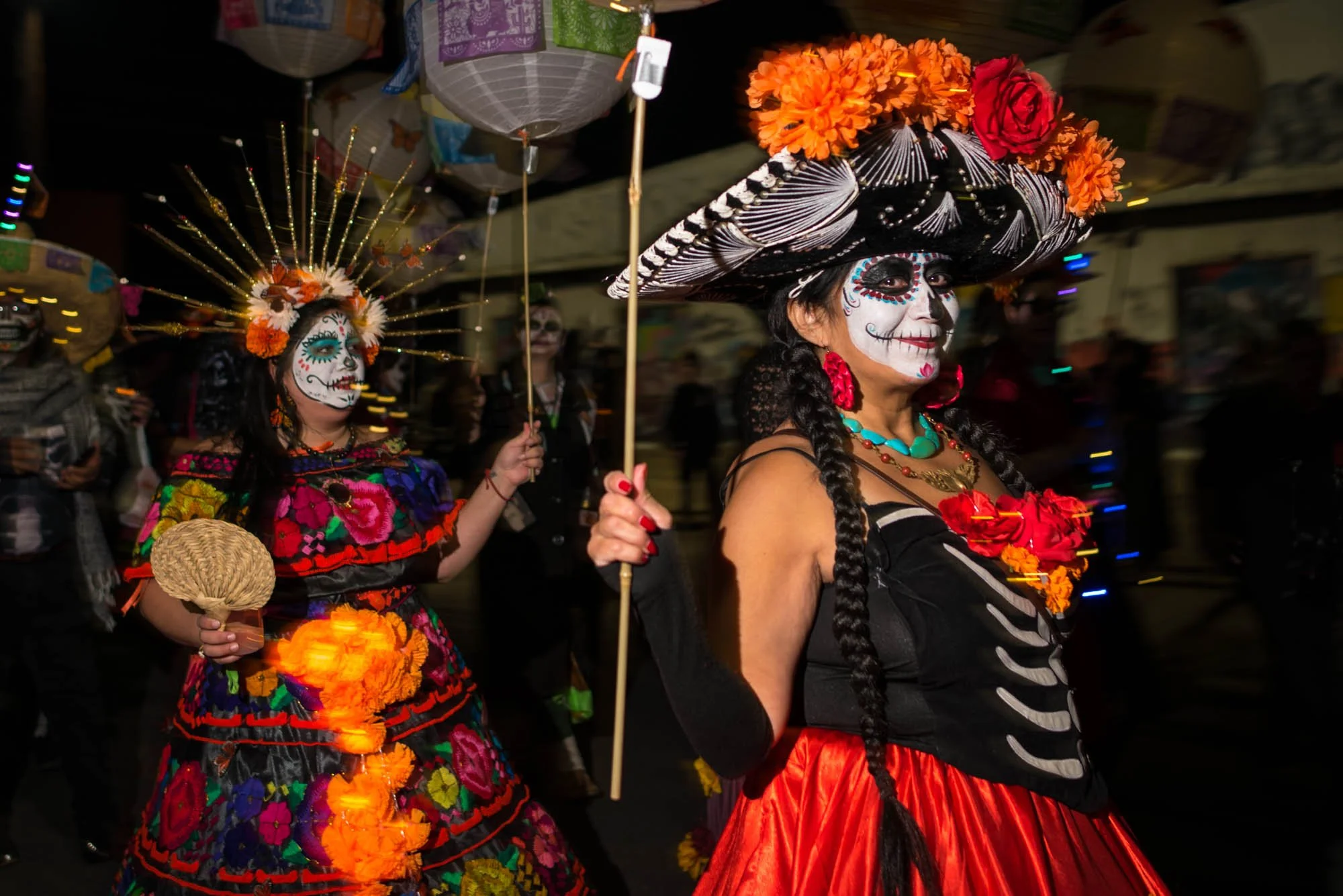
Krewe du Mayahuel in the 2025 Dia de los Muertos procession, photo by Shawn Fink for French Quarter Journal