Day in the Life of the COVID Quarter - Part 6
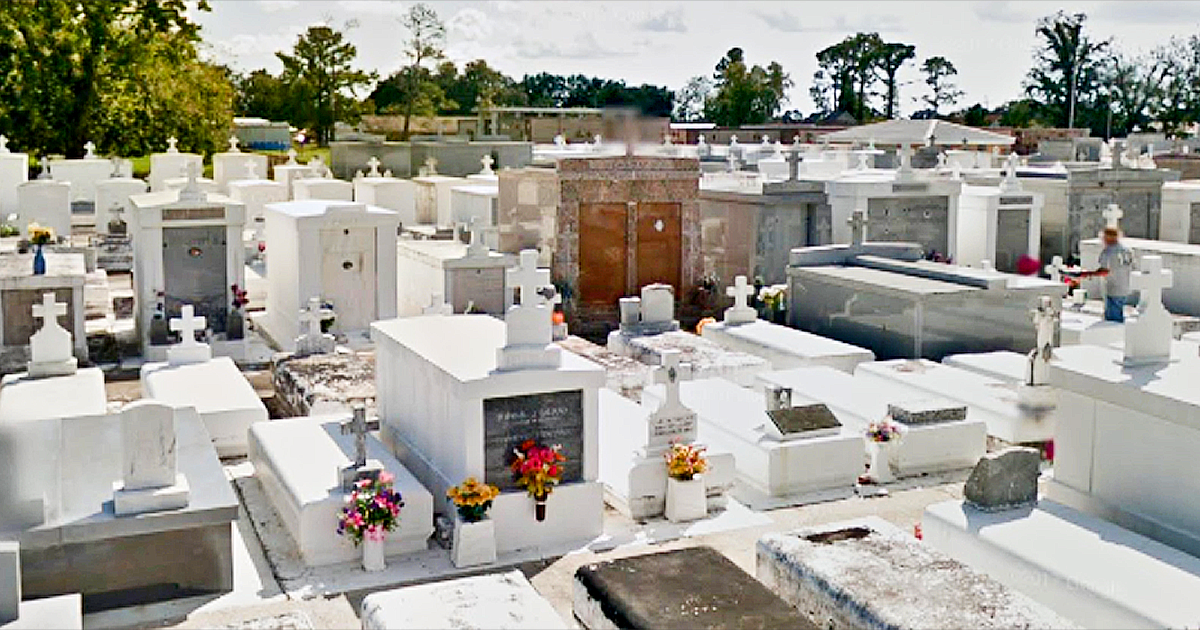
May 2020Leaving the French Quarter for the first time since the COVID shutdown, the writer's destination of choice? The family tomb in Galliano.
- by Frank Perez
Friday, May 8, 2020
6:10am
Wake up. In my dreams I was floating down a river on a barge deep-frying turkeys and then sling-shot-ing them to people on the banks. But not as weapons, I was just giving away turkeys.
It’s time to break in my brand new Ninja coffee maker, which arrived yesterday. It looks complicated and has so many buttons and gadgets that I’m afraid if I press the wrong one I might launch the space shuttle. I hit “brew,” go to the bathroom and hope the coffee drips correctly.
The words of Ignatius Reilly come to me as I’m brushing my teeth: “We shall storm the office very shortly, thereby surprising the foe when his senses are still subject to the psychic mists of early morning.”

This column is underwritten in part by Logo and name of column sponsor
6:25 am
Before “storming the office,” which is to say my computer, I take my first cup of coffee on the balcony. It promises to be a brilliant day, cool and sunny. I look at the buildings along Royal Street toward Esplanade and think of my neighbor, jazz musician Tim Laughlin, who each evening sits on his balcony and plays his clarinet for appreciative neighbors. The nightly solo concerts have started to draw something of a crowd.
Across the street from his building is the vacant lot created by the 2014 collapse of 810 Royal. One of the enduring paradoxes of the French Quarter is that for all its architectural beauty, that beauty is often a thin veneer behind which lies decay and decadence. The Quarter is a place of decrepit elegance.
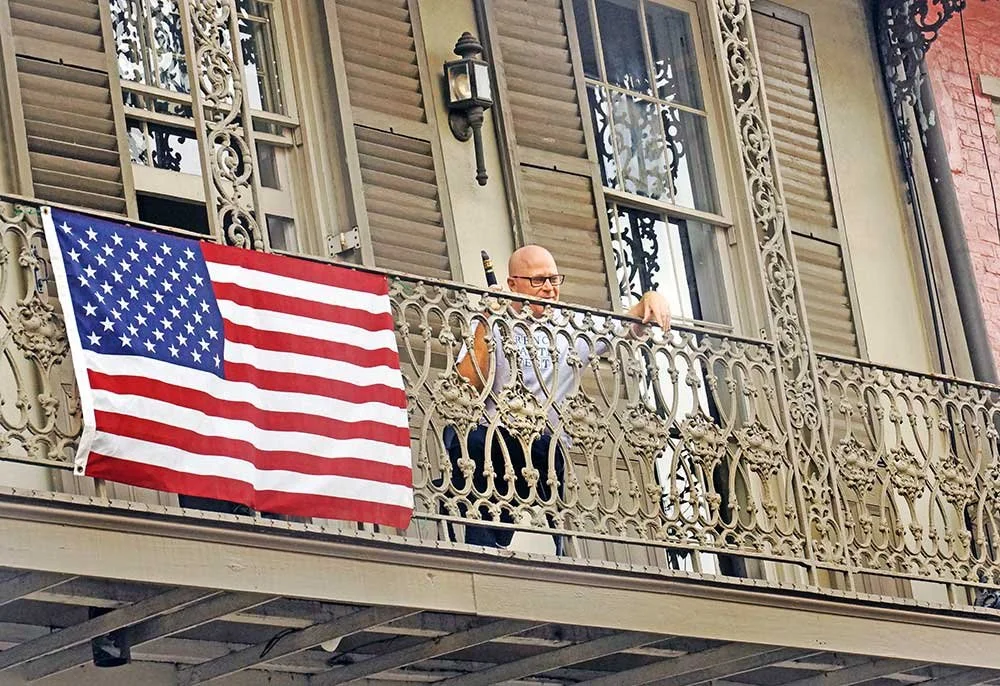
Tim Laughlin during an evening balcony concert on Royal St. Click for the FQJ video. photo Ellis Anderson
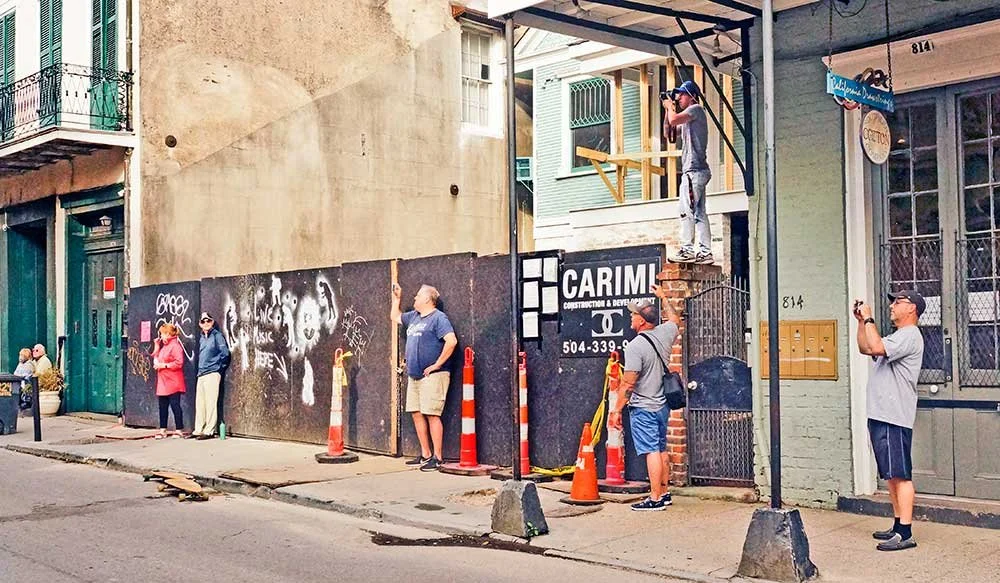
Neighborhood residents and a few passersby taking in the concert. photo by Ellis Anderson
6:45 am
The Stewart Butler biography manuscript awaits. Today’s writing task is emotionally difficult: the death of Alfred, Stewart’s partner of 35 years. Alfred died in their home, the Faerie Playhouse on Esplanade Avenue. The red, nearly 200 year old Creole Cottage is familiar to many because of the red hearts that adorn its façade—a nod to Alfred’s favorite holiday, Valentine’s Day. Stewart called Alfred his “love rock.”
10:45 am
Rupee is napping at my feet as I polish a passage. It’s almost time to go. I had asked my friend Jeffrey Dude for a lift to pick up some prescriptions and when he readily agreed, he also suggested we also take ride out of the city. He said he needed a change of scenery.
“Sure,” I said.
“Any place you’d like to go?” he asked.
I thought for a second and replied, “Yeah, I’d like to go visit my grandparents’ grave.”
So Jeffrey, Chris and I head down the bayou to Galliano.
Galliano is a small town on Bayou Lafourche, a discarded incarnation of the Mississippi River, a little over an hour from New Orleans. The drive down was like riding through my childhood. Memories were everywhere—sitting on my grandmother’s knee as she fed me potted meat on crackers with Dr. Pepper, my grandfather’s nicotine stained hand patting me on the back as smoke twirled and hung in the air, the triumphant feeling that overwhelmed me the first time I caught a speckled trout, and the first time I ate a raw oyster.
My great uncle was an oyster fisherman and when I was eight or nine, he took me out on his boat. I remember him dipping the oyster tongs into the water and retrieving what at first appeared to be sludge. He held the oyster in front of me, shucked it, and then offered it to me. It looked nasty to me, but the smile on his weathered face convinced me it was okay to eat. I slurped it down and fell in love.
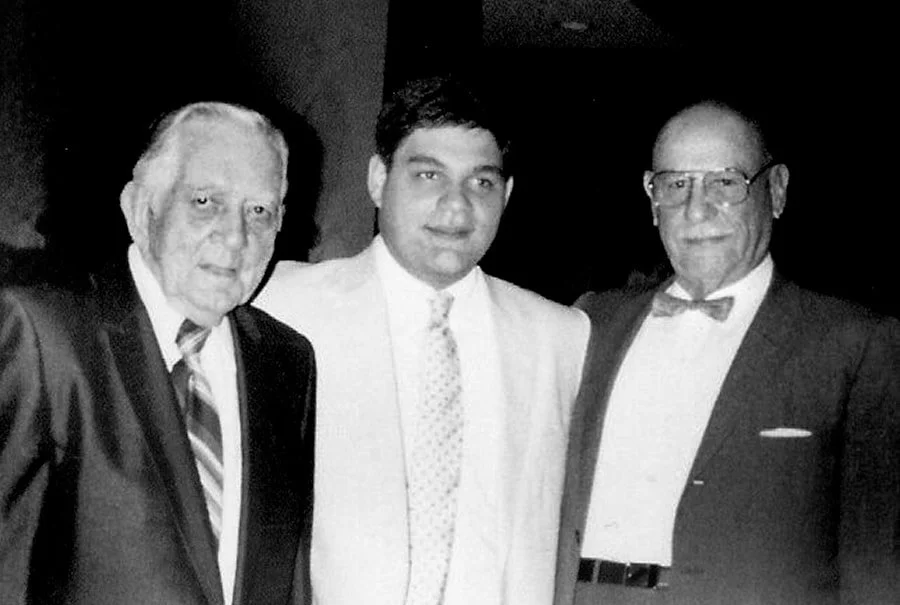
Frank (center) in high school with both his grandfathers. Earl is on the left.
12:30 pm
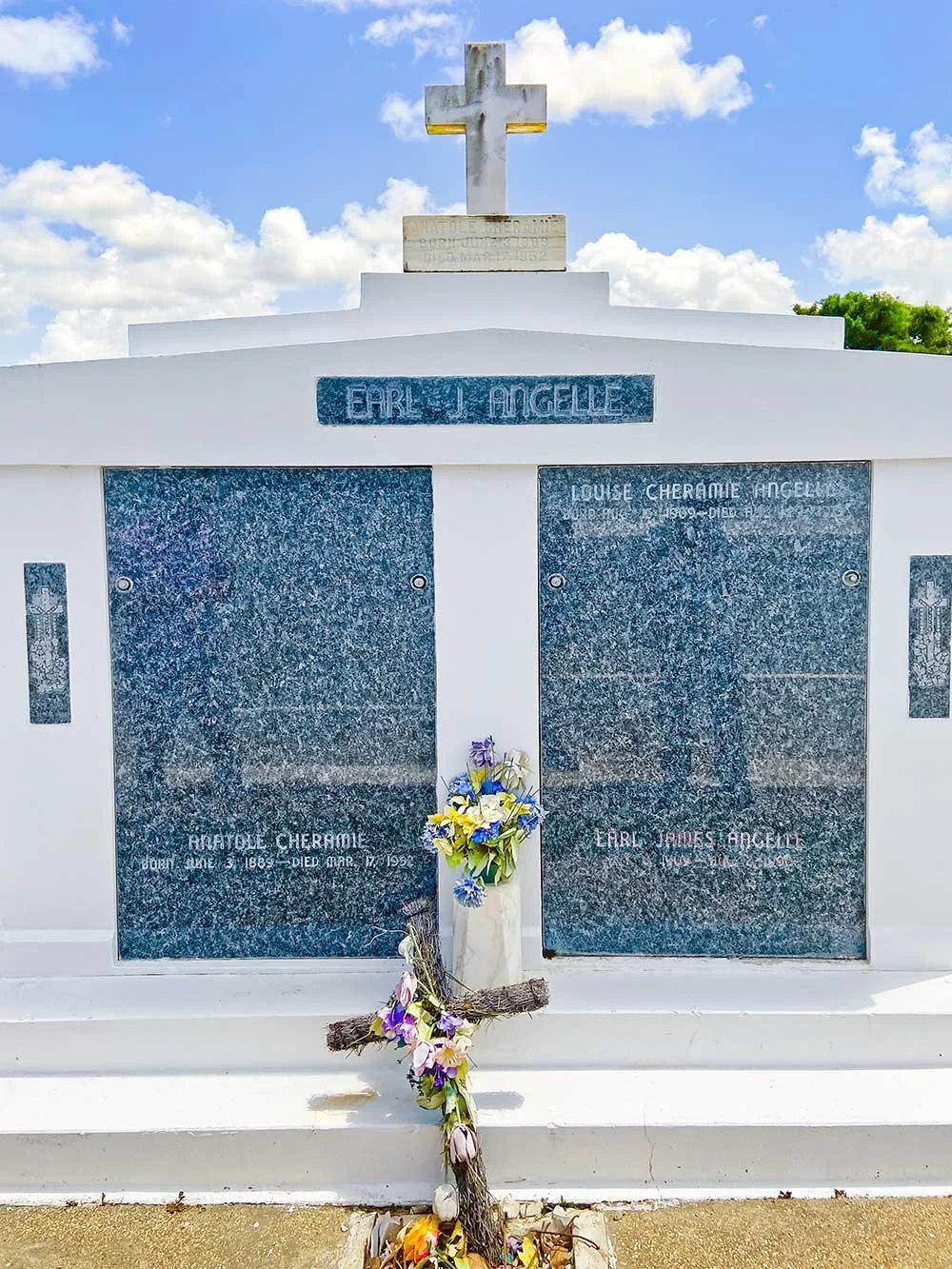
We arrive at the cemetery. The tomb is in good shape, freshly painted and well-kept. My Paw Paw, Earl Angelle, died in 1990, but still comes to me in dreams from time to time. In these dreams he whispers a word to me, a word I need at the time, a word like patience, or forgiveness, or endurance.
12:45 pm
We drive a little further down the bayou to see our old house. It looks the same. The shrimp boats along the bayou trigger another memory. Grandpa Earl once told me that in the 1940s, three or four times a week, his brother-in-law would load up his truck with fresh Gulf shrimp and bring them to New Orleans, where he would sell them to various neighborhood markets throughout the city.
The problem was that Uncle Eddie didn’t like to drive in the city. So whenever he could, my grandfather would drive the truck and Uncle Eddie would ride shotgun. The two would always save the French Market as the last stop and after selling the last of the shrimp, they would dine at Tujague’s. It was my grandfather’s favorite restaurant and today I can’t walk past it without thinking of him.
2:30 pm
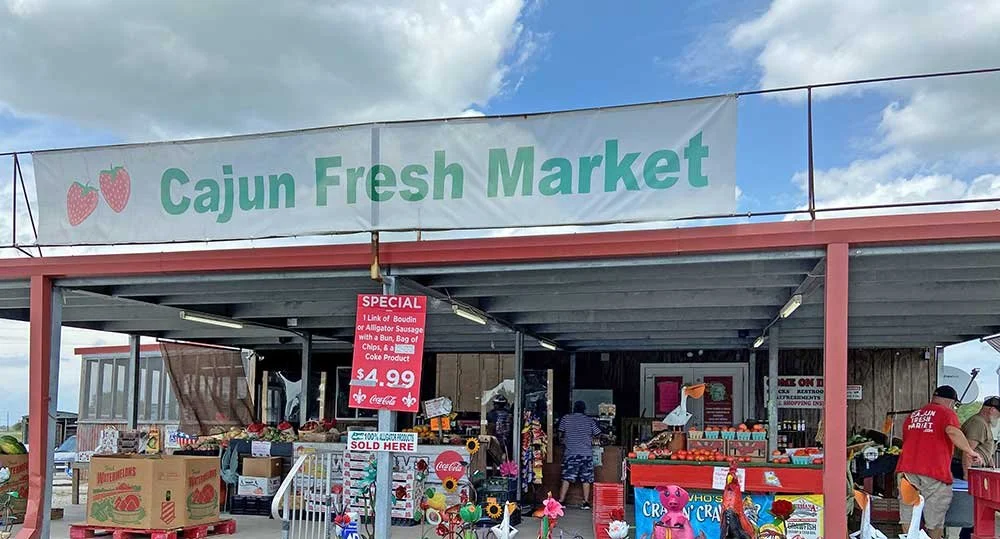
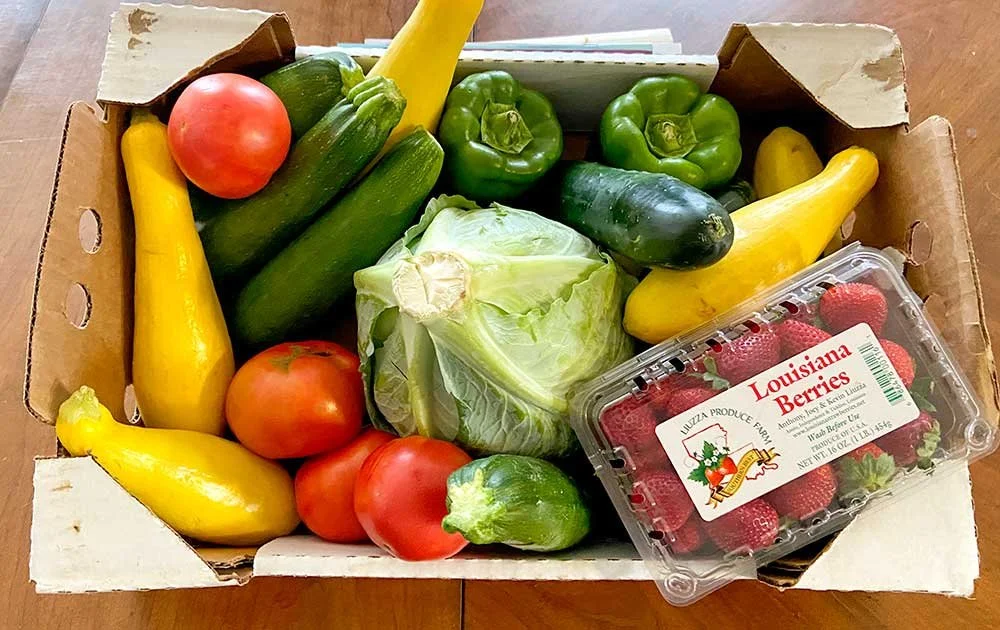
We stop at a roadside market advertising fresh shrimp and produce. Dinner tonight will be boiled shrimp.
3:30 pm
Home and Rupee goes berserk with joy.
6:30 pm
After dinner, a “Parks and Recreation” binge. Drifting off to sleep, I meditate on the intersection of place and identity and it occurs to me we are all tiny cracks into which a little bit of history slips.
I hope my grandfather visits me tonight.