
Eric Burt: Preserve the Artistry
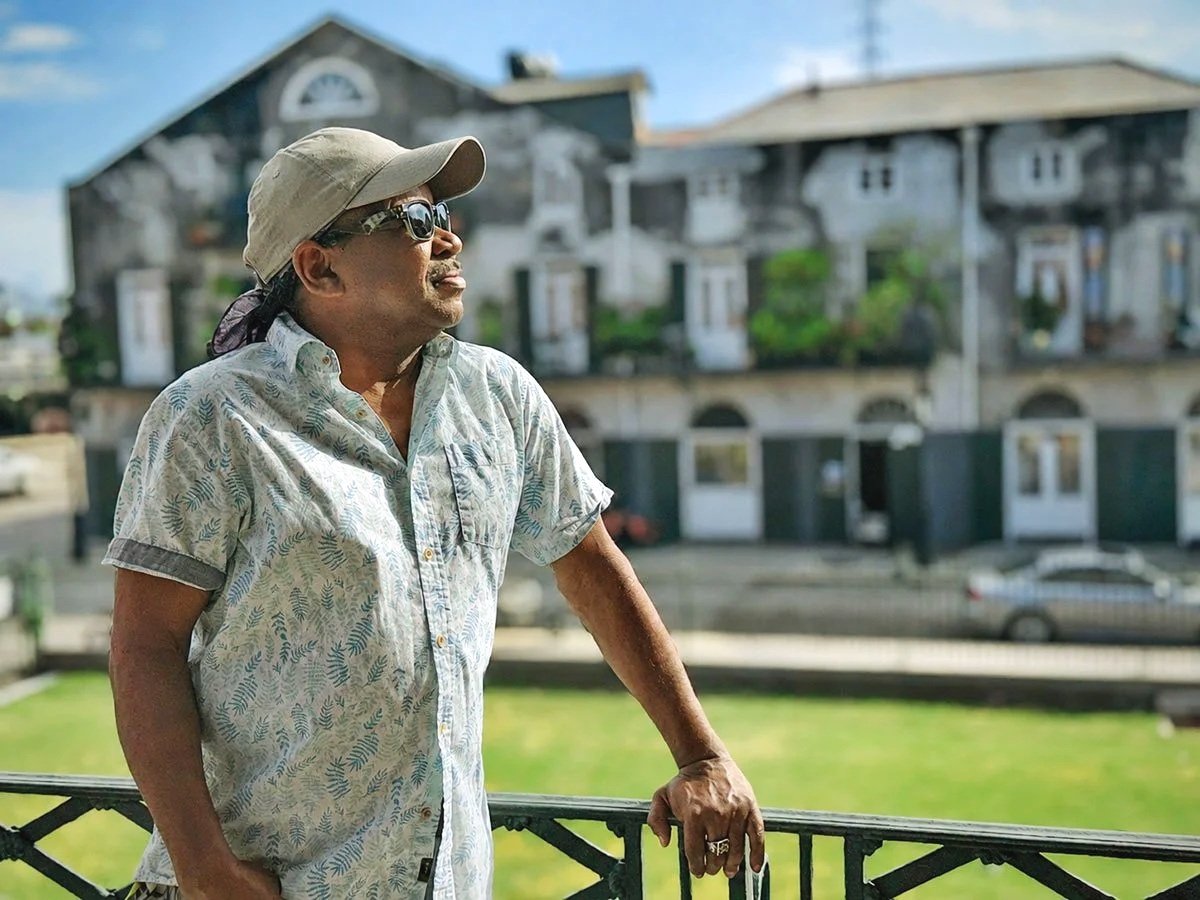
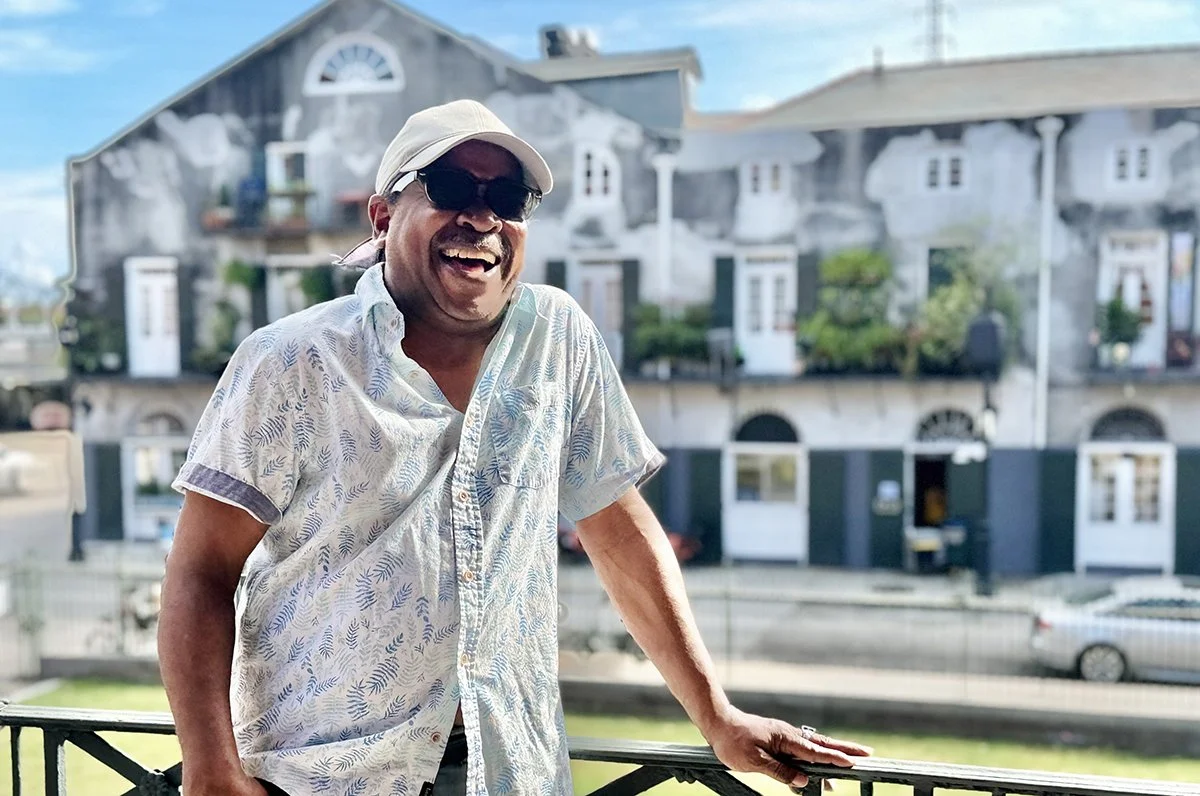
Eric Burt at the Jazz Museum, photo by Ellis Anderson
August 2026This culture bearer from the cradle grew up in the shadow of “some of the coolest cats around.”
~ by Eric Burt
This project is underwritten in part by Readers Circle member Rose Ali

This project is made possible in part by a grant from the New Orleans Jazz & Heritage Foundation, Inc.

This project is underwritten in part by Readers Circle members Kelly & Linda Baker
This project is underwritten in part by Readers Circle member Rosemary James, volunteer Managing Director of The Pirates Alley Faulkner Society
Hello, my name is Eric Burt. As a youth, I lived with my father on St. Philip Street, across from McDonough 15, between Bourbon and Royal streets. It was an apartment complex with a swimming pool. My brother and I loved that. The apartment above caught on fire and we had to move because of water damage. My father then moved to the Tremé.
Later in my teens, we moved back into the Quarters, right across the street from the Jazz Museum, on the third floor of Decatur and Esplanade. We lived above a clothing store and pizzeria. The Italian lady who ran the restaurant made some of the best Italian dishes I ever tasted. Later, that space became Check Point Charlie.
My father, Eluard Burt II, was a musician and New Orleans jazz historian. When he got out of the service in San Francisco, he came back to New Orleans with a fire in his belly to combine Beatnik poetry with New Orleans jazz. He was one of the first people to integrate jazz and poetry in the 1960s and 70s at a place called the Quorum.
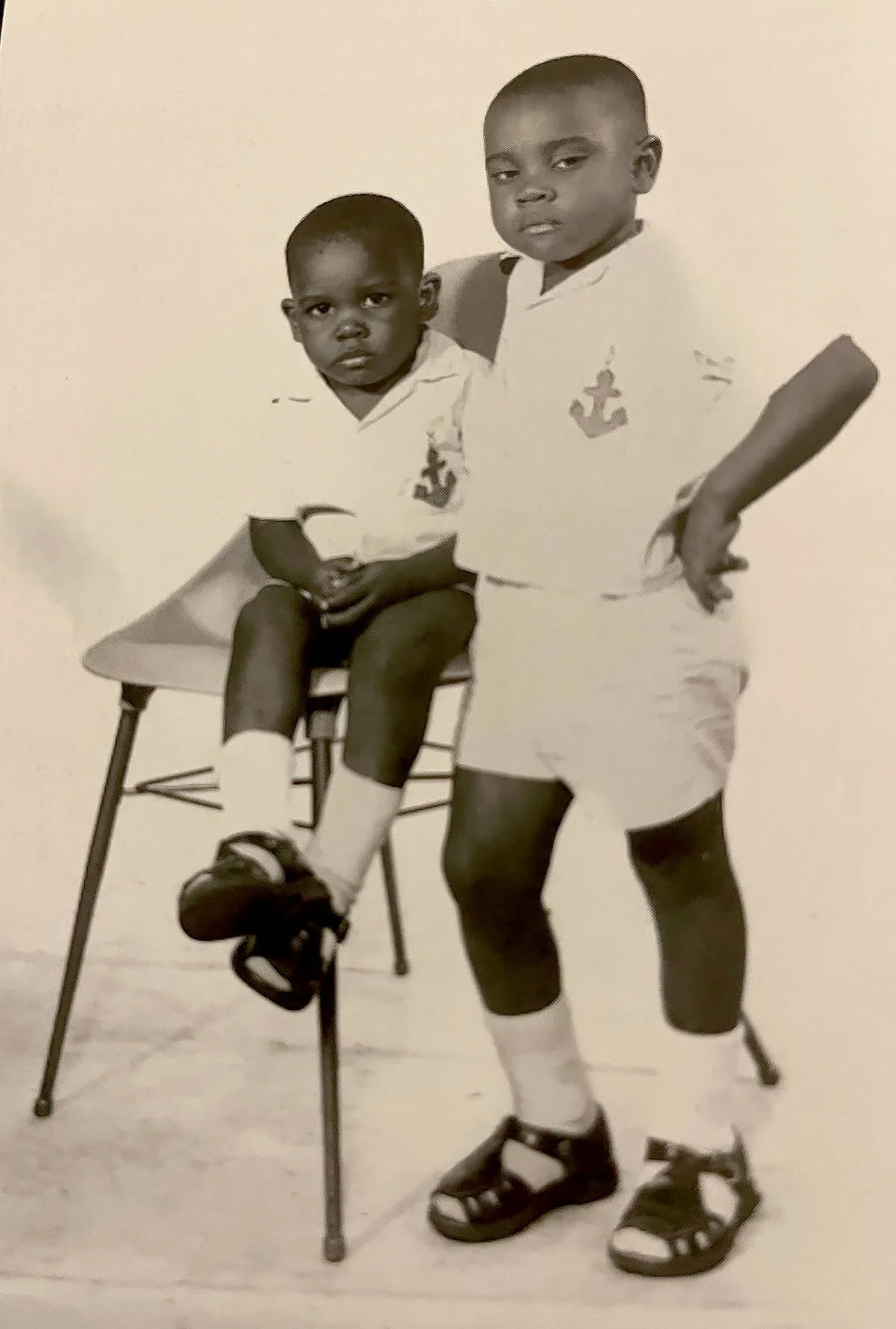
Eric (left) with his older brother Eluart (or ET). Photo courtesy Eric Burt
It was a house at the 600 block of Esplanade where Black, white and Creole people came together, under threat of arrest. Their crime? Being together, being integrated. My father was also a musician who played music all his life. He is one of the saxophonists on Big Joe Turner’s rendition of “C.C. Rider.”
Living in the Quarters with my father meant I grew up in the shadow of some of the coolest cats around. From my earliest days, I was with legends like Professor Longhair, the Nevilles and a host of beatnik poets, including John Mosley and John Sinclair. I was exposed from the beginning, finding music, artists and mentors in Quarters’ streets and homes.
At age 3, I did my first commercial. At 6 or 7, I did a CBS commercial in front of St. Louis Cathedral, where I was second lining. I remember in the months that followed, I kept getting royalties in the mail. This made a deep impact on me. Long before I was officially in the industry, I was learning the value of our culture to outsiders.
Another place I often tagged along with my father was St. Mark’s Community center on St. Claude, across from the Jazz and Heritage Foundation. My father did African and modern dance classes in the St. Mark’s gym. I witnessed dancers like Sheila Powell, Shannon Powell’s sister; Lula Elzy; Ausettua AmoraAmenkum; and Greer Goff Mendy. They were teens at the time, just beginning their craft.
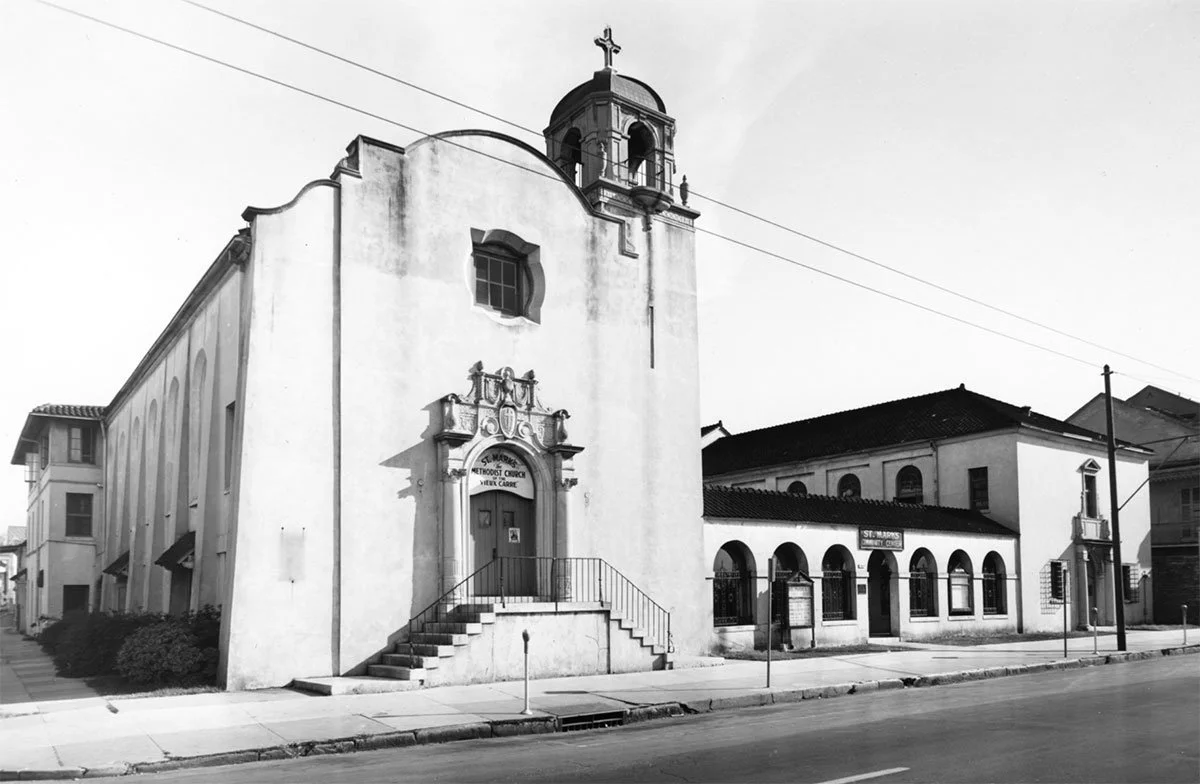
St. Mark’s Methodist Church and Community Center by Franck-Bertacci Photographers, 1956. The Historic New Orleans Collection, The Franck-Bertacci Collection
Meanwhile, I had a rough time being a young Black kid in the Quarters in the 60s and 70s. I was always harassed by the police or people on the street. You got to see everything. Not all of it was beautiful and fun, especially for young Black males. Several times, I was forced to tell suspicious police or bystanders who I was.
Once, as it was getting dark, some cops wearing civilian clothes approached me. I was maybe 12, 13 years old.
“Hey you, where you going?” they yelled.
“None of your business,” I said, not knowing they were cops out of uniform.
They handled me pretty rough that day. They assumed I was up to no good. They couldn't imagine I lived in the Quarters. All throughout that time, including all the 70s, any encounter I had with the police: it wasn’t the best.
It took time, but if they saw me again and again, they would eventually back off, finally understanding I lived in the Quarters. Thankfully, I had people, Black and white, looking out for me as a child. Many times, I was saved because of a neighbor knowing who I was.
“Leave him alone, he’s alright,” they would say. “That’s little Burt, Burt’s son, he lives right around the corner.”
In the Quarters, I was exposed to more than great performers. I saw many things my child’s eyes were not ready for. I got to see a lot. A lot, a lot. At 13, I saw my first full-blown orgy on Mardi Gras day, right around the corner of my house. I shouldn’t have been in those predicaments at that age, but it came with the territory.
Several places left me with great memories. The Pan-Am Building on St. Claude and Rampart did scouting and filming. I got involved in that as a kid and was featured in several movies. There was, of course, Buster’s on Burgundy, where you got your red beans and rice. Buster’s chef was Ms. Fanny, my brother’s mother-in-law.
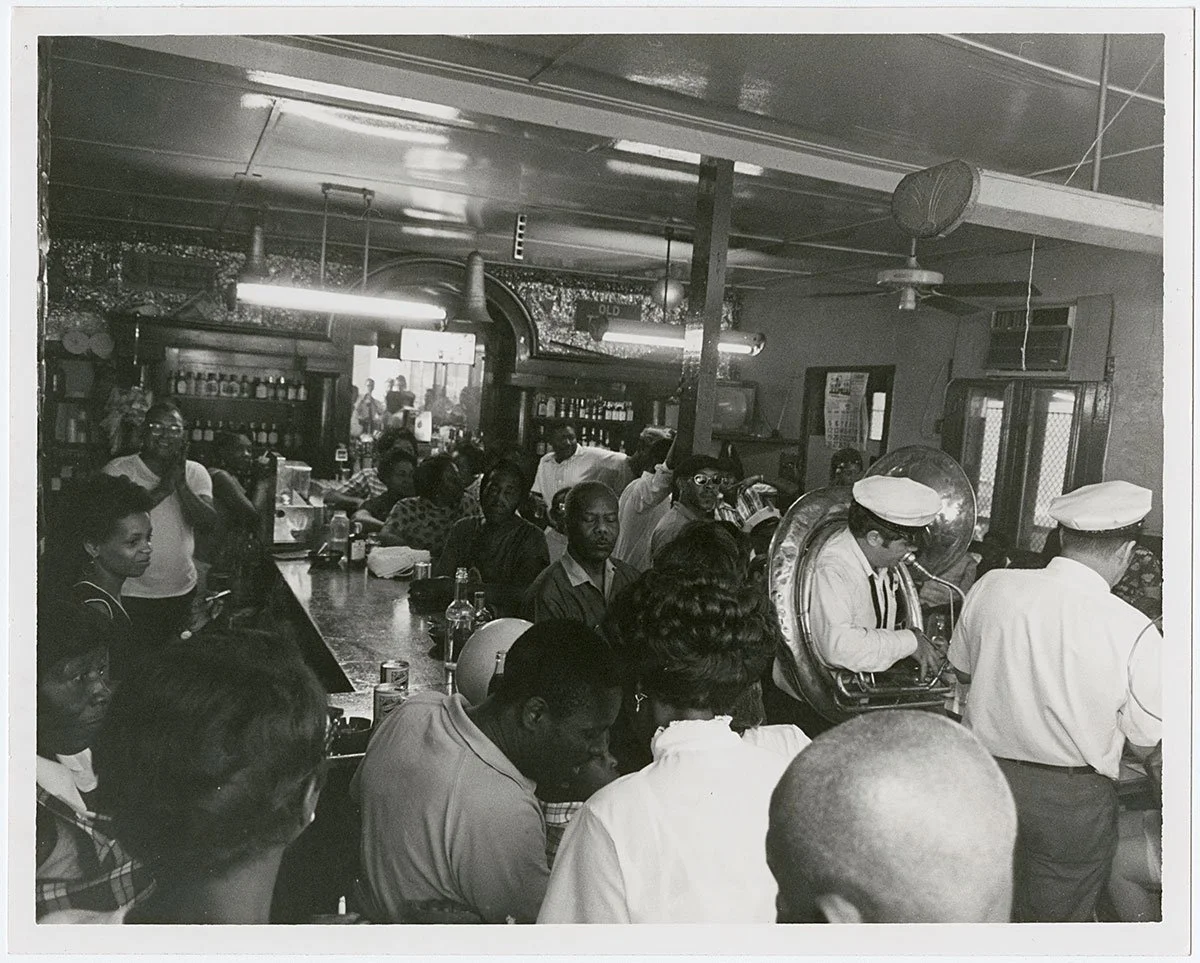
The interior of Buster’s, 1970, with Buster behind the bar. Photo by Jules Cahn, the Jules Cahn Collection at the Historic New Orleans Collection
There was this little spot on Bourbon around St. Peter called The Fatted Calf. They served the best grilled burgers you ever had. There was also Lu and Charles on Rampart, a jazz club and restaurant, just across from the St. Mark’s Community Center. My dad played music there every week. These places combined my life in the Quarters with the Treme. It gave me exposure to greats from both neighborhoods.
Fast forward into adulthood. As I built on my foundations in the music industry, I learned its depth and its breadth. I am a musician and performer in my own right. I’m a masked Indian with the Monogram Hunters out of the Seventh Ward. I’m the stage manager for the Tropical Isle Stage at French Quarter Fest.
With Joe Lastie from Preservation Hall, I created a label called Gumbolia Nation. It features Indians from different tribes under one umbrella to create a cultural sound. I have booked and sent musicians all over the world: Europe, Russia, Japan, Africa, South America. I was with Satchmo Fest from its beginning in the early 2000s. I love being in front of a crowd! I love people!
I have skill sets, though, that also put me behind the scenes. I have been in sound for 40 years now. It involves set up, running it, breaking it down, taking care of the equipment, fixing the equipment.
In all of these endeavors, there is one phrase that means the most to me: culture bearer. When I began with the French Quarter Festival 34 years ago, I took it seriously. Because I am from the Quarters. I love being responsible for local musicians getting to perform and express themselves before a large audience. And, I love traveling and bringing my city’s culture to the world.
I want our young kids to know the economic value of our culture to the world. I let them know they do not have to settle for crumbs. I take Indians and bands to Europe. I visit the Dominican Republic. I bring Indians to New Orleanians who left here to live in other states, but still carry this home with them in their hearts. I want culture bearers to know what they are worth.
I want everyone to know that New Orleans is a very unique place and the French Quarters has always been a place where outsiders come in.
Don’t take it for granted.
It can be taken away.
Keep the tradition. Preserve the artistry, the performance.
Thank you.
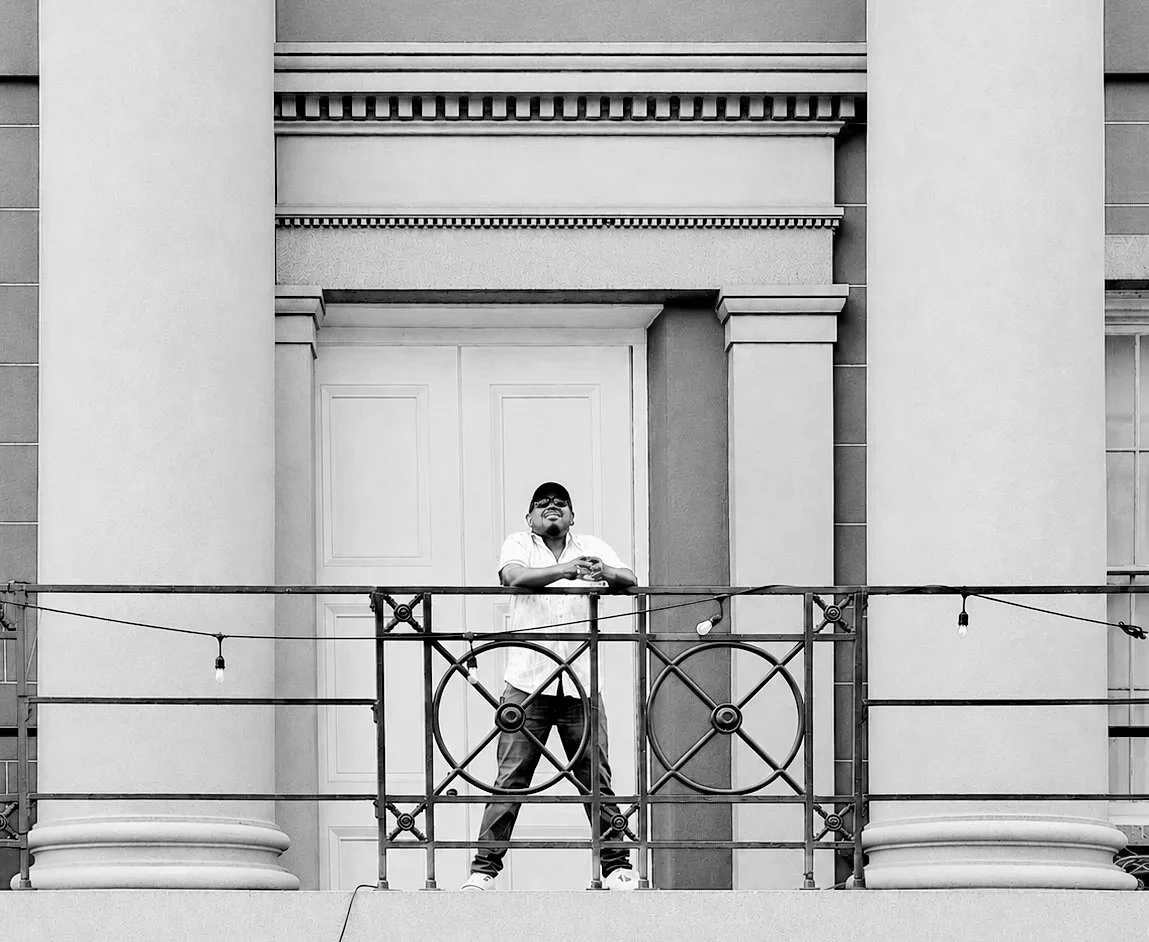
At the Jazz Museum, photo by Ellis Anderson