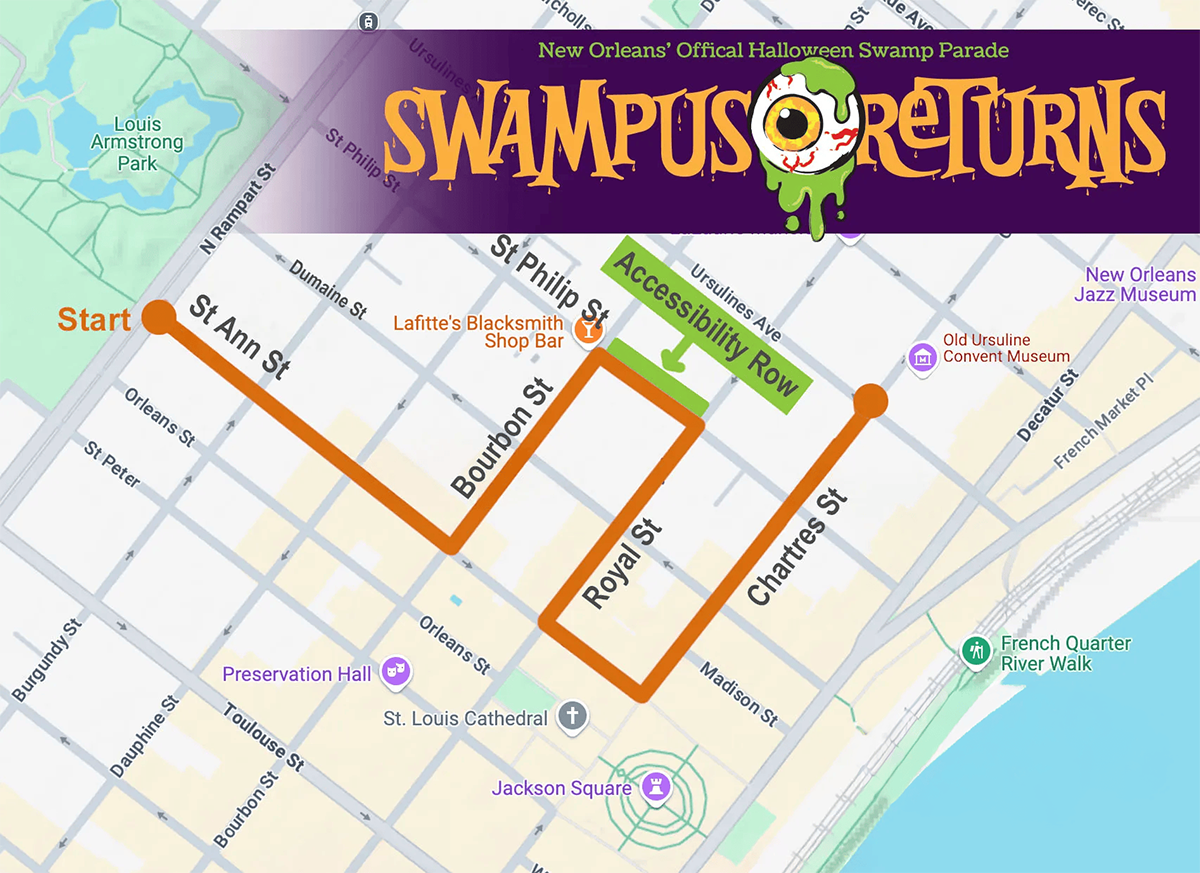
On Parade: Swampus and Krampus
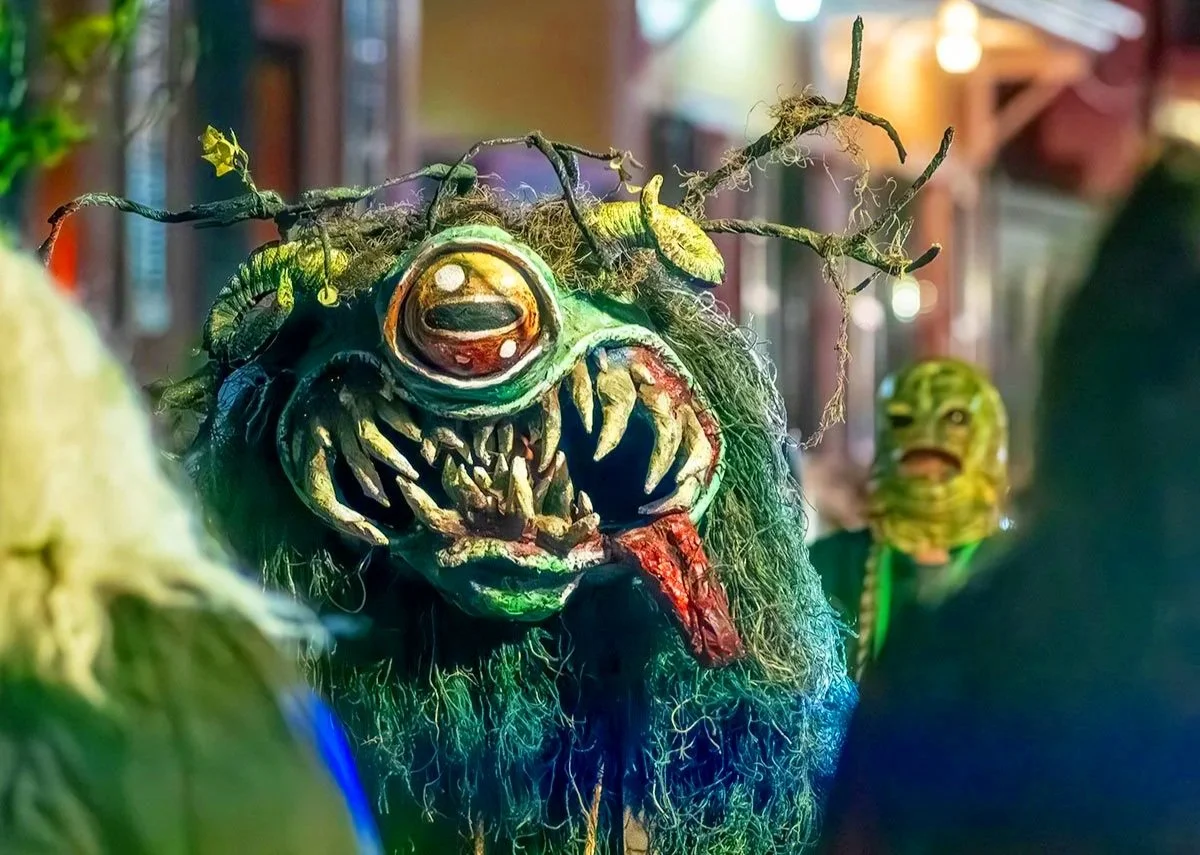
Michael Esordi as Swampus in the 2025 Swampus parade through the French Quarter, photo by Melanie Cole. See the full photo gallery here!
September 2026Two newer parades – one led by an ancient alpine Yuletide creature and the other by a shaggy swamp monster – are helping lead the way in sustainability, accessibility and creativity.
– by Matt Sheen
Editor’s note: Swampus parades this year on Saturday, October 3 and Krampus on Saturday, December 5. You’ll find details in French Quarter Journal’s curated Special Events section.
If New Orleans has one defining trait, it's that the city loves to throw a party – with the emphasis on throw.
The annual Mardi Gras parades involve copious "throws" – beads and other objects tossed from parade floats to the waiting crowds. Not all of them are caught, however, and the city's 2018 drainage system maintenance unearthed 46 tons of plastic beads.
And until recently, it’s often been difficult or impossible for the 1 in 3 Louisiana residents living with some sort of disability to participate in the city’s bounteous celebratory offerings.
Fortunately, some unlikely allies are here to help with both issues: a Central European mythical creature known as Krampus and his locally sourced spin-off, Swampus.
The Bigfoot-like characters are the central figures of two newer New Orleans parades, produced by the Krewe of Krampus. Michael Esordi and his wife Diana founded the krewe in 2015, inspired by the otherworldly character and celebrations taking place in the European Alps.

This column is underwritten in part by Matthew Peck Gallery
But while putting a fun and funky New Orleans spin on the parades, they’re also leading the way nationally by adhering to three guiding principles: sustainability, accessibility and creativity.

Photo by Shawn Fink for French Quarter Journal. See the full photo gallery here.
Krampus Who?
The legend of Krampus traces its origin to Austria and neighboring Alpine countries. Krampus is a frightening character that somewhat resembles Pan and similar horned creatures found in ancient mythology. He comes during the Christmas season – sometimes accompanying Santa Claus – not to reward good children, but to punish bad ones.
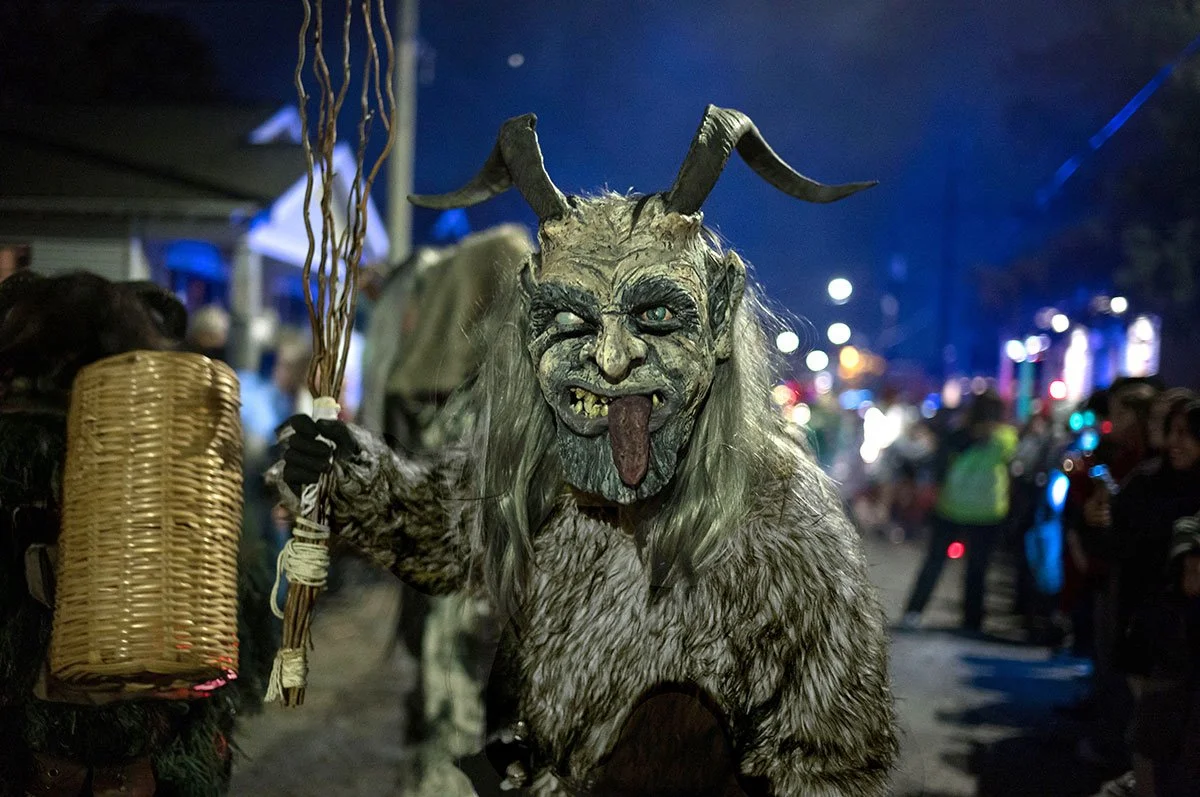
Michael Esordi as Krampus, photo by Mike Murat

Krewe of Krampus in New Orleans, photo by Shawn Fink for French Quarter Journal. See the full photo gallery here.
Alpine communities have a long history of winter celebrations built around the shaggy creature called Krampuslaufs. They’re traditionally held on December 5, the eve of St. Nicholas Day. The main event is usually a run (or procession) through the streets with participants masked and costumed as Krampus. The proceedings are marked by festive chaos.
Christopher Bickel organized the first major Krampus-related event in the U.S. in 2010 in Columbia, South Carolina. He’d discovered the bizarre celebrations after stumbling on a YouTube video titled “Krampus attack in Silandro (South Tirol).”
Although he’d heard of Krampus before, he thought the Krampuslauf was one of the “most insane, ararchic things” he’d ever seen and began researching.
“I thought it would be fun to do an American approximation,” he said recently. “I knew we couldn't legally get away with the ruckus I had seen in the original video… but I thought it would be fun dressing up, doing an unauthorized parade, and hitting several bars. It sort of blossomed from there."
That first parade was a success and American Krampuslauf quickly caught on, with similar events proliferating around the country.
When a few krampuslaufs started in the United States, the festivals soon captured the attention of the Esordis. The couple had a long-standing interest in exploring mysterious traditions in different countries and researching strange legends and folklore.
"Diana and I started traveling up to Philadelphia, one of the original US Krampus events, to participate and help the organizer," Esordi said.
"It wasn’t long before Diana and I were hanging out in a friend’s courtyard back here in New Orleans when I said, 'I know what I want to do.' These two – who know me very well – looked at me with the usual 'Oh no, what’s Mike thinking this time?’”
Esordi declared: “I am going to start a Krampus Parade here in New Orleans!”
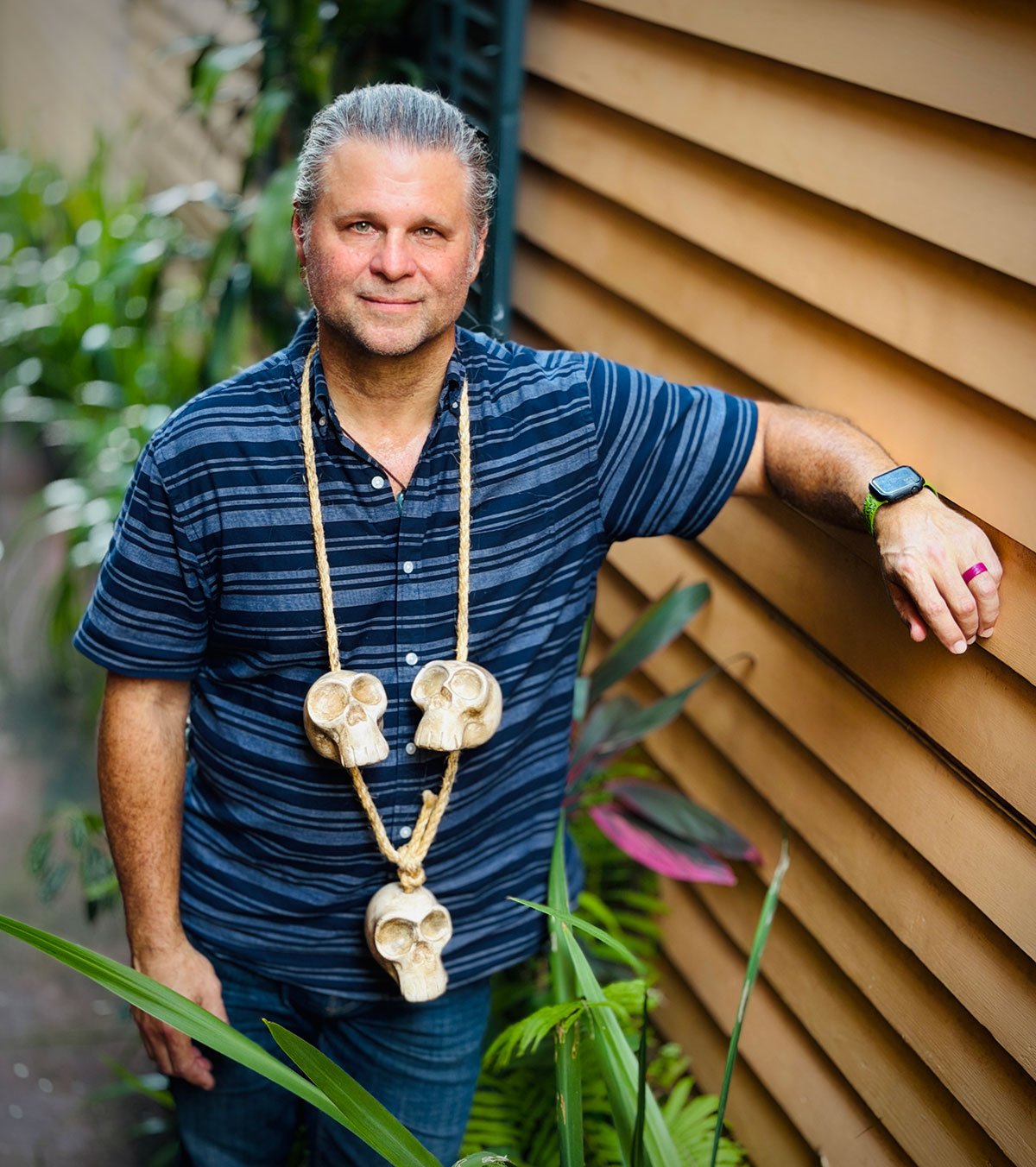
Michael Esordi, co-founder of the Krampus and Swampus parades, in the patio where the concept was first concieved. Photo by Ellis Anderson for FQJ
New Orleans Style
In designing their parade, the Esordis took liberties in adapting the traditional folklore to suit their own agenda. For instance, the New Orleans variation isn’t a krampuslauf; it’s a NOLAuf.
And since the original myth had no role for women, Diana created female characters even fiercer than Krampus. She called them the Sisters of SHHH (She Harkens Him).
“They warn people that Krampus is coming,” Esordi explains. “But make a sound in their presence and you will pay.”
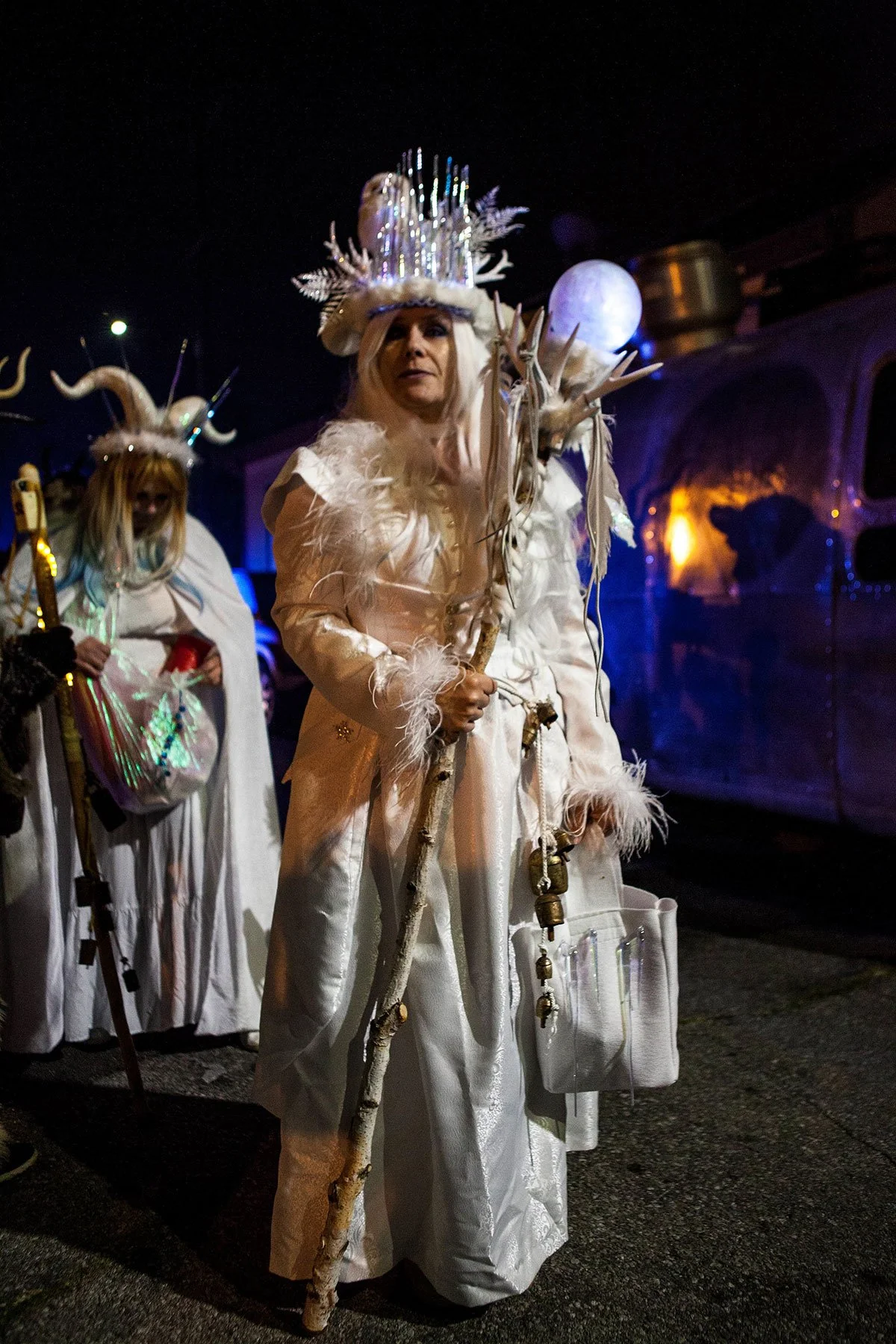
Diana Esordi, Queen of the Sisters of SHHH, photo by Corrie Boudreaux

Photo by Shawn Fink for French Quarter Journal. See the full photo gallery here.
Esordi also created an entirely new character, Swampus, to address the incongruity of a fictional alpine creature haunting the swamps of the American South. He invented a tale in which Krampus emigrates to South Louisiana in pursuit of a particularly naughty little boy named Fritz Schütz, whom he’s determined to punish.
The heat caused the shaggy monster to shed his fur and grow antlers, adapting to his new environment as he awaits his moment of reckoning with Fritz, which occurs each Halloween.
Swampus first appeared in 2019 in the Krewe of Boo parade, when Esordi introduced the character and his marsh-creature friends. Swampus then became a man about town, involved in scavenger hunts, pandemic drive-through events and even a Rocky Horror style “Bride of Swampus” wedding with audience participation and reception dance party.
Last year it seemed obvious that Swampus deserved a parade of his own – with sustainability as the focus, not an afterthought.
Swampus Returns 2025 welcomed any krewe or organization interested in changing parade culture to make it more sustainable. Participation rules require that all throws are handmade or locally produced; eco-friendly or reusable; sustainably packaged; and limited in quantity.
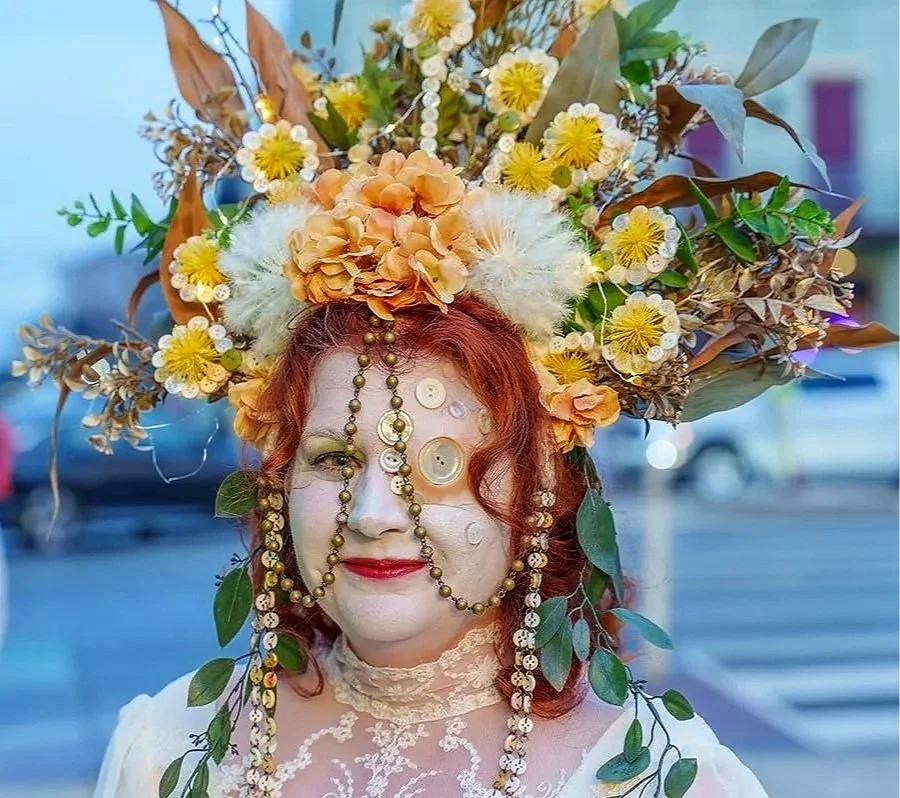
Swampus in the 2025 Swampus parade through the French Quarter, photo by Melanie Cole. See the full photo gallery here!

Swampus in the 2025 Swampus parade through the French Quarter, photo by Melanie Cole. See the full photo gallery here!
Monster Motivators
In producing both parades, Esordi’s three main “motivators,” remain sustainability, accessibility and creativity.
For him, sustainability presents creative challenges that “have introduced new ways of using local, recycled or reused materials that haven’t been done before,” he said.
Accessibility focuses on inclusiveness.
“It’s just not right if everyone,” he said, repeating the word for emphasis, “everyone can’t enjoy the amazing parades and events that happen here in New Orleans. We are working so hard to make sure when we do something, if someone wants to participate or experience it, they can. No excuses.”
According to the latest census figures, nearly one in six residents of Louisiana live with some sort of disability.
“Historically in New Orleans, parades are just not safe or accessible for people with disabilities,” Diana Esordi said, pointing out that a “huge segment of our community” is excluded from the city’s “rich, vibrant, cultural life.”
To address this, in 2021, the Krewe of Krampus created the first Accessibility Row, a two-block section designed to provide a more accessible parade experience for people with disabilities. This area includes trained volunteers, a variety of sensory supports, a portable sensory room for children or adults who are neurodivergent or have PTSD, an ASL interpreter for members of the deaf community and MCs that visually describe the parade for the blind community.
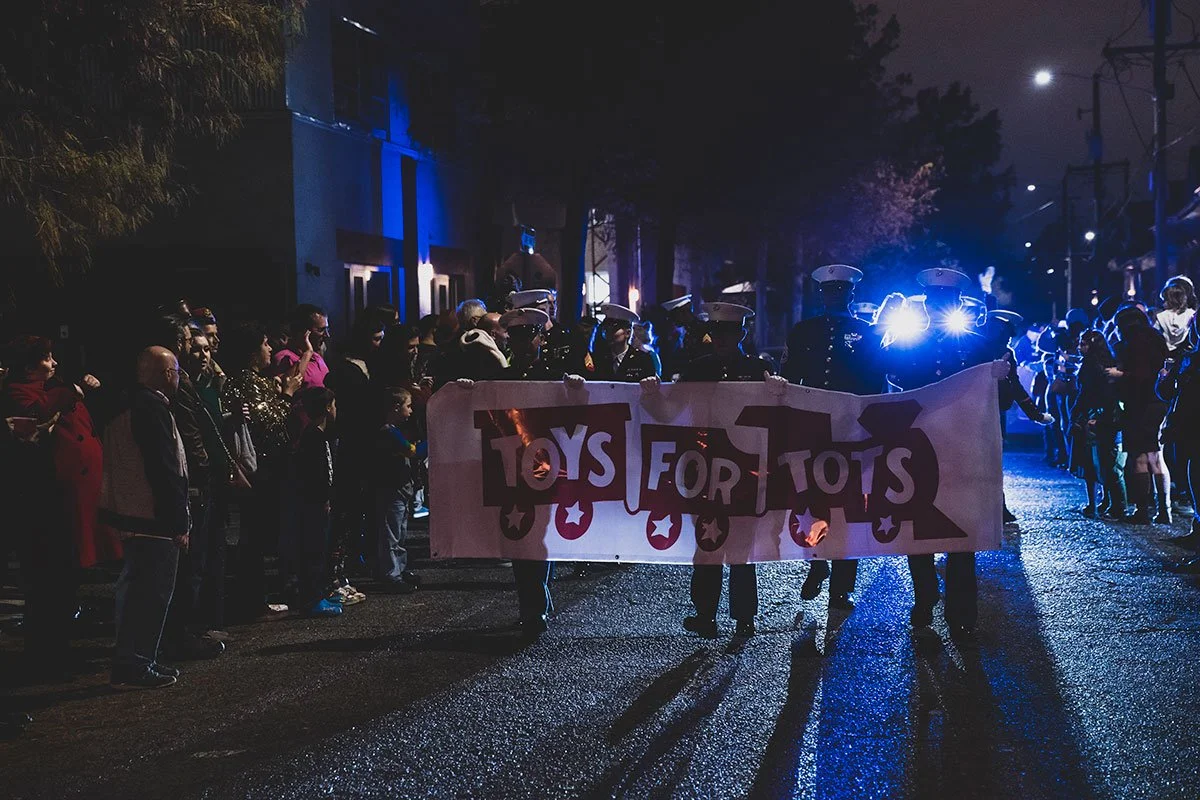
Michael Esordi notes, “Toys for Tots was something we started in our first Krampus NOLAuf and it continues to build each year — that won’t go away as long as the Marines are willing to parade with us!.” Apparently, parade-goers are keeping that in mind - last year, the trailer at the end of the parade where toys were collected filled up twice. Photo by Joshua Matthews

Swampus in the 2025 Swampus parade through the French Quarter, photo by Melanie Cole. See the full photo gallery here!
In 2024, they created a nonprofit focused on accessibility, One Krewe, “to create accessible, safe, and inclusive parading and event experiences for people living with disabilities.” Diana now serves as One Krewe’s executive director and is also chair of Mayor Moreno’s Council for Citizens with Disabilities.
As for creativity, Michael Esordi said that “it is why we are also able to include the other two categories and excel. We are not afraid of trying something out…”
And it’s the main reason he wanted to start a parade of his own. “Not only to give myself a creative outlet, but to make a space [in which] others felt inspired to also push themselves creatively. That, in turn, pushes me not to settle and to always push forward. It’s a fun environment for an artist.”
He’s also a professional experience designer with a passion for detail. For example, Esordi remembered seeing parades when he was younger and wondering why most times the backs of floats weren’t decorated as much as the front. “I understand how that can happen, but it’s yet another detail that, when addressed, makes the full experience even better,” he said.

Swampus in the 2025 Swampus parade through the French Quarter, photo by Melanie Cole. See the full photo gallery here!
"For me, great design is invisible. When done well, people leave excited and energized. They can't point to the exact detail that made it work, they just feel it.”
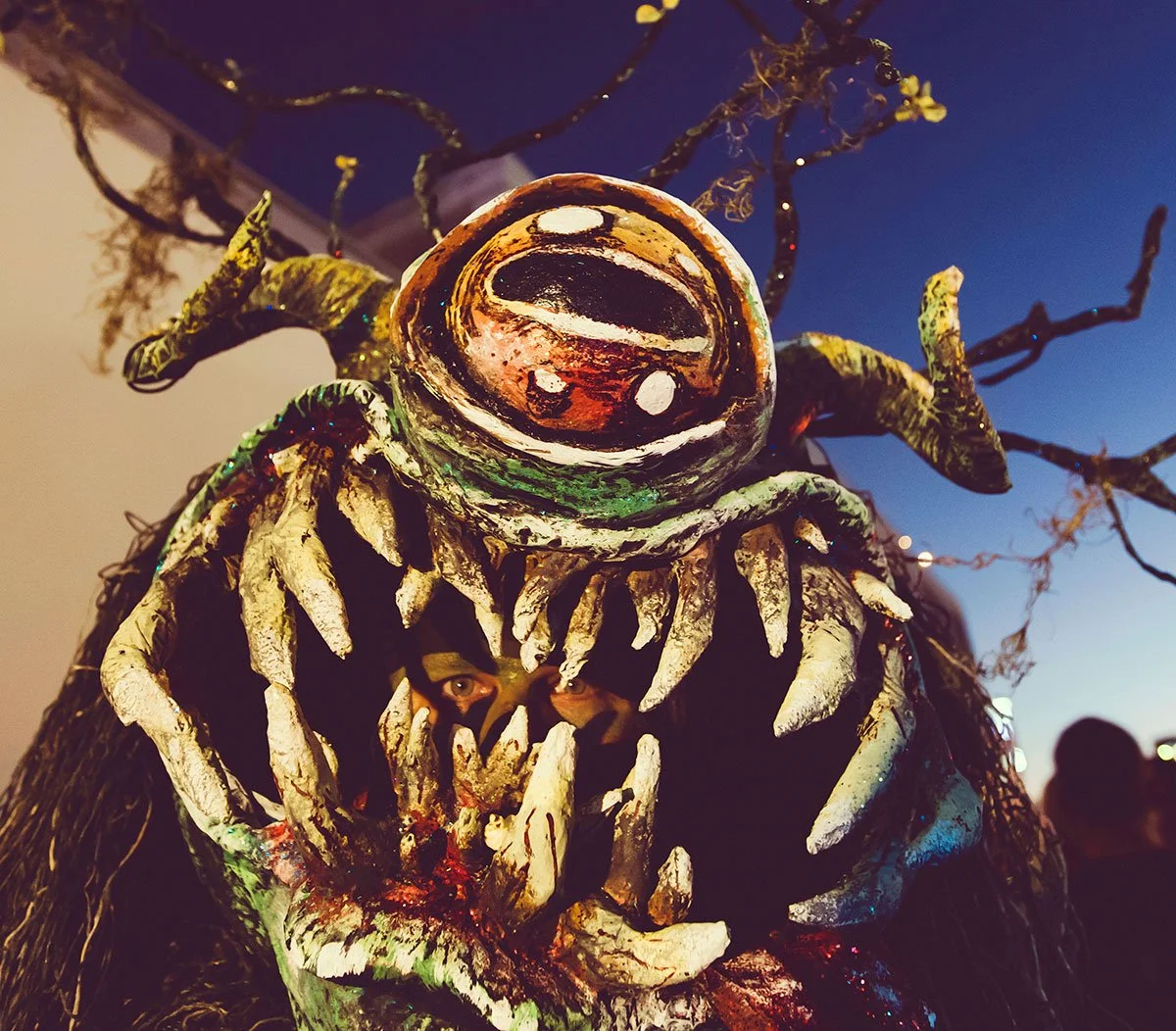
Michael Esordi as Krampus, photo by Joshua Matthews