
A Poet in Jackson Square: The Soul Study
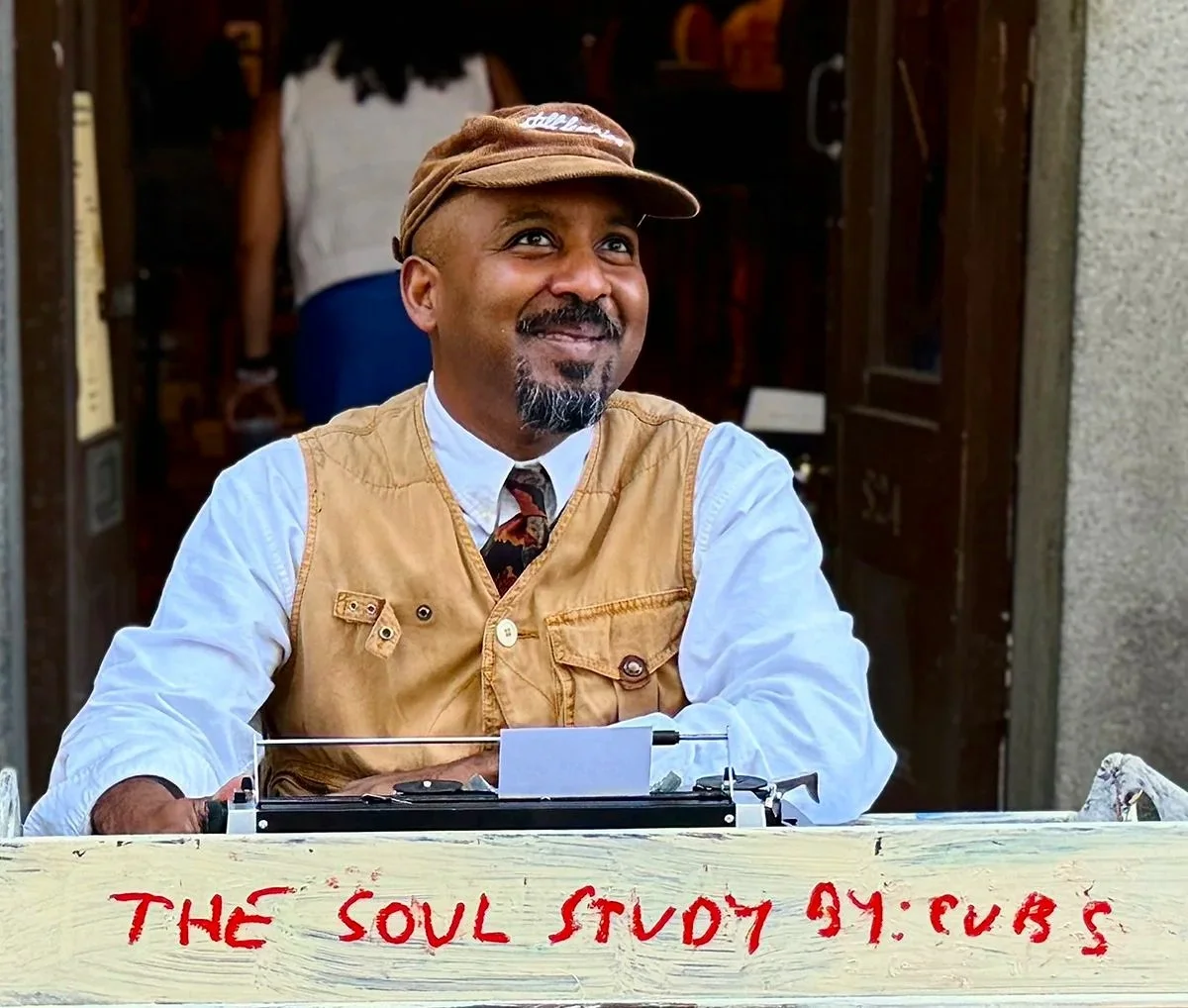
Christian “Cubs” Davenport at his new Pontalba building studio, part of the French Market District
April 2026Royal Street phenom Christian Davenport, otherwise known as “Cubs the Poet,” finds a permanent space for his art – and his trusty typewriter – in the Shops of the Upper Pontalba.
– by Kim Ranjbar
-photos by Ellis Anderson
This column is underwritten in part by Karen Hinton & Howard Glaser
From tiny Voodoo effigies and custom-made perfumes to antique glass eyes and tailored wigs, shops in the French Quarter have long offered singular finds, but Christian Davenport’s new space on St. Peter Street is something yet again.
For over a decade, Davenport, better known as Cubs the Poet, has been a neighborhood fixture perched on an upside-down milk crate, clacking away on a manual typewriter and spontaneously creating bespoke poems for passersby on Royal Street. Now in his own space in the Pontalba Buildings on Jackson Square – part of the French Market District – Cubs’ dreams have been realized. It seems he couldn’t be happier.
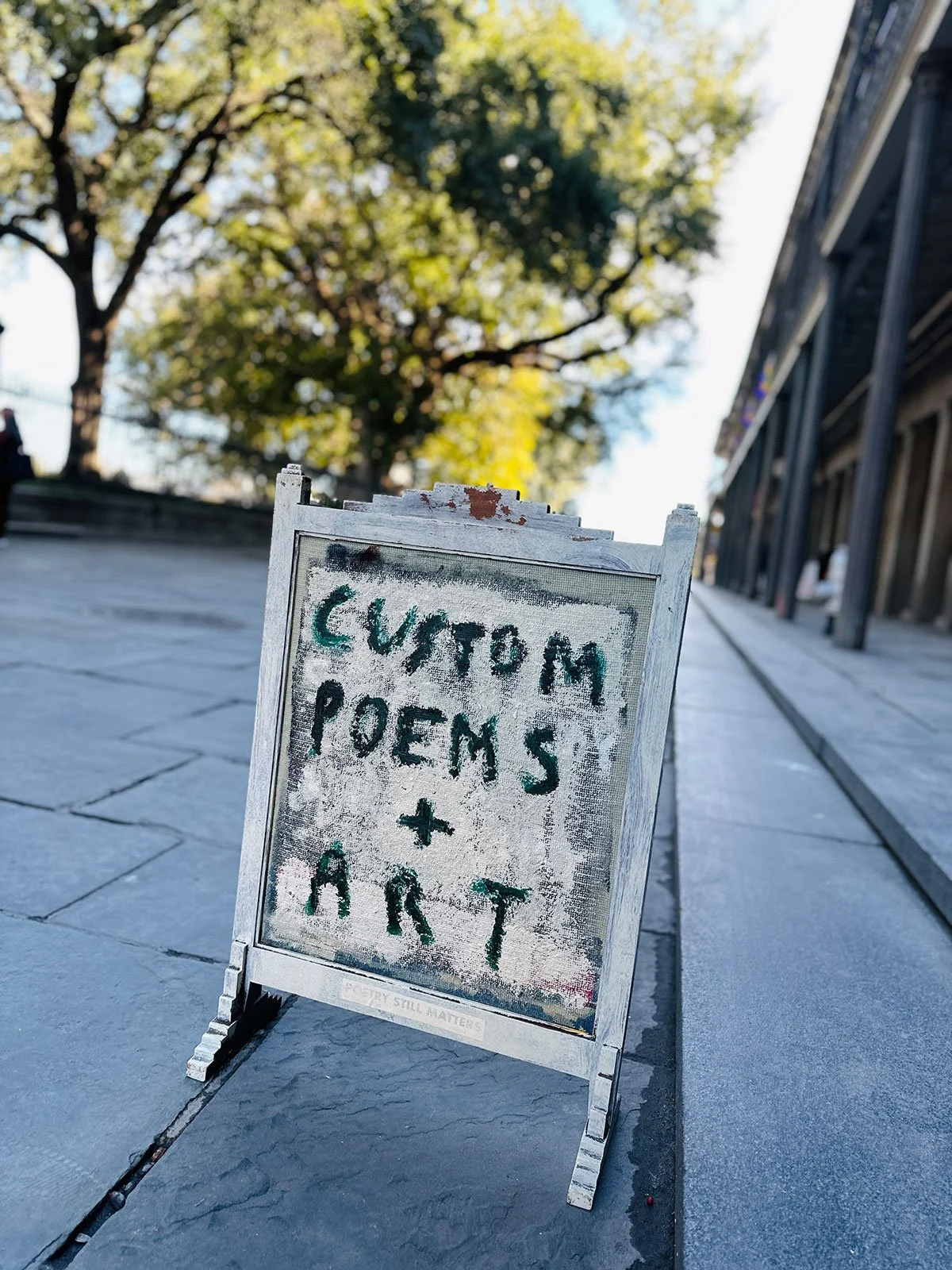
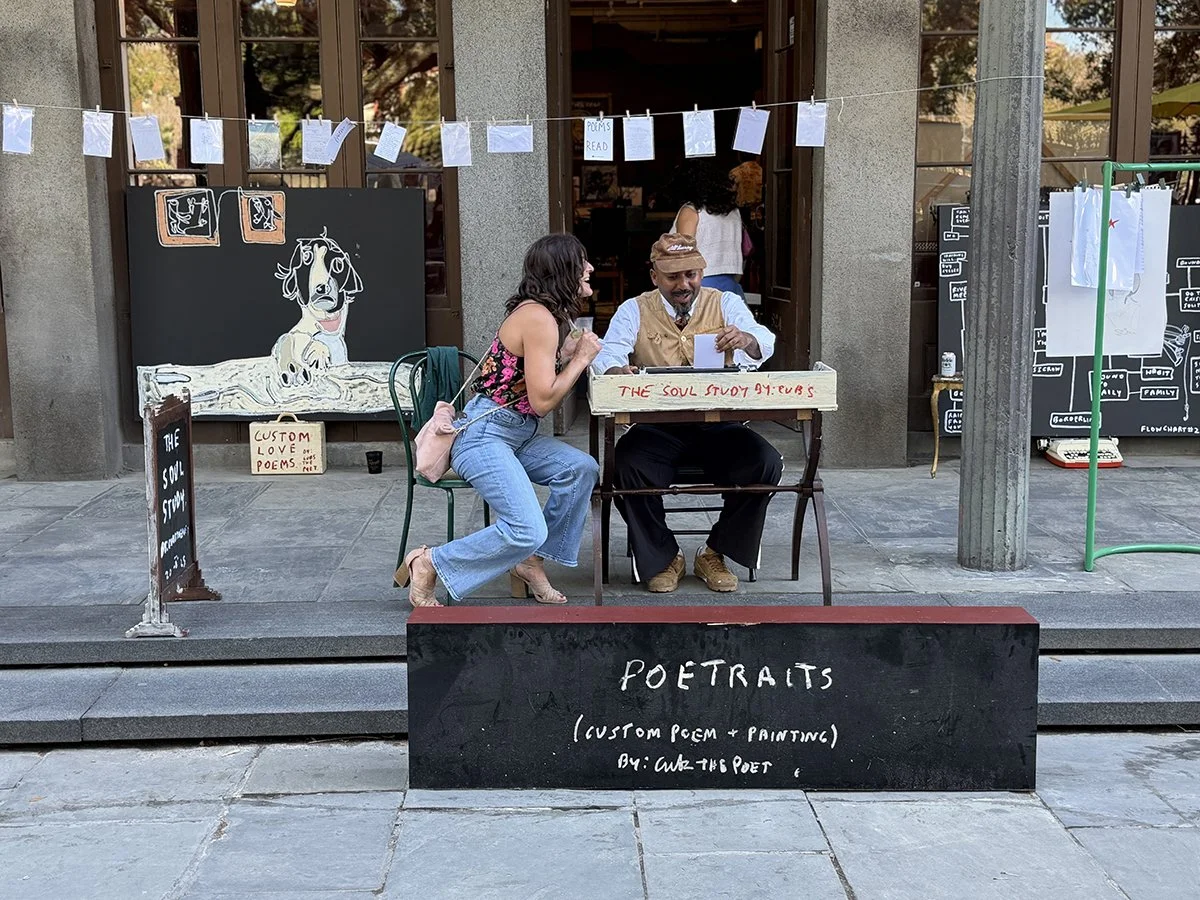
Cubs at work in front of the Soul Study Poetry Store
“As I was sitting on the street, I was thinking ‘I want to have a poetry store,’ not knowing what that meant, not having any inspiration or models to follow, it was just an idea, a vision of having a store centered around poetry.”
Though he was born in Baton Rouge, Davenport spent most of his youth just outside our nation’s capital in Frederick, Maryland. Raised by an Indo-Trinidadian mother and Black father, he often had difficulty fitting in with his peers and instead, retreated into the role of an observer, absorbing the world through the people surrounding him.
“I just remember as a child that the first thing to do was to listen and feel what people were saying,” explains Davenport. “I believe subconsciously the things I would focus on were just the feelings I would have about the relationships around me.”
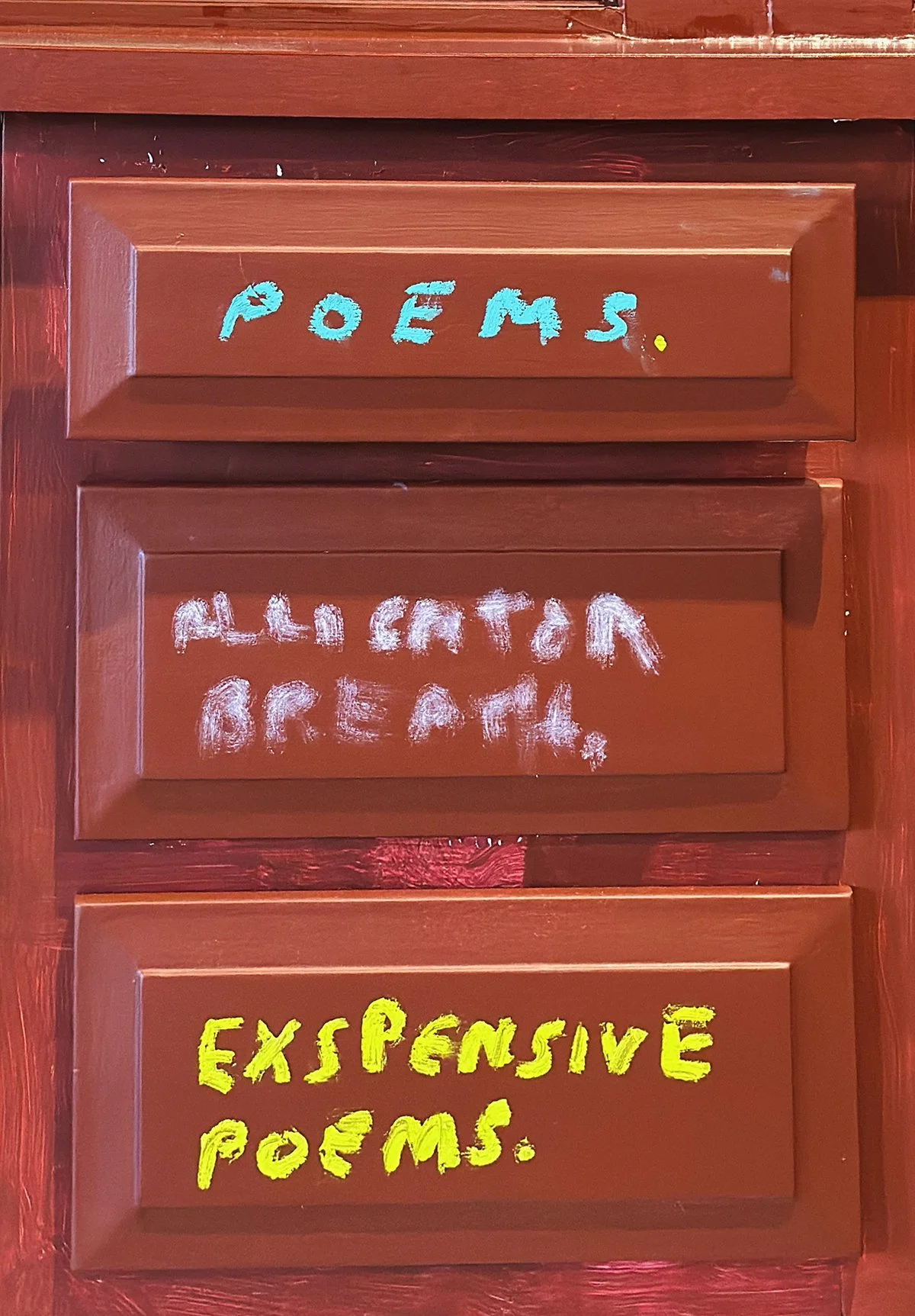
Drawers in Cub’s Pontalba building poetry store, labeled Poems, Alligator Breath and Expensive Poems
After graduating high school in Maryland, Davenport returned to Louisiana to pursue a degree in psychology at Dillard University. There he discovered books by psychologists and philosophers – such as Alfred Adler, Albert Camus and Ralph Waldo Emerson. Their beliefs encouraged forging one’s own path through life, writing one’s own story.
“What really made me believe in myself was that [these writers] thought that they had enough capacity to create a school of thought that we all subscribe to … how these people think in a way that applies to all of us. So I thought, ‘What is it that I believe and think?’”
Inspired by everyday interactions – from recollected car rides passed in silence with a reticent grandfather to random conversations overheard on the street – Davenport pinpoints his first urge to speak his truth through poetry after reading Ralph Waldo Emerson’s essay “Self-Reliance.”
“When you read and fall asleep, supposedly, what you read ferments in your brain. So I woke up [from a nap] under a Ginkgo tree in Maryland and said to myself, ‘Okay, I’m ready to be a poet.’”
Davenport wrote his first poem titled “Do You Like Poetry?”, a work that propelled him forward, taking his words to the visitors and residents of Royal Street. He shared his poems, received feedback and wrote about his interactions.
“I started feeling this fulfillment of meeting people and connecting that I wasn’t getting at school. Getting an A did not fulfill me the way connecting with people and writing poems did.”
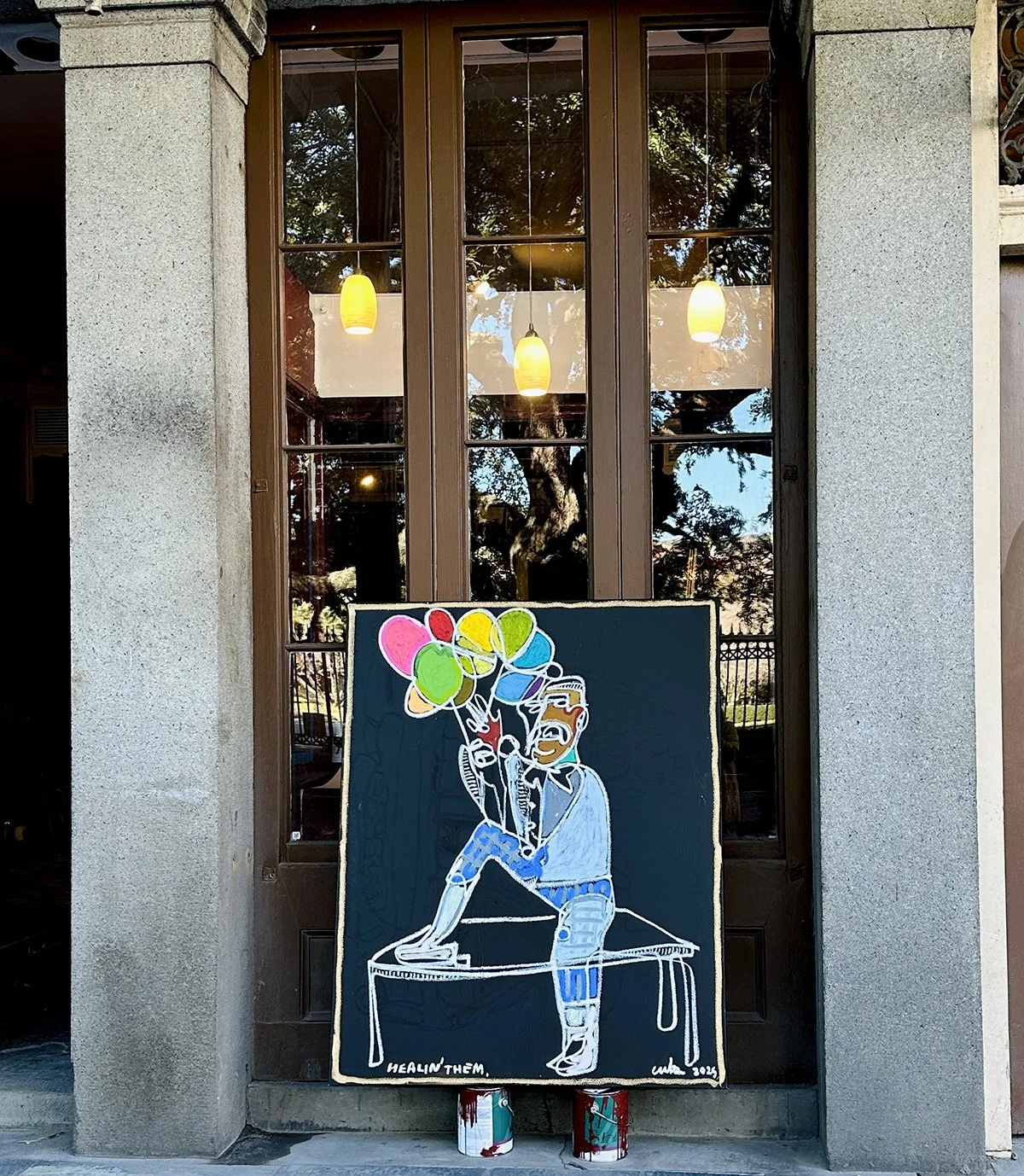
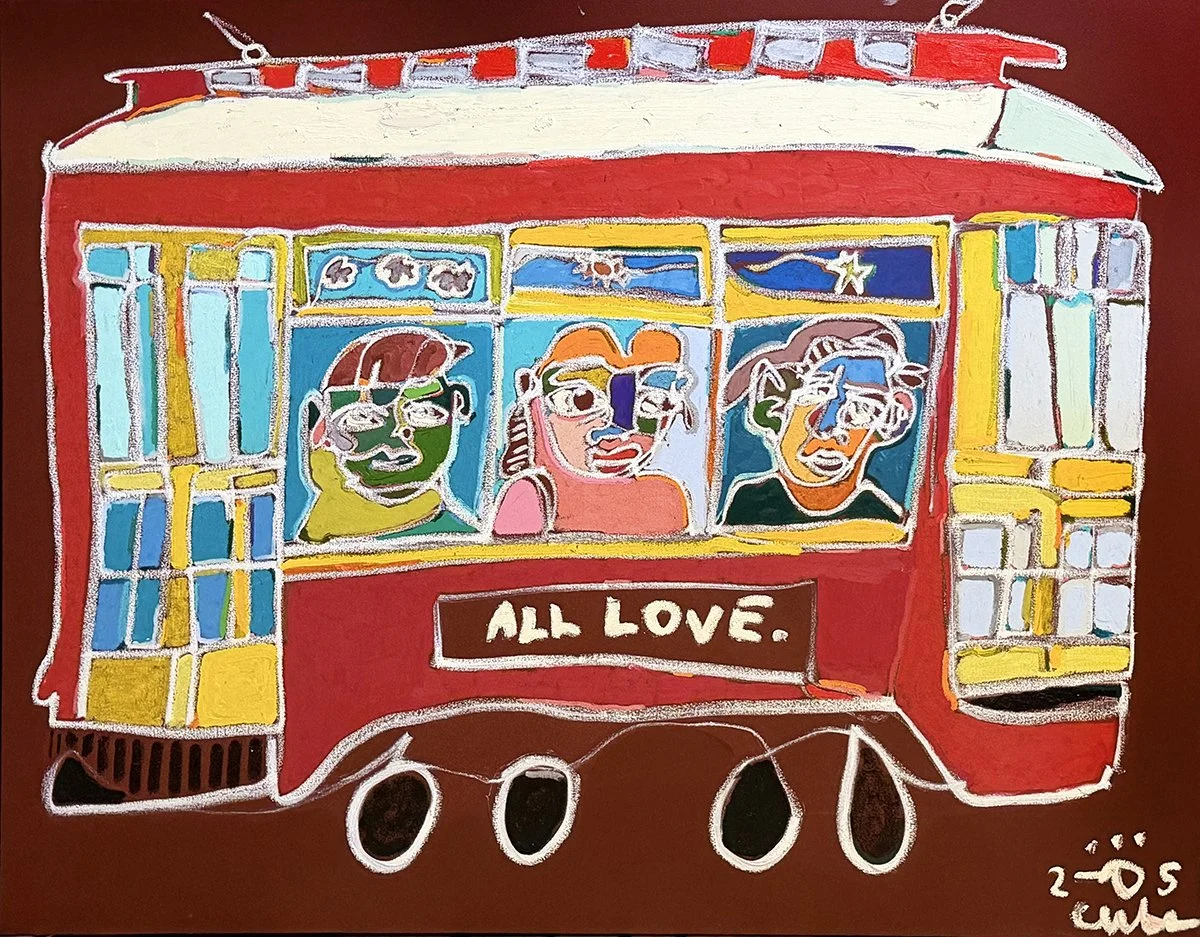
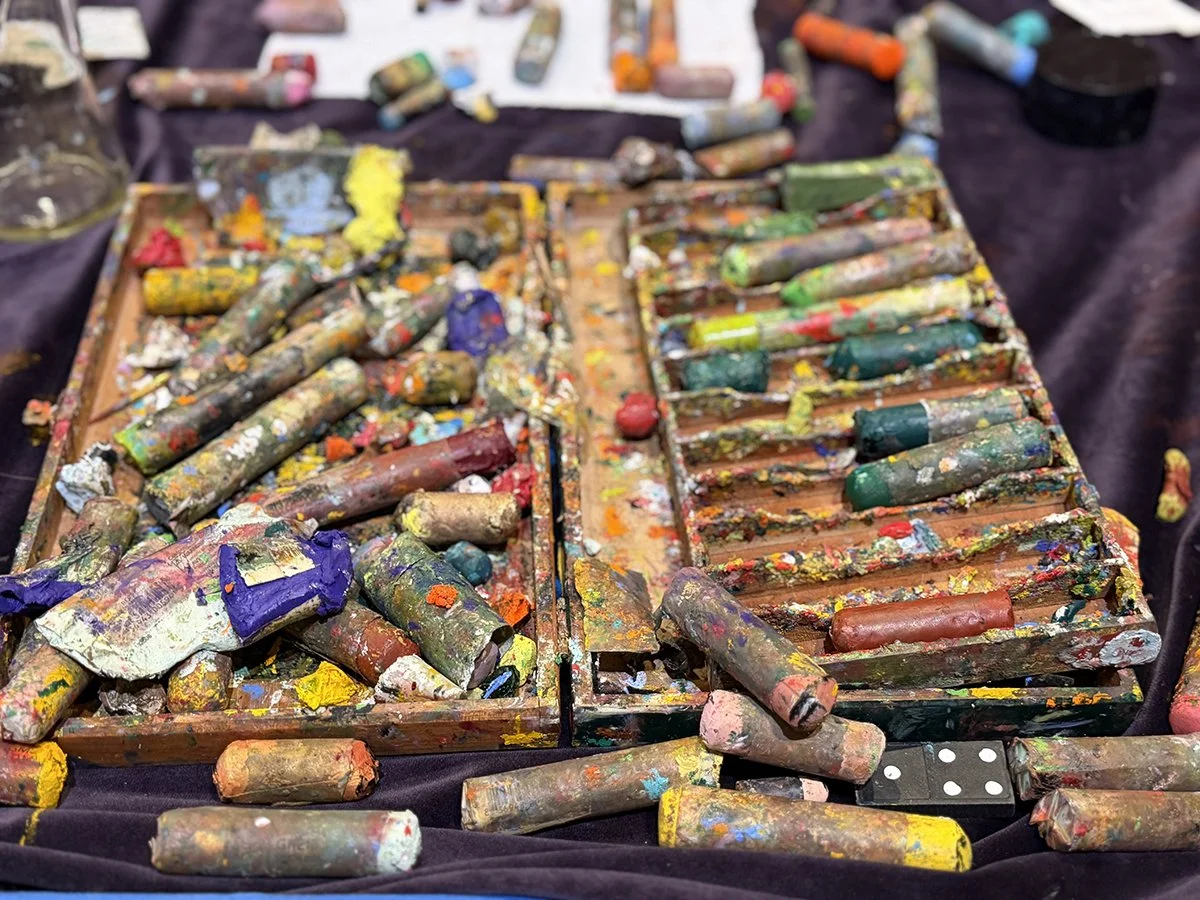
After several years, Davenport felt his poetry needed more than words, supplementing his poems with drawings, moving on to watercolor and finally oil on canvas. Using an observational art technique called blind contour, he focuses on his subject while his hand creates the image in one continuous line.
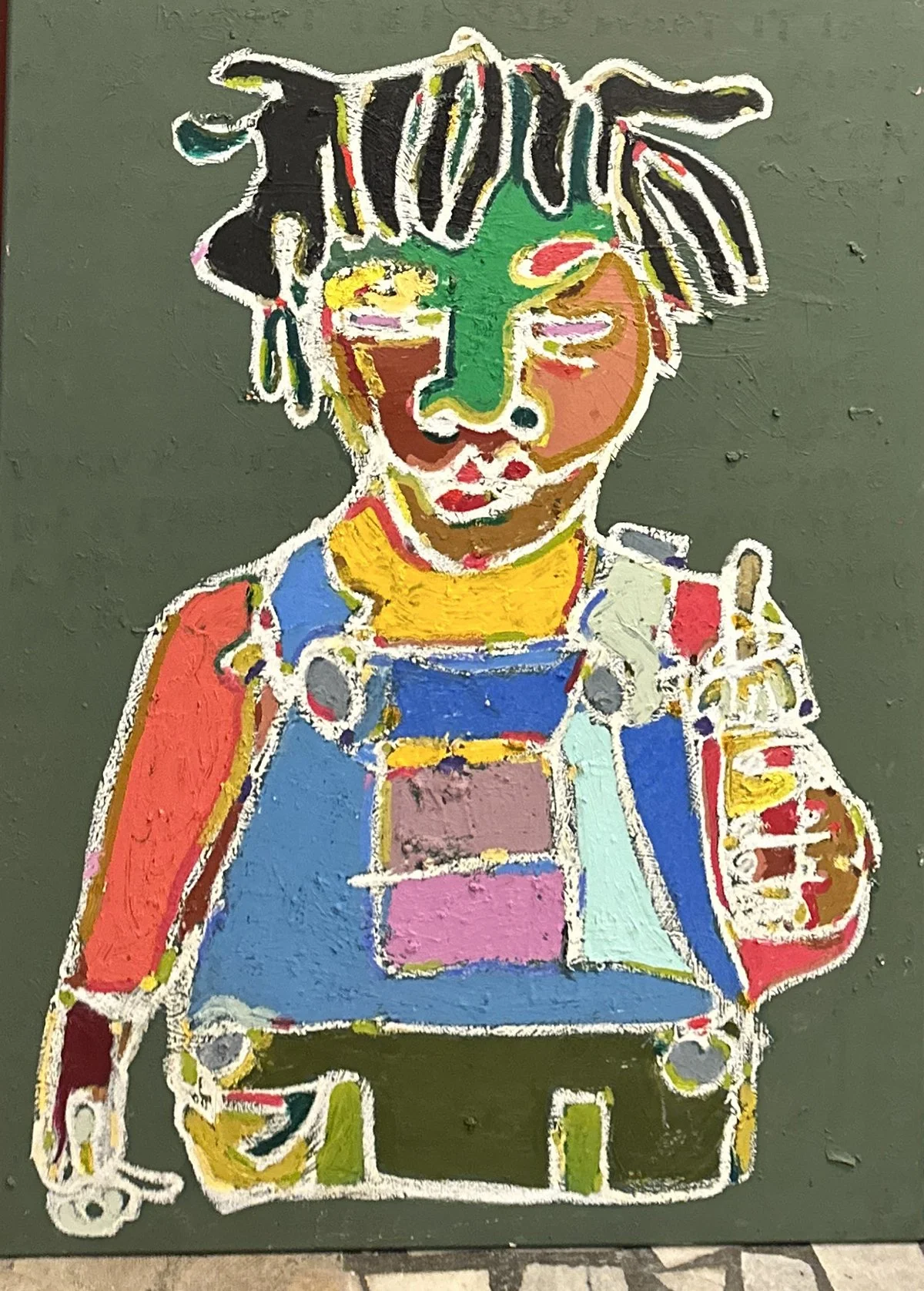
“I owe a lot of my creativity to my grandmother who was the first person to encourage me. She would draw little characters on our birthday cards. Some of the figures I paint are inspired by her.”
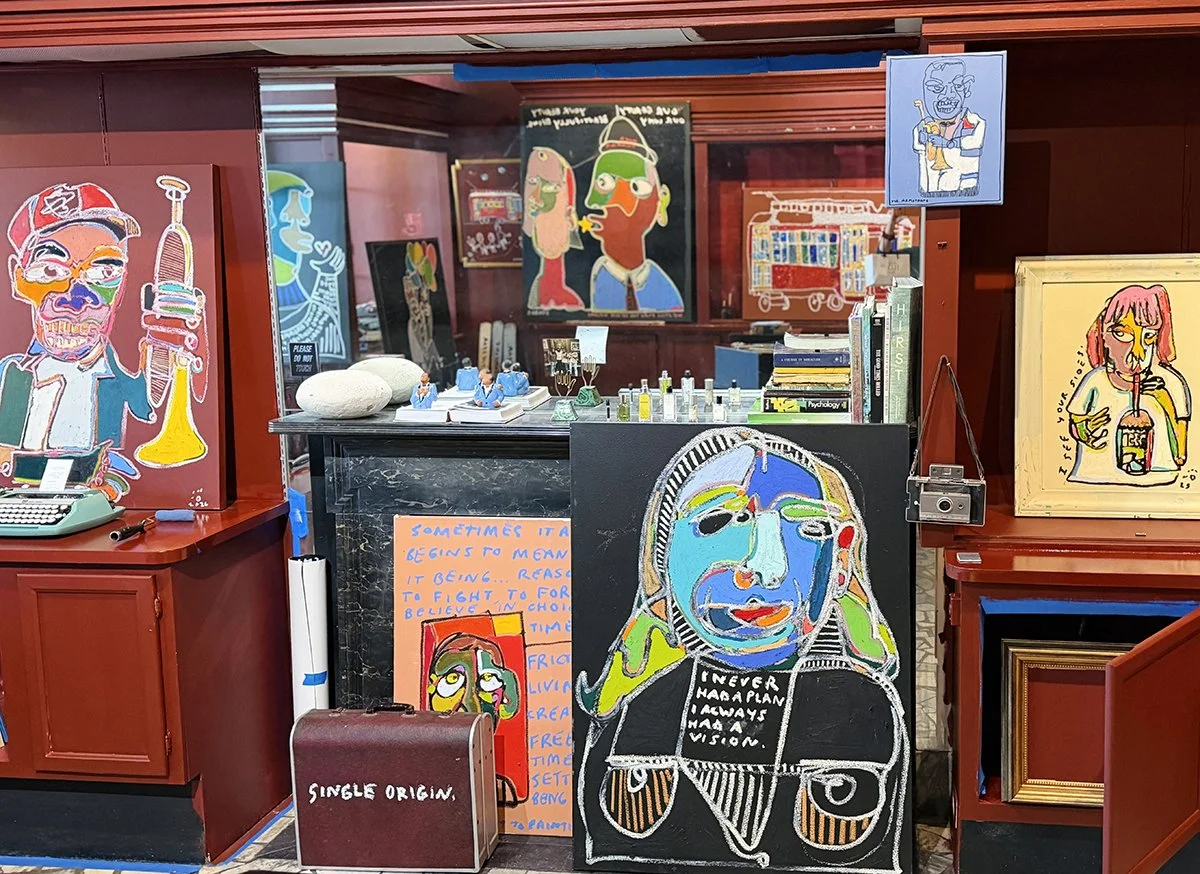
Some of the figures painted by Cubs are inspired by his grandmother’s drawings.
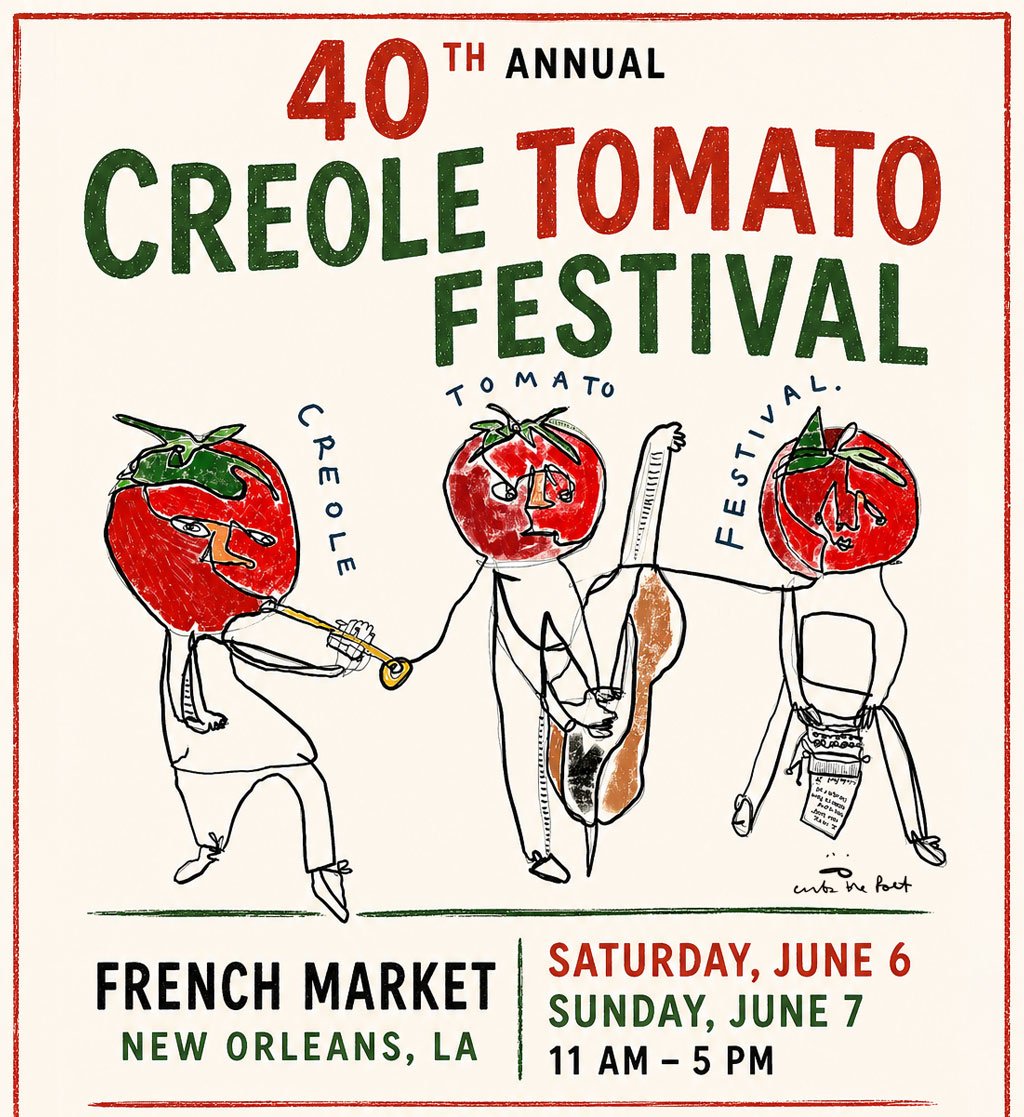
The poster for the French Market’s 40th anniversary Creole Tomato Festival this year features original artwork by Cubs
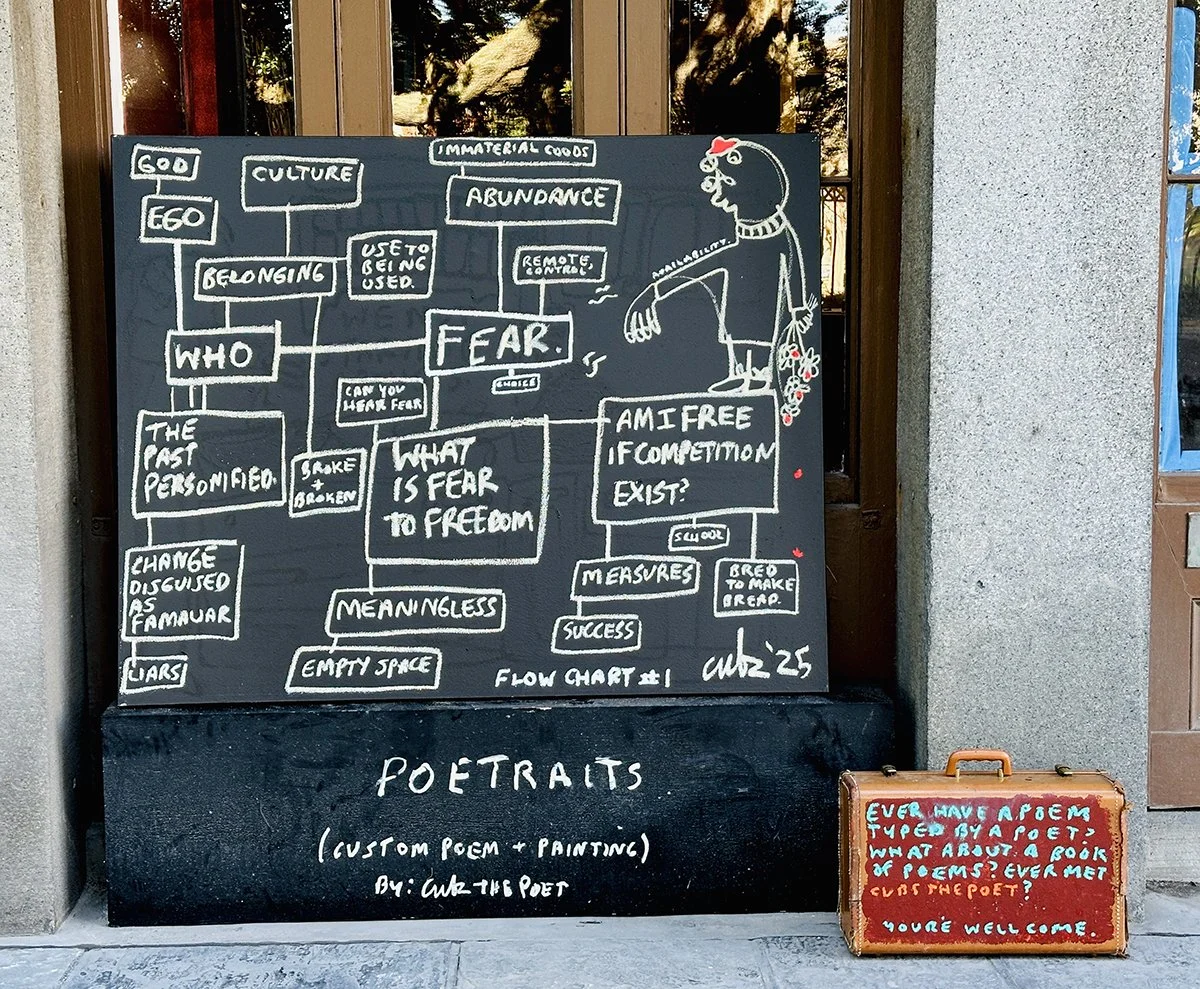
His single-lined stream-of-consciousness painting resonates with the improvised street poetry he composes on a vintage typewriter. “I’m not thinking about what I’m feeling, I’m just typing it,” says Davenport.
The clack of the keys hitting the paper and the buzz of the carriage return … vintage typewriters have a certain rhythm missing from today’s computer keyboards, a characteristic that appeals to Davenport. “What I love about that is it plays with your thought process, slowing it down or speeding it up.”
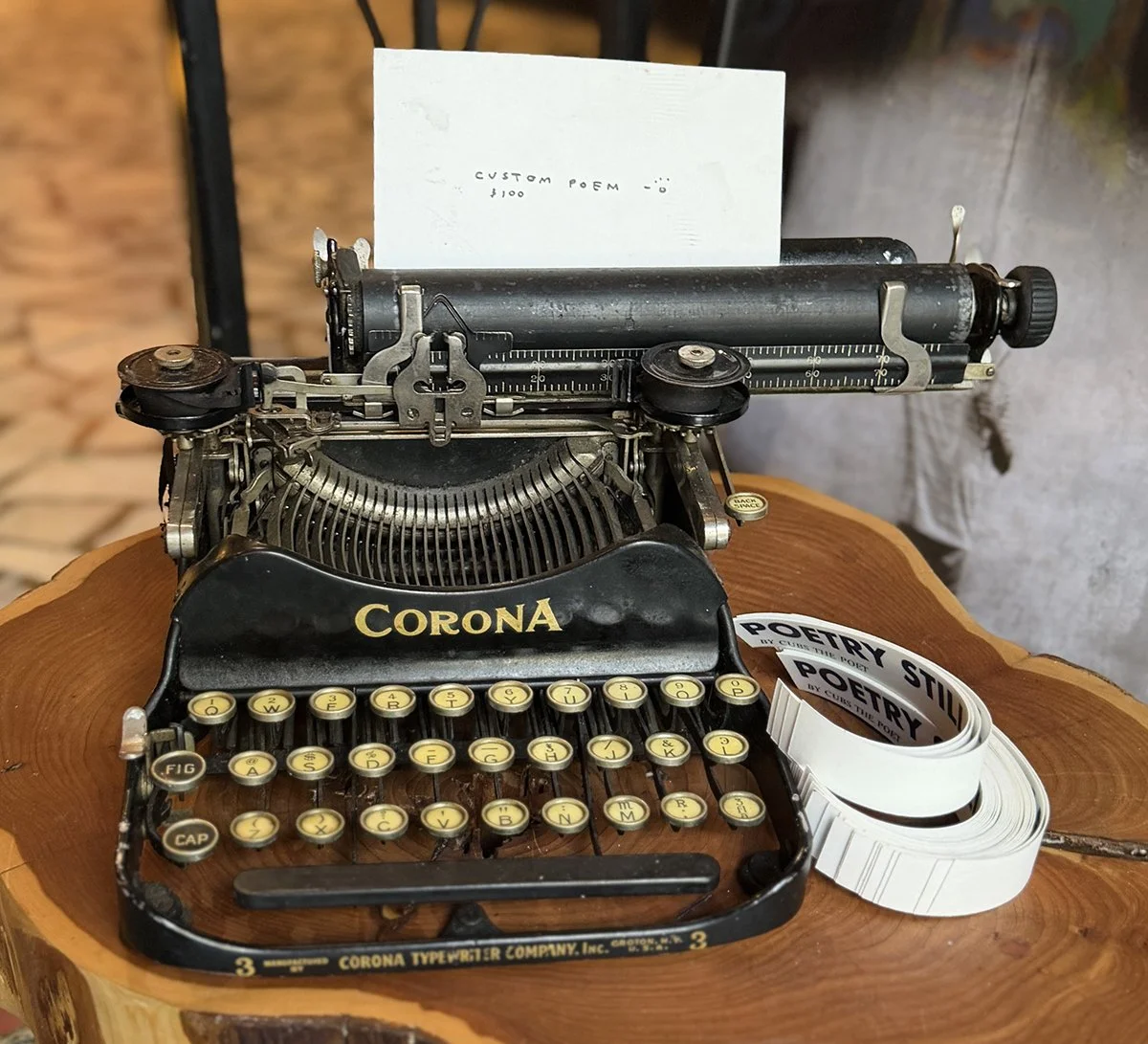
Recently, he’s incorporated that rhythm into a band called Free Therapy that went on a mini-tour of the city several years ago. At Preservation Hall, Hotel Peter & Paul and The Columns, Davenport “plays” with the band, typing alongside the music, writing poems in rhythm for the audience.
“One lady at The Columns wanted us to write a poem for her son, who was battling addiction. After the show, she was surrounded by people sharing their stories and I was moved. I thought ‘This is therapy.’”
Expressions of love, healing and personal insight can now be found all in one place at The Soul Study Poetry Store, Cubs’ new poetry shop/studio in the Upper Pontalba that formally opened this year on Mardi Gras Day. “I hung my sign up, that made it official.”
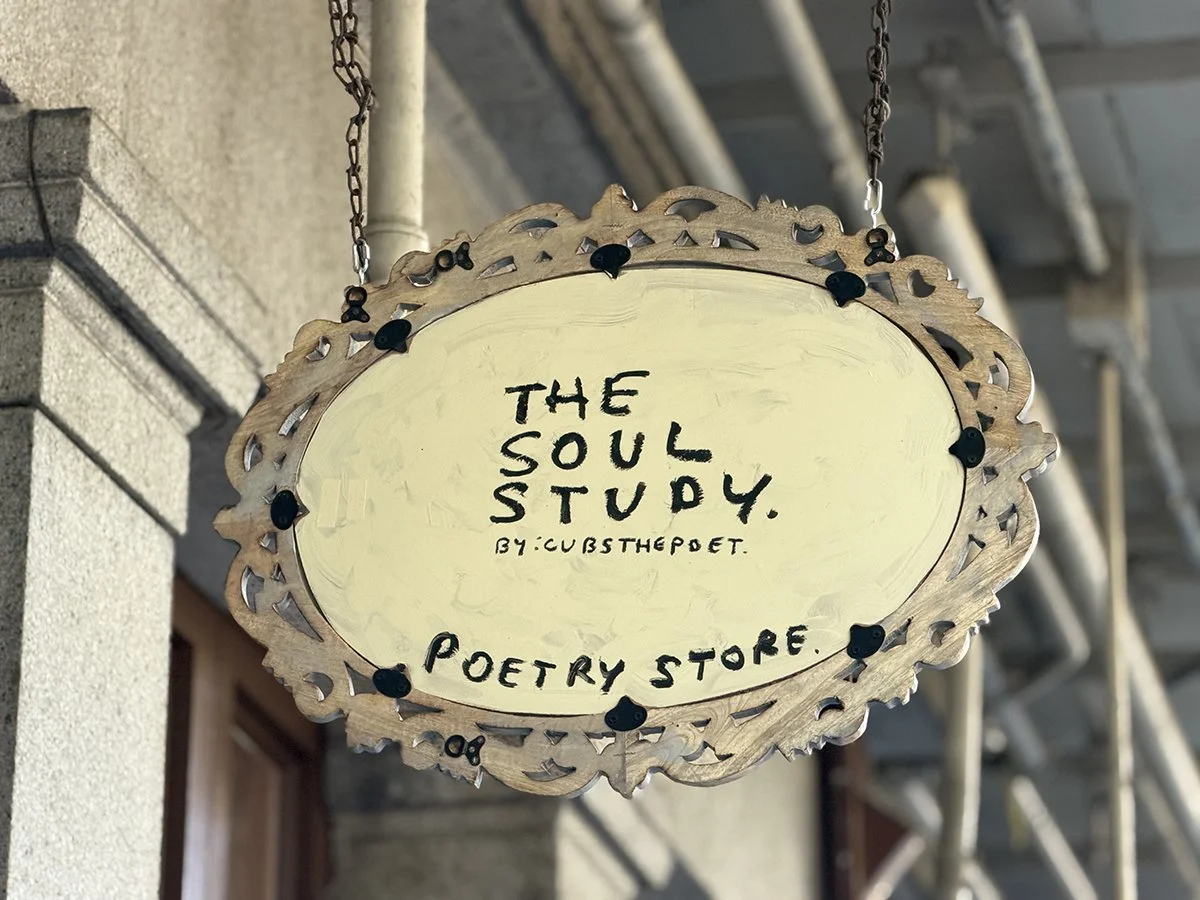
The poetry store opened on Mardi Gras day after Cubs hung his sign
Along with his poetry and paintings, Davenport also offers larger projects which he calls “soul studies,” entire books of poetry dedicated to a loved one who passed away or a couple celebrating their wedding day.
“A ‘soul study’ is based on everyday life, not highlights or milestones. What’s so unique about the book is that it’s not just their input, they can send friends or family to share a story that I can put into poems.”
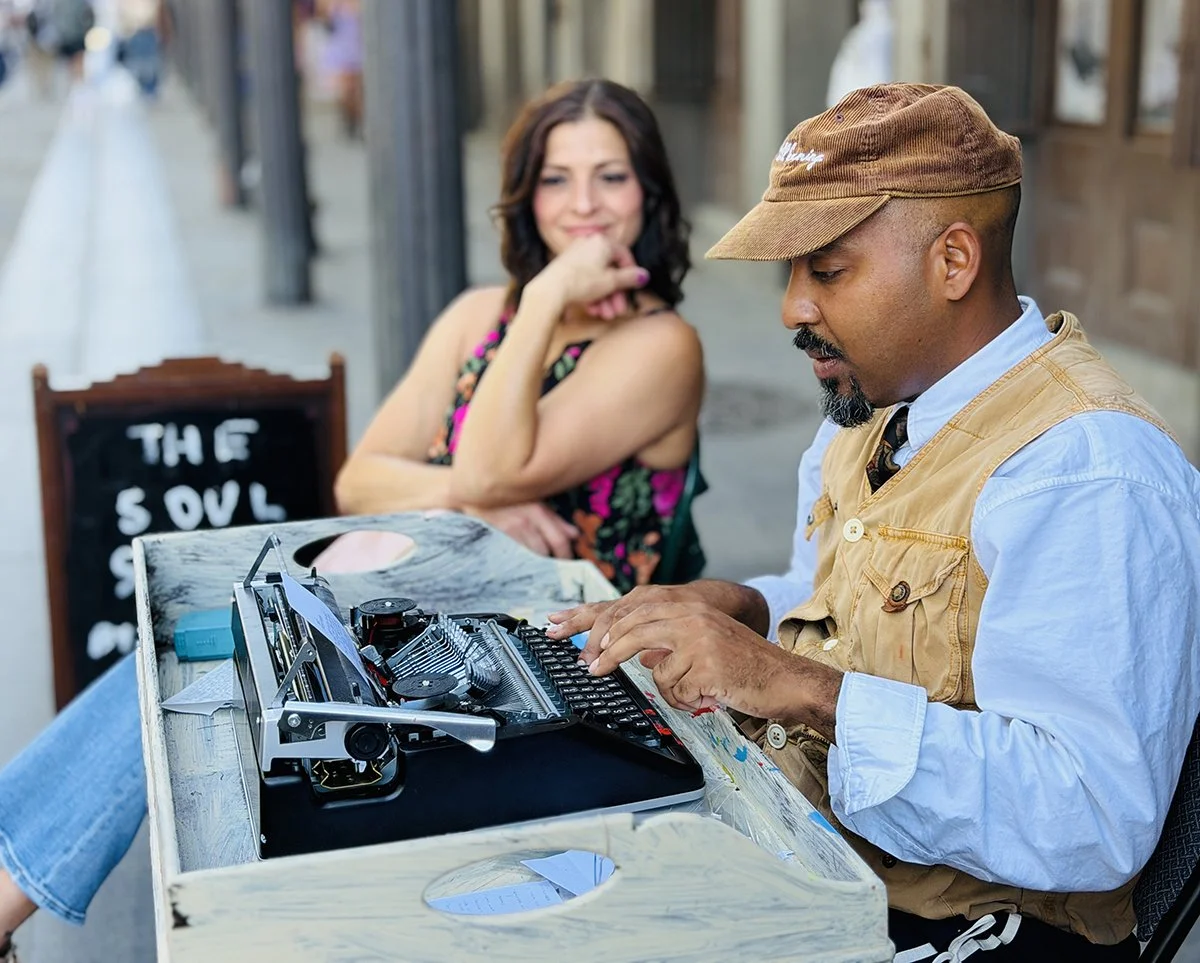
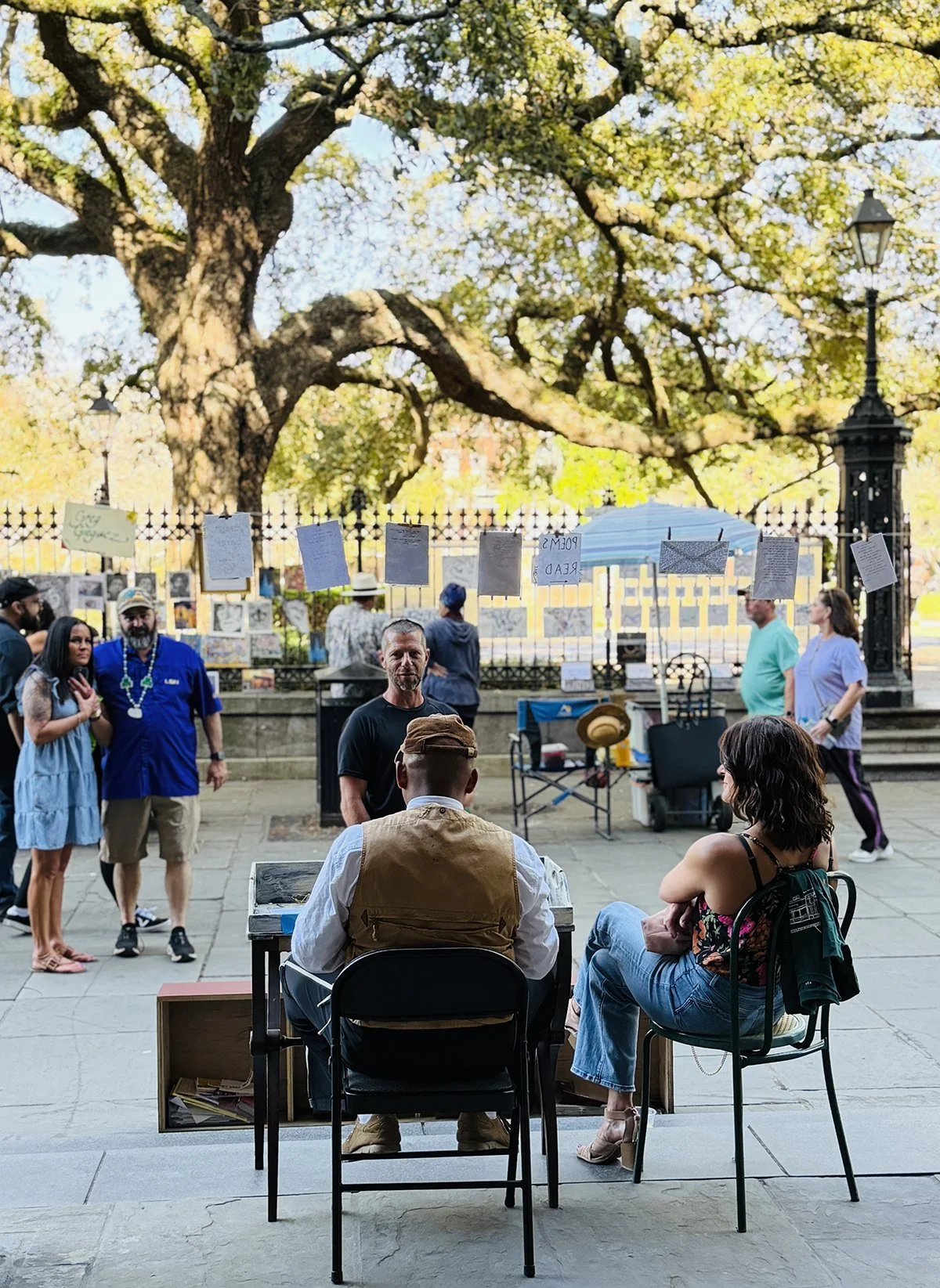
Looking from Soul Study’s doorway toward the Jackson Square park, while Cubs is writing for a visitor to the Quarter.
Painted a rich, chocolate brown, the walls exhibit his paintings and provide a backdrop for his faithful typewriter, where he still creates his spontaneous poetry for visitors popping in.
“One lady walked in with her two daughters and there was just my typewriter in here and a few paintings, and she started to cry. Through talking to her, I said it out loud for her, I said ‘This is a dream come true,’ and she said that’s what she was picking up.”
“I like to be present in those connections because I struggled with those early childhood experiences of not being able to fit in and belong. And now I’ve created a space where people feel like this is a sort of haven. I want people to read the room and trust me to help open their book… to share who they are.”
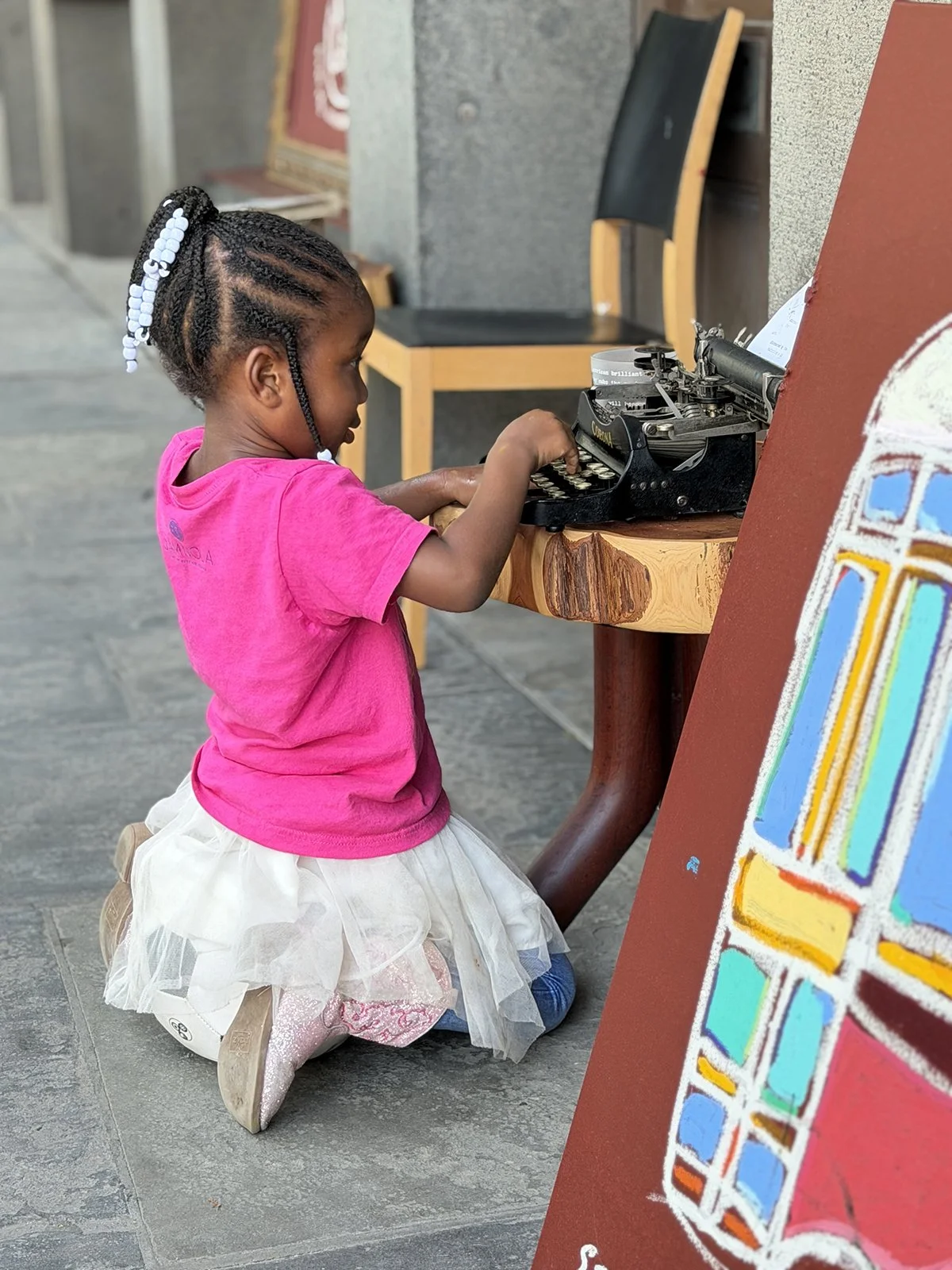
A budding poet inspired by Cubs.