Lafcadio Lives: A New Festival Honors Often Overlooked Writer
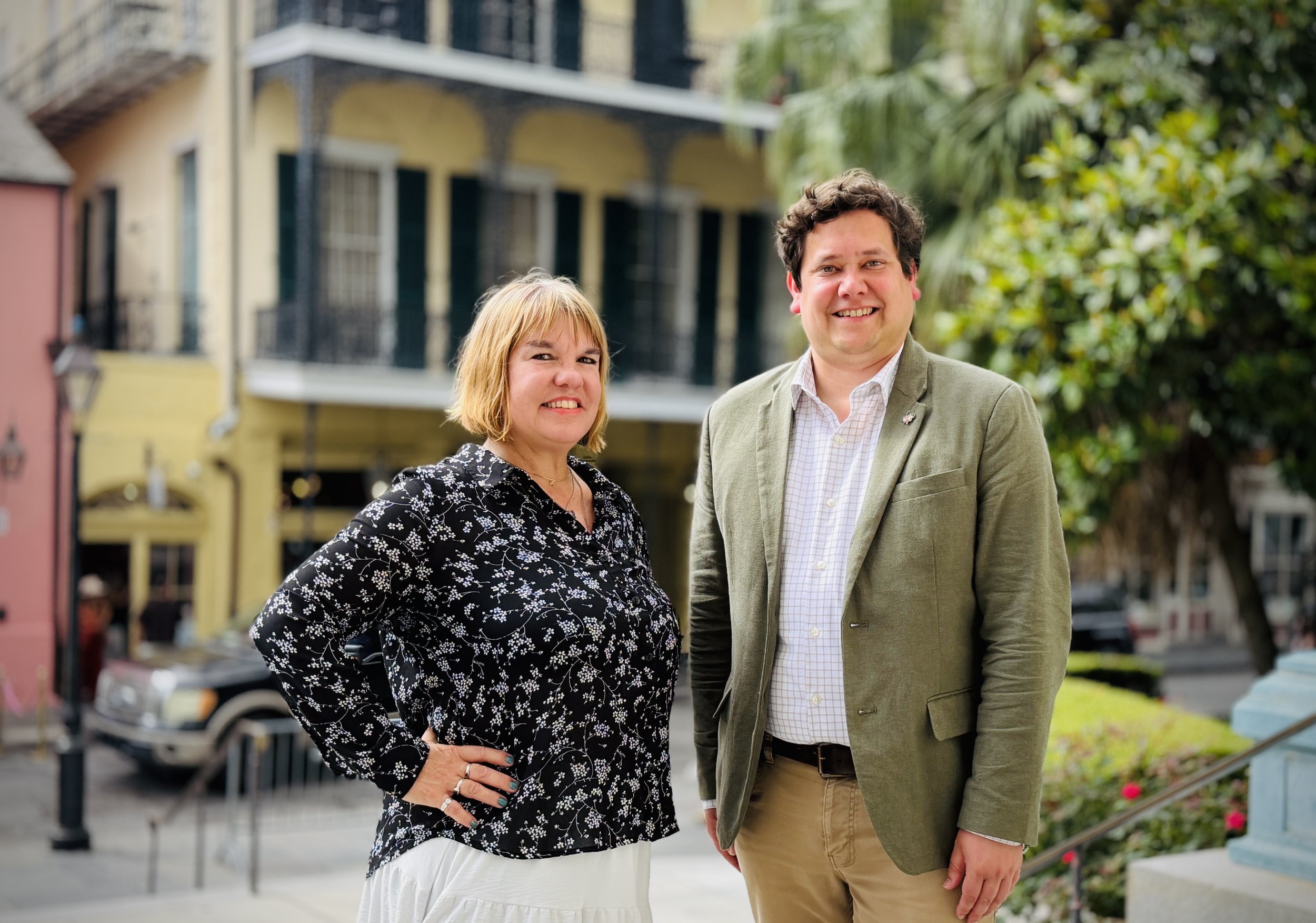
Founders of the new Lafcadio Festival: Amy Kirk Duvoisin and Matt Smith, photo by Ellis Anderson fr FQJ
June 2026A new festival celebrating legendary New Orleans writer Lafcadio Hearn and the city’s ties with Japan is the brainchild of Amy Kirk Duvoisin, founder of the beloved Joan of Arc Parade.
– by Kim Ranjbar

This column is underwritten in part by Matthew Peck Gallery
If you Google the name Lafcadio, a top result offers pronunciation help: laf-KAH-dee-oh. But if Amy Kirk Duvoisin has her way, Lafcadio Hearn’s name will soon be rolling off the tongues of thousands of new devotees.
Lafcadio Fest, an inaugural celebration dedicated to the historic writer, will take place at the New Orleans Jazz Museum on Saturday, June 20.
Thanks to Duvoisin’s partnership with the Japan Society of New Orleans and Hearn scholar Matt Smith, Duvoisin conceived and kickstarted the festival – one that she hopes will become an annual gathering.
“Every writer who has ever lived in city has contributed to the New Orleans ‘brand,’” says Duvoisin, “but Lafcadio doesn’t always get the credit he deserves.
“So much of the mystique that draws people here was created by him. Yet, he’s still not the first person people think of when you say ‘writers who lived in New Orleans’. It’s high time we paid him his due!”
Patrick Lafcadio Hearn was a journalist, author, translator and artist best known for introducing the culture of Japan to the Western world. The writer was born on the Greek island of Lefkada in 1850. Early in life, he was abandoned by his parents, and later his caretakers. An injury to his left eye rendered him partially blind.
Before moving to Japan in 1890, Lafcadio Hearn lived in New Orleans for nearly a decade (1877 - 1887), writing prolifically for local newspapers such as The City Item and the Times Democrat. He also created satirical cartoons to accompany his columns – a first for southern newspapers – using hand-carved woodcuts. Many of his writings contributed to the lasting myths about our city, but he remains relatively unknown to the local community.
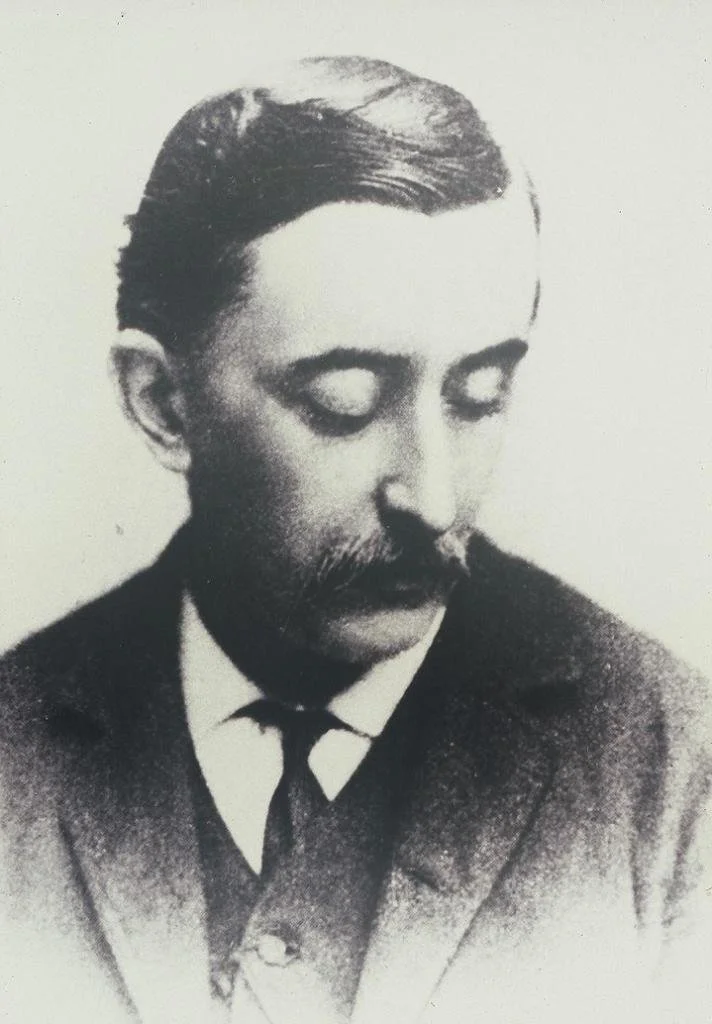
This undated photograph of Lafcadio Hearn was taken by Frederick Gutekunst. public domain
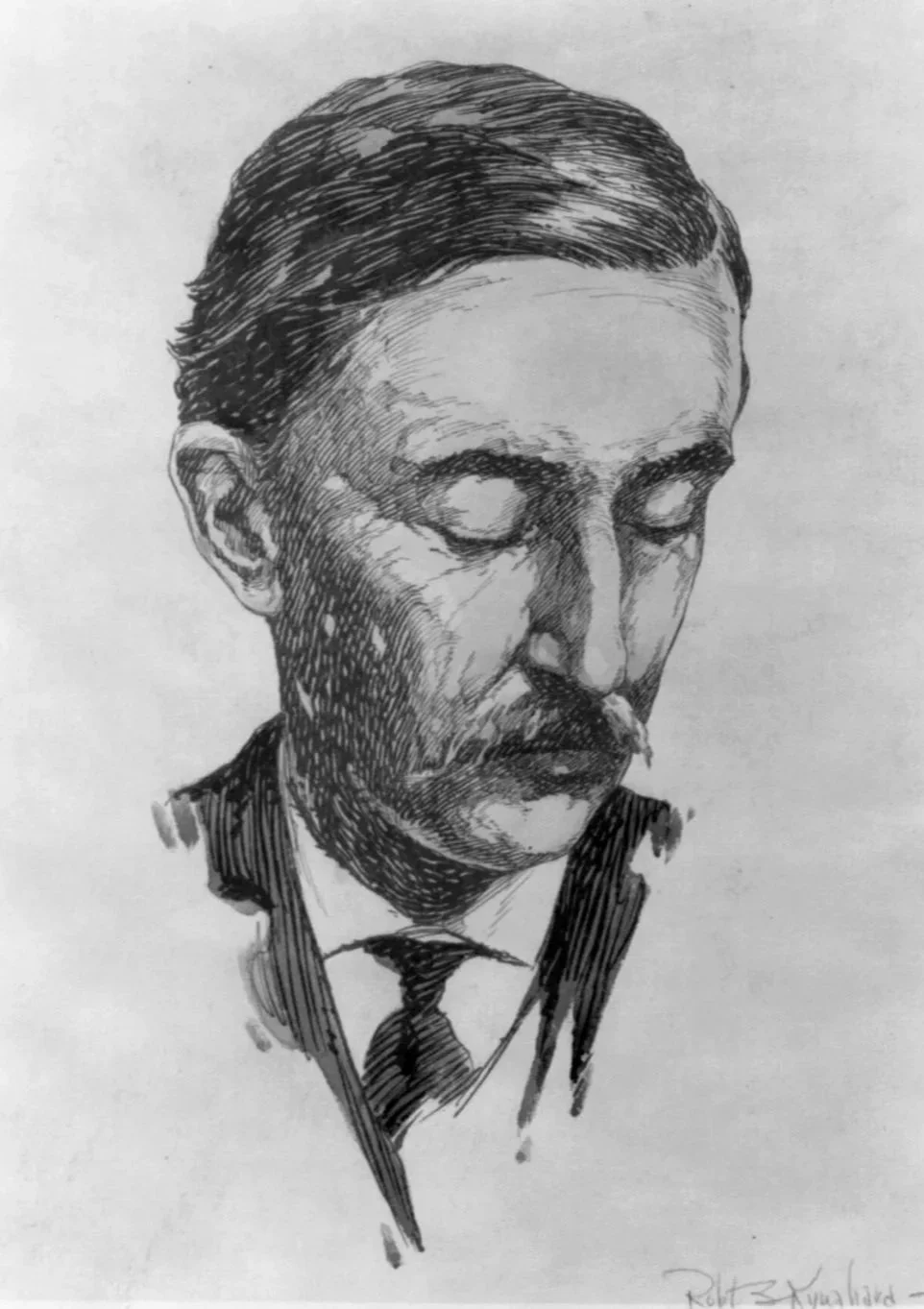
The drawing from the photograph was created in the 1930s by William Edwin Rudge, Library of Congress
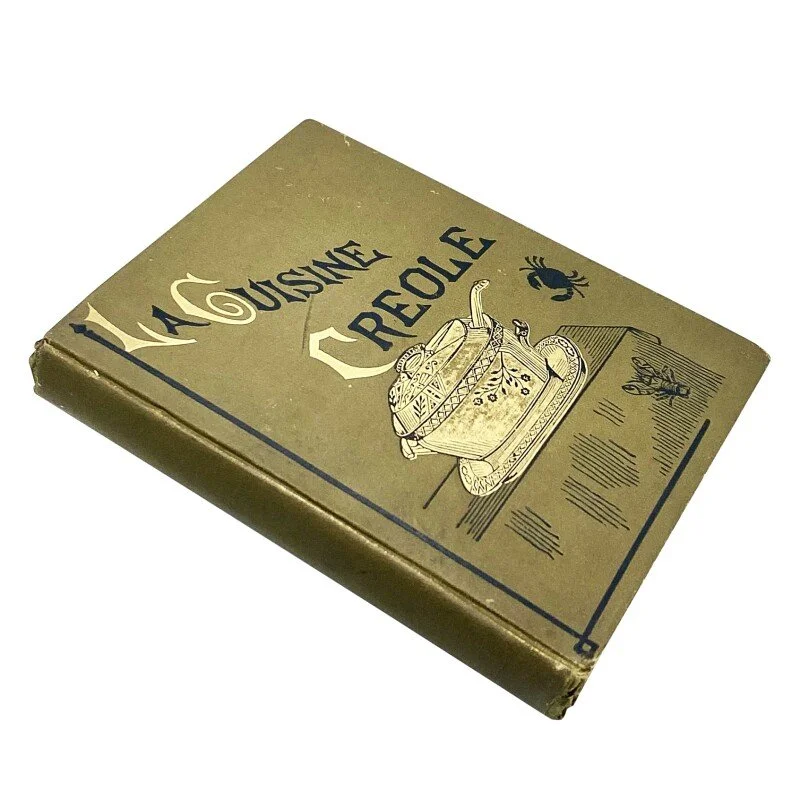
First editions of the Hearn’s cookbook are extremely collectable, like this one, available from Sotheby’s for $2500.
Like Hearn, Duvoisin also came to New Orleans and was smitten. She grew up in Ohio, earned her master’s degree in playwriting from San Francisco State University, then lived in Providence, RI, for two years, working as a teacher, playwright and community service organizer. Her first New Orleans’ job at Pelican Publishing served as an ideal place to learn about the city’s history.
“I was reading a lot about early New Orleans and Lafcadio Hearn was always in the mix. He was famous for his Creole cookbook [La Cuisine Creole: A Collection of Culinary Recipes from Leading Chefs and Noted Creole Housewives]. And I always found his quotes about Ohio very amusing.”
Duvoisin is referencing a quote from a letter Hearn wrote to a friend shortly after moving to New Orleans from Cincinnati.
Times are not good here. The city is crumbling into ashes. It has been buried under taxes and frauds and maladministrations so that it has become a study for archaeologists...but it is better to live here in sackcloth and ashes than to own the whole state of Ohio.
Lafcadio Hearn in the French Quarter
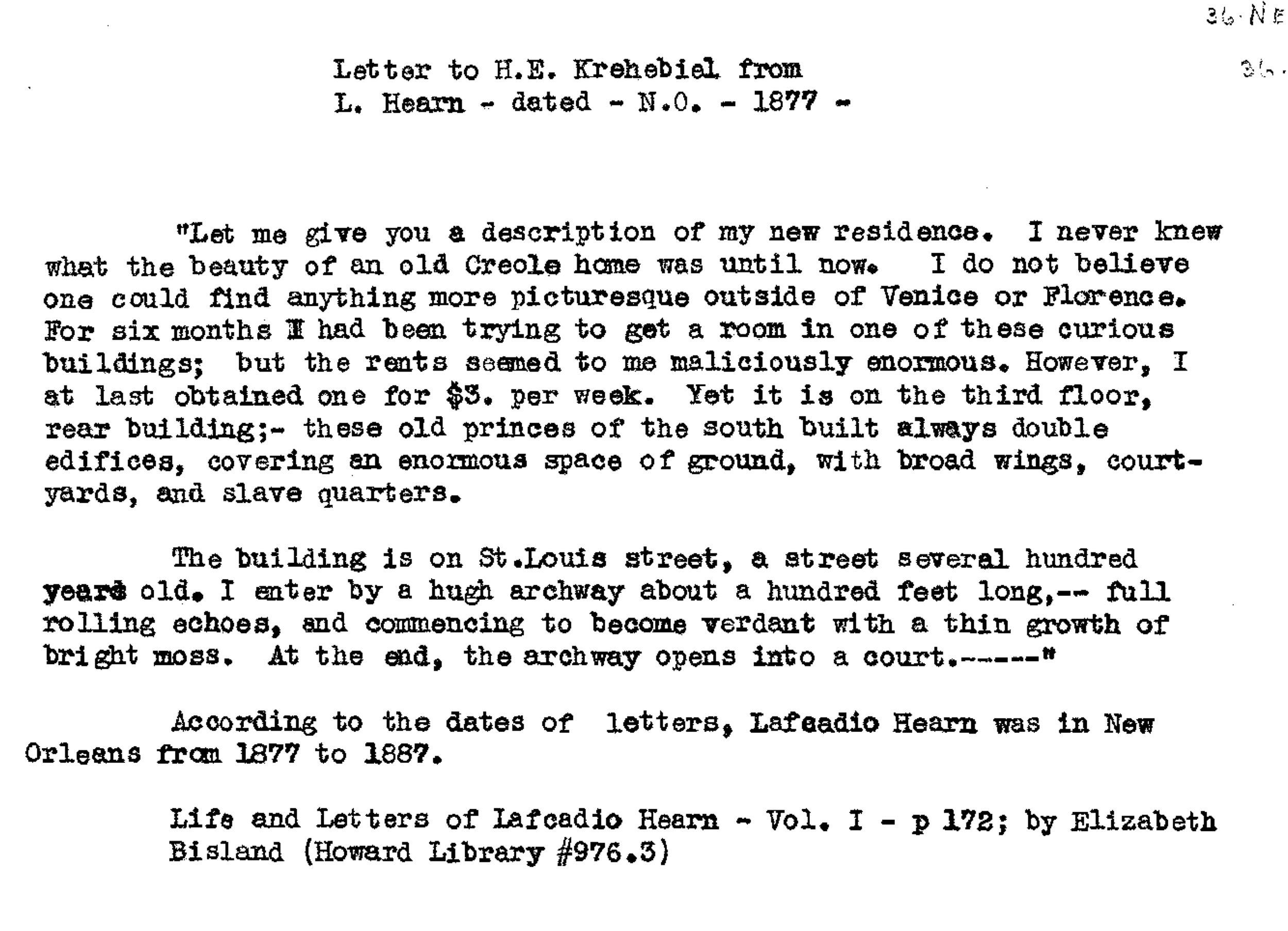
In another letter, Hearn waxes poetic in his description of his French Quarter apartment. Library of Congress

Noted photographer Arnold Genthe took this photograph in 1920 - 1926, notating that it was Lafcadio Hearn’s residence. Is it the building on St. Louis Street that Hearn references in the letter above? If you can identify this building, please write us! Library of Congress
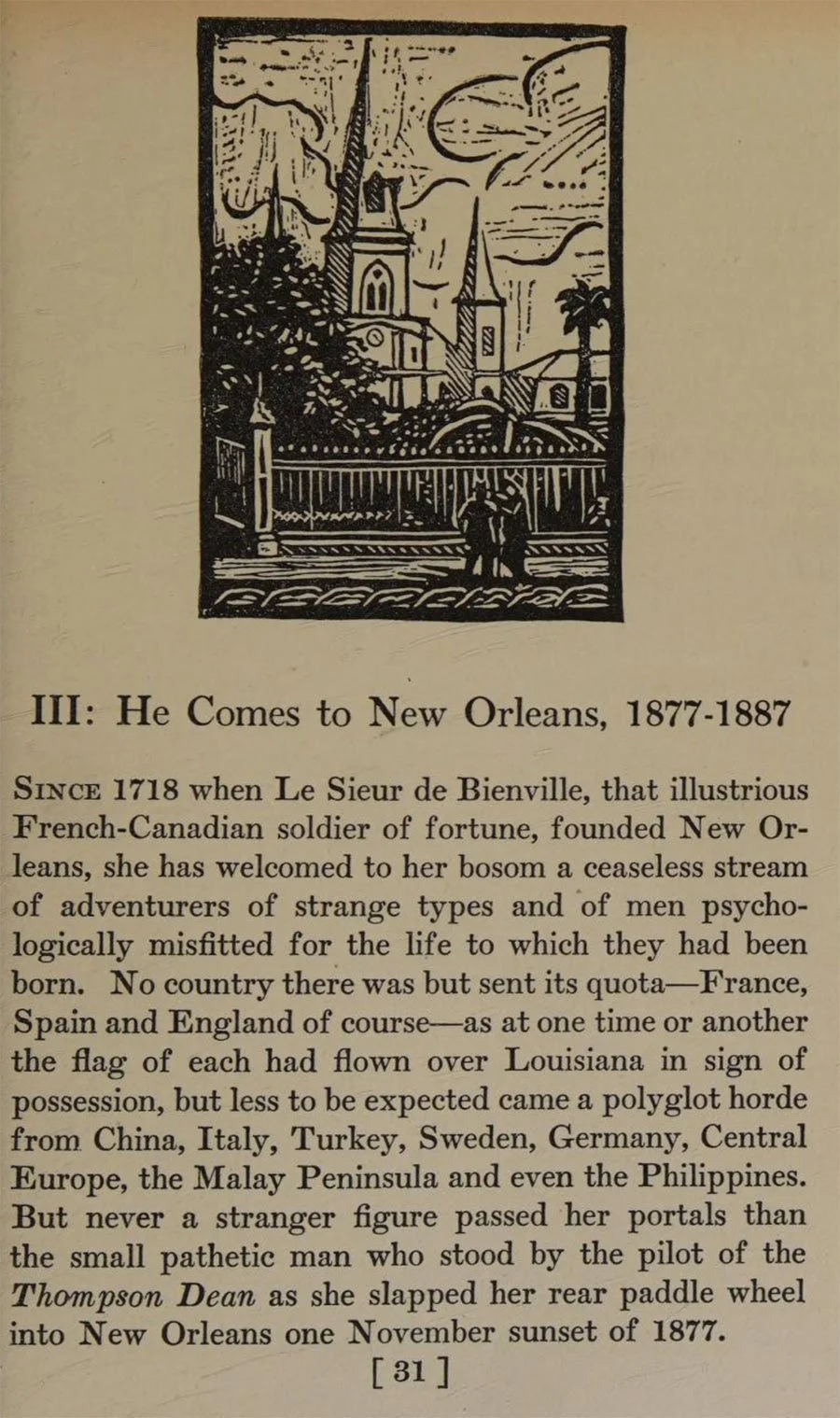
From the book Lafcadio Hearn’s American Days by Edward Larocque Tinker, published in 1924. See end of story for digital access
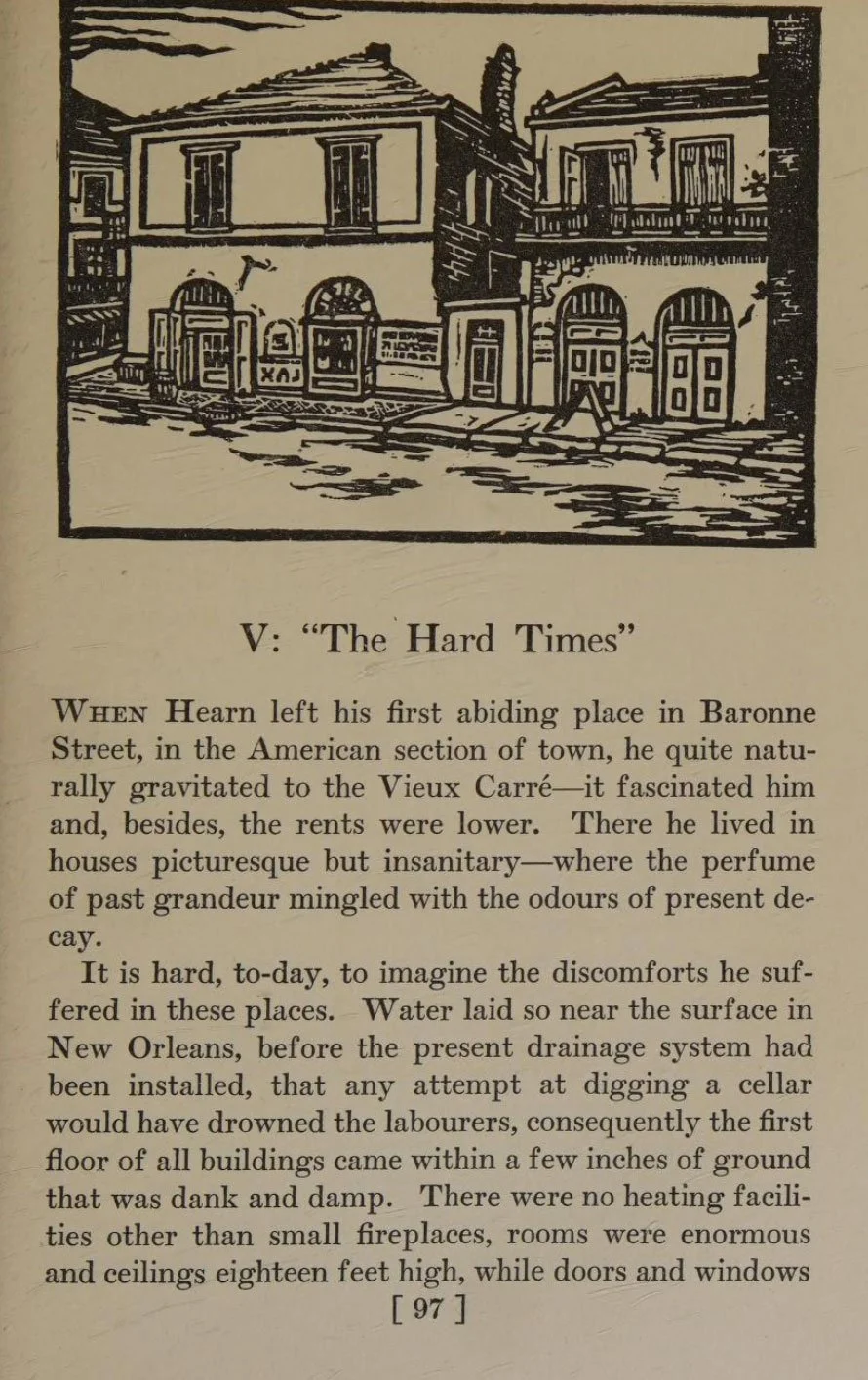
From the book Lafcadio Hearn’s American Days by Edward Larocque Tinker, published in 1924. See end of story for digital access
Duvoisin took Hearn’s advice to heart, although she’s spurned the sackcloth and ashes: she’s made a career out of supporting the arts and culture of New Orleans – from handling marketing for The French Market Corporation and Jefferson Performing Arts Society to creating special programming at the Louisiana Children's Museum.
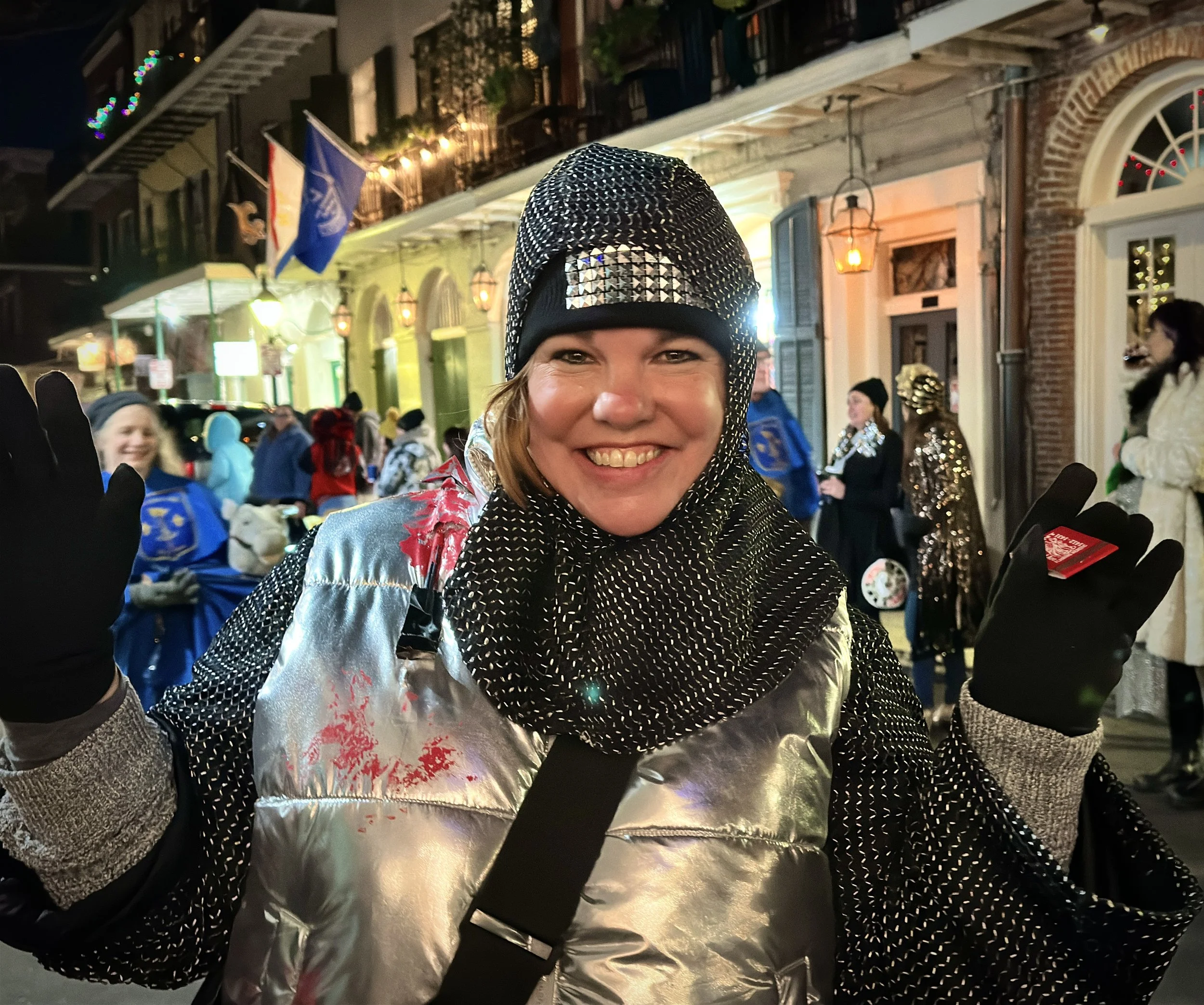
Amy Duvoisin Kirk in the 2025 Joan of Arc parade, photo by Ellis Anderson for FQJ
Duvoisin also spent ten years as a board member for the distinguished Tennessee Williams & New Orleans Literary Festival, and developed some of her closest friendships marching with the Pussyfooters dance krewe. Currently, Duvoisin spends her days as the events and sponsorship manager of the iconic local radio station WWOZ.
However, she’s best known for the Joan of Arc organization and parade she founded in 2008, where she still serves as President, managing several of their special initiatives and events throughout the year.
Duvoisin rediscovered Hearn after her mother passed away in 2021. She found comfort in his writings about Japanese approaches to death, grief, and the afterlife. Since she had several friends in the Japan Society of New Orleans, she asked if they had considered creating a Hearn-themed event.
“I kept pitching this idea because I knew the Japan Society goes to Matsue, our sister city in Japan, and that we are that sister city because of Lafcadio Hearn.”
“A friend of mine, another JPSO member, actually hosted the great-grandson of Lafcadio Hearn [Bon Koizumi] in 2024, when Rex had a Lafcadio Hearn theme,” says Duvoisin. “I brought it up again, about the deep connection with Japan and Lafcadio Hearn. Thanks to JPSO board member Duane Williams, I finally connected with Matt Smith.”
Meeting Matt Smith seemed like kismet. He is an active board member of the Japan Society and an instructor at Tulane’s Liberal Arts College and has heavily researched 19th-century Louisiana literature – including the work of Lafcadio Hearn.
“Once Matt and I got together and started talking, things came together very quickly – as things do when they’re meant to be,” says Duvoisin.
She is quick to point out that while the festival was her idea, “Matt is the real manifester at this point.” She also points to Smith as the expert on all things Lafcadio.
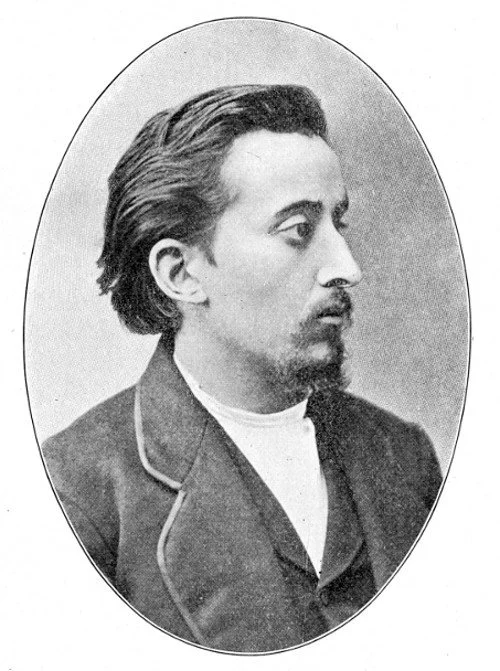
Becasue of the damage to his eye, Hearn always made sure it was hidden in photographs. This one is from 1883 (during his time spent in New Orleans) and included in the book The Life and Letters of Lafcadio Hearn, published in 1906 by Elizabeth Bisland. Unknown photographer, public domain. Access the book here.
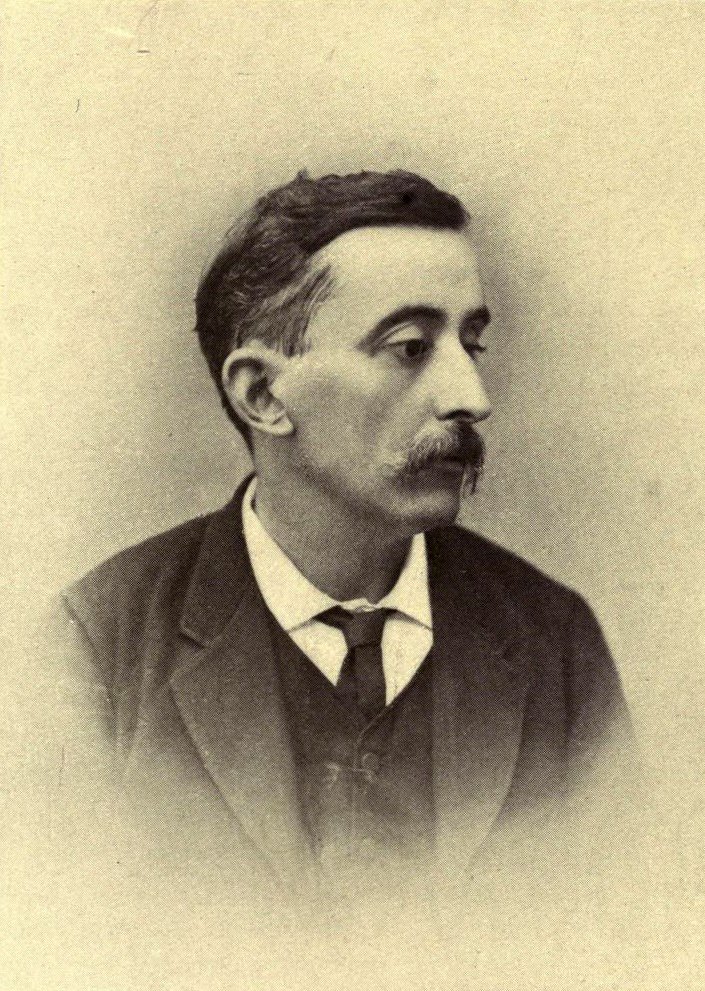
Lafcadio Hearn in 1888, shortly after he left New Orleans after living in the city for a decade. Unknown photographer, public domain
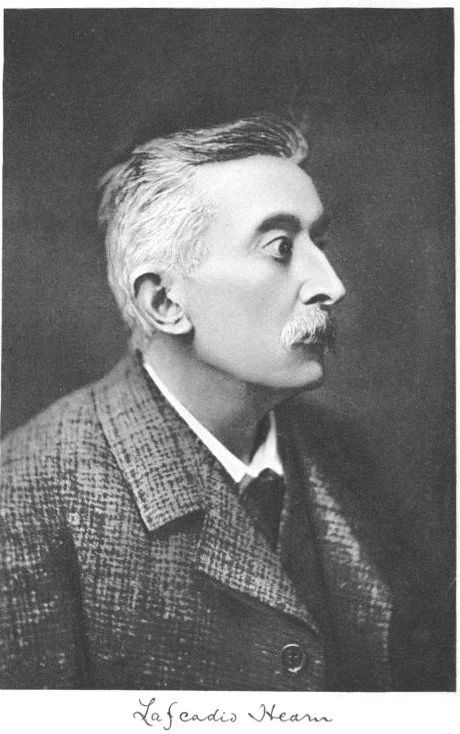
This photo was included in the book The Life and Letters of Lafcadio Hearn, published in 1906 by Elizabeth Bisland. Unknown photographer, public domain.
Matt joined the Japan Society in 2019 and in 2024, the organization sent him to Matsue, Japan, where he stayed with a host family for ten days. Smith was struck by how excited they were about Lafcadio Hearn – even though the writer only lived there for a year or two. It made Smith consider why New Orleans didn’t really celebrate the writer.
“[In Matsue] you can’t go a city block without running into some plaque about ‘this is what Lafcadio Hearn got up to here,’” explains Smith. “So when Amy came to me about the festival, I was happy to join forces with her.”“When you say his name around town, the culinary community knows him because of the cookbook, but beyond that I don’t know how wide of a reputation he has in this city,” says Smith.
“Amy and I are hoping that this festival is a way to get a little more name recognition for him out there, get larger pockets of the community more familiar with his life and work.”
The timing seems spot on – New Orleans has seen a renewed interest in the life and writings of Lafcadio Hearn. The Krewe of Lafcadio, devoted to cuisine, began marching in 2012. In 2024, Rex, one of the city's oldest (since 1872) and longest-running carnival krewes, announced “The Two Worlds of Lafcadio Hearn – New Orleans and Japan” as their theme and rolled with colorful floats depicting Japanese mythology and Creole cooking.
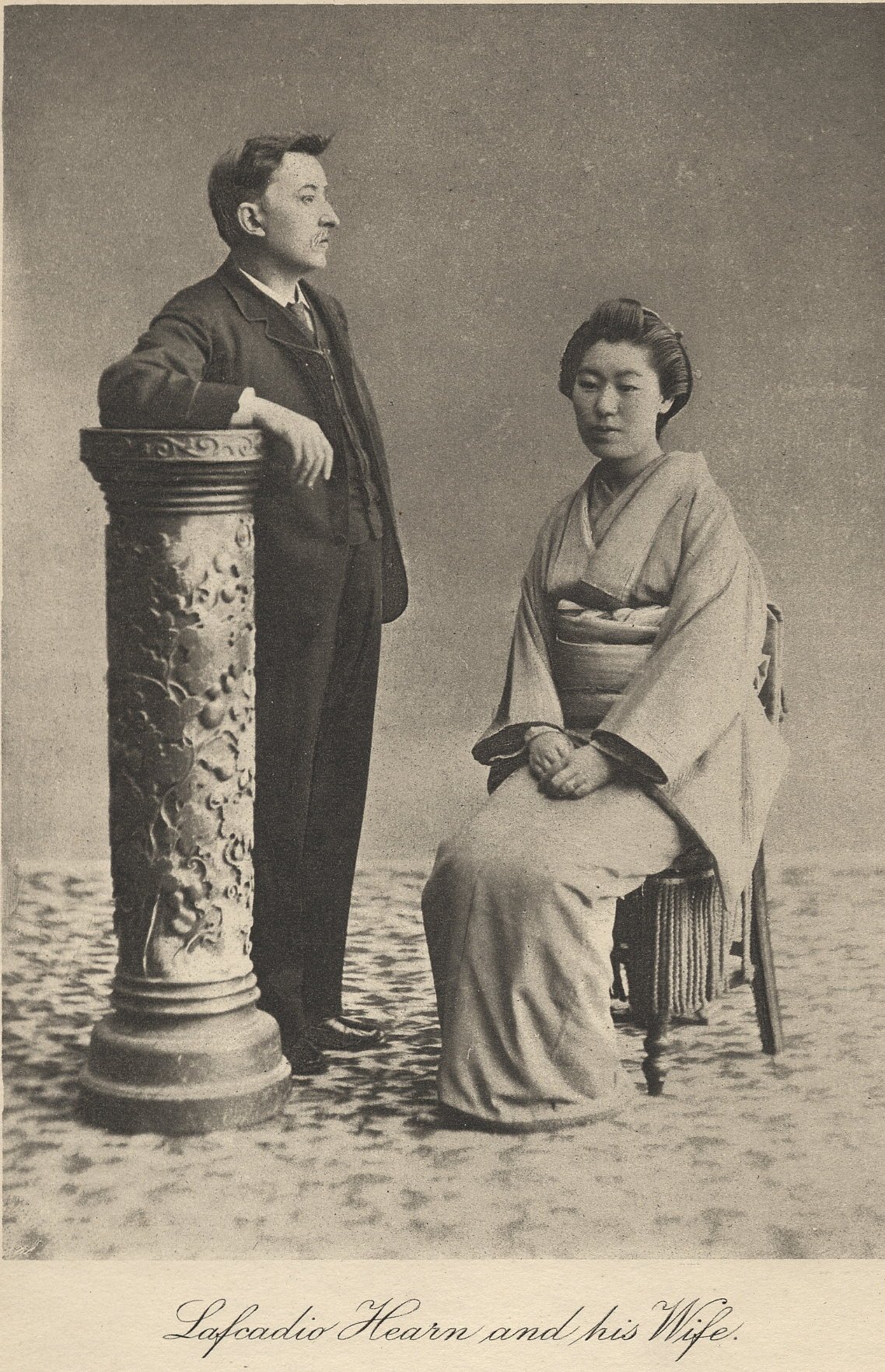
Lafcadio Hearn and his wife Setsuko in 1892, in Kumamoto, Japan, where he lived the later years of his life. Public domain image
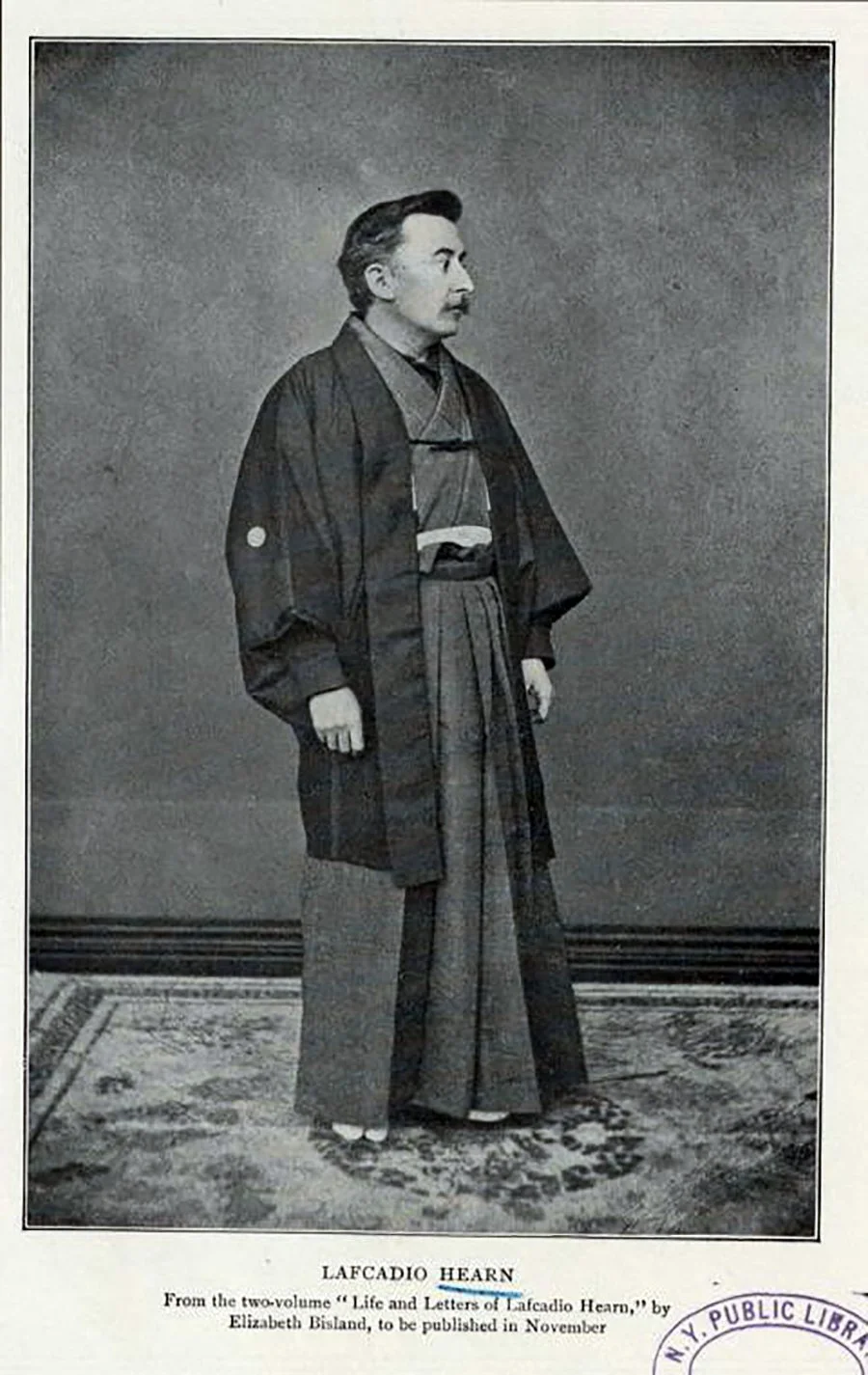
The Miriam and Ira D. Wallach Division of Art, Prints and Photographs: Print Collection, The New York Public Library. "Lafcadio Hearn."
Of course, it helps that Lafcadio Fest isn’t the first rodeo for Duvoisin: She jokes that she loves throwing birthday parties for historical characters. The annual Joan of Arc Project parades through the French Quarter each year on the saint’s birthday (January 6). And during her tenure at the French Market Corporation, she used to host annual birthday bashes for the Baroness Pontalba in the Upper Pontalba building.
Laughing, she explains that Lafcadio is simply the latest. The writer’s birthday is on June 27 (1850), but since the Jazz Museum was only available as a venue on June 20th, Duvoisin and Smith bumped up the date.
The upcoming, day-long festival at the New Orleans Jazz Museum is jam-packed with a morning panel featuring several Hearn scholars from Michigan to the Bahamas, with a mid-day lunch served by Greta's Sushi, a Gulf-forward omakase.
The festival’s keynote speaker is Steve Kemme, a Hearn biographer who wrote The Outsider: The Life and Work of Lafcadio Hearn: The Man Who Introduced Voodoo, Creole Cooking, and Japanese Ghosts to the World. The roster even includes virtual visits from Mayor Akihito Uesada of Matsue, Shoko Koizumi, and Lafcadio Hearn's great-grandson, Bon Koizumi.
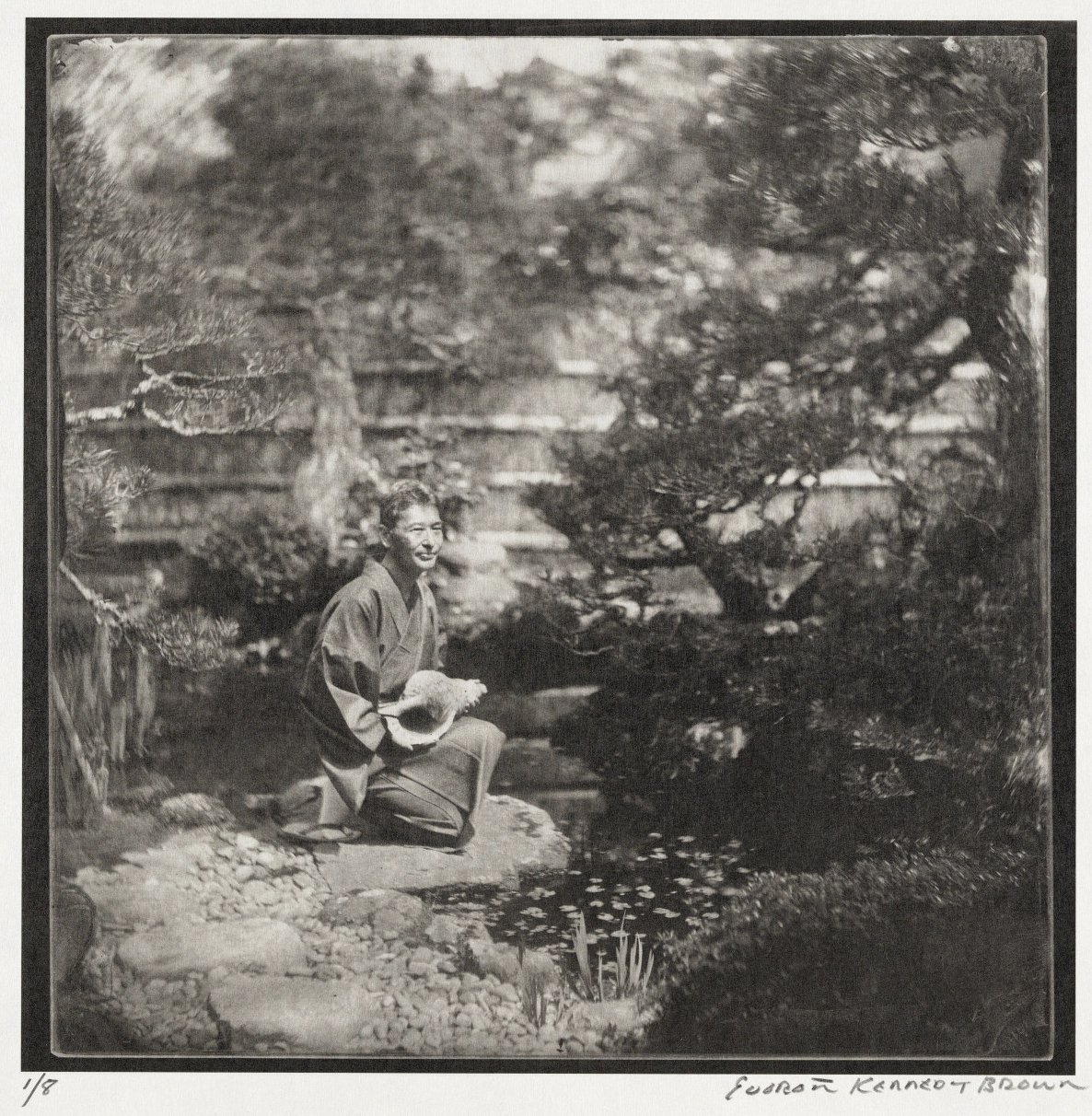
Bon Koizumi, Great Grandson of Lafcadio Hearn, Historic New Orleans Collection, acquisition made possible by Donna & John Fraiche and John Turner & Jerry Fischer, 2020.0142.1
But all of this is just the first wave in an ocean of information and study about Hearn. Both Duvoisin and Smith are already brainstorming future festivals.
“You can take him into a number of different conversations. In future years, I’d love to do a theme about Lafcadio Hearn and horror, Lafcadio and food, and then a year on tourism, but from a critical angle: How do we responsibly write about other cultures, how do we engage in intercultural interactions in ways that are respectful?” asks Smith excitedly.
“But this year the theme is ‘let’s see if we can get this thing done,’” Smith says, laughing.
Duvoisin agrees there are endless possibilities.
“The great thing about these larger-than-life characters is that they appeal to different people in different ways. You have someone like John Folse, who considers Lafcadio a culinary giant (and hosts a Lafcadio Hearn Awards dinner for his Culinary Institute), whereas others love his ghost stories and horror films based on them."
“This year, we’re just starting the celebration of him and his birthday. Joan of Arc and Lafcadio Hearn may be two very different figures, but both have a place in the eternal New Orleans' story!”