Judging A Writing Competition: WWTWD
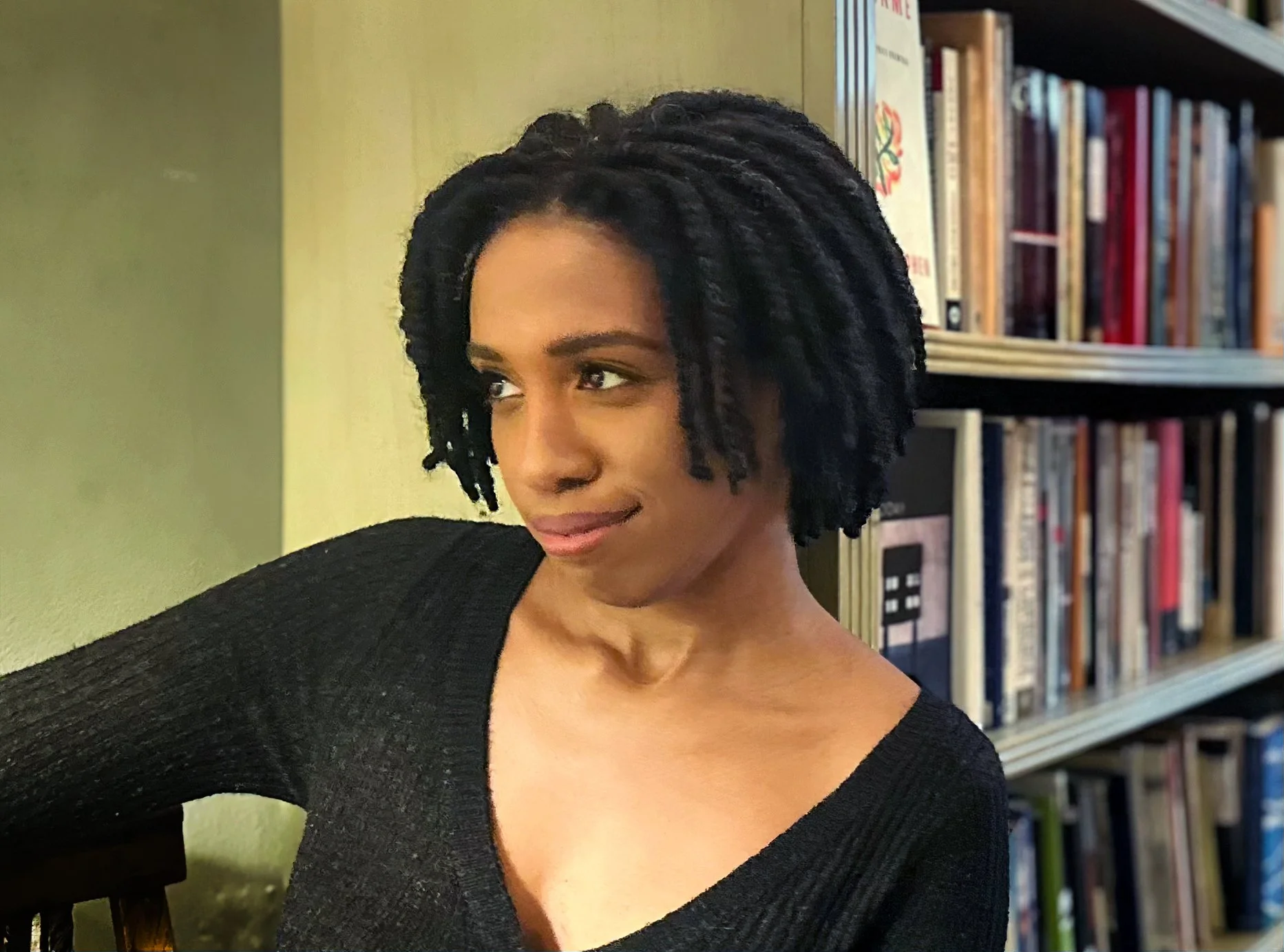
Writer Skye Jackson, photo by Ellis Anderson
March 2026It’s a time-consuming, thought-provoking process: Go behind the scenes with the writer who served as judge for the 2026 Tennessee Williams & New Orleans Festival Poetry competition.
– by Skye Jackson

This column is underwritten in part by the Historic BK House & Gardens
Judging a poetry contest is no simple feat.
As judge, you are operating under a lot of pressure – trying to figure out how to best determine which collection of poems should win the day. Sometimes (if you’re lucky) the winner is obvious from the start, and you thank your lucky stars for such a gift from the heavens.
Most of the time, though, it’s very nuanced. Defining what is good or bad poetry is not something that I would wish on my worst enemy – yet you must realize and respect the inherent power of the process: the ability to change a writers’ life by awarding them the ultimate artistic validation – publication. If the prize is right, the writer might also get a bit of money for their trouble as well.
Winning these contests comes with the delicious acknowledgment that your work is, in fact, good and that someone thought so much of it that they want other people to read and celebrate it too. I know that these scenarios, winning or placing in contests, can activate or boost a writers’ morale in deep and significant ways.
The opposite of that is also true – not placing can have a chilling effect and discourage a writer from wanting to keep participating in that part of the process. That’s why actually winning a contest operates like a little nudge from the universe: confirming that you’re on the right track. That a string of rejections (or, er redirections) has in fact led you to this moment of triumph – this institutional and professional level of reassurance.
I have judged many poetry and creative writing contests since beginning my own sojourn into the literary world. I have also been on the other side of that cold and lonely table as well – waiting for word of acceptance or rejection. Wondering if other people would read my work and deem it publishable or if I needed to kick the piece back to workshop or, even worse, the dark recesses of my computer drive, never to be seen or heard aloud again.
I was twenty-eight years old when I won my first poetry contest: a local arts organization put out an open call for a chapbook collection that also required a collaboration with a local artist. I didn’t realize it at the time but submitting that first manuscript then was an extremely ambitious act.
Up until that point, I had never even published a single poem! So, I must acknowledge my own audacity – the idea that a girl who had not even published a poem could somehow “skip ahead of the line” and publish a manuscript. None of that occurred to me then. I had no idea of the process and the way things were “supposed” to be done.
To that note, I vividly recall cobbling together the poems, calling up an ex-boyfriend who I knew could create some illustrations fast and set to work making the collection happen. Even though my poems and the accompanying artwork were selected, I recall having no idea why the manuscript was chosen. Looking back, I wondered just what the judge had been looking for – what she had seen in my work that made it stand out from the mountain of submissions they received that year.
I recently revisited these questions when the Tennessee Williams Festival asked me to judge their spring poetry contest. There was a lot of money on the line – one thousand dollars. I felt pressure to make sure that the right work was selected. It reminded me of the time a local university asked me to act as judge for their annual Truman Capote Writing Award, in which the winners would each be awarded twenty-thousand dollars from Capote’s estate to use towards their tuition, books and living costs.
That money, that prize, could change lives – and I tend to think of every single poetry contest that I judge in this way. Because, in fact, when I won that first contest years ago, it changed mine. It set me on an explosive trajectory that I’ve been riding like a wave ever since. I received a cash prize that I was able to use to tour the book across the country (after splitting the proceeds with my co-collaborator, of course) and was finally able to share my work with people around the world. It felt so good.
Before I sat down to read the finalists’ submissions, I came up with a list of criteria to evaluate each manuscript – a compass, of sorts, to keep me on the right track. The factors were as follows: exciting/unexpected imagery and language, overall cohesion as a manuscript, topical relevance, poignancy, whether the poem “haunted” me or lingered long after I’d read it, inventiveness and the way it dealt with beauty or the grotesque.
I knew that if I kept these elements at the forefront of my mind that the right work would beckon from the stack. It’s already there, I told myself as I opened the file, I just have to find it. Typically, this process takes several weeks or even up to a month or more to evaluate properly.
I sit with each work, read the poems several times, take notes on what’s working and what stands out to me. As all of that is happening, I begin a very difficult process of elimination, constantly referring to my list of standards, to see which manuscripts will narrowly escape the guillotine.
It's important to have a significant amount of time to do this because of the need to see which poems are haunting me. These are the poems that I’m still thinking about the next morning as I’m having breakfast or driving into work to teach classes for the day. As a judge, you need a little bit of distance to see what deeply resonates with you.
If I’m thinking about the poem after I’ve closed the file, I know that the poet has struck me somehow and that I would do well to return to that work. I’m proud to say that the collections I evaluated for The Tennessee Williams Festival this year all exemplified these standards that I set in varying degrees.
I recall musing that the first runner-up’s manuscript, “Without Borders” felt deliciously cohesive as a manuscript. It also focused on pressing current issues of immigration and over policing of Brown bodies in America under the Trump administration – so I thought that the relevance of these issues to current events needed to be shared.
I also loved how it handled more intimate subjects, like a speaker who is dealing with the aftermath of a breakup. The last poem in the manuscript, which takes place in a grocery store, reminded me of an adage that I repeat to myself in everyday life: the fact that poetry is everywhere.
In that poem, the speaker asks a fellow shopper in a grocery store if they can look at her shopping list to see “what your life is like.” She complies and at the end of the poem, joyfully tells the speaker that she wants to start writing again. It reminded me that art is everywhere and that we are all poets, whether we can see it or not.
The second runner-up, “Jump Jim Crow,” also felt cohesive in its’ handling of the subject matter – the indelible mark of segregation and racism in the Southern U.S. It was firmly rooted in place: the New Orleans of the past. It gave a deeper perspective on sharecroppers, porters, janitors who did their best to survive amid untenable circumstances during the Jim Crow era.
In one of the poems, the speaker’s mother takes her on a streetcar ride to see, who is implied to be, her white father who lives on the other side of town. The poet writes, “But that pantomime of a real meeting / couldn’t candy the sour years / of fatherlessness.”
The speaker yearns for a father-daughter connection but is met only with the everlasting sting of his absence. The speaker’s desire remains unfulfilled and unmet as she makes her way through a racially divided world.
And finally, the winning manuscript “Afterlives,” evidenced a strong and skillful knowledge not only of poetic form but also a wonderful mastery of compelling subject matter as well. The first poem, “At Dinosaur Land, the White Women Love Me,” immediately grabbed me from the title and refused to let go.
In it, the speaker realizes that the only reason that they can connect with the white women at a theme park is because of their misconception that the speaker is like them – another cis woman. The poem asks us to interrogate the layers of identity that bring us together, but also divide us as well. One of the stand-out poems in the collection utilized the contrapuntal poetic form to present readers with a biblical story told in a fresh and exciting way.
For those who might not be aware of the term, a contrapuntal poem can be read in several different ways – as such, it delivers vast interpretation of meaning and language. By doing so, it asks the reader to participate in the experience of reading the poem in an unusual and more interactive way. To effectively understand the poem, the reader must actively participate in each different permutation that the poet has constructed. It is quite extraordinary that the poet was able to accomplish that here.
And so, I completed my mission, after all: finally selecting three poetry manuscripts that were engaging, inspiring and poetically rigorous in all the best ways. These three poets, though they focused on different subject matter, all examined the ways in which we interact with each other as human beings – whether at a theme park, a grocery store or in a streetcar headed Uptown.
They remind us of the power of poetry to build bridges between our own experiences: to look outward, upward and inside of ourselves for these answers, always.
Entries to the TW&NOF literary contest are judged blind, so judges like Skye have no idea who the writers are until they’ve made their decisions. Here are the three that Skye selected:
Winner of the 2026 Poetry Contest is Afterlives by Tianyu Yi. FQJ publishes the work of the winners as part of the prize package, so you can read Afterlives here!
Runners-Up:
Without Borders by Javier Fernandez
Jump Jim Crow by Wendy A. Gaudin
FQJ extends congrats to all!
