
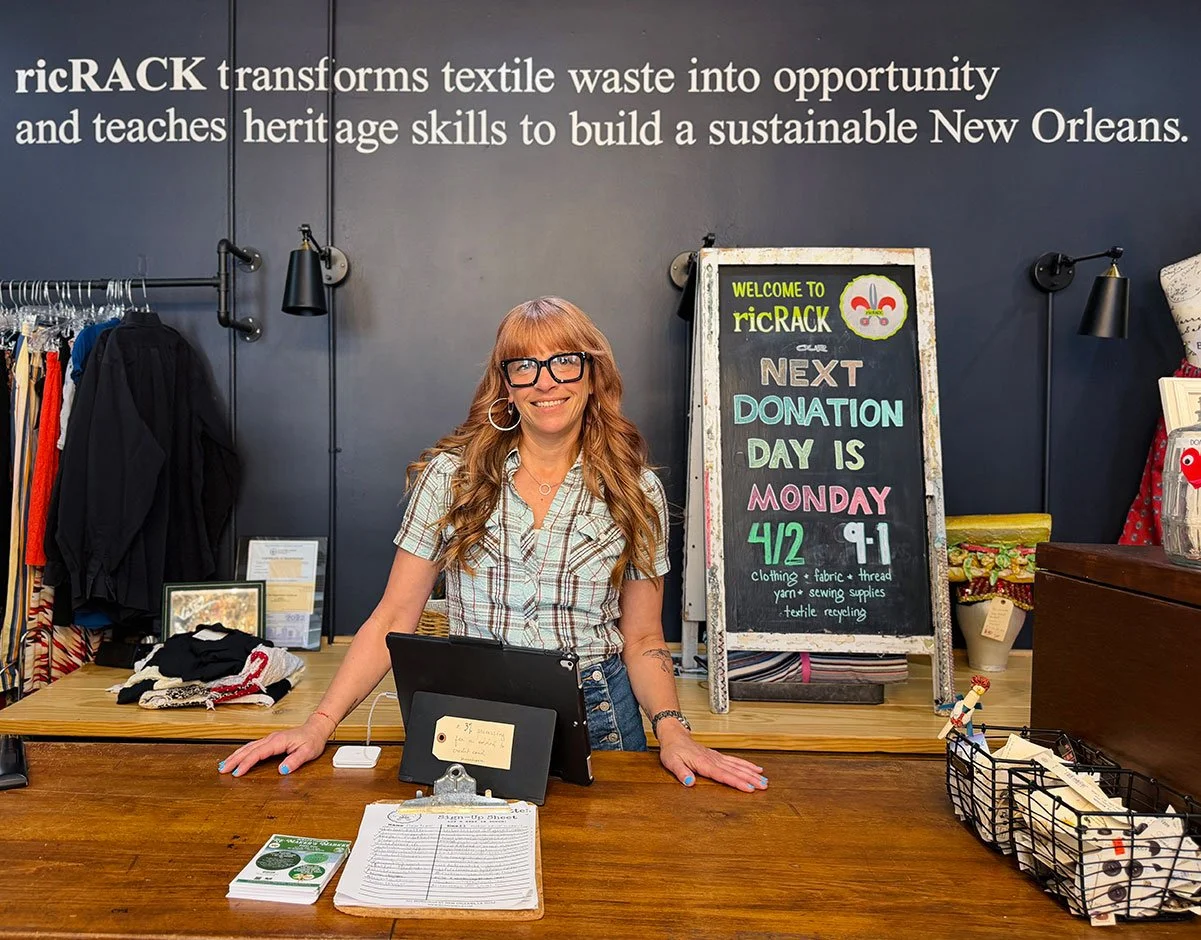
Shel Roumillat, Creative Reuse Store manager at ricRACK. Read FQJ’s story about this French Quarter non-profit here.
April 2026The French Quarter offers a blueprint for sustainability: timeless design always outshines transient trends. On Earth Day, we explore innovations to dazzle our wardrobes and make a positive impact.
By Bethany Ewald Bultman
The French Quarter’s historic buildings set the bar for sustainability, elegantly demonstrating how timeless design always outshines transient trends. Maybe that’s why the neighborhood has long been on the cutting-edge of creative repurposing and counter-culture chic.
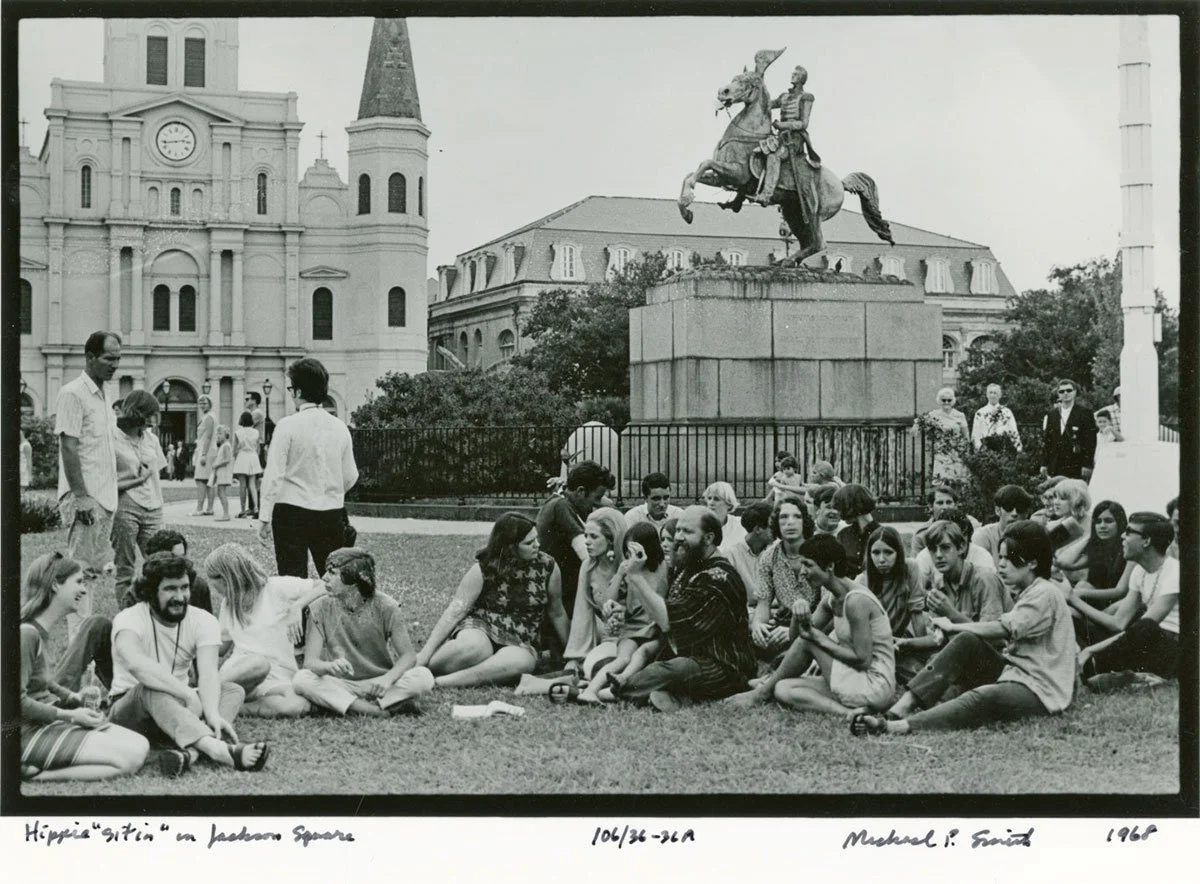
Hippies styling it in Jackson Square, 1969. Photograph by Michael P. Smith © Historic New Orleans Collection, 2007.0103.4.950
But truth be told, most Quarterites have difficulty embracing the current movement of decluttering our closets. None of the current minimalist gurus address the storage of costumes: those towering 18th-century wigs, hand-beaded bustiers and dazzling second-line umbrellas.
Our proclivity for costuming aside, for a city with ten months of long, hot summer and two weeks (at most) of glacial temperatures, many of us own too many clothes. Like our fellow Americans, we rarely wear an item more than 10 times before it is discarded.
Before the Industrial Revolution, clothing was made entirely by hand. Fabrics were spun, woven, dyed with natural dyes and hand-stitched. The working poor often bought used clothing of Yellow Fever victims or artfully re-tooled hand-me-downs.
After the Industrial Revolution introduced the sewing machine, the first metal coat hangers were created as a clever means of efficiently packing more clothes into armoires.
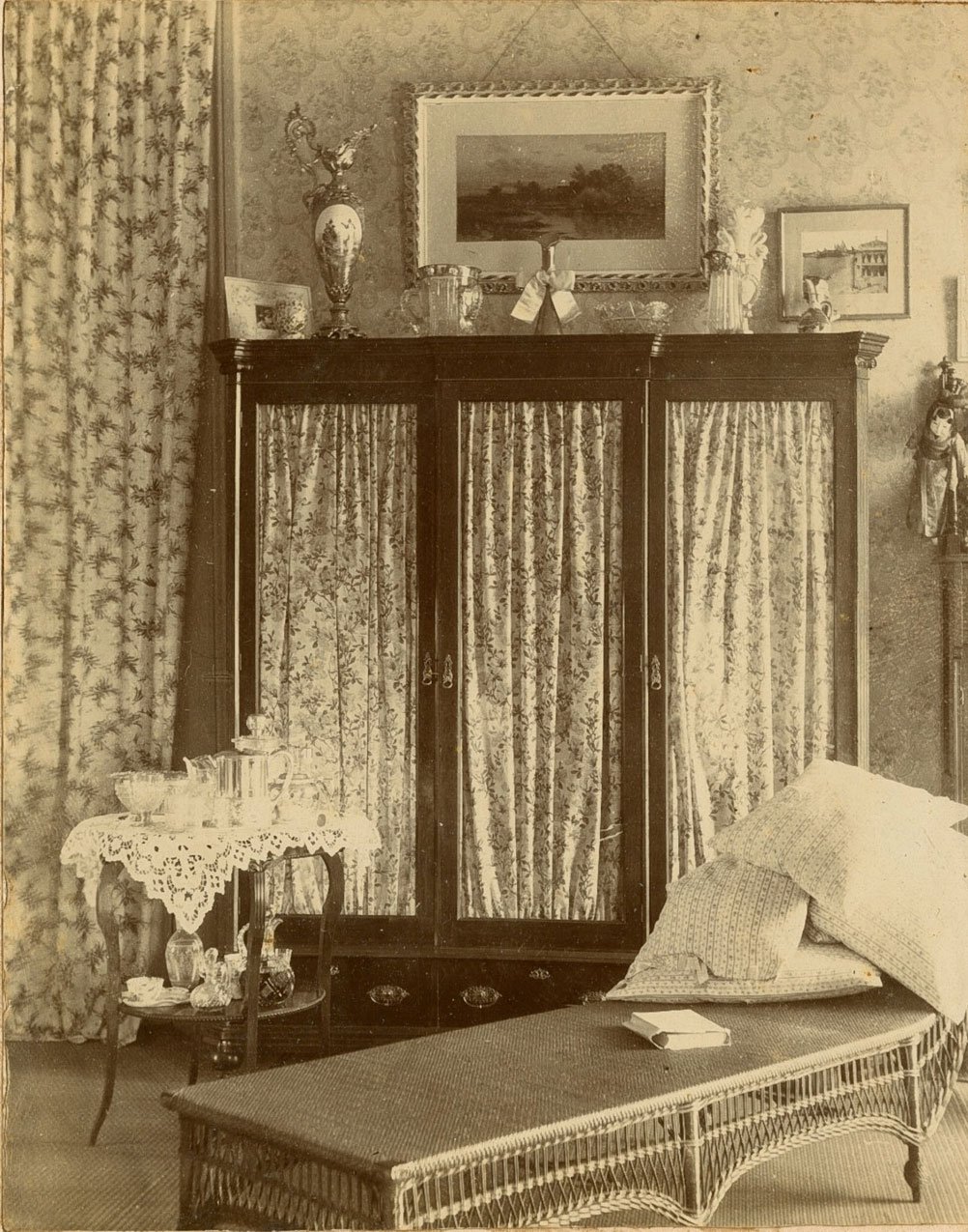
A typical New Orleans closet, 1899. Historic New Orleans Collection, 1977.83.59
Still, until the early 1960s, most New Orleans women purchased one new outfit a year – a suit, shoes, two blouses, gloves and a hat – usually at Easter. During this period, the American fashion industry produced 95% of the country’s apparel.
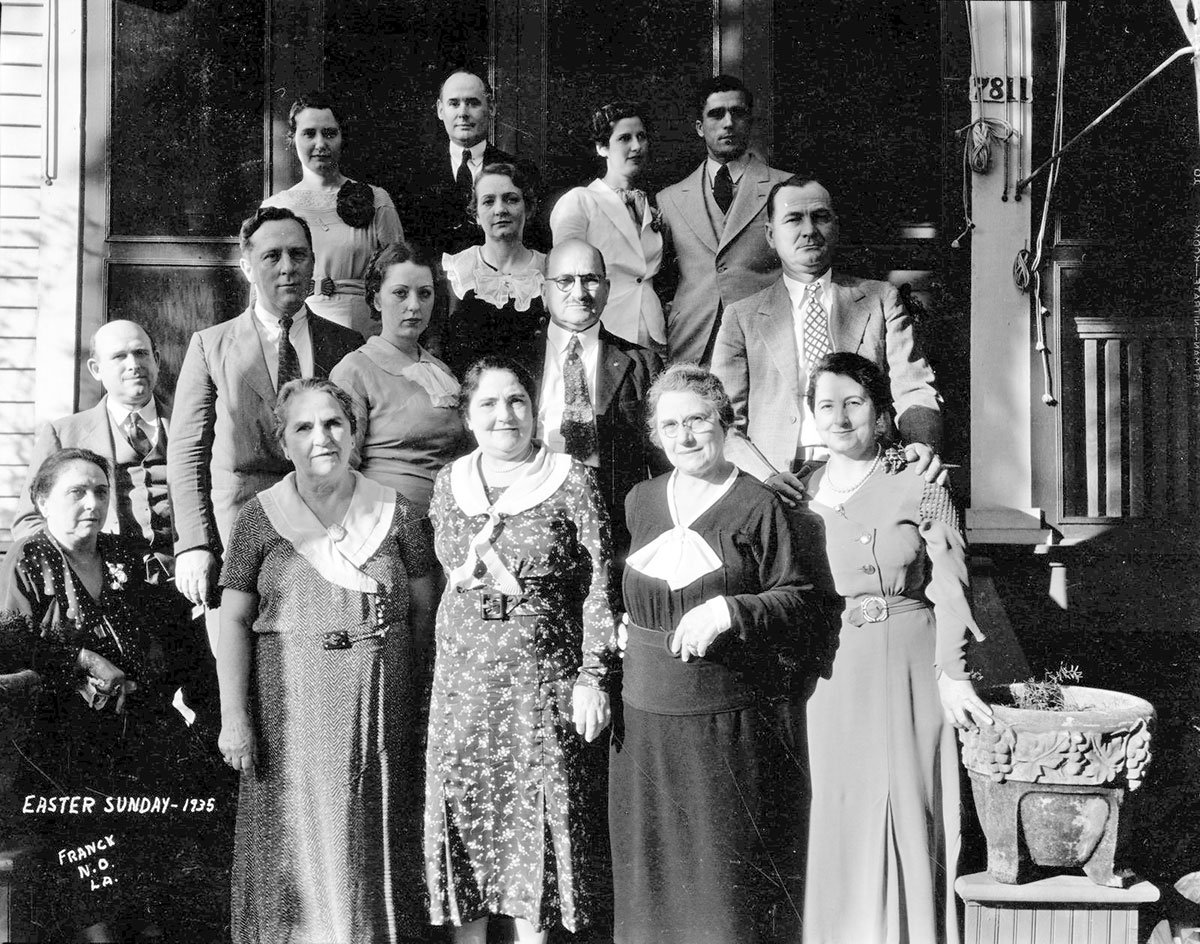
Many women bought one new dress or suit a year - for Easter. This family photo shows this New Orleans family dressed in their best, 1935: The Charles L. Franck Studio Collection at the Historic New Orleans Collection, 1979.325.4392
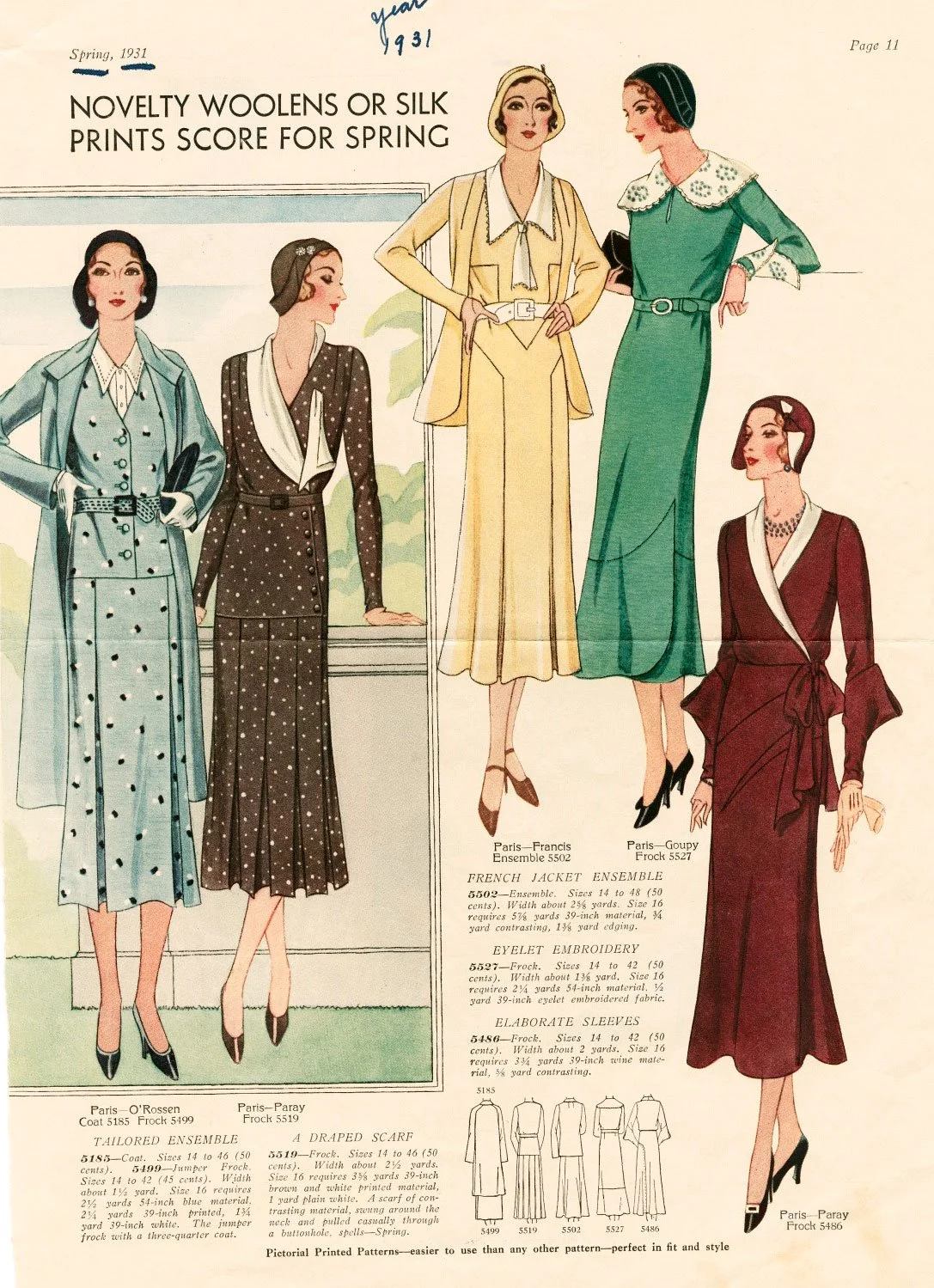
Classic women’s fashions in 1931, Historic New Orleans Collection, 1975.138.155 i,ii
Today, only 3% percent of this clothing is made in the USA. Most of what we wear requires shipping halfway around the world. Worse yet, when we discard it, it’s often shipped back across the globe to spend eternity in landfills.
But it wasn't until I glimpsed a particular hot pink tee shirt, “Karen’s French Quarter Bachelorette Bash 2003,” that it hit home. The shirt was worn by a seven-year-old Mascho-Piro boy deep in the Amazonian rainforest in 2011.
“What’s the Environmental Impact of a T-shirt,” puts Karen’s Bachelorette Party tee in context. The numbers are staggering. Of the approximately 15 million T-shirts sold each month in North America, 40 percent of those festival, sporting event, charity walk or catch-phrase-du-jour tees end up being burned, dumped in the ocean or shipped to the world’s landfills.
Meanwhile, social media platforms encourage fast fashion addiction, trumpeting the mantra of influencers: See now, must have. This translates to the average American throwing away 82 pounds of clothing per year!
And only 5-10% of the textiles are recycled into new clothing. All polyesters are partially derived from oil, which renders them non-biodegradable, meaning they can take up to 200 years to break down in a landfill.
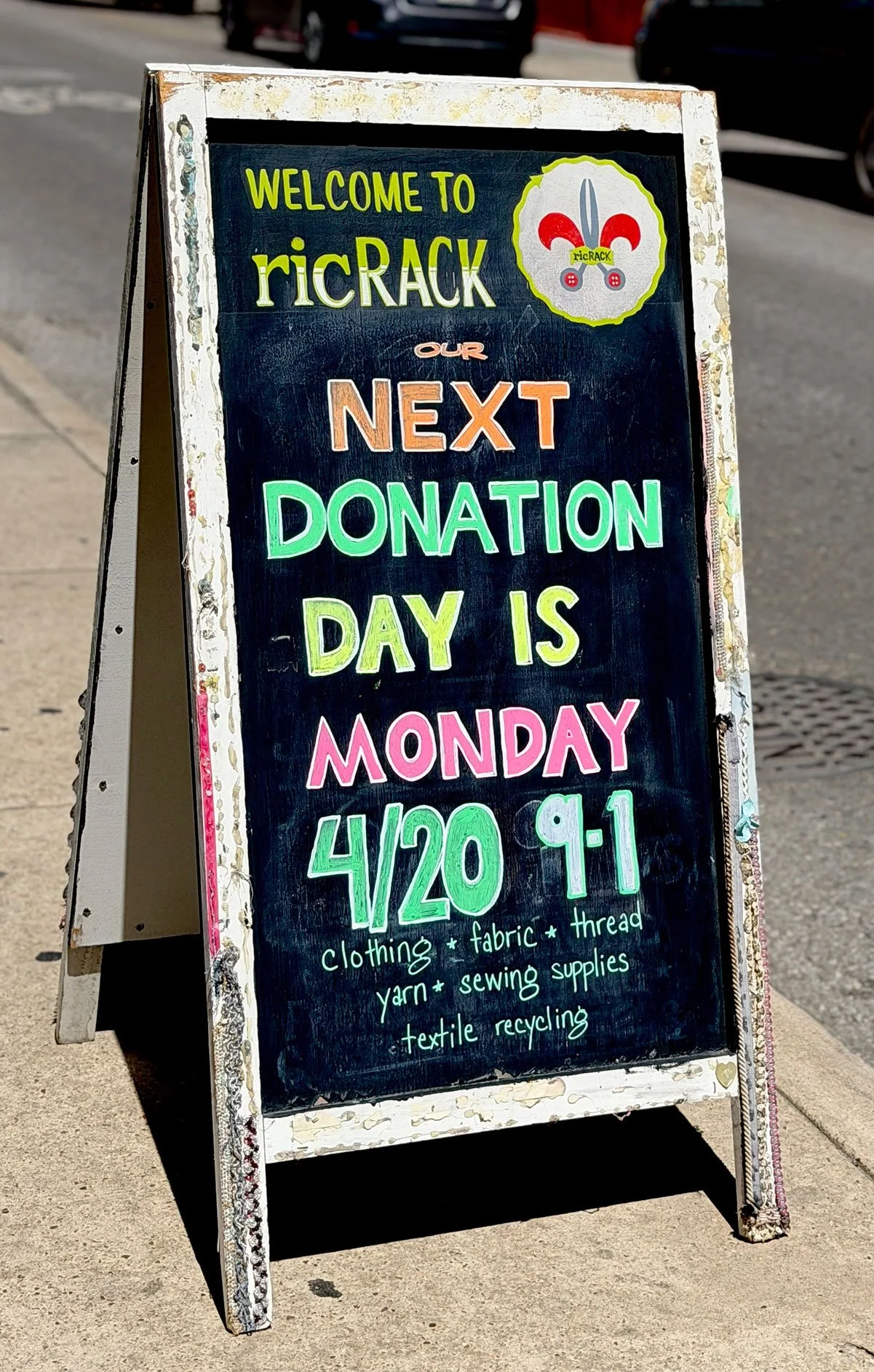
RicRACK in the French Quarter offers a sustainable donation day two Mondays each month. Their mission? Nothing winds up in a landfill
The Seven R’s
Fortunately, an evolving global movement is taking shape to correct the problem at the source. Recently, the French Parliament became the first nation to pass a fast fashion accountability bill.
Starting in 2025, any fashion brand labeled “ultra fast” is taxed about $5.50, depending on how poorly the item scores on environmental impact. By 2030, that number will rise to 50% of the item’s price.
“These brands will be required to display an eco-score on every product, rating how sustainable it really is,” notes Karissa Mitchell in Essence (July 22, 2025). “In France, they won’t be allowed to advertise at all, not on social media, TV, or anywhere else.”
Although we’re not likely to have similar legislation passed in this country - at least in the near future - we each can become aggressively mindful consumers. And we can reduce our impact on the planet by practicing the Seven R’s of sustainability: repurpose, repair, reduce, reuse, resale, recycle and rent.
Happily, the French Quarter is home to two innovative, planet-saving businesses to make those seven R’s easy. ricRACK, at 321 Burgundy Street, is a national trend setter when it comes to creative fabric recycling and sustainability (read our recent FQJ story about them here).
Visiting ricRACK to purchase decorative trim (all fabrics and trims they sell are donated) to add to a skirt may be all that is needed to extend its life in your wardrobe. Or shop from their vintage clothing racks after bringing in items you no longer wear.
For a small fee per pound, you can even bring in end-of-life textiles or items like underwear that’s not resaleable and leave them with confidence. They will be sustainably disposed of, becoming insulation.
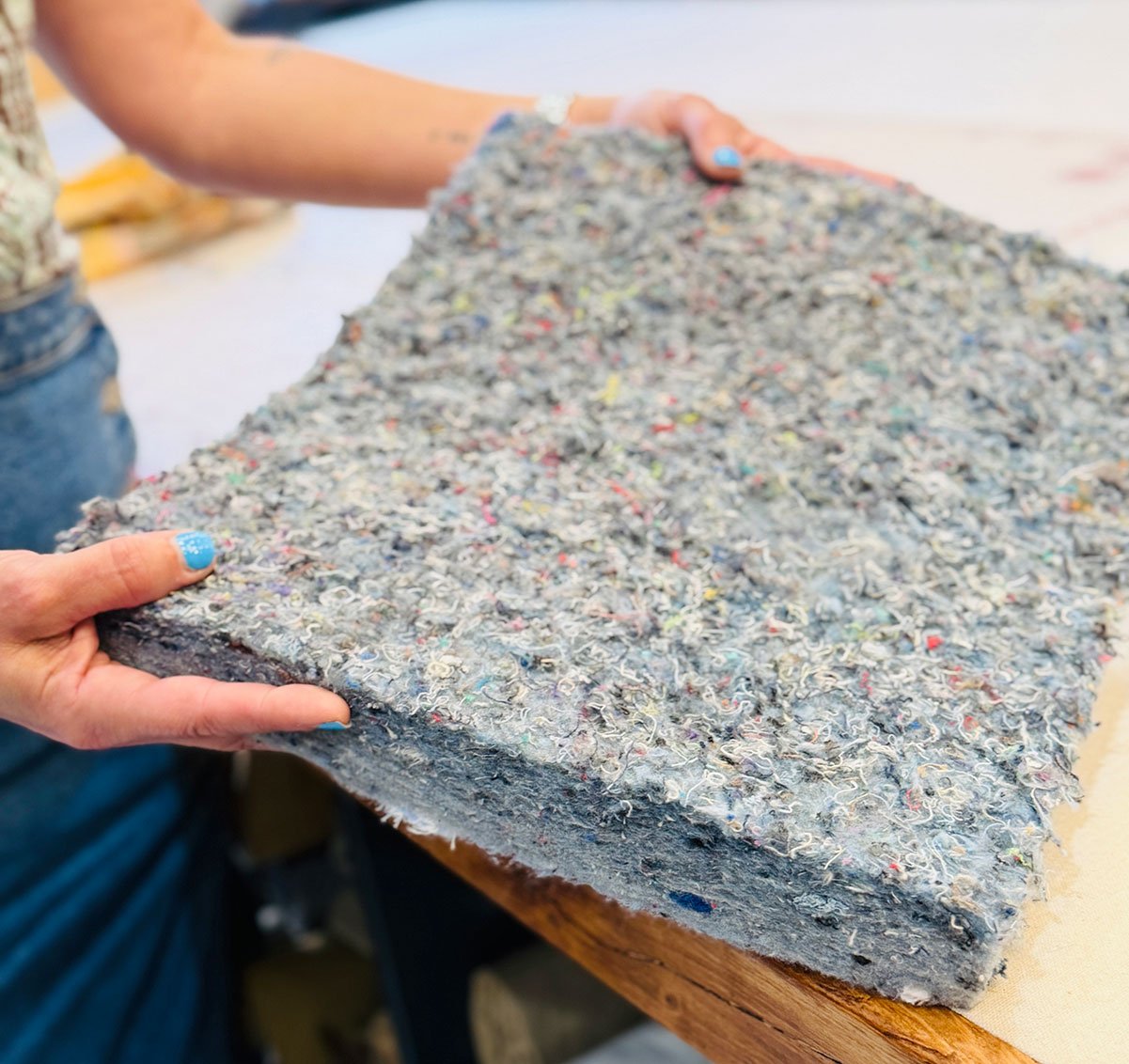
Insulation made from end-of-life fabrics collected by ricRACK
The Occasional Wife is a woman-owned company of decluttering wizards who hold estate sales. They also sell consignment items at all their locations - including the one right around the corner from the French Quarter Journal office at 624 Dumaine Street.
Sometimes, all an outfit needs to spruce it up is a chunky vintage necklace purchased at an Occasional Wife location or a resale shop near you. The purchase can be counterbalanced by bringing in jewelry you no longer wear to put on consignment.
If you live outside New Orleans, donate items to small local charities that will pass selected items directly to their clients.
Note: To protect the health and well-being of their volunteers, all clothing donations must be on hangers or neatly folded. Most places won’t accept clothing donations in garbage bags. Please keep in mind, each of these charities can benefit from every hour you can spare to donate time to their missions.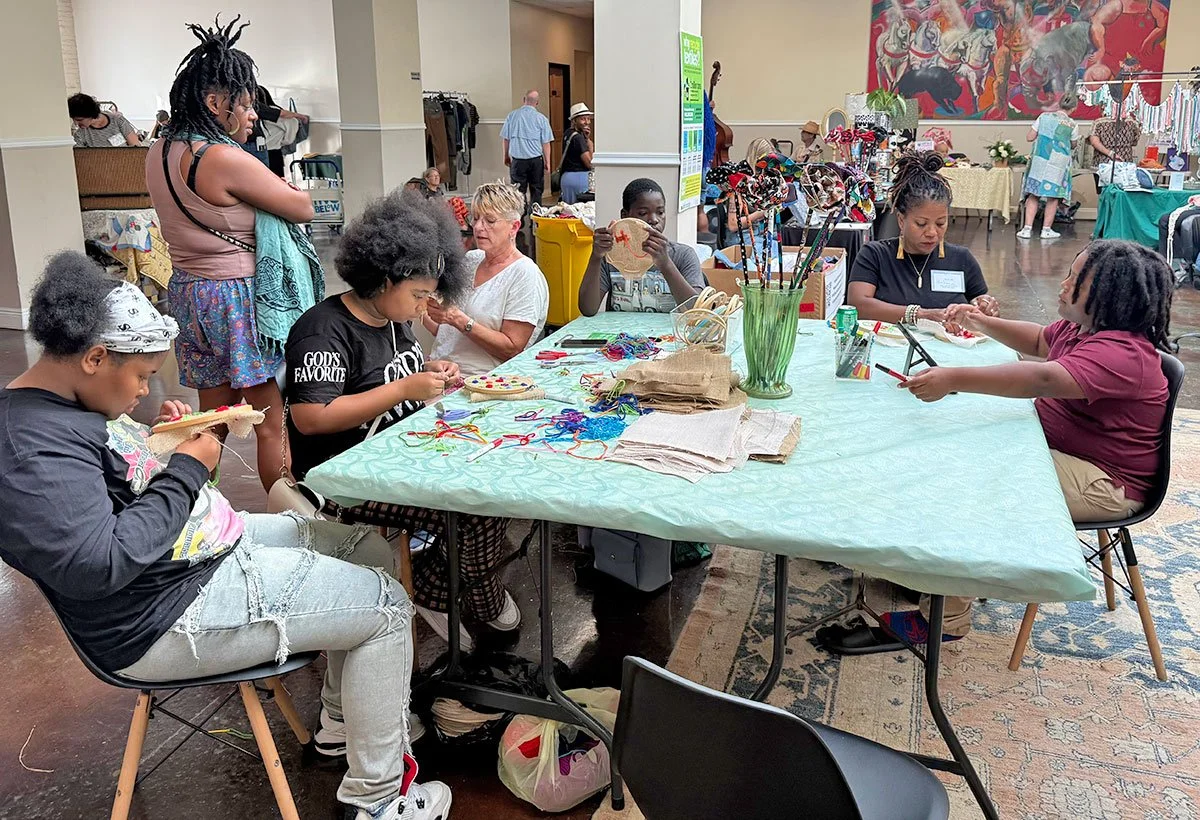
Earth Day classes at ricRack engage young students, teaching them sewing and embroidery skills. Photo by Bethany Bultman
If you’re in New Orleans and minimizing your wardrobe, consider these options:
The shop in uptown New Orleans provides well-displayed vintage clothes and accessories. It also provides resources and services for the LGBTQ+ community, including STI and HIV testing.
Founded in Manhattan in 1997, Dress for Success is a global non-profit providing business suits for those applying for their first job. They accept “interview appropriate” suits, including skirt or pant suits in all sizes, modern, classic styles in conservative colors. (No wool or winter-weight suits.)
YEP Youth Empowerment Thrift Works
Thrift Works accepts clean, gently used clothing, furniture, and household items. YEP provides young people with real-world customer service, point of sale, and inventory management experience in this vibrant retail environment.
Lastly, DAMM your wardrobe: Decorate, Alter, Make and Mend
Quilt: Gather up your cherished fabric items that carry special memories to take to ricRACK so one of their volunteers can teach you to make those items into a quilt or quilted table runner, place mats or tote bag.
Plump: Discarded wool coats and sweaters take at least 5 years to decompose. “At least” is a relative term, as illustrated by the oft-repeated tale of the gardener digging a fishpond in a Royal Street courtyard. He was horrified to unearth the skeleton of a Confederate soldier in a perfectly preserved uniform. So it’s best to cut up those moth-eaten woolen items and use as stuffing for pillows and cushions that need plumping.
Dazzle: Shoes and small purses can be gifted to friends in carnival krewes to decorate for the next parade. Special clothing items can be shared with local costume artists to be recycled into headdresses and wearable art.
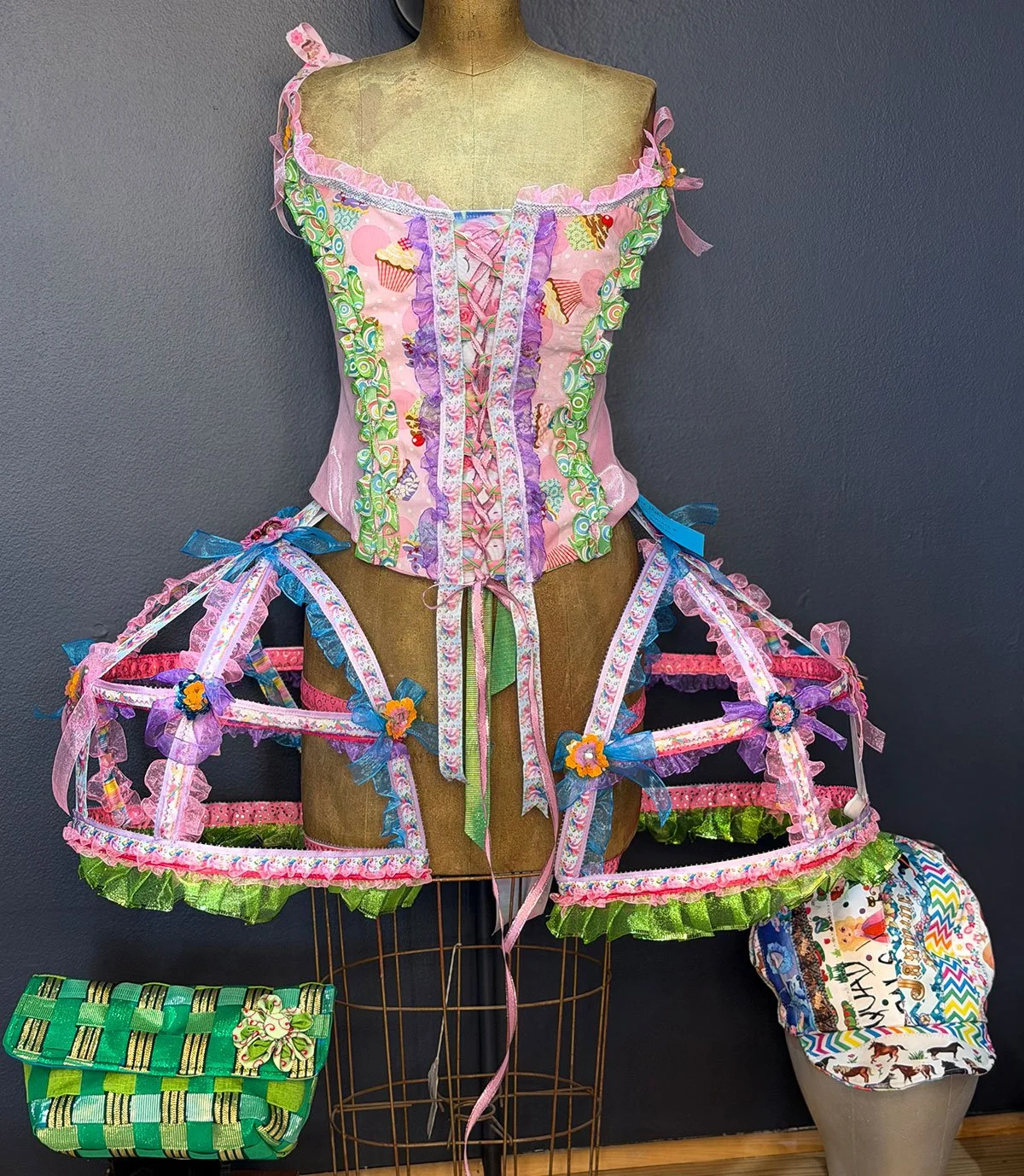
Items featured in this year’s Designers’ Challenge for the ReMakers Market on Earth Day at ricRACK. The 2026 theme was ribbons and trims.
Share: Host a swap party: Each guest brings 8 items to trade with their friends.
Bloom: Some gardeners compost textiles made from natural fibers: undyed, natural materials, like cotton, hemp, linen, or silk, cut into small pieces as compost in flower beds or to fill. ( Be sure to remove any buttons or zippers).
Each of us can make an impact, one item at a time. For Earth Day, become an influencer!
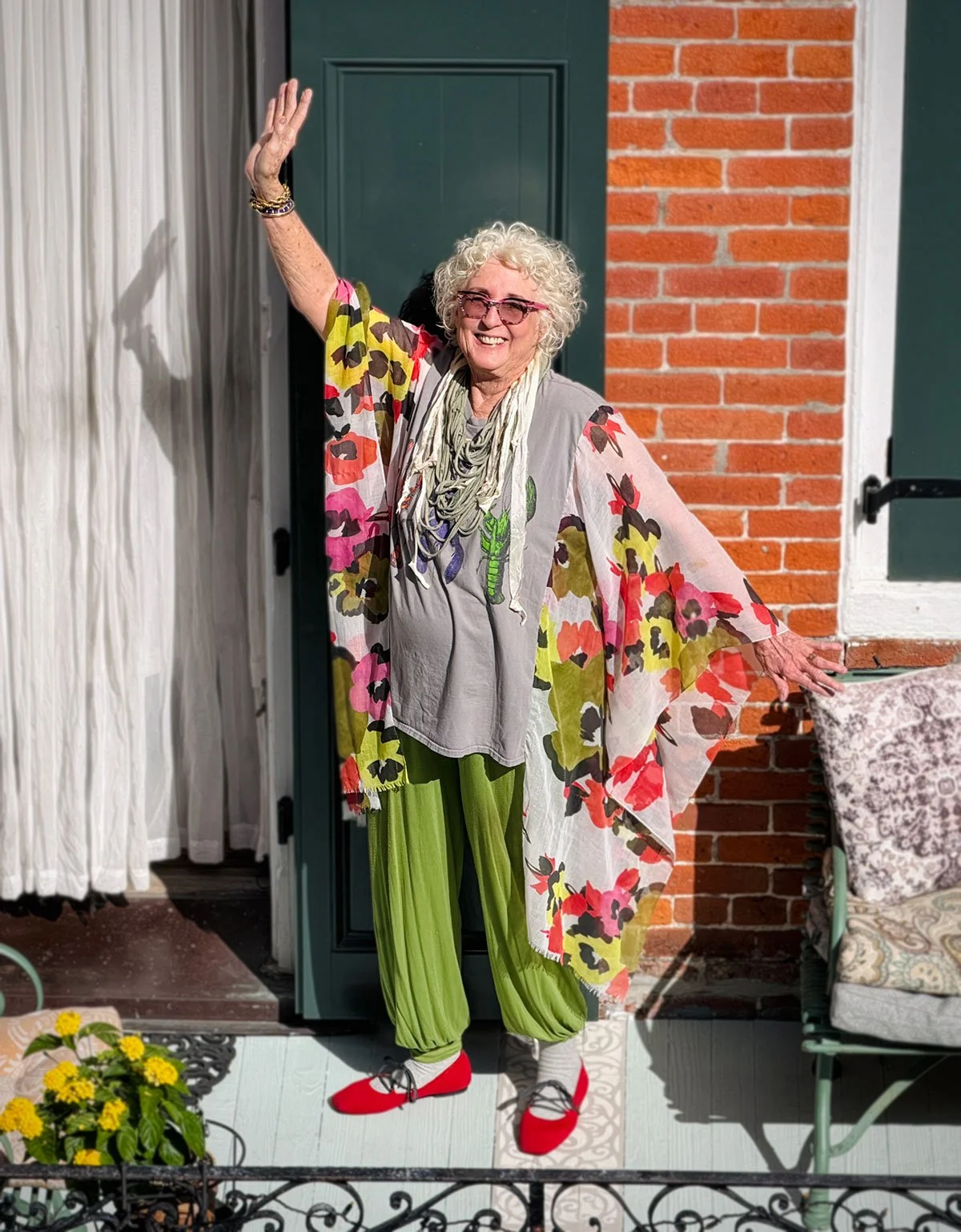
Writer Bethany Bultman ready for Jazz Fest in an outfit inspired by the so upcycle creators at ricRACK’s Earth Day Maker’s Market. The necklace and flowing top by Jean Hannan of Floor 13 is 100% crafted from discarded tee shirts and recycled chiffon.