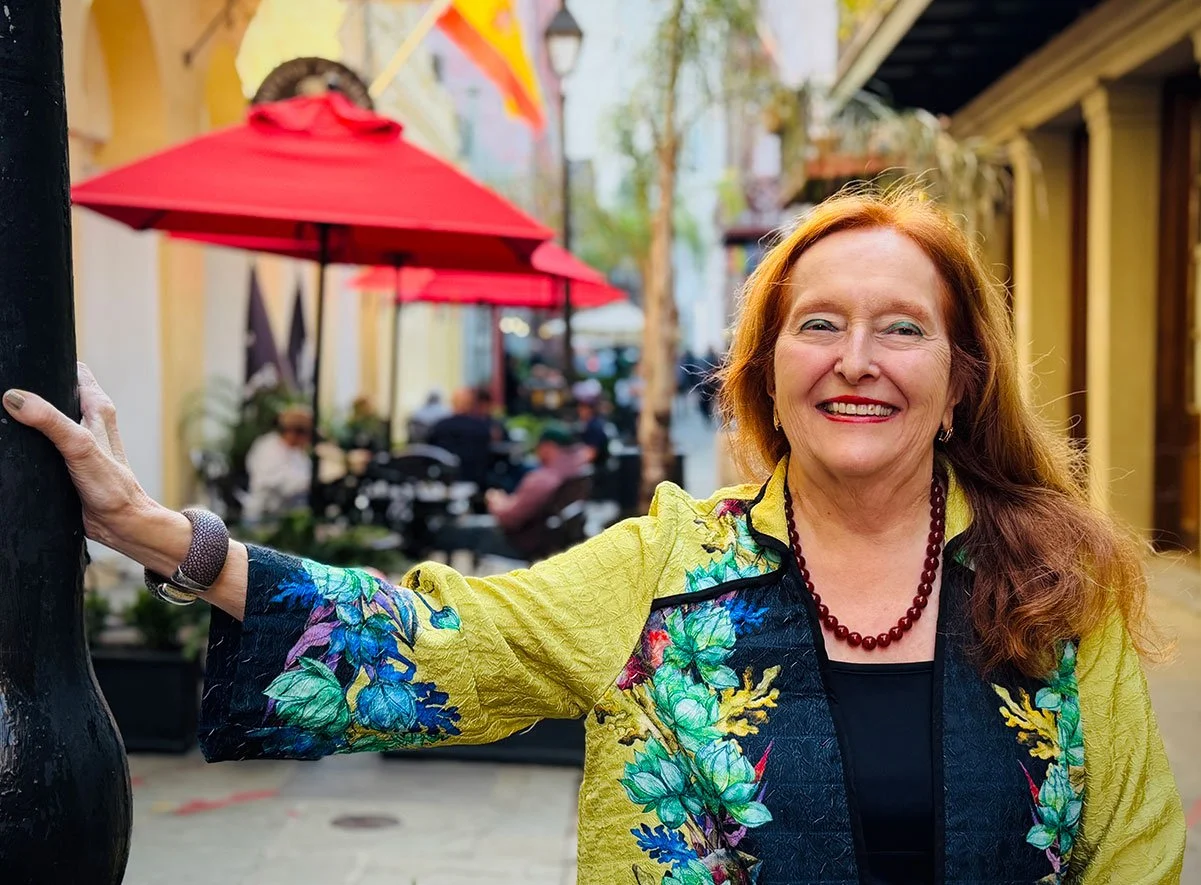
Esther in her home turf, the French Quarter
April 2026Bridging the business and art worlds, the ArtEgg Studios founder provides “a creative space for creative people.”
– by Doug Brantley

This column is underwritten in part by Karen Hinton & Howard Glaser
Art lover. Academic. Business executive. Consultant. Philanthropist.
Dr. Esther R. Dyer is many things—idle is not one of them.
“I leave Tuesday for Singapore,” she says, speaking from an apartment she maintains in New York City. “It’s a 25-hour flight.”
From there, it’s on to a two-week cruise specifically designed for bridge enthusiasts. Then she’ll head back to New Orleans, to her home in the Krauss Building on the edge of the French Quarter.
“I’ve been to 135 countries,” notes Dyer, a member and past international president of the Circumnavigators Club. “But, in terms of art and music and history, there’s no place like New Orleans.”
She and late husband, John “Jack” Lappin, first bought a place in the Marigny back in 1990, when airfare was inexpensive. Lappin, an accountant, was an avid music fan (he attended 32 Jazzfests). But initially, Dyer had little interest in visiting New Orleans – much less living here.
“I kept seeing these dreadful pictures of Bourbon Street,” she recalls, “and thought, ‘Why would I want to go to the world’s biggest drunk party?’
“But walking around the city, I fell in love with the architecture and the people. I find New Orleans to be enormously welcoming to anyone and convivial about everything—whatever it is.
“It’s a sanctuary city for people who want to express how they feel.”
A native of Albany, NY, Dyer grew up in a philanthropic-minded family of Masons and strong female role models: Her mother was the first executive director of the Autism Society of America and her aunt was head of the New York state budget department.
Dyer’s own LinkedIn page is chock-a-block full of accomplishments and impressive job titles, including a DSL in Library and Information Science from Columbia and serving as an Assistant Professor at Rutgers; President & CEO for National Medical Fellowship; President & Co-Founder of the Heritage Foundation for Art and Cultural Sustainability.
But there’s one title she holds near and dear: Founder and Proprietor of ArtEgg Studios.
Wandering around the 50,000-square-foot former Mid-City produce warehouse (known for its iconic “Everybody Loves a Good Egg” sign), a person could easily lose their bearings, with one corridor spilling into another and into another.
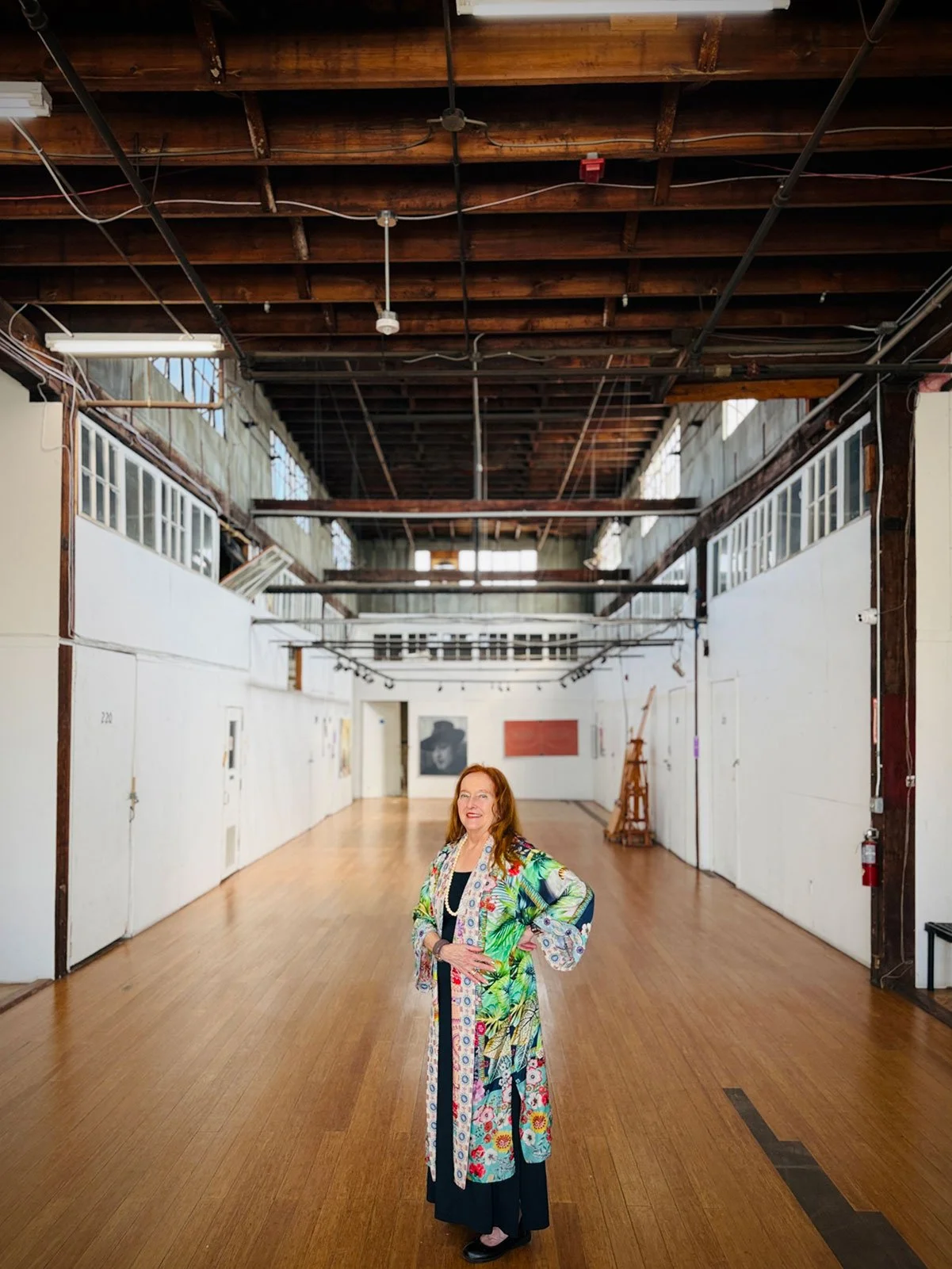
Esther on the second level of ArtEgg
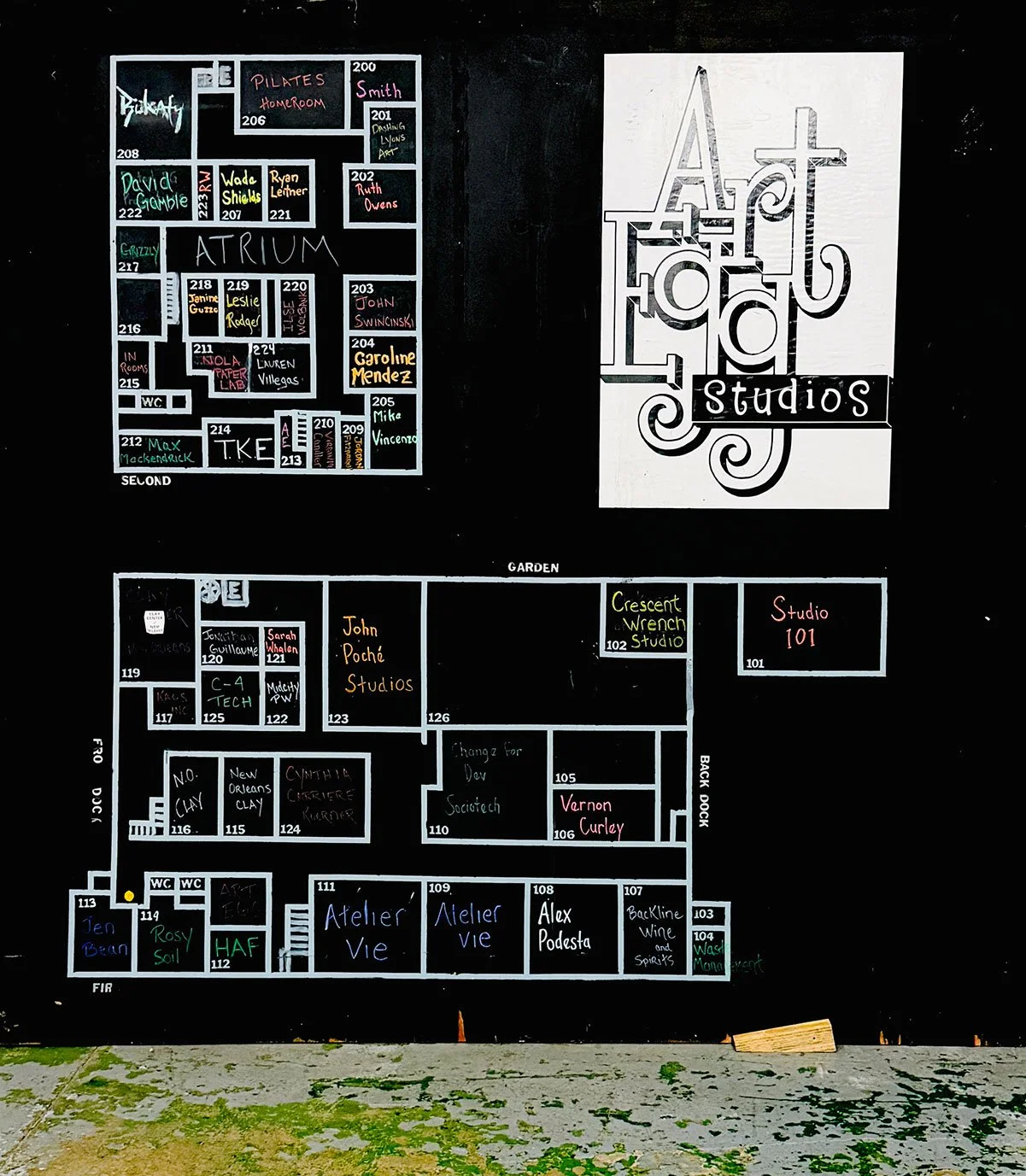
An enormous map on the ground level of ArtEgg helps visitors get their bearings
“At first, I couldn’t find it after I bought it,” says Dyer, who purchased the facility, tucked into an obscure industrial section of South Broad Street, in May 2001.
“And then I couldn’t find my way around it.”
But 25 years in, it seems as though Dyer, freely flowing from one room to the next, noting areas of interest, could navigate the sprawling space blindfolded.
“This is recycled glass—headlights and toilets—from EnviroGlass,” she says, pointing to the floor of Jen Bean’s boutique hair salon/art studio. “It came after Hurricane Katrina by somebody who wanted to help us and had leftover lots.”
When Dyer first bought the building, it was called the Egg Building and Conservancy and included the New Orleans Museum of Art and the Ogden Museum of Southern Art among its 12 tenants. By 2005, she had the 50-unit space completely rented out and had coined the name ArtEgg.
Then Katrina hit, destroying each of the structure’s five roofs and flooding the complex well above its eight-foot loading dock.
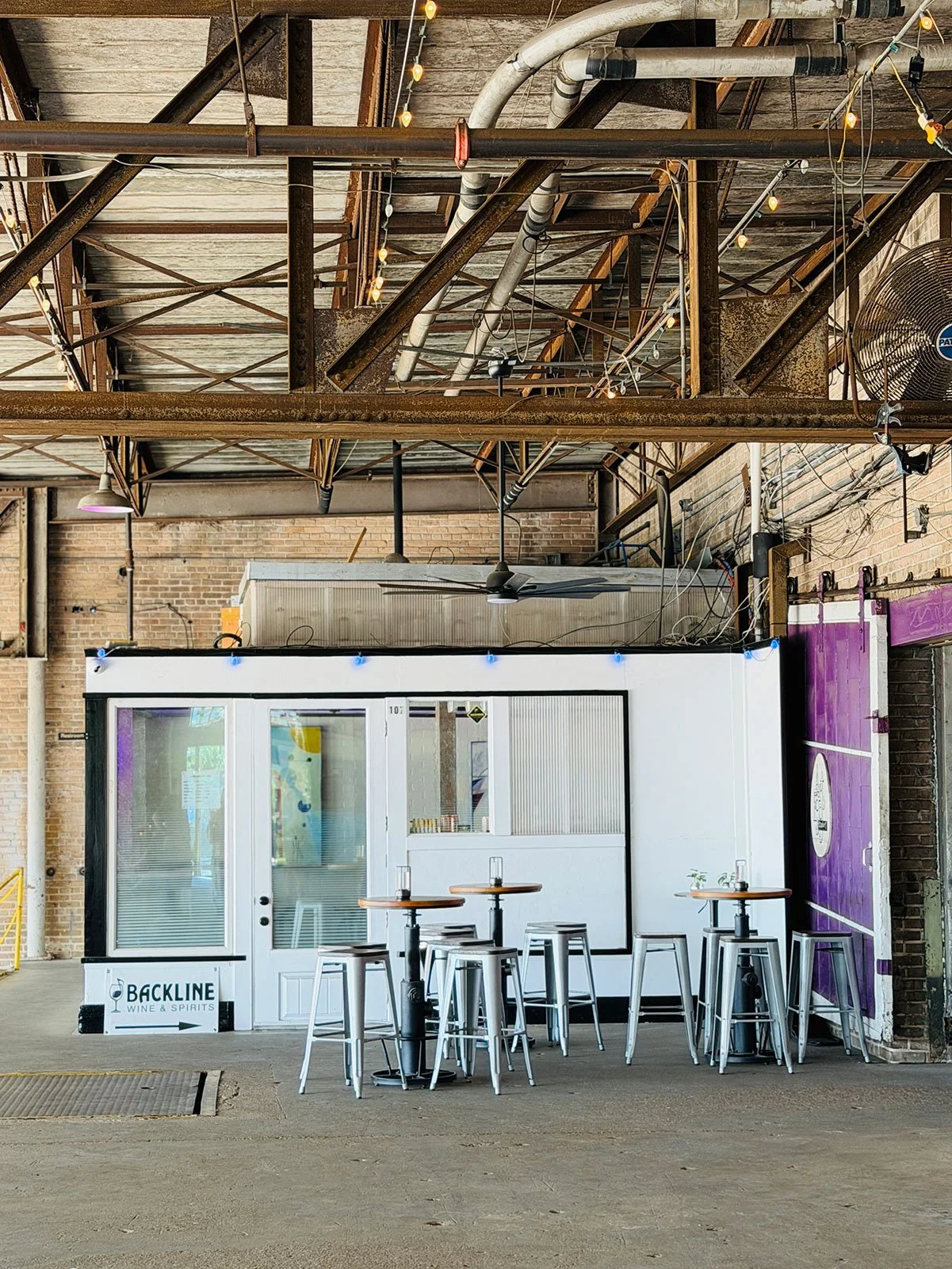
Seating for Backline Wine & Spirits on the art complex’s loading dock
“I could have given it up after that,” she notes. “But I thought, ‘If we all leave New Orleans, what will happen to the city?”
“Then it was 18 months before the insurance money came in and I was consulting and working a full-time job to make it work. It wasn’t a simple process – for instance, there are 938 sprinkler heads; every one of them had to be replaced. So many times along the way, I questioned why I had taken on the rebuilding, to make it functional and even better than before.”
Most of the floors also had to be replaced. Thankfully, in addition to the EnviroGlas donation, ArtEgg was gifted 5,000 square feet of bamboo flooring, along with cork tiling. The original wood on the second floor was saved and re-cured by a Finnish carpenter using skim milk.
Today, the arts center is at near full occupancy once more, with only four units currently open. And the “Good Egg” sign, rescued after Katrina, has recently been restored and remounted in honor of the Studios’ 25th anniversary.
On the ground floor there’s Alex Podesta, famed for his “Bunnymen” sculptures (“During Prospect.1 [in 2008], they paid for him to have a studio here, and he never left”), African art collector and Heritage Foundation co-founder Dr. William “Bill” Bertrand, kinetic sculptor John Poché and the Clay Center of New Orleans, which offers hands-on pottery classes.
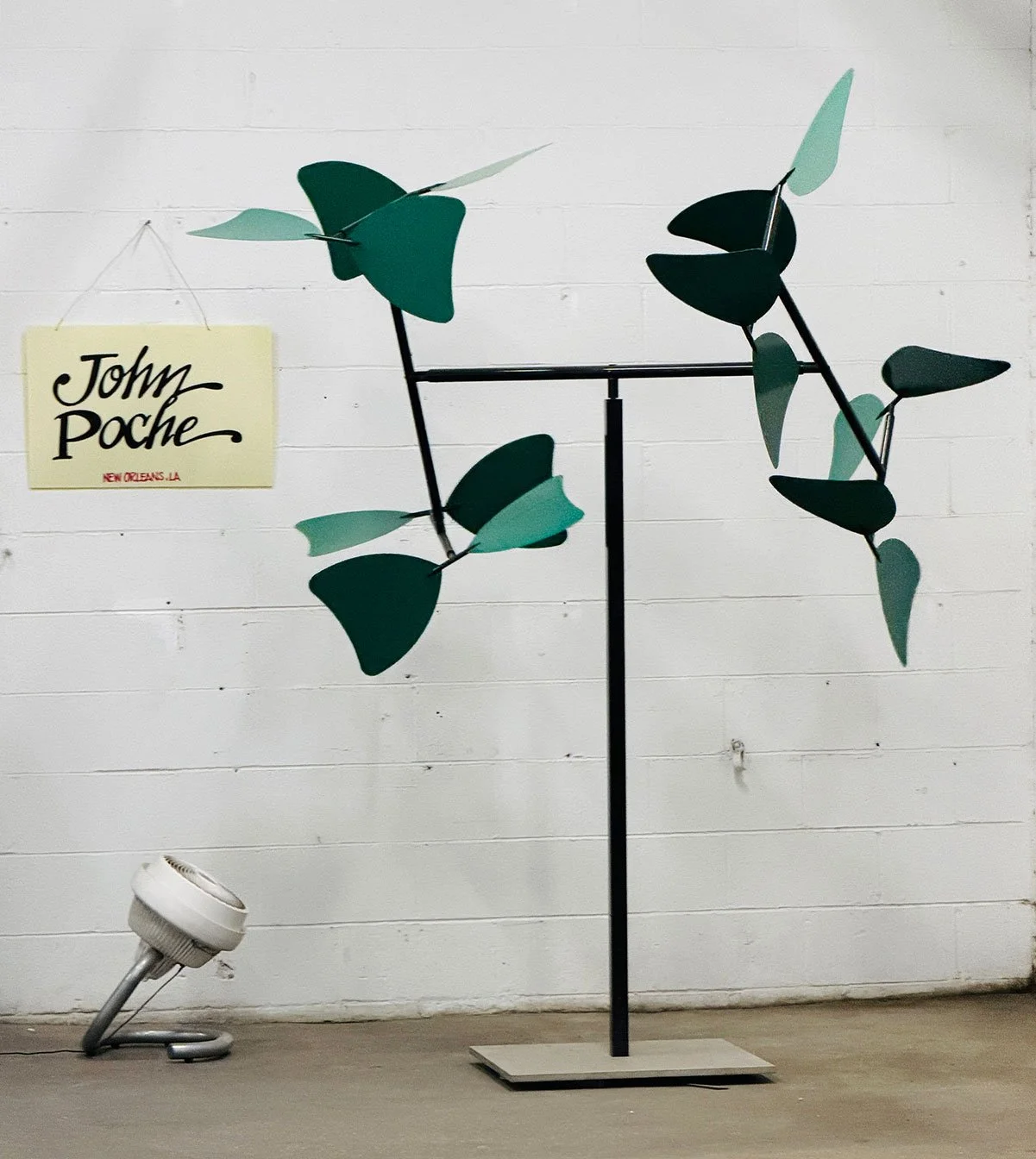
The second level houses French Quarter-based British photographer David Gamble, whose images are included in the Smithsonian’s National Portrait Gallery, live painter John Bukaty and abstract landscape artist John Swincinski, who also acts as the Studios’ general manager, among others.
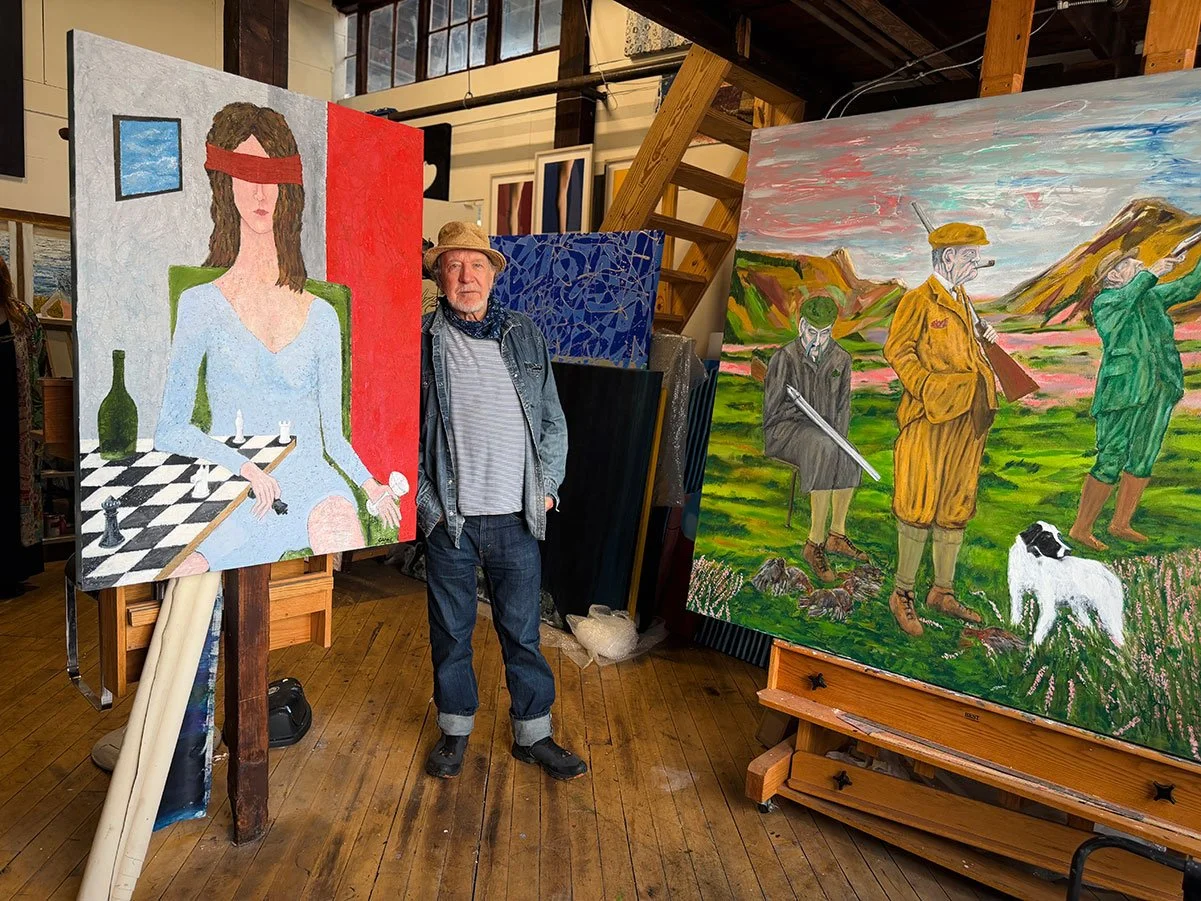
French Quarter resident David Gamble in his ArtEgg Studio
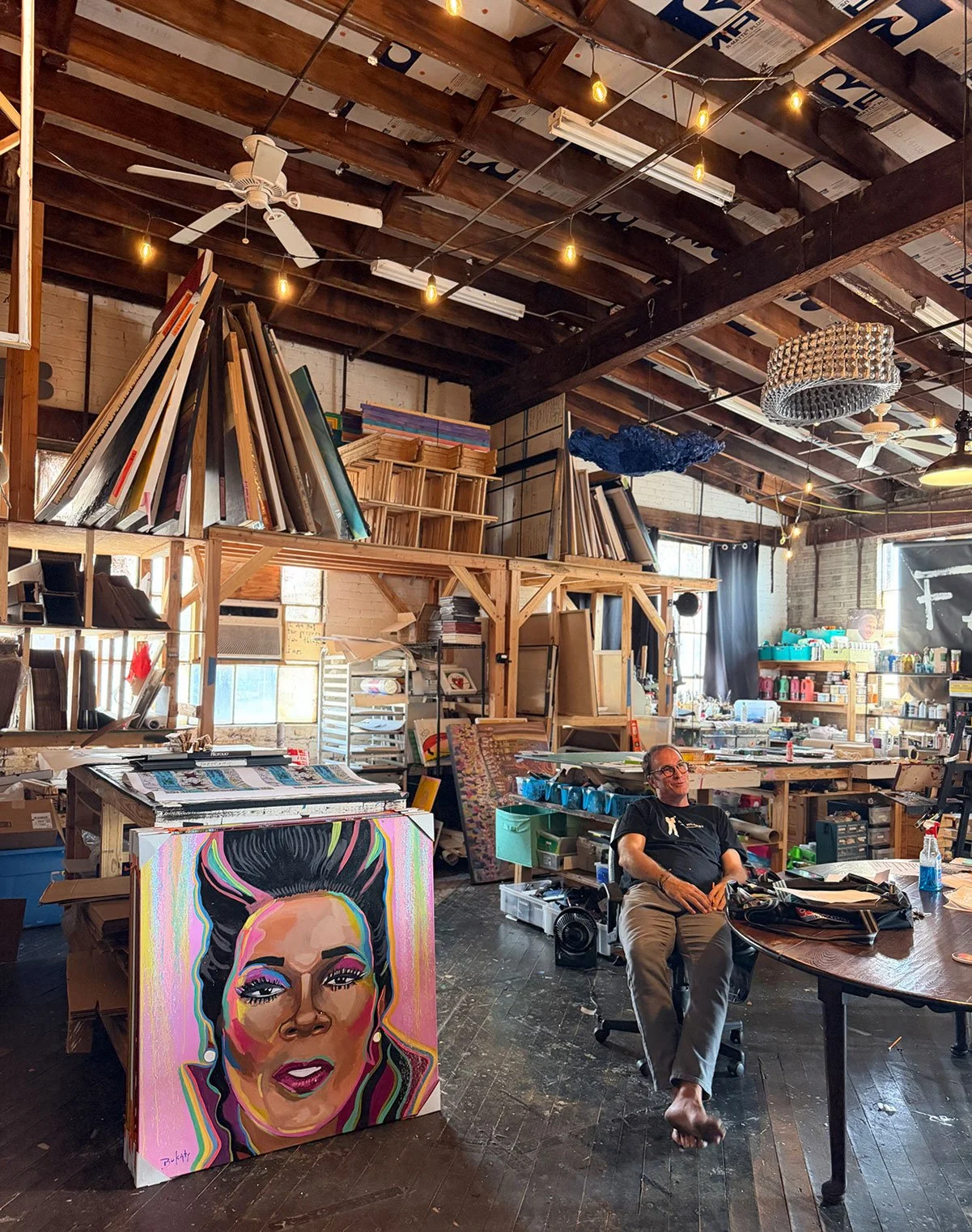
Artist John Bukaty in his ArtEgg Studio
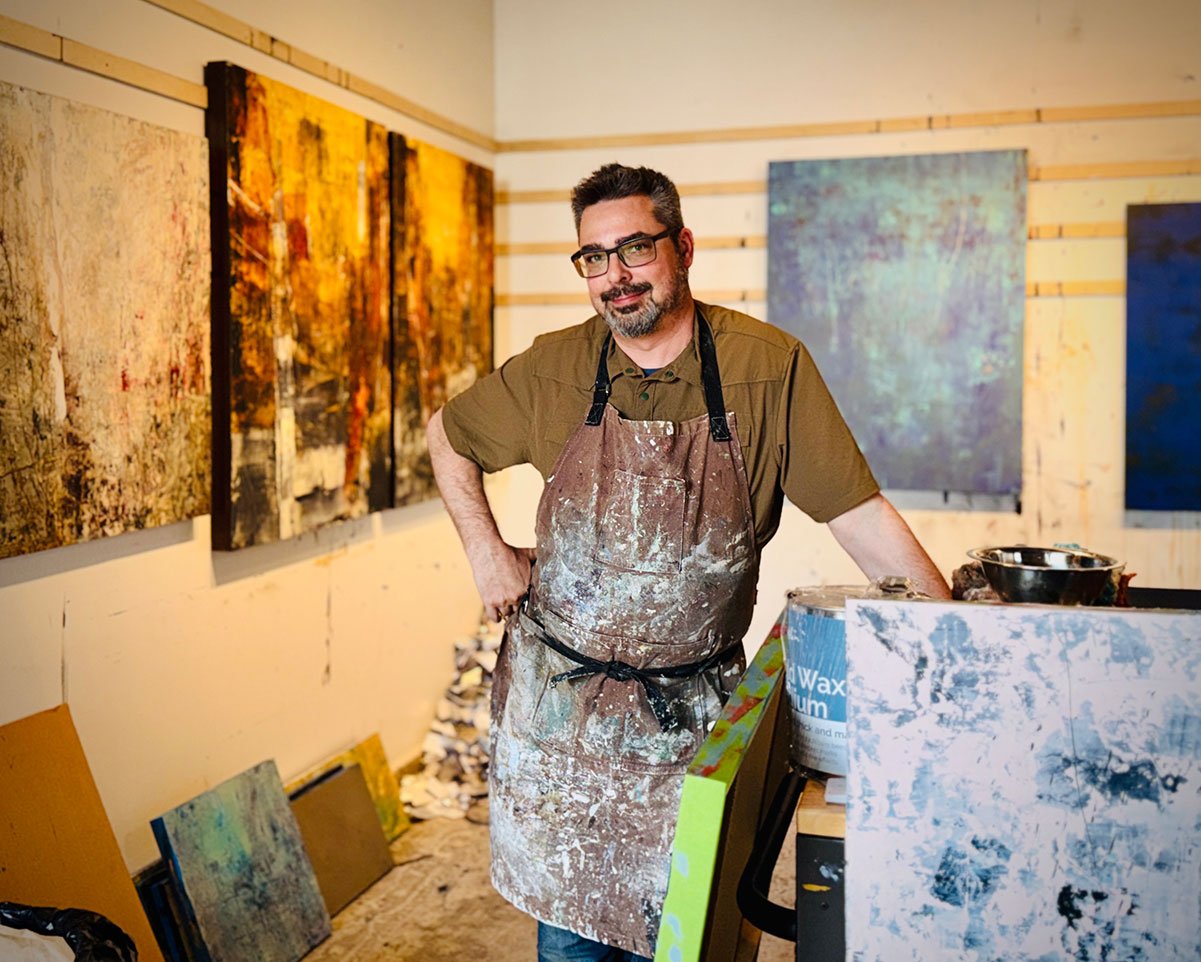
Artist John Swincinski in his ArtEgg studio
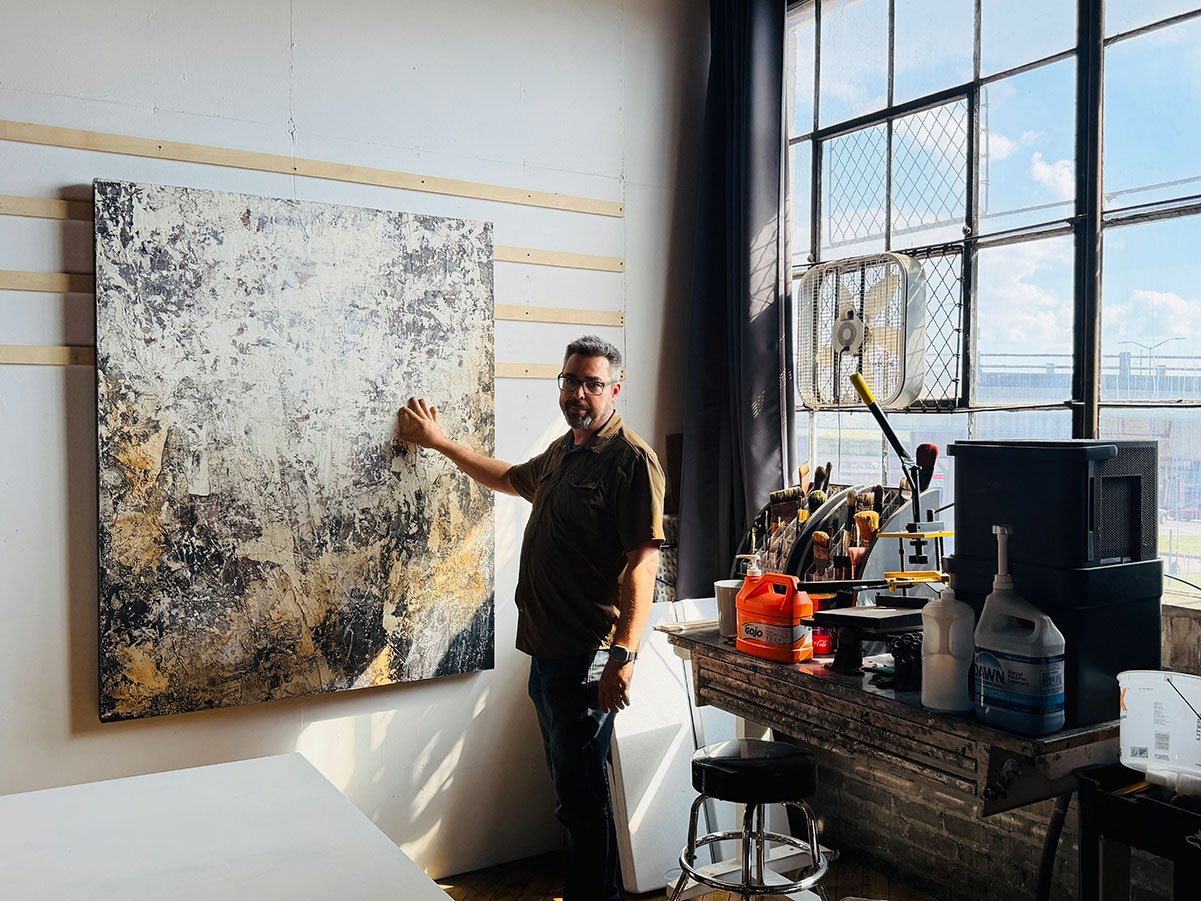
John Swincinski with the afternoon light pouring through his studio’s enormous windows
The cavernous compound is also home to Studio 101, a recording and rehearsal space located in one of the warehouse’s original coolers; the award-winning Atelier Vie distillery, whose gin and absinthe feature botanicals grown on site; and Backline Wine and Spirits, a curated retail shop and bar.
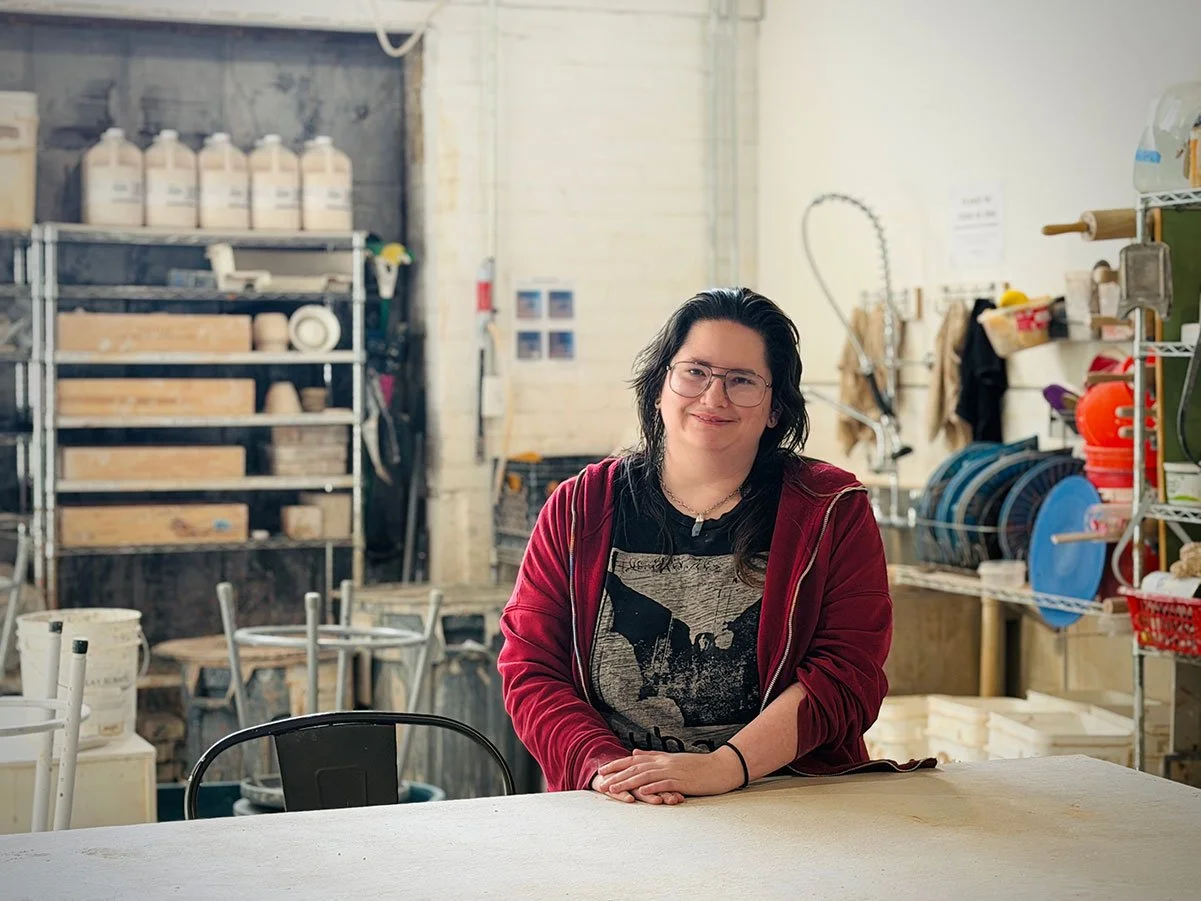
Inside the Clay Center of New Orleans at ArtEgg
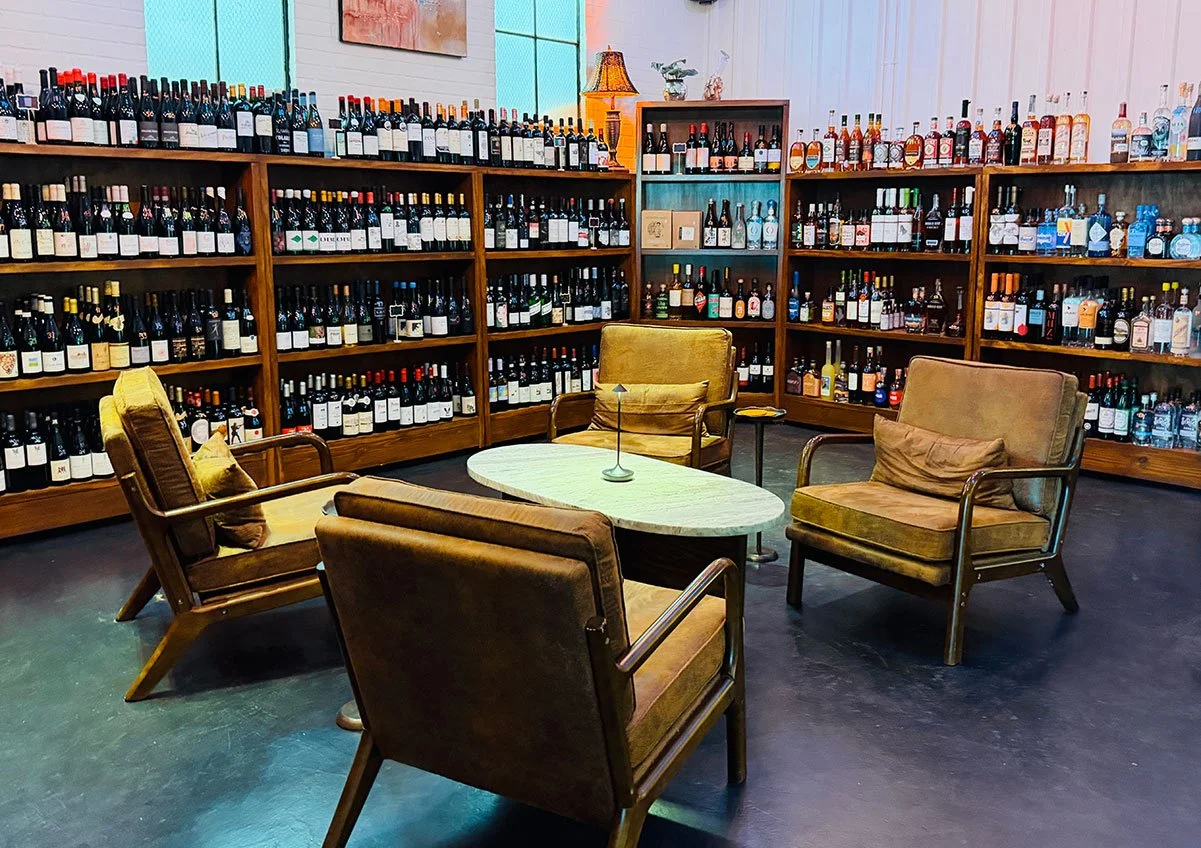
Inside Backline Wine & Spirits at ArtEgg
“I have a lawyer here,” adds Dyer. “Also, someone who is developing a line of designer soil. And a guy who does really interesting art, but his basic business is steam-cleaning sidewalks. That’s how he makes enough money to do his work.
“It’s really a creative space for creative people.”
Keeping the facility financially sustainable is itself an art Dyer has honed and mastered over time. She credits her success to 40-plus years of having lived in New York’s prestigious National Arts Club (NAC), where she was a longtime chair of its education committee.
“It was founded in 1898 with artists and appreciators,” she explains, “collectors and people who like the arts. It was the first arts club that accepted women as equal members and the first to recognize photography as an art form.”
Using the NAC as a working model and utilizing her business acumen, along with a small inheritance left by an uncle, Dyer set about to establish an “agenda-free center for the arts” for Crescent City creatives.
It’s a venture that’s paid off significantly over the past quarter-century. Not just for the numerous artists, entrepreneurs and nonprofits ArtEgg has helped nurture, grow and thrive, but for Dyer as well.
“I’m not quite sure, at this point in my life, that I would be happy without ArtEgg,” she says. “It’s always interesting, there’s always different people, there are always things to do.
And Dyer has found great satisfaction watching her tenants grow through the years. Studio 101, a tenant for more than 20 years, is thriving. The Clay Center began with one space and now occupies four. Art Egg also nurtures non-profits, like the Krewe of Lafcadio that has its home base there and is fully supported as a gift to the krewe.
“Watching these people as they have grown in their wonderful careers and talent has been amazing experience for me,” she said.
“ArtEgg is my passion project – like the city of New Orleans, it’s organic and evolving, with a great and giving heart.”
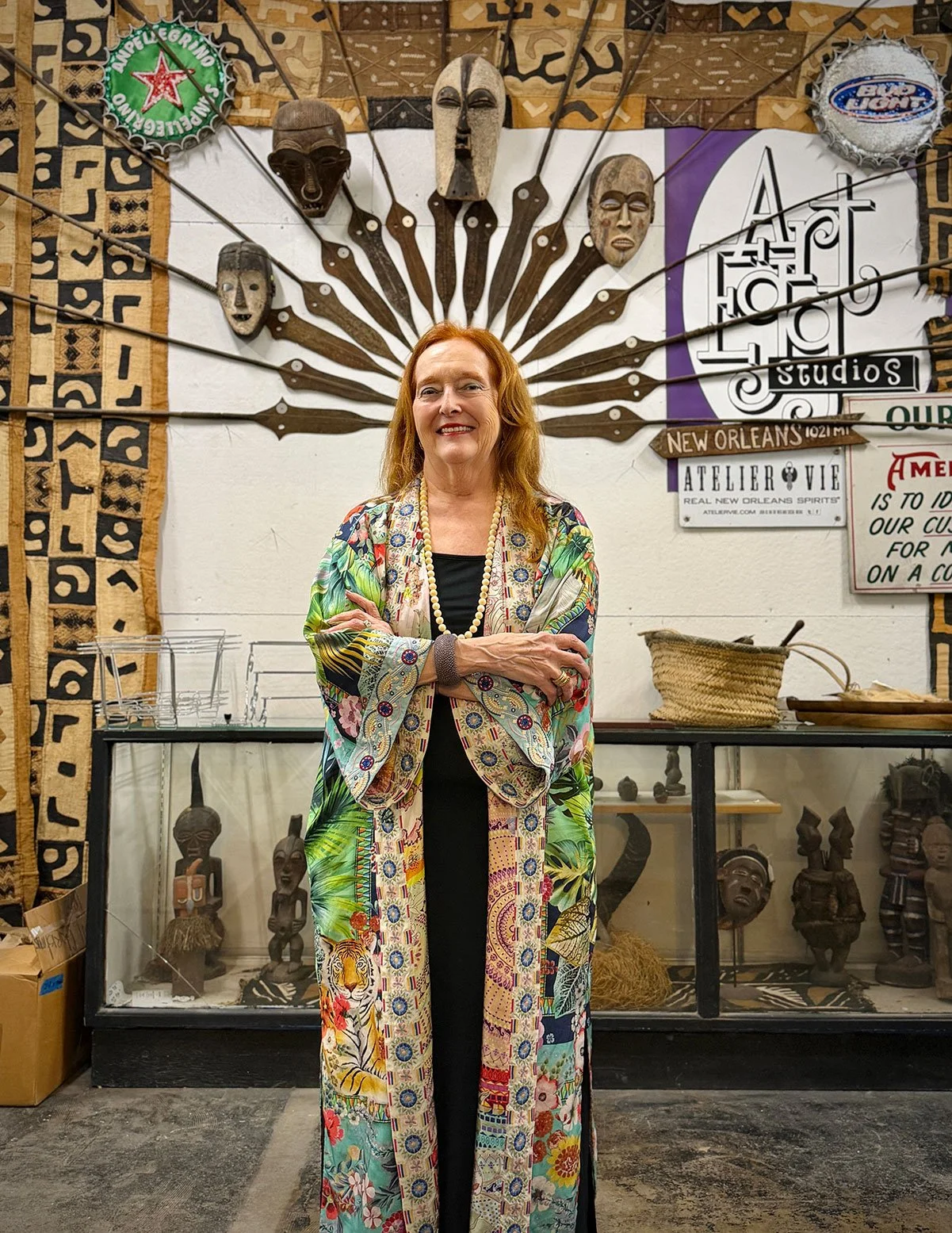
Esther in front of Heritage C