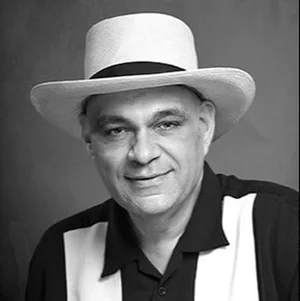
Day in the Life of the COVID Quarter, Part 8
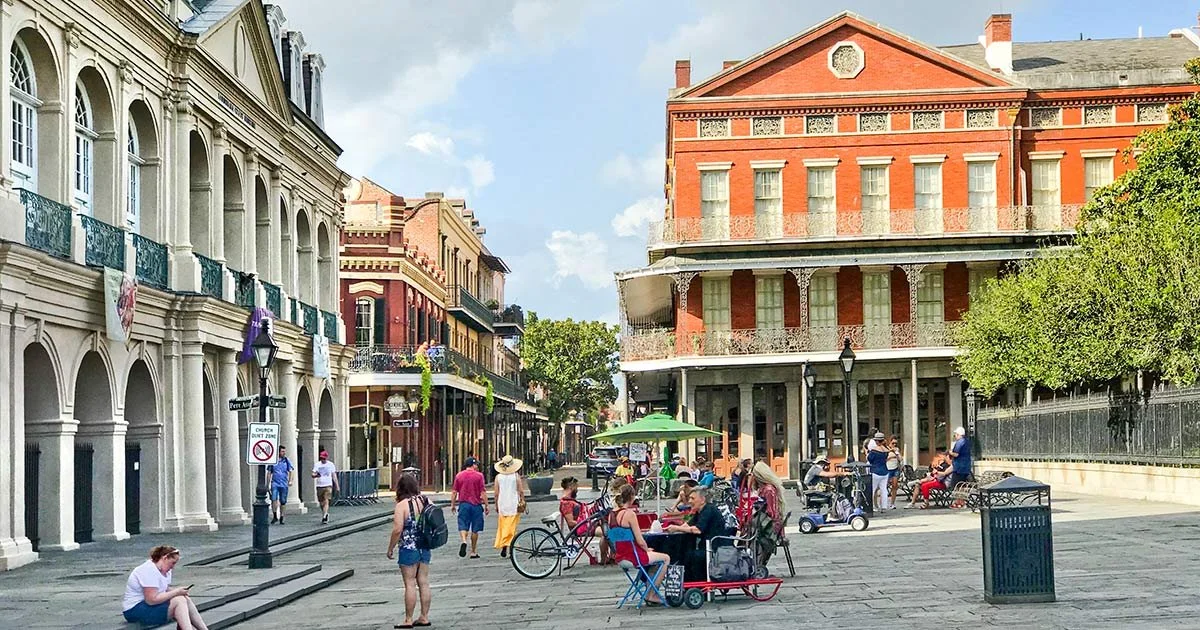
Jackson Square, slowly returning to "normal."
June 2020On the summer solstice, historian and writer Frank Perez reflects on the passage of time as his French Quarter neighborhood slowly reopens.
- by Frank Perez
Saturday, June 20, 2020
6:15 am
Wake up with nothing on my mind but coffee. My new Ninja coffee maker and I are getting along fine. The morning kitchen routine would not be complete without Rupee patiently awaiting his morning meal. He loves his regular food, but I know the Jimmy Dean sausage patty and sourdough English muffin I’m about to eat will cause him to act like he hasn’t eaten in days.
6:45 am
Sit down at the computer. I’m not working on the Stewart Butler manuscript today; rather, this morning is all Archives Project work. I’ve served as president of the LGBT+ Archives Project of Louisiana since it was founded in 2014, and although getting queer history out of the closet pays nothing financially, the work is significant, and the emotional dividends are priceless.

This column is underwritten in part by Logo and name of column sponsor
This summer we have five Tulane students transcribing previously conducted oral histories. This morning I’m checking their work and answering several Archives Project-related emails. Also, I’m writing a proposal for a chapter in an anthology about “LGBTQIA librarianship and community engagement in a post-Stonewall era.”
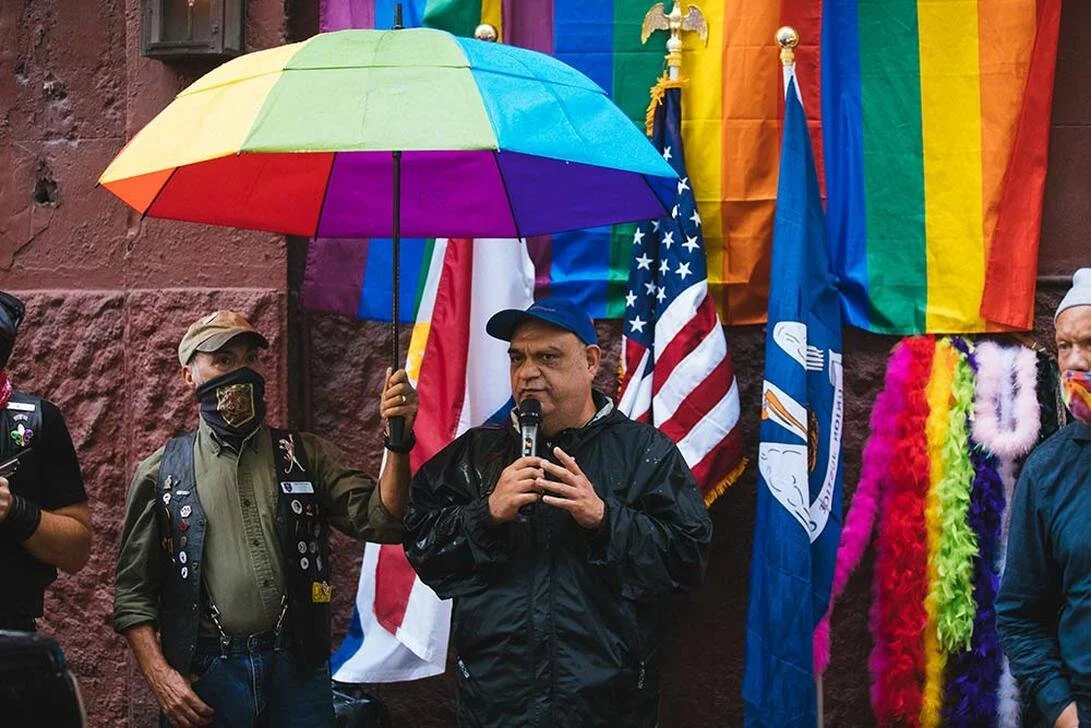
Frank representing the LGBT+ Archives Project at the recent memorial service for victims of the Up Stairs Lounge fire, 47 years ago. Click on the image for our full photo album of the event. Photo by Andrew Simoneaux.
9:50 am
Balcony break: The streets are quiet. After watering the plants, I sit and take in the silence. Even though the city has re-opened and the Quarter is slowly coming back to life, this morning, with its solitude and silence, reminds me of the first few weeks of the shutdown, a calm strangeness. Then, the lone sound of a trumpet. Goosebumps.
12:00 pm
Mindful of the Summer Solstice, I step outside to gaze upon the shortest shadows of the year.
12:10 pm
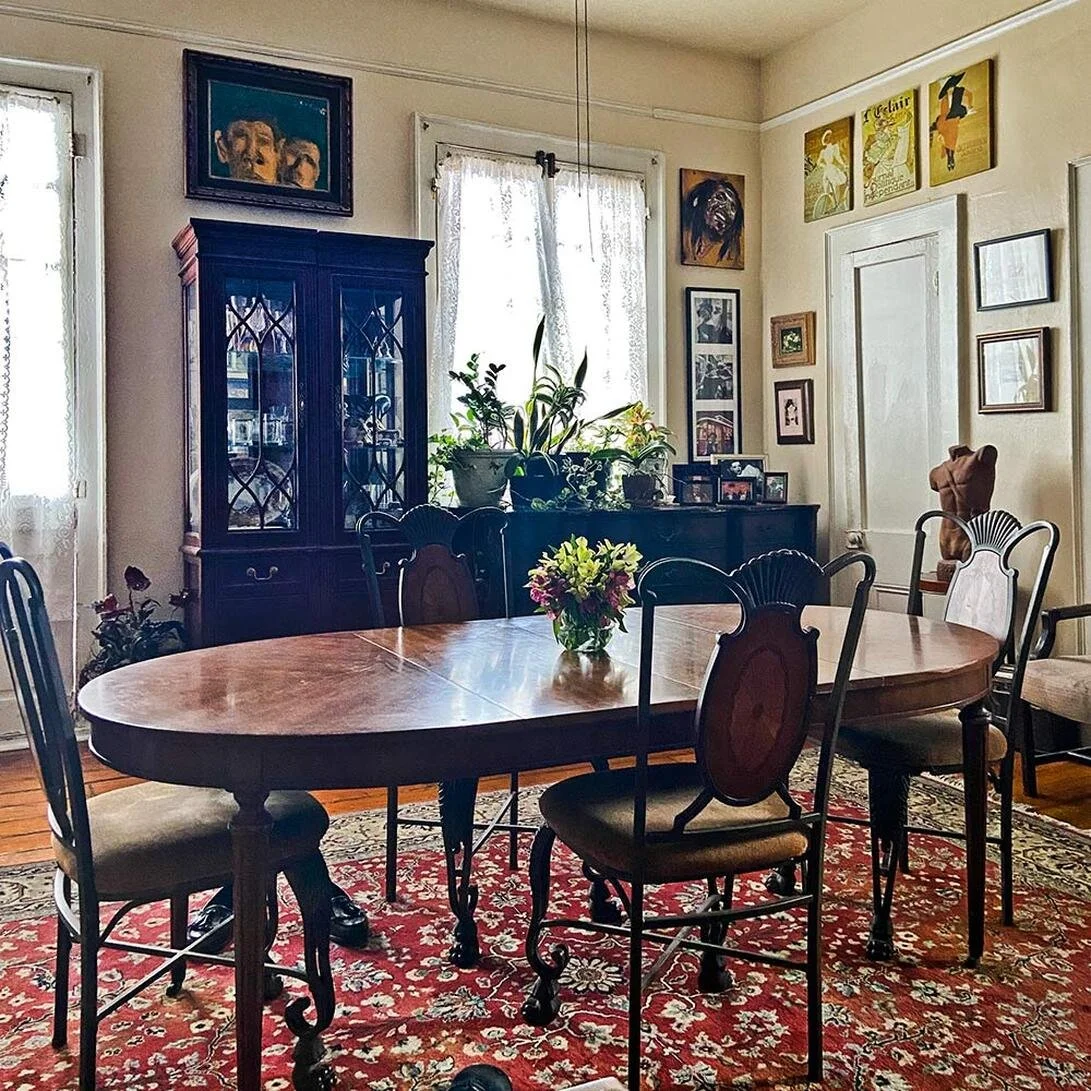
Sitting at my writing desk, I pause and survey the room, which is spacious enough to double as a dining room. The dining table is a family heirloom purchased by my grandmother at an antique store on Royal Street just blocks away. So many memories, like familiar spirits, are attached to that table.
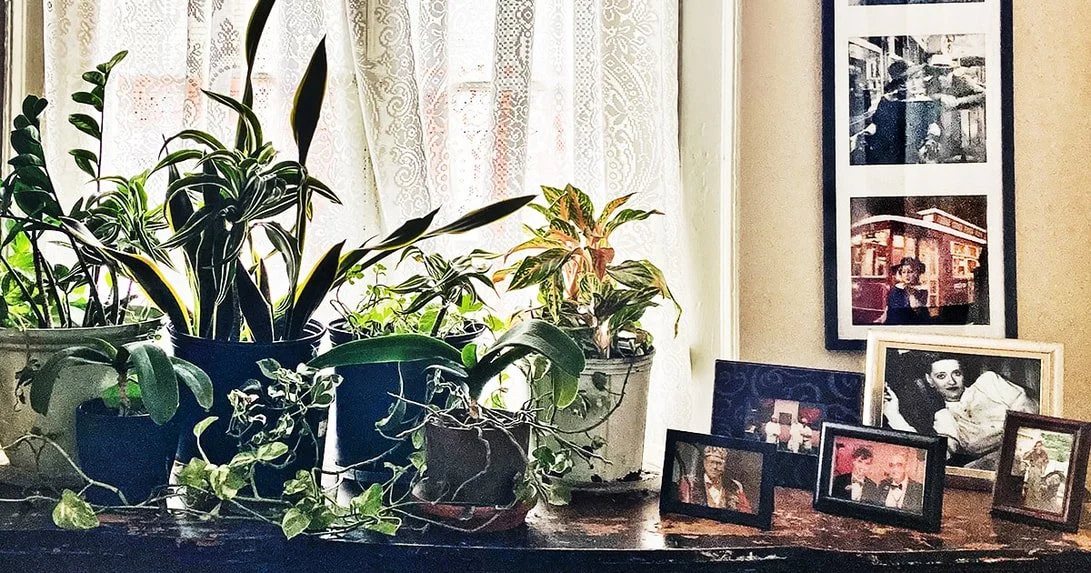
In the corner of the room is a recent acquisition - a hand-carved, German-made buffet / dresser. Like New Orleans herself, the piece is old and somewhat tarnished, yet elegant and beautiful. Next to the plants soaking up the sun through lace-curtained French doors are a few pictures: my father, Chris and I getting ready for a Carnival ball, my friend Rip who died a few years ago, Stewart and Alfred along with Rich Magill and Ron Joullian, and finally a picture of Bette Davis in repose smoking a cigarette.
A few years ago, I received a package from Rich containing a complete set of a newspaper he published briefly in the 1980s - The Big Easy Times. About an hour after I received it, a mutual friend called to inform me Rich had committed suicide.
I was sad, of course, but honored he entrusted the old papers to me and the LGBT+ Archives Project. Rich, who had a place on Chartres Street, and I would occasionally run into each other at Café Lafitte in Exile or sometimes he would drop by my office on St. Ann. I cherish those conversations. Listening to Rich reminisce about meeting Stewart Butler and fighting in the trenches with him on behalf of LGBT+ rights was always inspirational.
I don’t know much about guardian angels, but I do know Bette Davis helped me through some of the most difficult times of my life.
I think about Rip and Marsha and Stewart and Rich and my grandparents and a host of others who have passed on. How I wish I could have them around that table for one more meal.
My pause has morphed into reflection. Something lonely about Saturday mornings, like tired sunlight on a dusty mirror.
1:45 pm
Rouse’s run. Unlike this morning, the streets are now busy. More stores and restaurants are open. Peering down Pirate’s Alley, I see the gate around the Square is covered with artwork. The street musicians are out too. The feeling is pre-COVID.
2:30 pm
The groceries are put away and it’s time for a movie break. Yesterday, Juneteenth, was Marshall, a film about Thurgood Marshall. Today is a murder mystery double feature--Knives Out and the silly classic, Clue. Despite a promising ensemble cast, Clue, is slightly disappointing but sufficient as an afternoon escape.
7:00
Dinner tonight is Café Degas. In addition to consistently good food, the atmosphere here is delightful. The dining room is essentially open-air and is designed around a live tree. Stewart and Alfred ate here every Sunday evening for over twenty years.
10:15
Lying in bed, I randomly open James Baldwin’s Giovanni’s Room to the following passage:
“I remember that life in that room seemed to be occurring beneath the sea, time flowed past indifferently above us, hours and days had no meaning. In the beginning our life held a joy and amazement which was newborn every day.”
I fall asleep thinking about the last three months and the return of “normalcy” to the Quarter, about rooms and sea-changes.
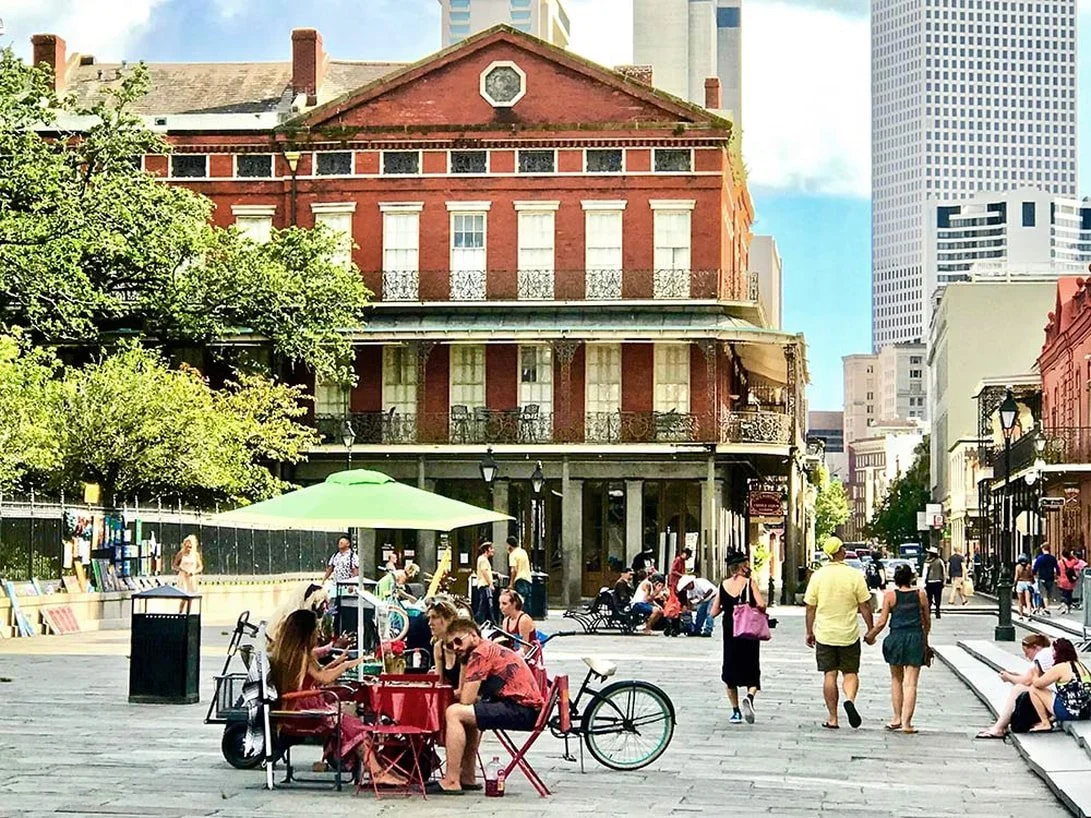
Jackson Square, late June, photo by Ellis Anderson