Day in the Life of the COVID Quarter, Part 7: Reopening
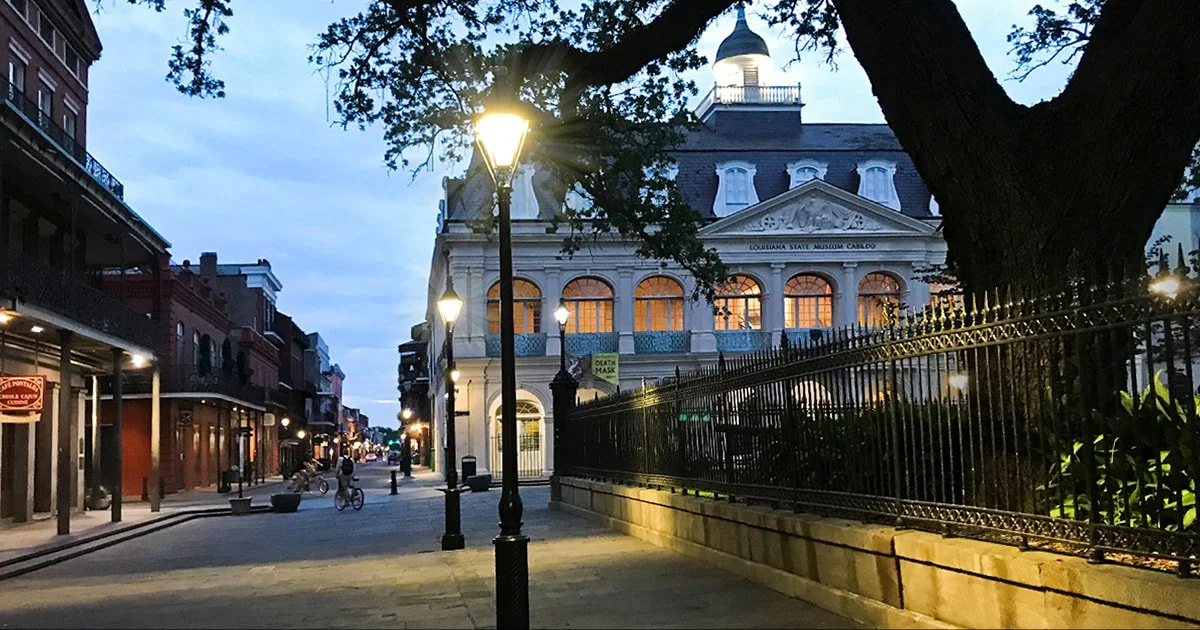
Jackson Square during the first week of reopening. photo by Ellis Anderson
May 2020As the nation writhes in turmoil, historian and writer Frank Perez looks through the lens of the past to ponder the French Quarter's future.
- by Frank Perez
- photos by Frank Perez and Ellis Anderson
Friday, May 29, 2020
5:10am
Wake up to news that Minneapolis is on fire. My mind goes back 30 years to the Rodney King verdict and the LA riots that followed. I think about my own brief career in “criminal justice.” I interned as a probation officer before landing a job with the Sheriff’s department (in a different city). It didn’t take long to recognize the institutionalized racism operating within the department. I wanted no part of it. I quit shortly after I started, firmly convinced we do not have a criminal justice system but a criminal justice industry.
I hit the brew, then respond to emails and begin writing. The topic? Stewart Butler’s opposition to the “War on Drugs” and his advocacy for reforming marijuana laws.

This column is underwritten in part by Logo and name of column sponsor
7:15 am
I step out onto the balcony, surprisingly, to a cacophony of sounds: a dog barking, the rumble of a truck, the beeps of a hydraulic lift, a very loud car stereo, a disheveled man cursing at no one in particular. There are sights too—workers at the Place d’ Arms Hotel painting shutters, a man sleeping in the gutter across the street, a bicyclist whizzing by, and in the distance, a family walking toward Café Du Monde.
On the other end of St. Ann a construction crew occupies the 800 block. The street activity, albeit nowhere near pre-COVID levels, is in stark contrast to the solitude that has greeted me each morning for the last two and a half months. The reopening is slow going, proceeding with caution. Breech birth and baby steps.
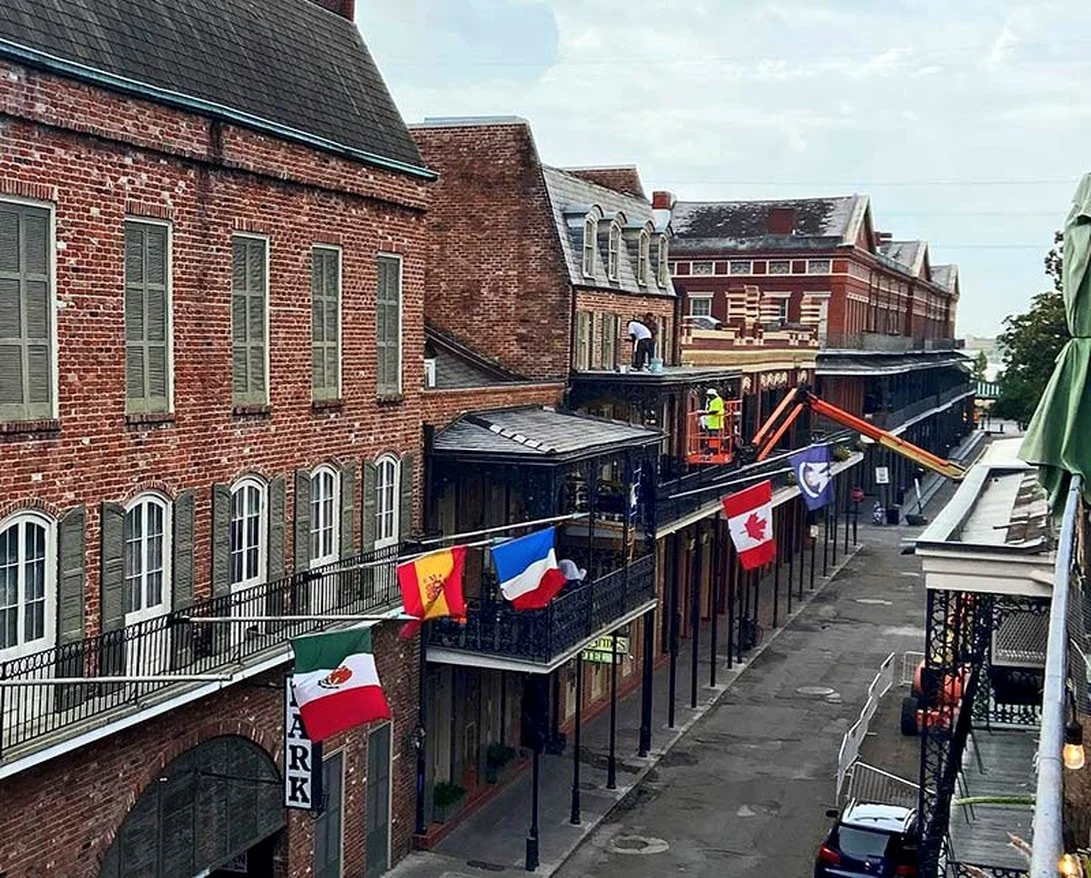
Frank's view of construction at the Place d'Arms Hotel on St. Ann
10:30 am
Walk to Walgreens on Decatur to pick up prescriptions. The store was closed during the lockdown and has only recently reopened. It is comforting to be greeted by name, by familiar faces. Another small sign of hope that the worst of COVID is behind us. Key word: hope.
As I walk the three and half blocks home, I notice the streets are lined with parked cars. I consider the Mayor’s proposal to banish cars from the Quarter. For me the litmus test is this: will it make people more or less likely to live in the Quarter? Because more than anything, the Quarter needs permanent, long-term, full-time residents. There is no neighborhood without neighbors. No Quarter without community.
11:21 am
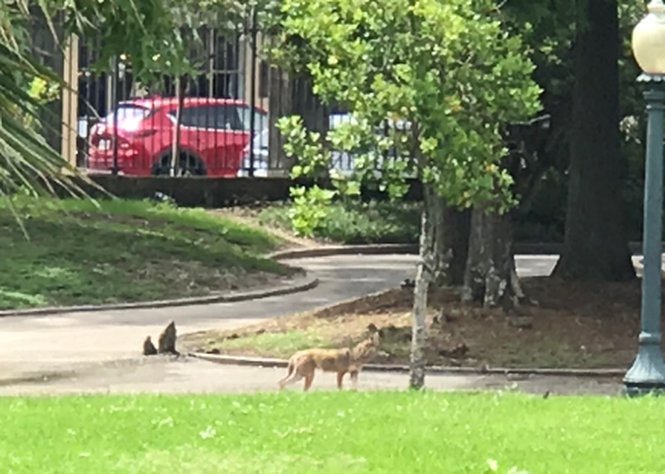
I receive an email from Leo Watermeier. Attached to it is a picture he took of a coyote in Armstrong Park. I think of the coyote spotted in a CBD parking garage at the beginning of the shutdown. My friend, Dr. Jeffrey Darensbourg, informs me that in Native mythology, coyotes were viewed as tricksters, a sign something strange was imminent.
Photo courtesy Leo WatermeierImminent strange was certainly the case on March 7, 1699, when Iberville and Bienville went sailing through Bulbancha and first spotted what would come to be modern day New Orleans. In his journal, Iberville noted three bison laying on the banks of the river in what is now the CBD. Upon seeing the expedition, the bison got up and walked away.
12:00 pm
Lunch is a pork chop with spinach.
1:00 pm
Walk Rupee to the vet. The 15 block walk takes longer than normal because Rupee has to sniff, inspect, and mark half a dozen things on each block. It's okay; we are not in hurry. I had hoped to take a break in Washington Square Park, but it was closed. I pause upriver on Royal and Frenchmen where Bernard de Marigny lived out the latter part of his life.
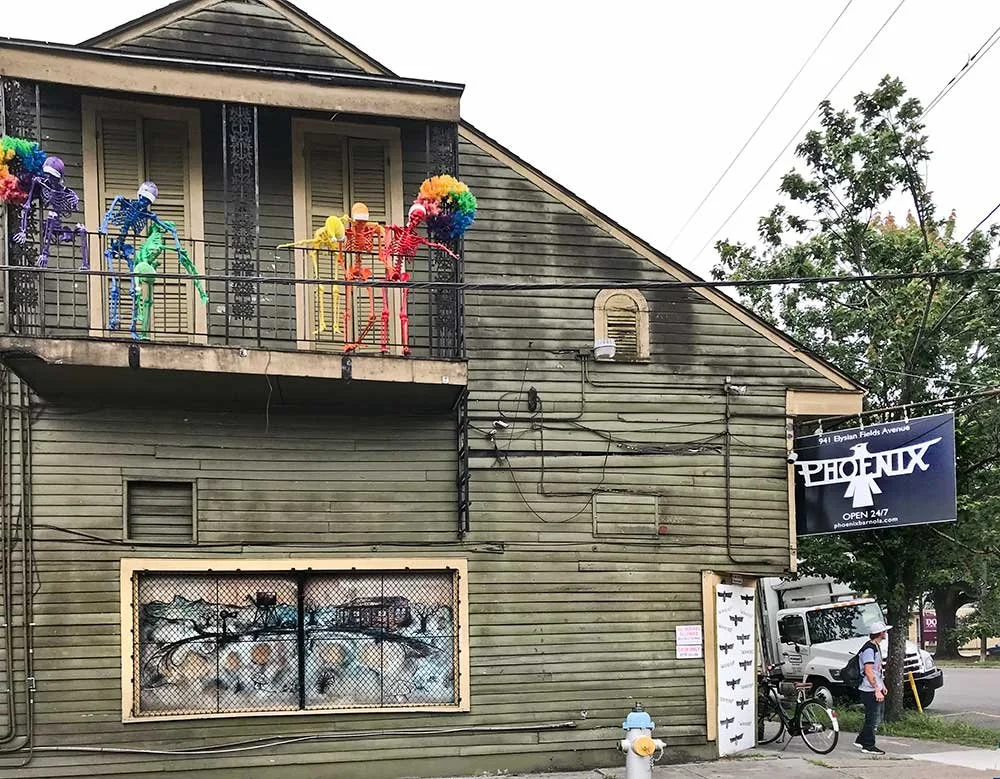
Before long Rupee and I are at the vet’s office. I’m not allowed in and am told they will call me when he’s ready to be picked up. Ordinarily I would have popped in across the street at the Phoenix. That is not to be. I look at the Starbucks. No. There was a time when a Starbucks in the Marigny, with all its corporate, bourgeois associations, was unthinkable. Times change.
I look at the boarded up Phoenix and remember the first time I visited the bar many moons ago. Then it occurs to me my friends Mike and Guy live around the corner. After a nice visit with them, the vet calls. Rupee is newly vaccinated, and my wallet is a bit lighter.
4:15 pm
News and social media are all Minneapolis. The coverage is repetitive, the story essential. The pundits call racism/slavery our nation’s “original sin.” The charge is true. The effects of our national sin extend to African American and Native communities, the latter of which represent the first enslaved people in Louisiana.
My thoughts turn to dinner.
Pere Antoine’s across the street from me is open, but I decide I’m not in the mood to go out. Not really that hungry, come to think of it.
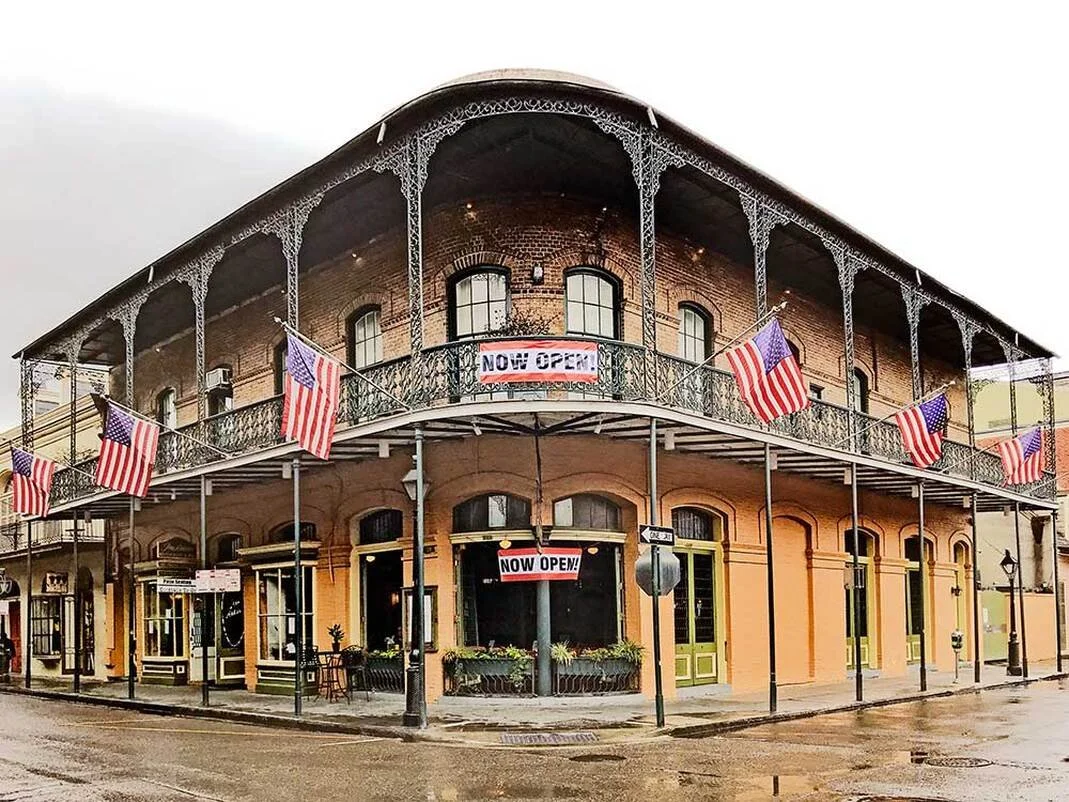
Pere Antoine's, across the street from Frank's home.
7:20 pm
On the couch with Chris and Rupee watching television, a barrage of thoughts. I think about the rioting, about racism, about white privilege. I think about how little things have changed. I think about the righteousness and volatility of anger.
I think about the city, the Quarter, reopening. Will it ever be like it was before? Will tourists return? And if so, in what numbers? And when? Which restaurants will survive, and which will close? How will all my friends in the service industry fare? Can restricting traffic in the Quarter really work? When will tours resume? How long will we have to wear masks in public? Will the bars open next week? How, exactly, does social distancing work in a bar after patrons drink a few cocktails?
I don’t know the answers. All I know is neighborhoods, like lives, inevitably change.